
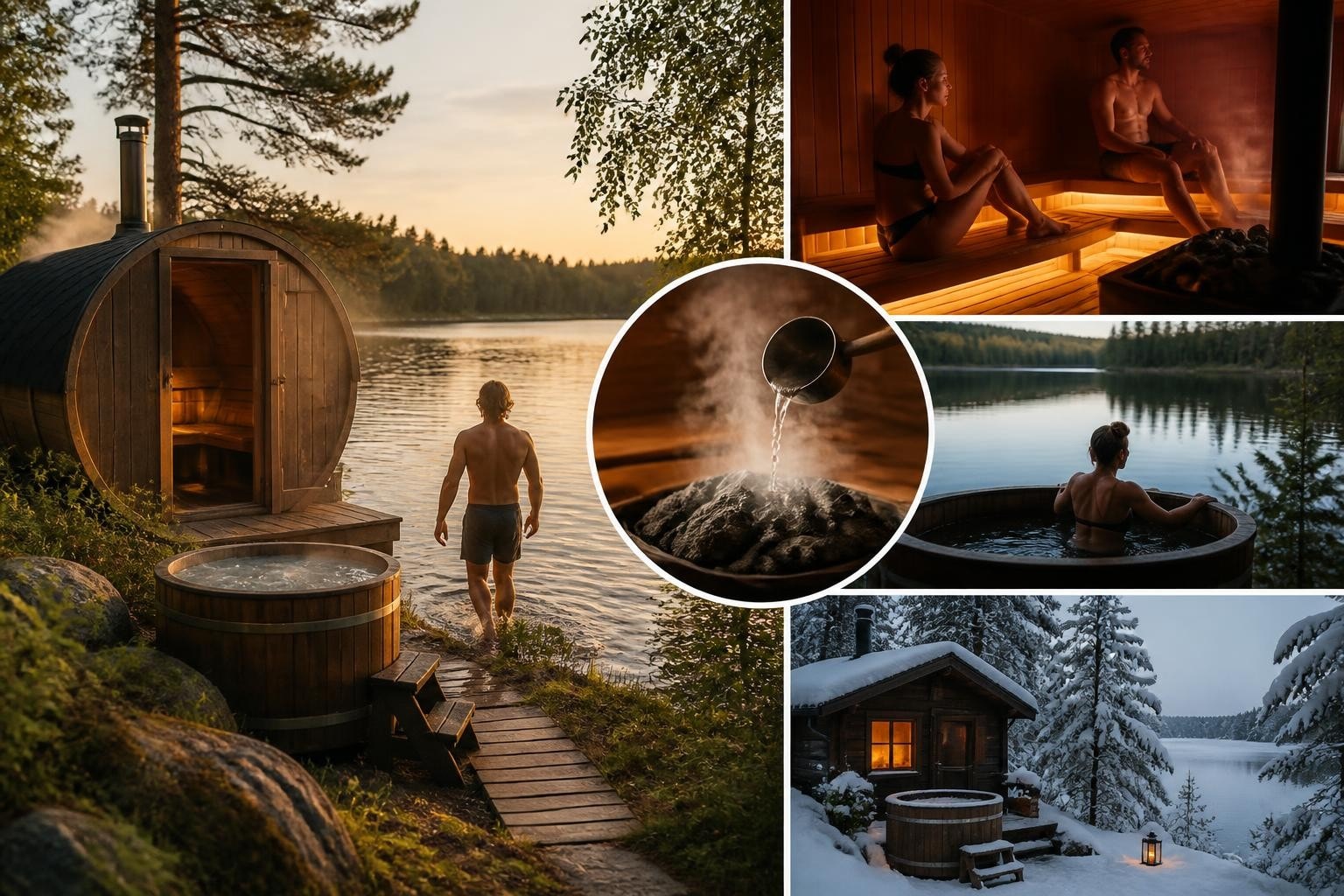
A 2 person sauna is not about size. It is about who you share löyly with. Growing up on Lake Saimaa in Eastern Finland, I learned this early. My father and I sat together in our family sauna every Saturday. Three rounds, cold lake plunge between each. That pairing, heat and cold, heat and cold, builds the rhythm your body needs for real recovery. A 2 person sauna gives you space for this ritual without wasting heat or water. You can practice it alone or with one other person. Either way, the sauna stays hot, the sessions stay consistent, and the recovery stays real.
What Makes a 2 Person Sauna Different
A 2 person sauna typically measures between 48 and 60 inches wide. Bench depth runs 60 to 74 inches, enough for two adults to sit facing each other or one person to lie down fully. This size heats faster than larger models. You reach 160 to 180°F in 20 to 30 minutes with a properly sized heater. Less interior volume means less energy to maintain temperature across multiple rounds.
Key dimensions to check:
- Interior width: 48 to 60 inches minimum
- Bench depth: 60 to 74 inches for full recline
- Ceiling height: 75 to 78 inches for proper heat circulation
- Door clearance: 24 inches minimum, tempered glass preferred
Smaller saunas also cool faster when you open the door. This matters if you practice contrast therapy. You step out, plunge into cold water, then return for another round. The sauna should recover to full heat within 10 minutes. A 2 person sauna does this efficiently because the heater does not need to reheat a large空間.
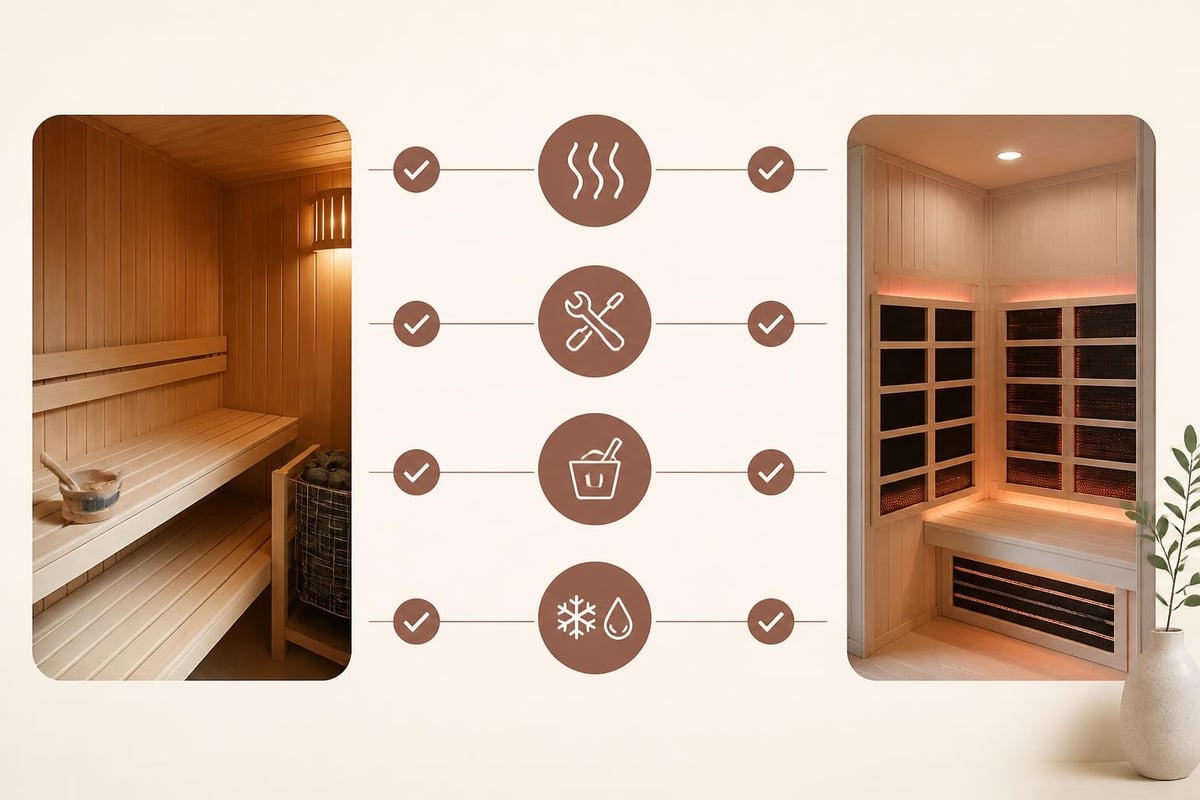
Traditional Cedar vs Infrared Models
Finnish saunas use wood stoves or electric heaters with stones. You throw water on the stones to create löyly. That steam penetrates deep, opens your airways, and shifts your nervous system from performance to recovery. Traditional sauna builds heat from 160°F to 195°F. Humidity spikes to 20 to 40% when you add water. This is how Finns have practiced for 2,000 years.
Infrared saunas skip the stones entirely. They use carbon or ceramic panels to heat your body directly through infrared light. Temperature stays lower, usually 120°F to 140°F, with no humidity. Some people prefer this for gentler sessions. But you lose löyly. You lose the steam that defines Finnish sauna culture, the moment UNESCO recognized as Intangible Cultural Heritage in 2020.
| Feature | Traditional Cedar Sauna | Infrared Sauna |
|---|---|---|
| Heat source | Electric heater with stones or wood stove | Carbon/ceramic panels |
| Temperature range | 160°F to 195°F | 120°F to 140°F |
| Humidity | 20% to 40% with water | Near zero |
| Löyly (steam) | Yes, central to the experience | No |
| Warm-up time | 20 to 30 minutes | 10 to 15 minutes |
| Contrast therapy | Ideal for heat/cold cycles | Less effective due to lower heat |
If you want real recovery, choose traditional. If you want gentle heat without steam, infrared works. But do not expect the same physiological response. Prof. Jari Laukkanen at the University of Eastern Finland published research in Mayo Clinic Proceedings showing sauna 4 to 7 times weekly cuts cardiovascular death risk by 51%. That research studied traditional Finnish saunas with löyly, not infrared panels.
Choosing the Right Heat Source
A 2 person sauna needs a heater sized to its interior volume. Too small, the sauna never reaches proper temperature. Too large, it cycles on and off constantly, wasting energy and stressing the heating elements. Calculate your sauna's cubic footage, then match it to heater wattage.
Indoor electric heaters:
- 3 to 4 kW for 100 to 200 cubic feet
- 4.5 to 6 kW for 200 to 300 cubic feet
- Requires 240V circuit, installed by licensed electrician
- Heater controls mounted outside sauna room
Electric heaters work for both indoor and outdoor saunas. They plug into standard 240V circuits. Most 2 person infrared saunas run on 120V, simpler to install but limited to infrared heat. If you choose traditional, budget for electrician costs. Installation typically runs $300 to $800 depending on distance from your electrical panel.
Wood-burning stoves add a different dimension. You tend the fire, adjust airflow, and monitor temperature manually. This ritual appeals to some people. But wood stoves require chimney clearance, spark arrestors, and regular ash removal. They also take longer to heat. If you live where wood is plentiful and you enjoy the process, wood stoves work. Otherwise, electric heaters give you consistent heat without the maintenance.
Outdoor Placement and Weather Resistance
Outdoor 2 person saunas face rain, snow, UV exposure, and temperature swings. Cedar handles this well. Eastern White Cedar and Western Red Cedar both contain natural oils that resist moisture and decay. The wood ages to a silver-gray patina if left untreated. You can apply clear cedar sealer every two to three years to maintain the original color, but it is not required for structural integrity.
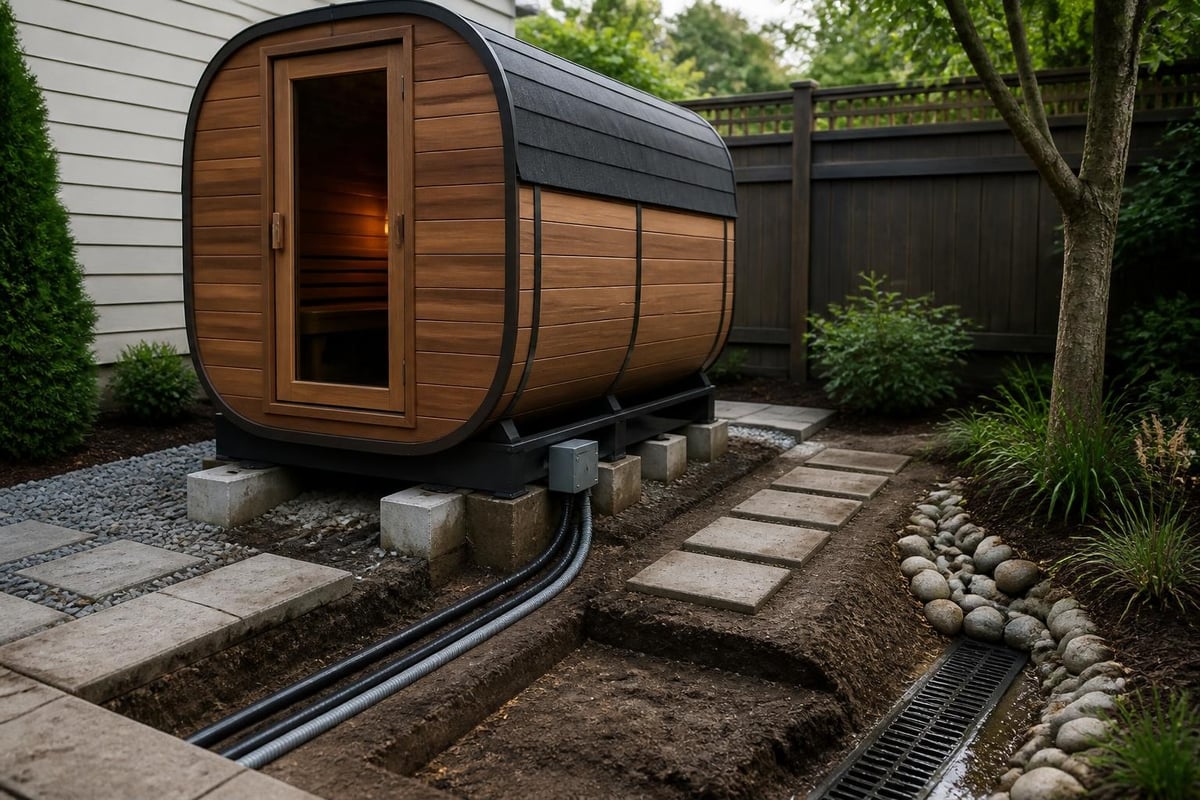
Place your sauna on a level gravel bed, concrete pad, or treated timber base. Avoid direct soil contact. Water should drain away from the sauna, not pool underneath. Leave 18 to 24 inches of clearance on all sides for airflow and maintenance access.
Outdoor setup checklist:
- Foundation: Gravel bed, concrete pad, or timber frame
- Electrical: 240V circuit run from main panel to sauna location
- Drainage: Ground slopes away from sauna base
- Clearance: 18 to 24 inches on all sides, 36 inches from combustibles
- Roof access: Clear overhead branches and power lines
Some outdoor barrel saunas ship fully assembled. Others arrive as kits requiring assembly. Kit assembly typically takes 6 to 10 hours with two people. Panels interlock, benches bolt into place, and the roof secures with screws. If you are comfortable with basic tools, you can handle it. If not, hire a handyman for $400 to $800.
Indoor 2 Person Saunas for Year-Round Use
Indoor saunas require moisture management. Cedar tolerates humidity, but your home structure may not. Install a vapor barrier behind the sauna walls. Route ventilation to the outdoors or into a well-ventilated room. Most building codes require a dedicated vent fan in bathrooms and other moisture-prone areas. Check local requirements before installation.
Indoor saunas fit in basements, spare bedrooms, and garage conversions. A standard 2 person sauna occupies roughly 25 to 40 square feet of floor space. Ceiling height matters more than floor area. You need at least 75 inches, ideally 78 inches, for proper heat stratification. Hot air rises and collects near the ceiling. If the ceiling is too low, heat distribution suffers.
The Maxxus 2 Person Full Spectrum IR Sauna offers a clean indoor option for homes where traditional steam sauna is not practical. It uses Canadian reforested Red Cedar and full-spectrum infrared heating with near, mid, and far wavelengths. Temperature stays between 120°F and 140°F, low enough to avoid moisture concerns in most indoor spaces. The unit includes Bluetooth speakers, chromotherapy lighting, and a floor heater. It plugs into a standard 120V outlet, so no electrician is needed. Pricing starts around $3,000 to $5,000 depending on current promotions and dealer pricing.
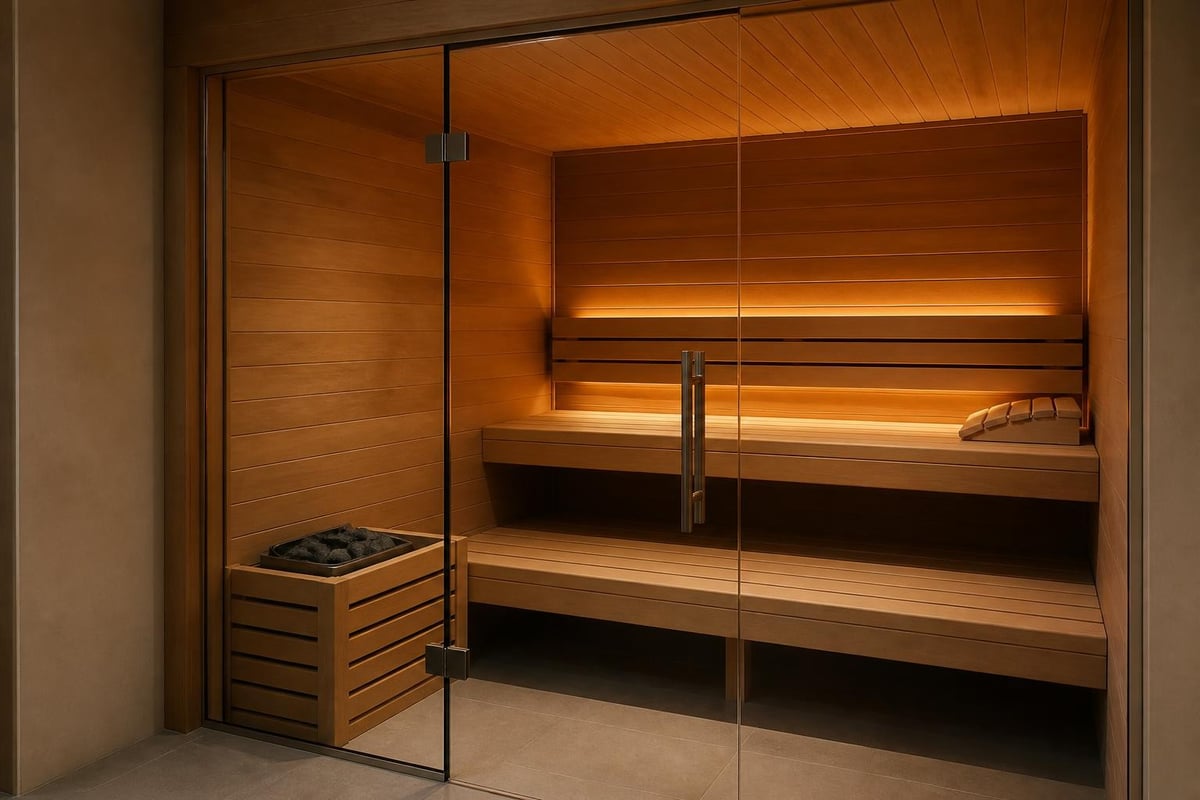
If you want traditional löyly indoors, choose an electric heater sauna. The LeisureCraft Loft CT Element Indoor Sauna uses Thermo Grandis, a moisture-resistant luxury wood treated in Ontario, Canada. It features a full glass front, warm interior lighting, and a compact 54x74 inch footprint. This is the only indoor traditional sauna in its class, designed specifically for homes that demand both performance and refined design.
Electrical Requirements and Costs
Most 2 person traditional saunas require 240V, 30 to 50 amp circuits. Infrared models typically run on 120V, 15 to 20 amps. Confirm your home's electrical capacity before purchasing. If your panel is full, you may need a subpanel or panel upgrade. Electricians charge $1,200 to $2,500 for panel upgrades, depending on local labor rates and permit fees.
| Sauna Type | Voltage | Amperage | Typical Install Cost |
|---|---|---|---|
| Traditional electric | 240V | 30-50A | $500 to $1,200 |
| Infrared | 120V | 15-20A | $0 to $300 |
| Wood-burning | None | None | $800 to $2,000 (chimney) |
Factor installation into your total budget. A $6,000 sauna becomes $7,200 after electrical work. A $3,500 infrared sauna may need only a dedicated 120V circuit, adding $200 to $300.
Practicing Contrast Therapy at Home
Contrast therapy is heat followed by cold, repeated three to five times. You sit in the sauna for 10 to 15 minutes, step out, plunge into cold water for 1 to 3 minutes, then return to the sauna. Each round deepens the effect. Your blood vessels dilate in the heat, then constrict sharply in the cold. This cycling improves circulation, reduces inflammation, and trains your nervous system to handle stress.
A 2 person sauna pairs naturally with a cold plunge tub. You do not need a large sauna for this ritual. You need consistent heat and immediate access to cold water. I place my plunge tub within 10 steps of the sauna. No robe, no delay. You step out, walk straight to the water, and submerge.
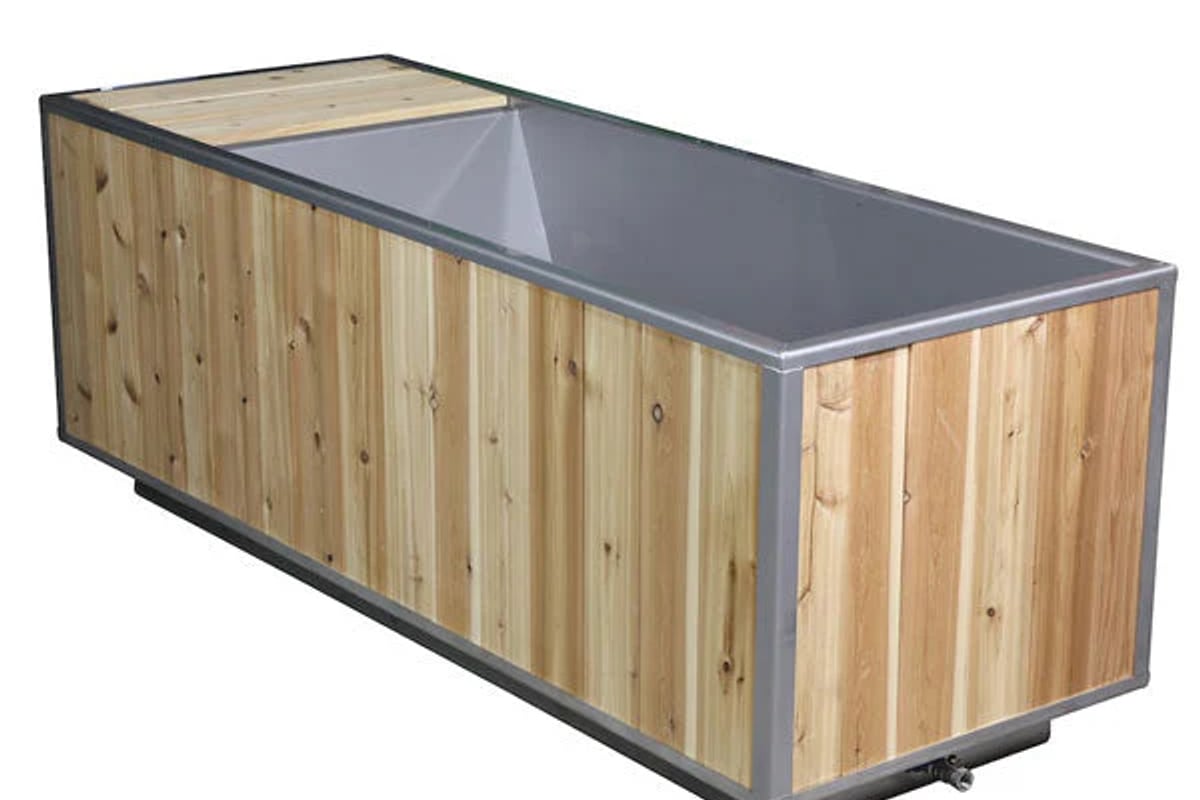
If you are serious about daily contrast therapy, the LeisureCraft Flow Cold Plunge offers professional-grade cold water recovery at home. It features a natural cedar exterior with a stainless steel interior and built-in chiller compartment. The unit ships fully assembled and ready to use immediately, making it easy to integrate into your routine.
Basic contrast therapy protocol:
- Sauna session: 10 to 15 minutes at 160°F to 180°F
- Cold plunge: 1 to 3 minutes at 45°F to 55°F
- Rest: 5 minutes, seated or standing
- Repeat 3 to 5 rounds total
- Final rest: 10 minutes, no heating or cooling
Cold water does not need to be extreme. Start at 55°F to 60°F. As you adapt, lower the temperature gradually. Your body will tell you when it is ready for colder water. Do not force it. Contrast therapy works through repetition, not extremes.
What to Look for When Buying
A 2 person sauna is a 10 to 20 year investment. Wood quality, heater reliability, and warranty coverage determine whether you use it weekly or let it sit unused. Eastern White Cedar and Western Red Cedar both perform well outdoors. Hemlock works for indoor infrared saunas but lacks the natural oils cedar provides. Thermo Grandis offers superior moisture resistance for indoor traditional saunas.
Inspection checklist before purchase:
- Wood grade: Clear, tight grain with minimal knots
- Panel thickness: 1.5 to 2 inches for insulation and durability
- Heater certification: UL or ETL listed for North America
- Bench construction: Solid slats, not thin veneer, spaced for drainage
- Door seal: Magnetic or silicone, no drafts when closed
- Warranty: 5 years minimum on structure, 1 to 3 years on heater
Avoid saunas marketed primarily on price. A $2,000 sauna built from thin panels and low-grade wood will need repairs within two to three years. A $6,000 sauna built from clear-grain cedar with a certified heater will perform for 15 to 20 years with basic maintenance. The cost per session favors the higher-quality unit.
Some home saunas qualify for HSA or FSA reimbursement if your doctor provides a Letter of Medical Necessity. Conditions like chronic pain, cardiovascular disease, and respiratory issues often meet the criteria. Check with your HSA/FSA administrator and physician before purchasing.
Comparing Popular 2 Person Models
Different manufacturers approach 2 person saunas differently. Some prioritize portability and quick assembly. Others focus on luxury finishes and integrated electronics. Your choice depends on whether you value simplicity or features.
| Model | Type | Price Range | Key Feature |
|---|---|---|---|
| LeisureCraft Indoor Traditional | Traditional | $5,585-$9,550 | Thermo Grandis wood, full glass front |
| Orivon Lumin Infrared | Infrared | $7,999-$10,999 | Plug-and-play, compact footprint |
| Golden Designs Llumeneres | Infrared | $4,500-$6,500 | Full spectrum, chromotherapy, Bluetooth |
| Maxxus Full Spectrum | Infrared | $3,000-$5,000 | Red Cedar, floor heater, MP3/Bluetooth |
Traditional models require more setup but deliver authentic löyly. Infrared models install faster and plug into standard outlets but skip the steam. Your decision comes down to what recovery means to you. If you want the ritual Finns practiced for 2,000 years, choose traditional. If you want gentle heat without humidity, choose infrared.
Daily Sauna Practice and Recovery
Consistency matters more than duration. Prof. Jari Laukkanen's research shows 4 to 7 sessions per week provide the strongest cardiovascular benefits. Each session typically lasts 10 to 20 minutes, though you can stay longer once adapted. New users should start with shorter sessions at lower temperatures, gradually increasing both as their body adjusts.
A 2 person sauna makes daily practice realistic. It heats quickly, uses less energy than larger models, and fits into a 30 to 45 minute routine including warm-up, sessions, and cooldown. I practice every evening after work. Three rounds, cold plunge between each, then rest. The entire ritual takes 40 minutes. My body knows the rhythm now. It expects the heat and cold, and recovery follows naturally.
Weekly sauna schedule example:
- Monday: 15 minutes sauna, 2 minutes cold, 10 minutes rest
- Tuesday: Rest or light session (10 minutes sauna only)
- Wednesday: 3 rounds contrast therapy
- Thursday: Rest
- Friday: 3 rounds contrast therapy
- Saturday: Extended session, 4 rounds
- Sunday: Rest or light session
Rest days matter as much as sauna days. Recovery builds during rest, not during stress. Do not push daily sessions if your body asks for a break. When you return, the sauna will still be there.
Sauna also supports sleep when practiced in the evening. Your body temperature rises during the session, then drops sharply after you finish. This cooling signals your circadian system that sleep is near. Many people report falling asleep faster and sleeping deeper after evening sauna. If you struggle with sauna for sleep, try moving your session to 90 minutes before bed.
Maintenance and Longevity
Cedar saunas require minimal maintenance. Sweep the floor after each session to remove any debris or excess water. Wipe down benches weekly with a damp cloth. No soap, no chemicals. Cedar's natural oils handle bacteria and odor on their own.
Outdoor saunas benefit from annual inspections. Check roof shingles for damage, tighten any loose screws, and inspect the door seal. Replace worn weather stripping as needed. Apply clear cedar sealer every two to three years if you want to maintain the original wood color. Otherwise, let the cedar age naturally to silver-gray.
Annual maintenance tasks:
- Inspect roof and repair any damaged shingles
- Tighten screws and bolts on benches and door
- Check door seal and replace if worn
- Clean heater stones and replace cracked or crumbled pieces
- Test heater controls and replace faulty components
Infrared saunas need less structural maintenance but more electronic care. Dust accumulates on infrared panels, reducing their efficiency. Wipe panels monthly with a soft cloth. Check wiring connections annually. Replace bulbs or panels when they fail, typically after 5,000 to 10,000 hours of use.
Heater stones in traditional saunas wear down over time. Inspect them every six months. Cracked or crumbled stones reduce heat capacity and can damage the heating elements. Replace worn stones with proper sauna stones, not random rocks. Improper stones can explode when heated.
Building a Sauna Routine That Lasts
The best sauna is the one you actually use. Size does not matter if the sauna sits cold. A 2 person sauna works because it removes friction. It heats fast, costs less to run, and fits into smaller spaces. You can practice alone or with one other person. Either way, the ritual stays simple.
I answer every customer question personally because I know this purchase is not about product specs. It is about whether you will build a practice that supports your recovery for years. The sauna is a tool, but the practice is yours to build. Start small, stay consistent, and let your body guide the progression.
Some people prefer outdoor cabin saunas with porches for post-session rest. Others want compact indoor units that disappear into a spare bedroom. Both work if you use them. Choose the format that fits your space and daily rhythm.
Final Considerations Before Purchase
Ask yourself three questions before buying. First, will you practice contrast therapy or sauna only? If contrast therapy, plan for cold water access. A garden hose works, but a dedicated plunge tub delivers better results. Second, do you have space for installation and the recommended clearances? Measure twice, buy once. Third, can your electrical system handle the load? A licensed electrician can evaluate this in 30 minutes for $100 to $200.
Budget for the full system, not just the sauna. A traditional outdoor 2 person sauna costs $5,585 to $9,550. Add $500 to $1,200 for electrical installation, $300 to $800 for a gravel or concrete base, and $1,500 to $3,500 for a cold plunge tub if you want contrast therapy. Total investment ranges from $7,885 to $15,150 depending on choices.
Infrared saunas start lower, typically $3,000 to $6,500, with minimal installation costs. But they skip löyly. They skip the steam that defines Finnish sauna culture and the heat intensity that drives effective contrast therapy.
Choose based on what you want to practice, not what costs less today. A traditional sauna used 4 to 7 times weekly for 15 years costs less per session than an infrared sauna used twice monthly for 3 years before it sits unused. The numbers favor use, not price.
On a personal note, the concept of human potential extends beyond the sauna itself. Building a practice, showing up consistently, and investing in your own recovery requires the same discipline that drives success in other areas of life. The sauna is a space where performance ends and recovery begins, but the commitment to use it is where real growth happens. Similarly, just as we invest in our own wellness, many of us also prioritize the health of our companions. Quality nutrition and thoughtful supplementation, like what North Hound Life provides for dogs, reflects the same principle: caring for those we value through consistent, informed choices.
A 2 person sauna gives you space to practice real recovery without wasting heat, energy, or space. The ritual is simple: heat, cold, rest, repeat. Growing up on Lake Saimaa, I learned this from my father. Now I bring that tradition to North America through RecoSauna. Every question you ask, I answer personally. Every sauna we sell comes with free shipping across the US and Canada, backed by factory warranties and honest guidance on what works. If you are ready to build a practice that lasts, let's talk.
Share:
Garden Sauna: A Finnish Practice for Your Backyard
Best At Home Sauna: Finnish Expert's 2026 Guide