
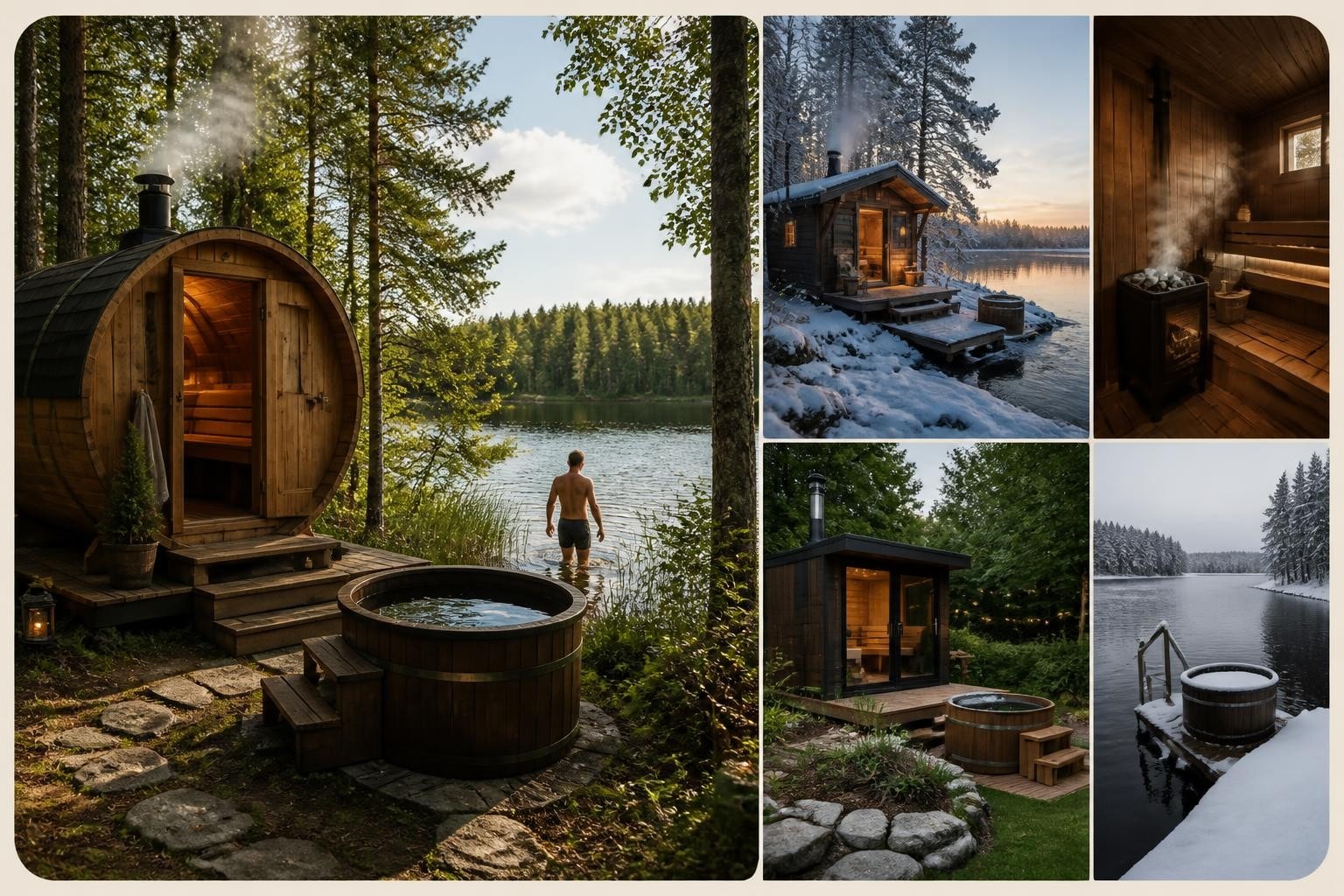
A garden sauna brings the Finnish practice of löyly and contrast therapy directly to your backyard. I grew up on Lake Saimaa in Eastern Finland, where sauna wasn't a luxury item but a weekly rhythm tied to recovery, family, and the shift between seasons. You heated the sauna, threw water on hot stones to create steam, then stepped outside into cold air or lake water. That cycle, practiced for over 2,000 years before anyone called it biohacking, is what UNESCO recognized as Intangible Cultural Heritage in 2020. A garden sauna lets you practice the same ritual without driving anywhere or booking appointments.
Why Place Your Sauna in the Garden
Outdoor placement matters more than most people realize. When you step from heat into cold, your body needs immediate access to fresh air, space to cool down, or ideally cold water. Indoor saunas work, but they require you to walk through hallways, navigate stairs, or wrap in a robe before reaching the outside temperature shift.
A garden sauna sits where the contrast happens naturally. You open the door and cold air meets your skin. You walk a few steps to a cold plunge tub or stand under open sky. That transition is the core of the practice, not just a nice feature.
The Tradition Behind Outdoor Sauna
Finns built saunas near water for practical reasons. Lakes and rivers provided the cold plunge after heat. The building stood separate from the main house to reduce fire risk and create a dedicated space for cleansing and recovery. Families gathered there on Saturday evenings, a ritual repeated across generations.
This wasn't about optimization or wellness trends. It was how you prepared your body for the work week, how you recovered from physical labor, how you marked the end of one cycle and the start of another.
Key elements of traditional Finnish sauna placement:
- Close proximity to natural water source
- Separate structure away from main dwelling
- Room for outdoor cooling between heat rounds
- Protection from wind while maintaining ventilation
- Year-round access regardless of season
Prof. Jari Laukkanen at the University of Eastern Finland has published research in Mayo Clinic Proceedings, featured in BBC, TIME, and the New York Times, showing that sauna use 4-7 times weekly reduces cardiovascular death risk by 51%. The practice works because of the heat-cold cycle, not just sitting in a warm room.
Types of Garden Sauna Construction
Garden saunas come in three main forms, each with different setup requirements and use patterns. The choice depends on your space, how you'll use the sauna, and whether you want traditional steam or infrared heat.
Barrel Saunas
Barrel saunas are the most recognized outdoor design. The curved walls shed rain and snow naturally. The shape creates efficient heat circulation with less wasted space than a square room. Most barrel saunas seat 2-4 people and ship as kits you assemble yourself.
The barrel works well if you have limited yard space and want the most compact footprint. The round interior feels different from a traditional rectangular sauna room, but the heat quality stays consistent if you use a proper electric heater with stone capacity.
Cabin and Box Saunas
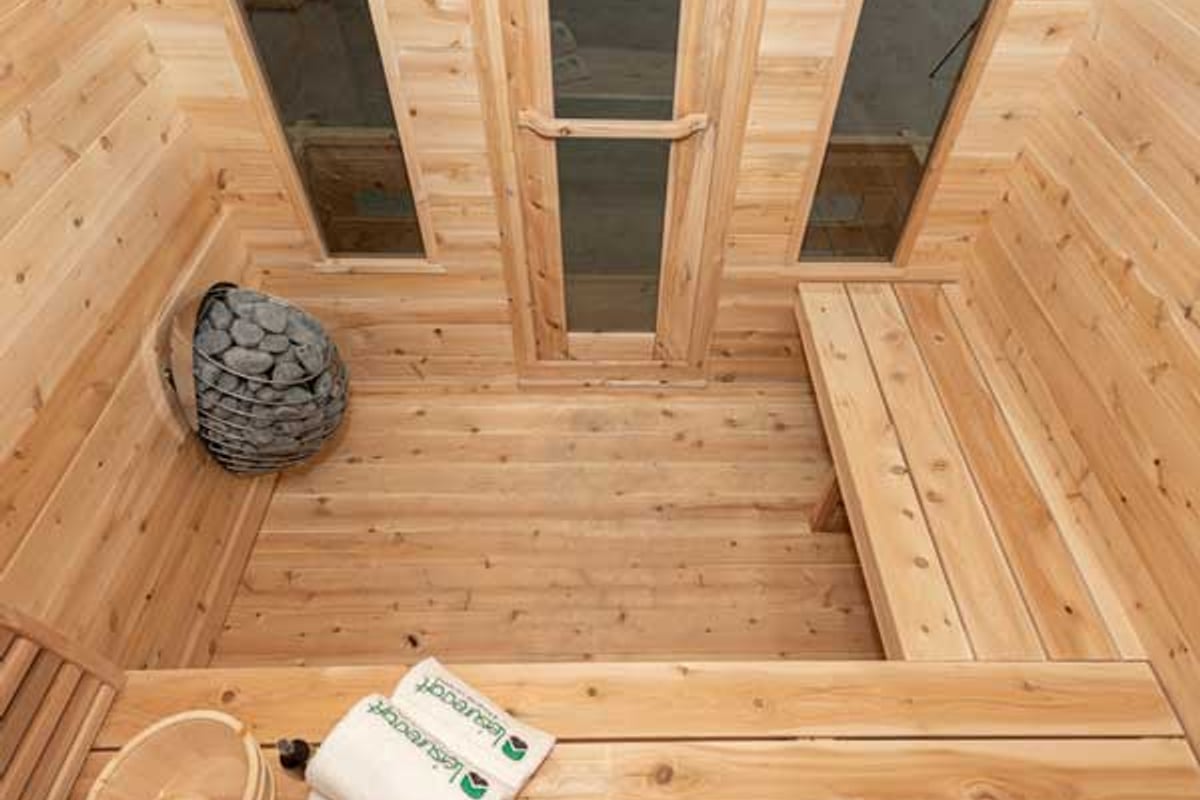
Cabin-style saunas offer more interior headroom and traditional bench layouts. These structures look like small outbuildings and integrate more naturally into landscaped yards. You can add porches, changing rooms, or storage areas.
The LeisureCraft Georgian Cabin Sauna with Porch includes a covered front porch where you can sit between heat rounds, a design that mirrors how Finnish families built their saunas with outdoor seating areas. The Eastern White Cedar construction and large windows bring natural light into the interior while maintaining the thermal mass needed for consistent löyly.
| Sauna Type | Footprint | Assembly | Capacity | Best For |
|---|---|---|---|---|
| Barrel | 6' x 6' avg | Kit, 2-3 people, 6-8 hours | 2-4 people | Compact yards, minimal visual impact |
| Cabin/Box | 6' x 8' to 8' x 10' | Kit or custom, 2-4 people, 8-12 hours | 2-6 people | Families, traditional aesthetics, porch seating |
| Pod/Compact | 4' x 6' avg | Pre-assembled or simple kit | 1-2 people | Solo practice, tight spaces, quick setup |
Pod and Compact Models
Smaller pod saunas serve 1-2 people and require minimal yard space. These work well for solo practice or couples who want daily access without the footprint of a full cabin. The compact size means faster heating and lower energy costs.
The trade-off is reduced social capacity. Finnish sauna culture includes shared sessions, conversation during cooling periods, and the presence of family or friends. A pod sauna prioritizes individual recovery over group experience.
Site Preparation and Foundation
Your garden sauna needs a level, stable base that handles moisture and seasonal ground movement. Most sauna manufacturers recommend either a concrete pad, paver base, or gravel foundation with drainage.
The foundation prevents wood rot, keeps the structure level, and provides access for electrical connections. You'll also need to consider sun exposure, wind direction, and how far you want to walk from your house in winter.
Foundation Options
A 4-inch concrete slab offers the most permanent solution. You pour a level pad slightly larger than the sauna footprint, add expansion joints, and ensure proper drainage slope. This works well for cabin saunas that become permanent landscape features.
Paver blocks on compacted gravel provide good stability with easier installation. You excavate 6 inches, add crushed stone, compact it, then lay pavers in sand. This method allows for future adjustments and handles freeze-thaw cycles better than concrete in some climates.
Steps for paver foundation installation:
- Mark sauna footprint with 12-inch border on all sides
- Excavate 6-8 inches depth, maintaining level base
- Add 4 inches compacted crushed stone (¾-inch minus)
- Layer 2 inches coarse sand, screed level
- Place pavers tight together, check level in all directions
- Sweep polymeric sand into joints, mist to activate
Gravel-only foundations work for lighter barrel saunas. You create a raised gravel bed with landscape edging, ensuring good drainage underneath the structure. This approach costs less but requires more frequent leveling checks.
Electrical Requirements and Heating
Garden saunas run on either electric heaters or wood-fired stoves. Electric heaters require professional installation and proper circuit capacity. Wood-fired options need chimney installation and clearance from combustible materials.
Most residential electric saunas use 240V circuits. A typical 6kW heater for a 4-6 person sauna draws 25 amps and needs a dedicated 40-amp circuit. You'll hire a licensed electrician to run appropriate wire from your main panel to the sauna location.
Electric Heater Sizing
The heater must match your sauna's interior volume. Undersized heaters never reach proper temperature. Oversized heaters cycle on and off too frequently, reducing the consistency of löyly.
Calculate cubic feet (length × width × height), then select heater capacity based on manufacturer charts. Add 20% capacity if you have large glass doors, poor insulation, or use the sauna in very cold climates.
| Sauna Volume | Heater Size | Circuit Required | Heat-Up Time |
|---|---|---|---|
| Up to 200 cu ft | 4-5 kW | 30 amp, 240V | 25-35 min |
| 200-300 cu ft | 6 kW | 40 amp, 240V | 30-40 min |
| 300-400 cu ft | 8 kW | 50 amp, 240V | 35-45 min |
| 400-500 cu ft | 9-10 kW | 60 amp, 240V | 40-50 min |
The heater must hold enough stones to create proper steam. When you throw water on the rocks, you want sustained steam that fills the room, not a quick hiss that disappears. Look for heaters with at least 30-40 pounds of stone capacity.
Wood-Fired Alternative
Wood-fired sauna stoves connect you more directly to the traditional practice. You build a fire, tend it during sessions, and manage the heat by adding logs and adjusting vents. The experience differs from electric convenience, but many people prefer the ritual of fire-tending.
Installation requires chimney clearance through the roof, non-combustible wall protection, and adequate fresh air intake. Most building codes require specific distances from walls and minimum chimney heights. Check local regulations before purchasing a wood stove setup.
Garden Integration and Privacy
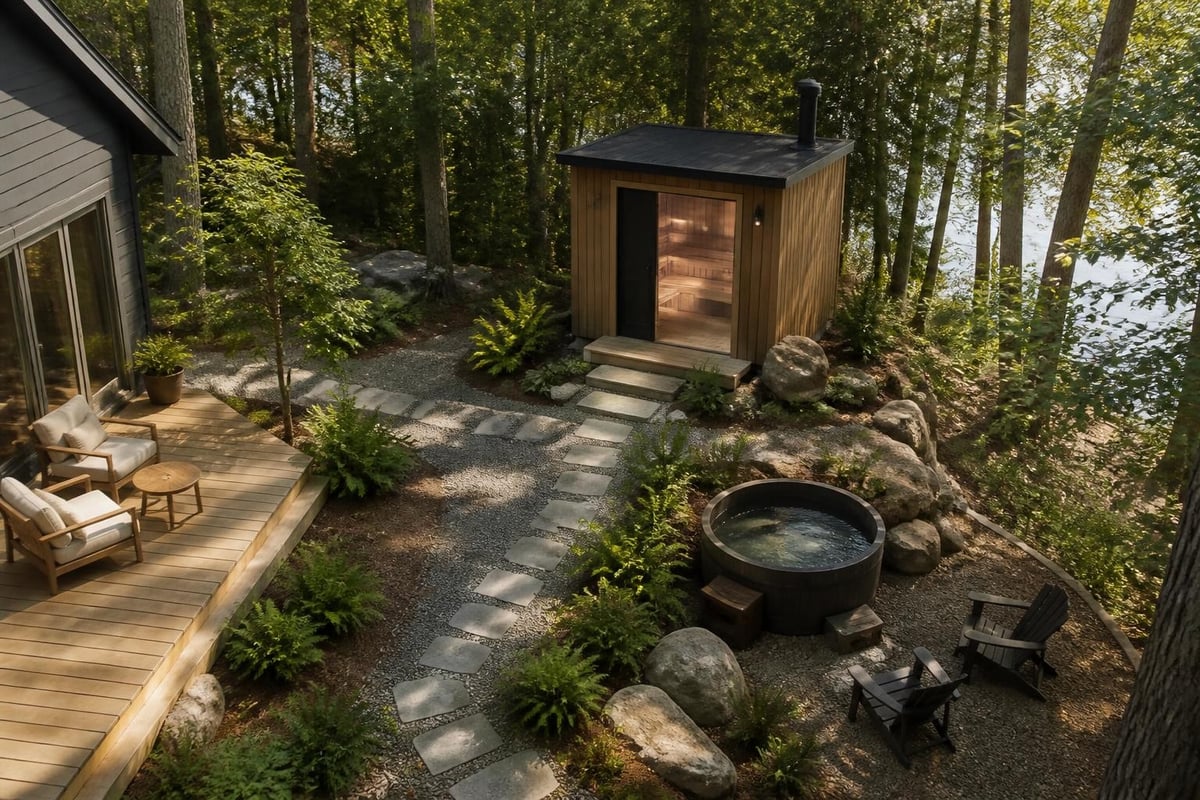
Your sauna location affects how often you'll actually use it. If the walk from your house feels too long, especially in winter, you'll skip sessions. If neighbors have clear sightlines, you might hesitate during cooling periods.
Consider the path you'll take from house to sauna. Is it lit for evening use? Does it stay clear of snow and ice? Will you walk barefoot on that surface? These practical details matter more than catalog photos suggest.
Privacy Screening
Natural screens work better than fences for sauna areas. Evergreen hedges, bamboo plantings, or strategically placed trees create year-round privacy without the visual weight of solid fencing. You want airflow and light while blocking direct sightlines.
If you're adding a cold plunge beside your garden sauna, the privacy needs increase. You'll spend time outside the sauna between heat rounds, often with minimal clothing. Plan the layout so you can move freely without feeling exposed.
The Livingetc guide on overlooked garden design features covers pathway planning and sun orientation, both critical when you're moving between heat and cold in an outdoor setting.
Cold Plunge Placement
The cold plunge should sit close to your garden sauna but not so close that steam or heat affects the water temperature. I place mine 8-10 feet from the sauna door, enough distance to cool slightly while walking but close enough that you don't lose the transition effect.
If you're using a tub-style plunge without a chiller, you'll need garden hose access for filling and a drainage plan for emptying. Chilled units require electrical connections and work year-round regardless of weather.
Cold plunge location considerations:
- Level ground for stability and safe entry
- Electrical access if using chiller unit
- Drainage path for water changes
- Privacy from neighboring properties
- Non-slip pathway from sauna door
- Shade during summer months to reduce heat gain
The outdoor sauna collections at RecoSauna include compatible cold plunge options designed for backyard contrast therapy. You can set up the complete heat-cold cycle in one coordinated space.
Material Selection and Maintenance
Most garden saunas use cedar, hemlock, or Nordic spruce. Cedar resists rot naturally and ages to a silver-gray patina if left untreated. Hemlock costs less but requires more maintenance in wet climates. Nordic spruce offers traditional Finnish aesthetics with good durability.
The wood choice affects how often you'll need to clean, seal, or replace panels. Cedar requires minimal upkeep beyond occasional sweeping and annual exterior inspection. Hemlock benefits from exterior sealant in rainy regions.
Interior Wood Care
Inside the sauna, you want untreated wood that can breathe and release moisture between sessions. Never seal, paint, or varnish interior surfaces. The wood naturally regulates humidity and absorbs excess steam.
Clean benches with a damp cloth and allow full drying between uses. Avoid chemical cleaners that leave residue or odors. If you notice mildew spots, increase ventilation time after sessions or reduce how much water you're throwing on the stones.
Exterior maintenance depends on your climate and aesthetic preferences. Some people prefer the natural weathered cedar look. Others apply exterior wood sealant every 2-3 years to maintain the original color. Both approaches work if the wood stays dry enough to prevent rot.
Heating Costs and Energy Use
Garden saunas cost $1-3 per session in electricity depending on your heater size, local rates, and heat-up time. A 6kW heater running 45 minutes uses about 4.5 kWh. At $0.15 per kWh, that's $0.68. At $0.30 per kWh, it's $1.35.
You reduce costs by insulating the sauna properly, choosing the right heater size, and not overheating between sessions. Some people leave the heater on low between multiple daily uses, which wastes energy. It's more efficient to heat from cold each time.
| Usage Pattern | Monthly kWh | Cost at $0.15/kWh | Cost at $0.30/kWh |
|---|---|---|---|
| 3x weekly, 45 min sessions | 54 kWh | $8.10 | $16.20 |
| 5x weekly, 60 min sessions | 120 kWh | $18.00 | $36.00 |
| Daily, 45 min sessions | 126 kWh | $18.90 | $37.80 |
| Daily, 90 min sessions | 252 kWh | $37.80 | $75.60 |
Wood-fired saunas eliminate electric costs but require steady firewood supply and more hands-on management. You'll use 4-6 pieces of split hardwood per session depending on outdoor temperature and desired heat level.
Building Permits and Regulations
Most municipalities classify garden saunas as accessory structures. This means setback requirements from property lines, height restrictions, and sometimes size limits. Some areas require building permits for any structure over 100-120 square feet or with electrical connections.
Check with your local building department before purchasing. The conversation usually takes 10 minutes and prevents expensive surprises. Ask about:
- Setback distances from property lines, house, and other structures
- Height restrictions for accessory buildings
- Permit requirements for structures with electrical service
- HOA restrictions if applicable
- Fire safety codes for wood-burning installations
The Homebuilding guide on garden saunas covers UK-specific planning permissions, but the general principle applies everywhere. Know your local rules before you pour a foundation.
Health Benefits and Research Context
The cardiovascular benefits of sauna use come from repeated heat exposure combined with cold contrast. Prof. Jari Laukkanen's research at the University of Eastern Finland tracked sauna habits and health outcomes over decades. The findings published in Mayo Clinic Proceedings and covered in BBC, TIME, and the New York Times showed 51% lower cardiovascular death risk for those using sauna 4-7 times weekly compared to once-weekly users.
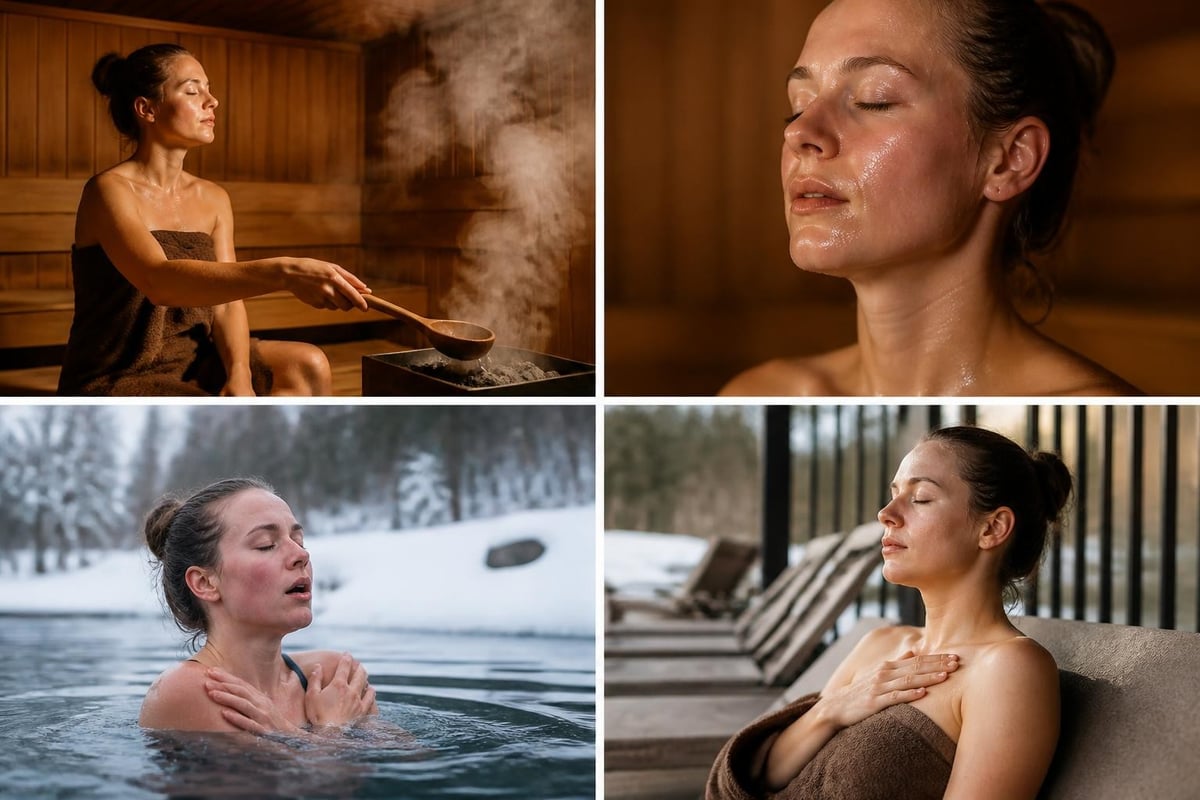
This isn't about sitting in warmth. It's about the stress-recovery cycle that heat and cold create. Your heart rate increases during heat exposure, blood vessels dilate, and circulation improves. The cold plunge after sauna triggers vasoconstriction, then rebound dilation. That pattern, repeated regularly, strengthens cardiovascular adaptation.
You can read more about the general health benefits of sauna use from Cleveland Clinic's overview, which covers stress reduction, improved heart health, and muscle relaxation.
The Role of Löyly
Löyly, the steam from throwing water on hot sauna stones, is central to the Finnish practice. It's not just about air temperature. The steam carries heat to your skin more effectively than dry air, triggering deeper sweating and stronger physiological response.
When you throw water on properly heated stones, the room fills with soft, breathable steam. The humidity rises temporarily, then the ventilation system gradually clears it. That cycle creates the distinctive feeling of a Finnish sauna compared to dry heat alternatives.
Many people practicing contrast therapy at home, such as those organizing team-building activities through platforms like Innobook, appreciate how traditional sauna sessions can complement group wellness experiences.
Choosing Between Traditional and Infrared
Traditional steam saunas and infrared saunas work through different mechanisms. Steam saunas heat the air to 160-190°F and rely on löyly for the full experience. Infrared saunas use radiant heat panels to warm your body directly, typically at 120-140°F air temperature.
If you want the Finnish practice of heat-cold contrast with steam, choose traditional. If you prefer lower air temperature without humidity, infrared works well. Both can fit in a garden setting, but the experience differs substantially.
Why I Prefer Traditional Heat
I grew up with steam and cold water. That's the pattern my body knows, the ritual that signals recovery time. Infrared feels gentle and works for many people, but it doesn't create the same steam-filled environment where you control the humidity by throwing water.
The health research Prof. Laukkanen conducted measured traditional Finnish sauna use, not infrared. We can't assume identical benefits from different heating methods, though infrared does offer some cardiovascular and relaxation effects.
If you're interested in comparing traditional and infrared approaches, Healthline's article on infrared sauna benefits provides a balanced comparison of both methods.
Budget and Investment Range
Garden saunas range from $5,500 to over $30,000 depending on size, construction quality, heating method, and features. A basic 4-person barrel sauna kit costs $5,500-8,000. Mid-range cabin saunas with porches or luxury interiors run $10,000-18,000. Premium outdoor saunas with changing rooms, high-end cedar, and wood-burning capability reach $20,000-35,000.
You'll also budget for foundation work ($500-2,000), electrical installation ($800-2,500), and optional cold plunge addition ($2,000-8,000). The complete backyard contrast therapy setup typically costs $10,000-25,000 installed.
Many customers don't realize that sauna purchases may qualify for HSA or FSA reimbursement with a Letter of Medical Necessity from your healthcare provider. This doesn't reduce the upfront cost but allows you to use pre-tax health savings for the purchase.
What You Get at Different Price Points
Entry-level barrel saunas ($5,500-7,000) include:
- 2-4 person capacity
- Cedar or hemlock construction
- Basic electric heater
- Kit assembly required
- Standard ventilation
- One-year warranty
Mid-range cabin saunas ($10,000-15,000) add:
- Larger interior space (6x8 feet typical)
- Premium cedar grades
- Better insulation
- Porch or changing area
- Upgraded heater with more stone capacity
- Tempered glass doors and windows
- Extended warranties (2-5 years)
Premium outdoor saunas ($18,000-32,000) offer:
- Custom sizing options
- Luxury wood species and finishes
- Multiple rooms (sauna, changing, storage)
- Wood-burning stove compatibility
- Architectural design details
- Professional assembly available
- Lifetime structural warranties
The cabin and box sauna collection at RecoSauna includes models across this range, with transparent pricing and specifications so you can compare based on actual features rather than marketing claims.
Year-Round Use and Winter Considerations
A proper garden sauna works every month of the year. In Eastern Finland, we used ours most in winter. The contrast between 180°F sauna heat and -10°F outside air creates the strongest physiological response. Snow feels better than any cold plunge.
Your sauna needs good insulation in the walls, roof, and floor. Most quality outdoor saunas include 2-3 inches of insulation, vapor barriers, and weather-tight door seals. This keeps heat loss minimal and reduces the energy needed to maintain temperature.
Winter use considerations:
- Clear snow from pathway before sessions
- Keep door threshold free of ice buildup
- Allow longer heat-up time in very cold weather
- Ensure adequate ventilation doesn't freeze shut
- Check that cold plunge remains accessible or has ice-free heating
- Stock firewood under cover for wood-fired units
Winter sauna followed by rolling in snow or jumping into an ice hole is the traditional Finnish version of contrast therapy. If you have snow cover in your region, you already have the cold component. Just clear a safe area near the sauna door.
Setup Timeline and Installation
Most garden sauna kits arrive on a freight truck and require 2-4 people to assemble over 6-12 hours. You'll need basic tools: cordless drill, level, square, tape measure, rubber mallet, and ladder. Some manufacturers include pre-hung doors and pre-assembled wall panels to speed installation.
Plan your project across two days minimum. Day one: prepare foundation and organize components. Day two: assemble structure, install heater, complete electrical connections. This gives concrete time to cure or allows you to adjust the foundation if initial leveling isn't perfect.
Professional vs. DIY Assembly
Sauna kit assembly is achievable for anyone comfortable with basic construction. The panels fit together with tongue-and-groove joints. Roof sections bolt together following numbered diagrams. Door frames install with provided hardware.
Professional assembly costs $1,500-3,500 depending on your location and sauna complexity. This makes sense if you're not confident with tools, can't gather helpers for lifting, or want warranty coverage that requires professional installation.
I assembled my first outdoor sauna with my father when I was 14. The kit included clear instructions, pre-cut components, and all fasteners. We finished in one weekend. The process isn't complicated if you work methodically and don't rush.
Medical News Today's overview of sauna benefits and risks provides helpful context about safe usage practices once your garden sauna is installed.
Adding Sauna to Existing Landscape
Your garden sauna becomes part of your outdoor living space. Consider how it relates to existing decks, patios, fire pits, or seating areas. Some people create a wellness zone that includes sauna, cold plunge, and outdoor shower in one defined area.
Landscaping around the sauna improves both aesthetics and functionality. Gravel paths stay cleaner than grass. Native plants reduce maintenance while providing natural screening. Outdoor lighting on timers makes evening sessions safer and more inviting.
The Ideal Home guide on turning your garden into a spa offers broader context for integrating wellness features into existing outdoor spaces.
Pathways and Lighting
Create a clear, level path from your house to the sauna. This route should accommodate wet feet and work in darkness. Gravel, pavers, or composite decking all work better than grass or mulch, which become muddy or stick to wet skin.
Install low-voltage LED path lights along the route. Solar options eliminate wiring but may not provide enough light in winter when days are short and clouds are heavy. Wired LED fixtures on timers or motion sensors ensure the path stays visible whenever you use the sauna.
Consider where you'll set towels, robes, or drinks during sessions. A small bench or shelf near the sauna door, protected from rain, keeps items dry and accessible.
A garden sauna brings the Finnish practice of löyly and contrast therapy to your daily routine without requiring travel or memberships. The combination of proper heat, steam from water on stones, and cold exposure creates the cardiovascular and recovery benefits documented in decades of research. Petri at RecoSauna grew up practicing this on Lake Saimaa and now helps families across North America set up authentic contrast therapy at home, answering every question personally and offering authorized LeisureCraft, Orivon, and Lumin saunas with free shipping.
Share:
Indoor Sauna: Finnish Steam, Modern Spaces (2026 Guide)
2 Person Sauna: A Finnish Guide to Choosing Yours