
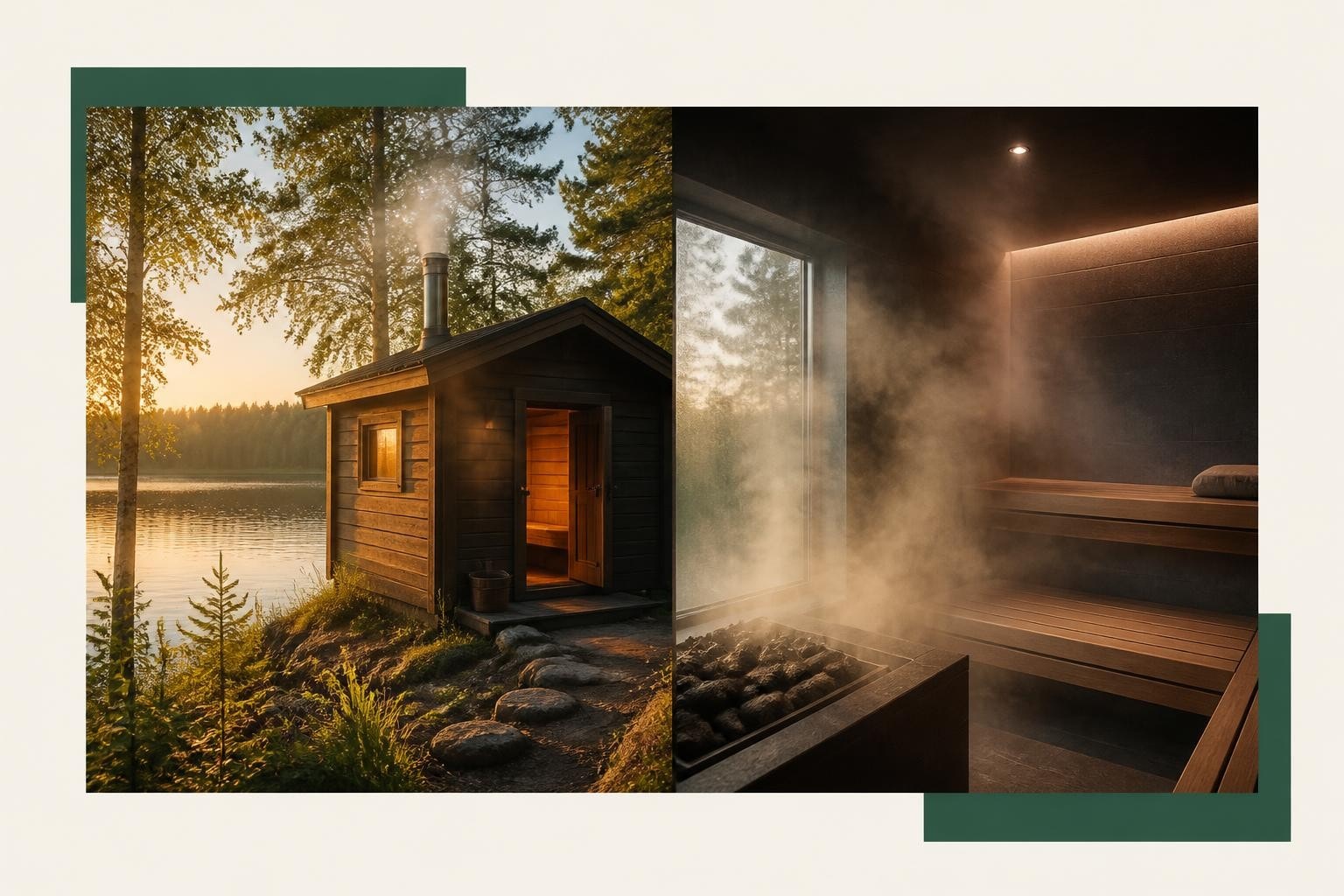
A traditional sauna and a steam room deliver two different experiences. A sauna uses dry heat, typically 150 to 195°F with low humidity, punctuated by brief bursts of steam when water meets hot stones. A steam room operates at lower temperatures, around 110 to 120°F, with near-100% humidity from a steam generator. The choice between a sauna steam room setup depends on your space, preferences, and how you recover. One uses fire and stone. The other uses water vapor. Neither is inherently better, but they are not interchangeable.
What Defines a Traditional Sauna
A traditional sauna heats a small insulated room using an electric or wood-fired heater topped with stones. The stones store thermal mass and radiate steady dry heat. When you ladle water onto the stones, you create löyly, a sudden pulse of humid heat that rises and spreads across your skin before dissipating. The cycle repeats: dry heat, löyly, dry heat again.
This rhythm is central to Finnish sauna practice. The room stays hot and mostly dry, allowing sweat to evaporate freely and cool your skin. Healthline notes that regular sauna use has been associated with cardiovascular benefits in observational studies, though causation is not established.
Key characteristics of a traditional sauna:
- Temperature: 150 to 195°F
- Humidity: 10 to 20%, rising briefly during löyly
- Heat source: Electric or wood-fired heater with stones
- Construction: Insulated wood room, often cedar or hemlock
- Session length: 10 to 20 minutes, multiple rounds
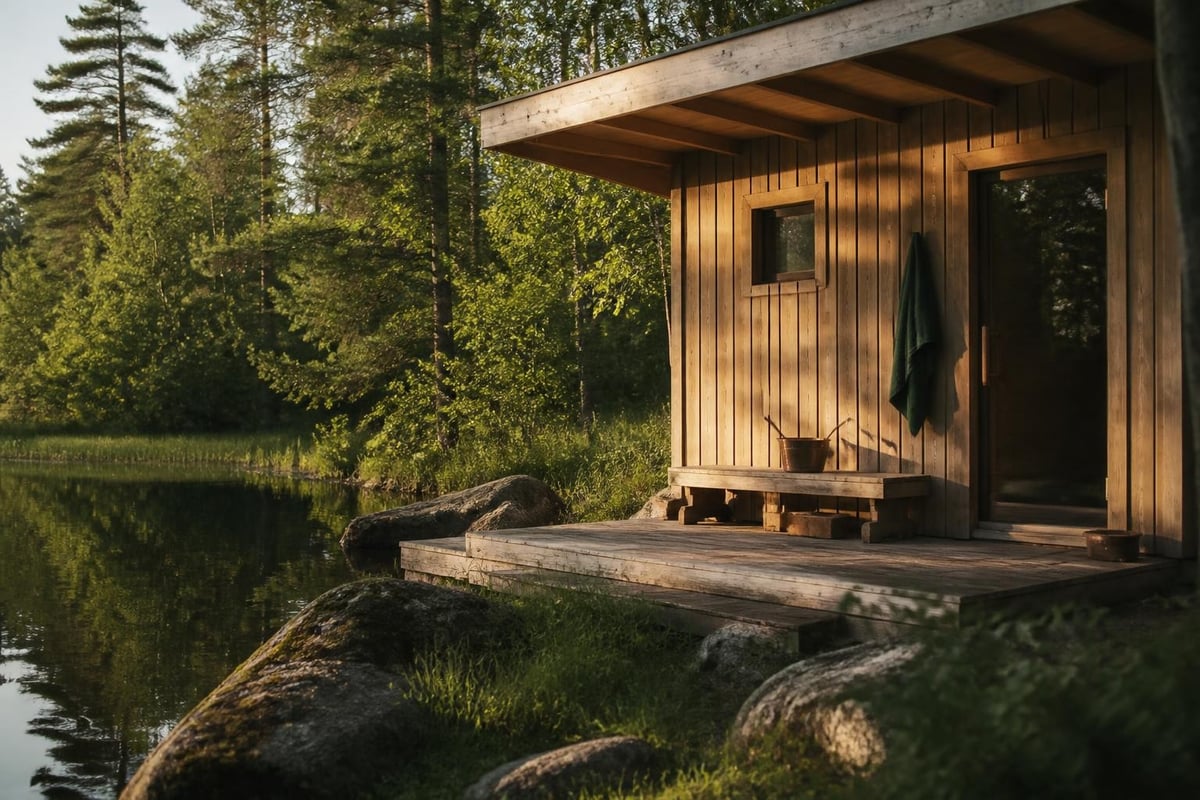
Traditional saunas can be installed indoors or outdoors. Indoor models plug into standard 120V or require 240V depending on heater size. Outdoor models range from barrel designs to cabin-style structures with porches.
What Defines a Steam Room
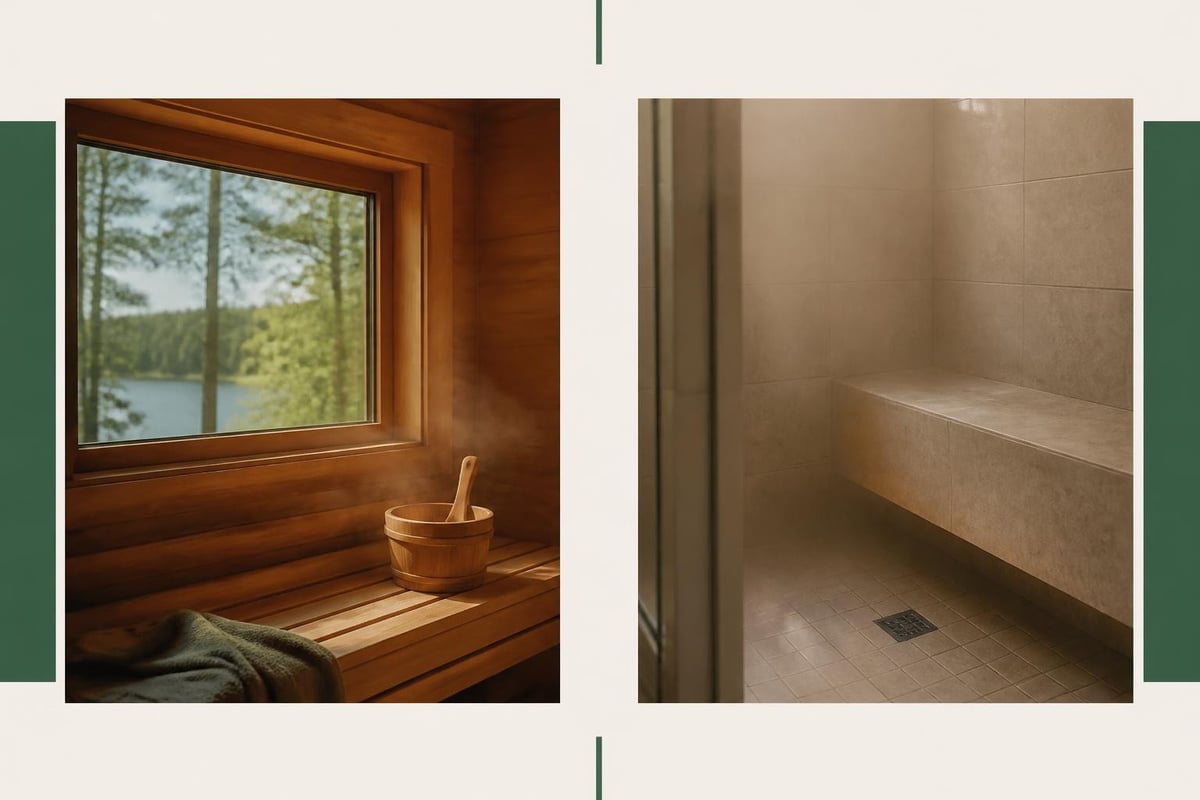
A steam room generates continuous moist heat using a steam generator that boils water and releases vapor into a sealed, waterproof enclosure. The air remains saturated. Surfaces stay wet. Sweat does not evaporate, so your skin feels slick and hot.
Steam rooms operate at lower temperatures than saunas because high humidity makes heat feel more intense. The body cannot cool itself through evaporation, so thermal stress builds faster. Medical News Today explains that both saunas and steam rooms may support circulation and skin health, though the mechanisms differ.
Key characteristics of a steam room:
- Temperature: 110 to 120°F
- Humidity: 95 to 100%
- Heat source: Electric steam generator
- Construction: Sealed tile or acrylic enclosure
- Session length: 10 to 15 minutes
Steam rooms require waterproof materials like tile, glass, or acrylic. They need a drain, a dedicated steam generator, and ventilation to prevent mold. Installation is more involved than a traditional sauna and typically requires professional plumbing and electrical work.
Sauna Steam Room Comparison Table
| Feature | Traditional Sauna | Steam Room |
|---|---|---|
| Temperature | 150–195°F | 110–120°F |
| Humidity | 10–20% (spikes during löyly) | 95–100% |
| Heat Type | Dry radiant heat | Wet vapor heat |
| Installation | Indoor or outdoor, simpler setup | Indoor only, waterproof enclosure |
| Maintenance | Wood care, stone replacement | Drain cleaning, mold prevention |
| Session Feel | Dry skin, breathable heat | Humid skin, intense warmth |
How Heat Delivery Affects Your Experience
The core difference between a sauna steam room setup is how heat reaches your body. In a sauna, dry air allows sweat to evaporate. This cools your skin and regulates core temperature naturally. The heat feels breathable. You can stay longer and tolerate higher temperatures.
In a steam room, saturated air prevents evaporation. Sweat coats your skin but does not cool you. The heat feels denser and more oppressive. Sessions are shorter because your body cannot self-regulate as effectively.
Neither method is superior. Some people prefer the dry intensity of a sauna. Others find the enveloping warmth of steam more soothing. WebMD discusses how steam rooms may help loosen mucus and open airways, which dry saunas do not address as directly.
Breathing and Comfort
Steam rooms are often recommended for respiratory comfort because moist air soaks into nasal passages and lungs. This can feel soothing during a cold or after exercise in dry winter air. Saunas offer the opposite: hot, dry air that some find easier to breathe deeply, especially during löyly when humidity briefly rises.
If you have asthma or chronic respiratory conditions, consult your doctor before using either. Steam rooms may trigger symptoms in some individuals, while dry sauna heat may irritate others.
Installation and Space Requirements
A traditional sauna can be installed almost anywhere. Indoor models fit in basements, spare bedrooms, or garage conversions. Outdoor models anchor in backyards, patios, or garden spaces. Most electric saunas require a 240V circuit, though smaller models may run on 120V.
Steam rooms demand waterproof construction from the ground up. Walls, floors, and ceilings must resist constant moisture. You need a steam generator, a water line, a drain, and exhaust ventilation. Retrofitting a bathroom or basement corner is possible but involves significant plumbing and tiling work.
Installation considerations:
- Sauna: Wood assembly, electrical hookup, ventilation for indoor models
- Steam room: Waterproof enclosure, steam generator, plumbing, drainage, mold-resistant materials
For homeowners with yards, an outdoor sauna offers flexibility without remodeling. For those with existing bathrooms or dedicated indoor wellness spaces, a steam room may integrate more naturally if you are already planning tile work.
Maintenance and Longevity
Traditional saunas built from cedar or hemlock require minimal upkeep. Wipe benches occasionally, refresh stones every few years, and ensure proper ventilation to prevent wood rot. Most outdoor saunas weather naturally and develop a silver patina over time. Indoor models stay protected and may last decades with little intervention.
Steam rooms require active moisture management. Wipe down surfaces after each session. Clean drains regularly. Inspect grout and seals for mold. Run exhaust fans to dry the enclosure between uses. Neglect leads to mildew, damaged tiles, and generator corrosion.
| Maintenance Task | Sauna | Steam Room |
|---|---|---|
| Post-Session Cleaning | Occasional wipe-down | Wipe surfaces every session |
| Ventilation | Passive air flow | Active exhaust fan |
| Mold Risk | Low (dry heat) | High (constant moisture) |
| Long-Term Durability | Decades with minimal care | Requires ongoing attention |
Energy Use and Operating Cost
Electric saunas draw power to heat stones and maintain temperature. A typical home sauna uses 4 to 8 kW and reaches temperature in 30 to 45 minutes. Sessions last 10 to 20 minutes, often repeated two or three times with cool-down breaks between. Total energy use per session varies by heater size and insulation quality.
Steam generators consume energy to boil water continuously. A residential unit typically uses 6 to 12 kW and produces steam within 5 to 10 minutes. Because sessions are shorter and the room is smaller, total energy use per session may be comparable to a sauna. However, steam generators require ongoing water supply and drainage, adding to utility costs over time.
Neither option is prohibitively expensive to operate, but saunas offer more control. You heat on demand and shut down between rounds. Steam rooms run continuously during sessions and require purging afterward to clear moisture.
Choosing Between a Sauna and a Steam Room
Start with how you plan to use the space. If you want a daily recovery ritual that fits into a backyard routine, a traditional sauna offers simplicity and flexibility. If you prefer humid heat and already have an indoor space with plumbing access, a steam room may suit you.
Consider a traditional sauna if:
- You have outdoor space or a basement
- You prefer dry heat and breathable air
- You want lower maintenance and longer durability
- You value the ritual of löyly and multiple rounds
- You plan to pair it with cold plunges
Consider a steam room if:
- You want humid heat for respiratory comfort
- You have an existing bathroom or wet room
- You prefer shorter, single sessions
- You are comfortable with active maintenance
- You already plan tile or plumbing work
Some homeowners install both, using the sauna for regular recovery and the steam room for respiratory relief during colder months. Others combine a sauna with a cold plunge to practice full contrast therapy. Research suggests that both heat modalities may support circulation and relaxation, though individual response varies.
Sauna Heater Sizing and Stone Mass
If you choose a traditional sauna, heater sizing determines session quality. A properly sized heater brings the room to temperature quickly and maintains steady heat during löyly. Undersized heaters struggle to recover after water hits the stones, leaving you with lukewm warmth instead of crisp heat.
Heater output is measured in kilowatts. Larger rooms need more power. Most North American home saunas use Harvia heaters, known for reliable performance and stone capacity. Stone mass matters as much as wattage. More stones store more heat and deliver smoother löyly.
Heater sizing guidelines:
- Small sauna (4x4 to 5x5 feet): 4 to 6 kW
- Medium sauna (5x6 to 6x6 feet): 6 to 8 kW
- Large sauna (6x7 feet and up): 8 to 10 kW
RecoSauna matches heaters to sauna size as part of every installation. Petri reviews room dimensions, insulation, and ceiling height before recommending a heater. This removes guesswork and ensures your sauna performs as intended.
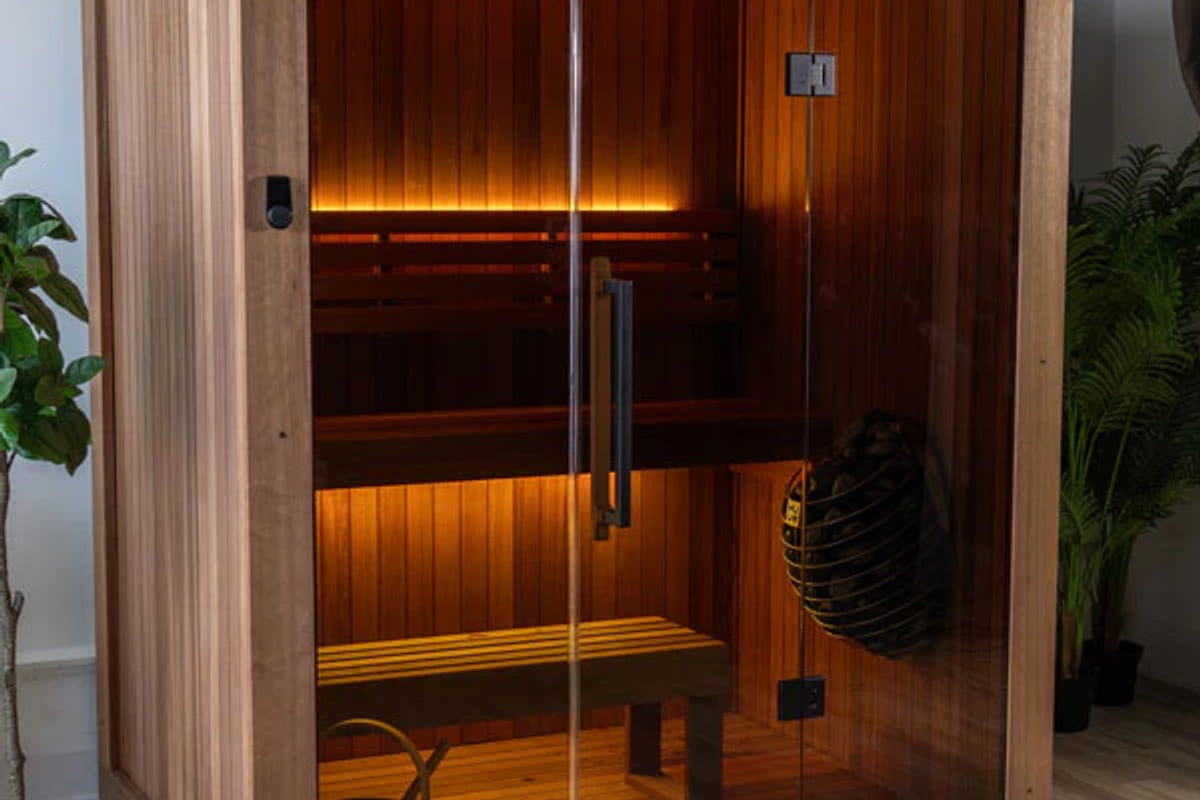
For indoor installations, a 2-person sauna typically uses a 4 to 6 kW heater and fits in a spare bedroom or basement corner. The LeisureCraft Loft CT Element Indoor Sauna is built from Thermo Grandis, a moisture-resistant wood treated in Ontario, and features a full glass front with warm interior lighting. It is the only indoor traditional sauna in its class, designed for couples and families who want authentic Finnish steam heat in a modern indoor space.
Growing Up With Sauna on Lake Saimaa
I grew up on the shore of Lake Saimaa in Eastern Finland, where sauna was not optional. Every Friday evening, we heated the wood-fired sauna beside the water. My grandfather taught me to ladle water slowly, letting each wave of löyly settle before adding more. After three rounds, we walked into the lake, even in winter through a hole in the ice. That rhythm, heat and cold, was not wellness. It was life.
Frequently Asked Questions
Can you use a sauna like a steam room?
No. A traditional sauna and a steam room deliver different heat experiences. A sauna uses dry heat with brief bursts of humidity from water on stones. A steam room maintains constant near-100% humidity. You cannot replicate steam room conditions in a sauna, and adding too much water to a sauna can damage wood and reduce comfort.
Which is better for your skin, sauna or steam room?
Both may support skin health, though through different mechanisms. Healthline reports that steam rooms may help open pores and cleanse skin through sustained moisture, while saunas promote sweating that flushes impurities. Research shows association, not proof. Individual response varies.
How long should you stay in a sauna steam room?
In a traditional sauna, sessions typically last 10 to 20 minutes, repeated two to three times with breaks. In a steam room, sessions are shorter, usually 10 to 15 minutes, because high humidity intensifies heat stress. Healthline advises listening to your body and exiting if you feel dizzy or uncomfortable.
Do you need special construction for a steam room?
Yes. Steam rooms require fully waterproof enclosures, typically built with tile, acrylic, or glass. You need a steam generator, plumbing for water supply, a drain, and exhaust ventilation. Traditional saunas use insulated wood construction and simpler electrical hookups, making them easier to install in most homes.
Can you install a sauna outdoors?
Yes. Outdoor saunas are common in Finland and increasingly popular in North America. Barrel saunas, cabin saunas, and pod designs all work outdoors. They require a level foundation, electrical access for the heater, and proper drainage. Outdoor saunas pair naturally with cold plunges for full contrast therapy.
Choosing between a traditional sauna and a steam room depends on your space, preferences, and how you plan to recover. A sauna offers dry heat, flexible installation, and lower maintenance. A steam room delivers humid warmth in a sealed enclosure with more involved setup. At RecoSauna, Petri answers every question personally and matches equipment to your home, climate, and goals. Authorized dealer for LeisureCraft, Golden Designs, and Harvia heaters. Free shipping across the USA and Canada. Ask Petri About Your Sauna.
Share:
Backyard Sauna: Complete Guide for Homeowners in 2026
Best Outdoor Sauna: Expert Guide from Finland (2026)