

Athletes and fitness enthusiasts constantly search for effective recovery methods to reduce muscle soreness, accelerate healing, and optimize performance. While traditional approaches like stretching, nutrition, and sleep remain essential, sauna therapy has emerged as a powerful complementary tool. Understanding the science behind sauna for muscle recovery can help you integrate this practice strategically into your training regimen, maximizing its benefits while avoiding common mistakes.
The Science Behind Heat Therapy and Muscle Repair
Heat exposure triggers multiple physiological responses that directly support muscle recovery. When you enter a sauna, your core body temperature rises, prompting your cardiovascular system to increase blood circulation throughout your body. This enhanced blood flow delivers oxygen and essential nutrients to damaged muscle tissues while simultaneously removing metabolic waste products that accumulate during intense exercise.
Research demonstrates that regular sauna sessions activate heat shock proteins (HSPs), specialized molecules that protect cells from stress and facilitate protein repair. These proteins play a crucial role in maintaining cellular integrity and promoting faster recovery from exercise-induced damage. Studies on different bathing methods have examined how various heat therapy approaches impact recovery from local muscle fatigue, revealing measurable physiological benefits.
The temperature range matters significantly. Traditional saunas typically operate between 150-195°F, while infrared saunas function at lower temperatures (120-140°F) while still penetrating deep into muscle tissue. Both approaches offer distinct advantages for recovery, depending on your tolerance and specific goals.

Cardiovascular Adaptations and Performance Enhancement
Beyond immediate recovery benefits, consistent sauna use creates lasting cardiovascular adaptations. Your heart rate increases during heat exposure, similar to moderate-intensity exercise, strengthening your cardiovascular system over time. This phenomenon, known as cardiovascular conditioning, can translate into improved athletic performance.
Recent research on sauna sessions and running performance found that 30-minute post-exercise sauna sessions enhanced endurance capacity and reduced marathon completion times. Athletes who incorporated regular sauna use experienced increased plasma volume, improved thermoregulation, and enhanced oxygen delivery to working muscles.
| Cardiovascular Benefit | Mechanism | Recovery Impact |
|---|---|---|
| Increased Heart Rate | Mimics moderate exercise | Strengthens cardiovascular system |
| Enhanced Blood Flow | Vasodilation response | Accelerates nutrient delivery |
| Plasma Volume Expansion | Fluid regulation adaptation | Improves endurance capacity |
| Improved Thermoregulation | Heat adaptation | Enhances performance in warm conditions |
Reducing Muscle Soreness and Inflammation
Delayed onset muscle soreness (DOMS) typically peaks 24-72 hours after intense exercise, limiting training capacity and overall performance. Sauna for muscle recovery addresses this challenge through multiple pathways. The heat promotes muscle relaxation by reducing tension in muscle fibers and connective tissues, while simultaneously decreasing inflammatory markers that contribute to post-exercise discomfort.
Scientific evidence on sauna and recovery highlights the role of reduced inflammation in accelerating the healing process. Heat exposure modulates inflammatory cytokines, creating a more favorable environment for tissue repair. This anti-inflammatory effect complements the body's natural recovery mechanisms without suppressing them entirely.
Optimizing Lactic Acid Clearance
Contrary to popular belief, lactic acid itself doesn't cause prolonged muscle soreness, but its removal still matters for recovery. Enhanced blood circulation during sauna sessions helps clear lactate and other metabolic byproducts more efficiently. Research on sauna and muscle recovery demonstrates that improved circulation facilitates faster removal of waste products while delivering recovery-promoting nutrients to stressed tissues.
The timing of your sauna session influences these effects. Immediate post-workout sauna use capitalizes on already-elevated circulation, potentially enhancing metabolite clearance during the critical recovery window.
Comparing Sauna Types for Recovery Applications
Different sauna technologies offer unique advantages for muscle recovery. Understanding these distinctions helps you select the most appropriate option for your needs and preferences.
Traditional Finnish Saunas generate dry heat through electric or wood-burning heaters, creating an intense thermal environment. The high temperatures trigger robust cardiovascular responses and profuse sweating, which some athletes prefer for recovery sessions.
Infrared Saunas use infrared light to directly heat your body rather than warming the surrounding air. This approach allows for longer, more comfortable sessions at lower ambient temperatures while still providing deep tissue penetration. For those seeking muscle recovery benefits without extreme heat exposure, infrared options like the Lumin Infrared Sauna Two offer an accessible entry point with straightforward home installation.
Barrel Saunas combine traditional heating methods with superior heat distribution due to their cylindrical design. The curved structure promotes optimal air circulation, creating consistent temperatures throughout the space.
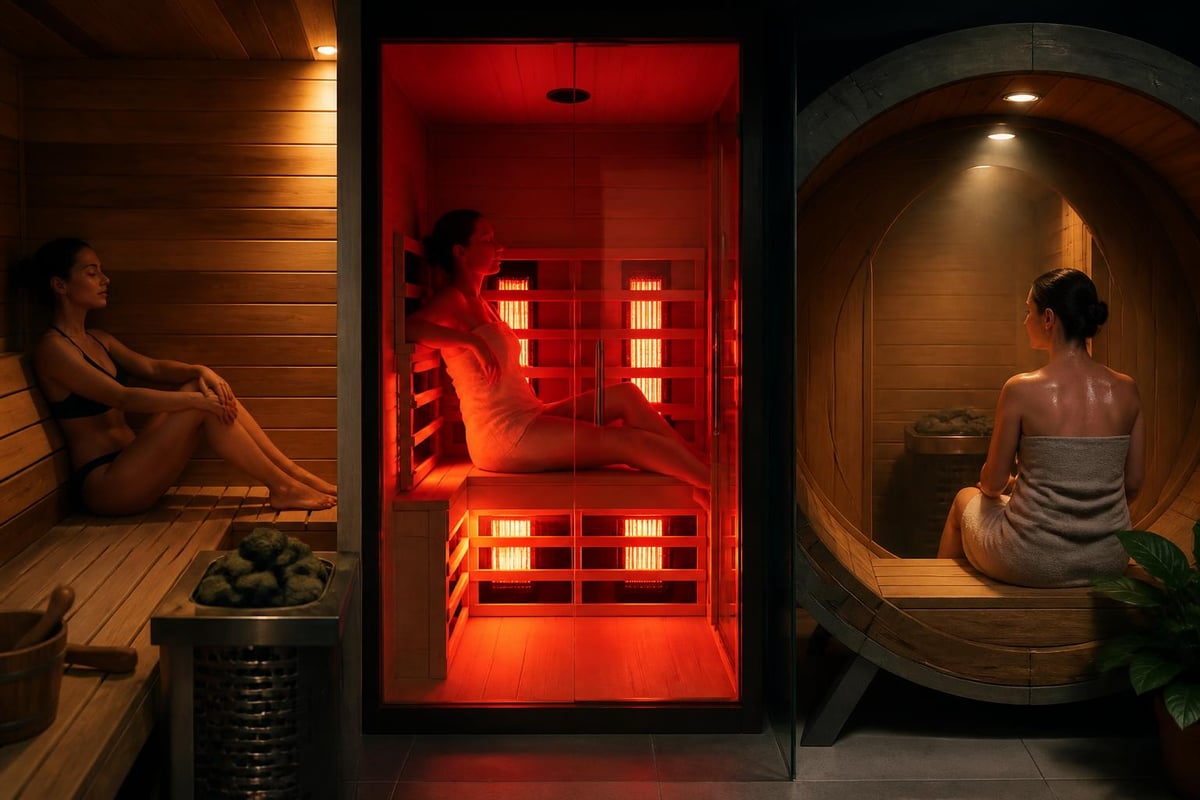
| Sauna Type | Temperature Range | Heat Delivery | Best For |
|---|---|---|---|
| Traditional Finnish | 150-195°F | Air convection | Intense cardiovascular stimulus |
| Infrared | 120-140°F | Direct infrared radiation | Gentle, prolonged sessions |
| Barrel | 150-180°F | Optimized air circulation | Efficient heat distribution |
Practical Protocols for Maximum Recovery Benefits
Implementing sauna for muscle recovery requires strategic timing and proper technique. Science-backed protocols suggest specific approaches to maximize benefits while minimizing risks.
Post-Workout Timing and Duration
Immediate Post-Exercise (0-30 minutes after training):
- Duration: 15-20 minutes
- Temperature: Lower range (120-160°F)
- Benefits: Enhanced blood flow during recovery window
- Hydration: Critical due to combined exercise and heat fluid loss
Later Same Day (3-6 hours post-exercise):
- Duration: 20-30 minutes
- Temperature: Full range (120-195°F)
- Benefits: Deep relaxation, stress reduction
- Hydration: Maintain consistent fluid intake
Next Day Recovery:
- Duration: 20-30 minutes
- Temperature: Moderate (140-175°F)
- Benefits: Continued inflammation reduction
- Hydration: Standard pre-sauna protocol
Session frequency matters as much as individual duration. Most research suggests 3-5 sauna sessions per week provide optimal recovery benefits without overtaxing your system. Guidelines on sauna therapy for muscle recovery emphasize consistency over intensity, recommending gradual adaptation rather than aggressive protocols.
Hydration and Safety Considerations
Proper hydration forms the foundation of safe, effective sauna use. Heat exposure increases fluid loss through sweating, which can reach 1-2 liters per session depending on temperature and duration.
Pre-Sauna Hydration:
- Consume 16-20 ounces of water 30-60 minutes before entering
- Avoid alcohol for at least 4 hours prior
- Consider electrolyte supplementation for longer sessions
During Sauna:
- Keep water accessible
- Sip periodically if session exceeds 15 minutes
- Exit immediately if experiencing dizziness or nausea
Post-Sauna Rehydration:
- Drink 20-24 ounces per pound of body weight lost
- Include electrolyte sources (sodium, potassium, magnesium)
- Monitor urine color as hydration indicator
Combining Sauna with Cold Therapy
Contrast therapy, alternating between hot and cold exposure, has gained popularity among athletes seeking enhanced recovery. The combination of outdoor sauna and cold plunge creates a powerful recovery protocol through complementary mechanisms.
Heat exposure from sauna use dilates blood vessels and increases circulation, while cold immersion constricts vessels and reduces inflammation. This alternating vasodilation and vasoconstriction creates a "pumping" effect that may enhance waste removal and nutrient delivery more effectively than either modality alone.
Contrast Therapy Protocol:
- Begin with 10-15 minutes in the sauna
- Exit and immediately enter cold plunge (50-60°F) for 2-3 minutes
- Return to sauna for another 10-15 minutes
- Repeat cycle 2-3 times total
- Always end with cold exposure to reduce inflammation
Post-workout sauna benefits become even more pronounced when strategically combined with cold therapy, though this approach requires proper adaptation and may not suit everyone immediately.

Nervous System Recovery and Sleep Quality
Physical muscle repair represents only one component of comprehensive recovery. Your nervous system requires restoration after intense training, and sauna for muscle recovery extends benefits to this often-overlooked aspect. Heat exposure activates the parasympathetic nervous system, shifting your body from "fight or flight" to "rest and digest" mode.
This parasympathetic activation promotes relaxation and stress reduction, both critical for optimal recovery. Elevated cortisol from intense training can impair muscle growth and recovery when chronic; regular sauna use helps modulate stress hormone levels, creating a more favorable hormonal environment for adaptation.
Sleep Enhancement Through Heat Exposure
The relationship between sauna use and sleep quality offers additional indirect recovery benefits. Your body temperature naturally drops in the evening, signaling sleep readiness. When you take a sauna session 1-2 hours before bedtime, your body temperature rises significantly, then drops more rapidly afterward, potentially enhancing this natural sleep signal.
Research examining thermal therapy and recovery indicates that improved sleep quality translates to better muscle protein synthesis, hormone optimization, and overall recovery capacity. Athletes who incorporate evening sauna sessions often report deeper, more restorative sleep patterns.
Understanding Limitations and Realistic Expectations
While sauna for muscle recovery offers substantial benefits, understanding its limitations prevents disappointment and promotes realistic integration into your recovery strategy. Expert analysis of sauna's role in muscle building clarifies that heat therapy supports recovery but doesn't replace fundamental training principles.
What Sauna CAN Do:
- Reduce perceived muscle soreness
- Enhance blood flow and nutrient delivery
- Accelerate metabolic waste removal
- Improve cardiovascular adaptations
- Support stress reduction and sleep quality
What Sauna CANNOT Do:
- Build muscle mass directly
- Replace proper nutrition or rest days
- Heal acute injuries or tears
- Compensate for inadequate training recovery time
- Substitute for medical treatment when needed
Sauna works best as part of a comprehensive recovery approach that includes adequate sleep (7-9 hours), proper nutrition with sufficient protein and micronutrients, strategic rest days, and appropriate training periodization. Heat therapy enhances these foundational elements rather than replacing them.
Integrating Sauna into Your Training Cycle
Strategic placement of sauna sessions within your training cycle maximizes benefits while avoiding interference with adaptation. Different training phases present distinct opportunities for heat therapy integration.
Heavy Training Blocks
During periods of high training volume or intensity, daily or near-daily sauna sessions can support recovery between challenging workouts. Keep sessions moderate in duration (15-20 minutes) to avoid additional stress on an already-taxed system.
Deload Weeks
Planned deload periods offer ideal opportunities for extended sauna protocols. With reduced training stress, you can safely implement longer sessions (25-30 minutes) or experiment with contrast therapy without compromising subsequent workouts.
Competition Preparation
In the weeks leading to important competitions, adjust sauna frequency based on your response. Some athletes reduce sessions to ensure full freshness, while others maintain regular protocols that have proven beneficial during training.
| Training Phase | Sauna Frequency | Session Duration | Primary Goal |
|---|---|---|---|
| Heavy Volume | 5-7x per week | 15-20 minutes | Daily recovery support |
| Moderate Training | 3-5x per week | 20-25 minutes | Consistent adaptation |
| Deload Week | 4-6x per week | 25-30 minutes | Deep restoration |
| Pre-Competition | 2-4x per week | 15-20 minutes | Maintain benefits, ensure freshness |
Individual Variation and Personalization
Response to sauna for muscle recovery varies significantly among individuals. Factors including training age, heat tolerance, genetics, body composition, and overall health status influence how you respond to heat therapy. Personalization based on your unique response optimizes results.
Signs of Positive Adaptation:
- Reduced perceived soreness after workouts
- Improved sleep quality
- Enhanced workout performance
- Increased heat tolerance over time
- Positive mood and stress reduction
Warning Signs of Overuse:
- Persistent fatigue despite adequate rest
- Declining workout performance
- Sleep disturbances
- Increased resting heart rate
- Extended recovery requirements
Start conservatively with 2-3 sessions per week at moderate temperatures and durations. Track your subjective recovery, workout performance, and overall well-being. Gradually increase frequency or duration based on positive responses while remaining alert to signs that you may be exceeding your capacity.
Selecting the Right Sauna for Home Recovery
Investing in a home sauna eliminates barriers to consistent use, making recovery protocols more sustainable long-term. When choosing a sauna for muscle recovery purposes, consider several key factors beyond basic specifications.
Space and Installation Requirements: Evaluate your available space, whether indoor or outdoor, and electrical capacity. Canadian Timber outdoor saunas offer excellent options for backyard installations, while compact infrared units suit smaller indoor spaces.
Heating Technology: Match the heating technology to your recovery preferences and tolerance. Traditional heaters provide intense heat experiences, while infrared technology offers gentler sessions suitable for daily use.
Capacity and Social Use: Consider whether you'll primarily use the sauna solo or with training partners and family. Solo recovery might require only a 1-2 person unit, while social use benefits from larger capacity.
Build Quality and Materials: Premium materials like Canadian Red Cedar or Eastern White Cedar provide durability, pleasant aromatics, and superior heat retention. These natural woods also resist warping and decay in high-moisture environments.
Sauna for muscle recovery represents a scientifically-supported strategy that enhances your body's natural healing processes through increased circulation, reduced inflammation, and nervous system restoration. By understanding the mechanisms behind heat therapy and implementing strategic protocols tailored to your training, you can accelerate recovery and optimize long-term performance gains. Whether you're exploring RecoSauna for outdoor barrel saunas, cabin models, or infrared options, selecting quality equipment and using it consistently creates a foundation for superior recovery and sustained athletic progress.
Share:
Outdoor Infrared Sauna: Benefits, Installation & Buying Guide
Steam Rooms: Health Benefits, Safety, and Usage Guide