
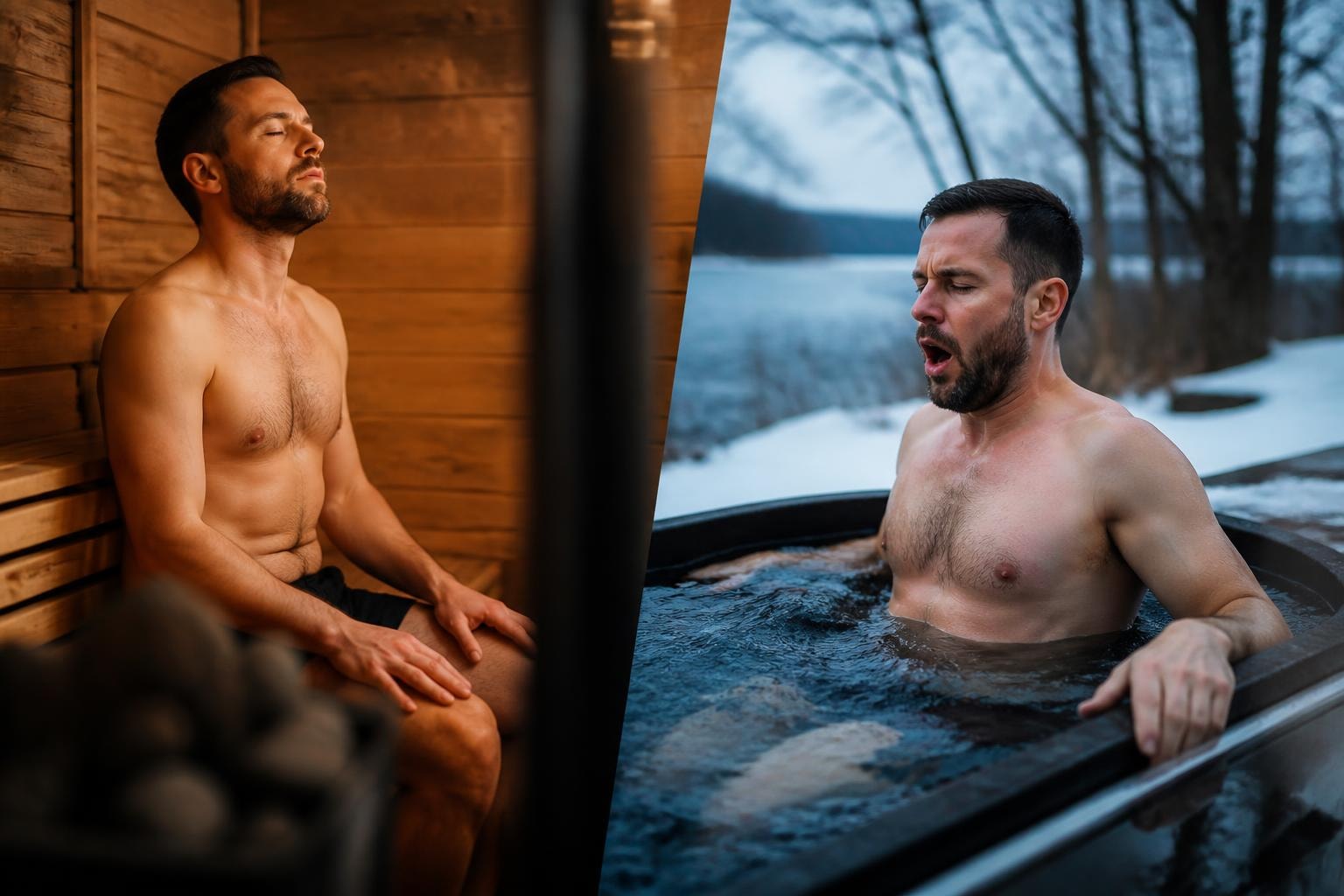
The combination of intense heat followed by cold immersion has become one of the most sought-after wellness practices in North America. An outdoor sauna and cold plunge setup transforms your backyard into a private recovery sanctuary, offering the proven benefits of contrast therapy without leaving home. This pairing delivers more than relaxation-it provides a powerful tool for improving circulation, reducing inflammation, supporting mental clarity, and accelerating recovery from physical activity.
Why Pair an Outdoor Sauna and Cold Plunge
Contrast therapy relies on the dramatic temperature shift between hot and cold exposure. When you move from a 160-180°F sauna directly into 50°F water, your body responds with profound physiological changes.
Physiological Benefits of Temperature Contrast
The heat exposure in your sauna dilates blood vessels, increases heart rate, and promotes sweating. Your core temperature rises, muscles relax, and circulation intensifies throughout your body. This prepares your system for the next phase.
Cold plunge immersion triggers vasoconstriction, forcing blood toward your vital organs. When you exit the cold water, fresh oxygenated blood rushes back to your extremities. This cycling process:
- Reduces muscle soreness and inflammation
- Accelerates metabolic waste removal
- Strengthens immune system response
- Improves cardiovascular function
- Enhances mental resilience and mood
Research continues to validate what Nordic cultures have practiced for centuries. Studies on cold plunge benefits demonstrate measurable improvements in recovery markers, stress response, and overall wellness outcomes.
Mental Health and Recovery Advantages
Beyond the physical benefits, the outdoor sauna and cold plunge routine creates a powerful mindfulness practice. The intentional discomfort of cold immersion builds mental toughness while the sauna promotes deep relaxation. Many users report improved sleep quality, reduced anxiety, and greater emotional balance when maintaining a consistent practice.
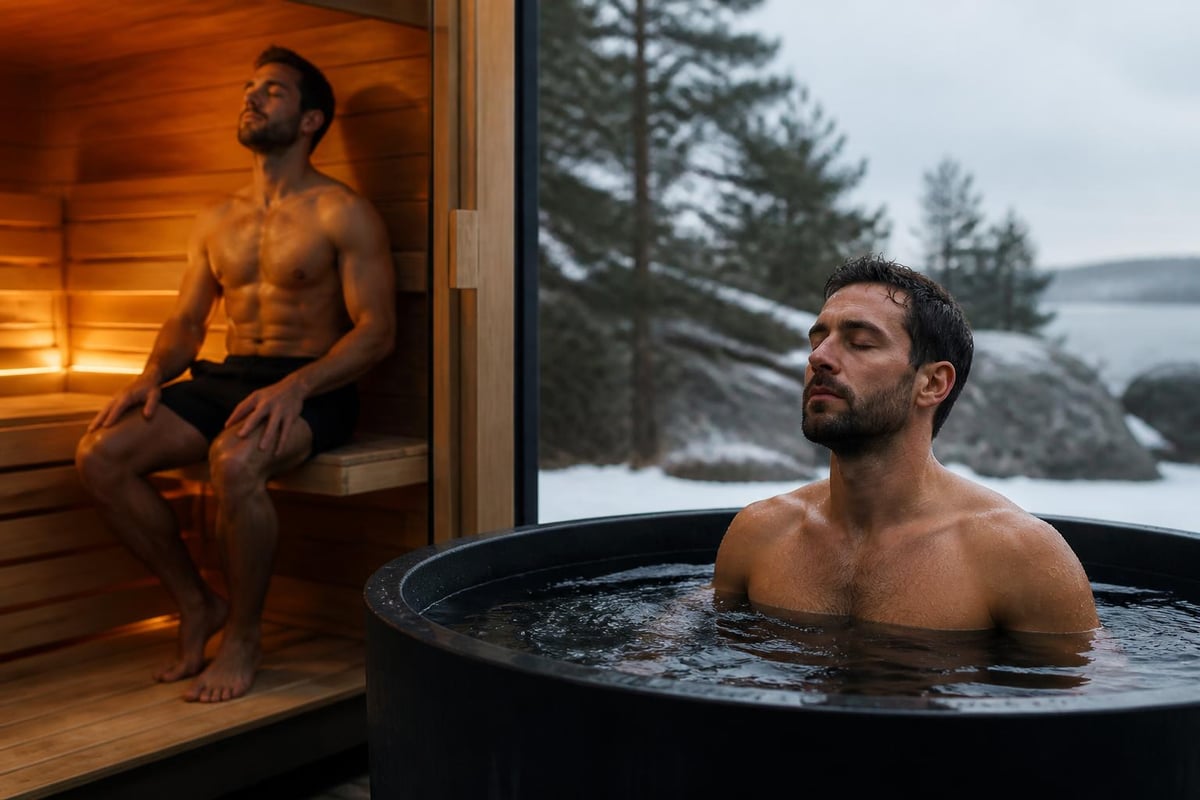
Designing Your Outdoor Sauna and Cold Plunge Layout
Strategic placement determines how effectively you'll use your contrast therapy setup. The ideal design minimizes travel distance while addressing practical considerations like privacy, drainage, and year-round accessibility.
Proximity and Flow Considerations
Position your cold plunge within 10-15 feet of your sauna exit. This short distance preserves the temperature contrast effect-your body should still be hot when entering the cold water. Too much distance allows your core temperature to normalize, diminishing the therapeutic impact.
Consider the path between units carefully. You'll traverse this route in bare feet, often multiple times per session. Choose materials that:
- Provide slip-resistant traction when wet
- Remain comfortable in all weather conditions
- Drain water quickly to prevent ice formation
- Require minimal maintenance
Natural stone pavers, composite decking, or textured concrete work well for most climates. Avoid smooth tile or polished surfaces that become hazardous when wet.
Site Selection Factors
| Consideration | Outdoor Sauna Requirements | Cold Plunge Requirements |
|---|---|---|
| Foundation | Level, well-drained, load-bearing surface | Stable base with proper drainage slope |
| Electrical | 220V circuit for electric heater (or wood-burning option) | 110V for chiller/filtration (if equipped) |
| Water Access | Not required for traditional saunas | Direct water line for filling and draining |
| Privacy | Visual screening from neighbors | Same privacy considerations |
| Ventilation | Open airflow, no enclosed spaces | Good air circulation around equipment |
Many homeowners create a dedicated wellness zone by positioning both units on a single raised deck or patio area. This consolidated approach simplifies utility access and creates an intentional retreat space. Comprehensive planning for sauna and cold plunge placement helps avoid costly mistakes during installation.
Climate-Specific Design Adjustments
Northern climates require additional weatherproofing and insulation for year-round use. Your outdoor sauna should feature proper vapor barriers, insulated doors, and weather-sealed joints. Cold plunge pools need protection from freezing-either through heated chillers that maintain temperature or proper winterization procedures.
Southern locations face different challenges. Direct sun exposure can overheat your sauna space and increase cooling costs for your plunge. Strategic shade structures, reflective roofing materials, and proper ventilation become essential design elements.
Choosing the Right Outdoor Sauna Type
RecoSauna offers multiple configurations to match different spaces, budgets, and aesthetic preferences. Each style delivers authentic heat therapy while serving distinct functional purposes.
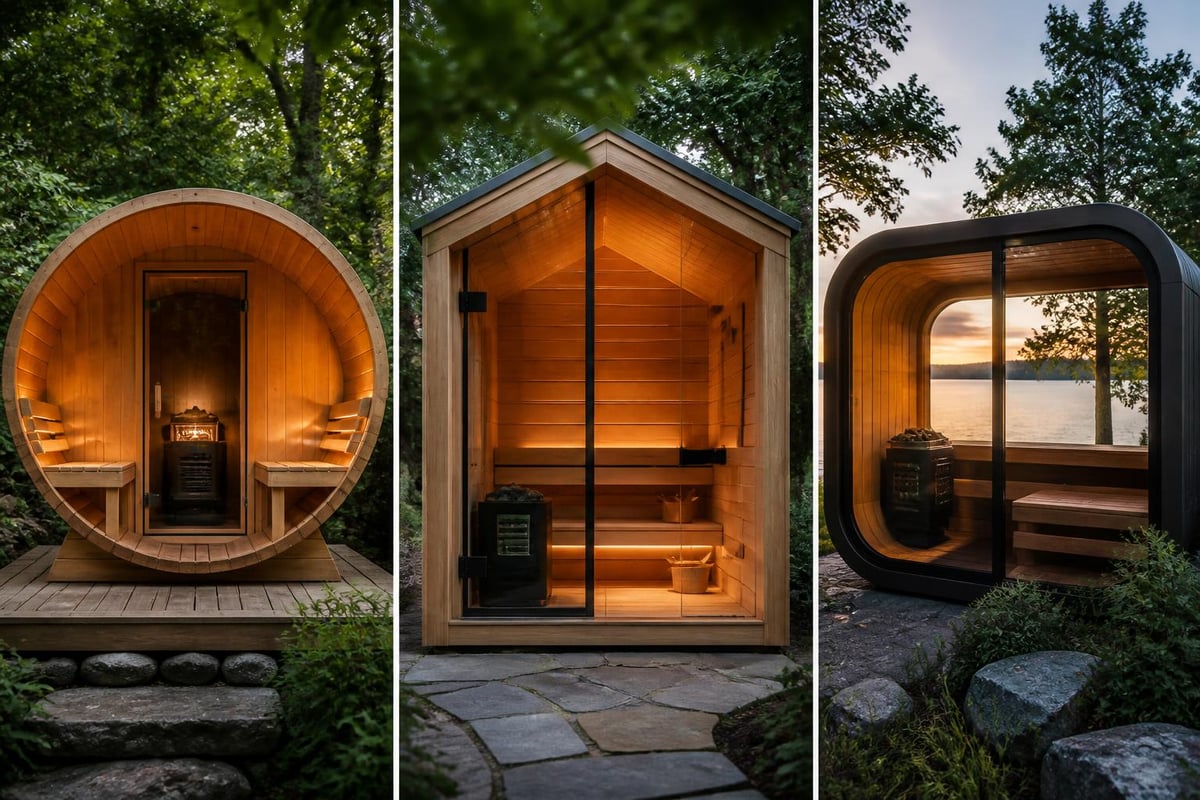
Barrel Saunas for Efficient Heat Distribution
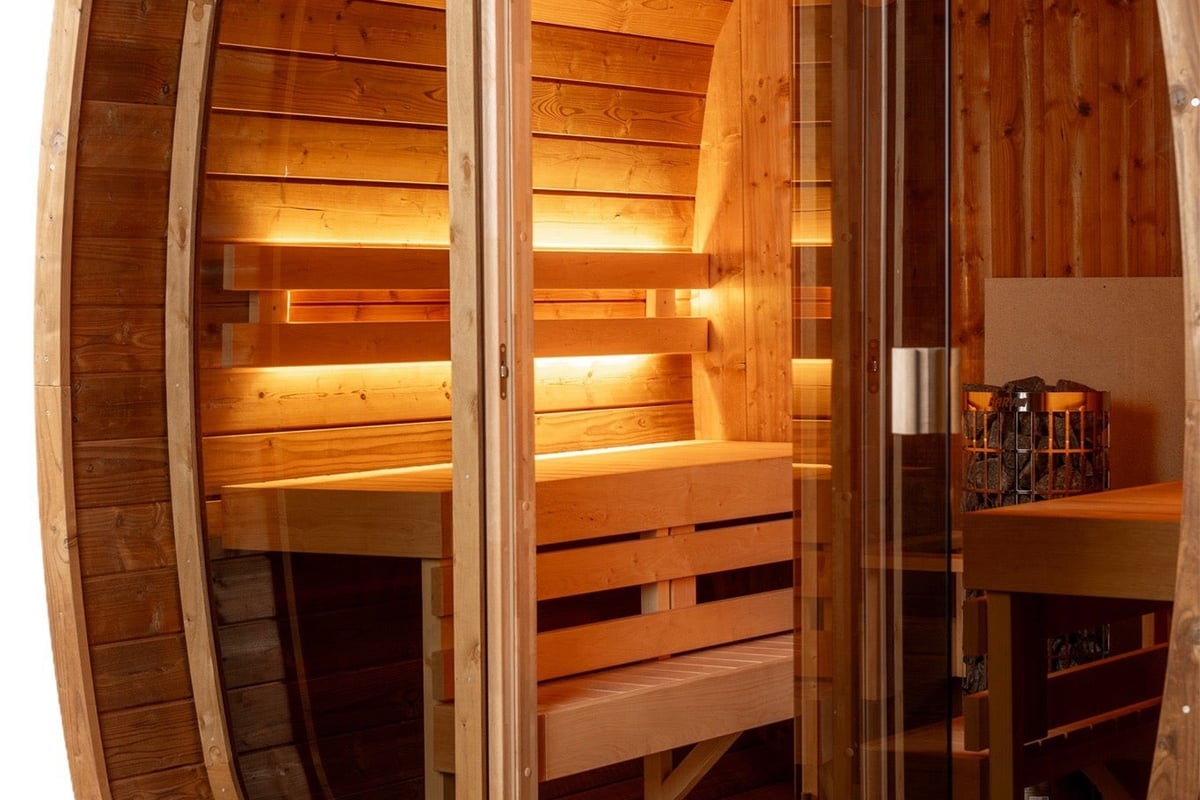
The cylindrical barrel design isn't just aesthetically distinctive-it's functionally superior for heat circulation. Hot air naturally rises to the curved ceiling and circulates back down the sides, creating even temperature distribution with less energy input.
Canadian Timber barrel saunas provide excellent insulation through thick Eastern White Cedar construction. The natural aromatic properties of cedar enhance the sensory experience while the wood's inherent resistance to moisture and decay ensures decades of reliable performance.
Barrel configurations typically accommodate 2-4 people comfortably, making them ideal for couples or small families. The compact footprint works well in suburban yards with limited space.
Cabin-Style Outdoor Saunas
Traditional cabin saunas offer more interior space and customization options. Rectangular construction provides easier bench configurations, more headroom, and the ability to add changing areas or covered porches.
These units integrate seamlessly with existing landscape architecture. Their conventional appearance suits neighborhoods with strict aesthetic guidelines or homeowners associations. Interior capacity ranges from intimate 2-person designs to spacious 6-8 person models for social wellness sessions.
Pod and Modern Designs
Contemporary pod-style saunas feature sleek lines, panoramic glass panels, and architectural presence. These designs prioritize visual transparency, bringing natural light into the sauna space while creating a stunning backyard focal point.
The Auris Two Luxury Outdoor Cedar Sauna exemplifies this modern approach, combining premium red cedar construction with refined aesthetics suitable for high-end outdoor living spaces. Its spacious 3-4 person capacity and optional wood-burning setup provide flexibility for families seeking both traditional and contemporary wellness experiences.
Selecting Your Cold Plunge System
Cold plunge technology has evolved significantly beyond simple stock tanks filled with ice. Modern systems maintain precise temperatures, filter water continuously, and integrate seamlessly with outdoor living spaces.
Chiller-Equipped vs. Ice-Based Systems
Chiller-equipped plunge pools use refrigeration technology to maintain constant water temperature, typically between 38-55°F. These systems eliminate the need for ice while providing consistent therapeutic temperatures year-round.
Advantages include:
- Set-and-forget temperature control
- No ice purchasing or storage
- Consistent experience regardless of ambient temperature
- Integrated filtration extends water life
Ice-based systems rely on manual ice addition to cold water. While initially less expensive, ongoing ice costs and temperature variability can become frustrating. These work better in naturally cold climates where groundwater temperatures remain low.
Size and Capacity Planning
Cold plunge dimensions should accommodate full-body immersion up to shoulder level while seated. Most therapeutic protocols recommend water depth between 36-42 inches with enough length for comfortable positioning.
| Plunge Size | Dimensions (approx) | Capacity | Best For |
|---|---|---|---|
| Compact | 40" x 30" x 36" | 1 person | Solo practice, limited space |
| Standard | 60" x 36" x 42" | 1-2 people | Individual/couple use |
| Large | 72" x 48" x 42" | 2-3 people | Social recovery, athletes |
Consider how many people will use the plunge simultaneously. Athletes often prefer larger sizes that allow full extension and movement. Solo practitioners prioritize compact designs that heat/cool efficiently.
Material Durability and Maintenance
Stainless steel construction offers superior longevity and sanitation. The non-porous surface resists bacteria growth, cleans easily, and withstands harsh chemicals and temperature extremes without degradation.
Acrylic and fiberglass options cost less initially but may yellow, crack, or develop surface issues over time. Cedar or other wood plunges provide beautiful aesthetics but require diligent maintenance to prevent rot, algae growth, and structural deterioration.
The Dynamic Cold Therapy Barrel 304 Stainless Steel Cold Plunge exemplifies professional-grade construction designed for daily use, combining performance with long-term reliability for serious recovery protocols.
Installation Requirements and Considerations
Proper installation ensures safety, longevity, and optimal performance. Both your sauna and cold plunge require specific site preparation and utility connections.
Foundation and Structural Support
Your outdoor sauna needs a level, stable foundation capable of supporting 500-1500 pounds depending on size and occupancy. Options include:
- Concrete slab with proper drainage slope
- Paver base with compacted gravel substrate
- Deck platform with reinforced joists rated for load
- Concrete pier system for uneven terrain
Cold plunge pools filled with water weigh substantially more-calculate roughly 8.3 pounds per gallon plus equipment weight. A 100-gallon plunge adds 830 pounds to your foundation load requirements.
Electrical and Plumbing Needs
Traditional saunas with electric heaters require dedicated 220V circuits installed by licensed electricians. Amperage requirements vary by heater size-typical 6kW heaters need 30-40 amp circuits. Wood-burning options eliminate electrical needs but require proper chimney installation and clearances.
Cold plunge systems with chillers and filtration run on standard 110V circuits. However, some high-performance models require 220V for compressor operation. Verify electrical specifications before purchasing.
Water supply for your plunge can be as simple as a garden hose for initial filling. Dedicated plumbing with fill/drain valves simplifies maintenance. Understanding indoor versus outdoor plumbing requirements helps you plan appropriate infrastructure.
Permits and Regulations
Many jurisdictions classify outdoor saunas as accessory structures requiring building permits. Electrical work almost always requires permits and inspection. Cold plunge installations may trigger pool/spa regulations depending on volume and heating/cooling equipment.
Contact your local building department early in the planning process. Setback requirements, height restrictions, and electrical codes vary significantly by location. Professional installation companies familiar with local regulations can expedite permitting and ensure compliance.
Maintenance and Water Care Protocols
Consistent maintenance preserves your investment and ensures hygienic, safe conditions. Both elements of your outdoor sauna and cold plunge require different but equally important care routines.
Sauna Maintenance Essentials
Wood saunas thrive with minimal intervention. After each session:
- Leave door open for complete drying
- Wipe benches if excessive sweat remains
- Check heater rocks for proper positioning
Monthly tasks include:
- Vacuum or sweep floor areas
- Inspect door seals and hinges
- Clean glass panels if equipped
- Check exterior wood for moisture damage
Annually inspect:
- Roof integrity and drainage
- Structural connections and fasteners
- Heater operation and electrical connections
- Wood treatment or sealing needs
Cedar naturally resists decay, but exterior surfaces benefit from occasional treatment with cedar-specific oils or sealers. Interior surfaces should never be sealed-maintaining breathability prevents moisture problems.
Cold Plunge Water Quality Management
Clean, balanced water prevents skin irritation, equipment damage, and bacterial growth. Comprehensive maintenance schedules for outdoor cold plunge pools recommend specific protocols based on usage frequency.
Daily tasks:
- Test sanitizer levels (chlorine or bromine)
- Check water temperature
- Remove debris from surface
- Run circulation system per manufacturer guidelines
Weekly tasks:
- Test pH and alkalinity
- Shock treat water
- Clean filter cartridge or media
- Inspect equipment operation
Monthly tasks:
- Deep clean plunge surfaces
- Replace or thoroughly clean filters
- Check plumbing connections for leaks
- Test and calibrate chiller settings
Water change frequency depends on usage volume and sanitizer effectiveness. Plan on complete water replacement every 2-4 weeks for daily use, less frequently for occasional sessions.
Optimal Usage Protocols and Safety
Understanding proper contrast therapy technique maximizes benefits while minimizing risks. Both elements of your outdoor sauna and cold plunge demand respect and proper protocols.
Recommended Session Structure
A complete contrast therapy cycle typically follows this pattern:
- Pre-hydration: Drink 8-16 oz of water before beginning
- Sauna session: 10-20 minutes at 160-180°F
- Cool-down: 30-60 seconds of normal breathing
- Cold plunge: 2-5 minutes at 45-55°F
- Rest period: 5-10 minutes at ambient temperature
- Repeat: 2-4 complete cycles per session
Beginners should start conservatively-shorter sauna exposures, warmer plunge temperatures, fewer total cycles. Your tolerance builds progressively over weeks of consistent practice.
Safety Precautions and Contraindications
Certain conditions require medical consultation before beginning contrast therapy:
- Cardiovascular disease or high blood pressure
- Pregnancy
- Recent surgery or acute injuries
- Respiratory conditions affected by heat/cold
- Raynaud's syndrome or cold sensitivity disorders
Never use alcohol before or during sauna sessions. Avoid contrast therapy when ill or feverish. Always have a way to exit quickly if you feel dizzy, nauseous, or uncomfortable.
The dramatic temperature shifts stress your cardiovascular system intentionally-this creates the therapeutic benefit but also carries risk if overdone. Comparing sauna versus cold plunge considerations helps individuals understand appropriate applications for different health goals.
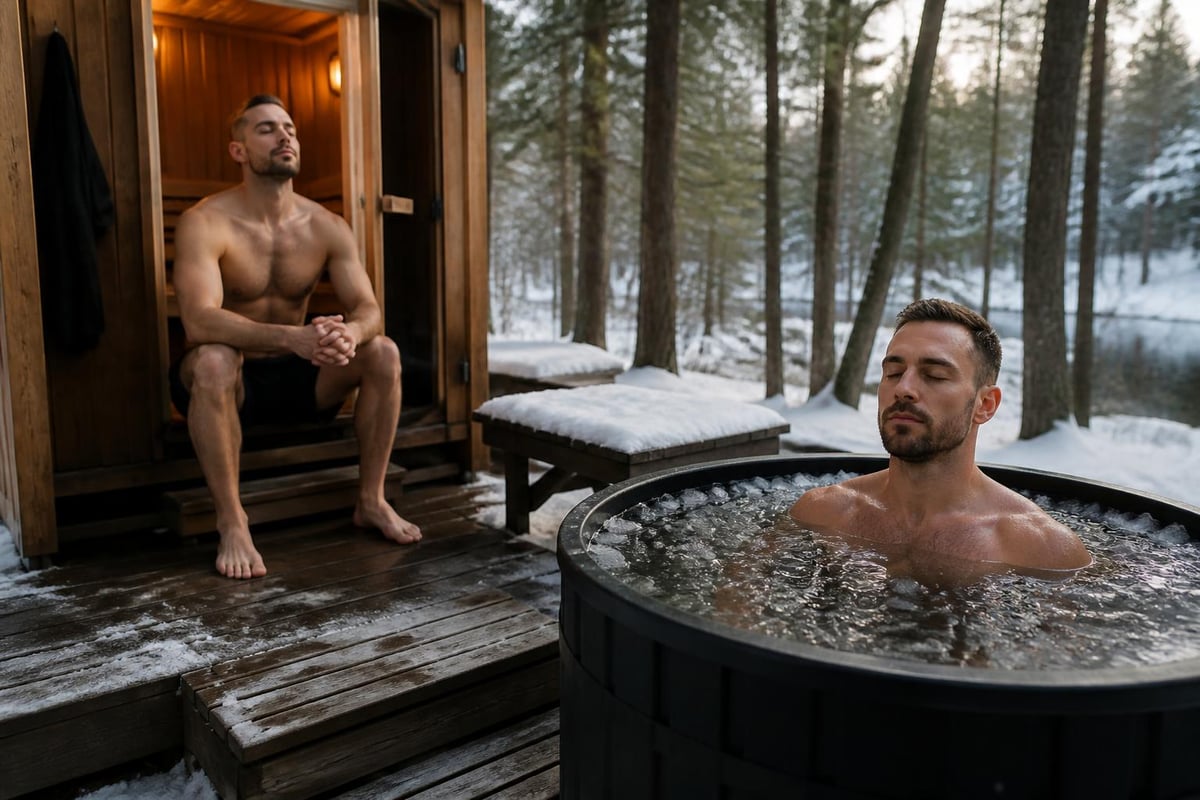
Seasonal Considerations and Year-Round Use
Your outdoor sauna and cold plunge can operate throughout the year with appropriate adjustments for temperature extremes and weather conditions.
Winter Operation Strategies
Cold weather actually enhances the sauna experience. Stepping from 180°F heat into crisp winter air creates an exhilarating sensation before entering your cold plunge. The ambient cold reduces plunge chiller workload, lowering energy costs.
Protect your cold plunge from freezing by:
- Running circulation systems during extreme cold
- Using insulated covers between sessions
- Installing freeze-protection modes on chiller equipment
- Considering heated chillers that maintain low temperatures without freezing
Your sauna requires more heating time in winter but operates normally once warmed. Ensure pathways remain clear of ice and snow. Some owners install heated walkways or covered transitions between units.
Summer Usage Modifications
Hot weather makes cold plunges especially appealing but challenges sauna heating efficiency. Plan sauna sessions during cooler morning or evening hours. Adequate ventilation becomes critical-cross-breeze through vents and partially opened doors prevents overheating.
Cold plunge chillers work harder against warm ambient temperatures. Insulated covers minimize heat gain between sessions. Some users fill plunges with ice in extreme heat to supplement chiller capacity.
Regardless of season, staying present in nature enhances the outdoor sauna and cold plunge experience in ways indoor facilities cannot replicate. Many wellness enthusiasts combine their routine with mindful practices found in comprehensive personal reset programs that support sustainable habit formation and lifestyle transformation.
Enhancing Your Wellness Space
Transform your outdoor sauna and cold plunge area into a complete retreat with thoughtful additions and complementary elements.
Landscape Integration
Surround your wellness zone with privacy screening-living walls of bamboo, evergreen hedges, or architectural fencing. Native plants create natural beauty while requiring less maintenance than exotic species.
Consider incorporating sustainable landscaping principles with zero-waste outdoor solutions that align with the health-conscious values behind contrast therapy practice.
Lighting extends usability into evening hours. Low-voltage pathway lights ensure safe navigation while preserving night vision. String lights or lanterns create ambiance without harsh glare.
Complementary Recovery Tools
Expand your wellness practice beyond contrast therapy:
- Stretching areas: Yoga mats or deck space for post-session mobility work
- Hydration stations: Outdoor-rated water dispensers or refrigerators
- Seating zones: Comfortable chairs for rest periods between cycles
- Storage solutions: Weather-resistant cabinets for towels, robes, and accessories
Athletes particularly benefit from keeping essential training and recovery equipment nearby to support comprehensive post-workout protocols.
Creating Rituals and Routines
The most significant benefits come from consistent practice. Establish regular sessions-many users schedule contrast therapy 3-4 times weekly. Morning sessions energize and prepare you for the day. Evening routines promote deep sleep and recovery.
Document your experience. Track session duration, temperatures, and how you feel afterward. These notes reveal patterns and help optimize your personal protocol.
For those drawn to extreme wellness experiences, the dedication required for regular outdoor sauna and cold plunge practice mirrors the commitment needed to chase the Northern Lights in Iceland-both require intentionality, patience, and appreciation for powerful natural forces.
Cost Analysis and Investment Considerations
Understanding total ownership costs helps you make informed decisions about your outdoor sauna and cold plunge investment.
Initial Purchase and Installation Costs
| Component | Budget Range | Mid-Range | Premium |
|---|---|---|---|
| Outdoor Sauna | $3,000-$6,000 | $6,000-$12,000 | $12,000-$25,000+ |
| Cold Plunge | $2,000-$4,000 | $4,000-$8,000 | $8,000-$15,000+ |
| Installation Labor | $1,000-$2,500 | $2,500-$5,000 | $5,000-$10,000+ |
| Site Prep/Foundation | $500-$1,500 | $1,500-$4,000 | $4,000-$8,000+ |
| Electrical/Plumbing | $800-$1,500 | $1,500-$3,000 | $3,000-$6,000+ |
Total investment typically ranges from $7,000 for basic setups to $65,000+ for luxury installations with premium materials, extensive site work, and professional design services.
Ongoing Operating Expenses
Monthly costs vary based on usage frequency, climate, and energy rates:
- Sauna electricity: $20-$60/month for electric heaters (wood-burning uses consumable wood)
- Cold plunge electricity: $30-$80/month for chiller operation
- Water and chemicals: $15-$40/month for plunge maintenance
- Maintenance supplies: $10-$30/month for cleaning and upkeep
Year-round use in extreme climates increases energy consumption. Efficient models with proper insulation minimize operating costs.
Return on Investment
While difficult to quantify financially, consider the value of:
- Eliminated gym or spa memberships ($100-$300/month)
- Reduced healthcare costs from improved wellness
- Increased property value (quality installations add resale appeal)
- Convenience and privacy of home-based recovery
- Family wellness benefits and quality time together
Most owners view their outdoor sauna and cold plunge as lifestyle investments rather than pure financial calculations. The daily access to therapeutic benefits and the transformation in overall wellness justify the expense for committed practitioners.
Creating an outdoor sauna and cold plunge sanctuary provides decades of wellness benefits, recovery support, and rejuvenation right in your backyard. Whether you prioritize athletic recovery, stress reduction, or simply want to embrace a powerful daily ritual, the combination of heat and cold therapy delivers proven physiological and mental health advantages. RecoSauna offers premium Canadian Timber saunas and professional-grade cold plunge systems designed for North American climates, backed by expert guidance to help you select, install, and maintain the perfect setup for your wellness goals.
Share:
Almost Heaven Barrel Sauna: The Complete 2026 Guide
Cold Plunge Sauna: The Ultimate Wellness Combination