
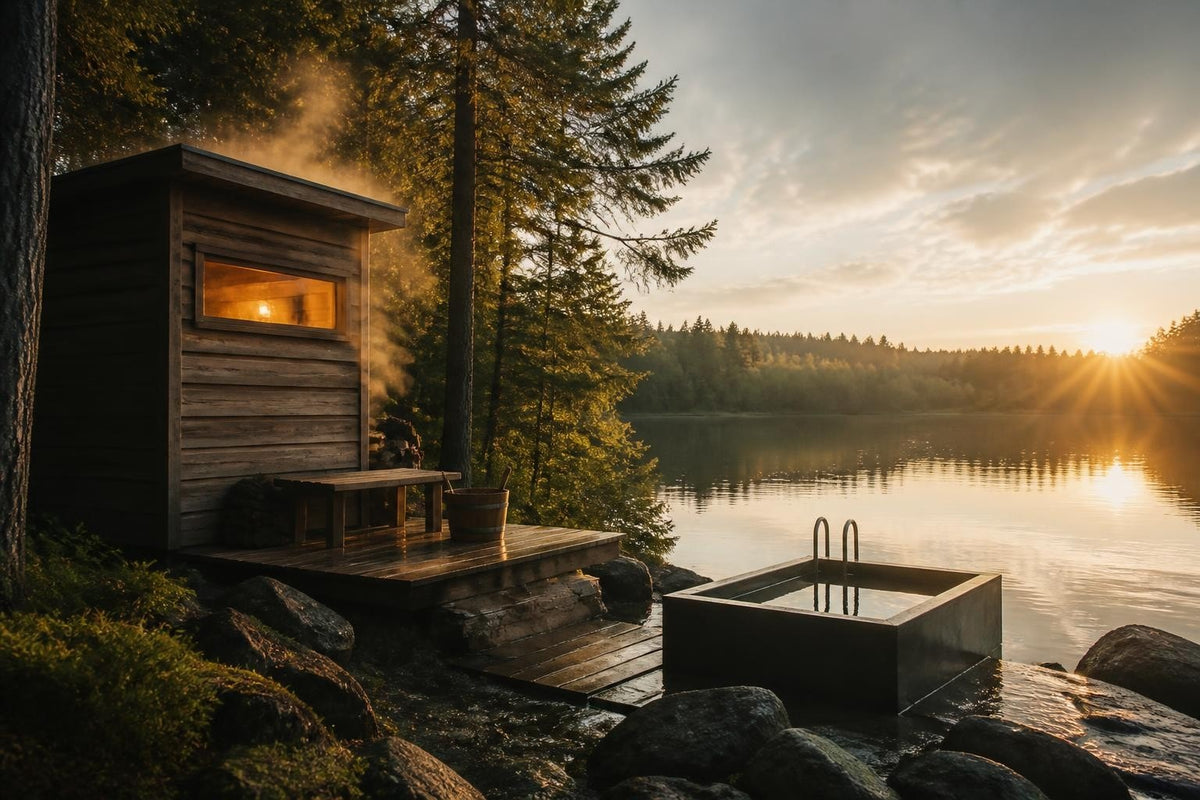
A sauna and ice bath used together create what Finns have practiced for two thousand years. You heat your body in the sauna, then cool it rapidly in cold water. The cycle repeats. This practice, now called contrast therapy, moves your body between opposite states. The heat dilates blood vessels. The cold constricts them. The alternation creates physiological changes that research associates with improved circulation, reduced muscle soreness, and mental clarity.
What Sauna and Ice Bath Practice Actually Is
The sauna and ice bath combination is not two separate activities. It is one continuous cycle.
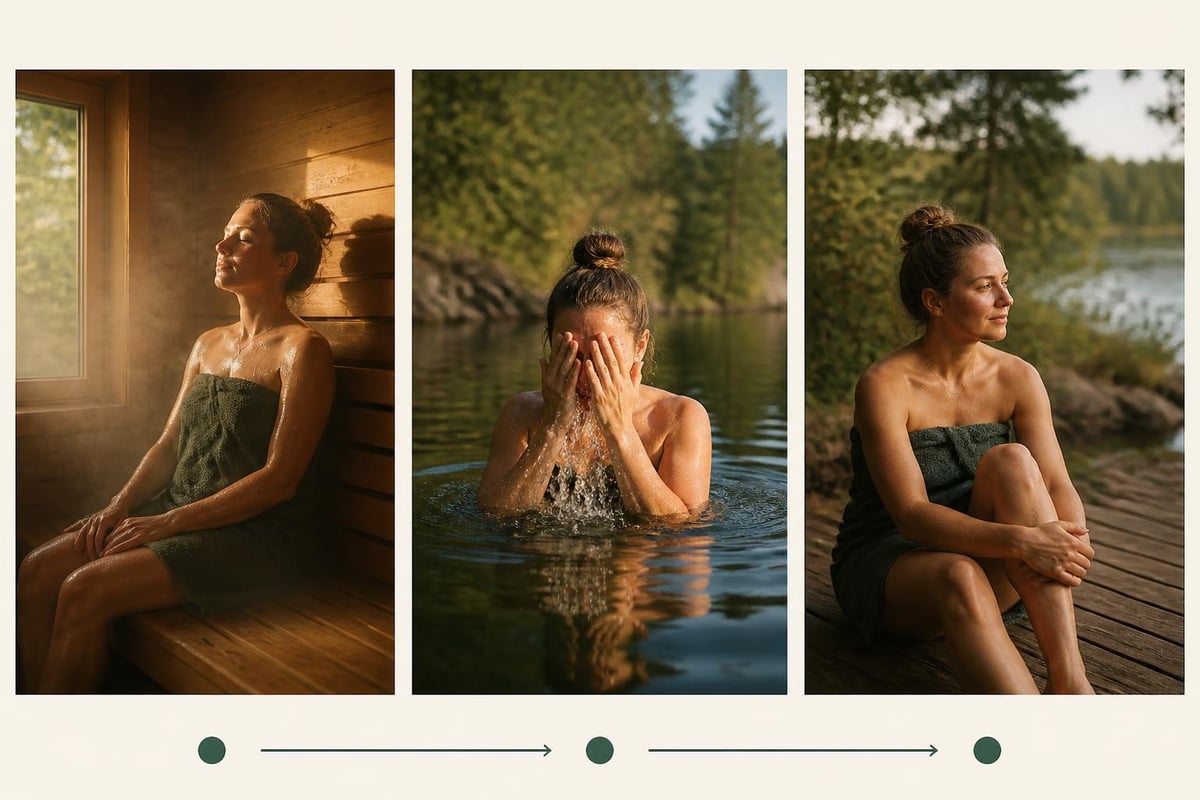
You start in a heated sauna. Traditional Finnish saunas use wood-fired or electric heaters with rocks. Water poured on hot stones creates löyly, the steam that briefly raises humidity and intensifies heat. Infrared saunas use radiant heat panels. Both raise skin temperature and induce sweating.
After the sauna session, you move to cold water. This can be a plunge tub, a cold shower, or in Finland, a lake or snow. The temperature drop is immediate. Your body responds by constricting surface blood vessels and redirecting blood flow.
Then you rest. You let your body return to baseline. Some people rest indoors. Others sit outside. The rest period is as important as the heat or cold.
You repeat the cycle. Two to four rounds is typical.
Sauna and Ice Bath Comparison
| Feature | Traditional Sauna | Infrared Sauna | Cold Plunge | Ice Bath |
|---|---|---|---|---|
| Temperature | 150-195°F | 120-140°F | 39-50°F | 32-50°F |
| Session Time | 10-20 min | 20-30 min | 2-5 min | 2-5 min |
| Heat Type | Convection + steam | Radiant panels | N/A | N/A |
Traditional saunas reach higher temperatures. The heat is intense but tolerable because humidity stays low until you add water to the stones. Infrared saunas use lower temperatures but penetrate differently. Some people prefer one over the other.
Cold exposure does not require ice. Water between 39 and 55 degrees triggers the physiological response. Adding ice lowers temperature further but is not necessary for most people. A chiller-equipped plunge maintains consistent temperature without ice management.
How to Set Up Sauna and Ice Bath at Home
Your backyard or basement can accommodate both. The setup depends on your space, climate, and whether you want portability or permanence.
Outdoor Setup:
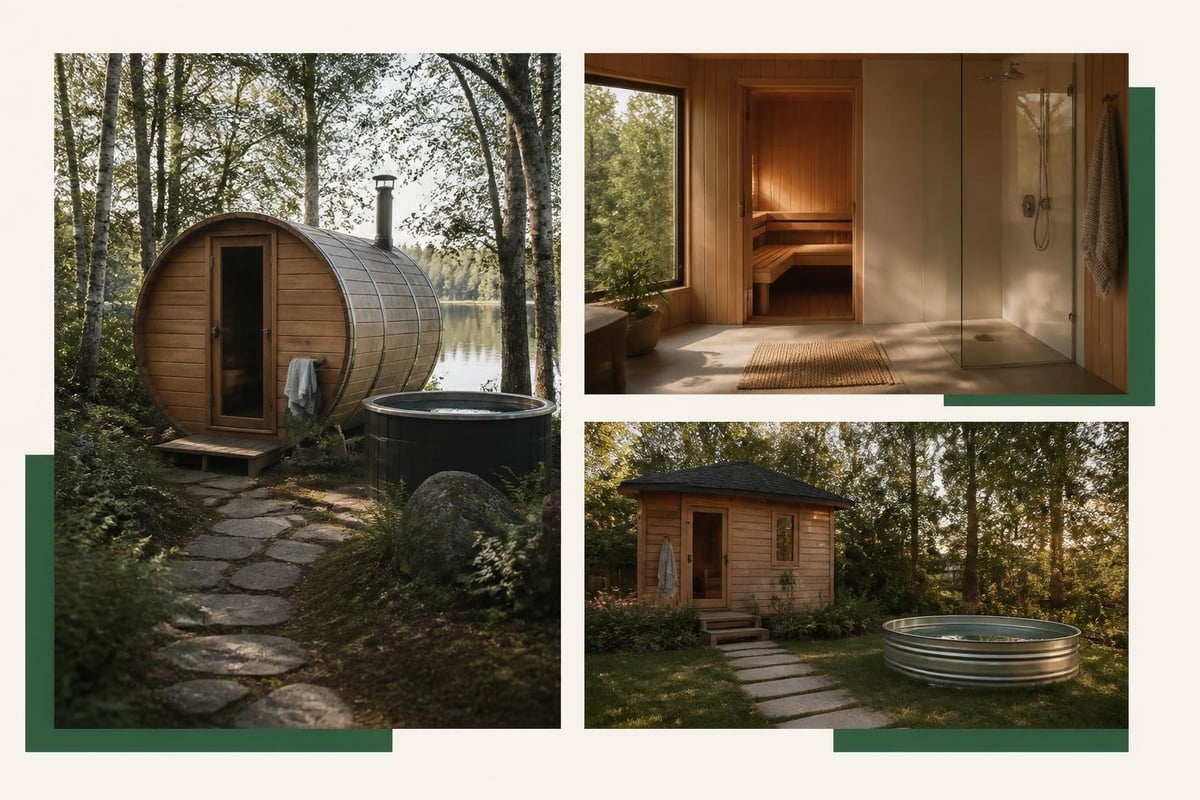
- Place the sauna near your cold plunge or natural water source
- Plan for electrical access if using an electric heater
- Position both where you can move between them quickly
- Consider privacy screening and seasonal use
Indoor Setup:
- Install a traditional sauna in your basement or spare room
- Use a cold shower, chest freezer conversion, or portable plunge
- Ensure proper ventilation for the sauna
- Protect flooring from water drips
Distance between sauna and cold water matters. In Finland, the sauna sits near the lake. You walk outside barefoot, even in winter. The brief cold air exposure between hot and cold is part of the experience. At home, minimize the distance but do not compromise safety. Wet feet on ice or snow can be dangerous.
Choosing Your Sauna Type
Your choice between traditional and infrared affects the contrast therapy experience.
Traditional saunas with electric or wood heaters create high heat and optional steam. The heat surrounds you. Your skin temperature rises quickly. You control the humidity by adding water to the stones. This is the method Finns have used for generations. A properly sized heater for your sauna dimensions ensures the room reaches temperature efficiently and maintains consistent heat.
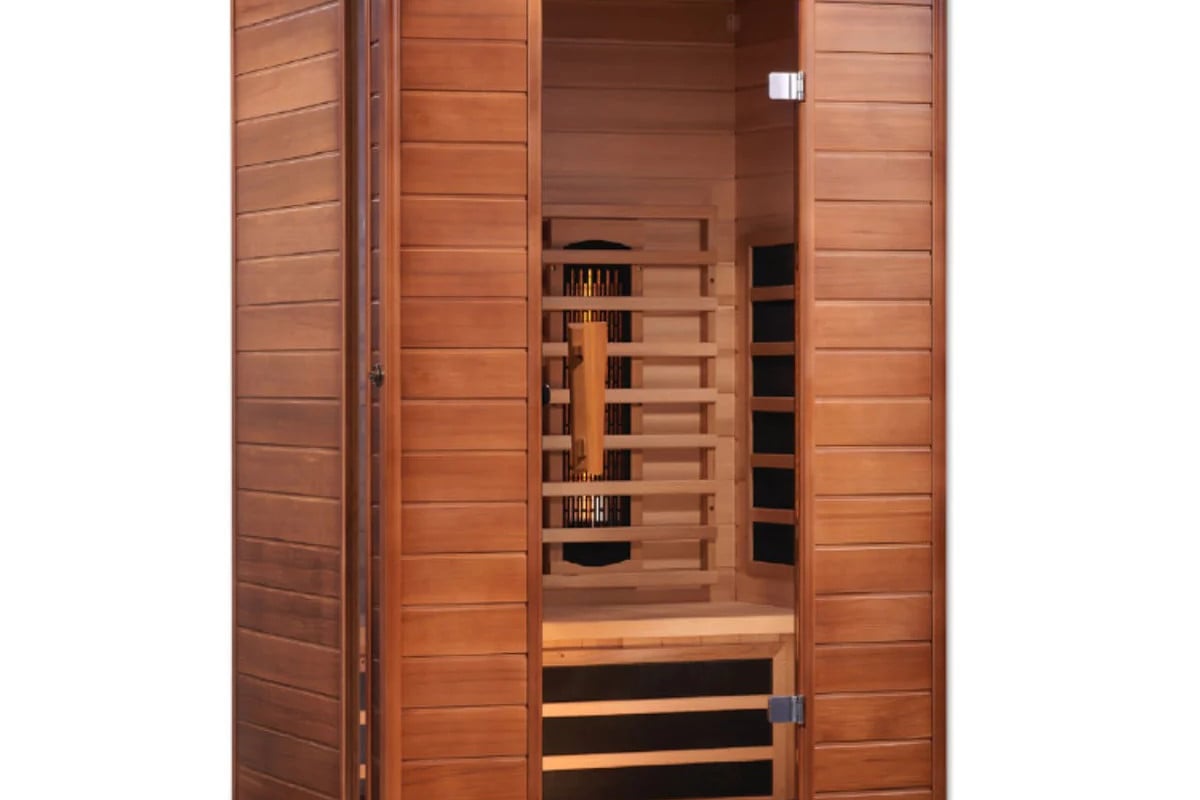
Infrared saunas use ceramic or carbon panels that emit infrared wavelengths. The air temperature stays lower. The panels heat your body directly. There is no steam. Sessions last longer. Some people find infrared easier to tolerate. Research on infrared versus traditional sauna shows different heat distribution but similar cardiovascular associations.
For contrast therapy, both work. Traditional saunas create a stronger temperature differential. The shift from 180-degree sauna air to 45-degree water is more pronounced than from 130-degree infrared heat.
Selecting Your Cold Water Method
Cold exposure has more variables than people expect.
Cold Plunge Tub: A dedicated plunge tub holds enough water for full submersion. The LeisureCraft Baltic Plunge Tub, for example, offers 132 gallons in a cedar exterior with HDPE liner. You can add ice daily or use a chiller system for consistent temperature. Daily ice use requires planning and freezer space. A chiller automates temperature control but adds cost.
Shower Conversion: A cold shower works for upper body exposure. Water temperature depends on your municipal supply and season. Most cold tap water in northern states runs between 45 and 60 degrees in winter, warmer in summer. You lose full-body submersion but gain convenience.
Chest Freezer Conversion: Some people convert a chest freezer into a plunge. You add a chiller and filter system. This is the most affordable path to chilled water but requires setup skill and space.
Stock Tank: Galvanized stock tanks hold water but lack insulation. You will use significant ice to maintain temperature, especially outdoors in summer. They work in cold climates during winter.
The method you choose should match your commitment level. Daily ice bath users often upgrade to chiller systems after months of manual ice management.
Timing and Temperature Guidelines
Sauna and ice bath practice has ranges, not fixed rules. Your tolerance builds over time.
Sauna Duration and Heat
Start with shorter sessions. Ten minutes at 160 degrees is enough for beginners. Your body adapts. Within weeks, fifteen to twenty minutes feels comfortable. Some experienced users stay longer, but duration alone is not the goal.
Temperature preference varies. Finns often prefer 175 to 195 degrees in traditional saunas. North Americans new to sauna sometimes start at 150 and work up. Find what allows you to breathe comfortably and stay present. If you feel dizzy or nauseated, the session is too long or too hot.
Adding water to stones raises perceived temperature through humidity. One ladle of water creates a wave of steam. The temperature gauge does not move, but your skin feels the difference immediately. This is löyly. It intensifies the experience without changing the air temperature.
Cold Water Exposure Time
Cold immersion is measured in minutes, not tens of minutes. Two to three minutes provides the physiological response. Five minutes is a long exposure for most people.
Water temperature below 50 degrees triggers cold shock response in the first thirty seconds. Your breathing quickens. Your heart rate spikes. This is normal but requires controlled breathing. Understanding cold water immersion risks helps you stay safe.
Do not force longer immersion. The goal is not endurance. The goal is the vascular response and the mental shift. Some days two minutes feels right. Other days sixty seconds is enough.
Rest Between Rounds
Rest periods let your body stabilize. Blood vessels return toward normal diameter. Heart rate settles. Core temperature moderates.
Five to ten minutes is typical. Some people rest longer. You can sit quietly, drink water, or move gently. The rest period is when you notice how your body feels different than before the cycle started.
Safety Considerations for Sauna and Ice Bath
Contrast therapy is generally safe for healthy adults. It is not safe for everyone.
Who Should Avoid or Modify:
- People with cardiovascular disease should consult their physician first
- Individuals with uncontrolled high blood pressure face risk from rapid temperature changes
- Pregnant women should avoid high heat exposure
- Anyone with cold urticaria or Raynaud's disease may react poorly to ice baths
- Recent surgery or open wounds require healing before returning to practice
The American Lung Association notes risks for people with chronic heart or lung conditions. The rapid shifts stress your cardiovascular system. This stress is part of why healthy people experience adaptations, but it can be dangerous for people with existing conditions.
Practical Safety Steps:
- Never use sauna or ice bath while intoxicated
- Stay hydrated before and after sessions
- Have a way to exit the cold water quickly
- Do not lock sauna doors
- Keep sessions shorter when alone
- Listen to your body's signals to stop
Cold water shock is real. When you first enter cold water, your breathing accelerates involuntarily. This can cause hyperventilation if you panic. Cleveland Clinic's guidance on cold plunges emphasizes controlled breathing and gradual adaptation.
Building Your Sauna and Ice Bath Routine
Consistency matters more than intensity. A moderate practice sustained over months produces more noticeable effects than aggressive sessions done sporadically.
Starting Frequency
Two to three sessions per week is a reasonable start. This allows your body to adapt without fatigue. Some people use sauna and ice bath daily. Others prefer a few times per week. There is no research showing that daily is better than three times weekly for most goals.
Session Structure
A typical session follows this pattern:
- Enter the sauna for 10-15 minutes
- Exit and move to cold water within a minute
- Immerse for 2-3 minutes
- Rest for 5-10 minutes
- Repeat 2-3 more rounds
- End with rest and hydration
You can adjust each variable. Some people prefer longer sauna sessions and briefer cold exposure. Others do the opposite. The pattern matters more than the exact timing.
Progression Over Time
Your tolerance increases. What felt intense in week one feels manageable in week six. You can extend sauna time, lower cold water temperature, or add rounds. Progression should be gradual. Rushing adaptation increases injury risk and reduces enjoyment.
When you no longer think about the cold water before entering, you have adapted. The mental resistance fades before the physical sensation changes.
Equipment Quality and Long-Term Decisions
Sauna and ice bath equipment represents a significant investment. Quality construction affects daily experience and longevity.
Cedar and hemlock are the primary sauna woods in North America. Eastern White Cedar resists moisture and insect damage naturally. It weathers well outdoors. Canadian Hemlock offers similar properties at slightly lower cost. Red cedar adds aroma. All three perform well with proper care.
Electric sauna heaters should be sized correctly for your sauna's cubic footage. Undersized heaters struggle to reach temperature and run constantly. Oversized heaters cycle too frequently. A sauna that is six feet by six feet by seven feet tall contains 252 cubic feet. You need a heater rated for that volume. Most quality saunas use Harvia heaters, which have been proven reliable over decades of use.
Cold plunge construction varies more. Stainless steel interiors resist corrosion but cost more. HDPE liners are durable and less expensive. Cedar exteriors age naturally. Fiberglass tubs are lightweight but less aesthetically integrated into outdoor spaces.
If you are planning to use your sauna and ice bath for years, invest in construction quality over features. Bluetooth speakers and chromotherapy lights are additions. Solid joinery and proper wood treatment are foundations. For those looking to invest in quality infrared options, the Maxxus 2 Person Full Spectrum IR Sauna offers Canadian Red Cedar construction with full spectrum heating and thoughtful features in a compact footprint.
Installation and Space Requirements
Outdoor saunas need level ground and electrical access. A concrete pad or compacted gravel base works. You want drainage away from the structure. Most barrel and cabin saunas arrive as kits. Assembly takes a day or a weekend depending on size and help available.
Indoor saunas require ventilation. Fresh air intake near the floor and exhaust near the ceiling prevent stuffiness and allow oxygen circulation. Electrical work should meet local codes. Most residential saunas run on 240V circuits.
Cold plunges need drainage or a plan for water changes. A 100-gallon tub is heavy when filled. Locate it where you can drain it easily or where a chiller can circulate and filter the water continuously.
Regional Considerations for Sauna and Ice Bath Use
Climate affects your setup and experience more than most people anticipate.
In Minnesota, Michigan, or Vermont, winter cold provides natural ice bath conditions. A plunge tub outdoors stays at 35 degrees without help from November through March. Summer requires a chiller or daily ice.
In milder climates like Tennessee or North Carolina, you need cooling help year-round. An unchilled tub may sit at 70 degrees in summer. That is cool but not cold enough for the full contrast effect.
For outdoor saunas, winter use in cold climates requires preheating time. A sauna sitting at 20 degrees ambient temperature takes longer to reach 180 degrees than one starting at 60 degrees. Insulation quality matters. Thicker walls retain heat better.
Year-round outdoor use is practical across most of the northern United States and Canada. Snow on the roof is normal. The sauna interior stays warm. The walk from sauna to plunge in January is brief and part of the tradition.
What Research Shows About Sauna and Ice Bath Effects
Research on sauna and ice bath has grown substantially in recent years. Most studies examine each practice separately. Few look at the combined protocol.
Sauna use is associated with cardiovascular benefits. Regular sauna bathing correlates with lower risk of cardiac events in large observational studies. The heat stress appears to improve endothelial function and reduce arterial stiffness. These are associations, not proven causation.
Cold water immersion shows different effects. Studies link it to reduced muscle soreness after intense exercise. The mechanism likely involves reduced inflammation and altered pain perception. Some research questions whether ice baths blunt training adaptations, particularly strength gains, when used immediately after resistance training.
The combination of hot and cold creates additional circulatory effects through alternating vasodilation and vasoconstriction. This "vascular gymnastics" is theorized to improve circulation, but direct research on combined use remains limited.
Important note: research shows correlation and association. It does not prove that sauna and ice bath cause specific health outcomes. Many factors influence health. People who use saunas regularly may differ from non-users in diet, exercise, or other habits.
Common Mistakes in Sauna and Ice Bath Practice
New users make predictable errors. Awareness helps you avoid them.
Staying too long in the sauna: More time does not mean more benefit. Excessive heat exposure causes dehydration and exhaustion. Sessions beyond twenty minutes should be reserved for experienced users who have adapted gradually.
Entering cold water too quickly: The first cold plunge after sauna should be entered slowly, even though your skin is hot. Sudden full immersion can trigger gasping and hyperventilation. Step in gradually or lower yourself steadily.
Skipping hydration: You lose fluid through sweating in the sauna. Cold immersion afterward can mask thirst. Drink water before your session and between rounds. Dehydration reduces the quality of subsequent rounds.
Using the sauna alone without precautions: While many people sauna alone safely, having a phone nearby and ensuring someone knows your schedule adds a safety margin. Do not lock doors from the inside.
Comparing your tolerance to others: Your cold tolerance and heat tolerance are individual. Someone else's five-minute ice bath is not your standard. Build your own practice.
Ignoring warning signs: Dizziness, nausea, chest pain, or confusion are signals to stop immediately. Pushing through these sensations is not toughness. It is poor judgment.
How Finns Approach Sauna and Ice Bath
I grew up on Lake Saimaa in Eastern Finland. The sauna was not a wellness activity. It was part of weekly rhythm. We heated the sauna every Saturday. In summer, we swam in the lake between rounds. In winter, we cut a hole in the ice or rolled in snow. The practice was simple. There was no timer. No protocol. You stayed in the sauna until you felt ready for cold water. You stayed in the lake until you felt cold. Then you went back.
What I notice in North America is the desire for rules. People ask for exact temperatures and durations. Finns rarely measure. We go by feel. The sauna is ready when the rocks are hot enough that water sizzles. The cold water is cold enough when it takes your breath. You have stayed in the sauna long enough when your skin feels very warm and you want the lake. This is not vague. It is paying attention to your body rather than a clock.
Frequently Asked Questions
How long should I wait between sauna and ice bath?
Move to cold water within one to two minutes of exiting the sauna. Your skin is still very warm. The contrast is strongest. Waiting longer allows your body to cool gradually, which reduces the vascular effect.
Can I do sauna and ice bath every day?
You can, but start with two to three times per week. Daily practice is safe for most healthy people once adapted. Listen to your energy and recovery. If you feel fatigued or run down, reduce frequency.
What temperature should the sauna be?
Between 150 and 195 degrees Fahrenheit for traditional saunas. Start at the lower end and adjust based on comfort. Infrared saunas operate between 120 and 140 degrees. Both are effective.
Is ice bath better before or after sauna?
Always sauna first, then cold water. The heat dilates blood vessels and warms your core. Cold water after sauna constricts vessels and cools the surface. Reversing the order feels uncomfortable and reduces the contrast effect.
Do I need ice in my cold plunge?
No. Water between 45 and 55 degrees triggers the physiological response. Ice lowers temperature further but is not required. A chiller maintains temperature without ice. In winter, outdoor water stays cold naturally in northern climates.
Sauna and ice bath together form a practice that works as well in a Minnesota backyard as it did on Lake Saimaa. The equipment choices matter less than consistency and attention to your body. Whether you choose a traditional outdoor sauna or a compact infrared model, pair it with cold water access that fits your space and climate. At RecoSauna, we help homeowners across the USA and Canada find the right combination of sauna and cold plunge for their specific setup. I answer every question personally because these decisions deserve more than generic advice. Ask Petri About Your Sauna and let's find what works for your home.
Share:
Ice Bath: Temperature, Duration, and Setup Guide
Best Traditional Sauna for Home (2026 Expert Buyer's Guide)