

An indoor sauna for home creates a personal retreat for recovery and warmth without stepping outside. The choice between traditional steam heat and infrared depends on the experience you want, the space you have, and how you plan to use it. Traditional saunas deliver löyly, the enveloping steam from water on hot stones, while infrared models provide focused radiant warmth without humidity. Both fit indoors, both offer genuine benefits, but they work differently.
Traditional vs Infrared: What Makes Sense for Your Home
The first decision is heat type. This shapes everything else.
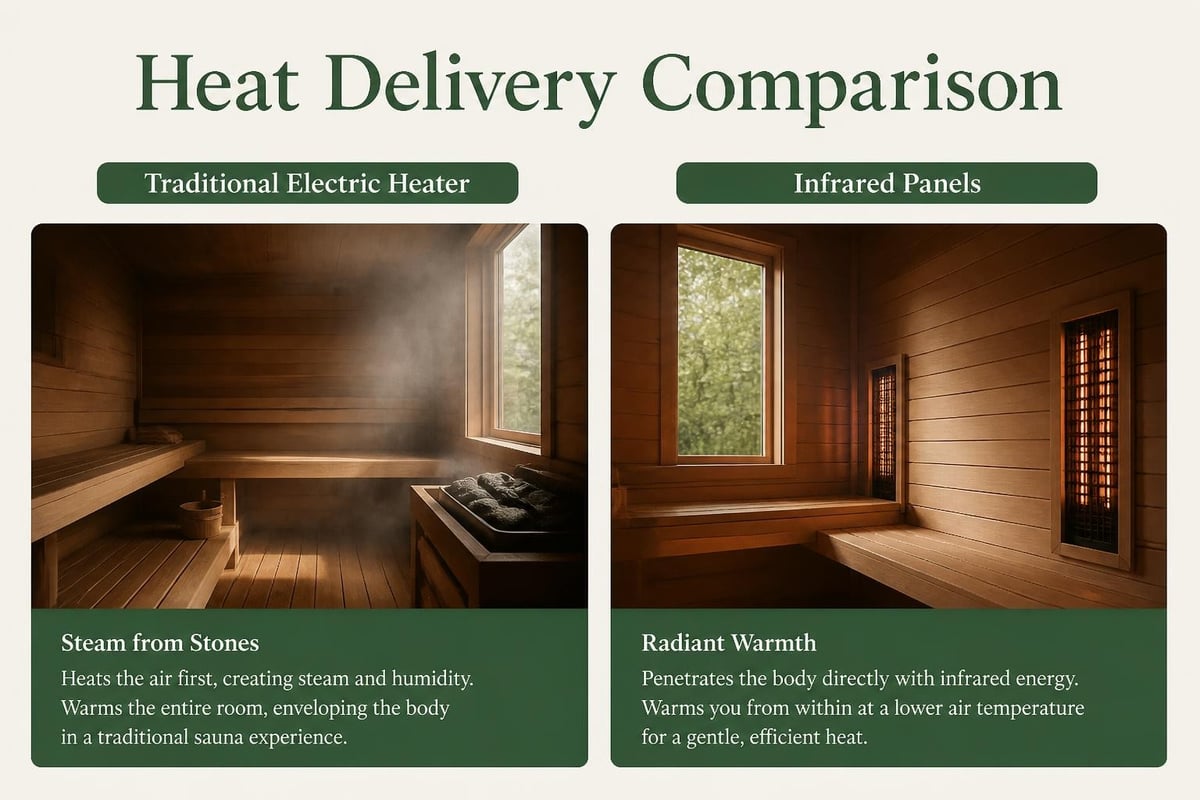
Traditional saunas use an electric heater with stones. You add water to create steam. Temperatures reach 160-190°F with humidity that varies based on how often you add water. The heat feels intense and enveloping. Sessions typically last 10-20 minutes, often followed by a cool rinse or cold plunge as part of contrast therapy.
Infrared saunas use carbon or ceramic panels that emit radiant heat. No stones, no steam. Temperatures stay lower, usually 120-150°F, with dry air. The heat penetrates differently, warming the body directly rather than heating the air first. Sessions often run 20-40 minutes. Some people prefer the gentler feel, especially if high humidity feels uncomfortable.
| Feature | Traditional | Infrared |
|---|---|---|
| Heat source | Electric heater + stones | Carbon/ceramic panels |
| Temperature | 160-190°F | 120-150°F |
| Humidity | Variable (steam) | Dry |
| Session length | 10-20 min | 20-40 min |
Both types suit home installation. Traditional saunas need more robust electrical service, typically 240V. Infrared models often run on standard 120V household circuits, which simplifies installation in existing spaces. Research from institutions like the Cleveland Clinic suggests both types may support cardiovascular wellness and relaxation, though through different mechanisms.
Choosing the Right Size and Location
An indoor sauna for home fits in basements, spare rooms, bathrooms, or large closets. Size depends on how many people use it at once and the space available.
Typical indoor sauna dimensions:
- 1-2 person: 3x4 feet or 4x4 feet
- 2-3 person: 4x5 feet or 4x6 feet
- 3-4 person: 5x6 feet or 5x7 feet
Ceiling height matters. Traditional saunas need 6.5 to 7 feet minimum to allow proper heat circulation and comfortable seating. Infrared units can work in spaces as low as 6 feet since heat doesn't rise as dramatically.
Location requirements vary by sauna type. Traditional units need ventilation to manage steam and moisture. A small vent near the floor and one near the ceiling maintain airflow without losing heat. Infrared saunas need less ventilation since they stay dry.
Installation considerations:
- Electrical capacity and breaker availability
- Flooring that handles heat and moisture (tile, sealed concrete)
- Wall protection or clearance from combustibles
- Door swing direction and clearance
- Proximity to shower or plunge for contrast therapy
Many homeowners place their indoor sauna for home near a bathroom to simplify plumbing access for a rinse shower. Others dedicate a basement corner where electrical upgrades and ventilation installation happen more easily. The indoor sauna installation checklist covers permit requirements and safety clearances by region.
Traditional Steam Heat: What to Know
Traditional saunas deliver the experience Finns have refined over centuries. The heater, typically a Harvia or similar quality unit, determines session quality.
Heater sizing follows room volume. A 4x5x7 foot space (140 cubic feet) needs roughly a 4-5 kW heater. Undersized heaters struggle to maintain temperature. Oversized units heat too quickly without allowing proper warm-up time.
Stone mass matters more than most realize. A good heater holds 30-50 pounds of stones. More stone mass means more stable heat and better steam. The stones absorb energy, then release it steadily when you add water. Olivine and peridotite are common choices for durability and heat retention.
Wood type shapes the interior feel. Cedar resists moisture and smells pleasant but costs more. Hemlock offers neutral scent and lighter color at lower cost. Aspen stays cool to touch and works well in higher-end builds. All three handle steam when properly ventilated.
Traditional sauna benefits:
- Authentic löyly experience with adjustable humidity
- Higher heat for those who prefer intense warmth
- Natural transition to cold exposure afterward
- Wood interior ages beautifully with use
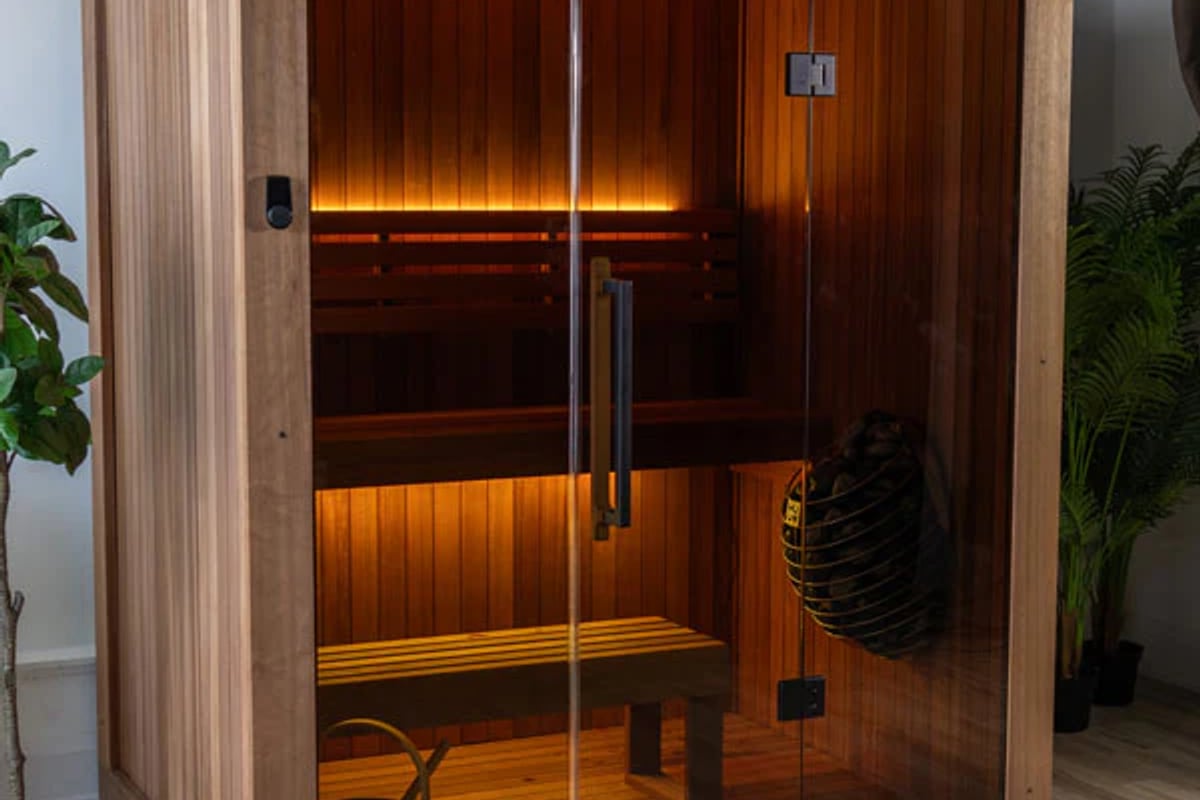
The LeisureCraft Loft CT Element brings traditional steam sauna quality indoors with a design suited to modern homes. Crafted from Thermo Grandis, it handles moisture better than standard wood treatments while maintaining the warmth of a Finnish-style interior.
Infrared Models: Heat Without Steam
Infrared saunas work differently at the molecular level. Panels emit wavelengths that penetrate skin and warm tissue directly. Air temperature stays lower, but the body heats thoroughly.
Three infrared types exist: near, mid, and far. Far infrared is most common in home units. It penetrates deepest and feels gentlest. Some models combine all three wavelengths, marketed as full-spectrum.
The difference in experience is noticeable. Infrared heat feels like lying in warm sunlight rather than sitting in hot air. Breathing stays comfortable since air stays cooler. People with respiratory sensitivity sometimes prefer this.
Infrared sauna characteristics:
- Plug-and-play installation on standard outlets (most models)
- Lower operating temperature for longer sessions
- Dry heat without humidity or steam
- Faster warm-up time, usually 10-15 minutes
Panel quality varies between manufacturers. Carbon panels distribute heat more evenly than ceramic. Low-EMF models reduce electromagnetic field exposure, though research on health significance remains uncertain. When evaluating brands, HealthGreenList aggregates customer feedback and brand claims to help identify trustworthy manufacturers.
Assembly typically involves connecting pre-built wall panels. Most people complete setup in 2-3 hours following included instructions. Video guides like this infrared sauna installation tutorial show the process step by step.
What to Look for Before Buying
Quality separates good saunas from problems. Wood grade, heater design, and electrical components determine longevity.
For traditional indoor saunas:
- Clear, knot-free wood on seating surfaces
- Heater with UL or ETL certification
- Ventilation design that maintains heat while allowing airflow
- Tempered glass on doors rated for temperature swings
- Stainless steel or protected fasteners
For infrared indoor saunas:
- Carbon panel coverage that heats evenly (check placement)
- Low-EMF certification if that matters to you
- Solid wood construction, not laminate or particle board
- Digital controls with timer and temperature adjustment
- Adequate insulation to contain heat
Warranty length indicates manufacturer confidence. Look for at least five years on heaters and structural components. Shorter warranties often signal lower-grade materials.
Price reflects quality more than brand name. A well-built traditional sauna for home with proper wood, a quality heater, and good insulation costs more than a thin-walled infrared box with minimal panels. Both serve different purposes. Neither is wrong if it matches your needs.
Electrical and Ventilation Requirements
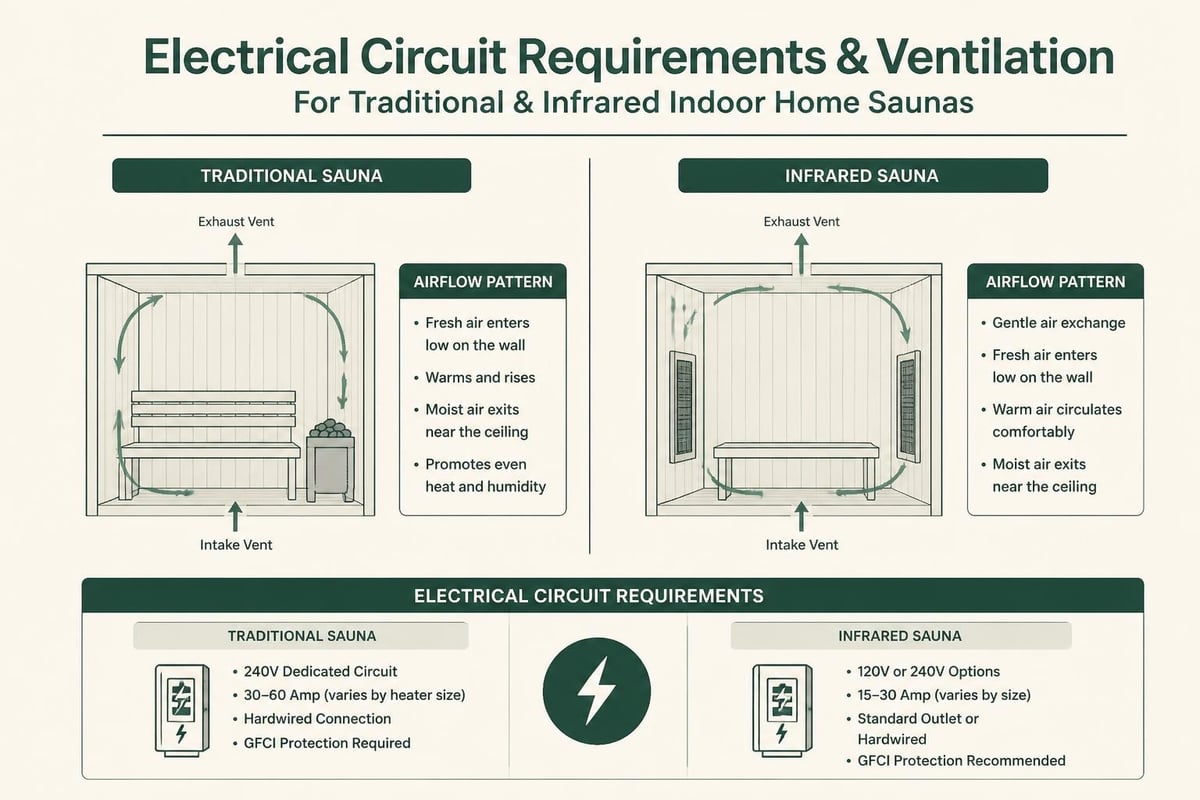
Traditional saunas draw significant power. A typical 6 kW heater needs a dedicated 240V circuit with 30-40 amp service. This often requires an electrician to run new wiring from the breaker panel. Budget for this when planning installation costs.
Infrared units pull less power. Most 2-person models run on 120V and 15-20 amps, compatible with existing household circuits. Some larger 3-4 person models need 240V but still use less power than traditional heaters.
Ventilation keeps traditional saunas healthy. A small intake vent near the floor brings fresh air. An exhaust vent near the ceiling or behind the heater removes moisture. This passive system works without fans in most home installations. The goal is 6-8 air exchanges per hour without creating drafts.
Infrared saunas need minimal ventilation since they produce no steam. A small gap under the door usually suffices. Some users add a ceiling vent for personal preference.
Assembly and Installation Timeline
Most indoor saunas for home arrive as prefabricated panels or pre-cut kits. Assembly ranges from simple to involved depending on model type.
Infrared sauna installation steps:
- Prepare the location (level floor, clear space)
- Connect wall panels using provided hardware
- Install ceiling panels and secure
- Attach door and glass components
- Connect electrical panel to power source
- Test heater function and temperature controls
Time required: 2-4 hours for two people with basic tools. The DIY infrared sauna installation guide demonstrates each step visually.
Traditional sauna installation steps:
- Frame the space or position pre-built panels
- Install insulation and vapor barrier
- Mount interior wood paneling and benches
- Position and wire the electric heater
- Install ventilation ducts and vents
- Add door, lighting, and accessories
Time required: 8-16 hours depending on skill level and whether you hire an electrician. Some homeowners handle framing and wood installation themselves, then bring in a licensed electrician for heater wiring.
Permits vary by location. Most jurisdictions require electrical permits for 240V circuits. Some require building permits for permanent installations. Check local codes before starting work.
My Experience with Indoor Saunas
I grew up on Lake Saimaa in Eastern Finland where every home had a sauna, usually in the basement or a separate building. The indoor ones felt different from lakeside cabins but served the same purpose. Saturday evenings meant heat, steam, and cold water, a rhythm that shaped how I understand recovery. When customers ask about indoor versus outdoor saunas, I tell them both work if built properly. The question is whether you want to walk outside in winter or stay in, and whether you want traditional steam or dry heat.
Common Questions About Indoor Saunas for Home
How much does it cost to run an indoor sauna for home?
Traditional saunas use 4-8 kW per session. At typical electricity rates, a 45-minute session costs roughly $0.50 to $1.50. Infrared units draw 1.5-3 kW, costing $0.20 to $0.60 per session. Monthly costs depend on frequency of use.
Can I install an indoor sauna in an apartment?
Infrared saunas work in apartments if your lease allows modifications and you have space. Traditional saunas rarely work due to electrical requirements, ventilation needs, and moisture concerns. Always check with your landlord first.
Do I need special flooring under an indoor sauna?
Tile, sealed concrete, or vinyl plank flooring work well. Avoid carpet or unsealed wood that can trap moisture. Infrared saunas need less moisture protection than traditional models but still benefit from durable flooring.
How long does an indoor sauna for home last?
Quality traditional saunas last 20-30 years with proper maintenance. Infrared units typically last 10-15 years before panels need replacement. Wood quality and heater construction determine longevity more than sauna type.
Should I add a cold plunge next to my indoor sauna?
Contrast therapy pairs heat with cold for enhanced recovery. If space allows, a cold plunge or dedicated shower near your sauna creates the full experience. Many people start with sauna alone and add cold exposure later. Research from TIME magazine and similar sources shows association between regular sauna use and cardiovascular benefits, often enhanced when combined with cold exposure.
Planning Your Space
Room layout affects daily use more than expected. Placing your personal sauna where you naturally move through the house increases usage frequency.
Ideal adjacent spaces:
- Bathroom for easy shower access
- Basement recreation area for dedicated wellness space
- Master bedroom suite for private morning sessions
- Home gym for post-workout recovery
Some homeowners integrate entertainment features like Bluetooth speakers, chromotherapy lighting, or reading lights. These additions personalize the space without affecting core function. Others prefer simplicity, just wood, heat, and quiet.
For couples or small families, a two person sauna balances size with intimacy. Larger units accommodate guests but take more space and energy to heat. Start with minimum viable size, since you can always upgrade later.
Custom home cinema and audio video solutions from specialists like ANR media can integrate sound systems into your wellness space, though most sauna users prefer silence or minimal audio to maintain focus on recovery.
An indoor sauna for home works when you match heat type to your preferences and size to your space. Traditional steam delivers the full Finnish experience with löyly, while infrared provides gentle radiant warmth in a simpler package. Both require planning around electrical capacity, ventilation, and location, but neither demands complex construction when you start with quality components. We help homeowners across North America find saunas that fit their space and recovery goals, answering every technical question along the way. Ask Petri About Your Sauna.
Share:
Traditional Sauna for Sale: Finnish Expert Buying Guide
Indoor Traditional Sauna: What You Need to Know in 2026