
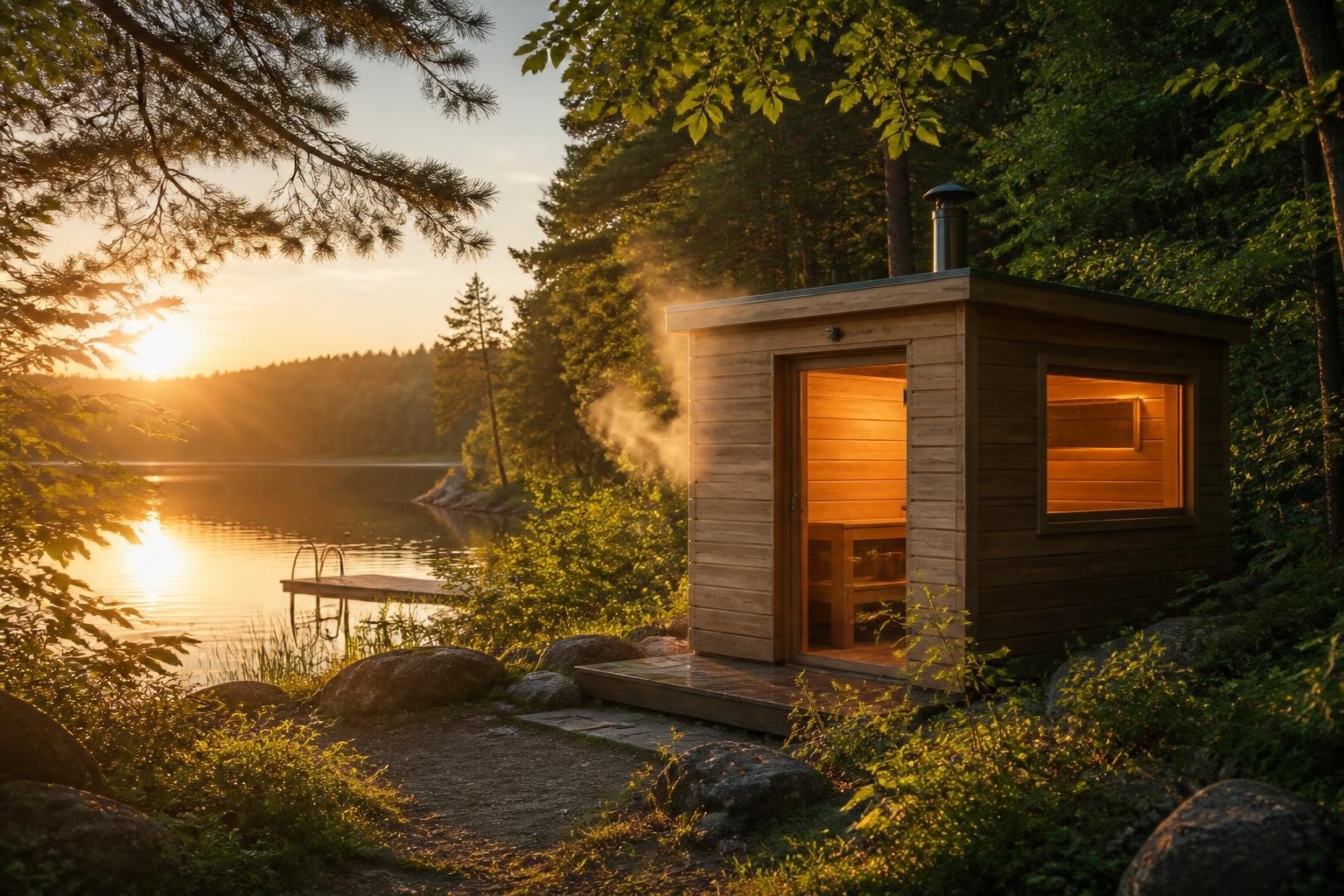
A two person sauna fits most couples comfortably and gives a single user generous room to stretch out. Most units measure between 48 and 60 inches wide, though actual usable space varies with bench layout, heater placement, and whether you choose traditional steam or infrared heat. The right choice depends on how you plan to use it, where it will go, and whether you value the ritual of löyly or the simplicity of plug-and-play infrared.
What Defines a Two Person Sauna
A two person sauna offers 25 to 40 square feet of interior space. Traditional steam saunas in this size range typically include L-shaped or parallel benches with enough depth to sit upright or lie down diagonally. Infrared models position carbon or ceramic panels along the walls, requiring less clearance but offering no steam.
Key capacity factors:
- Bench length determines whether two adults can sit side by side comfortably
- Interior height affects ventilation and heat distribution in traditional saunas
- Door swing or slide direction influences placement options
- Heater size and stone mass control heat recovery speed
Indoor infrared saunas usually ship fully assembled or in clasp-together sections. Outdoor traditional units arrive as prefabricated kits requiring assembly but offering authentic Finnish heat. Two person outdoor saunas handle weather exposure better when built from cedar or thermally treated wood.
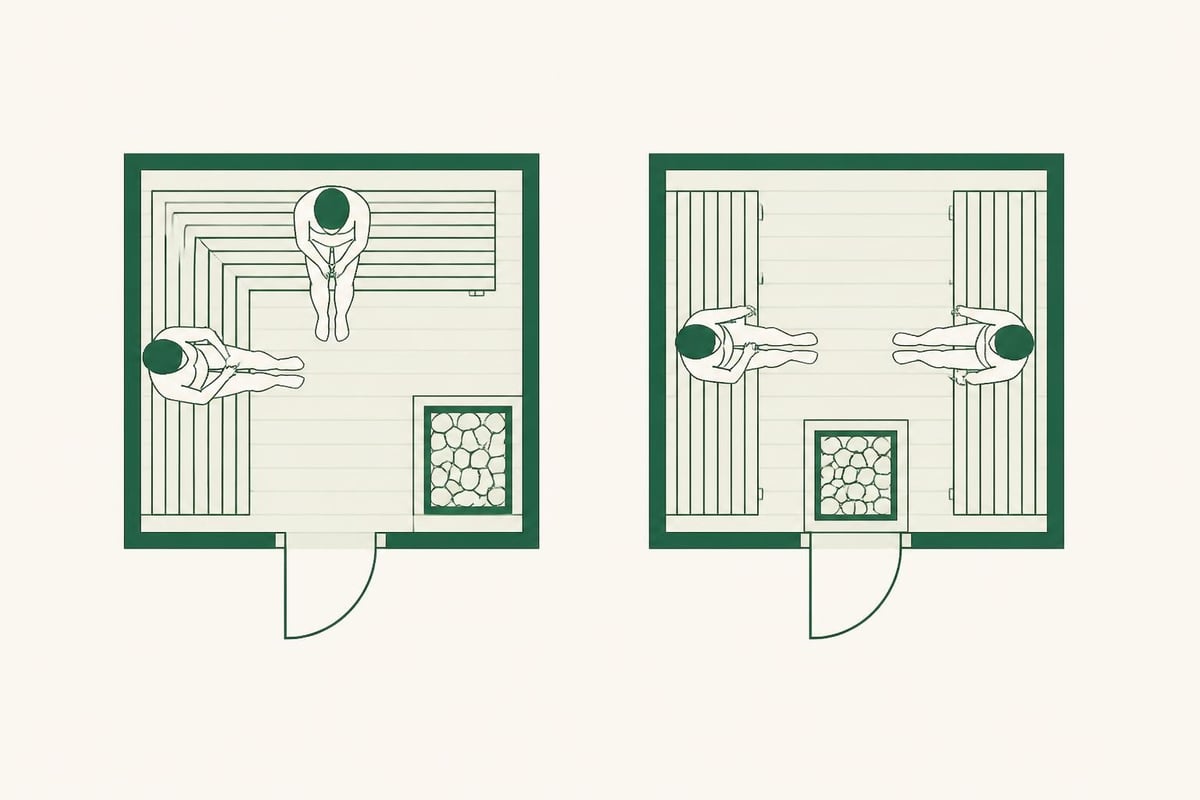
Traditional Steam vs Infrared Comparison
The heating method shapes every other decision. Traditional saunas create löyly, the humid pulse of steam when water meets hot stones. Infrared heats your skin directly without steam or stones.
| Feature | Traditional Steam | Infrared |
|---|---|---|
| Heat Source | Electric or wood-fired stone heater | Carbon or ceramic panels |
| Temperature | 160-195°F | 120-140°F |
| Humidity | High with löyly | Zero, dry heat |
| Heat-Up Time | 30-45 minutes | 10-15 minutes |
| Installation | 240V circuit outdoor, or indoor with ventilation | 120V plug-and-play indoor |
| Maintenance | Annual stone check, wood treatment | Minimal, panel cleaning |
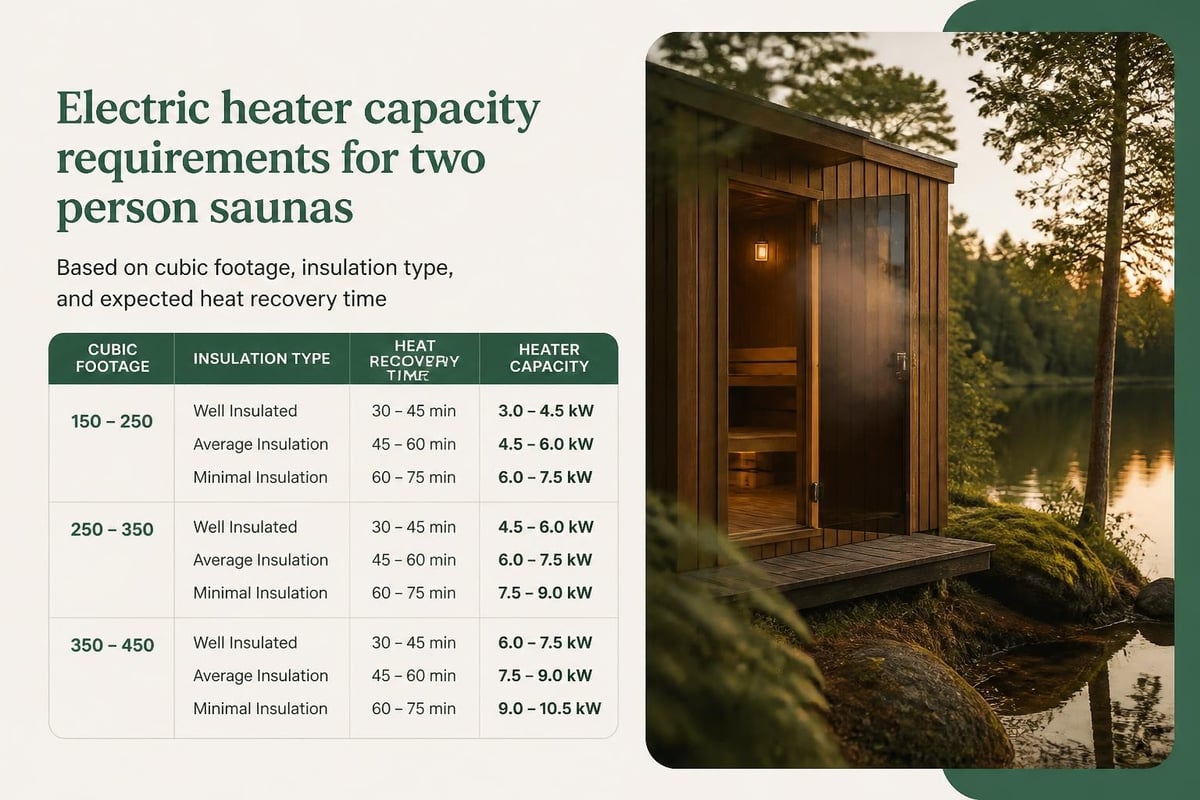
Traditional models require a dedicated electric sauna circuit or wood-fired setup. The heater needs proper sizing for the cubic footage. A two person outdoor barrel typically needs a 4.5 to 6 kW heater with 40 to 50 pounds of igneous stones for consistent heat recovery.
Infrared models eliminate electrical complexity but sacrifice the steam ritual. Some users prefer the lower temperature. Others find it feels incomplete without the sensory shift that happens when water hits hot stones.
Sizing for Real Use Patterns
Measure how you actually plan to use the space, not just how many bodies technically fit. A 48-inch bench seats two adults shoulder to shoulder but feels cramped for a relaxed session. A 60-inch bench allows spacing or lets one person recline fully.
Practical space considerations:
- Solo sessions: 48 inches gives plenty of room to stretch
- Couples: 54 to 60 inches works better for comfort
- Occasional third user: Some two person models squeeze three if one sits on a lower bench
- Contrast therapy: Budget exterior space for a cold plunge if you plan the full cycle
Outdoor models require ground prep. Level compacted gravel or a concrete pad prevents settling. Leave clearance for door swing and maintenance access. If your region experiences freeze-thaw cycles, your outdoor space may need paver restoration every few years to maintain a stable base.
Indoor infrared saunas need only floor protection and wall clearance. Check ceiling height, especially in basements. Most units stand 75 to 78 inches tall.
Heating Capacity and Stone Mass
A properly sized heater maintains temperature when you open the door or throw water on stones. Undersized heaters struggle to recover, creating uneven sessions. Oversized heaters cycle inefficiently.
For traditional steam saunas, calculate cubic footage (length × width × height in feet). Multiply by 150 to 200 BTU per cubic foot depending on insulation and wall material. A typical 5×5×7 foot two person outdoor sauna needs 26,000 to 35,000 BTU, roughly equivalent to a 6 kW electric heater.
Stone mass matters more than most buyers realize:
- 40 pounds minimum for stable heat in a two person unit
- Igneous rocks like olivine or peridotite hold heat longer than sedimentary types
- Replace cracked or crumbling stones annually
- More stones mean gentler, longer-lasting steam
Most quality North American saunas use Harvia heaters, known for reliability and accurate thermostats. The brand matters less than correct sizing and stone quality.
Infrared panels use wattage instead of stone mass. A two person cabin typically includes 1,500 to 2,000 watts distributed across four to six panels. Full spectrum infrared models combine near, mid, and far infrared wavelengths, though evidence for distinct health effects remains associational, not proven.
Indoor vs Outdoor Placement
Indoor saunas simplify logistics but require ventilation planning. Bathrooms and basements work if you can manage moisture and provide fresh air intake. Infrared units produce no steam, eliminating humidity concerns but still needing heat dissipation.
Outdoor saunas offer design freedom. Barrel saunas fit narrow side yards. Cabin-style models with porches create a dedicated wellness zone. The Canadian Timber Georgian Cabin Sauna with Porch provides a covered transition space where you pause between hot and cold, a detail that matters more than most buyers expect.
Outdoor installation checklist:
- Level foundation with drainage
- Electrical run for heater (240V for traditional, 120V for infrared)
- Clearance from property lines and structures per local code
- Seasonal access during snow or rain
- Privacy screening if neighbors overlook your yard
Wood choice affects longevity. Eastern White Cedar resists rot and insect damage naturally. Red Cedar adds aroma. Thermally treated Grandis combines moisture resistance with dimensional stability, useful in humid climates.
For customers planning a complete contrast therapy setup, pairing your sauna with a dedicated cold plunge creates the cycle Finns practiced for generations. Place them close enough for quick transition but far enough that snow or rain between them feels intentional, not accidental.
Assembly and Electrical Requirements
Indoor infrared saunas ship mostly assembled. You connect clasp panels, position benches, and plug into a standard outlet. Total setup time runs two to three hours for two people.
Outdoor traditional saunas arrive as prefabricated panels, roof sections, benches, and hardware. Assembly follows numbered steps, usually taking a full day with two or three helpers. The work is straightforward but requires basic carpentry skills and attention to sealing.
Electrical differences:
- 120V infrared: Plugs into any household outlet, draws 12 to 15 amps
- 240V traditional: Requires dedicated circuit, 30 to 40 amp breaker, permits in most jurisdictions
- Wood-fired: No electrical but needs chimney clearance and spark arrester
Hire a licensed electrician for 240V work unless you have professional experience. Incorrect wiring creates fire risk and voids warranties. Most outdoor units position the heater inside the cabin, running a weather-sealed conduit from your electrical panel.
Some regions require building permits for outdoor structures over a certain square footage or electrical capacity. Check local codes before ordering. Inspectors occasionally request engineering stamps for snow load in northern climates.
Material and Construction Quality
Wall thickness and wood grade separate budget models from those that last decades. Single-layer tongue-and-groove boards (3/4 inch thick) work for mild climates. Double-wall construction with insulation between layers retains heat better in cold regions.
Construction details that matter:
- Mortise-and-tenon joinery at corners versus simple butt joints
- Stainless steel bands on barrels to prevent warping
- Tempered glass doors rated for thermal stress
- Integrated ventilation adjusters, not just drilled holes
Eastern White Cedar weathers to silver-gray if left untreated. Some owners prefer the natural patina. Others apply penetrating oil annually to maintain the original honey tone. Red Cedar holds its color longer but costs more.
Indoor units use Hemlock or Aspen for lighter color and minimal aroma. The wood matters less indoors since it never faces UV or precipitation.
Growing Up with Sauna on Lake Saimaa
I spent every summer on Saimaa, the lake district in Eastern Finland where sauna was never a wellness trend, just part of the day. My grandfather's sauna sat twenty meters from the water. We heated it with birch, threw water on the stones until the room filled with steam, then walked straight into the lake. Winter, we cut a hole in the ice. The cycle was the point, not just the heat. That rhythm shapes how I think about what makes a sauna worth owning. It's not a product. It's a practice.
Key Decision Factors Summary
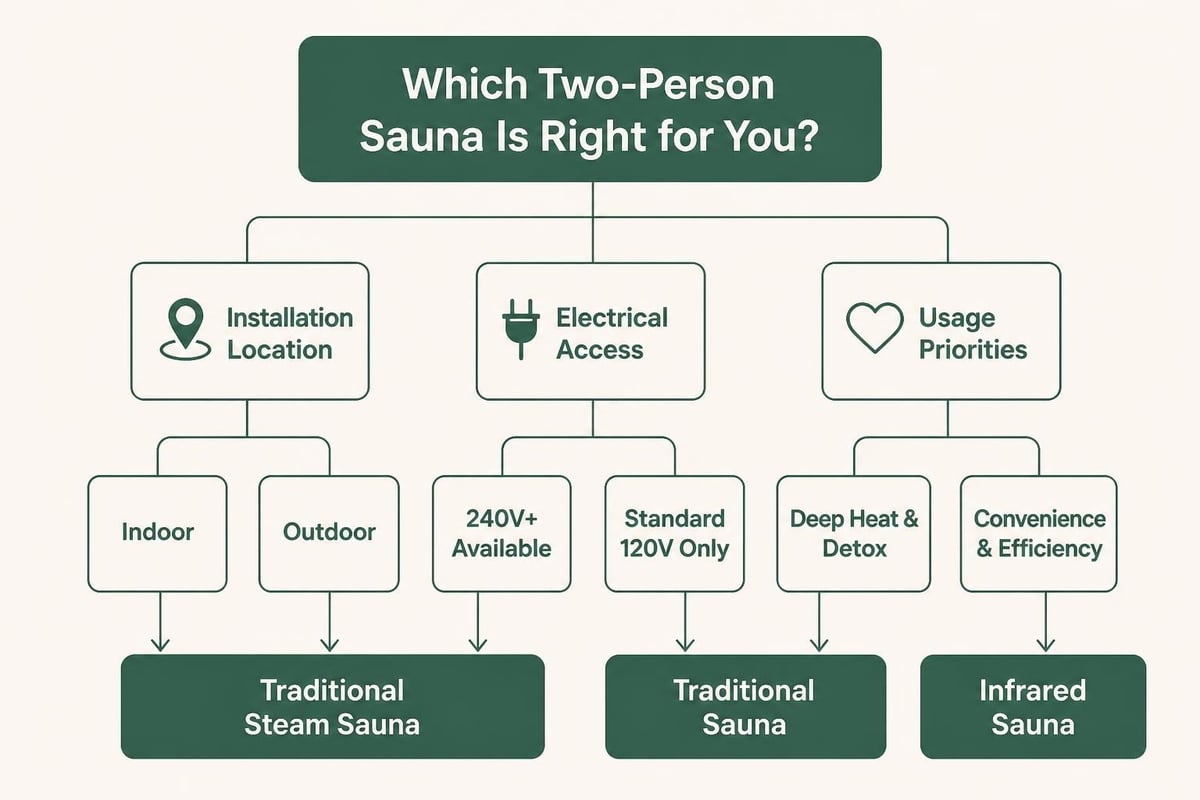
Choosing between models involves trade-offs. No single option suits everyone. Consider how each factor aligns with your situation.
| Factor | Traditional Steam Priority | Infrared Priority |
|---|---|---|
| Primary use | Authentic löyly ritual | Quick daily sessions |
| Location | Outdoor yard | Indoor basement or spare room |
| Electrical | 240V available or can add | 120V plug-in simplicity |
| Temperature preference | 175-195°F high heat | 120-140°F gentler warmth |
| Humidity tolerance | Enjoy steam | Prefer dry heat |
| Setup time per session | 45 minutes acceptable | Want 15 minute heat-up |
Comparing two person versus larger models shows that four person saunas only add 12 to 18 inches per dimension but significantly increase heating cost and footprint. Most couples find the two person size ideal for daily use.
Budget for accessories beyond the base unit. Bucket and ladle for steam, thermometer and hygrometer, backrests, LED lighting, and external steps for barrel models all add to usability.
Cost Considerations Beyond Purchase Price
A two person sauna involves ongoing expenses beyond the initial investment. Traditional electric models in cold climates might add thirty to fifty dollars monthly to your electrical bill with regular use. Wood-fired units require seasoned firewood, roughly half a cord per season for frequent bathers.
Infrared models draw less power, typically adding fifteen to twenty-five dollars monthly. The lower operating temperature reduces energy consumption but also changes the experience fundamentally.
Ongoing costs to anticipate:
- Electricity or firewood
- Annual stone replacement for traditional heaters
- Wood treatment or sealing every two to three years for outdoor units
- Replacement heater elements every eight to twelve years
- Deep cleaning supplies and accessories
Factor in the value of space. An outdoor sauna frees up indoor square footage. An indoor unit eliminates weather concerns but claims a room permanently. Neither choice is inherently better. The right answer depends on your property layout and how you imagine using the sauna through seasons and years.
Some buyers include a home cinema or audio system in their wellness space design, creating a retreat that extends beyond the sauna itself. Bluetooth speakers inside the cabin work, though prolonged high heat shortens electronics life. Traditional users prefer silence or natural sounds.
Maintenance Requirements by Type
Traditional outdoor saunas need periodic wood treatment. Untreated cedar develops surface cracks and weathering within two years. A penetrating oil or wood-specific sealer applied annually extends life and appearance. Avoid film-forming finishes that trap moisture and peel.
Check roof shingles and flashing after heavy snow or wind. Most barrel saunas use metal bands that expand and contract with temperature swings. Tighten hardware every few months to prevent warping.
Indoor infrared maintenance:
- Wipe carbon panels monthly with a dry cloth
- Vacuum floor and benches to remove dust
- Check cord and plug for damage
- Replace chromotherapy bulbs as needed
- Inspect door seals and hinges annually
Stone heaters require the most attention. Inspect stones every twenty to thirty sessions. Discard any pieces smaller than your fist or showing cracks. Reorganize remaining stones to eliminate air gaps. Add new stones to maintain total mass.
Clean benches with mild soap and water. Avoid harsh chemicals that absorb into wood and volatilize during heating. Some users sand benches lightly every few years to remove accumulated oils and restore a fresh surface.
FAQ
How long does a two person sauna session typically last?
Traditional Finnish sessions run fifteen to twenty minutes in the heat, followed by a cool-down period. Some users build up to longer sessions gradually. Infrared bathers often stay thirty to forty minutes due to the lower temperature, though there is no traditional reference for that practice.
Can you install a two person sauna in a basement?
Yes, if you have adequate ceiling height, electrical access, and ventilation. Infrared models work best indoors because they produce no moisture. Traditional steam saunas need careful moisture management and fresh air intake to prevent mold.
What is the minimum ceiling height needed?
Most two person saunas require seven feet of interior height, meaning your basement ceiling should be at least 84 inches. Measure carefully, accounting for any ductwork, pipes, or beams that reduce clearance.
Do you need a floor drain for a two person sauna?
Outdoor traditional saunas benefit from drainage underneath the structure, though not necessarily a plumbed drain. Indoor infrared saunas produce no water and need only a waterproof mat or tile underneath to protect flooring from heat.
How much does it cost to run a two person sauna monthly?
Electric traditional saunas using 6 kW heaters for four sessions weekly average thirty to fifty dollars monthly depending on local electricity rates. Infrared models using 1.5 to 2 kW draw half that amount. Wood-fired saunas depend on firewood cost and availability.
A two person sauna works when the size matches your actual usage, the heating method aligns with your expectations, and the installation fits your space and skills. Most buyers narrow choices by deciding indoor versus outdoor first, then traditional steam versus infrared second. Everything else follows from those anchors. If you are still weighing options or need help matching a specific model to your situation, Ask Petri About Your Sauna. I answer every question personally and only recommend what makes sense for how you will actually use it.
Share:
Contrast Therapy: The Finnish Sauna & Cold Plunge Ritual
Sauna for a Cold: What Works, What Doesn't (2026)