
A 2 person outdoor sauna fits two adults comfortably on opposite benches or side by side on a single bench. Most measure 4 to 6 feet wide and 5 to 7 feet deep, small enough for a modest yard but large enough for a shared session. The size suits couples, close friends, or a parent and child. You can use it alone when you want more room to stretch out.
What Makes a Sauna Right for Two People
The interior bench layout defines how two people actually share the space. Traditional Finnish saunas place benches along opposite walls, letting each person claim their own zone. Barrel saunas typically run benches lengthwise, so you sit shoulder to shoulder. Both work, but the opposite bench layout gives more personal space.
Ceiling height matters more than floor area. A 2 person outdoor sauna should measure at least 6 feet 6 inches tall inside, preferably 7 feet. Hot air rises, and you want your head well below the ceiling when seated. Lower ceilings trap heat closer to your body, which can feel uncomfortable during longer sessions.
Traditional vs Infrared Heating
Traditional steam saunas use an electric or wood-burning heater with stones. You pour water on the stones to create löyly, the steam that makes the air feel immediately hotter. The room heats to 150-195°F, and the humidity spikes briefly with each ladle of water. This is the sauna Finns have used for two thousand years.
Infrared saunas use panels that emit infrared light, warming your skin directly without heating the air as much. The room stays around 120-140°F, which some people find gentler. No steam, no stones, no ritual of the water. The experience is quieter and drier, closer to sitting in warm sunlight than to a Finnish sauna.
| Feature | Traditional Steam | Infrared |
|---|---|---|
| Temperature | 150-195°F | 120-140°F |
| Humidity | Variable with water | Always dry |
| Heat-up time | 30-45 minutes | 10-15 minutes |
Neither type is inherently better. The choice depends on whether you value the ritual of löyly or prefer a lower temperature with no wait time.
Space and Placement in Your Yard
A 2 person outdoor sauna requires a level foundation and clearance around all sides. The footprint averages 5 by 6 feet for a barrel, 6 by 7 feet for a cabin. Add 2 feet of clearance on all sides for air circulation, door swing, and maintenance access. Total space needed is roughly 9 by 10 feet minimum.
The foundation can be a concrete slab, paver stones, gravel with timber supports, or a pressure-treated deck frame. Concrete offers the most stability and the longest service life. Pavers work well if you level the ground carefully and use a compacted gravel base. Outdoor sauna installation requires attention to drainage so water from rain or snow does not pool under the structure.
Site selection priorities:
- Level ground or a surface you can level without major excavation
- Electrical access for an electric heater (240V, 30-50 amp circuit depending on heater size)
- Privacy from neighbors if that matters to you
- A path you can walk comfortably in winter
Avoid placing the sauna directly against your house or garage. Building codes in most regions require clearance from combustible structures, typically 3 feet or more. Even electric saunas benefit from open air on all sides to manage moisture and prevent mold on nearby surfaces.
Barrel vs Cabin Design
Barrel saunas look like a wine barrel cut lengthwise. The curved walls shed rain and snow easily, and the rounded shape heats efficiently because there are no corners where air can stagnate. The interior feels cozy, almost like sitting inside a wooden drum. Most barrel models seat two people on a single long bench.
Cabin saunas have vertical walls and a peaked or flat roof. The square interior offers more headroom and easier bench placement. You can configure benches in an L-shape or along opposite walls, giving each person their own side. Cabins often include a small changing area or porch, which is useful in cold climates.
Barrels heat faster because of less air volume. Cabins provide more flexibility in layout and a more traditional building appearance. Both styles work well as a 2 person outdoor sauna if built from quality wood and properly insulated.
Heater Sizing and Stone Capacity
Electric heaters for outdoor saunas are sized in kilowatts. A 2 person outdoor sauna typically needs a 4.5 to 6 kW heater, depending on insulation quality, wall thickness, and climate. Undersized heaters struggle to reach proper temperature in cold weather. Oversized heaters cycle on and off too quickly, which shortens their service life and prevents the stones from holding steady heat.
Stone mass is often overlooked. The heater should hold at least 30 to 40 pounds of stones. More stone mass means more stable heat and better löyly. When you pour water on the stones, a larger mass absorbs the water and releases steam gradually. A small stone pile creates a quick burst of steam that dissipates before you feel the full effect.
Most quality outdoor saunas sold in North America use Harvia heaters from Finland. Harvia has built sauna heaters since 1950 and understands stone capacity, air circulation, and temperature stability. Other brands exist, but Harvia remains the standard for traditional electric sauna heaters.
Wood-Fired Option
Some 2 person outdoor saunas can accommodate a wood-burning stove instead of electric. Wood fire takes longer to heat the room, usually 60 to 90 minutes, but the heat feels softer and the experience connects you to the oldest form of sauna. You need a chimney pipe, proper clearance from walls, and a spark arrestor on top.
Wood-fired saunas require more attention during the session. You feed the fire, adjust airflow, and monitor temperature manually. This is not a drawback if you enjoy the process. The smell of burning birch or maple, the sound of the fire, the slower pace, all of it becomes part of the session.
Check local regulations before installing a wood-burning sauna. Some municipalities restrict wood smoke or require permits for any structure with a chimney.
Choosing Between Indoor and Outdoor
Comparing indoor and outdoor two-person saunas comes down to available space and the experience you want. Indoor saunas fit in basements, bathrooms, or spare rooms. They offer convenience, especially in winter, and require no exterior weatherproofing. Outdoor saunas create a dedicated retreat separate from your living space, which some people prefer psychologically.
An outdoor 2 person sauna lets you step directly outside for cold air or a plunge. The contrast between hot and cold happens immediately, without walking through your house in a towel. In Finland, you step from sauna to lake. In North America, you might step to snow, a cold shower, or a plunge tub. The proximity matters.
Weather affects outdoor saunas more. Wood expands and contracts with humidity changes. Seals around doors and vents need occasional checking. Cedar and hemlock handle moisture well, but no wood is maintenance-free. Expect to clean the exterior once or twice a year and inspect the roof after heavy storms.
Material and Durability
Most 2 person outdoor saunas use Western Red Cedar, Eastern White Cedar, or Hemlock. Cedar contains natural oils that resist rot and insects. Hemlock is harder and more affordable but lacks cedar's aroma. Both woods perform well outdoors if properly finished and maintained.
Thicker walls provide better insulation. Standard tongue-and-groove construction uses 1.5-inch boards. Premium models use 2-inch boards or add an insulation layer between inner and outer walls. Thicker walls hold heat longer and reduce the heater's workload, especially in climates with cold winters.
The roof should overhang the walls by several inches to keep rain off the siding. Metal or asphalt shingles work better than wood shingles, which require more maintenance and eventually leak. A well-built roof lasts fifteen years or more without major repairs.
Assembly and Installation Realities
Most outdoor saunas ship as kits. You assemble the walls, roof, benches, and door yourself or hire a contractor. Kit assembly takes two people a full weekend, sometimes longer if you are building the foundation simultaneously. Detailed instructions help, but expect some problem-solving around alignment and hardware.
Pre-assembled saunas arrive ready to place on your foundation. You pay more for this convenience, but it eliminates construction errors and speeds up installation to a single day. Pre-assembled models are heavier and require delivery with a forklift or crane, which limits placement options if your yard has narrow access.
Installation checklist:
- Build and level the foundation
- Run electrical wiring to the sauna location (hire a licensed electrician)
- Assemble the sauna structure or position the pre-assembled unit
- Install the heater and connect to power
- Test the heater and verify temperature reaches at least 160°F
- Season the wood by running the sauna empty for 2-3 sessions
Electrical work must meet local code. A 240V circuit requires a dedicated breaker, proper gauge wire, and GFIC protection in most jurisdictions. Do not attempt this yourself unless you hold an electrical license.
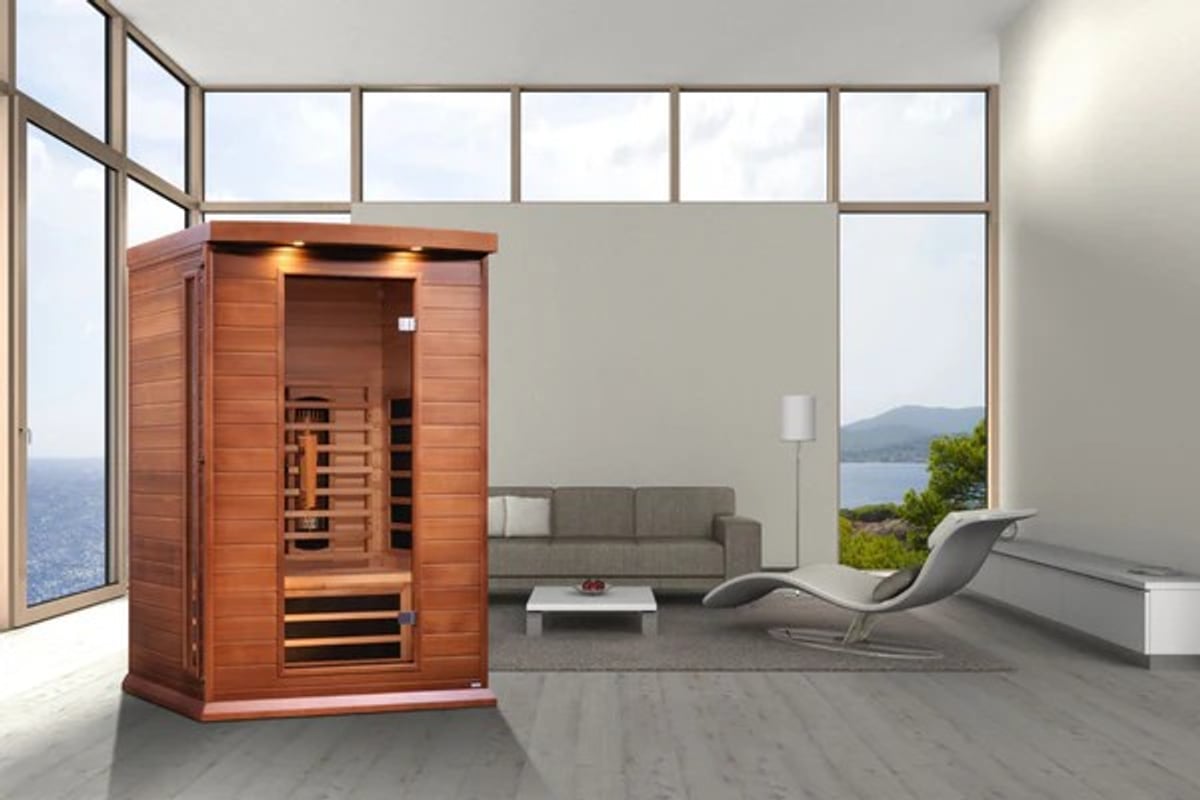
For those considering an infrared option for compact indoor or garage placement, the Maxxus 2 Person Full Spectrum IR Sauna uses Canadian reforested red cedar and plugs into standard 120V power, which simplifies installation when outdoor space is limited.
What I Learned Growing Up on Lake Saimaa
I grew up in a small house on the shore of Lake Saimaa in Eastern Finland. The sauna was a separate building, maybe twelve feet from the water. My father and I heated it every Saturday afternoon, winter and summer. We sat across from each other on opposite benches, him by the door, me by the window. After löyly, we walked down the dock and jumped in, no matter the season. That routine taught me that sauna is not about wellness trends or health claims. It is about heat, cold, quiet, and the reset that comes from doing the same simple thing every week for years.
Practical Considerations Before You Buy
Permits vary by location. Some municipalities classify outdoor saunas as accessory structures and require building permits. Others treat them like sheds and exempt structures under a certain size. Check with your local building department before ordering. The sauna company will not handle permits for you.
Ventilation prevents stuffiness and ensures fresh air during sessions. A proper 2 person outdoor sauna has an intake vent low on the wall near the heater and an exhaust vent higher on the opposite wall or ceiling. Air enters, circulates past the heater, rises with the heat, and exits through the upper vent. This passive system works without fans or mechanical help.
Ongoing costs to consider:
- Electricity for an electric heater (varies by usage, typically 30-60 cents per session)
- Wood treatment or stain every 1-2 years for exterior maintenance
- Stone replacement every few years as stones crack and crumble
- Occasional repairs to door seals, hinges, or roof
Insurance may or may not cover the sauna. Some homeowner policies include detached structures automatically. Others require a rider or separate coverage. Ask your insurance agent before installation, especially if you are financing the purchase.
Frequently Asked Questions
How long does it take to heat a 2 person outdoor sauna?
Electric saunas take 30 to 45 minutes to reach 160-180°F, depending on outdoor temperature and insulation. Wood-fired saunas take 60 to 90 minutes.
Can one person use a 2 person sauna comfortably?
Yes. The extra space lets you stretch out or switch positions during the session. Most people who own a 2 person outdoor sauna use it alone as often as with a partner.
Do I need a concrete foundation?
Concrete provides the most stable and long-lasting base, but pavers or a gravel-and-timber platform also work if properly leveled and drained. Avoid placing the sauna directly on grass or soil.
What temperature should I aim for?
Traditional Finnish saunas run between 160°F and 195°F. Start at the lower end and adjust based on comfort. Infrared saunas operate around 120-140°F and do not go higher.
How often should I use the sauna?
Finns typically sauna two to three times per week, though daily use is common in sauna-centered households. Benefits of regular sauna use are associated with consistent sessions rather than intensity or duration.
A 2 person outdoor sauna works when you match size, heating method, and placement to your actual yard and routine. The options are more straightforward than most buyers expect once you separate real needs from marketing. If you are researching saunas for your home and want direct answers from someone who grew up with this tradition, ask Petri about your sauna. He responds personally to every question.
Share:
Mini Sauna: Small Space, Full Finnish Tradition
Cold Plunge Benefits: Research, Risks, and What Works