
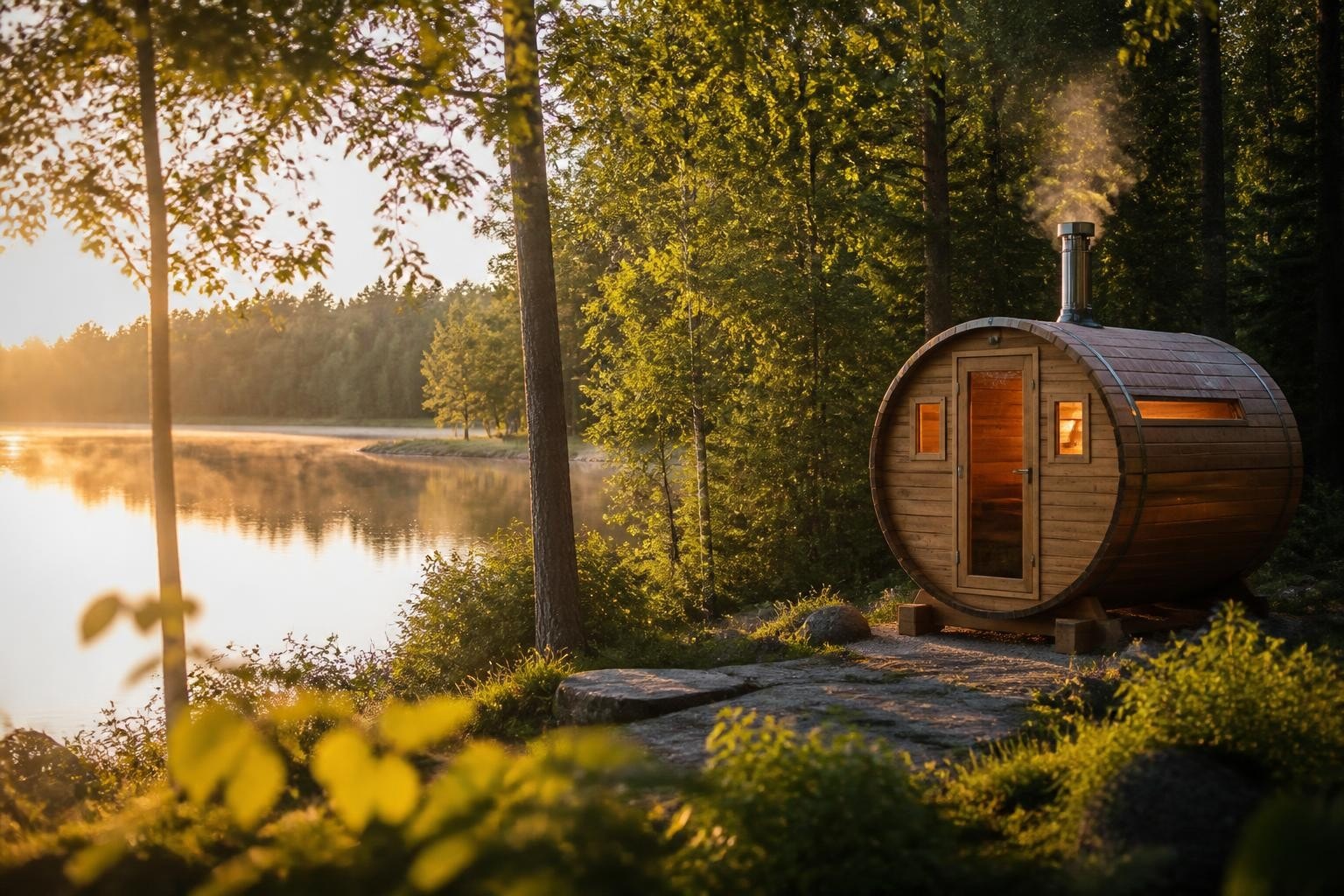
Shopping for a traditional sauna for sale means choosing between outdoor and indoor placement, electric or wood-burning heat, and construction materials that determine lifespan and maintenance. A traditional sauna generates heat from stones, creating löyly when you throw water on them. That steam moment, humid and intense, separates traditional from infrared. Most American homeowners researching a traditional sauna for sale have a backyard and want outdoor placement, though basement installations work well in colder climates.
What Defines a Traditional Sauna
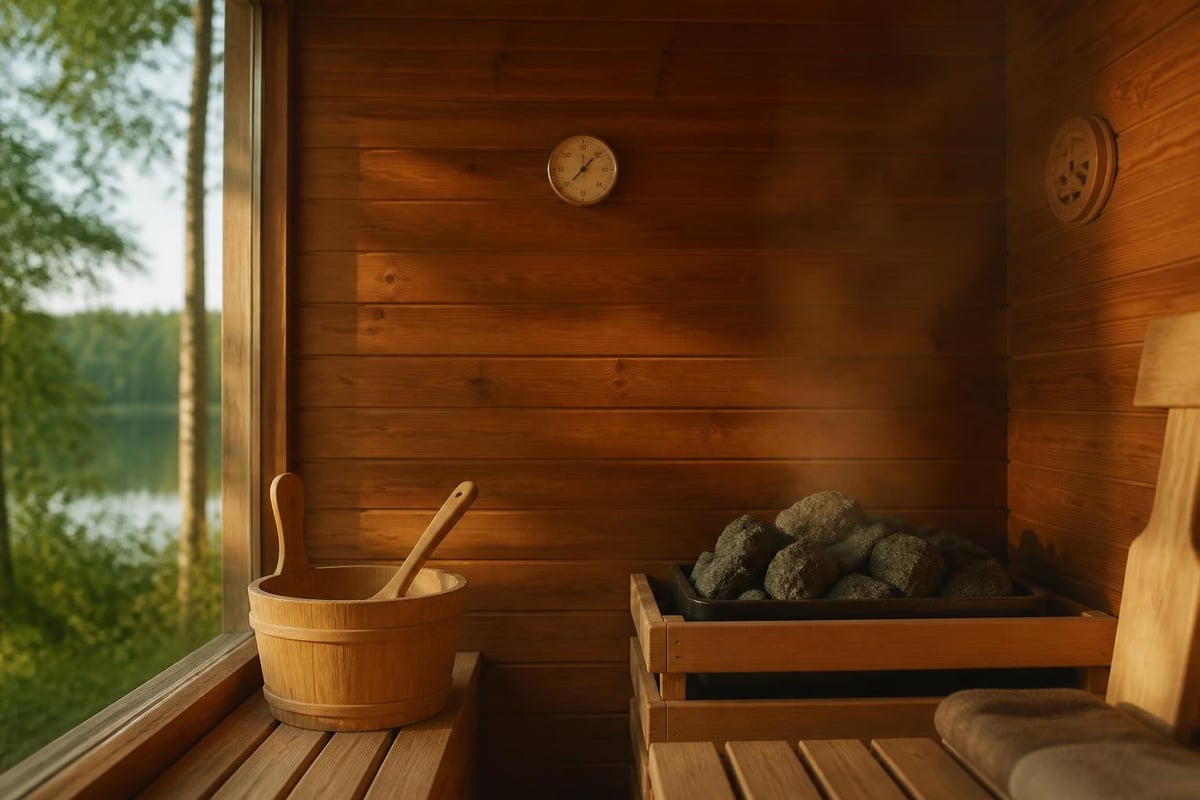
Traditional saunas heat air through stones. An electric or wood-burning heater warms stones to 150-200°F (66-93°C), creating dry heat that rises. When you ladle water onto the stones, steam surges through the room. That moment of wet heat is löyly, the defining element of Finnish sauna culture.
The heat source matters less than the stones. Electric heaters cycle on and off to maintain temperature. Wood-burning stoves require tending but offer sustained radiant heat. Both work if the heater has enough stone mass to hold and release heat evenly.
A traditional sauna needs ventilation. Fresh air enters low, near the heater. Heated air rises and exits through a vent near the ceiling. This constant exchange keeps the room breathable during long sessions. Poor ventilation creates stale, uncomfortable air.
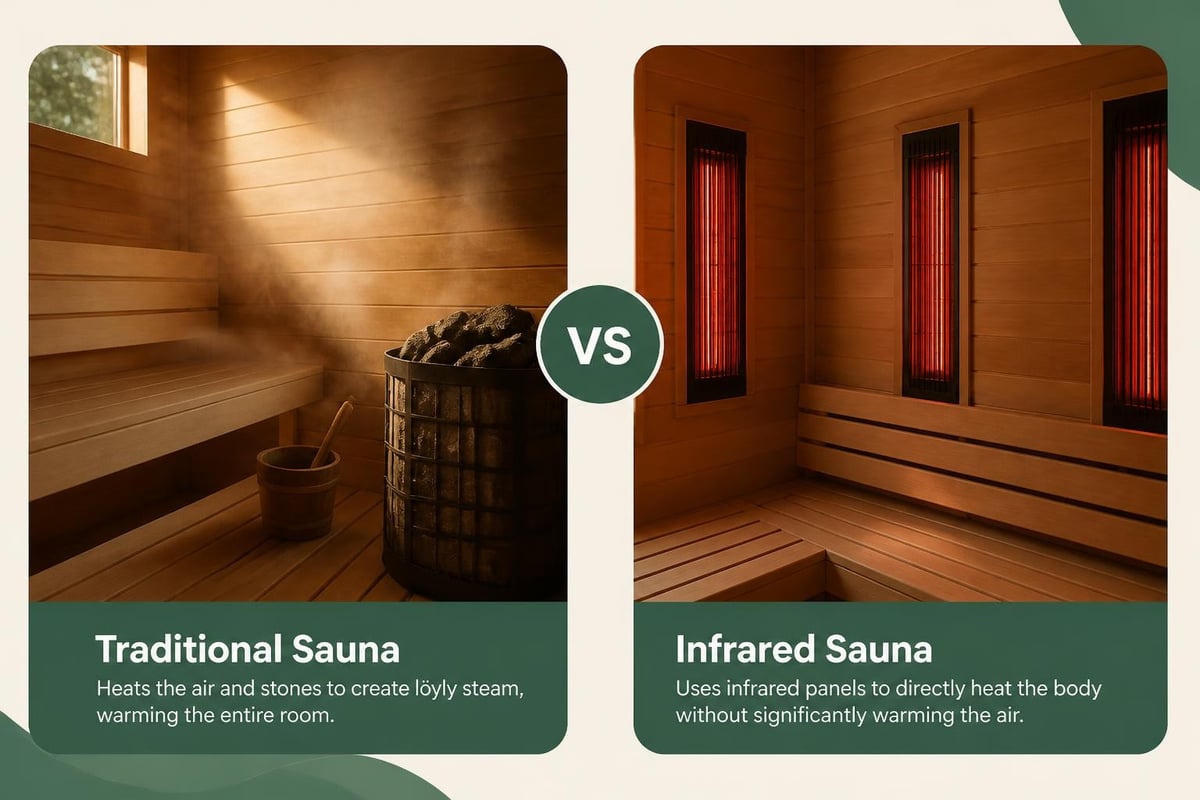
Traditional vs Infrared: How Heat Differs
Traditional saunas heat the air around you. Infrared panels heat your skin directly without warming the room significantly. Both are valid approaches. Traditional feels like sitting in a hot room. Infrared feels like standing in strong sunlight.
| Feature | Traditional | Infrared |
|---|---|---|
| Heat source | Heated stones | IR panels |
| Room temp | 150-195°F | 120-140°F |
| Steam option | Yes (löyly) | No |
Traditional requires higher power (240V for most electric models) and takes 30-45 minutes to heat. Infrared plugs into standard 120V outlets and heats in 10-15 minutes. The difference in operating mechanism also affects session length and comfort.
Outdoor vs Indoor Traditional Sauna Options
Most customers searching for a traditional sauna for sale choose outdoor placement. Outdoor saunas eliminate indoor ventilation concerns, require no bathroom proximity, and create a backyard wellness space. Indoor saunas fit basements or spare rooms where outdoor installation is not possible.
Outdoor advantages:
- No interior moisture concerns
- Natural cool-down space after sessions
- Easier electrical and ventilation installation
- Can be wood-fired without exhaust complexity
Indoor advantages:
- Year-round accessibility in harsh climates
- No exposure to weather or wildlife
- Smaller footprint, fits unused rooms
- Attached to home electrical and plumbing
Outdoor saunas need a level foundation (gravel, pavers, or concrete pad) and access to 240V power for electric heaters. Most arrive as prefabricated kits. You assemble panels, install benches, and connect electrical. A skilled homeowner can complete assembly in one weekend with help.
Indoor saunas require floor waterproofing, wall protection, and dedicated ventilation to the exterior. The construction requirements for indoor placement add complexity. Prefabricated indoor saunas simplify this by containing all moisture within the unit.
Barrel, Cabin, and Pod Designs
Three outdoor styles dominate the market when you browse a traditional sauna for sale:
Barrel saunas use curved walls to promote air circulation and heat efficiency. Compact footprint. Easy assembly with cradle base and banded construction. Cedar or spruce exterior. Typically 4-6 person capacity. Lower cost than cabins.
Cabin saunas offer traditional rectangular construction with peaked roofs, windows, and sometimes porches. Larger interior space. More upright seating. Easier to add changing areas or extra benches. Higher material cost but classic aesthetic.
Pod saunas feature modern compact designs for 1-2 people. Often panoramic glass fronts. Minimal footprint. Simple electrical setup. Popular for small yards or limited budgets.
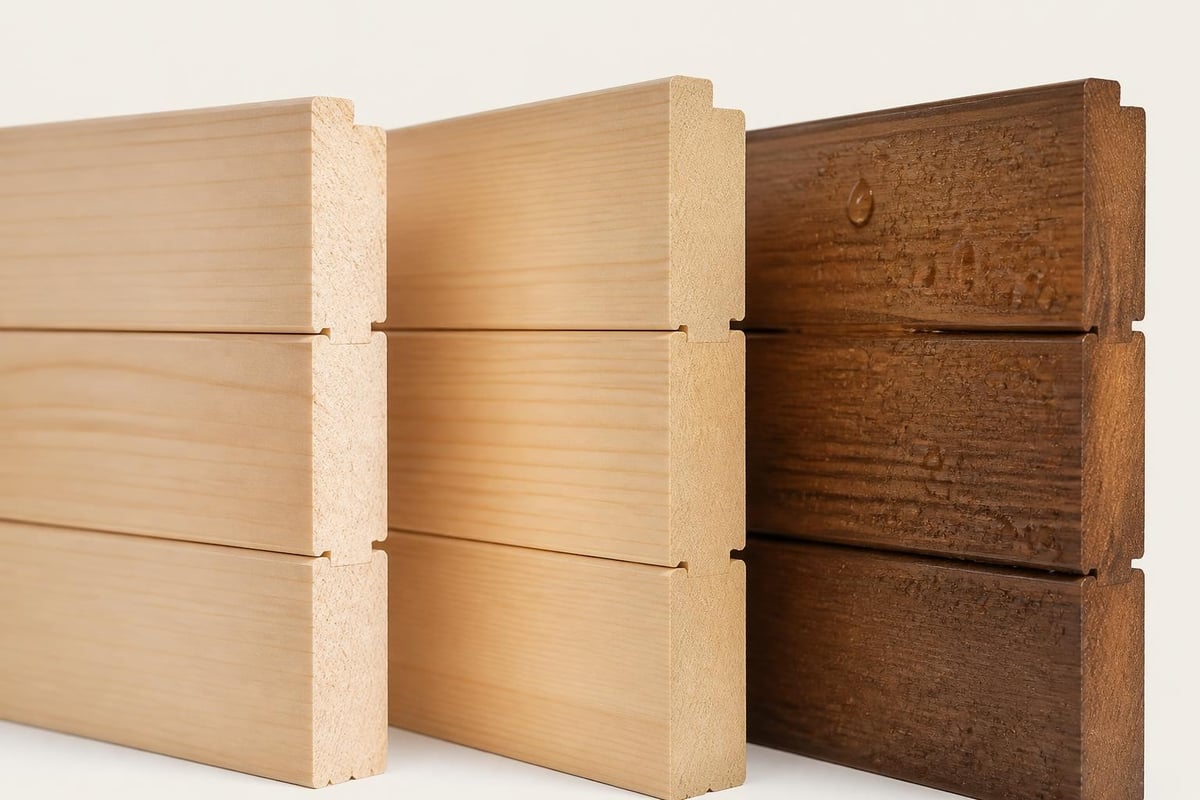
Construction quality varies significantly. Eastern White Cedar resists moisture and insects naturally. Hemlock is stable and affordable. Spruce is common in European imports but less weather-resistant in wet North American climates. Panel thickness (1-2 inches) determines insulation and longevity.
Wood-Fired vs Electric Heaters
Electric heaters dominate the traditional sauna for sale market in North America. They require a 240V dedicated circuit (most need 30-60 amp service depending on sauna size). A licensed electrician runs wire from your panel to the sauna. Installation costs $500-1,500 depending on distance and local codes.
Electric heaters heat predictably and hold temperature without tending. Digital or analog controls let you set exact temperature. Most quality outdoor saunas use Harvia heaters manufactured in Finland. These heaters feature stainless steel elements and large stone capacity (40-120 pounds depending on model).
Electric heater advantages:
- Consistent temperature control
- No smoke or ash
- Works in any location with power
- Lower ongoing maintenance
Wood-burning stoves create radiant heat and ceremonial appeal. You build a fire, tend it, and the stove radiates warmth into the room. Stones sit on or around the firebox. Heat output varies with wood type and how you manage the fire.
Wood-burning advantages:
- No electrical requirements
- Lower operating cost (if you source wood)
- Intense radiant heat from stove mass
- Traditional Finnish experience
Wood stoves need chimney installation, clearance from walls, and regular cleaning. Most building codes require specific clearances and spark arrestors. Wood-fired saunas work best in rural settings where smoke is not a concern.
Sizing: How Many People Actually Fit
Sauna capacity ratings reflect tight bench seating, not comfortable use. A "6-person" sauna fits six people if half sit on the upper bench and half on the lower, knees touching. For comfortable sessions with family or friends, cut the rating in half.
A two-person sauna typically measures 4x4 or 4x5 feet inside. One or two adults can sit or recline on the upper bench. A 6x6 or 6x8 cabin comfortably holds three adults with space to move and position water buckets.
| Sauna Size | Rated Capacity | Comfortable Use |
|---|---|---|
| 4x4 ft | 2-3 person | 1-2 adults |
| 5x6 ft | 3-4 person | 2-3 adults |
| 6x8 ft | 4-6 person | 3-4 adults |
Bench layout matters more than floor space. L-shaped benches maximize seating. A full upper bench lets one person recline while others sit. Lower benches should be deep enough to sit comfortably (16-18 inches minimum).
Ceiling height affects heat layering. Seven-foot ceilings are standard. Taller ceilings waste heat at the top. Shorter ceilings feel cramped. The hottest air sits at ceiling level. Your head should be 12-18 inches below the ceiling when sitting on the upper bench.
Heater Sizing and Stone Mass
Heater output (measured in kilowatts) must match sauna volume. Undersized heaters take too long to heat and struggle to maintain temperature when you add water to stones. Oversized heaters waste energy and can create uncomfortably fast temperature swings.
A general guideline: 1 kW per 50 cubic feet of interior space, adjusted for insulation and climate. A 6x6x7 foot sauna (252 cubic feet) needs about 5-6 kW. Colder climates or poorly insulated saunas need more power. Well-insulated indoor saunas need less.
Stone mass matters more than most buyers realize. Small heaters with 20-30 pounds of stones heat quickly but cool rapidly when you throw water. They cannot sustain good löyly. Larger heaters holding 60-120 pounds of stones release steady heat and create richer steam.
Harvia, the Finnish manufacturer, produces most quality heaters used in North American saunas. Their M-series and Cilindro models offer different stone capacities and outputs. Other reputable brands include Tylo and Helo. Heater brand matters less than sizing and stone capacity for your specific sauna.
Material Quality and Longevity
The wood species and construction quality determine how long a traditional sauna for sale will last. Cheap saunas use thin panels (less than 1 inch), soft woods like pine, and minimal fasteners. Quality saunas use 1.5-2 inch tongue-and-groove panels, rot-resistant wood, and marine-grade hardware.
Eastern White Cedar is the premium choice for outdoor saunas. Natural oils resist moisture, insects, and decay. Aromatic but not overpowering. Soft enough to work easily but dense enough to insulate well. Expect 15-25 years with minimal maintenance.
Hemlock offers stability and neutral aroma. Less natural rot resistance than cedar but still performs well when properly finished. Common in indoor saunas and budget outdoor models. 10-15 year lifespan with regular sealing.
Thermo-treated woods undergo heat modification to improve moisture resistance and dimensional stability. Thermo Grandis (treated Grandis wood) combines eco-friendly sourcing with enhanced performance. Used in higher-end indoor models.
Panel thickness affects insulation and structural strength. One-inch panels work for indoor saunas in conditioned spaces. Outdoor saunas need 1.5-2 inch panels to withstand temperature swings and retain heat efficiently.
Glass Doors and Windows
Full glass doors are now common on saunas marketed for modern homes. They let light in and create visual openness. Tempered safety glass handles temperature swings. Magnetic catches seal without mechanical latches that corrode.
Traditional wooden doors with small windows provide better heat retention. The smaller glass area loses less heat. Wooden doors feel more authentic to Finnish sauna culture but limit natural light.
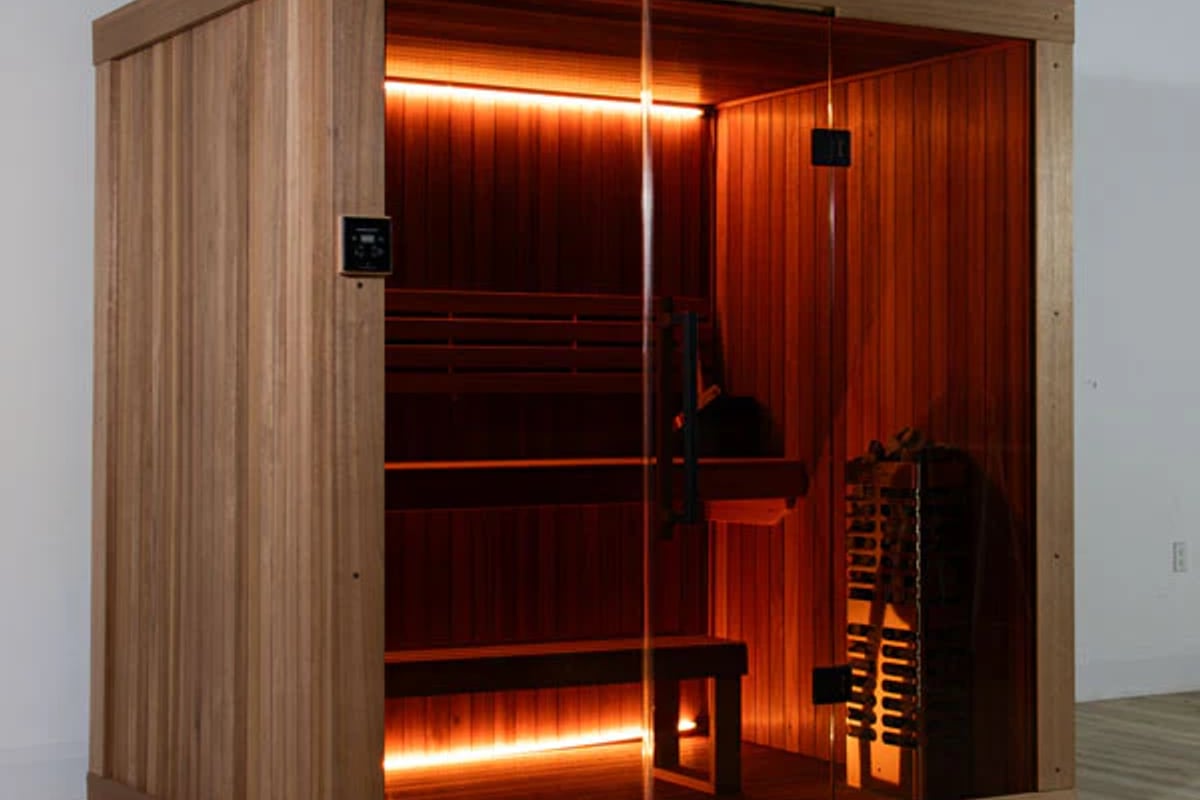
The LeisureCraft Loft CT Element Indoor Sauna features a full glass front that brings openness to indoor spaces while maintaining the traditional steam experience. The Thermo Grandis construction handles moisture while the glass creates architectural elegance.
Window placement affects privacy and light. Side windows let you see outdoors during sessions. Front windows facing your yard work if you have privacy. Some outdoor saunas include no windows, relying only on interior lighting.
Installation and Site Preparation
Most traditional saunas for sale arrive as prefabricated kits. Outdoor barrel and cabin saunas include pre-cut panels, benches, hardware, and assembly instructions. Two people with basic tools complete assembly in 6-12 hours depending on model complexity.
Site preparation determines installation success. Outdoor saunas need a level foundation that drains water away from the structure. Options include:
Gravel base: 4-6 inches of compacted gravel creates drainage and level surface. Least expensive. Works well for barrel saunas. Requires periodic releveling.
Paver base: Concrete pavers on compacted gravel provide solid, level support. More stable than gravel alone. Easier to keep clean around the sauna.
Concrete pad: Most permanent and level option. Overkill for most residential installs but necessary for very large cabins or strict building codes.
The foundation should extend 12-18 inches beyond the sauna footprint on all sides. This keeps splashed water away from wood siding and allows air circulation underneath.
Electrical Requirements
Electric saunas need dedicated 240V circuits. Heater amperage determines wire gauge and breaker size. A 6 kW heater typically draws 25 amps and needs 10-gauge wire with a 30-amp breaker. An 8 kW heater needs 8-gauge wire and 40-amp breaker.
A licensed electrician should run the circuit from your main panel to a disconnect box within sight of the sauna. From there, the sauna wiring connects. Most building codes require GFCI protection for sauna circuits. The electrician pulls permits and ensures code compliance.
Distance from your electrical panel affects cost. Running wire 50 feet costs less than 150 feet. Trenching for underground conduit adds labor. Some homeowners reduce cost by placing saunas closer to the house, though this limits yard layout options.
Indoor electric saunas typically use 120V or 240V depending on size. Smaller units under 3 kW can run on standard 120V outlets. Larger indoor saunas need dedicated 240V circuits just like outdoor models.
Prefab vs Custom-Built Considerations
Most buyers choose prefabricated saunas. They arrive ready to assemble with fitted panels, pre-hung doors, and included benches. Quality varies by manufacturer, but reputable brands deliver complete packages. Assembly is straightforward with clear instructions.
Custom-built saunas allow exact sizing for unusual spaces and personalized layouts. You work with a contractor to frame walls, install insulation and vapor barrier, add interior paneling, and integrate electrical. Professional sauna construction requires specific techniques for moisture management and ventilation.
Custom builds cost more in labor but let you match existing architecture or create unique features. Built-in changing areas, custom bench configurations, and integrated sound systems are easier in custom projects. Expect 2-3 times the cost of a prefab sauna of similar size.
For most homeowners, prefab quality now matches or exceeds site-built quality. Factory construction ensures tight panel fits and proper vapor barrier installation. You get manufacturer support for parts and warranty coverage. The main advantage of custom building is unusual space requirements or architectural integration.
I Grew Up with Traditional Sauna
I grew up in Eastern Finland on Lake Saimaa where every family owns a sauna. Our smoke sauna at the lakehouse had no chimney, just a fire that filled the room with smoke for hours before we opened vents and bathed. That smoke sauna taught me how different heat sources create different experiences. An electric sauna will never exactly replicate smoke sauna, but good stone mass and proper ventilation create authentic löyly regardless of heater type. When customers ask me which traditional sauna to buy, I ask about their space and climate first, not their budget. The right sauna fits your property and how you will actually use it.
Common Questions About Traditional Saunas
How much power does a traditional sauna use? A 6 kW electric sauna heating for 45 minutes uses about 4.5 kWh of electricity. At typical residential rates that costs $0.50-0.75 per session. Daily use adds $15-23 monthly to electric bills. Wood-fired saunas use 10-15 pounds of hardwood per session.
Can I install a traditional sauna indoors? Yes, but you need vapor barriers on walls and ceiling behind the sauna, ventilation to the exterior, and waterproof flooring. Prefabricated indoor saunas contain moisture within the unit and simplify installation. Check local building codes for specific requirements in your area.
How long does a traditional sauna last? Cedar outdoor saunas last 15-25 years with minimal maintenance. Annual inspection of door seals, roof condition, and wood finish extends lifespan. Indoor saunas in controlled environments can last 20-30 years. Heaters typically need replacement after 10-15 years of regular use.
What maintenance does a traditional sauna need? Wipe benches after use. Sweep floor weekly. Inspect door seals and hinges seasonally. Outdoor saunas benefit from annual wood treatment on exterior surfaces. Replace sauna stones every 2-3 years as they crack and crumble. Clean heater elements annually.
Do traditional saunas need plumbing? No. You carry water in a bucket and ladle it onto stones. Some owners install a small sink in changing areas for convenience, but the sauna itself needs no water connection. Outdoor saunas work fine far from any plumbing.
Comparing Popular Traditional Sauna Styles
When browsing traditional sauna for sale options, three primary styles dominate North American residential markets. Each offers distinct advantages for different properties and preferences.
| Style | Best For | Installation | Capacity |
|---|---|---|---|
| Barrel | Small yards, efficiency | 6-8 hours, 2 people | 2-4 adults |
| Cabin | Families, aesthetics | 8-12 hours, 2 people | 3-6 adults |
| Indoor prefab | Basements, year-round | 4-6 hours, 1-2 people | 1-3 adults |
Barrel saunas use curved walls that naturally circulate heated air. The rounded shape sheds rain and snow. Assembly involves banding pre-curved staves around two cradle supports. The compact footprint fits narrow side yards. Heat efficiency comes from the small volume and curved surfaces that minimize dead air space.
Cabin saunas offer traditional architecture with peaked roofs and rectangular interiors. More usable floor space than barrels of similar footprint. Vertical walls feel more spacious. Easier to add shelving, hooks, or interior accessories. The larger volume requires more powerful heaters but provides room for families or small groups.
Indoor prefab models fit existing rooms without construction. Self-contained units with built-in vapor barriers and ventilation. Plug-and-play installation for smaller models. The indoor traditional sauna options now include elegant designs that complement modern interiors.
Health Considerations and Research
Traditional sauna use associates with cardiovascular benefits in observational studies. Finnish research following thousands of men over decades shows regular sauna bathing correlates with reduced cardiovascular events. Association does not prove causation, but the data is compelling.
Heat stress from sauna sessions temporarily elevates heart rate similar to moderate exercise. Blood vessels dilate. Circulation increases. These responses may support cardiovascular function over time, though individual results vary significantly.
Studies on regular dry sauna bathing suggest potential benefits for blood pressure, pain relief, and stress reduction. The quality of evidence varies. Most studies are observational rather than randomized controlled trials. Benefits likely come from the combination of heat exposure, relaxation time, and social aspects of sauna culture.
Potential benefits suggested by research:
- Temporary blood pressure reduction after sessions
- Muscle relaxation and pain relief from heat
- Stress reduction and improved mood
- Better sleep quality in regular users
The Cleveland Clinic outlines that while sauna use is generally safe for healthy adults, those with cardiovascular conditions should consult their physician before starting regular practice. Heat stress affects people differently.
Contrast therapy, alternating between sauna heat and cold water exposure, has been practiced in Nordic cultures for millennia. Cold plunges or showers after sauna sessions create additional physiological responses. Modern research into contrast therapy benefits remains limited but suggestive of enhanced recovery and mood effects.
Outdoor Wellness Space Design
A traditional sauna for sale often becomes the centerpiece of a broader outdoor wellness area. Thoughtful layout creates a retreat that extends beyond the sauna itself.
Consider traffic flow between sauna, cold plunge, and rest area. Finnish tradition involves three elements: warming in sauna, cooling in cold water, and resting to let the body regulate. A cold plunge tub positioned 10-20 feet from the sauna allows quick transitions without long walks.
Layout considerations:
- Position sauna door away from prevailing winds
- Create a level path between sauna and cold plunge
- Include a covered or sheltered rest area
- Ensure privacy screening from neighbors
- Plan for evening lighting along pathways
Outdoor showers offer a middle ground between sauna heat and full cold plunge. A simple shower with cold water lets you cool gradually. Some people prefer this to immediate cold immersion.
Creating an outdoor wellness space that pairs sauna with thoughtful landscape design mirrors the approach taken by premium luxury outdoor kitchens where functional elements integrate with refined aesthetics. Both require attention to materials, placement, and how people move through the space.
Landscaping around the sauna matters. Native grasses and low-maintenance plants soften the structure. Gravel or stone pathways stay cleaner than grass. A small seating area with weather-resistant chairs creates space for post-sauna relaxation.
Choosing Between Brands and Dealers
Quality matters more than brand when comparing traditional sauna for sale options. Construction details, wood grade, and heater sizing determine performance and longevity. Reputable manufacturers use thick panels, quality hardware, and properly sized heaters.
LeisureCraft builds cabin and barrel saunas in Canada using Eastern White Cedar. Their outdoor barrel saunas feature thick staves and traditional banding. Golden Designs offers both traditional and infrared models with Canadian wood. Orivon Wellness focuses on elevated designs with premium materials.
Dealer support separates good purchases from frustrating ones. Look for dealers who answer technical questions before you buy, not just sales questions. Can they explain heater sizing for your climate? Do they know local electrical code requirements? Will they help troubleshoot installation issues?
What to ask dealers:
- Which heater size fits my sauna and climate?
- What electrical circuit do I need?
- How thick are the wall panels?
- What wood species and grade are used?
- What warranty covers the structure and heater?
Authorized dealers have direct manufacturer relationships and can order parts years after purchase. Independent sellers may offer lower prices but cannot help with long-term support. Warranty service requires working with authorized service networks.
Free shipping matters for large saunas. Freight shipping costs vary widely. Some sellers include shipping in the price. Others add it at checkout. Compare total delivered cost, not just the sauna price.
Financing availability helps spread the cost of quality saunas over time. Some dealers offer payment plans directly. Others work with third-party financing. Compare interest rates and terms if you plan to finance.
Final Buying Checklist
Before purchasing a traditional sauna for sale, confirm these details:
-
Space and foundation: Measure your installation area. Account for door swing and clearances. Confirm foundation type (gravel, pavers, concrete).
-
Electrical capacity: Check your electrical panel for available circuits. Determine if you have 240V service and space for a new breaker. Get electrician estimate for running circuit.
-
Permits: Contact your local building department. Ask about permit requirements for sauna installation. Some areas require permits for electrical and structures over certain sizes.
-
Heater sizing: Verify the heater matches your sauna volume and climate. Colder regions need higher output. Confirm stone capacity (more is better).
-
Wood quality: Inspect panel thickness and wood species. Look for tongue-and-groove construction. Check that hardware is stainless or coated steel.
-
Assembly support: Confirm assembly instructions are included. Ask if video guides are available. Verify all hardware and fasteners come with the kit.
-
Warranty coverage: Read the actual warranty document. Note what is covered (structure, heater, controls) and for how long. Confirm claim process.
The best traditional sauna for your property fits your space, climate, and how you will actually use it. A smaller well-built sauna that you use regularly beats a larger cheap one that frustrates you with poor heat or difficult maintenance.
Choosing a traditional sauna means selecting construction quality, appropriate sizing, and a heat source that fits your property. The best sauna delivers reliable löyly, fits naturally into your outdoor space, and requires minimal fussing to operate. At RecoSauna, I help customers navigate options from barrel to cabin styles, electric to wood-fired heaters, and indoor to outdoor installation. Every question gets a personal response based on decades of sauna experience from childhood in Finland to building saunas for North American homes. Ask Petri About Your Sauna.
Share:
Outdoor Sauna Kit: Build Guide & What to Look For
Indoor Sauna for Home: Traditional vs Infrared