
Sunlighten builds premium infrared saunas with a focus on wellness technology and guided health programs. The company offers two main lines: the Signature Series (far infrared only) and the mPulse Series (full spectrum with near, mid, and far infrared). Both use app-based controls and wellness tracking features not found in most infrared cabins. Build quality is solid, but reviews show slower heat-up times than competitors and EMF readings that sometimes exceed advertised claims. The cabins sit at the higher end of the infrared market, competing with brands that offer similar technology at different price points.
What Sunlighten Does Differently
Sunlighten positions itself as a health-first infrared sauna company. The mPulse models include pre-programmed wellness sessions for cardiovascular health, detoxification, pain relief, relaxation, weight management, and anti-aging. Each program adjusts infrared wavelength output automatically based on the selected goal.
The Signature Series uses only far infrared wavelengths. These penetrate tissue more deeply than near or mid infrared. This independent review notes the Signature line's strong build quality but points out that buyers not needing near or mid-infrared may find better value elsewhere.
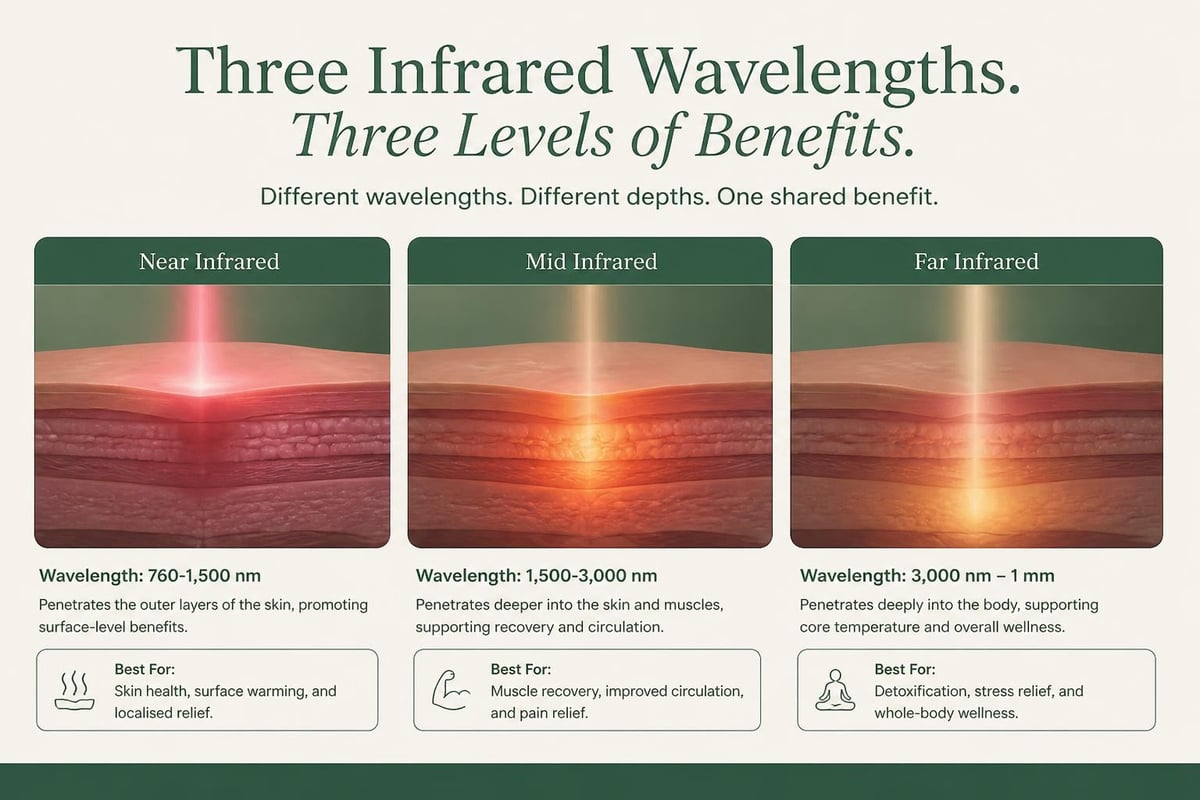
Full spectrum models combine three wavelength types:
- Near infrared targets surface tissue and skin
- Mid infrared reaches deeper for circulation support
- Far infrared penetrates tissue for core body warming
The app control system lets users adjust temperature, session length, chromotherapy lighting, and audio through a smartphone. Some users appreciate this level of customization. Others find it adds complexity to what should be a simple heat session.
Sunlighten Sauna Model Comparison
| Feature | Signature Series | mPulse Series |
|---|---|---|
| Infrared Type | Far IR only | Full spectrum (near, mid, far) |
| Control System | Digital panel | App + touchscreen |
| Wellness Programs | Manual only | 6 pre-programmed |
| EMF Rating | Low (claimed) | Ultra-low (claimed) |
The Signature line starts with single-person cabins and extends to three-person models. The mPulse line offers similar sizing but adds the Empower model with curved walls and extra headroom.
Both lines use non-toxic wood finishes and tempered glass doors. Cabinet wood is basswood or red cedar depending on model selection. Basswood absorbs less moisture and resists warping better than softer woods.
What Independent Reviews Report
EMF testing by an independent reviewer found readings higher than Sunlighten's published specifications in some models. The tests showed variation depending on where measurements were taken inside the cabin. Readings near heating panels sometimes exceeded the company's advertised ultra-low claims.
Heat-up time appears slower than competing brands. One detailed review notes that reaching target temperature takes longer than expected, which matters if you use your cabin daily. If you want heat immediately after work, this delay becomes noticeable over time.
The smart wellness systems receive mixed feedback. Users who want structured health programs appreciate the guided sessions. Those seeking simple high heat find the technology adds steps between them and a sweat.
Build quality consistently earns praise across reviews. Sunlighten cabins arrive with tight joints, quality glass, and durable electronics. The company backs products with clinical research partnerships, which gives credibility to their health claims, though as one reviewer notes, this research shows association rather than causation.
How This Compares to Traditional Steam Saunas
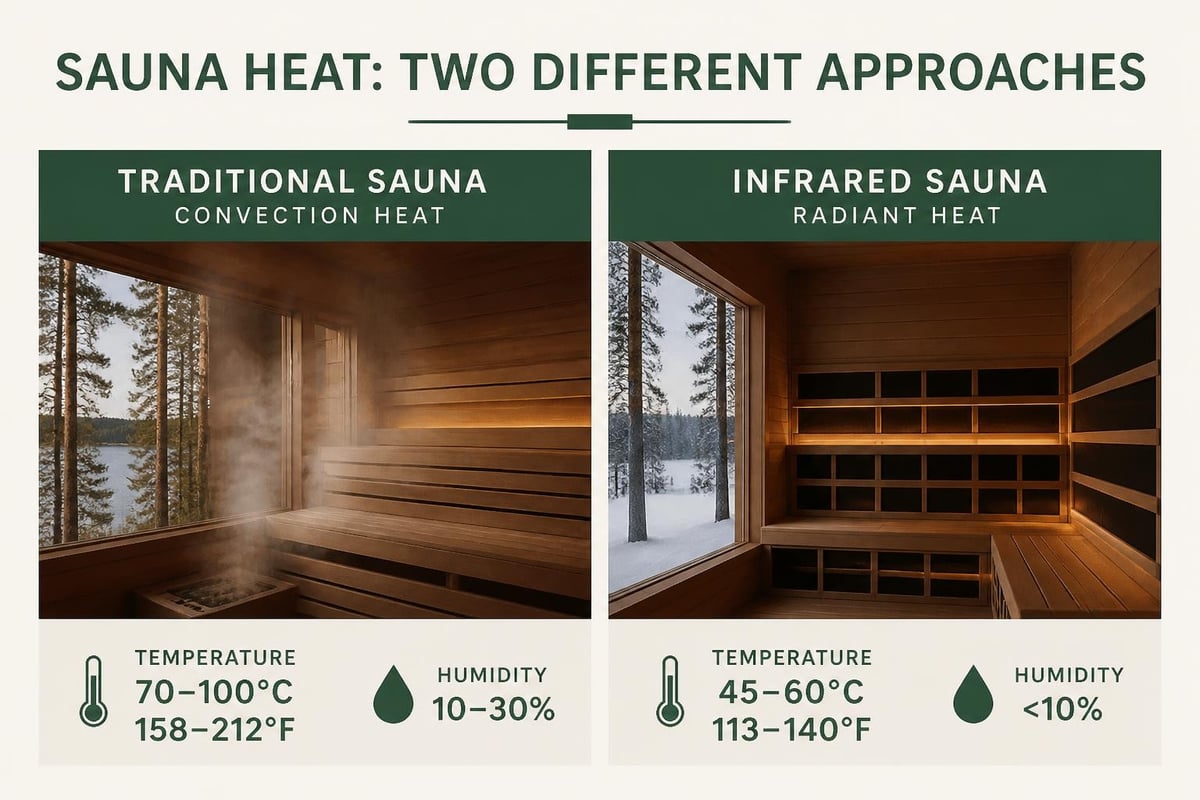
Infrared saunas heat your body directly through electromagnetic wavelengths. Traditional saunas heat the air, which then heats your body. The experience differs substantially.
A Finnish steam sauna reaches 160-195°F with humidity from water thrown on hot stones. This creates löyly, the moment steam rises and the room's character shifts. Your skin heats from the outside in. You feel the weight of hot air in your lungs.
An infrared cabin typically runs 120-150°F with no humidity. Heat penetrates tissue without heavy air. Some people prefer this gentler approach. Others miss the intensity of proper steam and the ritual of water on stones.
For recovery after cold exposure, both work. The pathway differs. Traditional sauna gives you the hot-cold contrast Finns practiced for two millennia. Infrared offers a different kind of heat that some find easier to tolerate for longer sessions.
If you're building a backyard sauna setup, consider which heat experience matches your goals. Neither is better universally. They serve different preferences.
Buying Criteria That Matter More Than Brand
Heater Capacity and Stone Mass
Traditional electric heaters need proper sizing for cabin volume. A 6 kW heater works for most home saunas up to 200 cubic feet. Larger spaces need 8-9 kW. Most quality manufacturers in North America use Harvia heaters, which reliably reach target temperature when sized correctly.
Stone mass matters more than most buyers realize. A heater with 40-50 pounds of stones holds heat better and creates stronger steam than one with 20 pounds. The stones act as thermal battery. More mass means more stored energy for each water throw.
Wood Selection and Moisture Resistance
Eastern White Cedar resists moisture naturally and brings a mild scent. Red Cedar adds stronger aroma and natural oils that resist decay. Hemlock absorbs less moisture than softer woods but carries no scent.
Thermo-treated wood undergoes heat modification that removes moisture permanently and increases dimensional stability. It costs more but eliminates seasonal expansion and contraction. Indoor saunas benefit most from this treatment.
Assembly and Installation Requirements
Most infrared saunas ship as panels that clasp together without tools. Setup takes 1-2 hours. They run on standard 120V outlets with no electrician needed.
Traditional electric saunas need dedicated 240V circuits. Outdoor models arrive as prefabricated panels or complete kits. A skilled homeowner can assemble a barrel or cabin sauna in a weekend. Factor this into your timeline and budget.
Long-Term Maintenance Needs
Infrared cabins need minimal care. Wipe interior surfaces monthly. Check door seals annually. Heating elements rarely fail.
Traditional saunas demand more attention. Clean benches after each use if multiple people share the space. Inspect heater stones yearly and replace cracked ones. Check door alignment as wood expands and contracts seasonally. Outdoor models need roof inspection and minor wood treatment every few years.
The best infrared sauna models, including some Sunlighten competitors, use simple digital controls that last years without repair. Complex app-based systems add potential failure points. A touchscreen that stops responding three years in becomes a costly fix.
What I've Seen From Lake Saimaa to North America
I grew up on Lake Saimaa in Eastern Finland, where summer evenings meant heating the family sauna, then plunging into cold lake water as the sun dropped below the pines. That pattern, repeated thousands of times, taught me what heat should feel like. When I answer customer questions now, that childhood experience guides my judgment more than any specification sheet. A sauna that takes 45 minutes to reach temperature disrupts the ritual that makes this practice sustainable over decades.
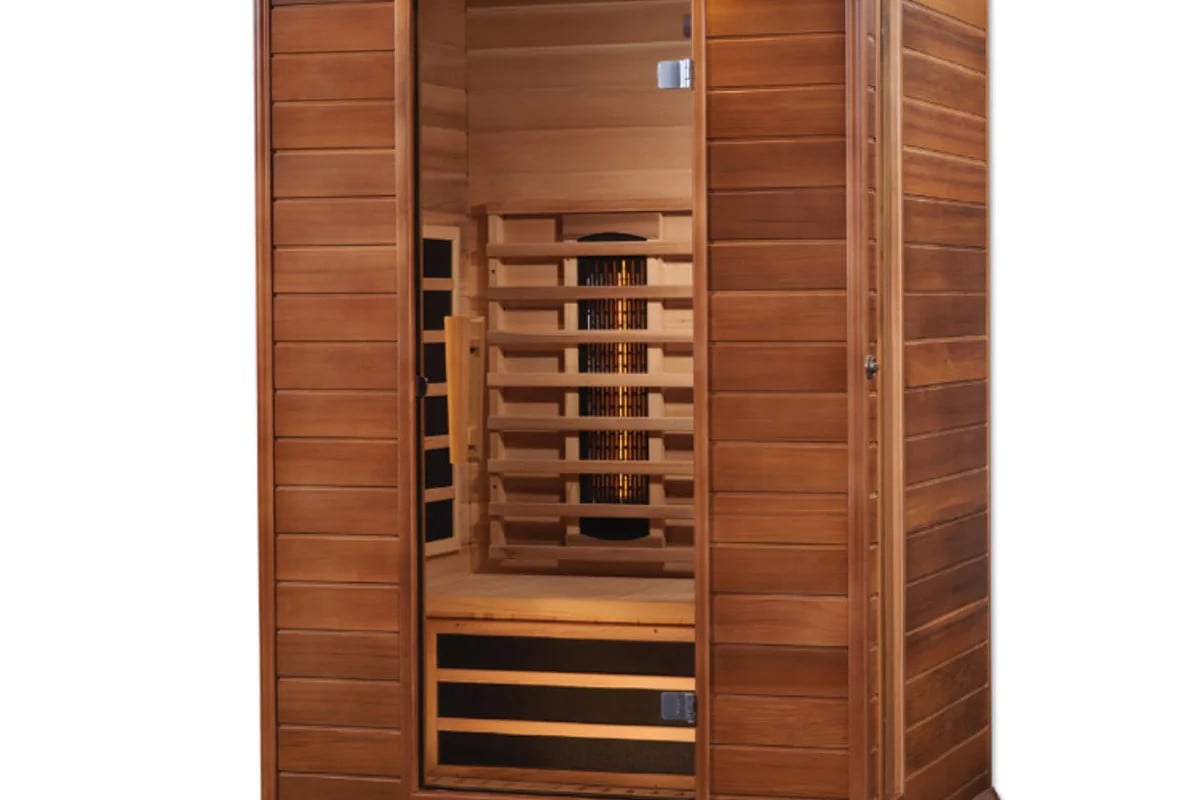
For customers who want the simplicity of infrared heat without complex wellness programs, models like the Maxxus 2 Person Full Spectrum IR Sauna deliver full-spectrum technology with straightforward digital controls and natural red cedar construction. This approach removes the learning curve of app-based systems while maintaining the infrared wavelengths that support circulation and recovery.
Traditional steam remains the standard in Nordic countries for good reason. The combination of high heat, humidity from löyly, and cold water immersion creates a recovery experience that has survived two thousand years of refinement. If you have space for an authentic setup, consider models like the outdoor cabin saunas that bring this practice home unchanged.
Common Questions About Sunlighten Saunas
Do Sunlighten saunas really have ultra-low EMF?
Independent testing shows mixed results. Some models measure within claimed ranges. Others show higher readings near heating panels. If EMF exposure concerns you, request specific testing data for the exact model and measure placement you're considering.
How long does a Sunlighten sauna take to heat up?
Most models need 30-45 minutes to reach operating temperature. This exceeds the 15-20 minute heat-up time of some competing infrared brands. Factor this into your daily routine if you plan frequent use.
Can I use a Sunlighten sauna outdoors?
The cabins are designed for indoor use only. Moisture and temperature variation damage the electronics and wood over time. For outdoor installation, look at traditional cedar saunas built specifically for exterior placement.
What's the difference between Signature and mPulse models?
Signature uses far infrared only with basic digital controls. mPulse adds near and mid infrared wavelengths, app control, and pre-programmed wellness sessions. The added features increase both capability and complexity.
How does Sunlighten warranty compare to other brands?
Sunlighten offers lifetime warranty on heating elements and cabin structure with shorter coverage on electronics. Most infrared sauna manufacturers provide similar lifetime structural warranties. Electronics typically carry 1-5 year coverage across the industry.
Installation Requirements and Space Planning
Sunlighten saunas need minimal installation effort compared to traditional models. The prefabricated panels connect without screws or tools in most cases. A two-person model fits through standard doorways when panels are separated.
Electrical requirements vary by model. Single-person Signature units run on 120V standard outlets. Larger mPulse models may need 240V depending on heater configuration. Verify electrical needs before ordering.
Space recommendations:
- Allow 2-3 inches clearance on all sides for air circulation
- Place on level surface that supports 400-600 pounds
- Keep away from moisture sources like showers or hot tubs
- Ensure adequate ventilation in the room
Interior ceiling height matters more than floor space for comfort. A 6-foot person needs at least 75 inches interior height to sit upright on the upper bench without hunching. Some compact models sacrifice headroom to reduce footprint.
Alternative Approaches Worth Considering
The infrared market offers strong alternatives to Sunlighten at various price points. Brands like Golden Designs, Dynamic, and Maxxus provide full-spectrum heating without the complex wellness programs, which reduces both purchase cost and long-term maintenance concerns.
For customers seeking the health benefits Sunlighten emphasizes, traditional steam sauna with cold water exposure delivers similar outcomes through a different pathway. Research on infrared benefits often parallels the documented effects of conventional heat exposure.
If you're building a complete contrast therapy setup, a quality traditional sauna paired with a cold plunge provides the hot-cold cycling that Nordic countries have refined over generations. This combination supports circulation, recovery, and mental clarity through temperature extremes rather than infrared wavelengths.
Indoor sauna options vary more than most buyers expect. A compact 2 person sauna fits in a basement corner or spare room, while outdoor models create a separate wellness space in your yard. Neither approach is universally better. Your available space and intended use pattern determine the right choice.
Heat Technology and User Experience
Sunlighten's full-spectrum approach combines three infrared wavelengths in one session. The company claims this provides broader benefits than far infrared alone. Independent verification of these claims remains limited to association studies rather than controlled trials.
The pre-programmed wellness sessions adjust wavelength output based on selected goals. The cardiovascular program emphasizes far infrared for core warming. The skin health program increases near infrared for surface penetration. Whether this wavelength targeting delivers measurably different results than simple full-spectrum heat at constant output has not been proven definitively.
User experience depends heavily on your preference for simplicity versus control. If you want to select a temperature, set a timer, and sit quietly, Sunlighten's app-based system adds steps to that process. If you appreciate tracking sessions, adjusting chromotherapy colors, and following structured programs, the technology serves a purpose.
Video reviews of Sunlighten cabins show the assembly process and daily use patterns. Watching actual installation helps set realistic expectations for setup time and space requirements.
What The Research Actually Shows
Sunlighten references clinical studies more than most infrared manufacturers. The company has partnered with research institutions to study infrared exposure effects on cardiovascular function, inflammation markers, and recovery metrics.
These studies show association between regular infrared use and positive health markers. They do not prove causation. Factors like improved sleep, stress reduction from daily ritual, and increased body awareness may contribute to measured benefits independently of infrared wavelengths.
Traditional sauna research spans decades with larger sample sizes. The Finnish population provides long-term data on frequent heat exposure and health outcomes. Studies consistently show association between regular sauna use and improved cardiovascular markers, though again without proving direct causation.
Both infrared and traditional heat appear safe for most healthy adults when used according to manufacturer guidelines. Neither should replace medical treatment. If you have cardiovascular conditions, check with your physician before starting any heat therapy routine.
Deciding Between Infrared and Traditional
Your decision comes down to heat preference and installation capability. Infrared cabins offer plug-and-play convenience with gentler heat. Traditional saunas provide intense dry heat with the option for steam and ritual.
Test both types if possible before buying. A 140°F infrared session feels nothing like 180°F traditional heat with löyly. Some people find infrared too mild. Others prefer the lower temperature and longer comfortable session time.
For outdoor installation in colder climates, traditional saunas handle temperature swings better. Cedar cabins built for exterior use withstand Minnesota winters and Canadian freeze-thaw cycles. Infrared electronics struggle with sustained cold and humidity.
Indoor placement favors infrared for speed and simplicity. No ventilation planning, no 240V circuit, no stone replacement. But a properly installed traditional sauna indoors creates an authentic experience that infrared cannot replicate.
Consider your end goal. If you want convenient daily heat exposure with minimal maintenance, infrared serves that purpose well. If you're building a recovery practice around heat and cold contrast, traditional sauna provides the foundation Finns have used for generations.
Sunlighten builds quality infrared cabins with advanced features, but the technology adds complexity and cost that not every user needs. Traditional cedar saunas offer proven heat therapy with simpler long-term maintenance. At RecoSauna, I help customers across the USA and Canada find the right match between their space, budget, and heat preferences, answering every question personally based on decades of experience with both approaches. Ask Petri About Your Sauna.
Share:
Cold Plunge Benefits: Research, Risks, and What Works
Backyard Sauna: Complete Guide for Homeowners in 2026