
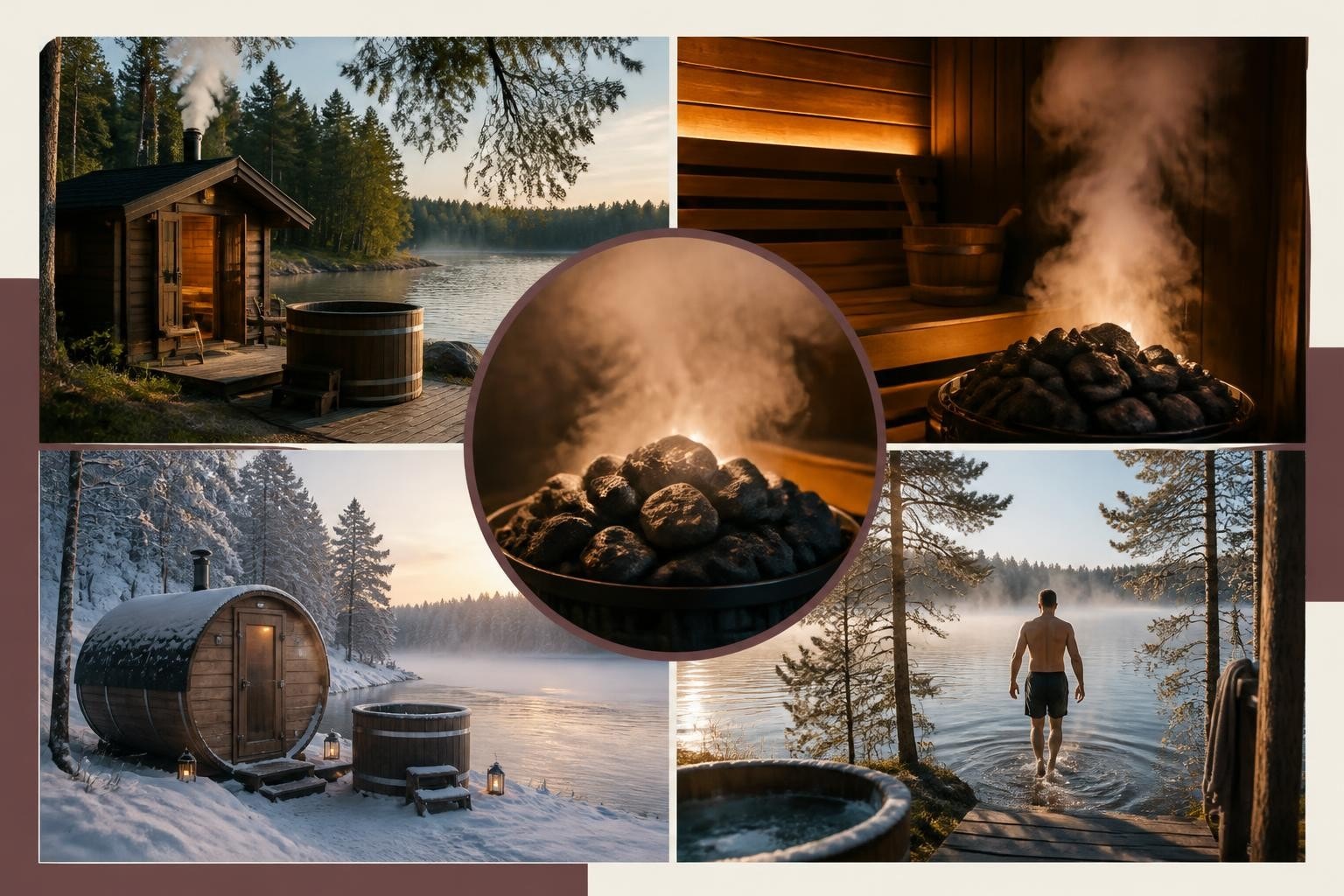
Growing up on Lake Saimaa in Eastern Finland, I learned that a steam sauna is not about the heat alone. It is about löyly, the steam created when water meets hot stones. That moment shifts the body from performance to recovery. UNESCO recognized Finnish sauna culture as Intangible Cultural Heritage in 2020, acknowledging a practice that has endured for over 2,000 years. The steam sauna remains the foundation of this tradition, and understanding how it works changes how you approach wellness at home.
What Makes a Steam Sauna Different
A steam sauna generates moisture through water poured over heated stones. The humidity rises quickly, creating a softer heat compared to dry infrared models. In Finland, we call this löyly, and it is the defining characteristic of an authentic sauna experience.
The steam opens your airways, increases circulation, and triggers a deep sweat response. Research on cardiovascular benefits shows that regular steam sauna use supports heart health and muscle recovery. Prof. Jari Laukkanen from the University of Eastern Finland published findings in Mayo Clinic Proceedings demonstrating that sauna use four to seven times weekly reduces cardiovascular death risk by 51%.
How Löyly Works in Your Body
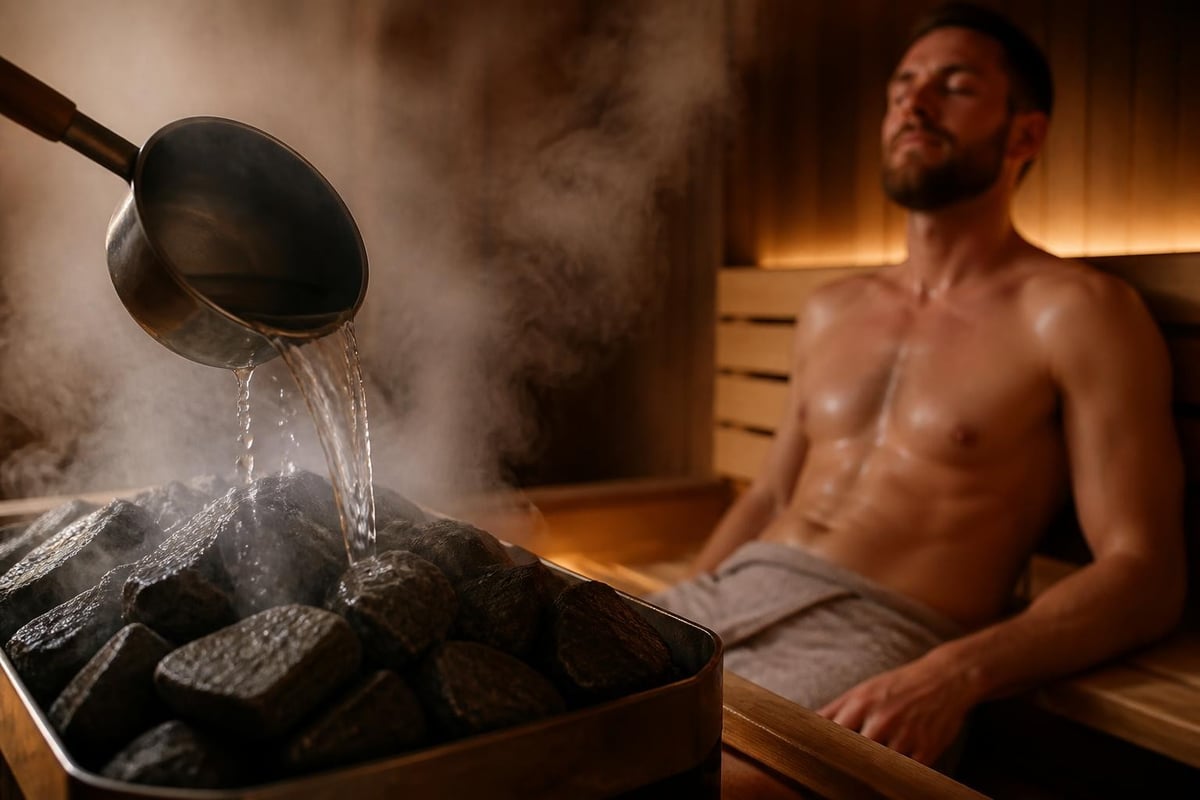
When you pour water on hot sauna stones, the resulting steam creates a humid environment that your body responds to differently than dry heat. Your heart rate increases gradually. Blood vessels dilate. Skin temperature rises, and perspiration begins.
Key physiological responses include:
- Increased cardiac output similar to moderate exercise
- Enhanced blood flow to skin and muscles
- Activation of heat shock proteins that support cellular repair
- Stimulation of endorphin release for natural pain relief
The steam sauna environment encourages longer sessions than dry heat alone. You stay comfortable at lower ambient temperatures because humidity transfers heat more efficiently to your skin.
Finnish Sauna Tradition and Contrast Therapy
In Finland, a steam sauna session is not complete without cold water. We practiced this cycle for two millennia before it was called contrast therapy. The pattern is simple: heat your body in the sauna, then cool it in cold water. Repeat.
This alternation between hot and cold creates a vascular workout. Blood vessels expand in heat, contract in cold. The repeated cycle strengthens circulation over time and supports recovery after physical exertion.
I have followed this pattern since childhood. After heating in the sauna for 10 to 15 minutes, I step into Lake Saimaa. In winter, we cut a hole in the ice. The shock is brief but clarifying. You return to the sauna feeling reset.
The Science Behind Heat and Cold Cycling
Contrast therapy works through temperature-induced vascular changes. When you move from a steam sauna into cold water, your body must regulate core temperature quickly. This process has measurable benefits.
| Phase | Temperature | Vascular Response | Duration |
|---|---|---|---|
| Steam sauna | 70-80°C (158-176°F) | Vasodilation | 10-15 min |
| Cold plunge | 4-10°C (39-50°F) | Vasoconstriction | 1-3 min |
| Rest | Room temp | Return to baseline | 5-10 min |
| Repeat | Cycle 2-3x | Progressive adaptation | 45-60 min total |
Studies on circulation improvements confirm that this practice enhances blood flow and may reduce inflammation markers. The cold phase also triggers norepinephrine release, which sharpens mental focus and elevates mood.
Choosing Your Steam Sauna in 2026
When you purchase a steam sauna, you are choosing wood quality, heater capacity, and session environment. These factors determine how closely your home setup mirrors traditional Finnish practice.
Wood selection matters for several reasons:
- Eastern White Cedar resists moisture naturally and ages well outdoors
- Hemlock offers a mild scent and smooth grain for indoor models
- Red Cedar provides aromatic oils that complement steam sessions
Heater capacity dictates how much löyly you can produce. A properly sized electric heater maintains stone temperature even after multiple water pours. Underpowered heaters struggle to recover heat, reducing steam quality.
Indoor vs Outdoor Steam Sauna Models
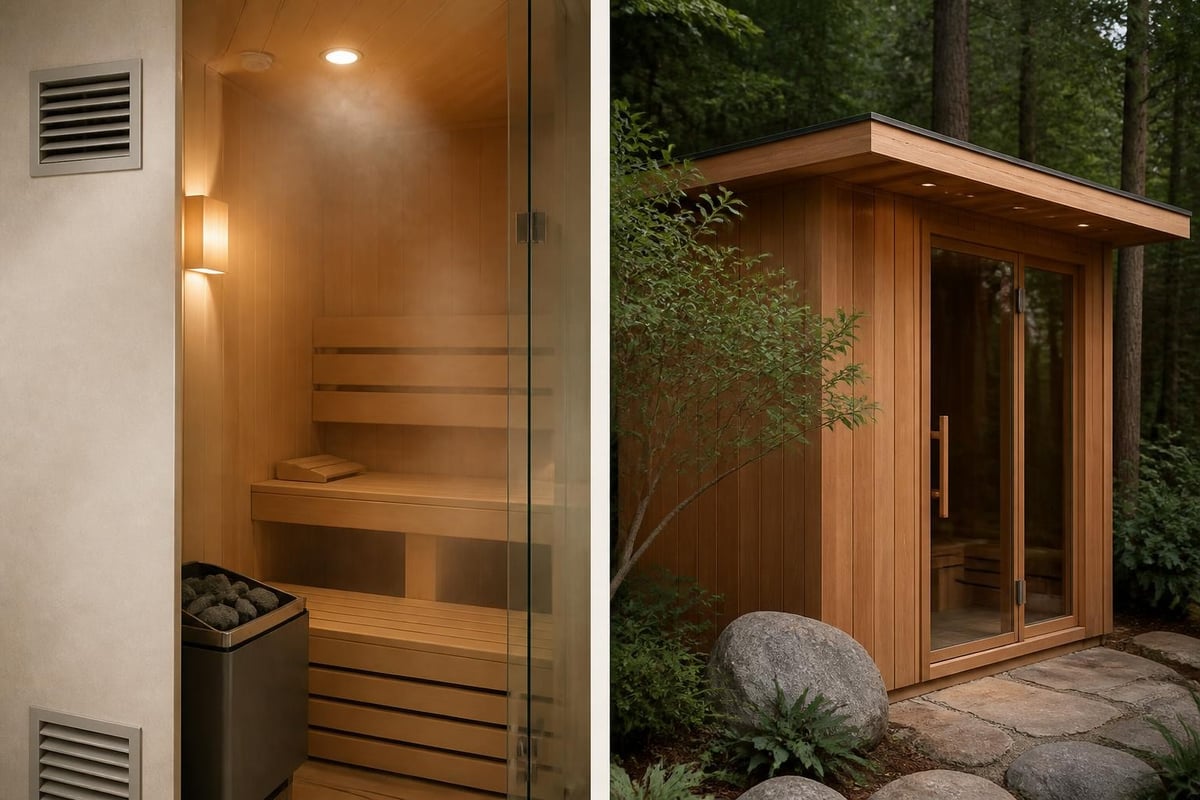
Indoor steam saunas require moisture management. Ventilation prevents condensation buildup. Exterior-grade wood or treated materials handle humidity without warping.
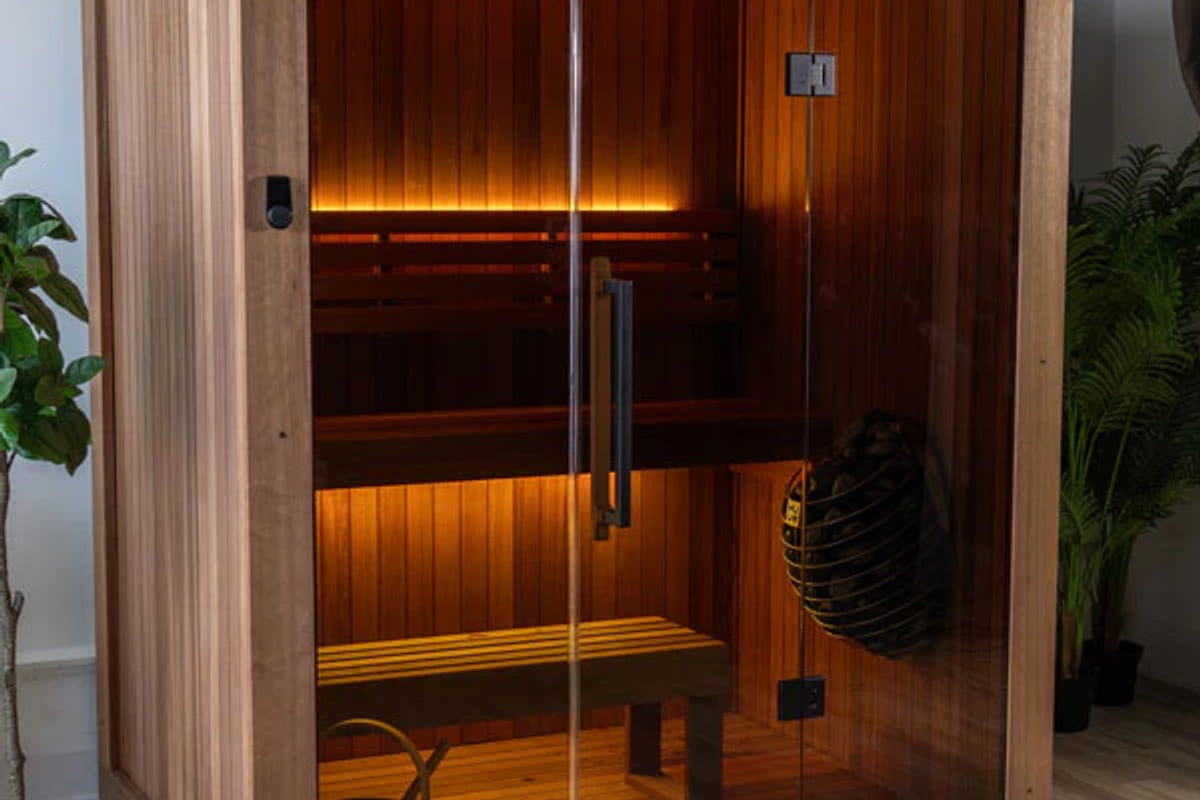
The LeisureCraft Loft CT Element Indoor Sauna uses Thermo Grandis, a moisture-resistant wood treated in Ontario. The full glass front and architectural design suit modern homes, while the compact 54x74 inch footprint fits couples and small families. This is the only indoor traditional steam sauna in its class, combining Finnish authenticity with practical indoor installation.
Outdoor models offer more flexibility in size and ventilation. Barrel saunas like those in RecoSauna's outdoor collection use Eastern White Cedar and accommodate electric or wood-burning heaters. The round shape promotes even heat distribution, and natural airflow prevents moisture stagnation.
Health Benefits Backed by Research
The cardiovascular benefits of steam sauna use are well-documented. Prof. Laukkanen's research followed over 2,300 Finnish men for more than 20 years. Those who used saunas four to seven times weekly had significantly lower rates of heart disease, stroke, and all-cause mortality.
The mechanism involves repeated cardiovascular stress in a controlled environment. Your heart rate increases to 100-150 beats per minute during a session, similar to moderate-intensity exercise. Over time, this improves endothelial function and arterial compliance.
Respiratory and Skin Health
Steam sauna sessions also support respiratory function. The warm, humid air loosens mucus and eases breathing. Research on respiratory benefits indicates that regular steam exposure may reduce symptoms in individuals with chronic bronchitis or asthma.
Your skin responds to steam by increasing blood flow to the surface. Pores open, perspiration removes debris, and collagen production may increase with regular use. These effects contribute to improved skin tone and texture over time.
Documented steam sauna benefits include:
- 51% reduction in cardiovascular mortality with 4-7x weekly use
- Improved endothelial function and arterial flexibility
- Enhanced respiratory clearance and breathing comfort
- Increased skin circulation and collagen synthesis
- Reduced muscle soreness after physical training
- Elevated mood through endorphin and norepinephrine release
Practical Guidance for Safe Sessions
Safe sauna use begins with hydration. Drink water before, during, and after your session. A 15-minute steam sauna can produce 500ml or more of sweat, which you must replace.
Start with shorter sessions if you are new to steam saunas. Ten minutes is sufficient for your first few visits. Gradually extend to 15 or 20 minutes as your body adapts. Listen to your physical responses. Dizziness or nausea signals that you should exit and cool down.
Session Structure and Timing
A traditional Finnish steam sauna session follows a rhythm. Enter the sauna, sit comfortably, allow your body to heat. After 10 to 15 minutes, pour water on the stones to create löyly. The steam intensifies the heat briefly.
- Warm-up phase (5-7 minutes): Sit calmly, let heart rate rise gradually
- Löyly phase (3-5 minutes): Pour water on stones, breathe deeply in the steam
- Peak heat (2-3 minutes): Tolerate the warmest period, then prepare to exit
- Cool-down (3-5 minutes): Step outside or rinse with cool water
- Rest (5-10 minutes): Rehydrate, let heart rate normalize
- Repeat cycle 2-3 times for full session
Avoid alcohol before or during sauna use. Alcohol impairs your body's ability to regulate temperature and increases dehydration risk. If you have a cardiovascular condition, consult your physician before beginning regular steam sauna sessions.
Steam Sauna vs Infrared Sauna
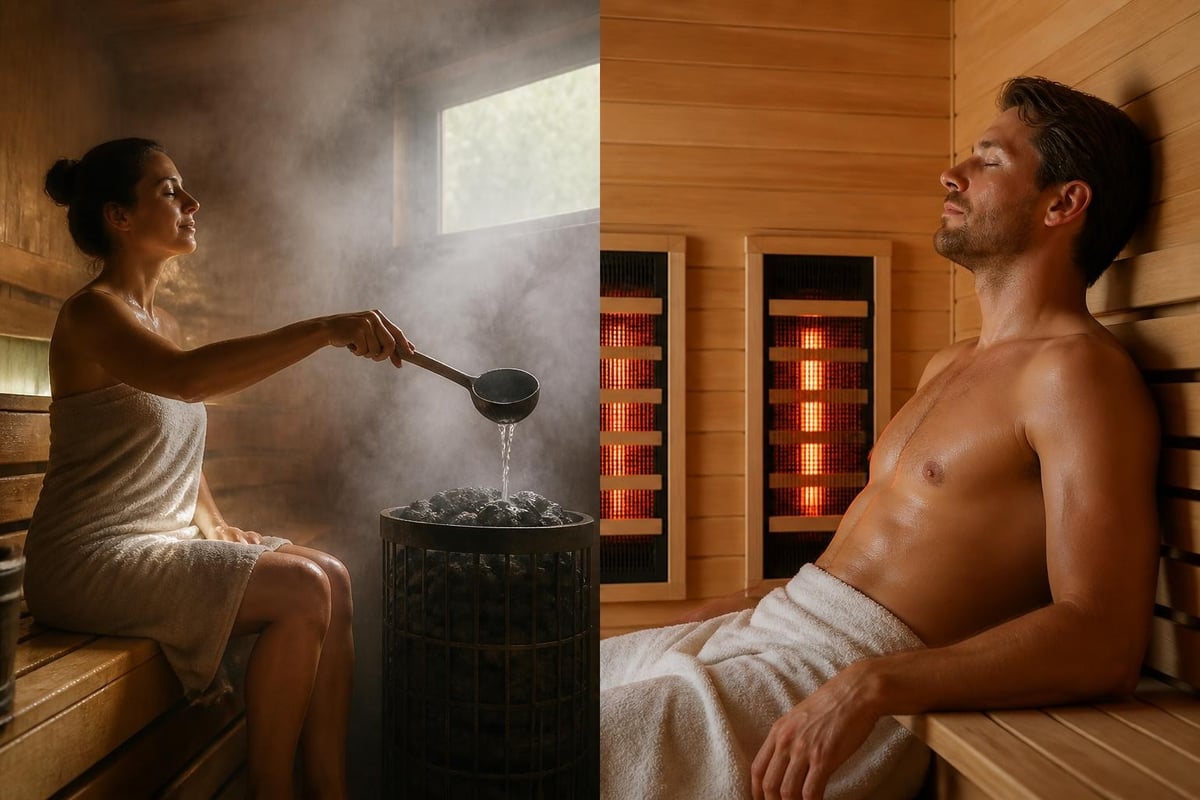
Steam saunas use convective heat. Hot air and steam surround your body. Infrared saunas use radiant heat that penetrates skin directly without significantly warming the air.
Comparing steam and infrared options reveals different experiences. Steam saunas reach higher ambient temperatures (70-80°C) but feel comfortable due to humidity. Infrared models operate at lower temperatures (45-60°C) with dry air.
| Feature | Steam Sauna | Infrared Sauna |
|---|---|---|
| Heat source | Electric heater + stones | Infrared panels |
| Temperature | 70-80°C (158-176°F) | 45-60°C (113-140°F) |
| Humidity | High (löyly steam) | Low (dry air) |
| Warm-up time | 30-45 minutes | 10-15 minutes |
| Session length | 10-20 minutes | 20-45 minutes |
| Recovery mechanism | Cardiovascular + löyly | Radiant heat penetration |
| Finnish tradition | Yes (2,000+ years) | No (modern technology) |
Both types produce sweat and increase heart rate. The steam sauna aligns more closely with traditional Finnish practice and the research Prof. Laukkanen conducted. Infrared models suit users who prefer lower ambient heat or have limited installation space.
Installing a Steam Sauna at Home
Home installation varies by model. Indoor saunas require electrical work, ventilation planning, and moisture barriers. Outdoor models need a level foundation and weather protection but offer simpler assembly.
Pre-installation checklist:
- Measure available space including door clearance
- Verify electrical capacity (most need 220V circuit)
- Plan ventilation to prevent indoor moisture buildup
- Choose placement near cold water source for contrast therapy
- Budget for professional electrical installation if needed
Kit-form barrel saunas arrive in panels that you assemble on-site. Most outdoor models take one to two days to complete with basic tools. Indoor models may require more finish work to integrate with existing flooring and walls.
Pairing Your Sauna with Cold Plunge
Authentic contrast therapy requires cold water. A dedicated cold plunge tub placed near your sauna completes the cycle. You move from heat to cold without delay, maximizing the vascular response.
The LeisureCraft Baltic Plunge Tub holds 132 gallons, enough for full-body immersion. Eastern White Cedar construction matches many outdoor sauna models. You can use it with ice or pair it with an electric chiller for consistent temperature control.
This setup transforms your backyard into a private recovery space. The cycle of heat and cold becomes accessible daily, not just on weekend trips to a spa or gym facility.
Cost and Long-Term Value
Steam sauna pricing reflects wood quality, size, and heater capacity. Outdoor barrel saunas start around $5,585 for compact two-person models. Larger cabin-style saunas range from $8,000 to $9,550. Premium indoor options with specialized moisture-resistant wood reach higher price points.
Consider total ownership cost beyond the initial purchase. Electric heaters consume approximately 6-8 kW per hour. At average U.S. electricity rates, a 30-minute session costs $0.50 to $1.00. Annual maintenance includes inspecting wood for weathering, checking heater stones for cracks, and cleaning benches.
Financial considerations in 2026:
- Purchase price: $5,585-$32,999 depending on model and features
- Electrical installation: $500-$1,500 for 220V circuit (outdoor models)
- Operating cost: $15-$30 monthly for regular use
- Maintenance: Minimal (annual wood treatment, stone replacement every 2-3 years)
- HSA/FSA eligibility: May qualify with Letter of Medical Necessity from physician
Some users receive HSA or FSA reimbursement for home saunas when prescribed for specific health conditions. Consult your plan administrator and obtain documentation from your healthcare provider.
Selecting the Right Heater and Stones
Electric heaters power most home steam saunas. Heater size depends on sauna volume. Undersized heaters struggle to maintain temperature during löyly pours. Oversized heaters waste energy but recover heat quickly.
Heater sizing guide:
- Small sauna (4-6 cubic meters): 4.5-6 kW heater
- Medium sauna (6-9 cubic meters): 6-8 kW heater
- Large sauna (9-12 cubic meters): 8-9 kW heater
- Extra-large sauna (12+ cubic meters): 9+ kW heater
Sauna stones store and release heat. Larger stones retain more thermal energy. Olivine and peridotite are common stone types that withstand repeated heating and water contact. Replace stones every two to three years as they fracture from thermal cycling.
Wood-Burning Heaters for Traditional Experience
Wood-burning heaters offer the most traditional Finnish experience. The crackling fire and wood smoke add sensory elements that electric models cannot replicate. Fuel cost is lower, but operation requires more attention.
You must feed the fire, monitor temperature manually, and clean ash regularly. Wood-burning setups suit rural properties with space for wood storage and ventilation. Many outdoor cabin saunas accommodate wood stoves with proper chimney installation.
Daily Practice and Routine Building
Consistency matters more than session length. Using your steam sauna three to four times weekly provides more benefit than occasional long sessions. The cardiovascular adaptations develop through repeated exposure.
I use my sauna after physical work or training. The heat relaxes muscles, and the cold plunge resets my nervous system. Within 45 minutes, I complete the full cycle and feel prepared for the next day.
Sample weekly routine:
- Monday: 15-minute sauna + cold plunge after morning work
- Wednesday: 20-minute evening session with extra löyly
- Friday: Post-workout recovery session
- Saturday: Longer social session (30-40 minutes total with multiple rounds)
Adjust frequency based on your schedule and recovery needs. Some people benefit from daily sessions. Others find three times weekly sufficient. Practical usage guidelines emphasize listening to your body rather than following rigid protocols.
Common Questions About Steam Saunas
New users often ask about optimal temperature and humidity. Traditional Finnish saunas operate at 70-80°C with humidity spiking to 20-30% during löyly. This combination creates a comfortable environment for 10 to 20-minute sessions.
You may also wonder about clothing. Most Finns sauna naked or wear a light towel. This allows unrestricted perspiration and heat transfer. If you share your sauna with others, establish house rules that everyone follows comfortably.
Maintenance and Longevity
Cedar and hemlock saunas last decades with minimal care. Outdoor models benefit from annual wood treatment to protect against moisture and UV exposure. Indoor saunas need regular ventilation to prevent mold growth.
Clean benches with mild soap and water. Avoid harsh chemicals that damage wood or create fumes during heating. Inspect electrical connections annually. Replace worn stones before they crumble and damage the heater.
Basic maintenance tasks:
- Wipe benches after each use to remove sweat
- Treat outdoor wood annually with protective oil
- Inspect heater stones every 6 months, replace when cracked
- Check door seals and weatherstripping on outdoor models
- Clean glass door monthly to maintain clarity
- Vacuum floor and corners to remove debris
Well-maintained steam saunas operate reliably for 20 to 30 years. The wood darkens naturally over time, developing a rich patina that enhances the traditional aesthetic.
Steam sauna practice rooted in Finnish löyly offers measurable health benefits and a recovery ritual you can sustain for life. The cardiovascular research is clear, and the tradition has proven its value across generations. If you are ready to bring authentic Finnish sauna culture to your home, RecoSauna offers LeisureCraft cedar models, Orivon Wellness luxury options, and cold plunge tubs with free shipping across the U.S. and Canada. I answer every question personally because this practice deserves that level of care.
Share:
Red Light Sauna: Combining Finnish Heat + Light Therapy
Outdoor Sauna for Sale: Buying Guide for 2026