
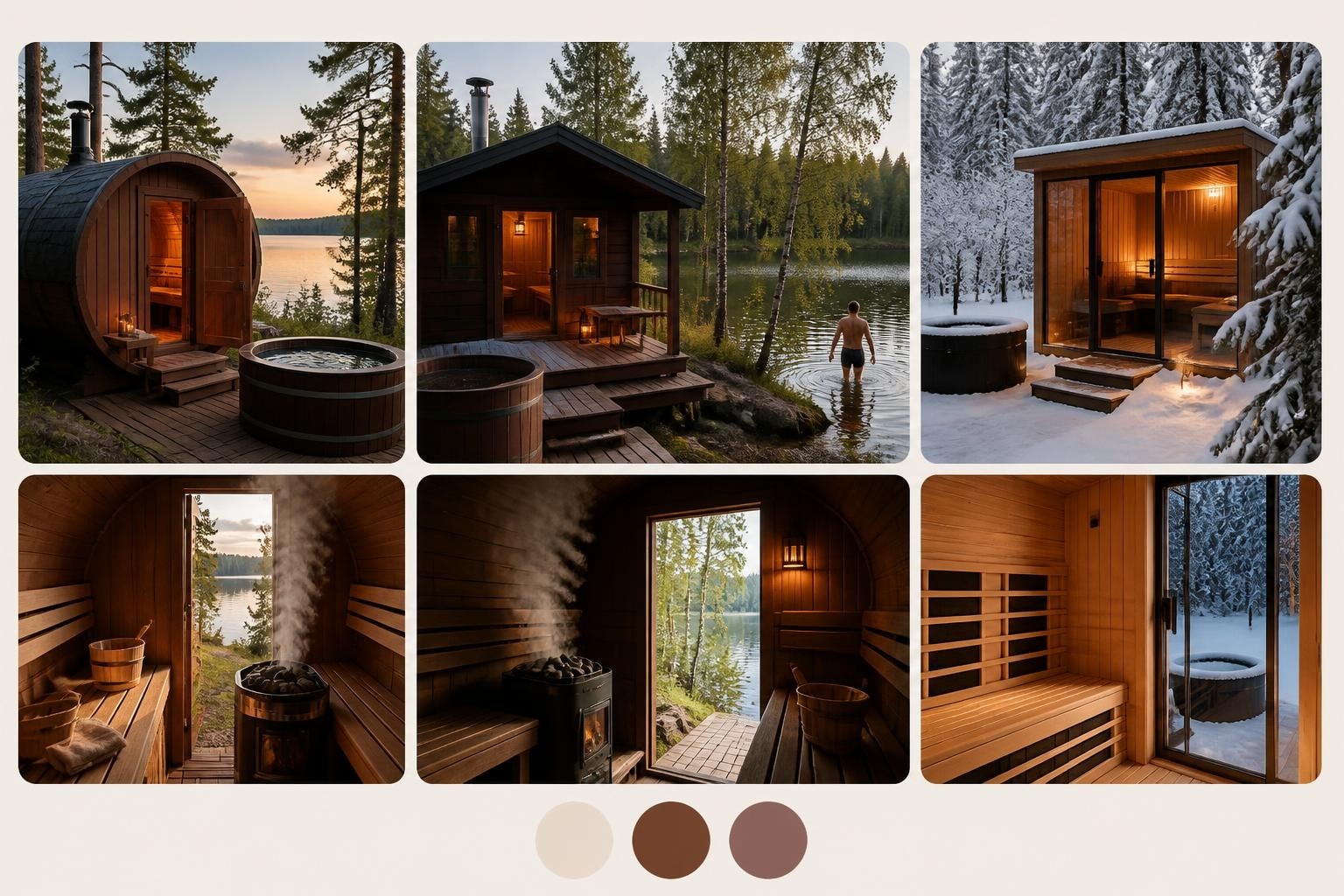
When you search for an outdoor sauna for sale, you see endless options. Barrel saunas. Cabin saunas. Infrared boxes marketed as wellness pods. The language sounds similar, but the experience differs completely. Growing up in Eastern Finland on Lake Saimaa, I learned sauna is not about sitting in heat. It is about löyly, the steam from water on hot stones, followed by cold water. This cycle, practiced for over 2,000 years before it was called contrast therapy, shifts your body from performance to recovery. UNESCO recognized Finnish sauna culture as Intangible Cultural Heritage in 2020. When you choose an outdoor sauna for sale, you are not just buying wood and a heater. You are choosing whether you want the real recovery mechanism or a warm room.
Understanding What You Actually Need
Most buyers focus on the wrong details first. They compare wood species, window size, and bench layout before asking what type of heat they need.
Traditional Finnish saunas generate löyly. You heat stones to 180-200°F, throw water on them, and the resulting steam opens your pores and increases circulation. Your heart rate rises. Blood vessels dilate. After 10-15 minutes, you step into cold water. The contrast is what drives recovery.
Infrared saunas use light panels to warm your body directly. No stones. No steam. No löyly. The temperature stays lower, around 120-140°F, and the experience is gentler. Some people prefer this, especially if they are new to sauna or have sensitivity to high heat.
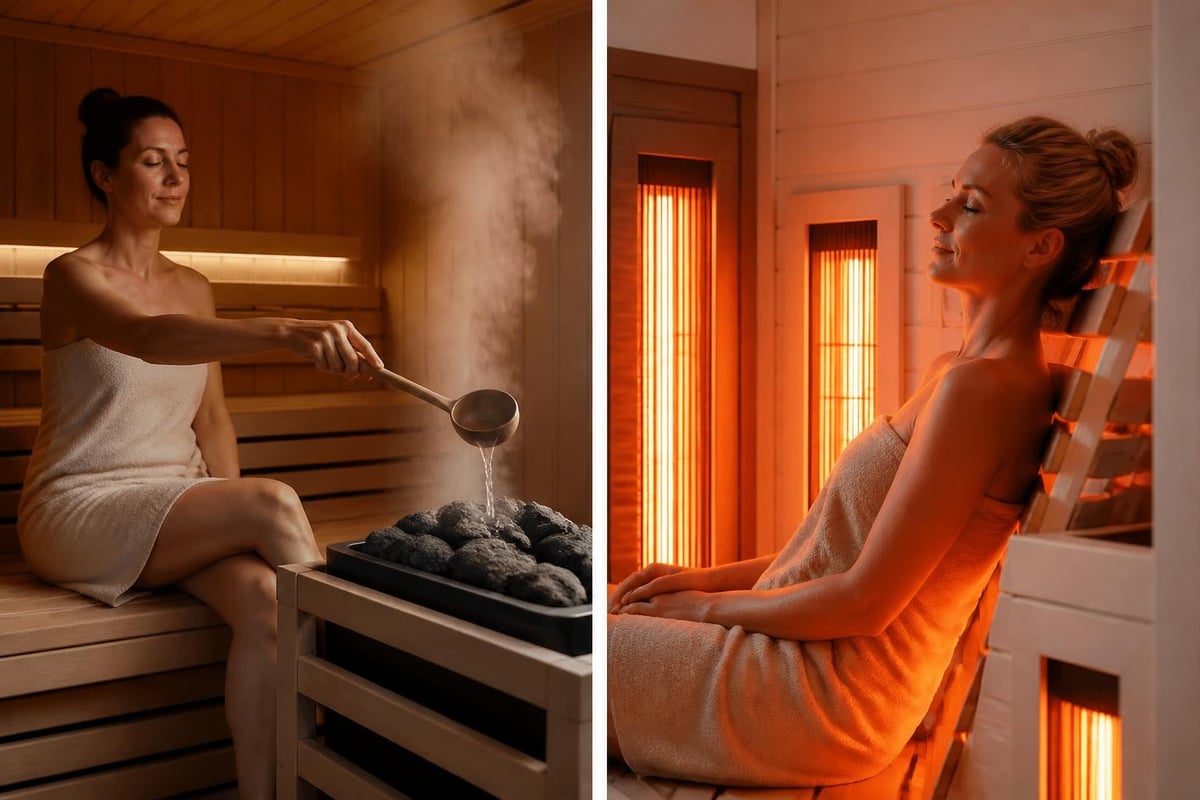
Traditional vs. Infrared: The Real Difference
| Feature | Traditional Sauna | Infrared Sauna |
|---|---|---|
| Heat source | Electric or wood-burning heater with stones | Carbon or ceramic light panels |
| Temperature | 160-200°F | 120-140°F |
| Humidity | High when you create löyly | Dry, no steam |
| Session length | 10-15 minutes, then cold plunge | 20-30 minutes |
| Recovery mechanism | Contrast therapy (hot-cold cycle) | Gentle warming, slower heart rate increase |
| Setup | Requires ventilation, proper electrical | Plug-and-play (120V) |
The health benefits of sauna use depend partly on this choice. Prof. Jari Laukkanen from the University of Eastern Finland published research in Mayo Clinic Proceedings showing that sauna use 4-7 times weekly reduces cardiovascular death risk by 51%. That research focused on traditional Finnish saunas with löyly and contrast therapy, not infrared.
If you want the recovery I grew up with, choose traditional. If you want lower heat and gentler sessions, infrared works.
Barrel Sauna or Cabin Sauna
Once you decide on heat type, you choose structure. Both barrel and cabin saunas can house traditional or infrared heaters, but the shape affects how heat moves and how the sauna fits in your space.
Barrel saunas are popular because they look distinct and heat efficiently. The round shape allows air to circulate naturally. Hot air rises to the top curve and cycles back down. Less wasted space means faster warmup and lower energy cost.
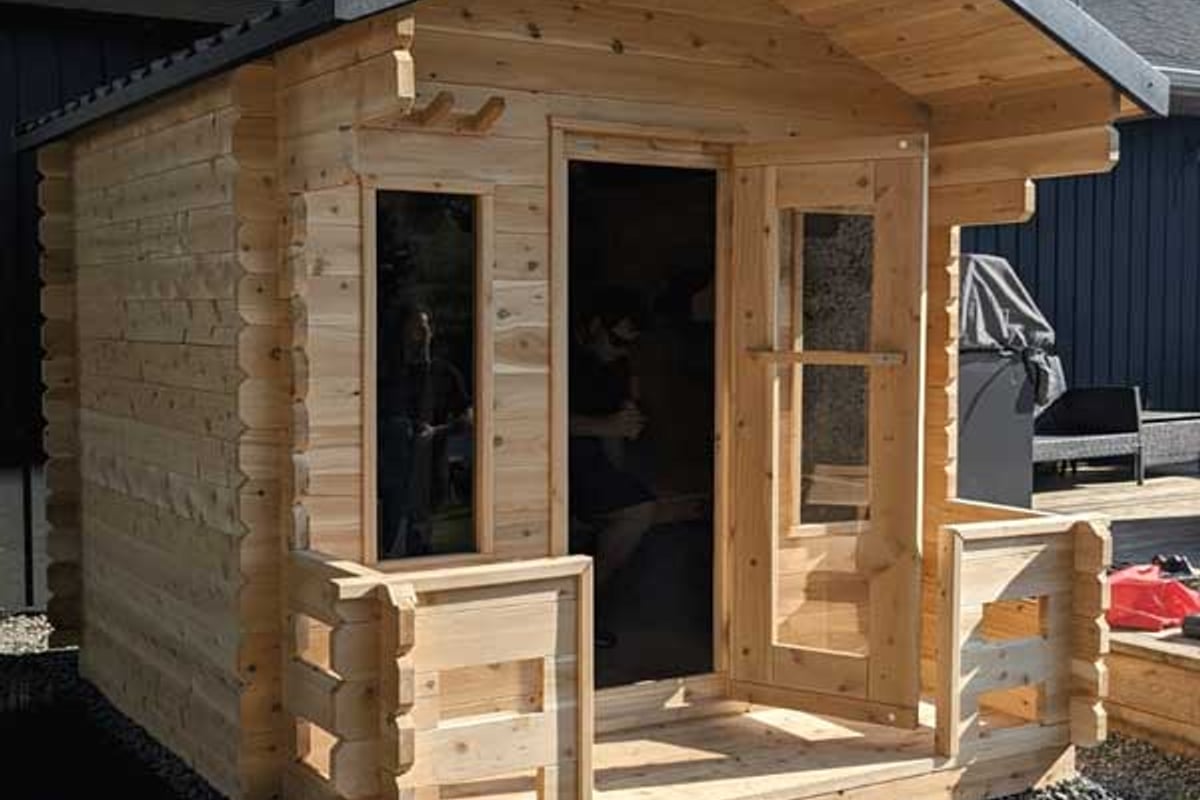
Cabin saunas have straight walls and a peaked or flat roof. They offer more interior room and easier bench layout. You can sit upright without your head touching the ceiling. Many cabin models include a porch, which gives you a place to cool down gradually before the cold plunge.
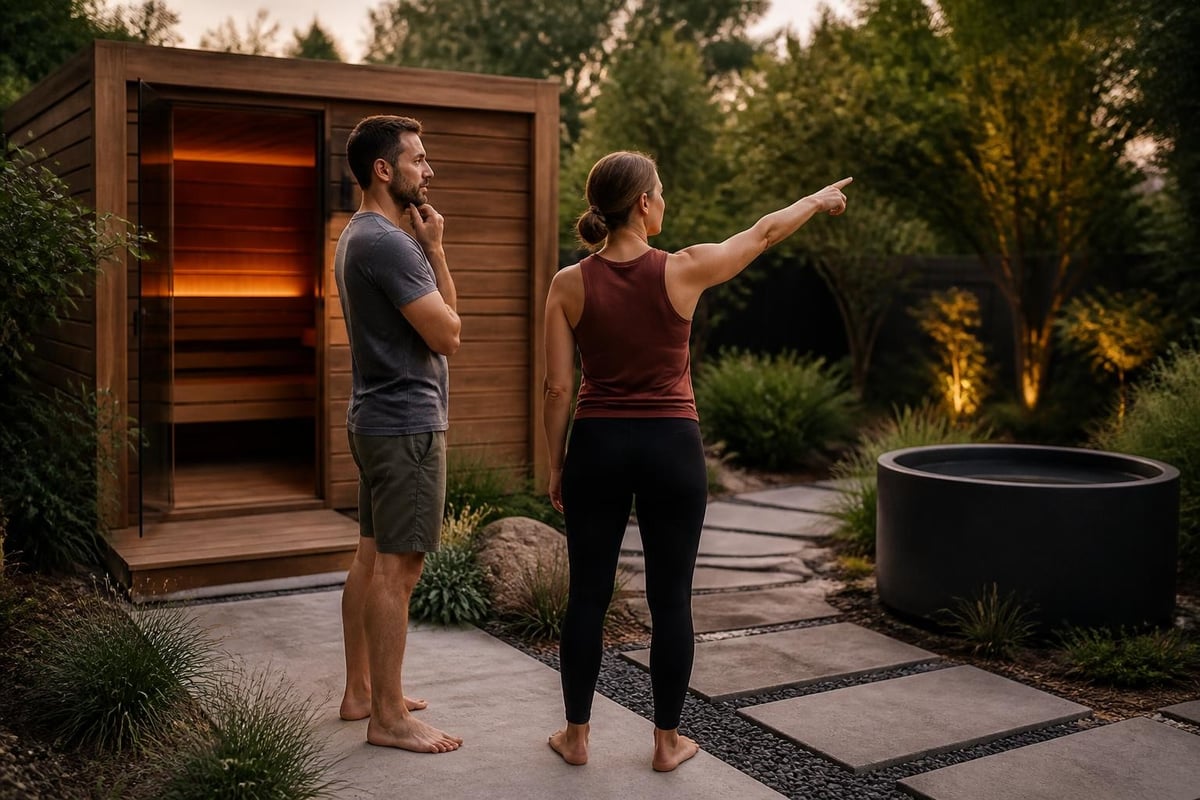
What to Consider for Your Yard
- Footprint: Barrel saunas have a smaller base. Cabins need more ground space but feel more spacious inside.
- Bench space: Barrels often seat 2-4 people on curved benches. Cabins seat 2-6 with wider, flat benches.
- Weather resistance: Both styles use cedar, which handles moisture well. Barrel roofs shed rain naturally. Cabin roofs need proper shingle installation.
- Assembly: Most outdoor saunas for sale ship as kits. Barrels assemble faster. Cabins take longer but offer more customization.
I recommend thinking about how you will use it. If you sauna alone or with one other person and want efficiency, a barrel works. If you have a family or like longer sessions with more space, a cabin sauna fits better.
This outdoor sauna buying checklist walks through site preparation, electrical planning, and installation steps that matter regardless of which style you choose.
Choosing the Right Size
Sauna size is listed by person capacity, but that number assumes tight seating. A 4-person sauna comfortably seats two adults lying down or three sitting upright.
Here is how to size correctly:
- Count regular users: If you sauna solo, a 2-person model gives you room to stretch. If you have a partner or friend who joins, a 3-4 person model lets you both lie flat.
- Measure your available space: Add 12 inches on all sides for ventilation and access. A 6x6 foot sauna needs at least 7.5x7.5 feet of cleared ground.
- Plan for the cold plunge: Contrast therapy requires cold water within a few steps of the sauna door. Budget space for a plunge tub, cold shower, or natural water source nearby.
The LeisureCraft Georgian cabin sauna with porch, for example, measures roughly 8x12 feet including the porch area. That porch becomes essential when you step out after löyly and need a moment before the plunge. You sit, breathe, let your heart rate settle slightly, then move to cold water. Without that transition space, the experience feels rushed.
Price Ranges for Outdoor Saunas for Sale in 2026
Expect these ranges when shopping:
- Barrel saunas (traditional heat): $5,500 - $9,500
- Cabin saunas (traditional heat): $8,000 - $15,000
- Luxury outdoor saunas (premium materials, larger capacity): $19,000 - $33,000
- Infrared outdoor saunas: $7,000 - $11,000
Price depends on wood quality, heater type, size, and included features like lighting, glass doors, and roof materials. Cedar costs more than hemlock but lasts longer outdoors. Electric heaters with digital controls cost more than basic models with manual dials.
When you find an outdoor sauna for sale that fits your budget, check what is included. Some models ship with heaters, stones, and benches. Others sell the structure only, and you buy the heater separately.
Wood Type and Build Quality
Most outdoor saunas use cedar or hemlock. Both resist moisture and insects, but they age differently.
Eastern White Cedar grows across Eastern Canada and the northeastern United States. It contains natural oils that repel water and prevent rot. The wood smells clean, almost sweet, when heated. It weathers to a silver-gray outdoors unless you seal it.
Red Cedar has a richer color and stronger aroma. It costs slightly more and holds up well in wet climates.
Hemlock is lighter in color and less aromatic. It works well for infrared saunas where you do not need stone-heat resistance. Hemlock is often more affordable.
In Finland, we traditionally used spruce or pine, but those species require more maintenance in North American climates. Cedar became the standard here because it handles temperature swings and humidity without warping.
Construction Details That Matter
- Wall thickness: Look for at least 1.5-inch thick tongue-and-groove boards. Thicker walls hold heat better and reduce energy cost.
- Roof material: Asphalt shingles are common and effective. Metal roofs last longer but cost more.
- Door seal: A tight seal keeps heat inside. Check for weatherstripping and a solid latch.
- Ventilation: Traditional saunas need an intake vent near the floor and an exhaust vent near the ceiling to keep air fresh during löyly sessions.
This guide to outdoor saunas covers design considerations and how to integrate a sauna into different backyard layouts, whether you have a small patio or a larger property.
Heater Selection and Power Requirements
The heater determines whether you can create real löyly or just dry heat.
Electric Heaters
Most outdoor saunas for sale include electric heaters rated between 4.5 kW and 9 kW. A 6 kW heater works for saunas up to 200 cubic feet. Larger spaces need 8-9 kW.
Electric heaters require 240V service in most cases. You will need a dedicated circuit and a licensed electrician to install it. Some smaller infrared models run on standard 120V outlets, which makes installation simpler but limits heat output.
Key features to look for:
- Built-in or external controls
- Timer function for automatic shutoff
- Stone capacity (60-80 lbs for good löyly)
- Stainless steel housing for durability
Wood-Burning Heaters
Wood-burning heaters deliver the experience closest to traditional Finnish sauna. The fire heats stones slowly, and the heat feels different, softer and more enveloping. You control temperature by adjusting airflow and adding wood, not by turning a dial.
Wood heaters cost less to operate if you have access to firewood, but they require a chimney, spark arrestor, and clearance from combustible materials. Installation is more complex and often requires permits.
I grew up with wood-burning saunas. The ritual of building the fire, waiting for the stones to heat, and tending the coals becomes part of the recovery process. But for daily use in a North American backyard, electric heaters offer consistency and convenience without sacrificing löyly quality.
Site Preparation and Installation
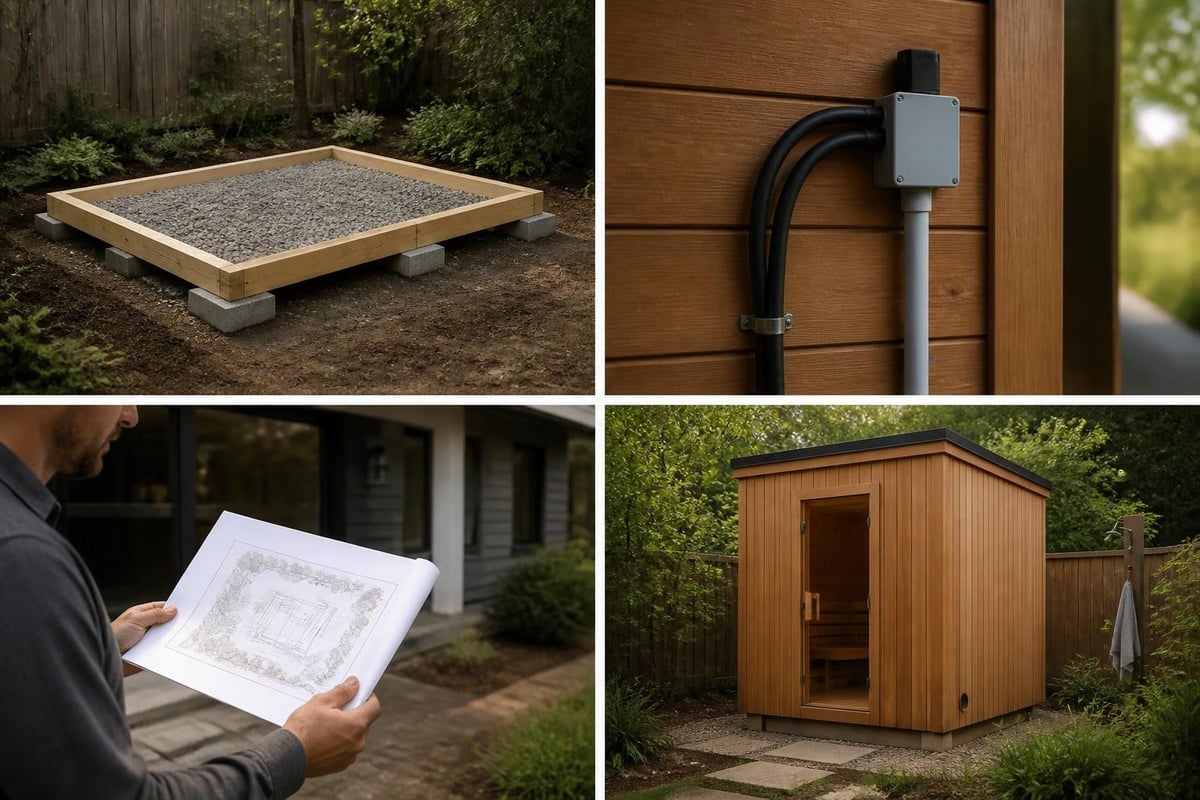
Before you buy an outdoor sauna for sale, prepare the site. Most models need a level, stable foundation.
Foundation Options
- Concrete slab: The most permanent and stable. Costs $500-$1,500 depending on size.
- Gravel pad: Lay landscape fabric, add 4-6 inches of compacted gravel, and level. Costs $200-$400.
- Deck or patio: If you have an existing deck, check the weight capacity. A loaded sauna weighs 1,000-2,000 lbs.
- Concrete pavers: Set pavers on a sand base and level carefully. Affordable and effective for barrel saunas.
Level matters. If the base is off by more than half an inch, doors will not close properly and benches will feel tilted.
Electrical and Permits
Most jurisdictions require permits for electrical work and sometimes for the structure itself. Check local building codes before ordering.
Your electrician will run 240V service from your panel to the sauna location. Budget $500-$1,200 for this depending on distance and complexity. The heater connects to a dedicated breaker, usually 30-50 amps depending on heater size.
Some buyers focus heavily on what to consider before buying a sauna, including these installation steps, to avoid surprises after delivery.
Adding the Cold Plunge for Contrast Therapy
A sauna alone offers benefits. A sauna with a cold plunge creates the recovery cycle Finns have used for centuries.
After 10-15 minutes in the heat, your body temperature rises, circulation increases, and muscles relax. When you step into cold water, blood vessels constrict, inflammation decreases, and your nervous system shifts. This contrast drives the recovery mechanism Prof. Laukkanen studied. The sauna and cold plunge combination is not a trend. It is how sauna was always meant to be practiced.
You have several cold plunge options:
- Dedicated plunge tub: Holds 100-150 gallons, fits one person fully submerged, and can be chilled with ice or an electric chiller.
- Stock tank: Affordable and functional, though less refined.
- Natural water source: If you have a pond, lake, or stream nearby, use it. I grew up plunging into Lake Saimaa year-round.
- Cold shower: Not as effective as full immersion, but better than nothing.
Place the plunge within 10-15 feet of the sauna door. You want to move from heat to cold quickly, without walking across the yard.
What an Outdoor Sauna for Sale Should Include
When comparing options, check what comes in the package. A complete sauna kit should include:
- Precut wall panels with tongue-and-groove edges
- Roof materials (shingles or panels)
- Benches and backrest lumber
- Door with handle, hinges, and seal
- Interior and exterior hardware
- Assembly instructions
Not always included:
- Heater and stones (sometimes sold separately)
- Electrical wiring and installation
- Foundation materials
- Lighting (some models include LED strips)
Read the product description carefully. Some outdoor saunas for sale are advertised at a low price but do not include the heater, which adds $800-$1,500 to the total cost.
Maintenance and Longevity
Cedar saunas last 15-25 years outdoors with basic care. Maintenance is minimal but necessary.
Routine tasks:
- Sweep or vacuum the interior after each use to remove dirt and debris.
- Wipe down benches monthly with a damp cloth. No soap or chemicals.
- Check door seals and hinges twice a year. Tighten screws as needed.
- Inspect the roof annually for damaged shingles or leaks.
Exterior care:
Cedar weathers naturally to gray if left untreated. This does not harm the wood. If you prefer the original color, apply a cedar sealant every 2-3 years.
Avoid painting or staining the interior. The heat will release fumes. Natural wood is safest and performs best.
HSA and FSA Eligibility
Many customers do not realize that saunas may qualify for HSA or FSA reimbursement with a Letter of Medical Necessity from your healthcare provider. The letter should explain how regular sauna use supports a specific health condition, such as cardiovascular health, chronic pain, or muscle recovery.
Not all plans approve sauna purchases, but the option is worth exploring if you have a flexible spending account. The research on sauna health benefits supports these claims, particularly for cardiovascular and metabolic health.
Check with your plan administrator before purchasing. If approved, you can use pre-tax dollars to cover part or all of the cost.
Recommendations by Use Case
For Daily Solo Use
A 2-person barrel sauna with an electric heater gives you efficiency and simplicity. It heats in 30-40 minutes, uses less power than larger models, and fits in compact yards. Pair it with a simple cold plunge tub or outdoor shower.
For Couples and Families
A 4-6 person cabin sauna with a porch offers space for multiple users and a comfortable post-sauna cooldown area. The porch becomes essential when you have children or guests who need a gradual transition before the cold plunge.
For Serious Recovery
If you train hard, recover intentionally, or manage chronic pain, invest in a larger traditional sauna with a powerful heater and a dedicated cold plunge. The best outdoor barrel sauna options and cabin models both work, but prioritize stone capacity, bench space, and quick access to cold water.
For Gentle Heat Preference
If high heat feels uncomfortable or you are new to sauna, start with an infrared model. The Lumin infrared saunas, priced between $7,999 and $10,999, offer plug-and-play simplicity and effective far-infrared heat without the intensity of löyly.
Where to Buy and What to Avoid
Buy from authorized dealers who understand sauna culture, not just product specs. You want someone who can answer questions about löyly, contrast therapy, and proper session structure.
Avoid marketplaces selling generic imported saunas with unclear wood sources and no customer support. If the listing does not specify wood type, heater brand, or electrical requirements, move on.
When you find an outdoor sauna for sale from a reputable dealer, ask these questions:
- What is included in the base price?
- What is the warranty on the wood and heater?
- Do you offer installation support or contractor referrals?
- Can you ship to my location, and what is the delivery timeline?
Expect free shipping within the U.S. and Canada from established dealers. Delivery takes 4-8 weeks depending on the model and your location.
How RecoSauna Helps You Choose
When you look for an outdoor sauna for sale, you need someone who has lived this practice, not just sold the equipment. At RecoSauna, we carry LeisureCraft cedar saunas ($5,585-$9,550), Orivon Wellness Auris models ($19,999-$32,999), and Lumin infrared saunas ($7,999-$10,999), plus cold plunge tubs designed for proper contrast therapy.
We are authorized dealers and members of Sauna from Finland and the North American Sauna Society. Every sauna qualifies for free shipping across the U.S. and Canada. Some purchases may qualify for HSA or FSA reimbursement with the right documentation.
This is not about selling boxes. It is about bringing the recovery ritual I practiced on Lake Saimaa to your backyard, with the right tools and the knowledge to use them correctly.
Choosing an outdoor sauna for sale means deciding whether you want real löyly and contrast therapy or just a warm space. If you want the recovery mechanism Finns practiced for 2,000 years, choose traditional heat, plan for a cold plunge, and build the ritual into your routine. Petri answers every question personally at RecoSauna to help you find the sauna that fits your space, budget, and recovery goals.
Share:
Steam Sauna: Finnish Löyly and Real Recovery Science
Indoor Sauna: Finnish Steam, Modern Spaces (2026 Guide)