
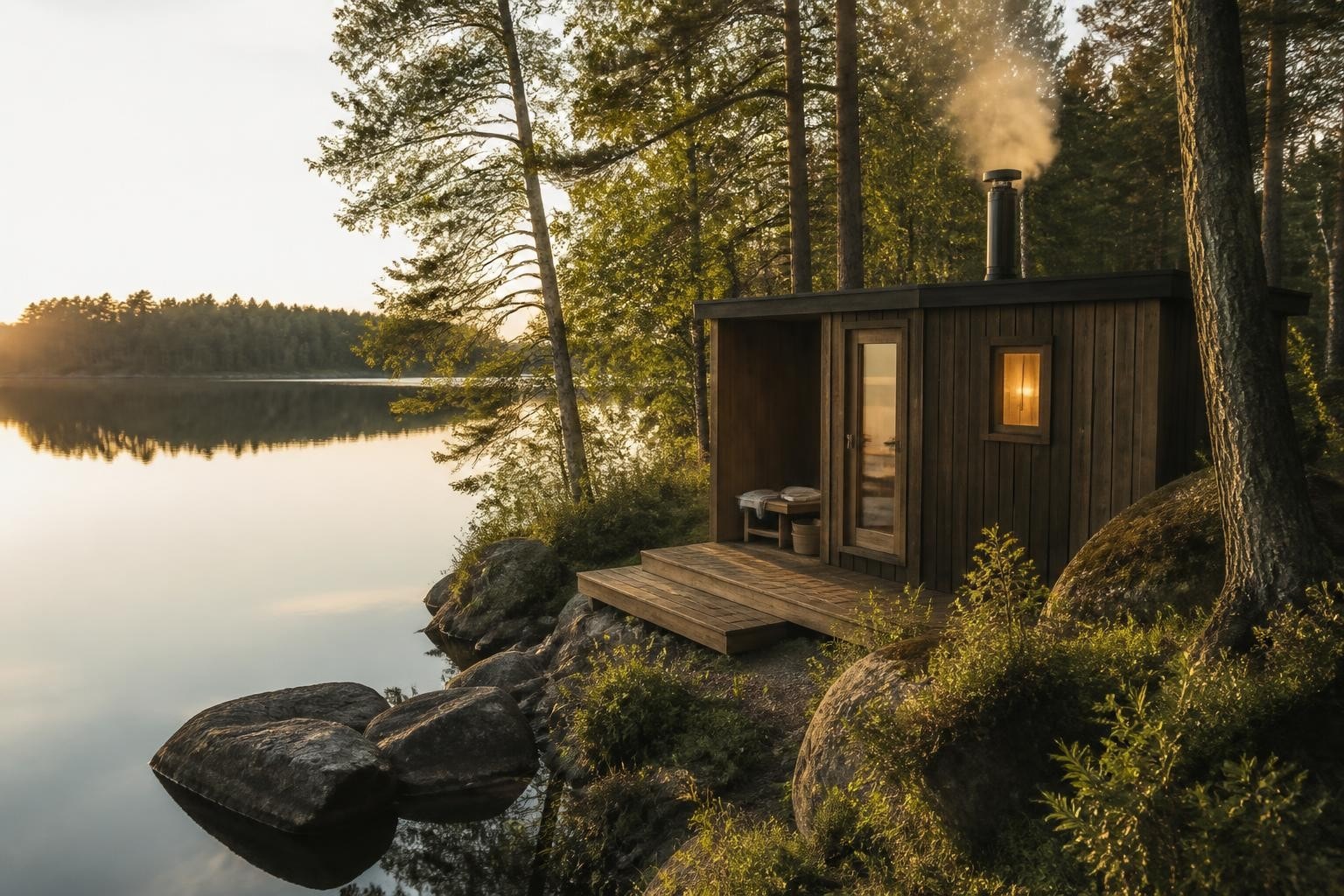
When you search "sauna x" today, results point in several directions. Commercial sauna venues in Australia, Finland, Poland, and Japan use this name. Fire & Ice X in North America offers contrast therapy centers. Meanwhile, people searching for home saunas often add an "x" thinking it means extra features or premium models. The term carries no single definition. What you find depends on geography and context. For homeowners researching backyard saunas, understanding this distinction matters. Public sauna culture differs from private home use in design, heating, session length, and social norms.
What Sauna X Actually Refers to in Different Regions
The term sauna x appears across multiple contexts without a unified meaning.
Sauna X in Australia operates as a commercial venue in Darlinghurst, welcoming guests to a social sauna environment with specific community guidelines. Sauna X in Finland offers public sessions and ice swimming services in Raisio, emphasizing open access and traditional Finnish practices. In Poland, Sauna-X manufactures compact outdoor saunas built from certified Scandinavian spruce. SAUNA XX in Japan provides minimal luxury facilities with efficient entry systems.
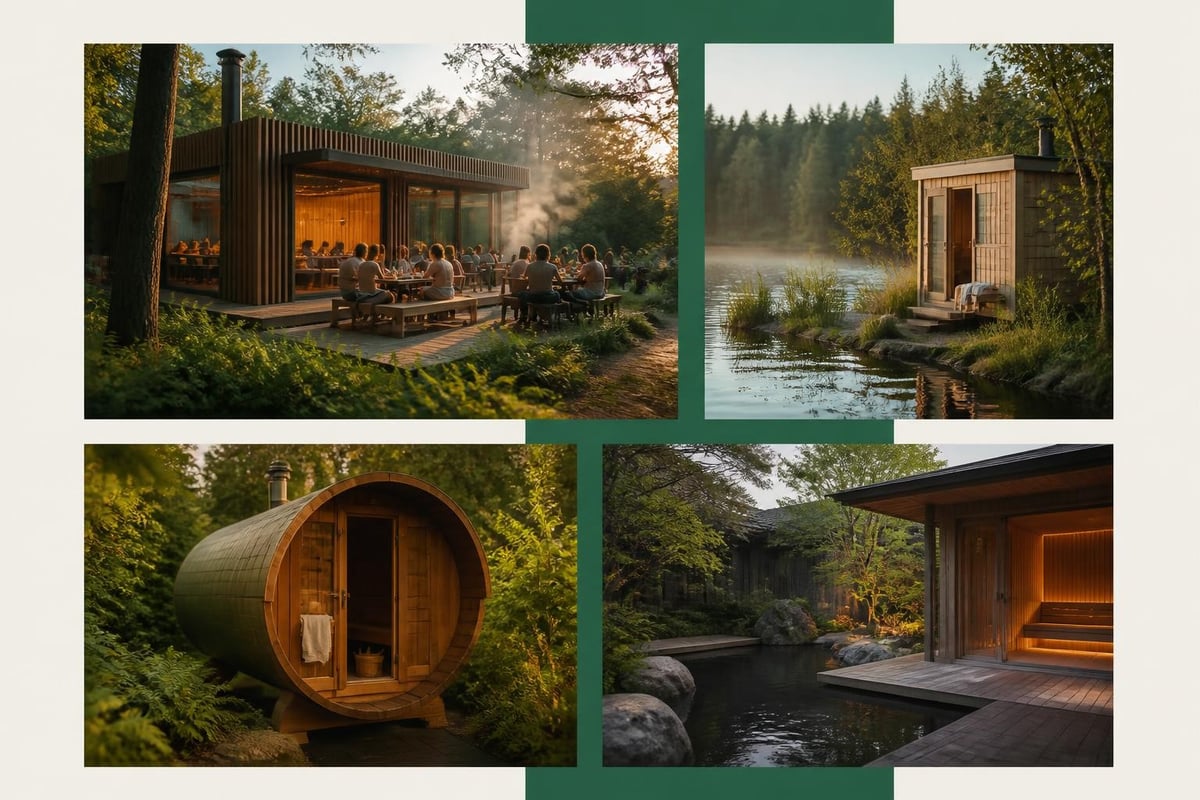
None of these share branding or business models. The "x" serves different purposes. Sometimes it signals inclusivity, sometimes a product line, sometimes just a distinctive name. For North American homeowners, this creates confusion. Searching for home sauna options pulls up international commercial venues with little relevance to backyard installation.
| Region | Type | Primary Use | Relevance to Home Buyers |
|---|---|---|---|
| Australia | Commercial venue | Social sauna sessions | None |
| Finland | Public facility | Open sauna + cold swim | Cultural context only |
| Poland | Manufacturer | Outdoor sauna kits | Product comparison |
| Japan | Luxury facility | Premium sessions | None |
| North America | Contrast therapy | Fire & Ice X centers | Session experience |
Commercial Sauna Venues vs Home Sauna Ownership
Public sauna culture and private home use differ fundamentally in design and purpose.
Commercial facilities prioritize throughput, ventilation for continuous use, and social space. Heating systems run all day. Benches accommodate shifting groups. Staff maintain temperature and cleanliness. Conditions of entry govern behavior, age limits, and safety protocols. Session length often caps at 15 to 20 minutes to manage capacity.
Home saunas serve one household. You control session timing, temperature, and frequency. No entry fees, no schedules, no waiting. The sauna heats when you want it. Sessions can extend to 30 minutes or longer once you adapt. Privacy means you choose who joins you. Maintenance falls to you, but so does every aspect of the experience.
Heating Requirements Differ by Use Pattern
Commercial venues require heaters sized 50 to 100 percent above residential recommendations. Constant door traffic, ventilation demands, and back-to-back sessions need sustained high output.
Home saunas heat once per session. A properly sized heater brings the room to temperature in 30 to 45 minutes, then cycles to maintain heat. Most quality North American saunas use Harvia heaters, sized by cubic footage and insulation quality. Stone mass matters. More stones mean steadier heat and better löyly, the steam that rises when water hits hot stones. That moment defines the Finnish sauna experience.
For a home outdoor sauna, calculate room volume, wall thickness, and climate. A 6x8 foot sauna in Minnesota winters needs more capacity than the same size in coastal California. Undersizing means long heat-up times and uneven temperature. Oversizing wastes energy and dries the air too quickly.
- Measure interior cubic feet accurately
- Factor insulation R-value
- Account for glass area and door gaps
- Choose heater capacity at the upper end of the range for your volume
Fire & Ice X and the Contrast Therapy Connection
Fire & Ice X represents a different model. These are commercial facilities offering sauna and cold plunge access in a refined setting. The "x" here signals a premium experience, not a specific brand or product.
Contrast therapy alternates hot and cold exposure. Sauna sessions raise skin temperature and heart rate. Cold water immersion follows, constricting blood vessels and shifting the nervous system. Repeating this cycle two or three times per session creates the physiological response. Research shows associations with improved circulation, reduced muscle soreness, and enhanced recovery. Causation remains difficult to prove, but the practice predates modern wellness trends by millennia.
At home, you control this rhythm. Heat your sauna to 160 to 180°F. Sit for 10 to 15 minutes. Step out, cool briefly, then immerse in cold water for one to three minutes. Rest, then repeat. No facility membership, no time limits, no shared space.
Setting Up Contrast Therapy at Home
Most homeowners start with sauna only, then add cold exposure later. A garden sauna provides the foundation. Cold plunge options range from simple stock tanks to insulated tubs with chillers.
Stock tanks cost less but require ice or hose refills. Insulated plunge tubs hold temperature longer. Chillers maintain 40 to 50°F year-round without ice. If you live where winters drop below freezing, natural cold water works half the year. Summer demands either ice or refrigeration.
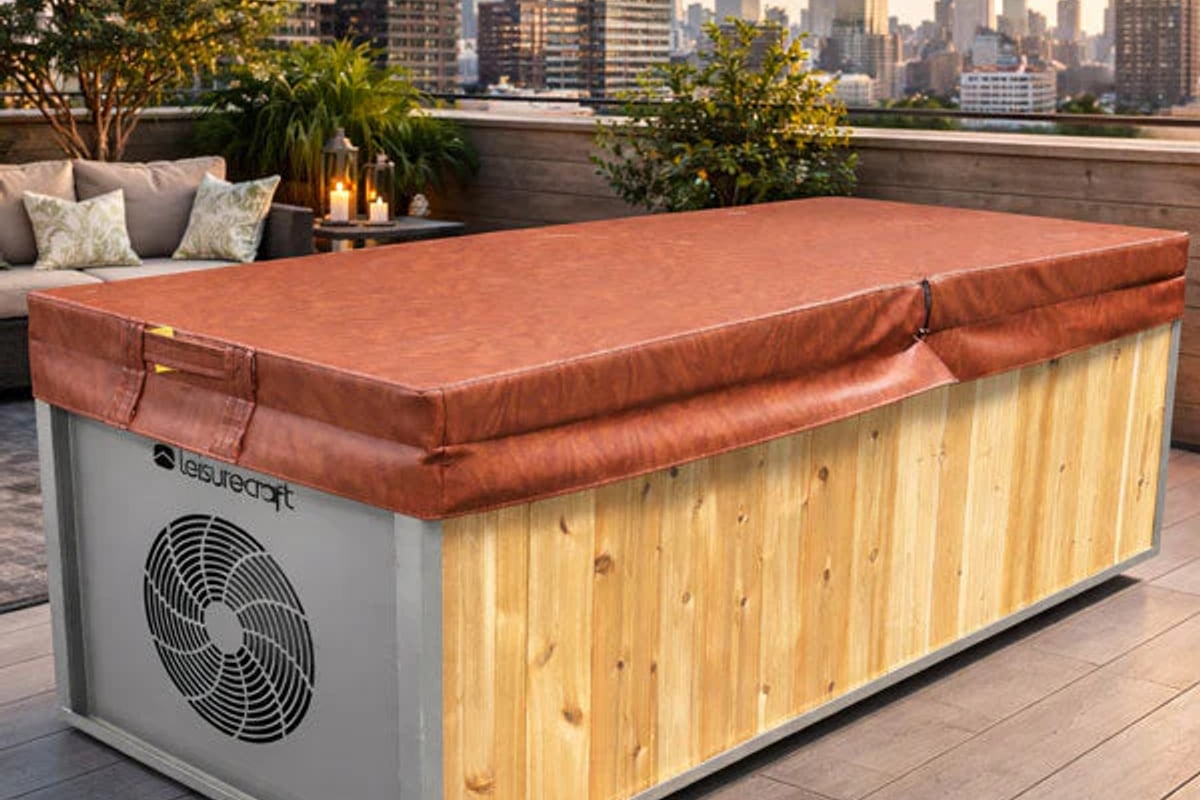
The LeisureCraft Flow Cold Plunge ships fully assembled with a built-in chiller compartment, combining natural cedar exterior with stainless steel interior. It eases post-workout soreness and promotes focus when used alongside a home sauna for complete contrast therapy.
| Cold Option | Cost Range | Temperature Control | Maintenance | Best For |
|---|---|---|---|---|
| Stock tank + ice | Low | Manual | Weekly drain | Testing the practice |
| Insulated tub + hose | Medium | Seasonal | Refill as needed | Mild climates |
| Chiller plunge | High | Precise | Filtration system | Year-round use |
What to Consider Before Buying a Home Sauna
Most buyers research for three to six months. The decision involves space, budget, heating type, and long-term use.
Space and Placement
Outdoor saunas need level ground, electrical access, and drainage. Indoor models fit basements or spare rooms but require ventilation and moisture management. Measure carefully. A 2 person sauna typically needs 4x6 feet minimum. Larger families or those who plan to host guests should consider 6x8 or bigger.
Traditional vs Infrared Heating
Traditional saunas heat air to 160 to 195°F using electric or wood-fired heaters and stones. Löyly creates humidity spikes that intensify the experience. Infrared saunas use panels that emit radiant heat, warming the body directly at lower air temperatures, usually 120 to 150°F. No steam, no stones, different sensation.
Traditional sauna aligns with Finnish practice. Infrared suits those who prefer gentler heat or have space constraints. Neither is better. The choice depends on what experience you want. If you grew up with sauna or visited Finland, traditional steam will feel familiar. If you are new to heat therapy and prefer gradual warmth, infrared may suit you better.
Wood Species and Durability
Quality outdoor saunas use Eastern White Cedar, Thermo Grandis, or Canadian Hemlock. Cedar resists moisture and insects naturally. Thermo Grandis undergoes heat treatment for stability and low maintenance. Hemlock offers smooth grain and moderate cost. Avoid pressure-treated lumber or low-grade softwoods.
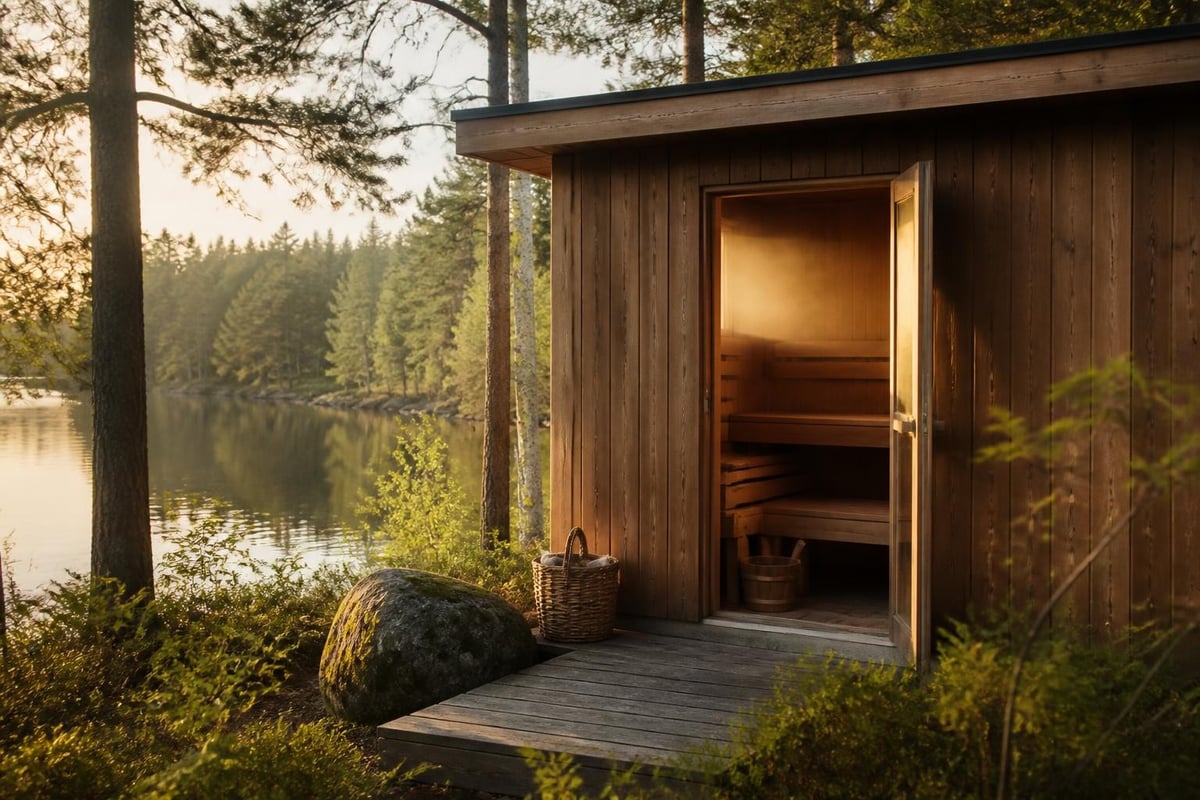
Indoor saunas often use Thermo Grandis for its refined appearance and resistance to warping in humidity. The LeisureCraft Loft CT Element Indoor Sauna is crafted from this eco-friendly, moisture-resistant wood treated in Ontario, with a full glass front and warm interior lighting suited for modern indoor spaces.
Assembly and Installation
Most outdoor saunas ship as kits. Assembly takes one or two days with basic tools. Some models arrive preassembled in sections, reducing build time. Indoor models often use clasp-together panels.
Electrical work should meet local codes. A 240V dedicated circuit typically powers traditional heaters. Some infrared models run on 120V standard outlets. Hire a licensed electrician if you lack experience. Permits vary by municipality. Check before ordering.
Petri's Perspective: What Matters Most
I grew up on Lake Saimaa in Eastern Finland. Sauna was not a luxury or a wellness trend. It was Saturday evening, summer cottage, family time. My grandfather heated the wood stove while we swam. The scent of birch and cedar, the hiss of water on stones, the shock of lake water afterward. That rhythm shaped how I understand sauna. When I moved to North America and started RecoSauna, I wanted to bring that honesty here. Not a product, not a protocol. Just heat, steam, cold water, and the quiet that follows. Everything else is secondary.
Frequently Asked Questions About Sauna X and Home Saunas
Is sauna x a specific brand or product line?
No. The term appears across unrelated commercial venues and manufacturers in different countries. It has no single brand owner or unified meaning.
Can I recreate a commercial sauna experience at home?
Yes, but home saunas serve different needs. You gain privacy, control, and unlimited access. You lose the social dynamic and staff-managed operations of commercial venues.
What is the main difference between traditional and infrared saunas?
Traditional saunas heat air and use water on hot stones to create steam. Infrared saunas warm the body directly with radiant panels at lower air temperatures. The sensations differ significantly.
How much does a quality home sauna cost?
Quality outdoor saunas range from mid-four figures for compact barrel models to high-four figures for cabin-style saunas with porches. Indoor infrared models often cost less. Financing spreads the expense.
Do I need a cold plunge if I already have a sauna?
No, but alternating heat and cold enhances the recovery cycle. You can start with sauna only and add cold exposure later when you are ready.
Sauna x as a search term leads in many directions, but the core choice for North American homeowners remains clear: decide between traditional steam sauna and infrared, choose a size that fits your household, and plan for placement and electrical needs. Petri at RecoSauna answers every question personally, drawing on a lifetime in Finnish sauna culture. Free shipping across the USA and Canada, financing available, authorized dealer for LeisureCraft, Golden Designs, Maxxus, HUUM, and Orivon Wellness. Ask Petri About Your Sauna and start with guidance rooted in authenticity, not sales pressure.
Share:
Best Outdoor Sauna: Expert Guide from Finland (2026)
Rooftop Sauna: Planning, Installation & What Works