
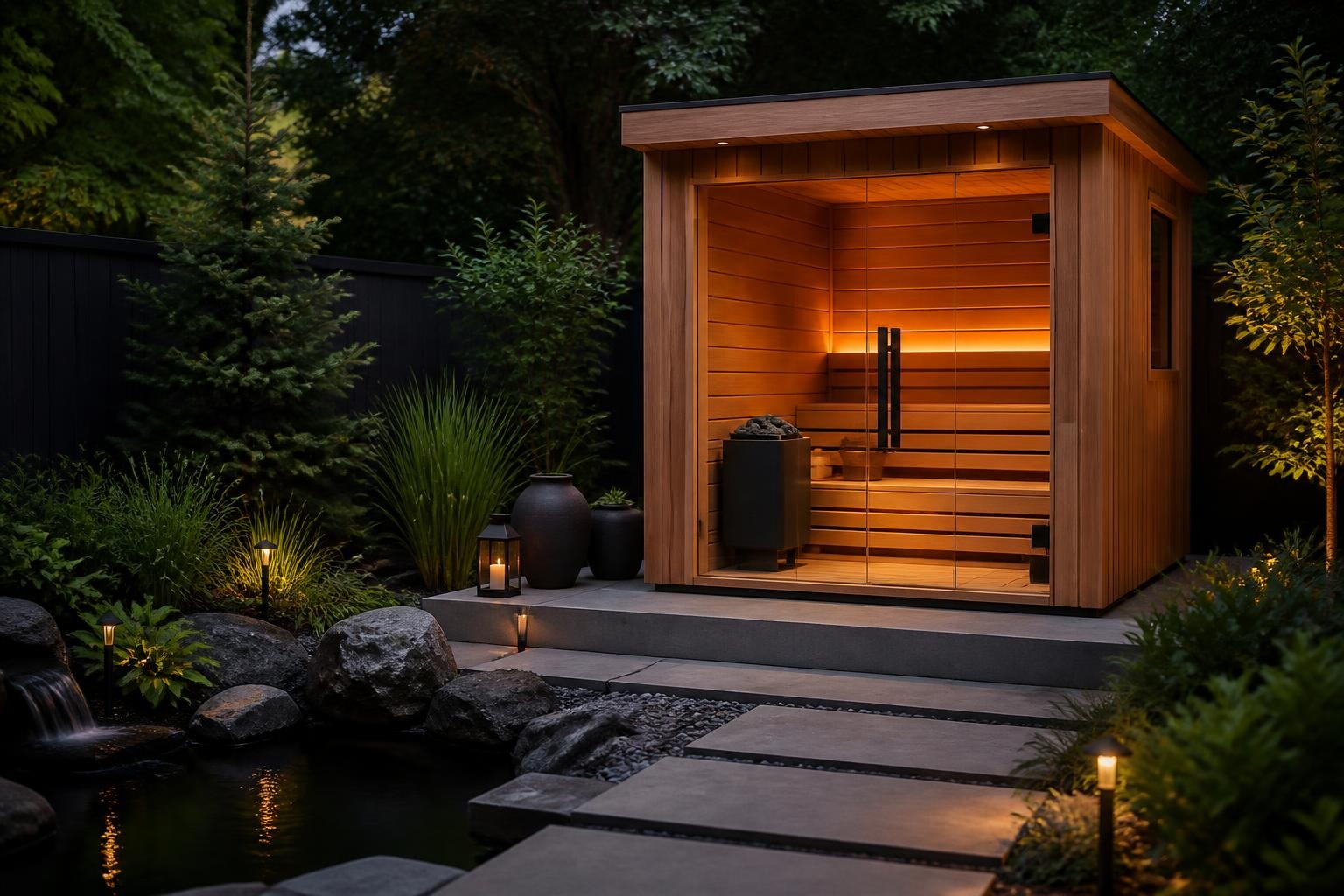
Adding an outdoor sauna home transforms your backyard into a personal wellness retreat while increasing property value and creating a dedicated space for relaxation, recovery, and social connection. Unlike indoor installations that require extensive home modifications, outdoor saunas offer flexibility in placement, design, and functionality. Whether you're seeking the traditional heat therapy experience or modern infrared wellness sessions, understanding the fundamentals of outdoor sauna home planning ensures you make informed decisions that align with your lifestyle, budget, and available space.
Understanding the Outdoor Sauna Home Advantage
The outdoor sauna home concept has evolved from a luxury amenity to an accessible wellness investment for homeowners across North America. This shift reflects growing awareness of sauna health benefits and the desire for private recovery spaces that don't compromise living areas.
Space Efficiency and Property Integration
Outdoor sauna installations preserve valuable interior square footage while creating distinct wellness zones in your yard. This separation offers practical advantages:
- Moisture management without affecting indoor humidity levels
- Dedicated access that keeps foot traffic away from main living areas
- Flexible placement options that maximize sun exposure or privacy
- Year-round accessibility independent of home occupancy patterns
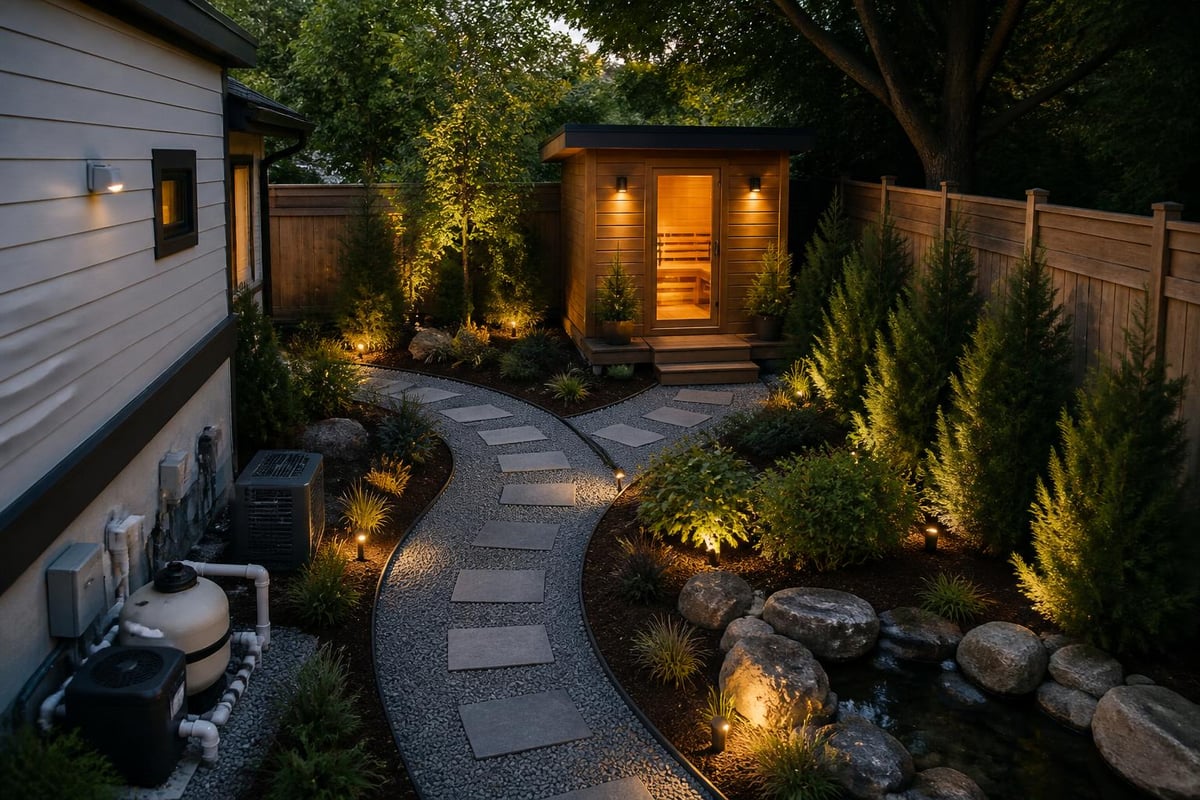
The outdoor sauna home approach also complements existing landscape features. Strategic placement near pools, gardens, or natural privacy screens enhances the overall ambiance while maintaining functional access to utilities and pathways.
Health and Wellness Benefits
Regular sauna use supports cardiovascular health, muscle recovery, and stress reduction through controlled heat exposure. The outdoor setting amplifies these benefits by encouraging temperature contrast therapy, especially when combined with cold plunge routines that maximize circulation and recovery.
Research indicates that consistent sauna sessions may improve endurance, reduce inflammation, and promote deeper sleep patterns. The outdoor sauna home environment facilitates this consistency by making wellness sessions more appealing and accessible throughout all seasons.
Choosing the Right Outdoor Sauna Type
The market offers diverse outdoor sauna home options, each with distinct characteristics suited to different preferences and property configurations. Understanding these differences helps narrow your selection based on aesthetic goals, capacity needs, and heating preferences.
Traditional Wood-Fired vs. Electric Models
| Feature | Wood-Fired | Electric |
|---|---|---|
| Heat Character | Deep, radiant, variable | Consistent, controllable, precise |
| Installation Complexity | Chimney required, clearances | Electrical connection only |
| Operating Cost | Wood supply dependent | Electricity rates, generally predictable |
| Maintenance | Ash removal, chimney cleaning | Minimal, heater element lifespan |
| Heat-Up Time | 45-90 minutes | 30-45 minutes |
Electric models dominate contemporary outdoor sauna home installations due to simplified permitting, faster heat cycles, and user-friendly controls. However, wood-burning options appeal to purists who value the ritual of fire-building and authentic sauna tradition.
Barrel, Cabin, and Pod Designs
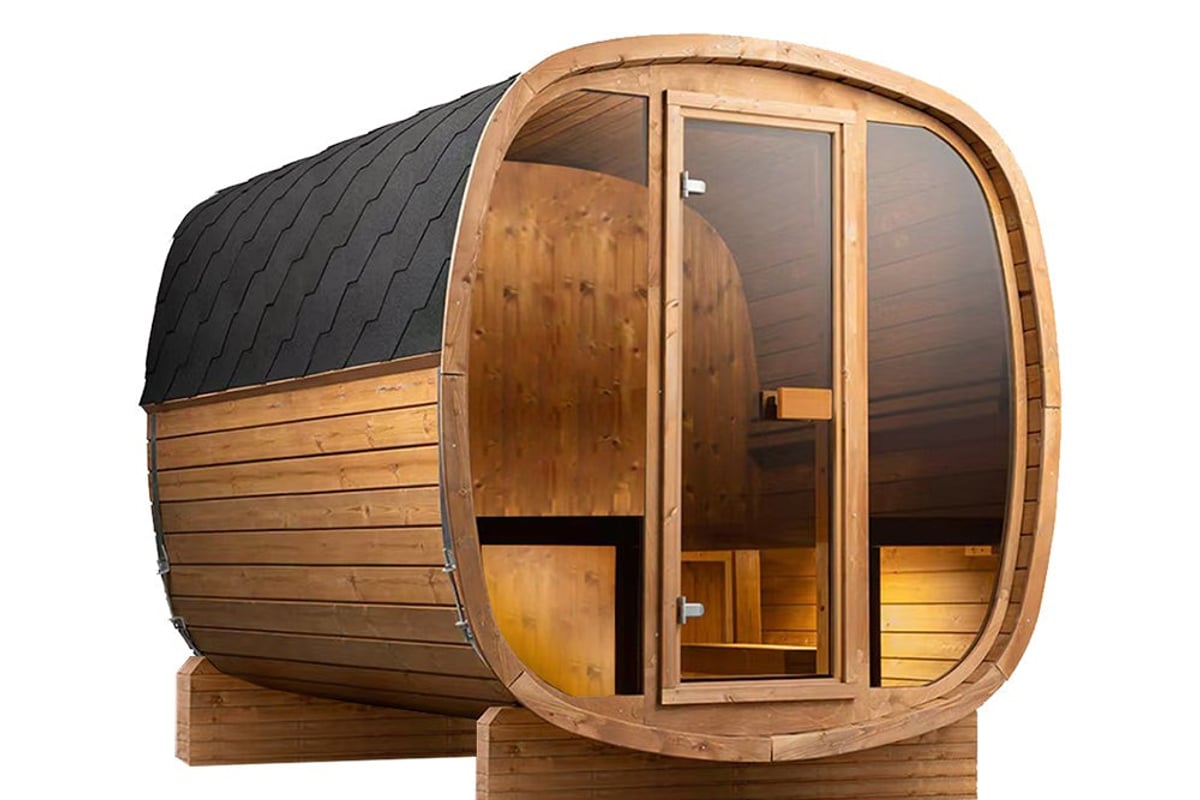
Barrel saunas feature cylindrical construction that promotes superior heat circulation through natural convection. The curved walls reduce dead air pockets while creating an intimate atmosphere. These designs typically accommodate 2-4 users and require less heating energy than rectangular structures of similar capacity.
Cabin-style saunas offer traditional architecture with vertical walls, peaked roofs, and optional changing rooms or covered porches. This format provides maximum interior headroom and flexible layout options, making it ideal for families or those planning social sauna sessions.
Pod saunas represent modern minimalist design with compact footprints and contemporary aesthetics. These space-efficient options suit smaller yards while delivering full sauna functionality in a distinctive package that serves as an architectural focal point.
Material Selection for Durability and Performance
The outdoor sauna home requires weather-resistant materials that withstand temperature extremes, moisture exposure, and UV degradation. Premium timber species and proper construction techniques ensure decades of reliable service with minimal maintenance.
Canadian Timber Options
Eastern White Cedar stands as the preferred choice for outdoor sauna construction across North America. This species offers natural rot resistance, dimensional stability, and aromatic qualities that enhance the sauna experience. Its lightweight nature simplifies assembly while maintaining structural integrity under thermal cycling.
Red Cedar provides enhanced durability with higher oil content that repels moisture and resists insect damage. The wood's rich color and pronounced grain pattern create visually striking interiors. Many manufacturers combine red cedar cladding with white cedar framing to balance aesthetics and cost-effectiveness.
Both species require minimal chemical treatment, aligning with wellness priorities while reducing environmental impact. The natural antibacterial properties of cedar contribute to healthier indoor air quality during sauna sessions.
Glass and Hardware Components
Modern outdoor sauna home designs incorporate substantial glass elements that flood interiors with natural light while maintaining thermal efficiency. Tempered glass doors withstand repeated temperature fluctuations without risk of shattering, while bronze or gray tinting reduces glare and enhances privacy.
Hardware selection impacts longevity significantly. Stainless steel hinges, latches, and fasteners prevent corrosion in high-humidity environments. Hot-dipped galvanized roofing materials extend weatherproofing performance beyond standard asphalt shingles.
Site Preparation and Foundation Requirements
Proper foundation work determines your outdoor sauna home's stability, drainage performance, and long-term durability. The investment in quality groundwork prevents structural settling, moisture intrusion, and premature material degradation.
Level Surface and Drainage Planning
Every outdoor sauna installation begins with site grading that ensures proper water runoff away from the foundation perimeter. Slope requirements typically specify a minimum 2% grade within 10 feet of the structure to prevent pooling.
Foundation options include:
- Concrete slab – Permanent, stable, supports heavy loads
- Paver base – Semi-permanent, adjustable, good drainage
- Gravel pad – Budget-friendly, excellent drainage, requires border containment
- Deck platform – Elevated, integrates with existing structures
- Concrete pier system – Minimal ground contact, superior airflow
Most residential outdoor sauna home installations perform well on compacted gravel bases topped with concrete pavers. This approach balances affordability with functionality while allowing future relocation if needed.
Utility Access and Planning
Electric saunas require dedicated circuits rated for heater wattage, typically 30-50 amp service depending on unit size. Licensed electricians should route underground conduit from the main panel to the sauna location, ensuring compliance with local codes regarding burial depth and conduit type.
Water access facilitates bucket-and-ladle rituals in traditional saunas while supporting cleaning routines. A frost-free spigot positioned near the sauna entrance provides year-round convenience without winterization concerns.
Climate Considerations and Weatherproofing
The outdoor sauna home must perform reliably across seasonal temperature swings, precipitation patterns, and UV exposure levels specific to your region. Design features and protective treatments extend service life while maintaining aesthetic appeal.
Insulation and Heat Retention
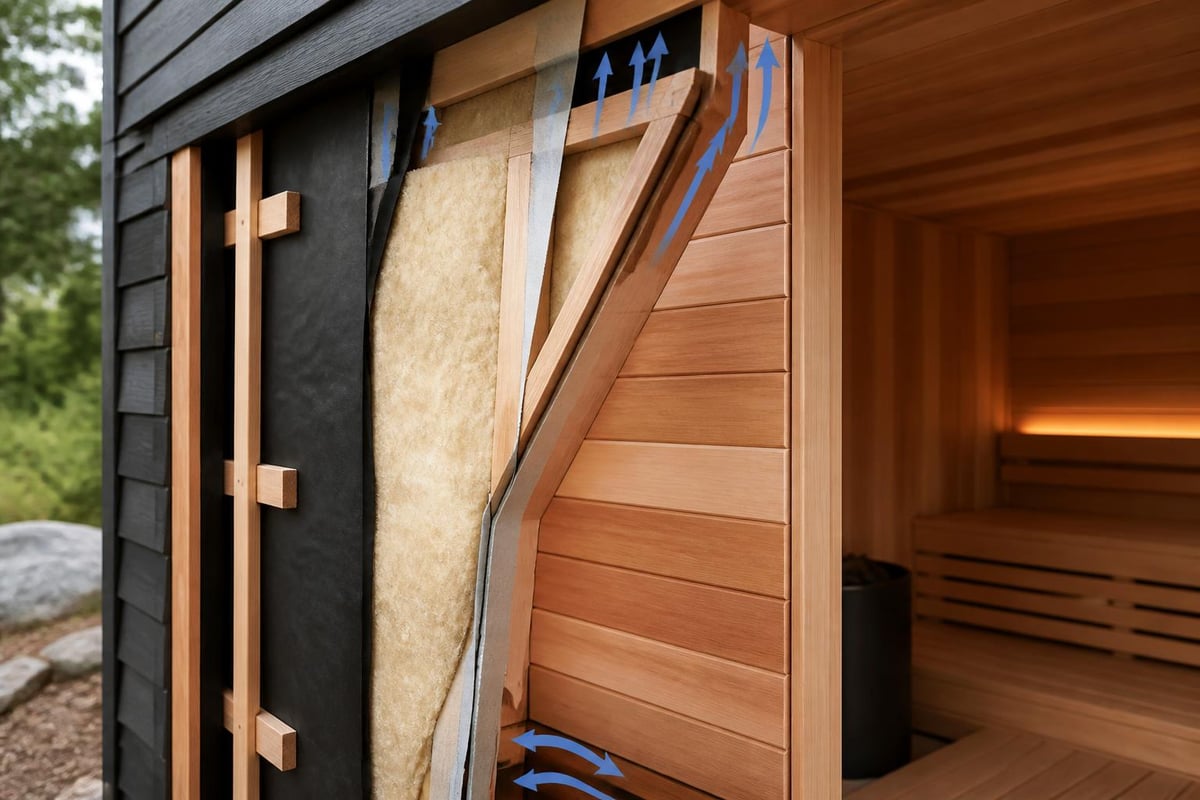
Proper insulation creates the thermal envelope necessary for efficient heating and comfortable sessions. R-13 to R-21 wall insulation represents the standard range for outdoor sauna applications in moderate climates, while northern installations may require enhanced values approaching R-30.
Ceiling insulation demands special attention since heat naturally rises. Doubling the wall R-value for ceiling assemblies prevents excessive heat loss through the roof while protecting against condensation that could compromise structural members.
Vapor barriers positioned on the warm side of insulation prevent moisture migration into wall cavities where condensation could foster rot or mold growth. Proper construction techniques ensure these barriers remain continuous and intact during assembly.
Roof and Exterior Protection
Asphalt shingles provide economical weatherproofing with 15-25 year lifespans, while metal roofing delivers superior durability and precipitation shedding over 40+ years. The steeper the roof pitch, the more effective snow and rain removal becomes.
Exterior wood treatment options range from natural weathering to protective stains or sealers. Untreated cedar develops an attractive silver-gray patina over time without compromising structural integrity. Semi-transparent stains preserve wood appearance while blocking UV damage and moisture penetration.
Infrared vs. Traditional Heat Sources
The outdoor sauna home can employ conventional rock-heated systems or modern infrared technology, each offering distinct therapeutic profiles and operational characteristics. Your wellness goals and usage patterns should guide this fundamental decision.
Traditional Finnish Sauna Experience
Conventional saunas heat ambient air to 150-195°F using electric or wood-burning heaters that warm stacked sauna stones. Löyly (steam bursts from water ladled onto hot rocks) creates humidity spikes that intensify perceived heat and promote sweating.
This approach delivers:
- Deep penetrating warmth from high ambient temperatures
- Customizable humidity through water application frequency
- Social atmosphere conducive to extended sessions
- Traditional rituals valued in Nordic sauna culture
The high-temperature environment encourages shorter sessions (10-20 minutes) followed by cooling periods and repeated cycles for optimal cardiovascular conditioning.
Infrared Sauna Technology
Infrared saunas operate at lower temperatures (120-140°F) while using invisible light wavelengths to warm the body directly rather than heating surrounding air. This technology segments into near, mid, and far infrared spectrums, each penetrating tissue to different depths.
Full-spectrum infrared systems combine all three wavelengths for comprehensive therapeutic effects:
- Near-infrared supports skin health and cellular regeneration
- Mid-infrared enhances circulation and cardiovascular function
- Far-infrared promotes detoxification through deep tissue warming
The gentler heat profile enables longer sessions (30-45 minutes) that some users find more comfortable, particularly those sensitive to extreme temperatures or managing certain health conditions.
Sizing Your Outdoor Sauna Home
Capacity planning balances available yard space, typical user count, and budget constraints. Undersized saunas create cramped conditions that diminish enjoyment, while oversized units waste energy heating unused volume.
Occupancy Guidelines
| Sauna Size | Typical Capacity | Interior Dimensions | Heater Power |
|---|---|---|---|
| Compact | 1-2 persons | 4' × 4' | 3-4.5 kW |
| Standard | 2-3 persons | 5' × 5' | 4.5-6 kW |
| Family | 3-4 persons | 6' × 6' | 6-8 kW |
| Large | 4-6 persons | 6' × 8' | 8-10 kW |
These figures assume standard bench configurations with one or two levels. L-shaped benching maximizes seating within compact footprints while straight bench layouts simplify construction and create spacious feel in larger models.
Ceiling height significantly impacts comfort and heat distribution. Minimum 6'6" interior clearance accommodates most users comfortably, while 7'0" to 7'6" heights prevent claustrophobic sensations and improve air circulation.
Growth and Multi-Use Planning
Consider future household changes when selecting outdoor sauna home dimensions. A couple planning to start a family might prioritize 4-person capacity despite current needs. Properties used for vacation rentals benefit from larger saunas that serve as attractive amenities justifying premium rates.
Changing room additions extend sauna functionality by providing sheltered space for clothing storage and shower access without enlarging the heated chamber. This configuration proves particularly valuable in cooler climates where outdoor temperature transitions feel harsh.
For homeowners seeking a refined outdoor wellness experience, the Auris Two Luxury Outdoor Cedar Sauna exemplifies premium construction and thoughtful design. This spacious 3-4 person model features natural red cedar construction with multiple heater options, delivering the flexibility to create your ideal outdoor sauna home environment.
Installation Process and Timeline
Most outdoor sauna home units arrive as prefabricated kits engineered for straightforward assembly using basic tools and modest carpentry skills. Understanding the installation sequence helps set realistic timeline expectations and identify tasks requiring professional assistance.
DIY Assembly vs. Professional Installation
Panel-based kits feature pre-cut walls, roof sections, and bench components that interlock or bolt together following included instructions. Typical assembly requires:
- Foundation preparation (1-3 days depending on type)
- Floor frame assembly and installation (2-4 hours)
- Wall panel erection and securing (3-6 hours)
- Roof assembly and weatherproofing (4-8 hours)
- Interior bench installation (2-3 hours)
- Door and window fitting (1-2 hours)
- Electrical heater hookup (requires licensed electrician, 2-4 hours)
- Final trim and hardware installation (2-3 hours)
Competent DIYers with helper assistance complete installations in 2-3 full days of work. Professional installation services condense this timeline to 1-2 days while ensuring warranty compliance and code adherence.
Permit and Code Compliance
Local building departments typically classify outdoor sauna home structures as accessory buildings subject to setback requirements, height restrictions, and electrical permitting. Requirements vary significantly by jurisdiction, making advance research essential.
Common permit triggers include:
- Floor area exceeding 120 square feet (varies by locality)
- Electrical work requiring dedicated circuits or service upgrades
- Proximity to property lines violating setback minimums
- HOA deed restrictions governing accessory structure appearance
Budget 2-6 weeks for permit approval processes and schedule inspections accordingly to avoid project delays.
Maintenance and Seasonal Care
The outdoor sauna home requires minimal upkeep when constructed from quality materials and operated properly. Establishing maintenance routines preserves appearance, prevents premature wear, and ensures optimal performance across decades.
Regular Cleaning Protocols
Post-session ventilation represents the single most important maintenance habit. Opening doors and vents for 30-60 minutes after use allows moisture evacuation that prevents mildew and wood degradation. This simple practice dramatically extends material lifespan.
Weekly cleaning tasks include:
- Bench wiping with mild soap solution
- Floor sweeping or vacuuming
- Glass door cleaning for visibility
- Heater guard dust removal
- Ventilation screen inspection
Monthly deep cleaning addresses accumulated oils, sweat residue, and any developing stains using approved cedar cleaners that preserve wood integrity without harsh chemicals.
Seasonal Inspection and Winterization
Spring preparation focuses on post-winter assessment:
- Roof inspection for ice damage or lifted shingles
- Wood treatment application if using protective stains
- Hardware tightening after thermal expansion/contraction cycles
- Heater testing to verify proper function before peak season
Fall winterization in cold climates includes:
- Water line draining if equipped with plumbing
- Heater protection from moisture in unused saunas
- Snow load consideration for roof structures
- Door seal inspection preventing drafts and heat loss
Year-round outdoor sauna home operation remains feasible in most North American climates. The growing trend of outdoor saunas reflects increased recognition that cold-weather sessions offer unique benefits when followed by brief outdoor cooling periods.
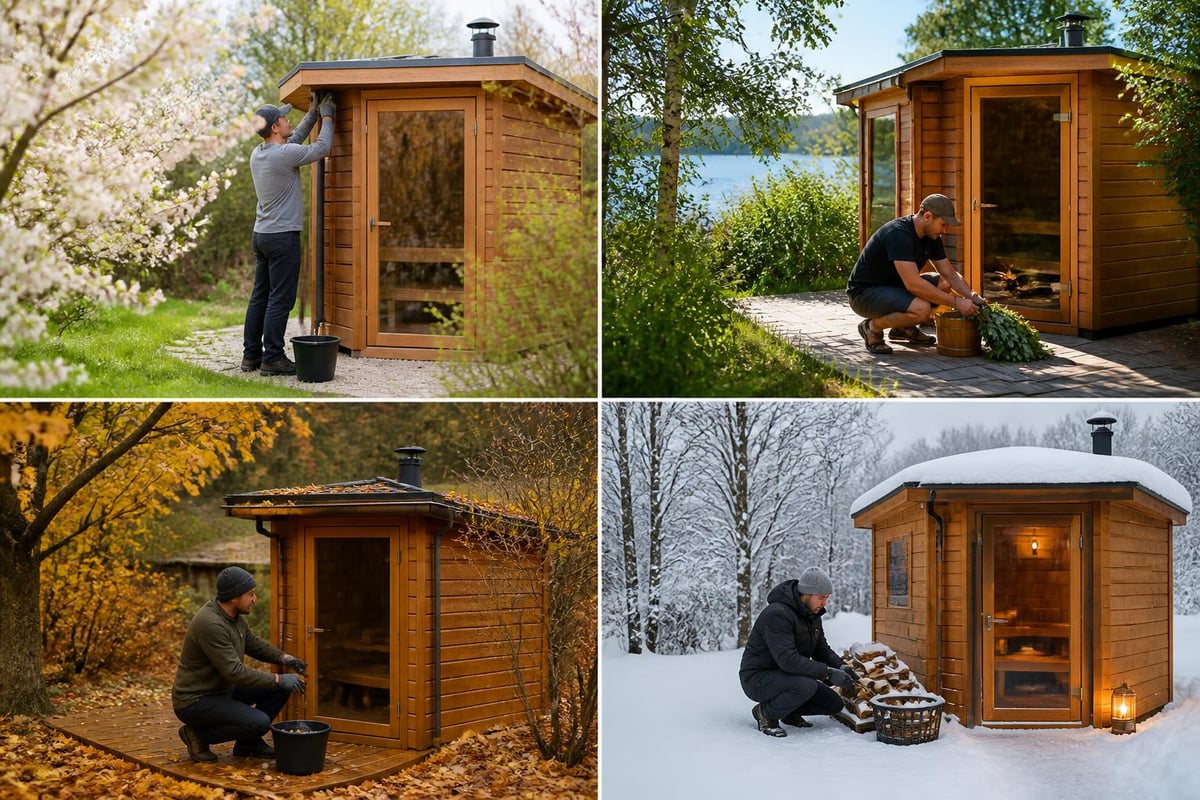
Design Aesthetics and Landscape Integration
The outdoor sauna home should complement existing architecture while creating visual interest that enhances overall property appeal. Thoughtful design choices transform functional wellness equipment into attractive landscape features.
Architectural Harmony
Style matching considers your home's design language when selecting sauna aesthetics. Contemporary residences pair naturally with pod or modern cabin designs featuring clean lines and substantial glass, while traditional homes harmonize with classic barrel or rustic cabin styles.
Material coordination extends visual cohesion through:
- Roof color matching existing structures
- Trim detail echoing home architectural elements
- Window style complementing house fenestration
- Exterior finish coordinating with primary dwelling
These subtle connections create unified landscapes that feel intentionally designed rather than haphazardly assembled.
Privacy and Screening Solutions
Strategic placement and landscape screening balance openness with seclusion. Natural privacy barriers like evergreen hedges, bamboo groves, or ornamental grasses mature over time while softening hard edges and providing year-round coverage.
Constructed screening options include:
- Cedar fence panels matching sauna materials
- Lattice screens supporting climbing vines
- Pergola structures defining outdoor zones
- Retaining walls creating grade-separated areas
The goal involves creating comfortable seclusion without claustrophobic enclosure. Partial screening that blocks direct sightlines from neighboring properties while preserving open sky views often provides optimal results.
Cost Factors and Budget Planning
Understanding outdoor sauna home pricing helps establish realistic budgets that account for the full project scope beyond base unit costs. Comprehensive planning prevents mid-project surprises while ensuring adequate resources for quality installations.
Equipment and Installation Costs
Entry-level outdoor saunas start around $3,000-$5,000 for compact 2-person models with basic features and materials. Mid-range options in the $5,000-$10,000 range offer larger capacity, premium woods, and enhanced features like improved insulation or superior hardware.
Premium outdoor sauna home installations exceeding $10,000-$20,000 deliver luxury materials, substantial sizing, integrated technology, and refined aesthetics suitable for high-end properties. Custom builds can extend beyond these ranges based on architectural complexity and finish specifications.
Installation expenses add $1,500-$5,000 depending on:
- Foundation complexity and materials
- Electrical service requirements and distance
- Site accessibility for equipment and materials
- Professional labor vs. DIY assembly
- Permit fees and inspection costs
Operating Cost Considerations
Electric sauna operation typically consumes 3-10 kW during heat-up and session periods. A 6 kW sauna running 3 hours weekly costs approximately $15-30 monthly at average North American electricity rates, varying by regional energy prices and usage frequency.
Wood-burning models cost $5-15 per session in firewood depending on local supply costs and efficiency. Annual wood consumption might total $200-$600 for regular users.
Long-term maintenance adds minimal expense, primarily replacement heater elements ($200-$400 every 5-10 years for electric models) and occasional wood treatment products ($50-$100 annually if using protective finishes).
Enhancing Your Outdoor Sauna Experience
Maximizing your outdoor sauna home investment extends beyond the structure itself. Thoughtful accessories, wellness practices, and complementary features transform basic sauna sessions into comprehensive restorative experiences.
Essential Accessories and Upgrades
Bucket and ladle sets enable traditional löyly rituals in conventional saunas. Cedar buckets match interior aesthetics while providing practical volume for water storage near heaters.
Chromotherapy lighting systems incorporate colored LED arrays that bathe interiors in therapeutic wavelengths. Color therapy proponents associate specific hues with distinct wellness benefits, from energizing reds to calming blues.
Sound systems with Bluetooth connectivity and water-resistant speakers allow curated playlists or guided meditation during sessions. Premium installations include:
- Recessed ceiling speakers for unobtrusive placement
- External amplifiers positioned away from heat exposure
- Auxiliary inputs supporting multiple audio sources
Thermometers and hygrometers provide accurate environmental monitoring. Analog instruments suit traditional aesthetics while digital displays offer precision readouts and memory functions tracking session parameters.
Wellness Ritual Development
Establishing consistent sauna routines maximizes health benefits while creating anticipated self-care moments. Wellness experts recommend 2-4 weekly sessions for optimal results, though individual tolerances and schedules vary.
Effective session structure might include:
- Pre-heating sauna to target temperature (30-45 minutes)
- Hydration with water or electrolyte beverages
- Initial warming period (10-15 minutes)
- Cooling interval with outdoor air exposure or cold shower
- Second heat cycle (10-15 minutes)
- Final cooling and rest (15-30 minutes)
- Post-session rehydration and relaxation
Temperature contrast therapy combining sauna heat with cold exposure amplifies cardiovascular benefits and recovery effects. Outdoor placement naturally facilitates seasonal cold plunging using snow exposure or dedicated cold tubs.
Property Value and Investment Returns
The outdoor sauna home represents both wellness investment and property enhancement that appeals to health-conscious buyers in competitive real estate markets. Understanding value impacts helps justify initial expenditure through long-term returns.
Market Appeal and Buyer Preferences
Lifestyle amenities including outdoor saunas increasingly influence purchase decisions among buyers seeking wellness-oriented properties. Real estate professionals note particular appeal in markets where:
- Health and fitness culture drives residential preferences
- Harsh winters create demand for year-round outdoor activity options
- Remote work arrangements increase home-based recreation value
- Luxury market segments expect resort-style residential features
Quality outdoor sauna installations potentially return 40-70% of initial investment at resale, varying by market conditions, installation quality, and overall property positioning. The feature differentiates listings in crowded markets while commanding attention from qualified buyers.
Long-Term Wellness Economics
Health cost avoidance through consistent sauna use presents compelling financial logic beyond property value considerations. Regular heat therapy may reduce frequency of minor illnesses, support chronic condition management, and promote mental health through stress reduction.
Quantifying these benefits proves difficult, but wellness-focused homeowners value the outdoor sauna home as health infrastructure comparable to home gyms or swimming pools. The investment supports preventive care philosophies that emphasize proactive wellness over reactive treatment.
For homeowners in Finland or Europe planning comprehensive property improvements that include outdoor sauna additions, Remonttihaku.fi offers a valuable service for comparing renovation quotes from qualified contractors, ensuring professional installation that maximizes both immediate enjoyment and long-term property value.
Selecting Quality Manufacturers and Suppliers
The outdoor sauna home market includes numerous manufacturers offering varied quality levels, warranty coverage, and customer support. Due diligence during supplier selection prevents costly mistakes while ensuring satisfactory long-term ownership experiences.
Evaluating Build Quality
Material sourcing separates premium manufacturers from budget competitors. Top manufacturers specify sustainably harvested Canadian timber with verified moisture content, dimensional tolerances, and grade specifications that ensure structural integrity and appearance consistency.
Construction standards worth investigating include:
- Panel thickness affecting insulation and durability
- Joint design determining weather resistance
- Hardware quality influencing longevity and reliability
- Glass specifications ensuring safety and thermal performance
Assembly instructions quality reflects manufacturer attention to customer experience. Detailed manuals with clear diagrams, parts identification, and sequential steps indicate professional operations committed to successful installations.
Warranty Coverage and Support
Comprehensive warranties covering structural components, heating elements, and finish integrity demonstrate manufacturer confidence in product durability. Industry-standard coverage includes:
- 5-10 years on structural wood components
- 1-3 years on heating elements and electrical components
- 1 year on accessories and trim details
Customer support accessibility matters significantly when questions arise during assembly or operation. Responsive manufacturers provide multiple contact channels and knowledgeable representatives familiar with product specifics.
Environmental Considerations and Sustainability
The outdoor sauna home aligns naturally with sustainable living principles when constructed from renewable materials and operated efficiently. Environmentally conscious buyers can enhance ecological benefits through informed choices.
Sustainable Material Selection
FSC-certified timber verifies forest management practices that balance harvesting with regeneration, habitat preservation, and ecosystem health. Canadian cedar sources increasingly adopt certification demonstrating environmental stewardship commitments.
Low-VOC finishes minimize harmful emissions from stains, sealers, and adhesives used in construction. Many manufacturers now specify water-based products that reduce indoor and outdoor air quality impacts without compromising protection or appearance.
Recycled and recyclable components including metal roofing, glass elements, and fastener materials reduce resource extraction demands. End-of-life disassembly enables component recovery for repurposing rather than landfill disposal.
Energy Efficiency Optimization
Superior insulation reduces heating requirements, lowering operating costs while decreasing environmental impact from electricity generation. Enhanced thermal envelopes pay dividends throughout ownership through reduced energy consumption per session.
Renewable energy integration becomes increasingly practical as solar panel costs decline. Dedicated solar arrays sized for sauna electrical demands enable carbon-neutral operation while reducing grid dependency and utility expenses.
Heat recovery systems in advanced installations capture exhaust heat for domestic water preheating or space warming in adjacent structures. While adding complexity, these approaches maximize energy utilization efficiency.
For professionals seeking premium spa-quality products to complement outdoor sauna home installations, Green Spa offers French-made organic cosmetics designed specifically for wellness facilities, including massage oils and sensory ritual products that enhance the complete sauna experience.
Future Trends in Outdoor Sauna Design
The outdoor sauna home category continues evolving through technological integration, design innovation, and changing wellness preferences. Anticipating emerging trends helps future-proof investments while maximizing long-term satisfaction.
Smart Technology Integration
App-based controls enable remote sauna preheating, temperature adjustment, and session scheduling from smartphones. Users can activate saunas during commutes, ensuring optimal temperatures upon arrival home.
Environmental monitoring through integrated sensors tracks temperature, humidity, and air quality metrics while logging session history for wellness tracking. Data integration with fitness platforms provides comprehensive health insights.
Automated maintenance alerts notify owners when cleaning intervals arrive, filter replacements become due, or unusual operating patterns suggest potential issues requiring attention.
Modular and Expandable Designs
Scalable systems allow initial compact installations with future expansion capabilities as needs or budgets grow. Modular construction enables changing room additions, covered decks, or capacity increases without complete replacement.
Multi-function spaces blur boundaries between dedicated sauna structures and flexible outdoor rooms. Convertible designs accommodate yoga practice, meditation sessions, or sheltered relaxation when not operating in sauna mode.
Architectural Integration
Attached outdoor saunas connected to main residences via covered walkways or mudroom transitions reduce exposure during winter access while creating seamless indoor-outdoor wellness circuits.
Rooftop installations in urban settings maximize limited yard space while providing privacy and elevated views. Structural engineering ensures adequate load support while access provisions maintain safety and convenience.
For homeowners considering comprehensive outdoor improvements including structures like carports alongside outdoor sauna home installations, Metal Structure Sales LLC provides durable metal buildings with customizable options and included delivery, offering weather protection for vehicles while complementing wellness-focused landscape development.
Creating your ideal outdoor sauna home requires balancing personal wellness goals, property characteristics, and budget realities while selecting quality products that deliver decades of reliable service. From compact barrel designs to spacious cabin installations, the right outdoor sauna transforms your backyard into a private wellness retreat that enhances daily life while adding lasting property value. RecoSauna offers an extensive selection of premium outdoor saunas, barrel designs, cabin models, and infrared options from top North American manufacturers, all backed by expert guidance to help you find the perfect outdoor sauna home solution. Explore the complete collection at RecoSauna and start your wellness journey today.
Share:
The Sauna Pod: Modern Wellness Meets Space-Saving Design
Sauna and Weight Loss: Science-Backed Facts for 2026