
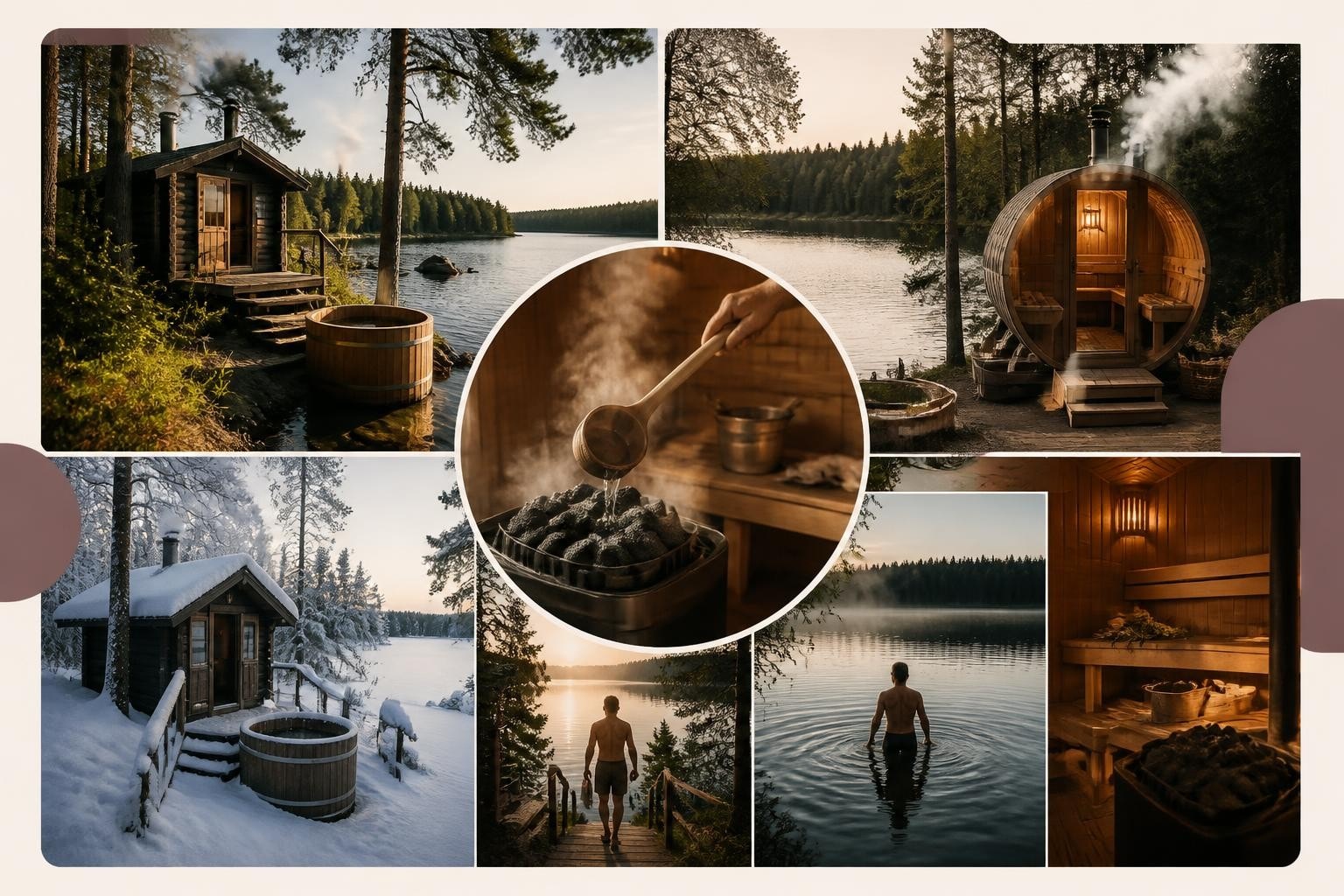
The best at home sauna is not just a box with a heater inside. It is a place where your body remembers how to shift from performance to recovery. I grew up on Lake Saimaa in Eastern Finland, where löyly (the steam that rises when you throw water on hot stones) was part of every day. My family practiced this cycle for 2,000 years before it was called contrast therapy. You heat your body, then you cool it in cold water. UNESCO recognized Finnish sauna culture as Intangible Cultural Heritage in 2020, not because of the wood or the benches, but because of what happens inside.
What Makes a Sauna Work for Recovery
Most articles list materials and heating types. That is useful, but not the heart of it.
Löyly is the moment. When water hits stones heated to 180-200°F, steam rises and humidity spikes. Your body responds. Heart rate increases. Blood vessels dilate. You sweat. Then you step into cold water. Vessels constrict. Heart rate drops. This cycle, repeated 2-4 times in one session, is what Prof. Jari Laukkanen from the University of Eastern Finland studied for decades.
His research, published in Mayo Clinic Proceedings and cited by BBC, TIME, and The New York Times, showed that sauna use 4-7 times weekly cuts cardiovascular death risk by 51%. Not from the wood. Not from the ambiance. From the physiological response to heat and cold.
Traditional vs Infrared Heat
The best at home sauna for you depends on what you need.
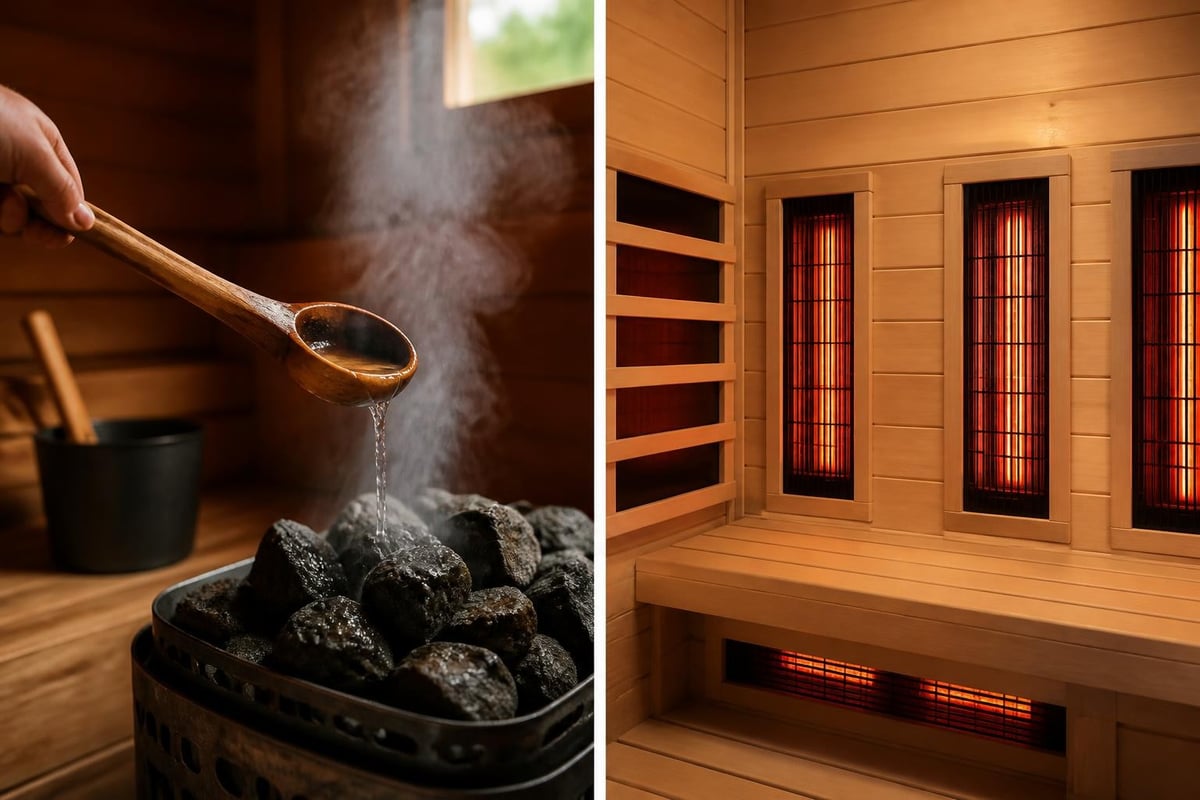
Traditional Finnish saunas use electric or wood-fired heaters with stones. You throw water on the stones. The steam is löyly. This is what Cleveland Clinic recognizes as the classic cardiovascular and recovery tool. It produces higher ambient heat (150-195°F) and humidity.
Infrared saunas use panels to heat your body directly without steam. Lower ambient temperature (120-150°F). No stones. No löyly. But infrared penetrates skin deeply, which Healthline notes can support muscle recovery and circulation. Some people prefer this if they find traditional heat too intense or if they want a quicker session.
Here is the difference in daily use:
| Feature | Traditional Sauna | Infrared Sauna |
|---|---|---|
| Heat source | Stones + water = steam | Infrared panels |
| Temperature | 150-195°F | 120-150°F |
| Humidity | High (with löyly) | Low |
| Session time | 10-20 min per round | 20-40 min single session |
| Cardiovascular response | Strong, rapid | Moderate, gradual |
| Setup | Needs heater + stones | Plug and play |
Neither is wrong. But if you want the Finnish experience that Prof. Laukkanen studied, you need stones and water.
Indoor vs Outdoor Placement
You can install the best at home sauna indoors or outdoors. Both work. Both have trade-offs.
Indoor Saunas
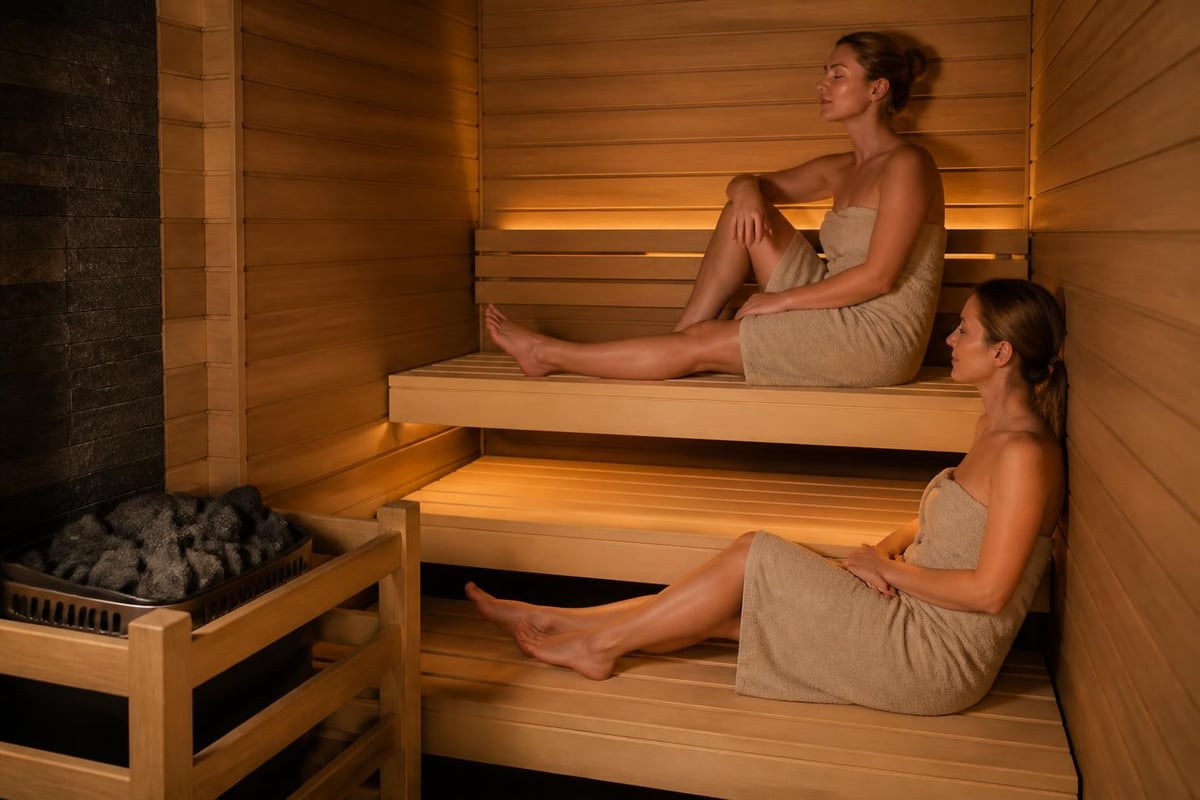
- Space: A 2 person sauna fits in a basement, bathroom, or spare room. Typical footprint is 4x4 or 4x6 feet.
- Access: You use it more often when it is inside. Winter in Minnesota or New England does not stop you.
- Ventilation: You need proper airflow. Infrared models vent less moisture. Traditional saunas need a gap under the door and a small vent near the ceiling.
- Electrical: Most plug into standard 120V outlets. Larger traditional heaters may need 240V.
Indoor models that work well include infrared units like the Lumin series or traditional cedar models with electric heaters.
Outdoor Saunas
- Space: Barrel or cabin saunas fit in a backyard. You need a level base (concrete pad, gravel, or pavers).
- Experience: Stepping outside into cold air or snow after a hot session is part of the Finnish ritual. If you have space for a cold plunge nearby, you create a full recovery circuit.
- Weather: Cedar and hemlock resist moisture. Metal roofs shed rain and snow. But you still clean and maintain them.
- Permits: Check local codes. Most residential saunas under 200 square feet do not need permits, but verify.
I prefer outdoor saunas when possible. The air after a session is sharper. You cool faster. The ritual feels more complete. If you are exploring backyard options, a garden sauna offers flexibility and privacy.
Key Features to Compare
When choosing the best at home sauna, look past the photos. Ask specific questions.
Heat Source and Stones
If you want traditional heat, the heater must hold enough stones. A 6kW electric heater should have space for 40-50 pounds of stones. Stones store heat and release it slowly when water hits them. Without enough mass, the steam disappears too fast.
Wood-fired heaters take longer to heat but reach higher temperatures. They require outdoor placement, a chimney, and regular wood supply. Electric heaters are faster and cleaner but lack the scent of burning birch.
Wood Type
Eastern White Cedar is standard in North America. Lightweight, aromatic, naturally resistant to moisture and insects. It ages to a silver-gray outdoors unless sealed.
Canadian Hemlock is denser than cedar. Minimal scent. Smooth grain. Common in infrared models.
Thermo-treated Grandis is heat-treated for dimensional stability and moisture resistance. Used in premium indoor models where humidity control matters.
The wood does not create the health benefits. The heat and steam do. But good wood lasts longer and feels better under bare skin.
Glass and Visibility
Full glass doors let in light. Tempered glass handles temperature swings. Some people like to see outside. Others prefer privacy with a smaller window.
If you sauna with a partner or family, visibility helps with timing and communication. If you sauna alone, a solid door with a small window is enough.
Benches and Layout
Bench height matters more than you think. Upper benches should be 36-42 inches from the floor. Lower benches around 18-20 inches. You sit on the lower bench to cool slightly or warm up gradually. You sit on the upper bench when you want full heat.
Bench depth should be at least 18-20 inches so you can sit comfortably or lie down if space allows. Lying down distributes heat more evenly across your body.
Size and Capacity: What You Actually Need
The best at home sauna is not always the biggest.
1-2 Person Models
- Footprint: 3x4 to 4x4 feet
- Best for: Solo use, tight spaces, apartments, condos
- Heat-up time: 15-25 minutes (infrared), 30-40 minutes (traditional)
- Price range: $4,500-$8,000
These fit in a corner of a bedroom or bathroom. Infrared models are nearly all plug-and-play. Traditional models need a small electric heater and basic assembly.
For daily personal recovery, a compact infrared sauna like the Lumin Infrared Sauna One offers consistent far-infrared heat, simple digital controls, and quick setup. It plugs into a standard outlet and delivers therapeutic warmth for muscle recovery and relaxation without extensive installation.
3-4 Person Models
- Footprint: 5x6 to 6x7 feet
- Best for: Couples, families, social sessions
- Heat-up time: 40-50 minutes (traditional with stones)
- Price range: $7,000-$15,000
These allow you to sit with someone or lie down alone. Barrel saunas often fit 3-4 people in a curved bench layout. Cabin saunas offer more headroom and straighter benches.
5-6 Person Models
- Footprint: 6x8 feet or larger
- Best for: Larger families, entertaining, outdoor wellness spaces
- Heat-up time: 50-60 minutes (traditional)
- Price range: $12,000-$35,000
If you have the space and plan to use the sauna regularly with others, larger models offer comfort and flexibility. They also hold heat longer once warmed up.
Top Models in 2026
Forbes recently reviewed the best home saunas available in 2026, evaluating construction quality, safety, and features. Here is what stands out in traditional and infrared categories.
Traditional Finnish Models
LeisureCraft Barrel Saunas use Eastern White Cedar with curved staves. The barrel shape sheds water naturally and requires less wood to heat. Models range from 2-6 person capacity. Electric heaters with stones. Tempered glass doors. Kit assembly. Prices from $5,585 to $9,550 depending on size and heater.
LeisureCraft Cabin Saunas offer more headroom and porch options. Straight walls. Larger window placement. Some models include a front porch for cooling between rounds. Prices from $6,200 to $14,500.
Orivon Wellness Auris is a luxury outdoor cedar line. Natural red cedar construction. Multiple electric heater options. Optional wood-burning heater on request. 3-4 person capacity. Premium finish and hardware. Prices from $19,999 to $32,999.
Infrared Models
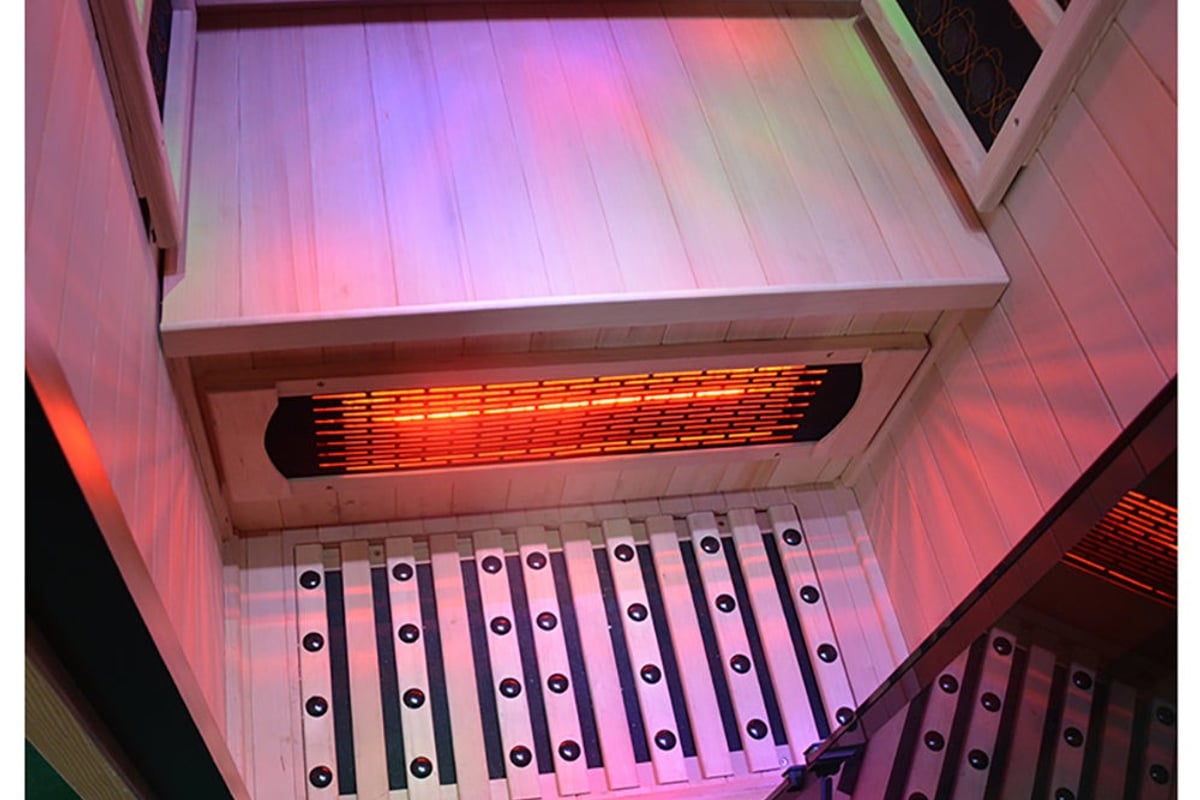
Lumin Infrared Saunas from Orivon Wellness use Canadian Hemlock. Compact 1-2 person models. Far-infrared carbon panels. Digital controls. 120V plug-and-play. Prices from $7,999 to $10,999.
Maxxus Full Spectrum Saunas combine near, mid, and far infrared. Canadian Red Cedar. Floor heaters. Chromotherapy lighting. Bluetooth audio. Privacy glass. 2-person models start around $3,800.
Golden Designs Llumeneres offers near-zero EMF full-spectrum heat. Canadian Hemlock. 2-person capacity. Red light therapy. Bluetooth speakers. Clasp-together assembly. 120V plug-and-play. Around $5,200.
Here is a quick comparison of heat types and session structure:
| Model Type | Heat Method | Löyly Available | Typical Session | Best For |
|---|---|---|---|---|
| Traditional barrel/cabin | Electric or wood-fired stones | Yes | 10-20 min per round, 2-4 rounds | Cardiovascular, authentic Finnish ritual |
| Infrared (far) | Carbon or ceramic panels | No | 20-40 min single session | Muscle recovery, lower heat preference |
| Infrared (full spectrum) | Near/mid/far panels | No | 25-35 min single session | Skin health, circulation, mild heat |
Assembly and Installation
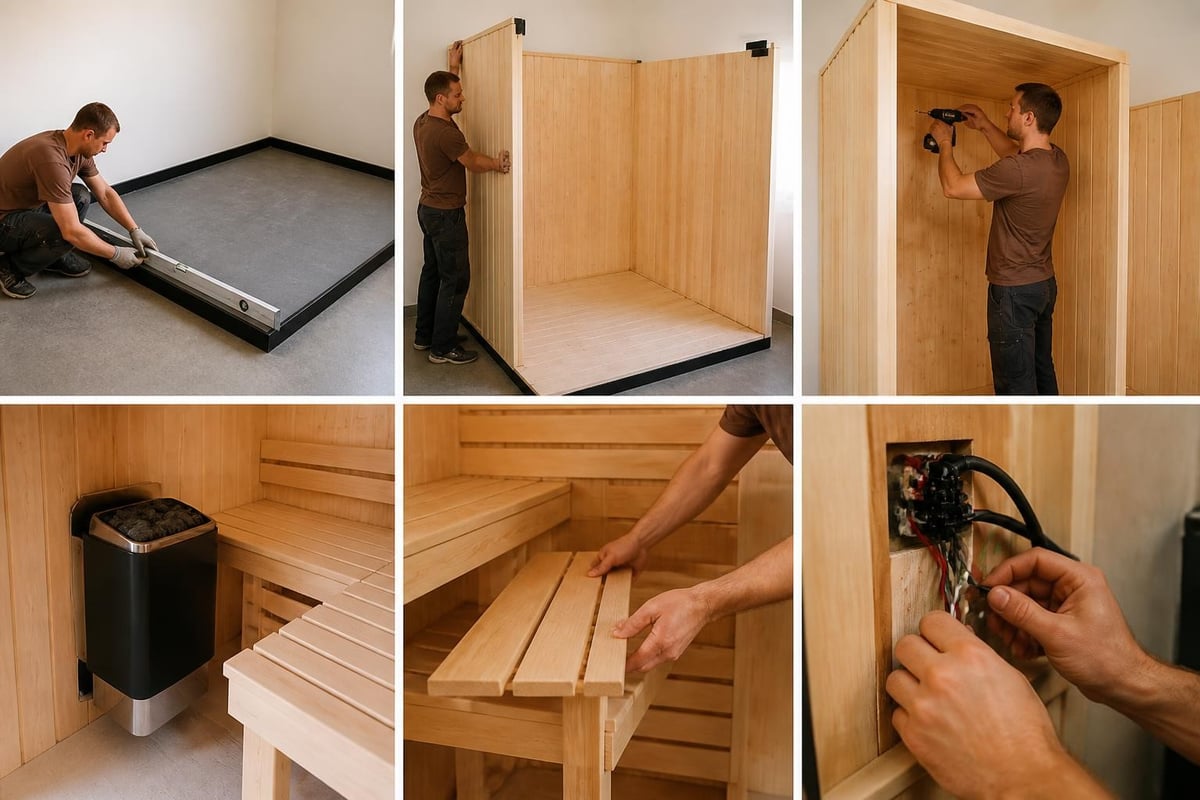
Most home saunas arrive as kits. You assemble them yourself or hire a local handyman.
Barrel Saunas
Staves lock together with metal bands. Tempered glass door. Roof panels. Heater installation. Two people can complete assembly in 4-6 hours. You need a level base.
Cabin and Box Saunas
Pre-cut panels. Tongue-and-groove or interlocking edges. Roof assembly. Door hanging. Heater wiring. Assembly takes 6-10 hours depending on size. Some companies offer professional installation for an additional fee.
Infrared Saunas
Panels snap or clasp together. Pre-wired heating elements. Plug into wall outlet. Assembly takes 1-3 hours. No special tools needed.
Electrical Requirements
- 120V models: Plug into standard household outlets. Most infrared saunas and small traditional heaters (up to 4kW) use 120V.
- 240V models: Larger traditional heaters (6kW and above) need a dedicated 240V circuit. Hire a licensed electrician. Cost ranges from $300 to $800 depending on distance from the breaker panel.
Contrast Therapy at Home
The best at home sauna becomes even more effective when paired with cold exposure.
After 10-15 minutes in heat, your core temperature rises. Blood vessels dilate. Then you step into cold water (50-59°F). Vessels constrict. Metabolic waste clears faster. Inflammation drops. This is contrast therapy.
You can use:
- Cold plunge tubs (chilled water, dedicated tub)
- Stock tanks (fill with ice and water)
- Outdoor showers (cold well water or hose)
- Natural water (lake, river, ocean if nearby)
In Finland, we used the lake year-round. In winter, you cut a hole in the ice. That is not necessary. A simple cold rinse works. But if you want the full cycle, a dedicated cold plunge tub gives you consistent temperature and year-round access.
Cost and Budgeting
Expect to spend between $4,000 and $35,000 depending on size, heat type, and build quality.
Budget Tier: $4,000-$7,000
- Small infrared saunas (1-2 person)
- Basic outdoor barrel kits (2-3 person, smaller heaters)
- Standard materials, fewer features
Mid Tier: $7,000-$15,000
- Larger infrared models with full spectrum heat
- Mid-size traditional barrel or cabin saunas (3-4 person)
- Premium wood, better heaters, chromotherapy, Bluetooth
Premium Tier: $15,000-$35,000
- Luxury outdoor cabin saunas with porches
- Large traditional models (5-6 person)
- Custom finishes, wood-burning options, integrated cold plunge setups
Factor in:
- Delivery: Most models include free shipping in the US and Canada
- Electrical work: $300-$800 for 240V circuit if needed
- Base preparation: $200-$500 for gravel, pavers, or concrete pad
- Accessories: Stones, buckets, ladles, thermometers, headrests ($100-$300)
HSA and FSA Reimbursement
Some health savings accounts and flexible spending accounts cover saunas if a doctor provides a Letter of Medical Necessity. Conditions that may qualify include chronic pain, arthritis, cardiovascular rehabilitation, or muscle recovery needs. Check with your HSA/FSA administrator and your doctor.
Maintenance and Longevity
The best at home sauna lasts 15-25 years with minimal upkeep.
Daily
- Wipe benches with a damp cloth after use
- Leave door open to air out interior
- Empty water bucket
Weekly
- Sweep or vacuum floor
- Wipe down glass door
- Check heater stones for cracks (replace if crumbling)
Monthly
- Inspect wood for cracks or splits
- Tighten any loose hardware
- Clean air vents
Annually
- Re-seal outdoor wood if needed (optional, many prefer natural aging)
- Check electrical connections
- Replace heater stones if heavily used
Cedar and hemlock naturally resist mold and insects. No chemical treatments needed. Over time, outdoor saunas turn gray. That is normal. The wood still functions. If you prefer the original color, apply a UV-resistant wood oil once a year.
Choosing Your Model
Start with heat type. Do you want löyly and the traditional Finnish experience? Choose a model with stones. Do you prefer lower ambient heat and direct infrared? Choose an infrared panel sauna.
Then consider space. Measure your available area. Indoor models need ceiling clearance (at least 75 inches). Outdoor models need a level base and access to power.
Finally, set a realistic budget. A quality 2-person infrared sauna costs $5,000-$8,000. A traditional outdoor barrel for 3-4 people costs $7,000-$12,000. Premium models with custom features and larger capacity cost $15,000-$35,000.
You do not need the most expensive model. You need one that you will use 4-7 times weekly. That is where the cardiovascular benefits appear, according to Prof. Laukkanen's research. Consistency matters more than luxury.
The Daily Beast recently published a guide to outdoor saunas in 2026 that covers heat types, materials, and setup requirements. It is worth reading if you are comparing barrel and cabin models.
Common Mistakes to Avoid
Buying Too Small
If you plan to sauna with a partner, do not buy a 1-person model. You will regret it. Go up one size. A 3-4 person sauna gives you room to lie down even if you sauna alone.
Skipping the Cold
Heat alone helps. But the cycle of heat and cold is what shifts your body into recovery mode. If you install a sauna, plan for cold exposure. Even a cold shower works.
Ignoring Ventilation
Indoor saunas need airflow. A gap under the door and a small vent near the ceiling prevent moisture buildup and keep oxygen circulating. Do not seal the sauna completely.
Overlooking Electrical Needs
Check your heater's power requirements before buying. If it needs 240V and you only have 120V outlets, add $500-$800 to your budget for electrical work.
Choosing Style Over Function
A sauna with a beautiful exterior but poor heater placement or thin benches will frustrate you. Focus on heat distribution, bench comfort, and ease of use first. Aesthetics second.
The best at home sauna brings löyly and contrast therapy into your daily life, not just heat and wood. Whether you choose traditional or infrared, outdoor or indoor, what matters is consistent use and the cycle of warming and cooling that Finns have practiced for over 2,000 years. If you want guidance on models, pricing, or setup, reach out to RecoSauna. I answer every question personally and help you find the sauna that fits your space, goals, and budget.
Share:
2 Person Sauna: A Finnish Guide to Choosing Yours
DIY Sauna: Build Your Own Finnish Heat & Cold Retreat