
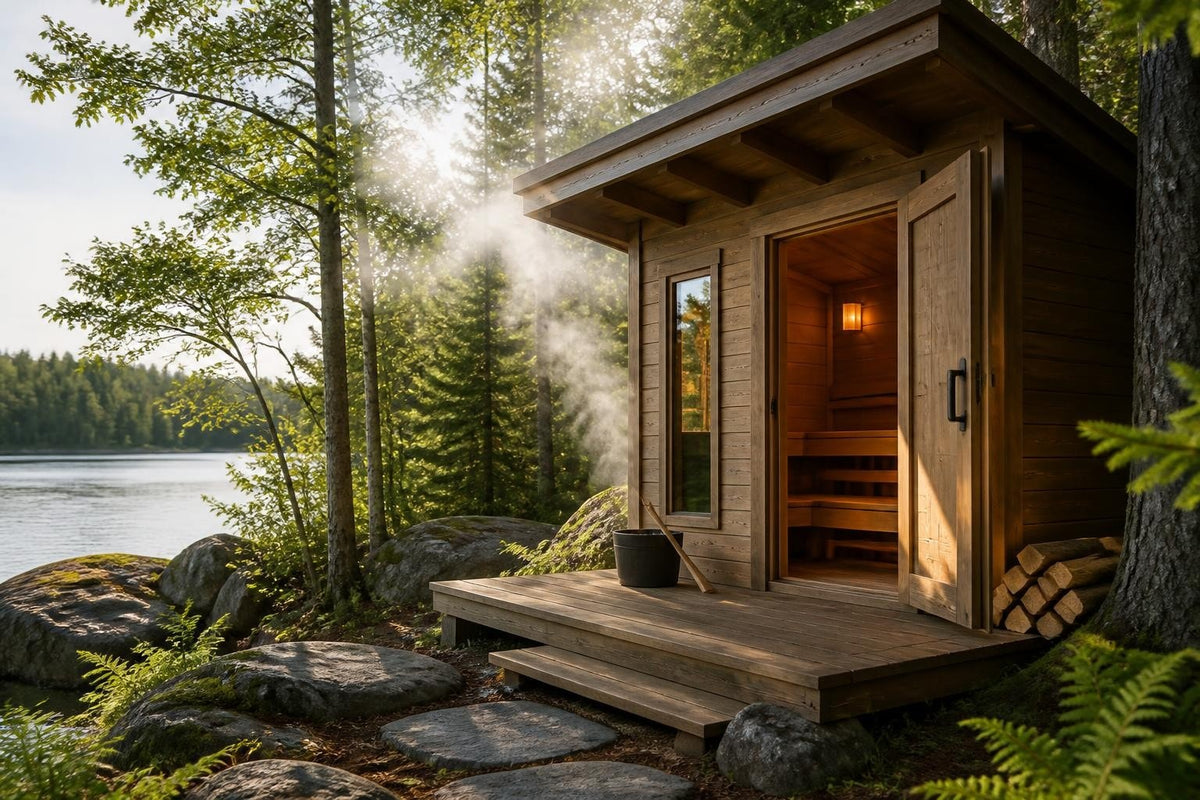
A wood burning outdoor sauna delivers the traditional experience at the heart of Finnish sauna culture. The crackle of birch logs, the radiant heat rising from the stove, and the soft steam from water meeting hot stones create a ritual that electric heaters can approximate but never fully replicate. For North American homeowners considering a backyard sauna, the choice between wood and electric heating is one of the most important decisions you'll make, shaping not just your sauna sessions but also your installation timeline, ongoing costs, and relationship with the building itself.
Why Wood-Fired Heat Creates a Different Sauna Experience
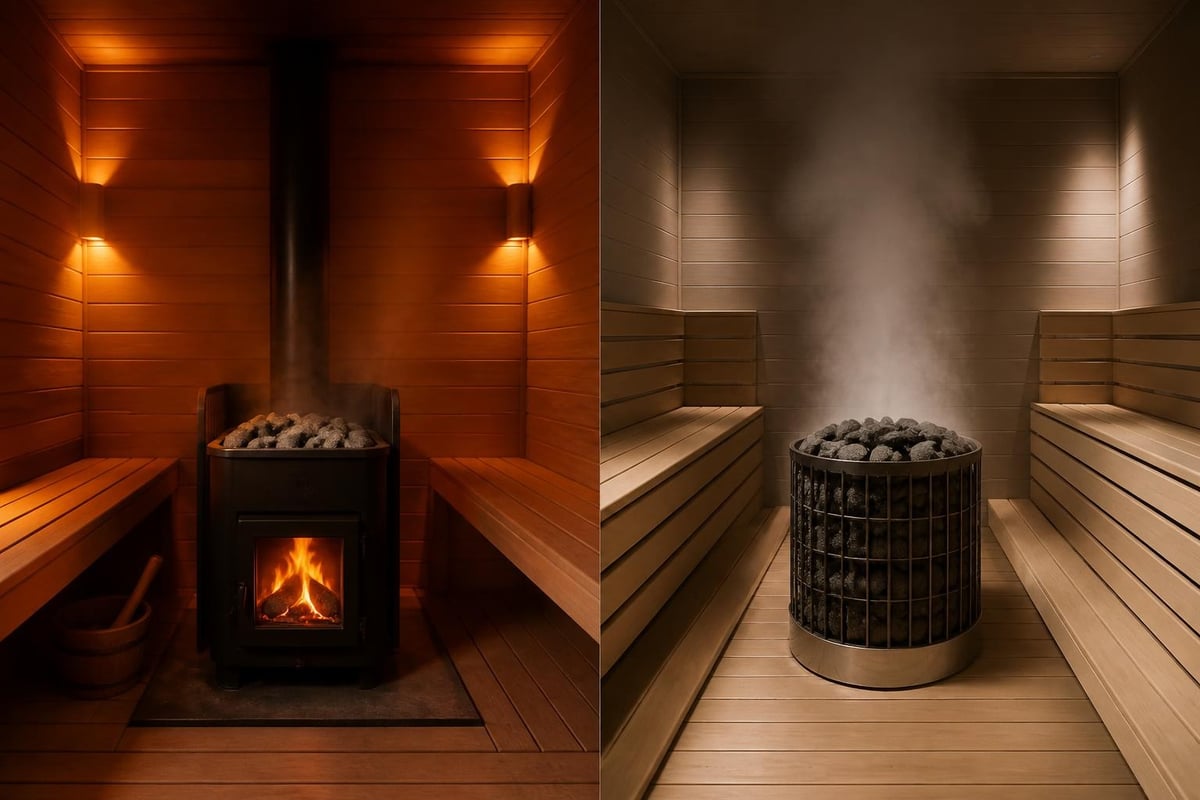
Wood-burning heaters produce a distinctive quality of heat that sauna enthusiasts describe as softer and more enveloping than electric alternatives. The difference comes down to radiant versus convective heating patterns and the way a wood stove interacts with the sauna room.
Radiant Heat and Löyly Quality
A wood-burning sauna heater radiates infrared warmth in all directions. You feel the heat on your skin before the air temperature rises significantly. When you throw water on the rocks, the resulting steam (löyly in Finnish) carries more nuance because the stove mass and flame dynamics create micro-variations in stone temperature.
Key characteristics of wood-fired löyly:
- Softer initial steam burst with longer-lasting warmth
- Greater tolerance for larger water throws without temperature crash
- Natural fluctuation in heat intensity tied to burn cycle
- Deeper stone bed typically holds more thermal mass
Electric heaters cycle on and off to maintain set temperature. Wood stoves require active tending, adjusting air intake and adding fuel. This creates a more involved experience that many consider part of the ritual rather than a burden.
Ritual and Engagement
Preparing a wood burning outdoor sauna begins 45 to 90 minutes before you plan to bathe. You load seasoned wood, light kindling, adjust the damper, and monitor the warming room. The process creates anticipation. By the time the sauna reaches 160–180°F (70–82°C), you've invested effort that makes the session feel earned.
Research on sauna bathing and cardiovascular health focuses primarily on frequency and duration rather than heat source, but anecdotal evidence from regular sauna users suggests that ritual engagement contributes to the mental-health benefits many people report.
Wood Heater Types and Installation Requirements
Not all wood-burning sauna stoves are identical. Understanding the main categories helps you match equipment to your building size, climate, and installation constraints.
| Heater Type | Typical Output | Best For | Installation Notes |
|---|---|---|---|
| Internal wood stove | 30,000–50,000 BTU | Traditional builds, engaged users | Requires internal floor protection, 16–36" clearances |
| External-fed wood stove | 35,000–60,000 BTU | Modern designs, convenience | Wall penetration, external fuel access, simplified interior |
| Hybrid wood/electric | Variable | Maximum flexibility | Complex installation, higher initial cost |
Internal Wood-Burning Stoves
These classic heaters sit entirely inside the sauna room with a chimney penetrating the roof or wall. You load fuel from inside the hot room, which some people find meditative and others consider inconvenient during a session.
Installation considerations:
- Non-combustible floor pad (tile, stone, metal) extending 16–24 inches beyond the stove in all directions
- Wall clearances of 16 to 36 inches depending on stove design and shielding
- Vertical chimney run with rain cap, spark arrestor, and proper draft
- Compliance with NFPA 211 chimney and venting standards
Internal stoves work well in larger outdoor saunas where floor space allows proper clearances without crowding the benches. A square outdoor sauna measuring 2.3 × 2.3 m or larger typically provides adequate room.
External-Fed Wood Stoves
An external-fed heater mounts in the sauna wall with the firebox and loading door extending outside. You add wood from the changing room, covered porch, or exterior, keeping ash, bark, and cold-air drafts out of the hot room.
This design suits modern aesthetics and streamlines the bathing experience. The sauna interior remains clean and uncluttered. You can reload the stove without opening the sauna door or interrupting bathers.
The trade-off is structural complexity. You must frame a wall opening, maintain clearances on both sides, and properly seal and insulate around the heater. If your outdoor sauna includes a dedicated changing area, an external-fed stove makes excellent use of that space.
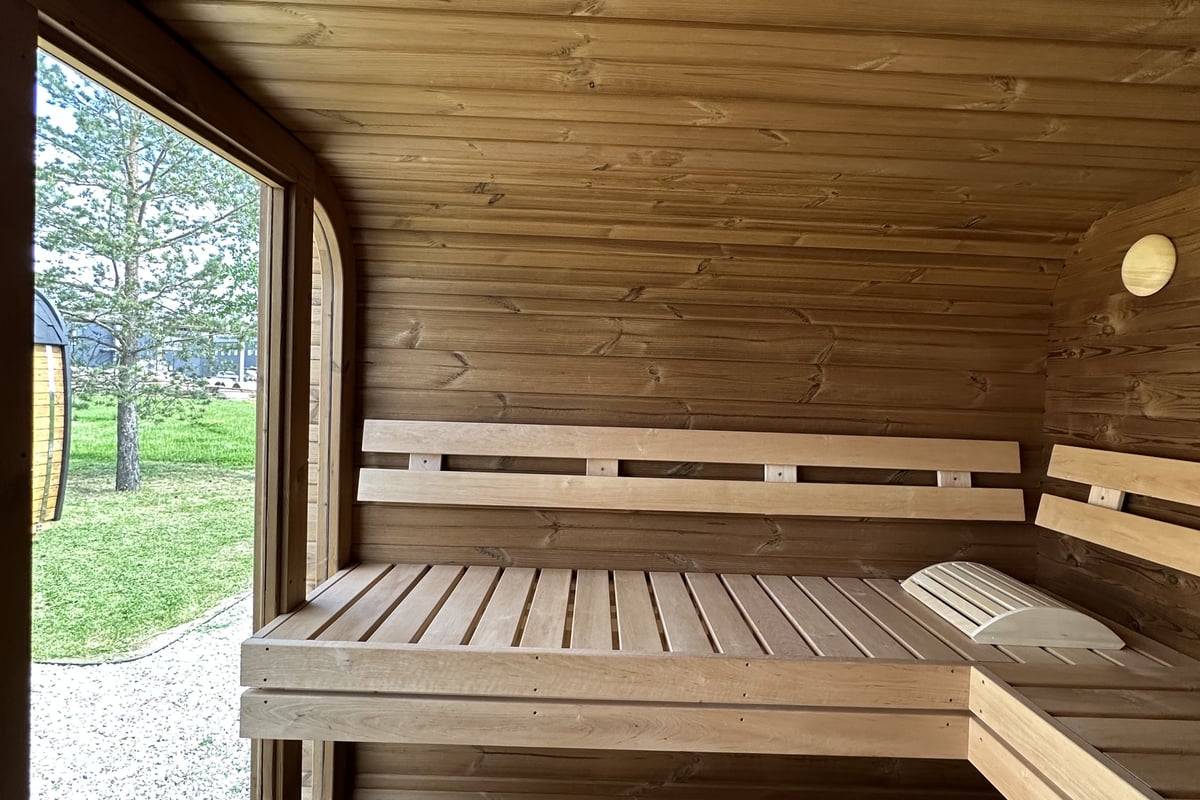
The RecoSauna Comfort Square Sauna 3.0 × 2.3 m in Thermowood includes a 1-meter changing room and internal glass door that naturally supports an external-fed heater layout, keeping firewood storage and stove tending separate from the bathing room.
Regulatory and Permit Considerations
Wood-burning appliances face stricter regulation than electric heaters, and requirements vary significantly by jurisdiction. Before purchasing a wood burning outdoor sauna or heater, research local rules.
Federal and State Regulations
The EPA regulates wood-burning appliances to reduce particulate emissions. Since 2020, new wood stoves must meet EPA-certified emission standards. Most modern sauna heaters manufactured for the North American market carry EPA certification, but confirm before purchase.
Some states and provinces impose additional restrictions:
- Burn bans during air-quality alerts (common in Western states)
- Seasonal prohibitions in urban airsheds
- Mandatory reporting or registration of wood-burning appliances
Check with your state environmental agency or provincial ministry before committing to wood heat.
Local Building and Fire Codes
Municipal building departments apply national codes (IRC, IBC, or provincial equivalents) plus local amendments. Wood-burning heaters trigger permit requirements in virtually all jurisdictions because they involve structural penetration, fire safety, and venting.
Common permit and inspection requirements:
- Building permit for sauna structure and heater installation
- Electrical permit if combining with lighting or controls
- Plumbing permit if adding outdoor shower or drain
- Final inspection verifying clearances, chimney installation, and fire protection
Local ordinances may also dictate setbacks from property lines, minimum distances from combustible structures (like wooden fences or decks), and chimney height relative to the roofline.
Budget time and cost for the permit process. In suburban and rural areas, straightforward installations often clear inspection without issue. Dense urban zones sometimes impose restrictions that make wood heat impractical.
Fuel Selection and Storage for Optimal Performance
The wood you burn directly affects heat output, emissions, and maintenance. Using properly seasoned hardwood is not optional; it's the foundation of a well-performing wood burning outdoor sauna.
Moisture Content and Seasoning
Freshly cut (green) wood contains 40 to 60 percent moisture by weight. Burning wet wood produces weak heat, excessive smoke, creosote buildup in the chimney, and higher particulate emissions.
Properly seasoned firewood reaches 15 to 20 percent moisture content after 6 to 12 months of drying in a covered, ventilated location. Hardwoods like oak, maple, birch, and ash require longer seasoning than softwoods but deliver more heat per cord.
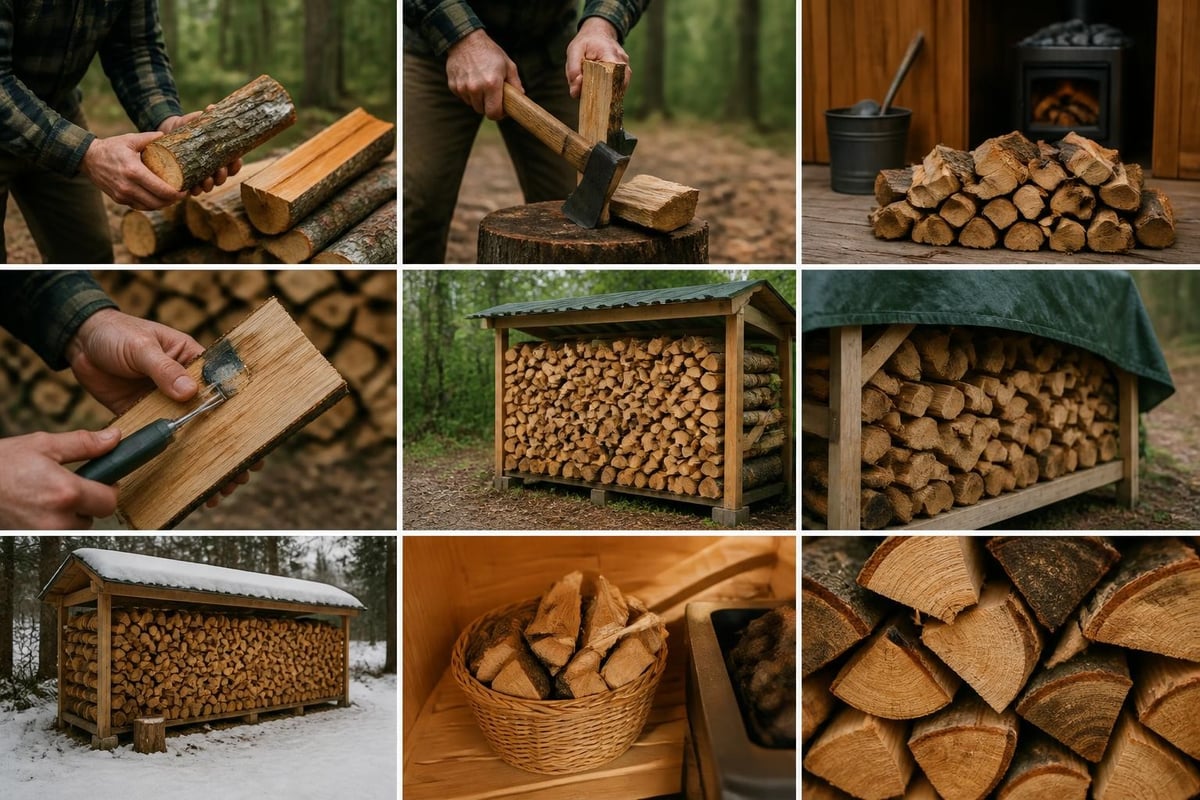
Best practices for sauna firewood:
- Split logs to 3–5 inch diameter for faster drying and easier handling
- Stack off the ground with top cover and open sides for airflow
- Store at least one season ahead; two seasons is ideal for hardwoods
- Use a moisture meter to verify readiness (under 20% moisture)
In Finland, birch is the traditional sauna wood, prized for its pleasant aroma and clean burn. North American equivalents include maple, ash, and oak. Avoid resinous softwoods like pine and fir for sauna use; they spark more and leave sticky deposits.
Storage and Accessibility
Position your firewood storage close to the sauna but protected from rain and snow. A small woodshed, covered rack, or integrated storage bench keeps fuel dry and ready. Plan for easy access during winter when paths may be snow-covered.
A typical sauna session consumes 10 to 20 pounds of wood depending on building size, insulation, outdoor temperature, and desired heat level. Store at least a week's worth near the sauna to avoid constant trips to your main woodpile.
Installation and Chimney Design for Safety and Performance
A wood burning outdoor sauna requires careful chimney design to ensure safe, reliable operation. Poor draft, improper clearances, or code violations create safety hazards and performance problems.
Chimney Height and Draft
Effective draft depends on vertical rise and temperature differential. The hotter the exhaust gases compared to outdoor air, the stronger the natural convection pulling air through the firebox.
Standard chimney design guidelines:
- Minimum 10–12 feet of total vertical run from firebox to cap
- Chimney top at least 2 feet above any roof surface within 10 feet (horizontal)
- Spark arrestor and rain cap to prevent debris and water entry
- Double-wall or insulated pipe through roof and in exposed runs to maintain flue temperature
Single-wall stovepipe is acceptable for short interior runs but requires greater clearance from combustibles (typically 18 inches). Transition to insulated chimney before penetrating the roof or wall.
In very cold climates, exterior chimney runs can cool enough to weaken draft or promote creosote condensation. Route as much of the chimney as possible through interior spaces or use well-insulated pipe.
Material and Component Selection
Choose chimney components rated for solid-fuel appliances and high flue temperatures. Galvanized steel, stainless steel, and black steel are common materials.
| Component | Material Options | Key Considerations |
|---|---|---|
| Stovepipe (interior) | Black steel, 24-gauge | Requires 18" clearance; short runs only |
| Insulated chimney | Stainless steel, double-wall | Use through roof and exterior; maintains draft |
| Chimney cap | Stainless or galvanized steel | Must include spark arrestor; choose design for local weather |
| Roof flashing | Aluminum or stainless | Proper seal prevents leaks; verify angle matches roof pitch |
Work with a certified chimney sweep or experienced installer for your first wood-burning sauna. Mistakes in chimney design compromise safety and are difficult to correct after the fact.
Comparing Wood Heat to Electric for Outdoor Saunas
Choosing between a wood burning outdoor sauna and an electric model involves trade-offs across cost, convenience, experience, and site requirements. Neither option is objectively superior; the best choice depends on your priorities.
Upfront and Operating Costs
Wood-burning heaters:
- Stove cost: $800–$2,500 depending on size, features, and aesthetics
- Chimney and installation: $1,000–$3,000 for materials and labor
- Ongoing fuel: $100–$300 per cord; usage varies by frequency and climate
- Maintenance: Annual chimney cleaning ($150–$300) plus occasional stove repairs
Electric heaters:
- Heater cost: $500–$2,000 for residential outdoor sauna models
- Electrical installation: $500–$2,000 depending on distance from panel and circuit requirements (typically 40–60 amp, 240V)
- Ongoing fuel: $20–$60 per month in electricity for regular use (varies widely by rates and frequency)
- Maintenance: Minimal; occasional element replacement after years of use
Wood heat has higher initial installation costs but potentially lower operating costs if you have access to inexpensive or free firewood. Electric heat offers lower installation complexity and faster permitting but higher recurring utility costs.
Convenience and User Experience
Electric heaters win on convenience. Set the thermostat, return in 30 to 45 minutes, and the sauna is ready. No fire-tending, no ash removal, no smoke or outdoor mess.
Wood-burning stoves demand engagement. You plan ahead, manage the fire, and accept that startup time varies with weather, wood quality, and your skill. For some people this is a drawback; for others it's a cherished part of the ritual.
The physical act of splitting wood, carrying logs, and tending the fire adds a layer of connection to the sauna experience that resonates with traditional Finnish practices. Modern life offers few opportunities to work directly with fire and natural materials.
Site and Climate Factors
Wood heat performs well in all climates, including extreme cold where very high BTU output overcomes heat loss. Electric heaters may struggle to reach target temperature in poorly insulated buildings during sub-zero weather unless significantly oversized.
However, wood heat requires:
- Outdoor clearance for chimney (minimum heights and offsets from structures)
- Storage space for firewood (dry, accessible, protected)
- Tolerance for smoke, even from a clean-burning EPA-certified stove
If your lot is small, neighbors are close, or local rules restrict outdoor burning, electric may be the only practical option.
Detailed guidance on outdoor sauna planning helps you assess site-specific factors before committing to a heating method.
Winter Performance and Year-Round Use
A wood burning outdoor sauna excels in cold climates where its high heat output and independence from the electrical grid become major advantages.
Heating Power in Cold Weather
Wood stoves deliver 30,000 to 60,000 BTU per hour, far exceeding most residential electric heaters (typically 6 to 9 kW, or roughly 20,000 to 30,000 BTU). In January in Minnesota, Manitoba, or northern New England, that extra power makes the difference between a lukewarm room and proper sauna heat.
Thick walls, good insulation, and tight construction amplify the advantage. Thermowood saunas with insulated roofs and floors retain heat more effectively than uninsulated structures, reducing fuel consumption and improving comfort.
Grid Independence and Reliability
Wood heat works during power outages. For rural homeowners or those in areas prone to winter storms and grid failures, a wood-fired sauna remains functional when electric models go cold.
This reliability extends to operating cost predictability. Firewood prices fluctuate less dramatically than electricity rates, and if you cut your own wood, fuel becomes a matter of labor rather than cash outlay.
Interior Layout and Wood-Heater Placement
Floor plan design for a wood burning outdoor sauna must accommodate heater clearances, bench placement, and safe movement within the hot room.
Clearance and Bench Configuration
Position the stove where it provides even heat distribution without dominating the space or creating hazards. Corner placement is common, allowing benches along two walls and keeping the stove accessible but out of the primary seating area.
Typical layout strategies:
- Corner installation: Stove in one corner; L-shaped or opposing benches along remaining walls
- Center-wall installation: Stove midway along one wall; straight or tiered benches opposite
- Alcove or extended firebox: Stove partially recessed into framing to minimize intrusion
Always verify clearances against the stove manufacturer's specifications and local code. The Hydrothermal Guide provides technical background on sauna interior materials and design principles that support safe, durable installations.
Door Swing and Ventilation
Sauna doors must swing outward for safety. Coordinate door placement with heater location so the door does not interfere with stove clearances or create awkward entry paths.
Wood-burning heaters consume indoor air for combustion. Ensure adequate low-level ventilation (a small vent near the floor under or beside the stove) and high-level exhaust (a vent high on the opposite wall or in the ceiling). Proper airflow supports combustion, prevents carbon monoxide buildup, and refreshes the sauna atmosphere between löyly rounds.
Maintenance and Long-Term Care
A well-maintained wood burning outdoor sauna delivers decades of reliable service. Neglecting routine care leads to safety risks, declining performance, and costly repairs.
Chimney Cleaning and Inspection
Creosote accumulates inside the chimney as volatile compounds in wood smoke condense on cooler surfaces. Over time, creosote buildup restricts airflow and creates a fire hazard.
- Inspect the chimney annually before the sauna season (or mid-season for heavy users)
- Clean when creosote deposits exceed 1/8 inch thickness
- Hire a certified chimney sweep or learn proper brushing and removal techniques
- Check for cracks, loose joints, and deteriorated flashing during inspection
Burning well-seasoned hardwood and maintaining hot fires reduces creosote formation but does not eliminate it. Annual cleaning is standard practice.
Stove and Heater Stone Maintenance
Sauna stones gradually fracture and deteriorate under thermal cycling. Replace stones when they crumble into small fragments or no longer produce satisfying löyly.
Inspect the firebox, door gaskets, and internal baffles annually. Tighten loose bolts, replace worn gaskets, and remove accumulated ash. Most modern sauna stoves are built for low maintenance, but even durable designs benefit from attention.
Building Envelope and Weatherproofing
Outdoor saunas face rain, snow, UV exposure, and temperature swings. Thermowood and proper construction handle these stresses well, but periodic inspection catches small issues before they escalate.
Annual maintenance checklist:
- Check roof for damaged shingles or membrane; clear debris from valleys and flashing
- Inspect door and window seals; replace weatherstripping as needed
- Examine wall joints and trim for gaps; re-caulk or seal where necessary
- Clean exterior surfaces; apply protective finish if recommended by manufacturer
- Verify foundation remains level and stable; adjust supports if settling occurs
Proper care keeps the building sound and the interior experience consistently excellent.
Choosing the Right Wood-Burning Heater for Your Sauna Size
Matching heater output to sauna volume ensures efficient heating, comfortable sessions, and manageable fuel consumption.
Calculating Sauna Volume and Heater Requirements
Measure your sauna's interior heated space in cubic feet (length × width × height). Subtract volume occupied by benches if they're substantial, though most calculations use gross interior volume.
General sizing guideline for wood-burning sauna heaters:
- 1,000 BTU per cubic foot for well-insulated buildings in moderate climates
- 1,200–1,500 BTU per cubic foot for uninsulated walls or extreme cold climates
- Add 20–30% capacity if the sauna includes large glass doors or windows
A 2.3 × 2.3 m sauna with 2.0 m ceiling height equals roughly 370 cubic feet. A well-insulated model needs a heater delivering 37,000 to 45,000 BTU. An uninsulated or very cold-climate installation might require 50,000 BTU.
Oversizing Versus Right-Sizing
An oversized heater reaches target temperature faster and provides reserve capacity on very cold days. The trade-off is less efficient burns (the stove may smolder rather than burn hot) and potential overheating if not carefully managed.
An undersized heater struggles to reach or maintain proper sauna temperature, leading to frustration and excessive fuel consumption as you burn longer, hotter fires trying to compensate.
Right-sizing based on realistic volume calculations and climate delivers the best balance of performance, efficiency, and user experience.
Environmental and Air-Quality Considerations
Wood burning produces emissions that impact local air quality. Understanding these effects helps you operate responsibly and minimize your footprint.
Modern EPA-Certified Heaters Versus Older Designs
Older, non-certified wood stoves emit 15 to 40 grams of particulate matter per hour. Modern EPA-certified models emit less than 2.5 grams per hour through improved combustion chamber design, better air control, and secondary burn systems.
Choosing a certified heater significantly reduces your impact. Proper operation (burning seasoned wood, maintaining hot fires, avoiding smoldering) further cuts emissions.
Neighborhood and Site Considerations
Even clean-burning stoves produce visible smoke during startup and shutdown. In dense neighborhoods or areas with poor air circulation, wood smoke can bother neighbors or violate nuisance ordinances.
Position your wood burning outdoor sauna and chimney so prevailing winds carry smoke away from neighboring homes, outdoor living areas, and air intakes. Communicate with nearby residents if you anticipate concerns, and demonstrate responsible operation through fuel quality and burn practices.
Some municipalities restrict wood burning on high-pollution days or ban it entirely in urban cores. Verify local rules before installation.
A wood burning outdoor sauna offers an authentic, engaging experience rooted in centuries of Finnish tradition, with powerful heat output, grid independence, and the unmistakable warmth of a live fire. Balancing installation complexity, regulatory requirements, and ongoing maintenance against the ritual and performance benefits helps you decide whether wood or electric heat fits your lifestyle and site. RecoSauna brings Finnish sauna expertise and premium Thermowood construction to North American backyards, offering guidance on heater selection, layout, and year-round outdoor sauna design tailored to your climate and goals.
Share:
Outdoor Sauna for Cold Climate: Build & Enjoy Year-Round
DIY Outdoor Sauna: Planning, Permits & Build Realities