
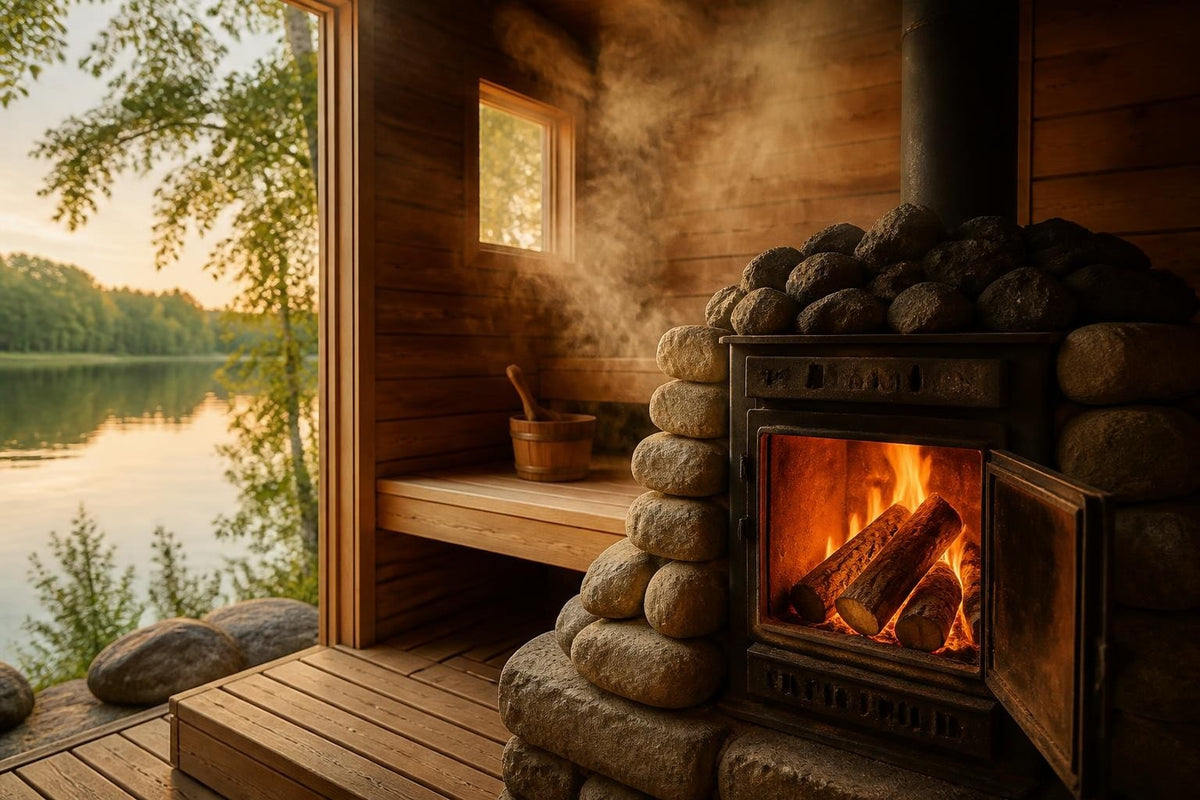
A wood fired sauna uses burning logs to heat a mass of stones that store and radiate heat into the room. The fire sits inside a dedicated stove with a firebox below and a stone chamber above. Water thrown on the stones creates löyly, the steam that defines a real sauna. The heat comes from thermal mass, not electric elements. The experience is closer to what Finns practiced for two thousand years. Setup requires more planning than an electric sauna, but the heat quality and ritual are different.
How a Wood Fired Sauna Works
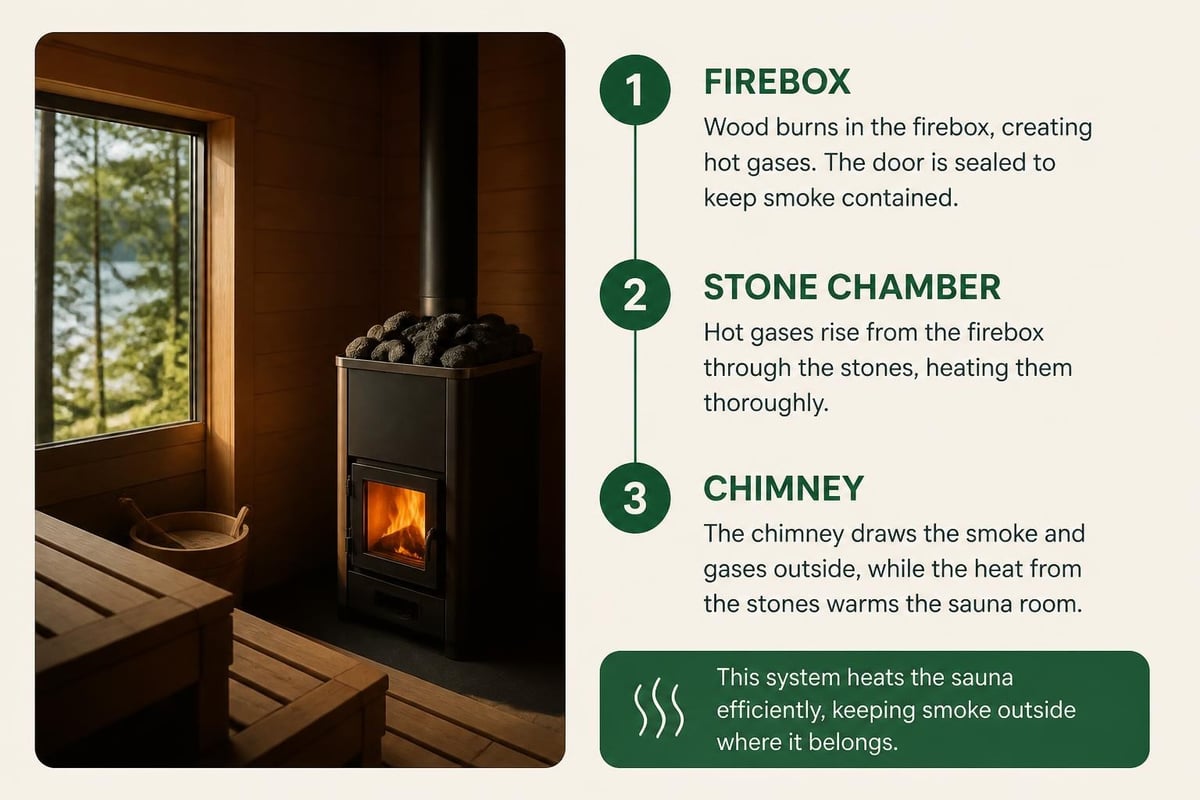
The stove burns wood in a chamber separate from the sauna room. Heat rises through the stone mass. The stones absorb energy and hold it. When the stones reach temperature, you throw water on them. The steam rises instantly.
Three parts work together:
- Firebox holds the burning wood
- Stone chamber stores thermal mass, usually 50 to 200 pounds of igneous rock
- Chimney vents smoke outside and creates draft
The fire itself never enters the sauna room. Only heat moves through the stove's metal walls and stone mass. Smoke exits through a pipe that runs from the firebox through the roof or wall. Draft pulls air through the fire and controls burn rate.
Wood Fired Sauna Compared to Electric
| Feature | Wood Fired | Electric |
|---|---|---|
| Heat source | Burning logs | Resistance elements |
| Stone mass | 50–200 lbs | 30–60 lbs |
| Installation | Chimney, clearances, permits | 220V circuit (most models) |
| Start time | 60–90 minutes | 30–45 minutes |
| Adjustability | Add or reduce wood | Thermostat dial |
| Outdoor only? | Usually, due to chimney and code | Indoor or outdoor |
Electric heaters cycle on and off to hold temperature. A wood fired sauna stays hot as long as the stones hold heat. You control intensity by adding wood or letting the fire burn down. The ritual is longer. You split logs, light kindling, and tend the fire.
For many owners, that ritual is the point. You arrive early to start the fire. You wait while the stones heat. The process slows you down before you even enter.
Chimney and Ventilation Requirements
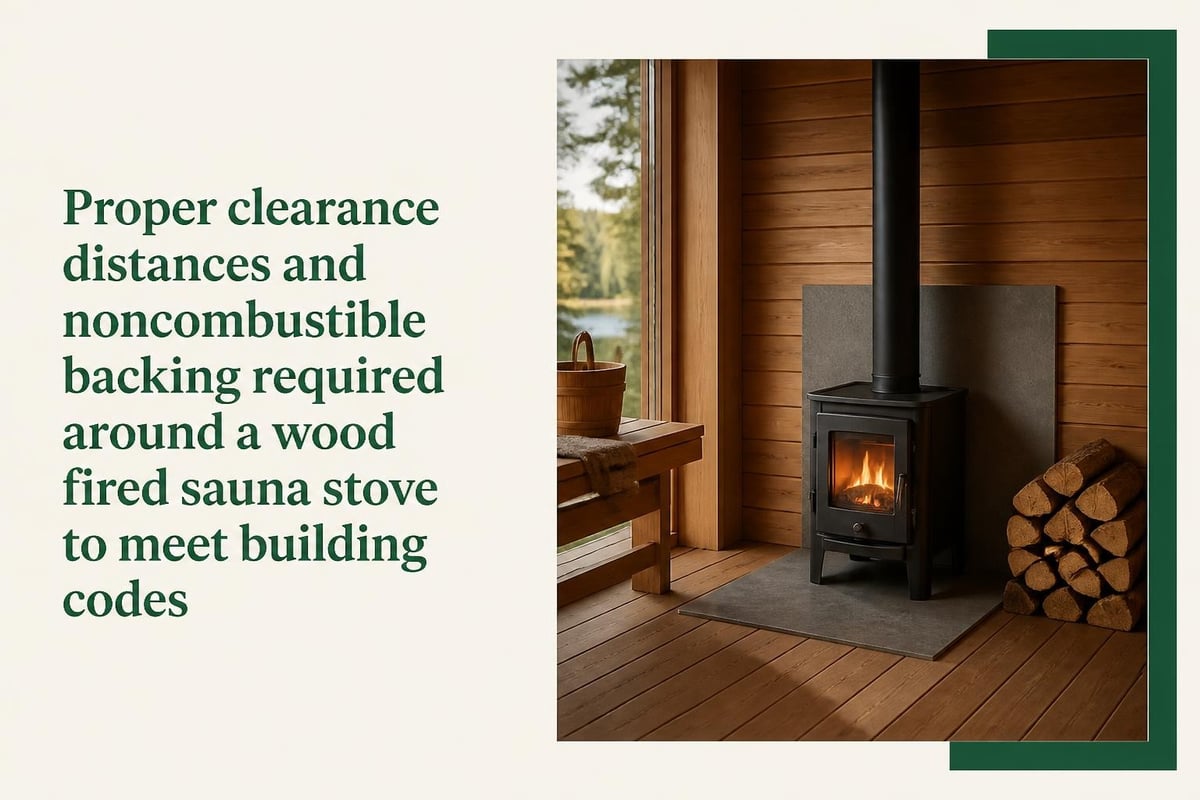
Every wood fired sauna needs a chimney that runs from the stove through the roof or wall. The chimney must meet local building codes and clearances. Most jurisdictions require 18 inches of clearance from combustible walls unless shielded with approved materials.
Draft depends on chimney height and diameter. Too short, and the fire smolders. Too tall, and you waste heat. Stove manufacturers specify minimum height, usually 12 to 15 feet from firebox to cap.
Fresh air must replace what the fire consumes. Most outdoor saunas draw air through floor vents or gaps under the door. A dedicated air intake near the stove improves combustion and keeps the fire burning clean. The EPA's best wood-burning practices explain how proper air supply reduces smoke and improves efficiency.
Buying Criteria for a Wood Fired Sauna
Stove Size and Stone Capacity
Stove output is rated in cubic feet of sauna room it can heat. A 200-cubic-foot room needs a stove rated for at least that volume. Undersizing means slow heat-up. Oversizing wastes wood and makes the room too hot too fast.
Stone capacity matters more than firebox size. Larger stone mass holds heat longer and creates steadier löyly. A stove with 100 pounds of stones recovers faster after water is thrown than one with 40 pounds.
Look for igneous stone, usually olivine diabase or peridotite. These absorb heat without cracking. Never use river rock or sedimentary stone. They can explode when heated and doused.
Material and Burn Efficiency
Traditional stoves are welded steel. Thicker walls last longer and radiate more evenly. Cast iron holds heat well but is brittle and harder to repair.
Modern stoves use secondary combustion chambers that burn smoke gases before they exit. This reduces emissions and extracts more heat from each log. Research from the University of Eastern Finland shows that secondary-burn designs cut particulate emissions significantly compared to older single-chamber stoves.
Certifications matter. In the USA, look for EPA-certified or EPA-exempt models. In Europe, the EN 16510 standard sets emission and safety benchmarks for sauna stoves. Not all imported stoves meet North American codes, so verify before installing.
Sauna Structure and Code Compliance
A wood fired sauna cabin must be built to handle high heat and combustion clearances. Walls, ceiling, and floor near the stove need noncombustible backing or increased spacing. Most codes require cement board or masonry behind the stove and 36 inches of clearance on all sides unless shields are used.
Cedar and hemlock are common wall materials. Both tolerate heat and resist rot. Avoid treated lumber anywhere inside the sauna. Pressure-treated chemicals release vapors at high temperature.
Roof pitch and chimney flashing must shed water and snow. A poorly sealed chimney penetration will leak. Use a storm collar and high-temp silicone flashing around the pipe.
Local rules vary. Some municipalities ban wood-burning appliances during fire season or in high-density areas. The EPA's local ordinances page lists state and county regulations. Check zoning before ordering a stove or cabin.
Fuel and Ongoing Cost
A wood fired sauna burns about one armload of split logs per session. Hardwood (oak, ash, maple) burns hotter and longer than softwood (pine, fir). Hardwood also produces less creosote, which reduces chimney buildup.
Season your wood for at least six months. Wet wood smolders, smokes, and leaves tar in the chimney. Dry wood ignites easily and burns clean. Stack it in a covered area with airflow on all sides.
Cost depends on local wood prices. In rural areas, a cord of mixed hardwood runs $150 to $300. One cord heats a sauna 50 to 100 times, depending on cabin size and session length. That is lower than electric costs in most regions, but the labor of splitting and stacking is real.
What It Feels Like
A wood fired sauna heats differently. The stones radiate warmth in every direction. The air is dry until you throw water. Then the steam rises in a wave that wraps around you. The heat is softer than electric and lasts longer after the fire dies.
The cabin smells like burning birch or maple. If you crack the door, cold air rushes in and mixes with the heat. The temperature swings are part of the experience. You adjust by adding a log or opening a vent, not turning a dial.
Sessions take longer because heat-up is part of the ritual. You sit outside while the fire burns down to coals. You listen to the crackle. When the stones glow, you step in.
Some research suggests that traditional sauna bathing, practiced regularly, is associated with cardiovascular benefits and lower all-cause mortality. A comprehensive review published on PubMed summarizes findings from Finnish cohort studies. The associations are observational, not causal. Heat exposure alone does not replace other health behaviors.
Installing a Wood Fired Sauna at Home
Most wood fired saunas are placed outdoors. A backyard placement gives room for chimney clearance, ventilation, and safe fuel storage. You also avoid indoor smoke risk and structural modifications.
Steps for a typical outdoor installation:
- Choose a level site at least 10 feet from structures and property lines
- Pour a gravel or concrete pad for drainage and stability
- Assemble the cabin (most kits use tongue-and-groove panels)
- Install the stove with required clearances and floor protection
- Run the chimney through the roof with proper flashing
- Connect air intake vents near the stove
- Inspect before the first burn (many areas require a building or fire-marshal inspection)
Kits simplify assembly. Panels fit together without custom cuts. Roof sections lock into place. The stove and chimney are the only pieces that require precision. If you are comfortable with basic carpentry, you can complete a barrel or cabin sauna in two to three days.
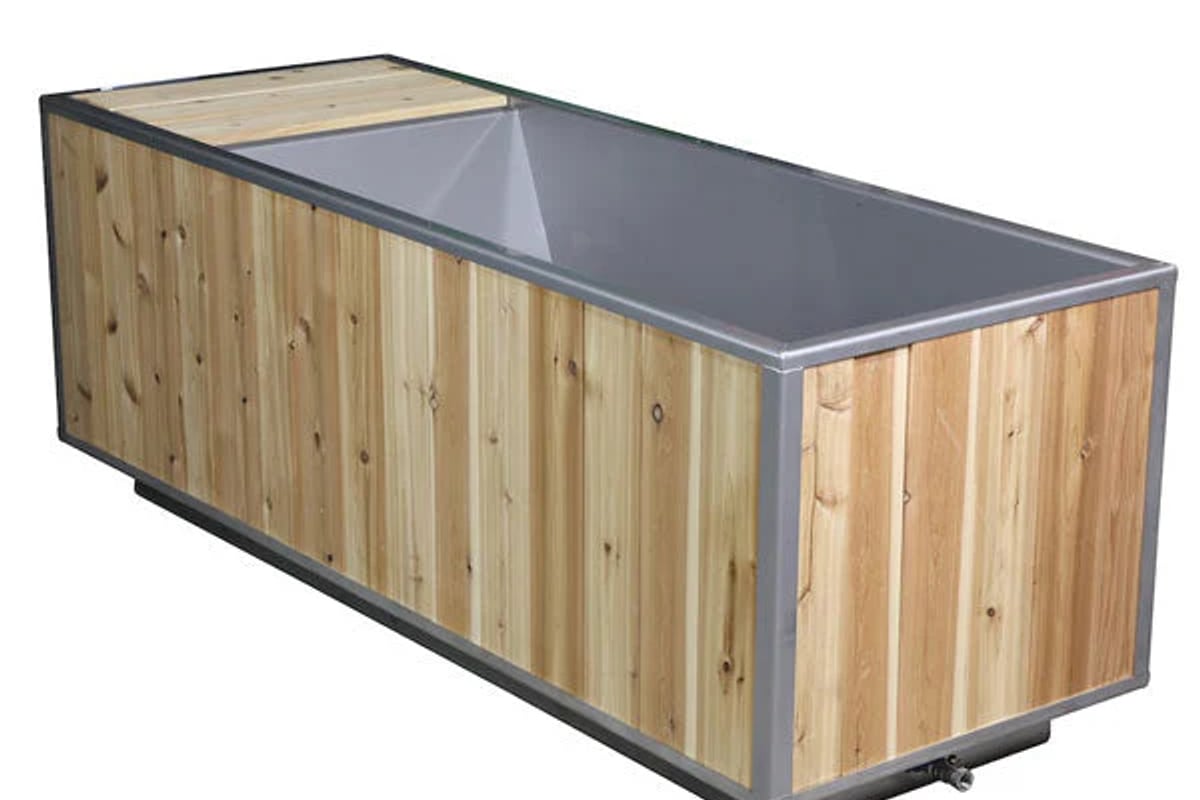
For homeowners planning a complete backyard retreat, the wood sauna often sits beside a cold plunge or natural water source. The contrast between fire-heated steam and cold immersion is central to Finnish tradition. If you are considering a premium cold therapy option alongside your sauna, the LeisureCraft Flow Cold Plunge ships fully assembled with a built-in chiller and natural cedar exterior, ready for immediate use.
If a fully outdoor setup does not fit your property or climate, some prefab cabins are built with enclosed porches or transition rooms that protect you from wind while you cool between rounds. RecoSauna offers models like the LeisureCraft Georgian Cabin with Porch, which extends the usable season by giving you shelter before and after each session.
For a more integrated approach to backyard wellness, consider how lighting, landscaping, and seating shape the experience. Our guide on backyard spa ideas covers layout and ambiance in more detail.
My Experience with Wood-Fired Heat
I grew up on Lake Saimaa in Eastern Finland, where every cottage had a wood sauna by the water. We heated it Saturday afternoons. My grandfather taught me how to split birch and stack it so air could move through. We never used a thermometer. You knew the stones were ready when the cabin smelled right and the heat pushed you back from the door. After each round, we walked down the dock and jumped in. Winter or summer, the lake was always there.
The ritual taught patience. The fire does not care if you are in a hurry.
FAQ
How long does it take to heat a wood fired sauna?
Most cabins reach temperature in 60 to 90 minutes, depending on stove size, wood quality, and outdoor temperature. Larger stone mass takes longer to heat but holds warmth through multiple rounds.
Can I install a wood stove in an indoor sauna?
Technically yes, but most building codes require extensive fireproofing, a full chimney system, and dedicated combustion air. Electric heaters are simpler and safer for basements or interior rooms. Outdoor placement is standard for wood-fired models.
What kind of wood should I burn?
Seasoned hardwood (oak, maple, ash, birch) burns hottest and cleanest. Avoid softwoods like pine unless fully dried. Never burn treated lumber, painted wood, or trash. Wet wood creates creosote and excessive smoke.
Do I need a permit for a wood fired sauna?
Most jurisdictions require a building permit for any structure with a foundation and a separate permit for the wood-burning appliance. Some areas also mandate chimney inspection before use. Check local zoning and fire codes before ordering.
How often do I need to clean the chimney?
Inspect the chimney after every 40 to 50 burns. If you see more than 1/8 inch of creosote, schedule a cleaning. Burning dry hardwood and maintaining good draft reduces buildup. A dirty chimney is a fire risk.
A wood fired sauna delivers heat through thermal mass and ritual, not convenience. The process is slower and demands more attention, but the quality of löyly and the rhythm of fire and water are worth it for those who want the traditional experience. If you are planning a wood sauna for your backyard or have questions about stove sizing, chimney clearances, or which cabin best fits your property, ask Petri about your sauna. He grew up with this tradition and answers every question personally.
Share:
Home Wellness: Build Your Recovery Space in 2026
Sauna for Recovery: The Finnish Approach to Rest and Repair