

Sauna for recovery is not a trend. It is a practice that grew from necessity in Northern Europe, where the body must endure long winters and short daylight. Heat pulls the body out of performance mode and into repair. The nervous system shifts. Blood moves toward the skin. Metabolic waste clears more efficiently. This is not speculation. A systematic review published in Sports Medicine in 2025 examined the effects of post-exercise whole-body heat exposure and found consistent associations with improved subjective recovery markers, though objective performance benefits remain less certain.
How Sauna for Recovery Works
When you sit in a sauna, your core temperature rises. Your heart rate increases without mechanical load. Blood vessels dilate. Skin circulation can increase five to seven times above baseline. This is passive cardiovascular work, not unlike moderate exercise, but without the muscular demand.
Key physiological responses include:
- Elevated heart rate (100-150 bpm depending on temperature and duration)
- Peripheral vasodilation and increased skin blood flow
- Sweating and electrolyte loss
- Heat shock protein activation in tissues
- Temporary reduction in muscle tension
The heat does not repair tissue directly. It creates conditions that support the body's own repair processes. Increased circulation delivers oxygen and nutrients. Heat shock proteins help cells manage stress. Muscle tension decreases. The parasympathetic nervous system becomes more active.

Steam Sauna vs Infrared for Recovery
Two main types of home sauna exist: traditional steam saunas and infrared saunas. Both create heat. The mechanisms differ.
| Feature | Traditional Steam Sauna | Infrared Sauna |
|---|---|---|
| Heat source | Electric or wood heater, stones for steam | Infrared panels (near, mid, far wavelengths) |
| Temperature | 70-90°C (160-195°F) | 45-65°C (115-150°F) |
| Heat method | Convection, steam (löyly) | Radiant heat absorbed by skin |
| Setup | Outdoor or indoor, requires ventilation | Indoor, plug-and-play 120V |
A traditional sauna heats the air and your skin first. When you throw water on the stones, you create löyly, the burst of steam that fills the room and accelerates heat transfer to your body. The sudden humidity makes the heat feel more intense. This is the sauna I grew up with on Lake Saimaa.
Infrared saunas use light wavelengths that penetrate the skin and warm tissues directly. The air stays cooler. Some people find this more tolerable for longer sessions. Near-infrared may reach deeper tissue. Far-infrared warms more broadly and is the most common in home units.
Neither type has proven superiority for recovery. Both raise core temperature and trigger similar cardiovascular and nervous system responses. The choice often comes down to preference: do you want the ritual of water on hot stones, or the convenience of lower air temperature and faster warmup?
Research on Sauna Use After Exercise
The 2025 systematic review in Sports Medicine analyzed studies that used sauna, hot water immersion, or infrared exposure after training. Subjective recovery feelings improved in most trials. Participants reported less soreness and better readiness to train again. Objective markers like strength, power, and sprint performance showed inconsistent results. Some studies found small benefits. Others found none.
A peer-reviewed meta-analysis on passive heat exposure found associations between regular sauna use and improved cardiovascular markers in controlled studies, though most long-term data comes from observational cohorts. The Kuopio Ischaemic Heart Disease study, which followed more than 2,000 Finnish men for decades, linked frequent sauna bathing with lower cardiovascular and all-cause mortality. These are associations, not proof of causation.
What the evidence suggests:
- Sauna after exercise may improve how you feel recovered, even if performance metrics do not always reflect it
- Regular sauna use is associated with cardiovascular adaptations over time
- Most acute recovery studies used 15-30 minute sessions at 80-90°C within hours of training
- Individual response varies; some athletes report clear benefit, others notice little difference
Heat is a stressor. If you are already overtrained or under-recovered, adding more stress may not help. Timing and frequency matter.
Comparing Heat and Cold for Recovery
Sauna is heat. Cold plunges are the opposite. A 2024 network meta-analysis compared hydrotherapy and cryotherapy methods for recovery from exercise-induced muscle damage. Cold water immersion showed modest short-term reductions in soreness and fatigue. Heat therapies showed less consistent effects on soreness but supported subjective recovery.
Many people use both in sequence: heat first, then cold. This is called contrast therapy. In Finland, we have done this for two thousand years, long before anyone gave it a name. You sit in the sauna until your body is deeply warm, then step into cold water or snow. The shift is immediate. Blood vessels constrict. Your breathing changes. The nervous system resets.
Whether contrast therapy is superior to heat alone or cold alone is unclear from the research. Most studies test one modality at a time. What is clear is that the combination is tolerable and well-practiced across cultures.
Choosing a Sauna for Recovery at Home
If you want to bring sauna for recovery into your routine, you need a sauna that fits your space, your routine, and your expectations.
Space and Installation
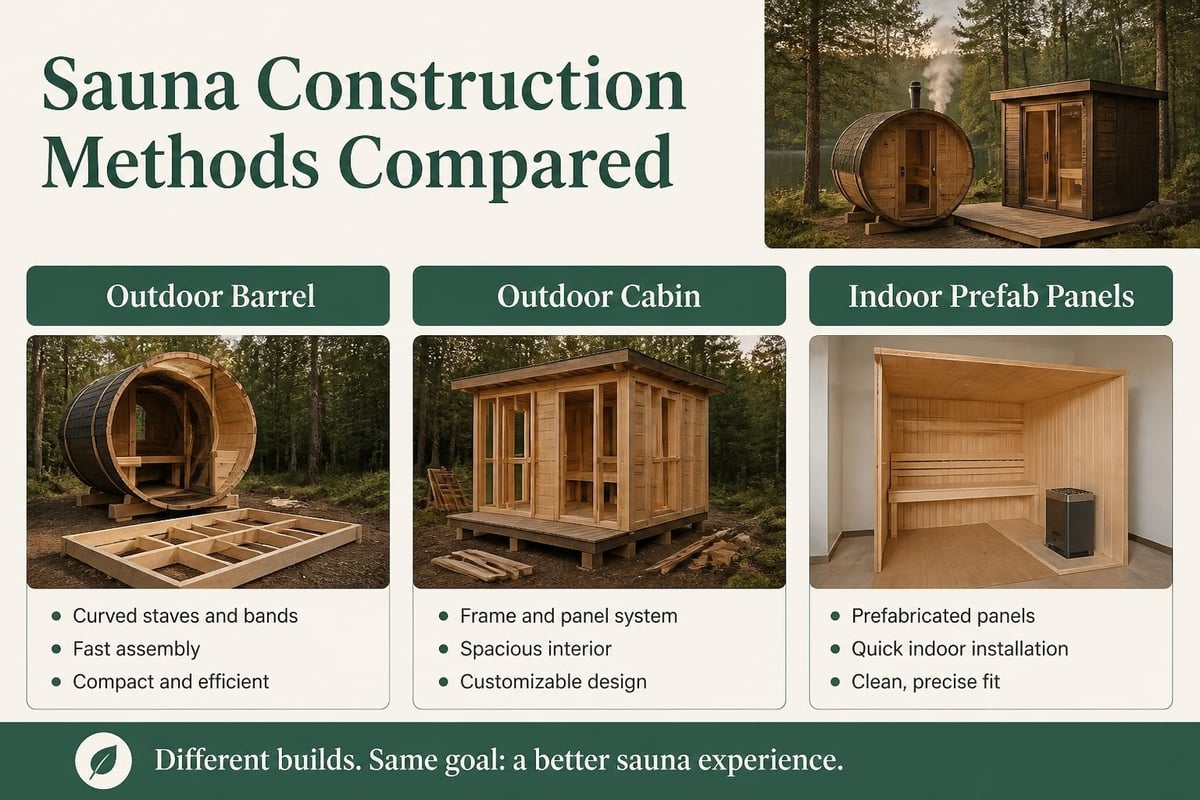
Outdoor saunas require a level foundation, electrical connection for the heater (unless wood-fired), and clearance from structures. Barrel saunas are compact. Cabin saunas offer more room and often include a changing area or porch.
Indoor saunas need ventilation, a dedicated space, and moisture-resistant flooring if using a traditional steam model. Infrared saunas are simpler. Most plug into a standard 120V outlet and can be placed in a basement, spare room, or garage.
Heater Sizing and Performance
The heater determines how quickly the sauna reaches temperature and how well it holds heat during use. Traditional electric heaters are sized by kilowatt output and room volume. A 6 kW heater typically serves a 200-300 cubic foot space. Larger saunas need more power or longer warmup times.
Stone mass matters. A heater with 40-60 pounds of sauna stones stores more heat and creates better löyly than a small stone capacity. Most quality North American saunas use Harvia heaters, which are built in Finland and designed for continuous residential use.
Infrared panels are rated by wattage per panel and wavelength type. Full-spectrum panels include near, mid, and far infrared. Far infrared alone is more common and less expensive. Panel placement affects heat distribution. Look for models with panels on the back, sides, and sometimes the floor.
Durability and Wood Quality
Cedar and hemlock are the most common sauna woods in North America. Both resist moisture and heat. Cedar has a stronger aroma. Hemlock is lighter in color and odor. Thermo-treated wood, heated to high temperatures during production, offers improved moisture resistance and dimensional stability for indoor installations.
Barrel saunas use tongue-and-groove staves held by steel bands. Cabin saunas use panel construction with insulated walls. Indoor prefab saunas use interlocking panels or clasp-together systems.
A well-built sauna lasts decades with basic maintenance: occasionally retighten bands on barrel saunas, clean benches, check heater stones for cracks, and ensure ventilation stays clear.
A Routine Built for Recovery
Sauna for recovery is most effective when used consistently, not sporadically. Frequency depends on training volume, goals, and individual tolerance.
General guidelines for post-exercise sauna:
- Wait 30-60 minutes after intense training to allow heart rate to return near baseline
- Start with 10-15 minutes at moderate temperature (70-80°C for traditional, 50-60°C for infrared)
- Stay hydrated before, during, and after; replace fluids and electrolytes lost through sweat
- Build tolerance gradually; increase session length or frequency over weeks, not days
- Listen to your body; dizziness, nausea, or rapid heart rate means exit immediately
Some people use sauna daily. Others use it two or three times per week. Harvard Health notes that most Finnish studies showing cardiovascular associations involved four or more sessions per week, each lasting 15-20 minutes. That level of use is common in Finland but less so in North America.
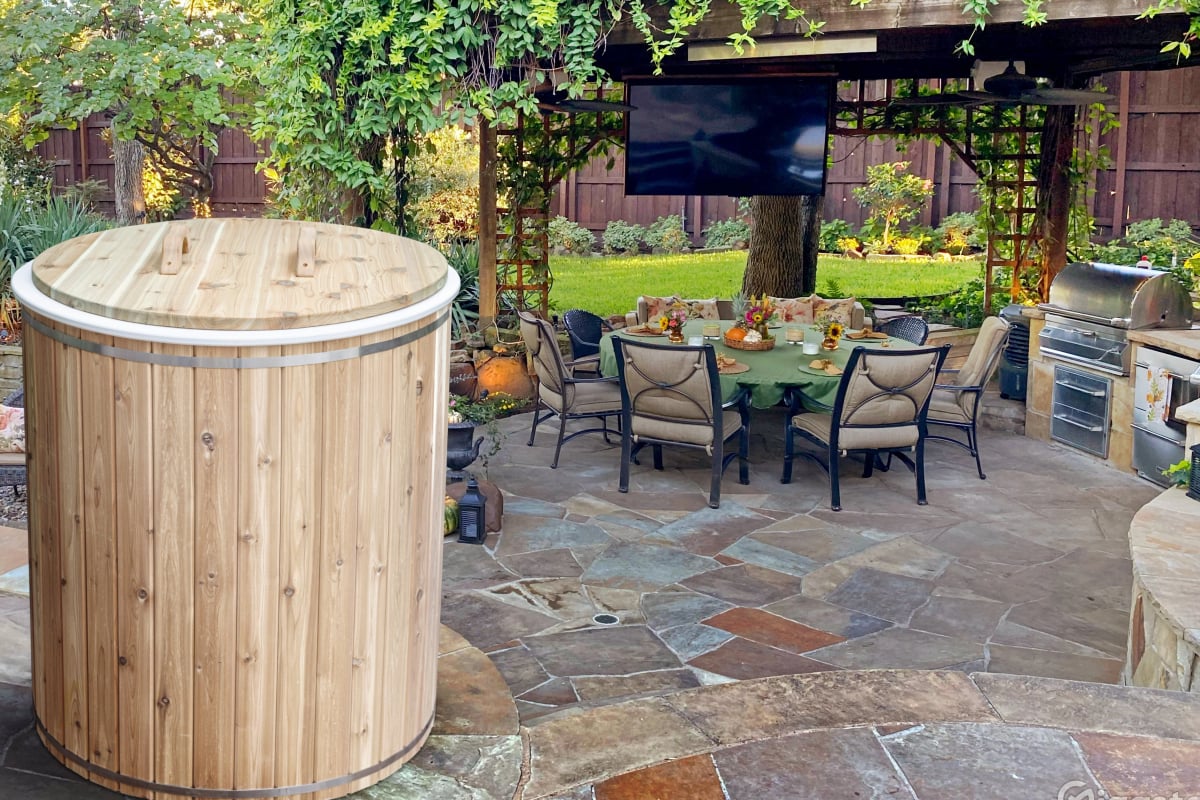
Contrast therapy adds cold exposure. After your sauna session, immerse in cold water for 1-3 minutes. A dedicated cold plunge tub maintains temperature better than a bathtub filled with ice. Repeat the cycle if you have time: heat, cold, rest, repeat. The LeisureCraft Baltic Plunge Tub offers full-body immersion in a cedar tub designed to hold temperature with or without a chiller, making it practical for daily use beside your sauna.
Safety and Contraindications
Sauna is generally safe for healthy adults. Certain conditions require caution or medical clearance: uncontrolled hypertension, recent heart attack, unstable angina, severe aortic stenosis, pregnancy (especially first trimester), and acute illness with fever.
Alcohol and sauna do not mix. Alcohol impairs your ability to regulate temperature and recognize overheating. Dehydration risk increases sharply.
If you take medications that affect blood pressure, heart rate, or sweating, ask your physician whether sauna is appropriate. Some drugs reduce your ability to dissipate heat.
Growing Up with Sauna on Lake Saimaa
I grew up in Eastern Finland on the shore of Lake Saimaa, where every family had a sauna. Ours was wood-fired, built by my grandfather. We used it year-round, not just for cleanliness but for recovery after long days outside. After ice fishing or skiing, we would heat the sauna, sit until the heat felt too much, then walk straight into the lake. Even in winter, there was always a hole cut in the ice. The cold was sharp but brief, and afterward, your body felt awake in a way nothing else provided. That rhythm-heat, cold, rest-was as ordinary as eating. It was not therapy. It was life.
Frequently Asked Questions
How soon after exercise should I use the sauna?
Wait 30 to 60 minutes after hard training. Let your heart rate and breathing return close to resting levels. Entering a sauna immediately post-exercise when your core temperature is already elevated can increase risk of dizziness or overheating. Some research protocols used sauna within one hour of exercise. Individual tolerance varies.
How long should a recovery sauna session last?
Start with 10 to 15 minutes and build tolerance over time. Most research showing associations with cardiovascular health used sessions of 15 to 20 minutes. Some people extend to 30 minutes once acclimated. Exit sooner if you feel lightheaded, nauseous, or uncomfortable. Longer is not always better, especially when starting.
Can I use sauna on rest days or only after training?
Both. Sauna for recovery does not require exercise first. Many people use sauna on rest days for relaxation and circulation benefits. In Finland, sauna is a weekly or daily habit regardless of training schedule. The cardiovascular and nervous system effects occur whether you trained that day or not.
Is infrared or traditional steam sauna better for muscle recovery?
Neither has proven superiority. Both raise core temperature and trigger cardiovascular responses. Traditional saunas reach higher air temperatures and offer the option of steam. Infrared saunas operate at lower air temperatures and may feel more comfortable for longer sessions. Choose based on preference, space, and the experience you want. For context on how different types fit into a home wellness setup, both work well alongside cold plunge routines.
Do I need to combine sauna with cold water for recovery benefits?
No. Sauna alone provides passive heat exposure and the associated physiological responses. Cold water adds contrast and a different type of stress, which some people find beneficial. The combination is traditional in Nordic cultures and increasingly common in recovery routines elsewhere, but it is not required. Heat alone is sufficient for most recovery purposes. Cold adds variety and may support mental resilience and circulation in its own way. For more on integrating both into a backyard wellness space, see our guide to backyard spa ideas. If you are managing recovery protocols alongside broader longevity and performance goals, clinics like Healthi Life in Bangkok offer physician-supervised programmes that integrate heat and cold exposure with biomarker tracking and cellular therapies.
Sauna for recovery is a practice rooted in physiology and culture, not speculation. The evidence links regular use with subjective improvements in recovery readiness and long-term cardiovascular associations, though individual response varies. Whether you choose a traditional outdoor barrel sauna or an indoor infrared model depends on your space, preferences, and how you want heat to fit into your routine. At RecoSauna, I personally answer every question about heater sizing, wood choice, installation, and how to pair sauna with cold exposure. Free shipping across the USA and Canada, and I am here to help you choose the right sauna for your home. Ask Petri About Your Sauna.
Share:
Wood Fired Sauna: Guide to Traditional Heat in 2026
Two Person Infrared Sauna: Models, Buying Guide & Setup