
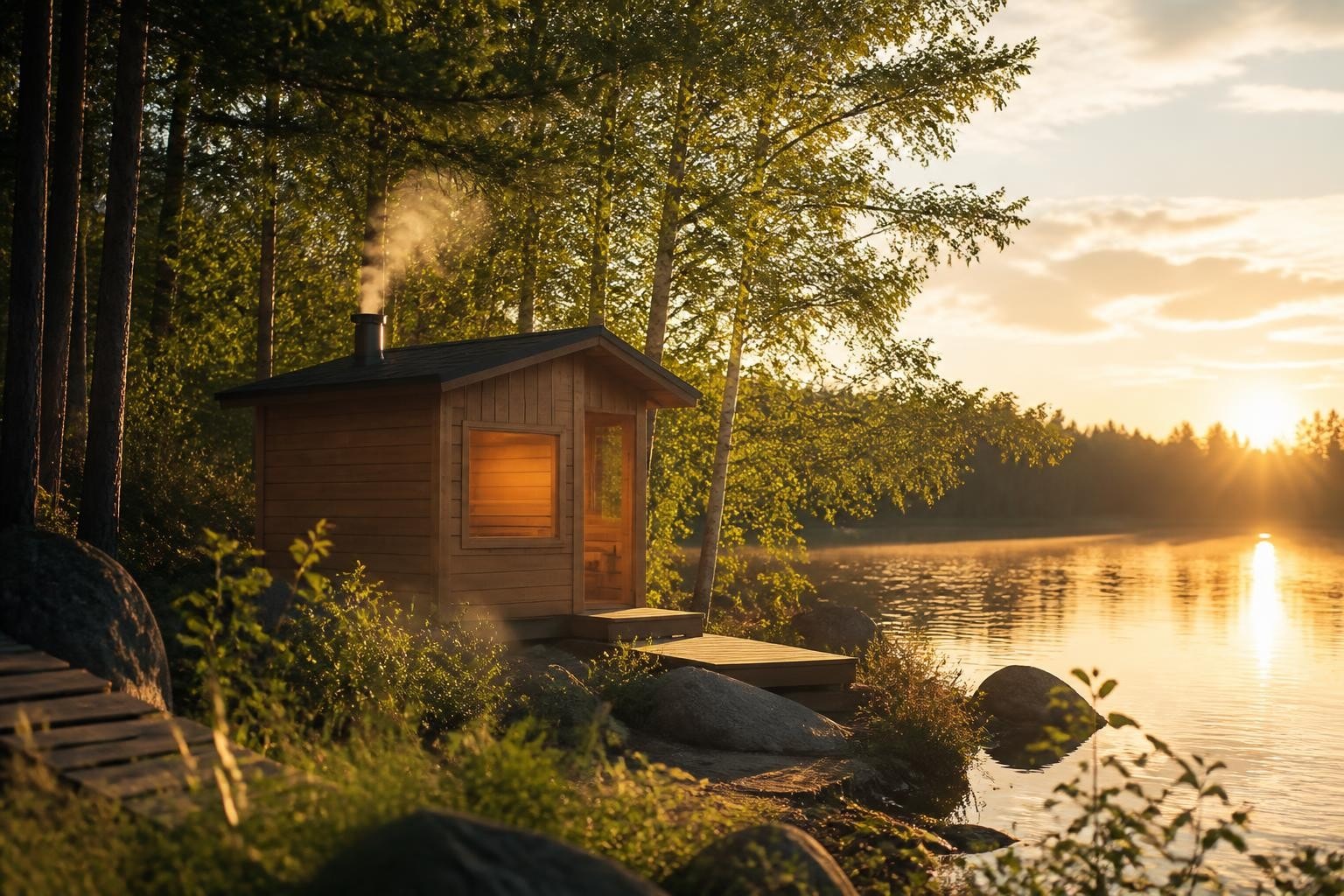
A personal sauna is a compact sauna designed for one or two people, installed in a home basement, spare room, backyard, or outdoor space. The term covers both traditional Finnish steam saunas and infrared models, typically sized between 3x4 feet and 5x6 feet. Unlike commercial or family saunas built for four or more, a personal sauna prioritizes individual use, faster heat-up, and simpler installation in spaces where a full-sized sauna would not fit.
What Makes a Sauna Personal
The distinction is capacity and footprint.
Most personal saunas seat one person comfortably or two people in close proximity. Bench length runs 48 to 60 inches. Interior ceiling height stays around 75 to 78 inches. Total floor space rarely exceeds 30 square feet.
Key characteristics:
- Single-user focus: built for one primary bather
- Faster heating: smaller volume reaches temperature in 15 to 30 minutes
- Lower electrical demand: most plug into standard 120V outlets
- Flexible placement: fits in corners, closets, patios, decks
A personal sauna does not require a dedicated building or major construction. You install it where space allows.
Traditional vs Infrared: The Two Categories
Personal saunas split into two heating methods, each with a different experience.
| Feature | Traditional Steam | Infrared |
|---|---|---|
| Heat source | Electric heater with stones | Carbon or ceramic panels |
| Temperature | 150–195°F | 120–150°F |
| Humidity | Adjustable with water on stones (löyly) | Dry, no steam |
| Heat-up time | 25–40 minutes | 10–20 minutes |
| Electrical | Often 240V | Usually 120V plug-in |
Traditional steam saunas use an electric heater topped with stones. You pour water over the stones to create löyly, the steam that defines Finnish sauna culture. The air is hot and can be humid or dry depending on how often you add water. The experience is about the entire room heating your body from the outside.
Infrared saunas emit infrared wavelengths that heat your skin and tissue directly. The air stays cooler. There is no steam, no stones, no water ritual. The session feels gentler on the lungs but still brings warmth to muscles and joints.
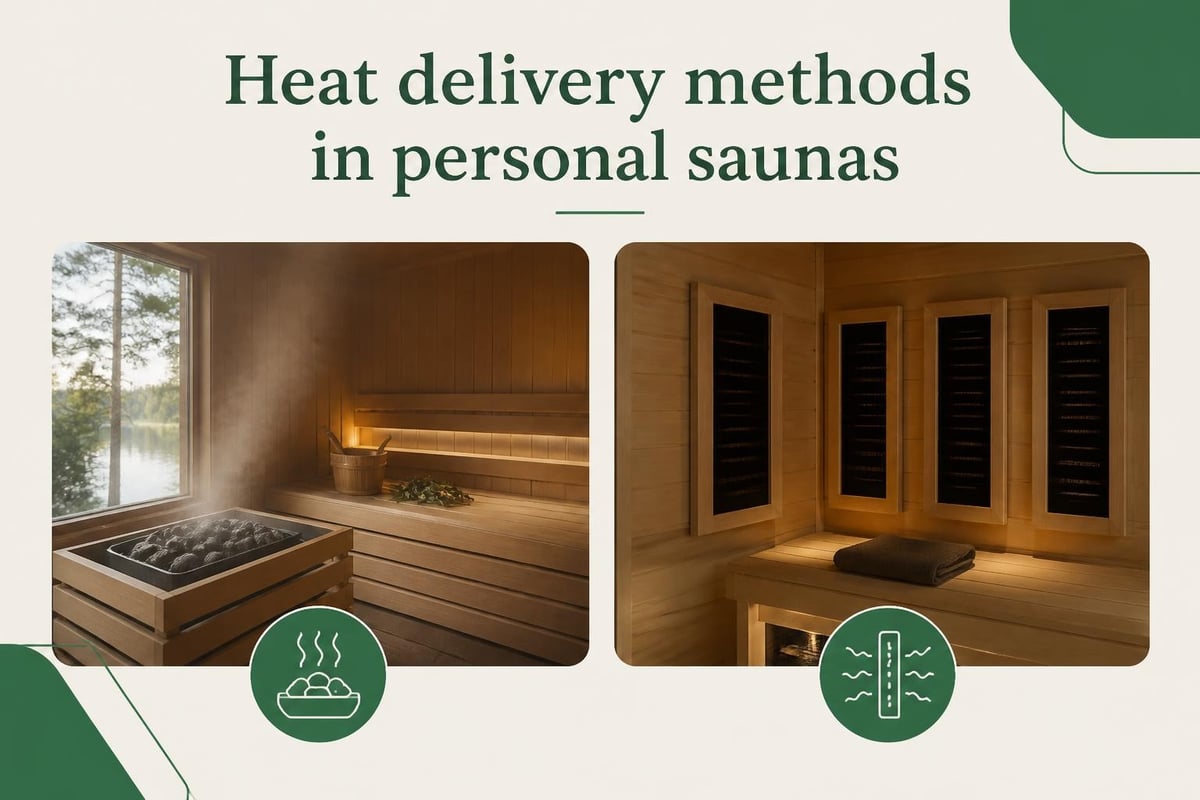
Neither method is superior. The choice depends on what you want from the session. If you grew up with steam or want the ritual of water on stones, traditional fits. If you prefer lower air temperature and simpler operation, infrared works.
Research on sauna benefits typically studies traditional Finnish sauna bathing, though infrared research is growing. Both are associated with relaxation, improved circulation, and recovery support, but evidence quality varies by study design.
Indoor vs Outdoor Placement
Your home layout often determines placement.
Indoor Personal Saunas
Indoor models fit basements, bathrooms, closets, or spare rooms. They arrive as prefabricated cabins or panels you assemble on-site.
Advantages:
- Year-round access regardless of weather
- No foundation or site prep required
- Closer to showers and changing areas
- Easier electrical connection
Considerations:
- Ventilation is critical, especially for steam models
- Flooring must tolerate heat and occasional moisture
- Door clearance and ceiling height matter during assembly
Infrared saunas work well indoors because they produce minimal moisture. Traditional steam saunas need ventilation planning to prevent condensation buildup. A gap under the door and a vent near the ceiling usually suffice.
For detailed planning, consult a home sauna installation guide that covers ventilation, flooring, and electrical specs.
Outdoor Personal Saunas
Outdoor models include barrel saunas, cabin-style structures, and prefab pods. They sit on a deck, patio, gravel pad, or concrete slab.
Advantages:
- No indoor space required
- Natural ventilation and steam release
- Easier to pair with cold plunge or outdoor shower
- Adds backyard retreat aesthetic
Considerations:
- Requires weatherproof construction
- Electrical wiring to outdoor location
- Foundation or support platform needed
- Seasonal access in cold climates depends on snow clearing
Outdoor personal saunas typically use traditional steam heating. The open setting handles moisture naturally. Many homeowners installing a sauna also consider adding a cold plunge for contrast therapy, the alternating heat and cold cycle practiced in Finland for generations.
Sizing and Capacity
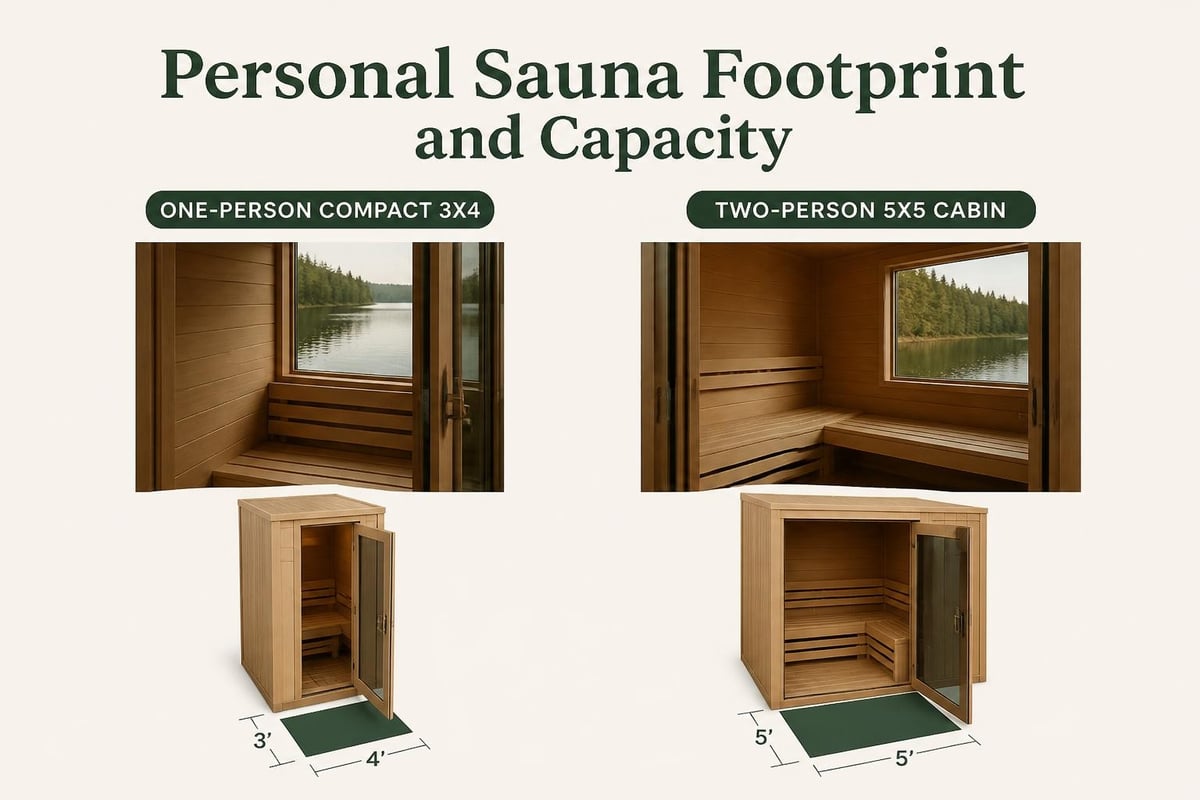
Personal saunas range from compact one-person pods to two-person cabins.
One-person models:
- Interior: 36–42 inches wide, 42–48 inches deep
- Best for: solo sessions, tight spaces, apartments
- Bench: single tier, sit or recline
Two-person models:
- Interior: 48–60 inches wide, 48–60 inches deep
- Best for: couples, families taking turns, more bench room
- Bench: L-shape or parallel seating
Ceiling height stays consistent around 75 inches. Taller users should verify interior headroom before purchase.
Floor space is the limiting factor. Measure your intended location with a 6-inch clearance on all sides for ventilation and assembly. Many personal saunas arrive in panels or sections, so you need maneuvering room during installation.
Heater Selection and Electrical Requirements
The heater defines performance and installation complexity.
Traditional Electric Heaters
Traditional personal saunas use electric heaters sized between 3 kW and 6 kW. Smaller saunas (under 150 cubic feet) work well with 3–4.5 kW heaters. Larger two-person models need 4.5–6 kW to reach temperature efficiently.
Stone mass matters. A heater with 20 to 40 pounds of stones holds heat longer and produces better löyly when you add water. Most quality North American saunas use Harvia heaters, which are manufactured in Finland and sized correctly for the sauna volume.
Electrical service varies. A 3 kW heater can run on 120V with a dedicated 30-amp circuit. Heaters above 4 kW typically require 240V service and a dedicated breaker. You will need a licensed electrician to run the line and confirm your panel has capacity.
Infrared Panels
Infrared personal saunas use carbon or ceramic panels mounted on the walls and sometimes the floor. Total wattage ranges from 1,200 to 2,400 watts for one- to two-person models.
Most infrared saunas plug into a standard 120V household outlet. No electrician required, though a dedicated circuit is still recommended to avoid tripping breakers.
Panel placement affects heat distribution. Full-spectrum infrared saunas combine near, mid, and far infrared wavelengths. Far infrared provides deep tissue warmth. Near infrared is associated with skin benefits. The Maxxus 2 Person Full Spectrum IR Sauna uses this approach, combining wavelengths for broader therapeutic range.
Material and Construction Quality
Wood type and build quality determine durability and maintenance.
Common woods:
- Eastern White Cedar: lightweight, aromatic, naturally resistant to moisture and insects
- Canadian Red Cedar: rich color, pleasant scent, slightly denser than white cedar
- Hemlock: neutral scent, smooth grain, often used in infrared saunas
- Thermo-treated wood: heat-modified for dimensional stability, resists warping in humid conditions
Cedar is traditional and performs well in both indoor and outdoor settings. Hemlock offers a scent-free alternative for those sensitive to aromatic oils. Thermo-treated wood costs more but maintains shape and appearance longer in variable humidity.
Panel thickness affects insulation. Walls should be at least 1.5 inches thick, ideally with tongue-and-groove joinery. Glass doors are tempered for safety. Hardware should be stainless steel or brass to resist corrosion from steam and sweat.
Check for certifications. ETL or UL listing confirms electrical safety. Some manufacturers provide third-party EMF testing results for infrared models, especially important if you are sensitive to electromagnetic fields.
Installation and Setup
Most personal saunas arrive as kits or prefabricated cabins.
Kit assembly:
- Prepare the location: level floor, access to electrical, ventilation plan
- Unpack and organize panels, benches, hardware
- Assemble walls and ceiling following instructions
- Install benches, heater, and controls
- Connect electrical (hire an electrician for hardwired models)
- Test heat-up and adjust ventilation as needed
Assembly time ranges from two to six hours depending on model complexity and help available. Two people make the job easier.
Prefabricated cabins arrive mostly assembled. You position the unit, level it, and connect power. These cost more but save installation time.
For detailed steps and checklists, review a home sauna installation checklist covering electrical, flooring, and ventilation requirements.
When buying or selling a home with a sauna already installed, work with a knowledgeable Realtor who understands how wellness features affect property value. Diana Burress, a seasoned Realtor and Broker in South Central Kansas, brings deep local market expertise to guide buyers and sellers through unique property features like saunas, cold plunges, and other home wellness installations.
Maintenance and Upkeep
Personal saunas require minimal maintenance when used properly.
Routine care:
- Wipe benches and walls after each session to remove sweat
- Leave the door open after use to air out the interior
- Vacuum or sweep the floor weekly
- Check heater stones for cracks or crumbling every few months
- Replace stones when they lose mass or stop producing good steam
Wood naturally darkens over time. This is normal. Avoid varnishes or sealants inside the sauna, as they release fumes when heated.
For infrared saunas, dust the panels occasionally and check electrical connections annually. Carbon panels have no moving parts and rarely need replacement.
Traditional steam saunas in humid climates may develop mildew if not ventilated properly. Keep air flowing and dry the interior between sessions.
Cost Considerations
Personal sauna prices vary by type, size, and quality.
Typical ranges (2026):
- Basic infrared (1 person): $1,200–$2,500
- Mid-range infrared (2 person): $2,500–$4,500
- Traditional indoor steam (2 person): $3,500–$6,500
- Outdoor barrel or cabin (2 person): $5,000–$10,000
Quality construction, better wood, and advanced features add cost. Financing options spread payments over time, making higher-quality models more accessible.
Installation adds to the total. DIY assembly is free but time-intensive. Hiring help for assembly and electrical work runs $500 to $1,500 depending on location and complexity.
Operating cost depends on usage and electrical rates. A 4.5 kW traditional sauna running for 45 minutes uses about 3.4 kWh. At $0.13 per kWh, that is roughly $0.44 per session. Infrared saunas use less power and cost even less per session.
Making the Decision
Start by answering a few questions.
Where will the sauna go?
Indoor models fit tight spaces and offer year-round convenience. Outdoor saunas pair well with cold plunge setups and create a dedicated wellness area separate from the main house.
How many people will use it regularly?
One-person models work for solo use or couples taking turns. Two-person models offer more room and flexibility for shared sessions.
Do you want steam or dry heat?
Traditional saunas with stones and steam deliver the classic Finnish experience. Infrared saunas offer simpler setup and operation with no water ritual.
What is your electrical situation?
Check your electrical panel capacity. Infrared models usually plug in. Traditional saunas often need a dedicated 240V circuit.
What is your budget and timeline?
Higher-quality materials and construction last longer and perform better. Financing spreads cost over months. Most homeowners research for three to six months before buying, which allows time to compare models, plan installation, and verify electrical requirements.
Growing Up on Lake Saimaa
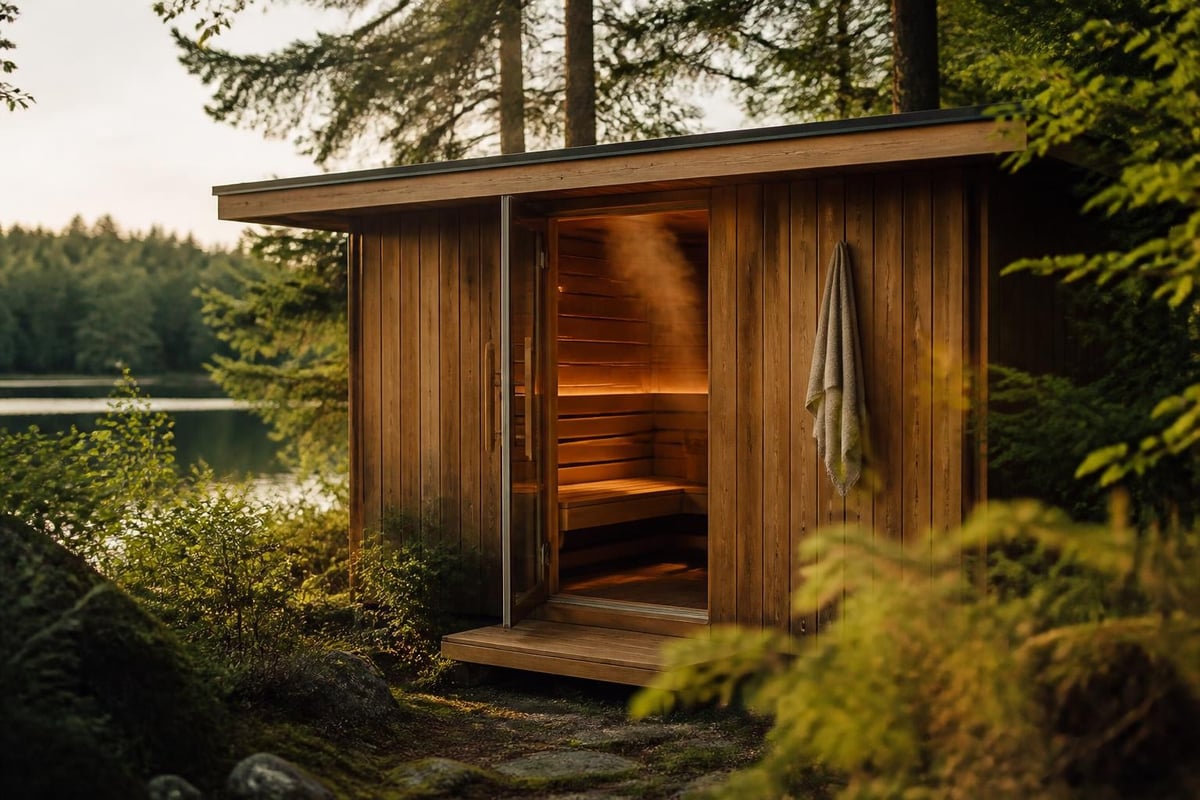
I grew up in Eastern Finland on Lake Saimaa, where every household had a sauna. We heated ours with wood, and the ritual was simple: heat the stones, create löyly, then step into the cold lake water. That cycle was not called contrast therapy yet. It was just how you recovered after a day of work or play. The sauna was where you became quiet, where the body shifted from effort to rest. That tradition, practiced for 2,000 years, is what I bring to every conversation with customers today.
Common Questions About Personal Saunas
Can I install a personal sauna in my basement?
Yes, if you have adequate ceiling height (at least 80 inches including the sauna itself), ventilation, and appropriate flooring. Infrared models work especially well in basements because they produce minimal moisture. Traditional steam saunas need a ventilation plan to prevent condensation.
How long does a personal sauna take to heat up?
Infrared models reach operating temperature in 10 to 20 minutes. Traditional electric saunas with stones take 25 to 40 minutes depending on heater size and sauna volume. Smaller personal saunas heat faster than larger models.
Do personal saunas increase home value?
Wellness features like saunas can appeal to buyers, especially in colder climates where sauna culture is appreciated. Permanent installations, particularly outdoor cabins or well-integrated indoor models, add more value than portable units. Consult a local real estate professional to understand your market.
What is the difference between a personal sauna and a portable sauna?
A personal sauna is a permanent or semi-permanent installation with solid wood construction, proper ventilation, and a dedicated heater. A portable sauna is a fabric or soft-sided enclosure with a small heating element, designed for easy storage and relocation. Personal saunas deliver better heat retention, durability, and user experience.
Can I use a personal sauna every day?
Many people use their sauna daily without issue. Traditional Finnish sauna culture includes frequent bathing. Research on cardiovascular health benefits of sauna use often studies regular users who bathe four to seven times per week. Start with shorter sessions and listen to your body. Consult your doctor if you have existing health conditions.
A personal sauna fits where you live and how you recover. Whether you choose traditional steam or infrared, indoor or outdoor, the right model supports daily wellness without taking over your home. RecoSauna offers curated options from LeisureCraft, Golden Designs, Maxxus, and Orivon Wellness, with guidance from someone who grew up in the heartland of sauna culture. Petri answers every question personally to help you find the model that fits your space, goals, and budget. Ask Petri About Your Sauna.
Share:
Home Infrared Sauna: A Finnish Expert's Guide (2026)
Steam Rooms Near Me: What to Know Before You Visit