
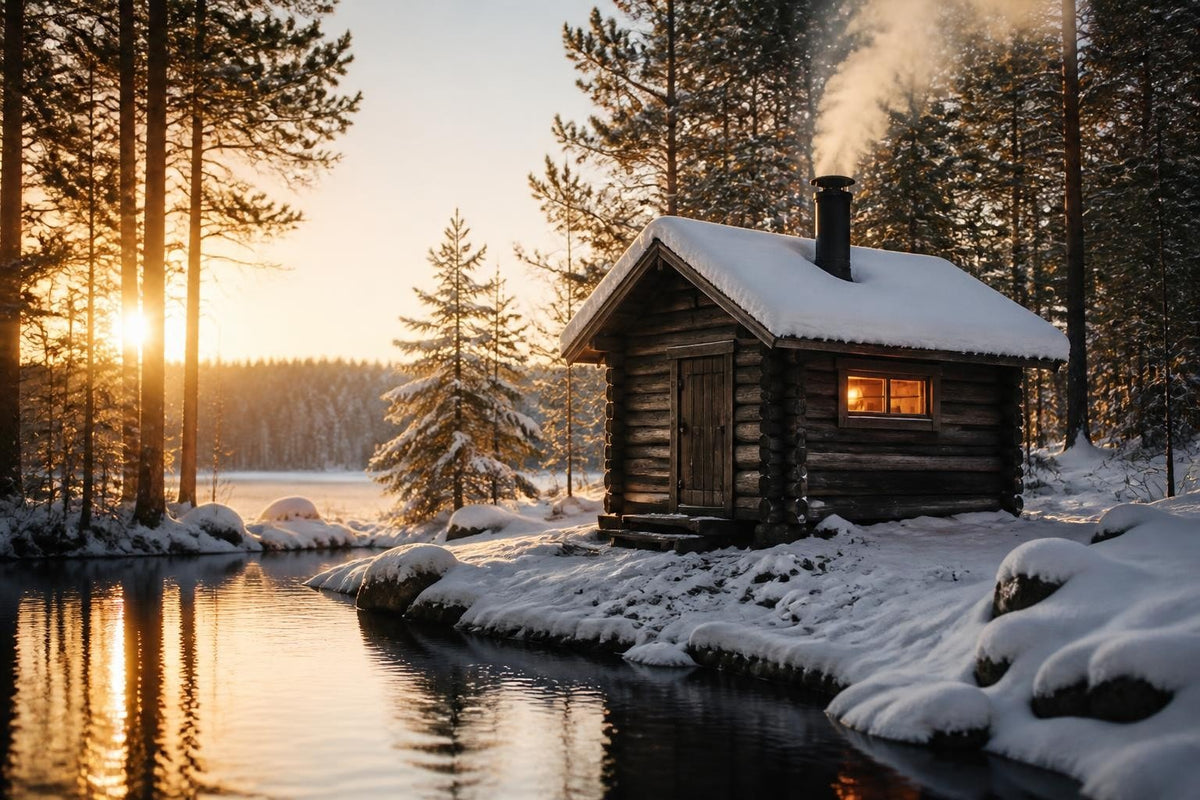
An outdoor sauna wood fired is a traditional sauna structure heated by burning wood in a stove, creating steam (löyly) when water hits hot stones. Unlike electric models, wood-fired saunas require manual fire-starting, constant fuel supply, and active heat management. They deliver higher stone mass, authentic smoke-scented steam, and the rhythm of tending the fire between sessions. For homes with reliable firewood access and space for outdoor installation, they're the closest experience to Finnish practice.
I grew up lighting the sauna stove before school in winter, splitting birch logs beside Lake Saimaa. The process itself is the therapy: stacking kindling, adjusting air vents, waiting for the chimney to draw. That relationship with fire and heat is what makes wood-fired saunas distinct.
What Makes Outdoor Sauna Wood Fired Different
Wood-fired saunas separate the heating process from the bathing experience. You start the fire 1-2 hours before your session, monitor the wood supply, and adjust air intake to control temperature. The stove burns continuously, heating a large mass of stones to 400-500°F. Those stones hold heat longer and produce denser steam than electric heaters.
The fire demands attention. You're responsible for fuel quality, chimney draft, and timing. If the wood is damp or the stove is undersized, the sauna won't reach proper temperature. If you overfill the firebox, you'll waste wood and create uneven heat.
This is not convenience. This is deliberate effort rewarded by superior löyly.
Stone Mass and Heat Retention
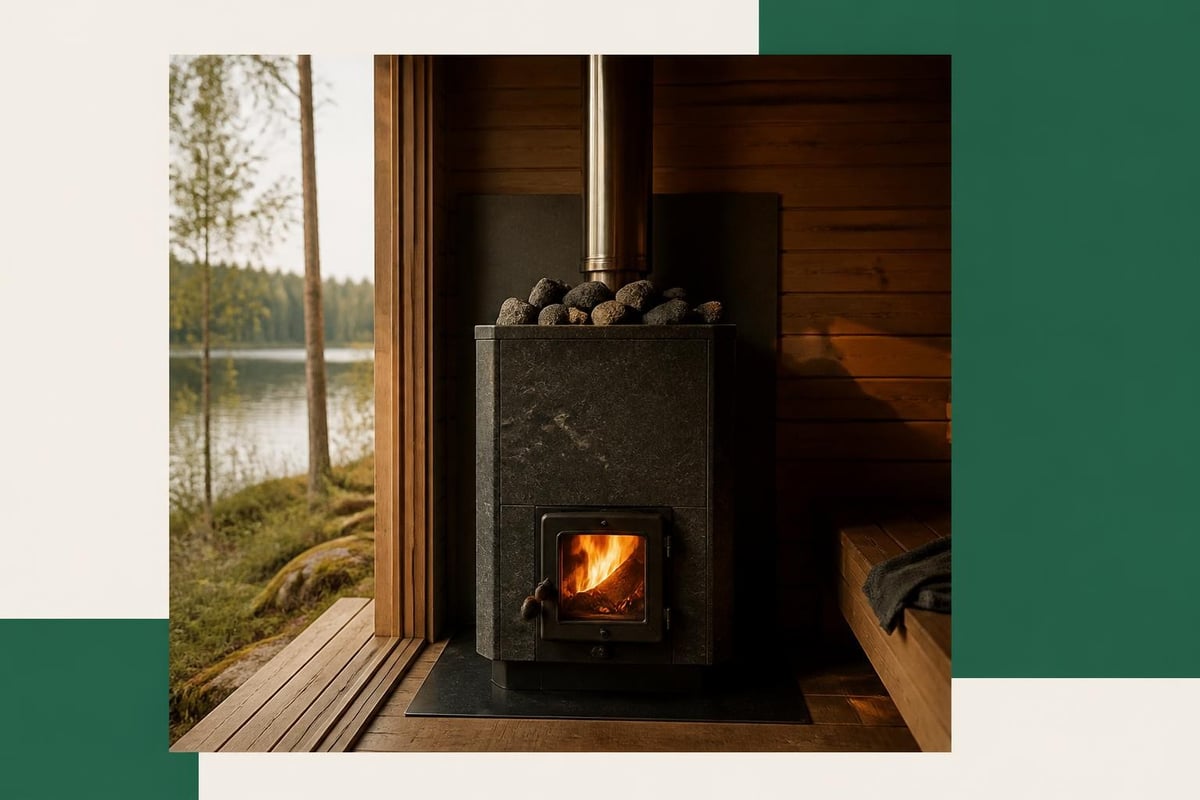
Wood-fired stoves hold 80-200 pounds of stones, compared to 20-50 pounds in most electric heaters. Larger stone mass absorbs more heat, releases steam more gradually, and sustains temperature longer. When you throw water on a wood-heated stone pile, the steam is thicker and lingers in the air. The rocks cool slightly but recover quickly because the fire keeps burning beneath them.
Electric heaters cycle on and off. Wood stoves maintain continuous heat as long as you feed them. That difference shows up in the quality of each steam throw.
Wood-Fired vs Electric: Side-by-Side Comparison
| Feature | Wood-Fired | Electric |
|---|---|---|
| Heat-up time | 1-2 hours | 30-45 minutes |
| Stone capacity | 80-200 lbs | 20-50 lbs |
| Power source | Firewood | 240V or plug-in |
| Installation complexity | Chimney + hearth required | Wiring only |
| Ongoing cost | Firewood supply | Electricity usage |
| Heat control | Manual (airflow + fuel) | Digital thermostat |
Electric saunas suit daily quick sessions and modern convenience. Wood-fired saunas suit weekend rituals, larger groups, and users committed to traditional sauna practice. If you're considering the difference between indoor and outdoor setups, note that wood-fired models almost always require outdoor placement due to chimney routing and ventilation codes.
Firewood Type and Seasoning
Hardwoods like birch, oak, or maple burn hotter and longer than softwoods. Firewood must be seasoned for at least 6-12 months to reduce moisture content below 20%. Wet wood creates creosote buildup in the chimney, smokes excessively, and struggles to reach target temperature.
I split and stack birch every spring, storing it under a roof with open sides. By December it's dry enough to light with one match. That prep work is part of owning an outdoor sauna wood fired.
Choosing the Right Wood-Fired Stove
Stove sizing follows a simple formula: 1 kilowatt per 45-50 cubic feet of sauna interior. For a 6x8 foot sauna with 7-foot ceilings (336 cubic feet), you need roughly 7 kW of heating capacity. Wood stoves are rated by firebox volume and stone capacity, not kilowatts, so check manufacturer specifications carefully.
Key stove features to evaluate:
- Firebox size: Larger fireboxes accept longer logs and reduce refueling frequency
- Stone basket design: Top-loading stones heat faster than side-loaded configurations
- Chimney diameter: 6-inch chimneys are standard; undersized pipes restrict draft
- Door material: Cast iron doors with glass windows let you monitor the fire without opening the stove
- Air intake control: Adjustable vents give finer control over burn rate and temperature
Most quality outdoor saunas in North America use Harvia stoves. Harvia has been manufacturing wood-fired heaters in Finland since 1950. Their stoves are designed for the stone mass and ventilation requirements of authentic Finnish saunas.
Installation and Code Requirements
Wood-fired stoves require clearances from walls, benches, and ceilings. Most jurisdictions require 16-36 inches of space around the stove, plus a non-combustible hearth extending 16 inches in front of the firebox. The chimney must penetrate the roof with proper flashing and terminate at least 3 feet above the roofline.
Check local building codes before installation. Some areas classify outdoor saunas as accessory structures requiring permits. Others treat them as recreational equipment with no review. Chimney height, spark arrestors, and setback distances from property lines vary by region. If you're unfamiliar with these requirements, this outdoor sauna guide provides a helpful overview of common regulations.
Building Materials for Wood-Fired Outdoor Saunas
Cedar and spruce are the standard woods for sauna construction. Cedar resists rot, contains natural oils that repel moisture, and requires no chemical treatment. Eastern White Cedar is common in North America. Spruce is traditional in Finland, lighter in color, and develops a soft patina over time.
Avoid pressure-treated lumber inside the sauna. High heat can release chemicals from treated wood. Use it only for the base frame if the sauna sits on a concrete pad or gravel foundation.
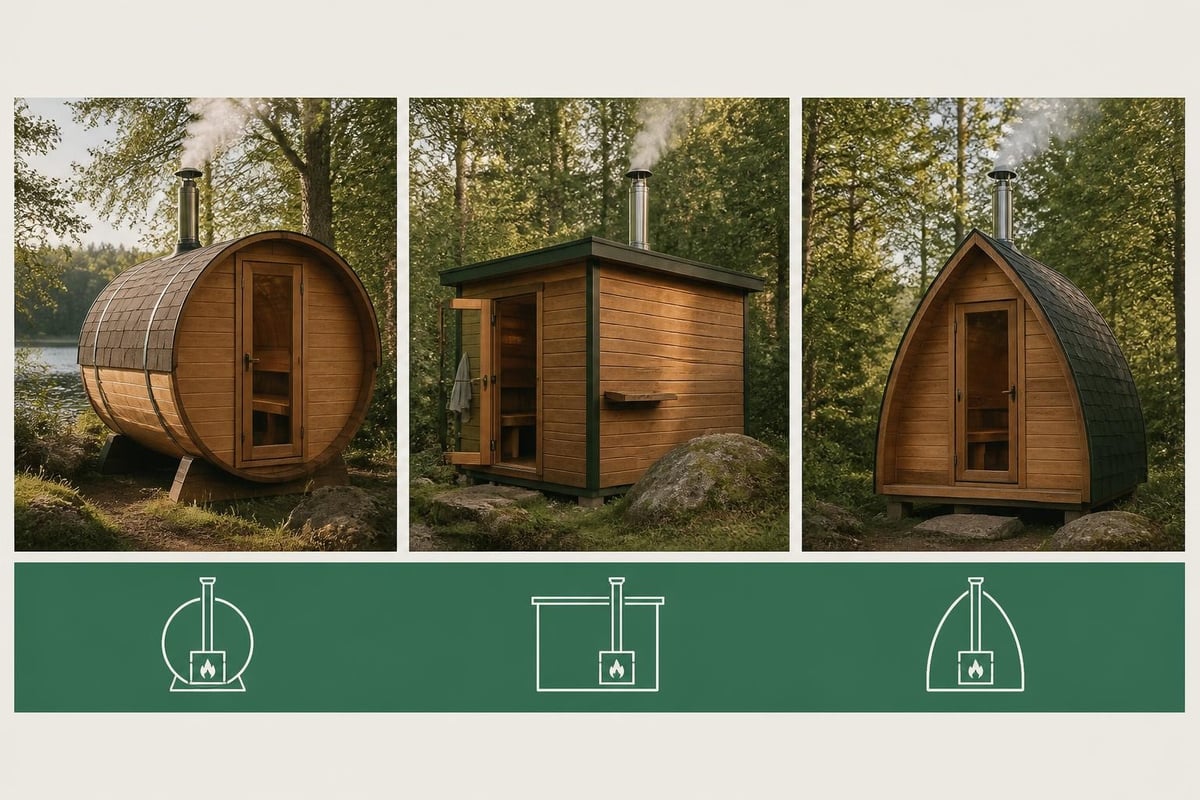
Common outdoor sauna styles:
- Barrel saunas: Curved walls shed rain naturally and heat efficiently due to reduced interior volume
- Cabin saunas: Rectangular structures with porches, windows, and traditional architecture
- Pod saunas: Compact pre-fab units with minimal footprint
If you're planning a build from scratch, this DIY outdoor sauna build guide walks through foundation, framing, and chimney installation step by step.
Roof and Ventilation Design
Wood-fired saunas produce smoke during fire-starting and require proper chimney draft to function safely. The chimney must extend high enough to create suction that pulls smoke upward. Shorter chimneys or poorly sealed stove pipes result in backdraft, filling the sauna with smoke.
Roof pitch affects chimney performance. Steeper roofs allow taller chimneys without guy wires. Flat or shallow roofs require additional bracing to support chimney weight and wind load.
Fresh air intake is separate from the chimney. A small vent near the floor (opposite the stove) brings in oxygen to feed the fire and replaces stale air. A second vent near the ceiling releases steam after each session. This cross-flow ventilation keeps the sauna fresh between uses.
Operating and Maintaining a Wood-Fired Sauna
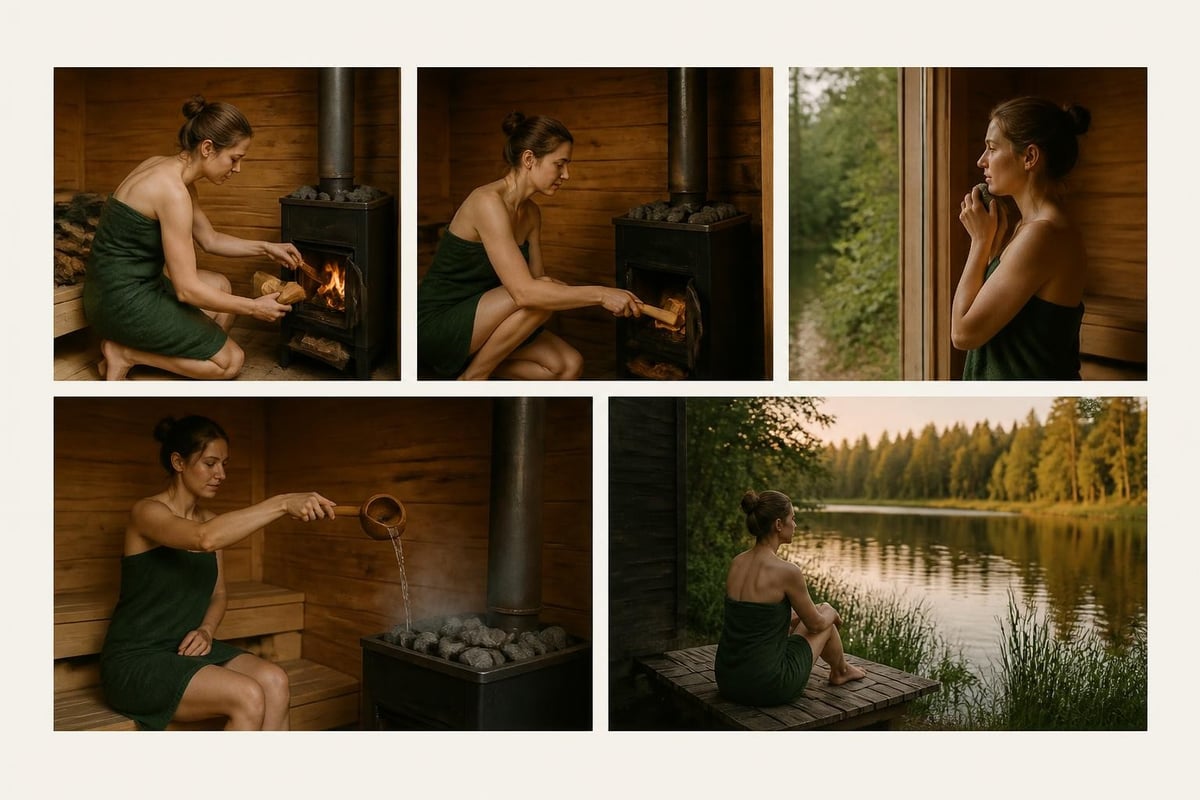
Start the fire 60-90 minutes before your session. Use newspaper, dry kindling, and small split logs to build initial heat. Once the kindling catches, add larger logs and adjust the air intake damper to control burn rate. Monitor the thermometer and add wood as needed to reach 160-180°F.
Once the sauna reaches temperature, let the fire burn down to coals. Close the stove door and damper slightly to slow combustion. The stone mass will hold heat for 1-2 hours, even as the fire fades.
Between sessions, remove ash from the firebox. Ash buildup restricts airflow and reduces heating efficiency. Inspect the chimney annually for creosote deposits. Creosote is a flammable tar-like residue that forms when wood smoke cools inside the chimney. If deposits exceed 1/8 inch thickness, hire a chimney sweep to clean the flue.
Firewood Consumption Estimates
A typical outdoor sauna wood fired session consumes 10-20 pounds of firewood, depending on sauna size, outdoor temperature, and session length. In cold climates, expect higher fuel use during winter. A full cord of hardwood (128 cubic feet) provides fuel for roughly 50-80 sessions.
Store firewood under a roof or tarp, stacked off the ground to prevent rot. Rotate your supply so older wood burns first. Freshly cut wood takes 12-18 months to season properly in humid climates.
| Firewood Type | Heat Output (BTU/cord) | Burn Rate | Availability |
|---|---|---|---|
| Oak | 24-28 million | Slow | Common (East, Midwest) |
| Birch | 20-24 million | Medium | Common (North, Canada) |
| Maple | 24-27 million | Medium | Common (East, Midwest) |
| Pine | 14-17 million | Fast | Widespread |
Pine and other softwoods ignite quickly but burn fast and produce more creosote. Use them for kindling, not primary fuel.
Why Choose Wood-Fired Over Electric
Electric saunas offer convenience, faster heat-up, and simpler installation. Wood-fired saunas offer authenticity, higher stone mass, and independence from the electrical grid. The choice comes down to your priorities.
If you sauna daily before work, electric makes sense. If you sauna on weekends, host groups, or practice contrast therapy with friends, wood-fired delivers a richer experience.
Wood heat also pairs naturally with cold plunges. The time spent tending the fire gives you a break between rounds of heat and cold. That pacing is built into the process. You're not rushing through a protocol. You're following the rhythm the fire sets.
The Smell and Sound of Wood Heat
Electric heaters are silent and odorless. Wood stoves crackle, pop, and fill the air with the scent of burning birch or oak. That sensory layer adds to the experience. You hear the fire breathing, smell the woodsmoke on your skin after the session, and feel the heat radiating from the stones in waves.
Some people find the smoke scent intrusive. Others consider it essential. There is no objective answer. It's preference shaped by what you value in a sauna session.
From Lake Saimaa to Your Backyard
I learned to build a fire in our family sauna when I was seven, watching my grandfather split birch beside the lake. He'd light the stove before breakfast and let it burn for two hours before we bathed. The sauna wasn't a luxury. It was Saturday routine, part of the week's rhythm. The fire, the steam, the cold lake afterward. That's the experience an outdoor sauna wood fired makes possible.
Wood heat connects you to the process in a way electric saunas don't. You're responsible for the fire, the timing, the quality of the steam. It's more work and more reward.
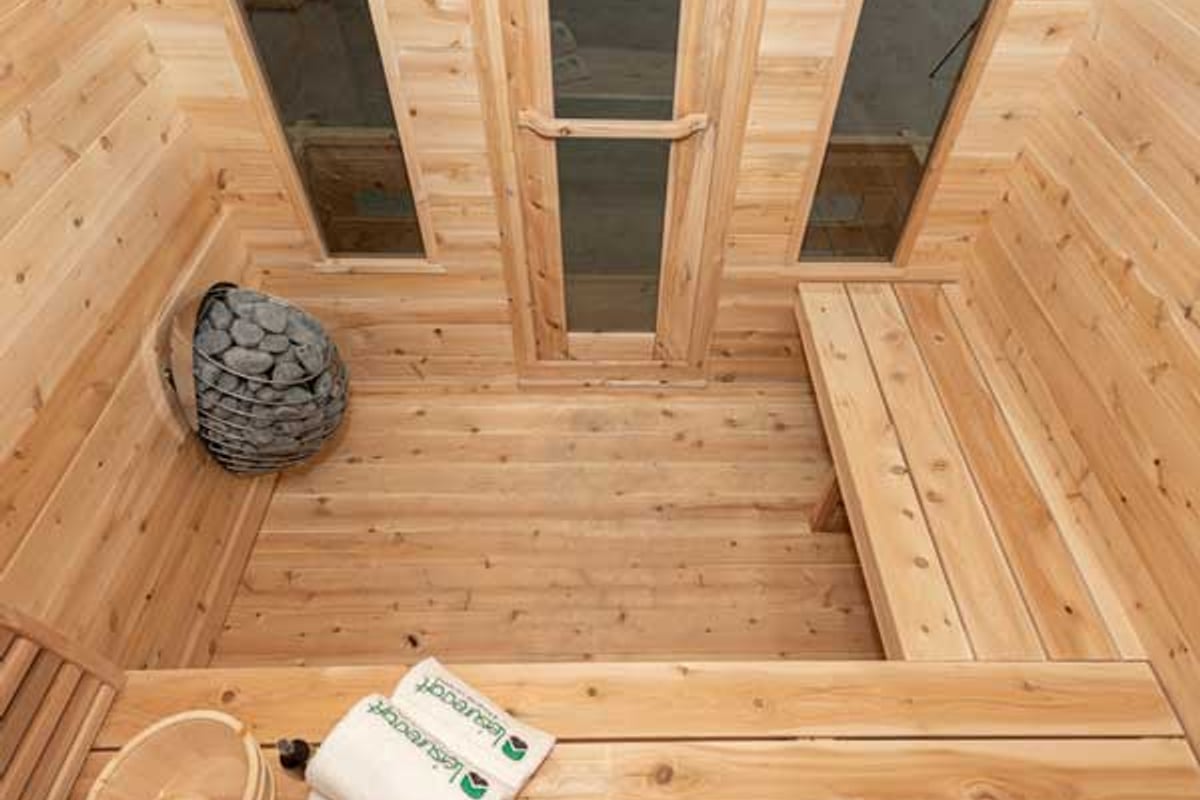
For those interested in hosting larger groups or families, wood-fired models often provide better value than electric saunas in the same size range. The Canadian Timber Georgian Cabin Sauna with Porch is built from Eastern White Cedar with a welcoming front porch and capacity for 2-6 people. The open front porch gives you space to cool down between rounds and invites slower pacing. It's designed for wood-fired heating, though electric heaters can be installed if you prefer.
Frequently Asked Questions
How long does it take to heat a wood-fired outdoor sauna?
Most wood-fired outdoor saunas reach 160-180°F in 60-90 minutes, depending on outdoor temperature, stove size, and insulation quality. Larger saunas or poorly insulated structures may take up to 2 hours.
Can I use a wood-fired sauna in winter?
Yes. Wood-fired saunas perform well in cold climates because the continuous fire compensates for heat loss through walls and roof. Expect to use more firewood per session when outdoor temperatures drop below freezing.
Do I need a permit to install a wood-fired outdoor sauna?
Requirements vary by location. Many jurisdictions require permits for structures with chimneys, while others classify outdoor saunas as exempt accessory buildings. Contact your local building department before installation.
What's the difference between a wood-fired stove and a wood-burning heater?
The terms are interchangeable. Both describe a metal firebox that burns wood to heat stones. Some manufacturers distinguish "stoves" (freestanding with chimneys) from "heaters" (built-in models), but the function is identical.
How often should I clean the chimney on a wood-fired sauna?
Inspect the chimney every 40-50 sessions or annually, whichever comes first. If creosote buildup exceeds 1/8 inch, hire a certified chimney sweep. Burning only seasoned hardwood reduces creosote formation.
Wood-fired outdoor saunas deliver authentic steam and a slower, more deliberate practice than electric models. They require effort, planning, and access to quality firewood, but they reward that investment with superior heat and a connection to Finnish tradition. If you're ready to explore wood-fired options for your backyard, Petri answers every question personally and ships across the USA and Canada. Ask Petri About Your Sauna.
Share:
Sauna for Cardiovascular Health: What the Research Shows
Sauna Recovery: How Heat Supports Your Body After Training