

A home spa is a dedicated space in your house or yard where you practice heat and cold therapy for recovery and wellness. Most effective versions combine a sauna with cold water immersion, the pattern Finns have used for two thousand years. The term "spa" can mean many things, but the proven health associations come from thermal contrast: hot followed by cold, repeated over time. Building one at home requires space, upfront investment, and careful planning around your property's layout and climate.
What Makes a Functional Home Spa
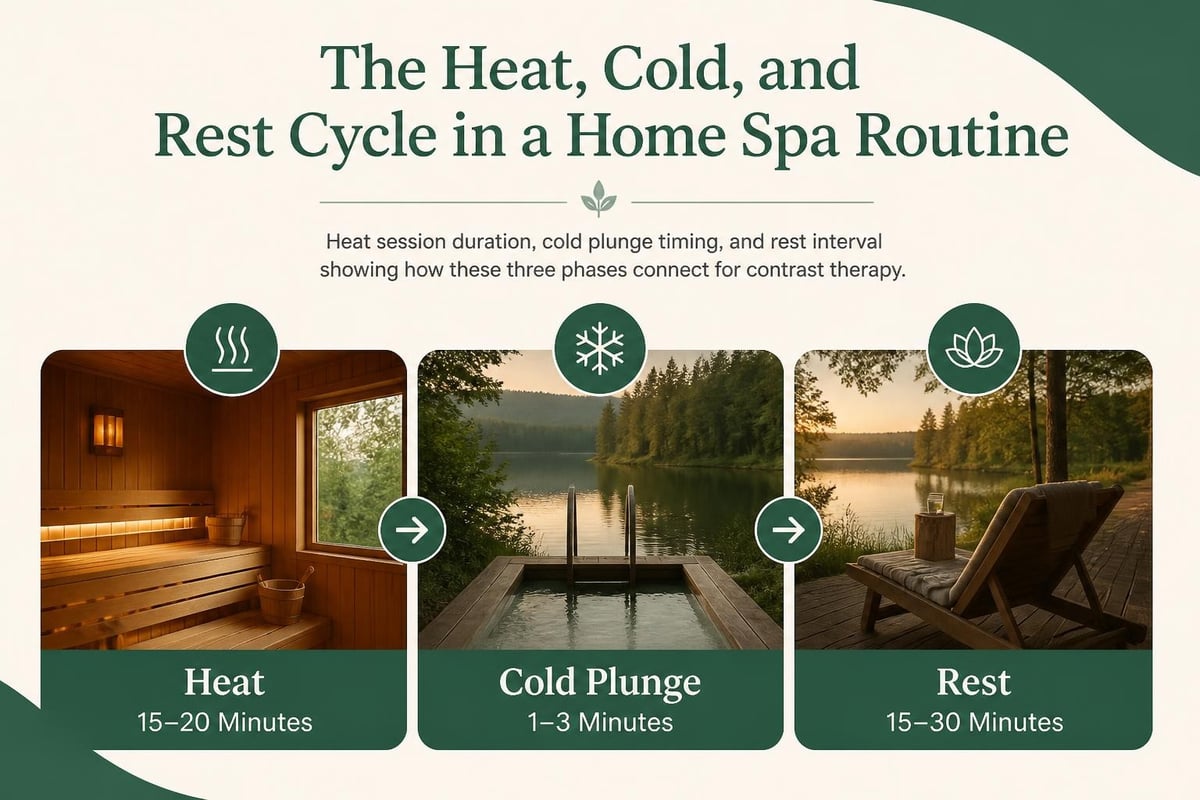
The simplest functional home spa includes three elements: heat source, cold source, and rest area.
Heat comes from a traditional sauna with an electric heater and stones, or an infrared cabin. Traditional saunas reach 160-190°F and use steam from water on hot stones. Infrared saunas operate at 120-140°F with radiant panels. Both support relaxation and circulation, but the experience differs significantly.
Cold immersion means a dedicated cold plunge, a stock tank with a chiller, or even a shower set to cold. Research from MedicalXpress comparing hot tub and sauna use suggests that deliberate cold exposure may offer distinct cardiovascular benefits. The goal is full-body immersion at 50-60°F for one to three minutes.
Rest area matters more than most people expect. You need a place to sit after each round, ideally outdoors in fresh air or in a quiet room. A simple bench or chair works. Forcing yourself back into daily activity immediately after a session cuts the recovery effect short.
Home Spa Comparison: Indoor vs. Outdoor
Your property determines where you build. Each option has clear tradeoffs.
| Location | Best For | Consideration |
|---|---|---|
| Outdoor Yard | Traditional sauna, cold plunge, year-round use | Requires concrete pad, electric line, privacy fence |
| Indoor Basement | Infrared sauna, controlled climate | Needs ventilation, moisture barrier, floor drainage |
| Garage Conversion | Full spa setup with plumbing | Insulation, heating in winter, permit requirements |
Outdoor builds work well in cold climates. Snow, freezing air, and seasonal shifts enhance the experience rather than limit it. You step from a 180°F sauna into 40°F air, then into cold water. That is the pattern.
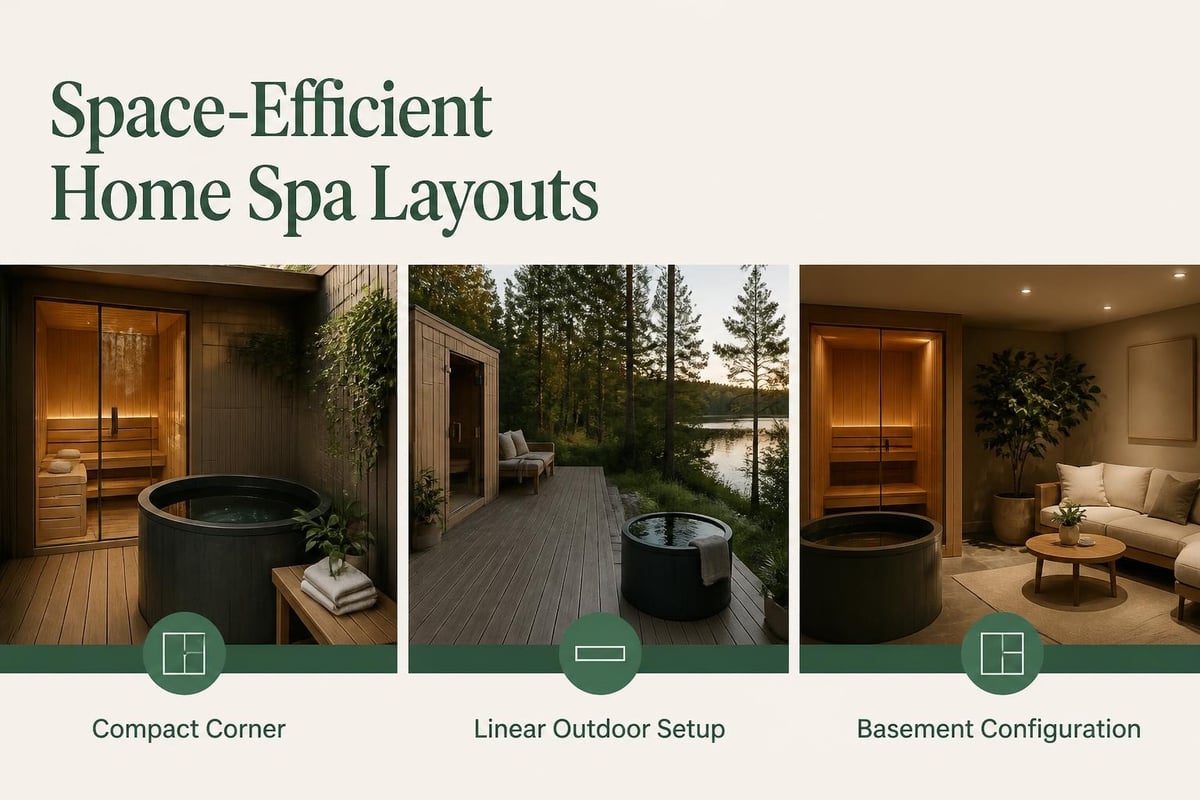
Indoor builds suit smaller homes or urban properties. An indoor sauna for home use fits in a basement corner or spare room. Infrared models plug into standard 120V outlets. Traditional saunas need 240V and proper venting.
Garage conversions offer the most flexibility. You can add both heat and cold, plus a shower and changing area. Most garages already have electrical capacity and concrete floors. The 2026 trend report from House Beautiful on spa-style design highlights warm textures, biophilic materials, and calming lighting, all applicable to converted spaces.
Buying Criteria for Home Spa Equipment
Sauna Selection
Traditional sauna specifications:
- Heater sized to room volume (1 kW per 50 cubic feet)
- 100-200 lbs of stone mass for proper steam
- Eastern White Cedar or Hemlock interior
- Tempered glass door with wood frame
- Bench depth minimum 18 inches
Most quality saunas in North America use Harvia heaters. The brand's 240V models heat efficiently and hold stone mass well. Size the heater correctly or the room never reaches proper temperature. Undersized heaters run constantly and wear out faster.
Infrared sauna specifications:
- Full spectrum or far infrared panels
- Low EMF certification (under 3 mG)
- Canadian Hemlock or Red Cedar construction
- Digital controls with timer
- 120V plug-and-play installation
Infrared models heat your body directly rather than heating air. Sessions last 30-40 minutes at lower temperatures. Some research associates regular infrared use with improved circulation and muscle recovery, though studies vary in quality.
Cold Plunge Options
Cold water immersion requires either a dedicated tub, a converted chest freezer, or a DIY stock tank with chiller.
- Dedicated plunge tub: Cedar exterior, stainless or HDPE liner, built-in filtration
- Chest freezer conversion: Low cost, reliable temperature, limited space
- Stock tank with chiller: Flexible size, outdoor placement, DIY assembly
A purpose-built cold plunge simplifies daily use. The LeisureCraft Baltic Plunge Tub offers 132-gallon capacity and works with or without an electric chiller, suitable for year-round outdoor placement beside a sauna.
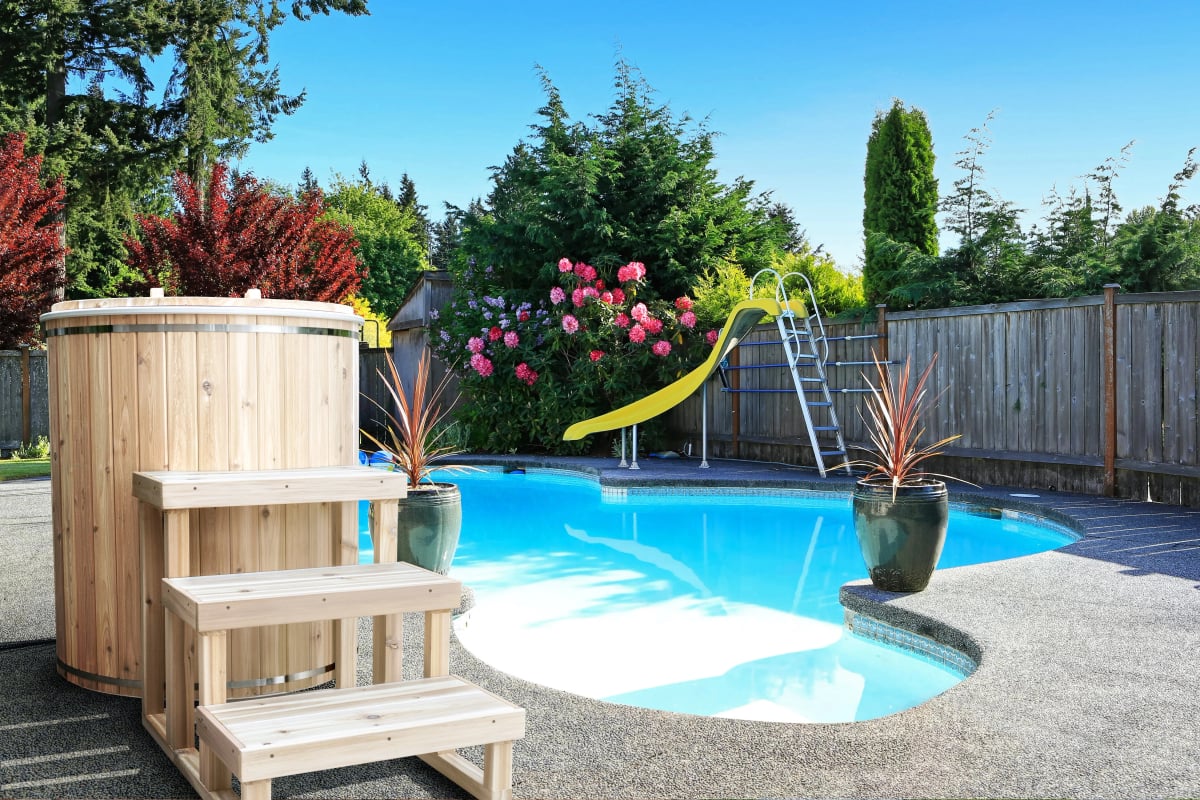
Safety standards matter when installing any water feature at home. The U.S. Consumer Product Safety Commission's pool and spa guidelines cover entrapment hazards, electrical requirements, and child safety protocols. Follow local codes for electrical installation and water drainage.
Supporting Elements
Ventilation:
- Traditional saunas need fresh air intake and exhaust
- Infrared saunas require minimal ventilation
- Basement installations must prevent moisture buildup
Lighting:
- Warm-toned LED strips (2700K)
- Dimmable controls for evening sessions
- Outdoor path lighting for safe night use
Audio:
- Bluetooth speakers rated for high heat
- Wired connections more reliable than wireless
- Consider silence as an option
For integrated home entertainment, a custom home cinema and audio specialist can design multi-room sound systems that extend to spa areas while maintaining appropriate moisture protection and acoustic quality.
Building Your Home Spa: Practical Steps
1. Assess Your Space
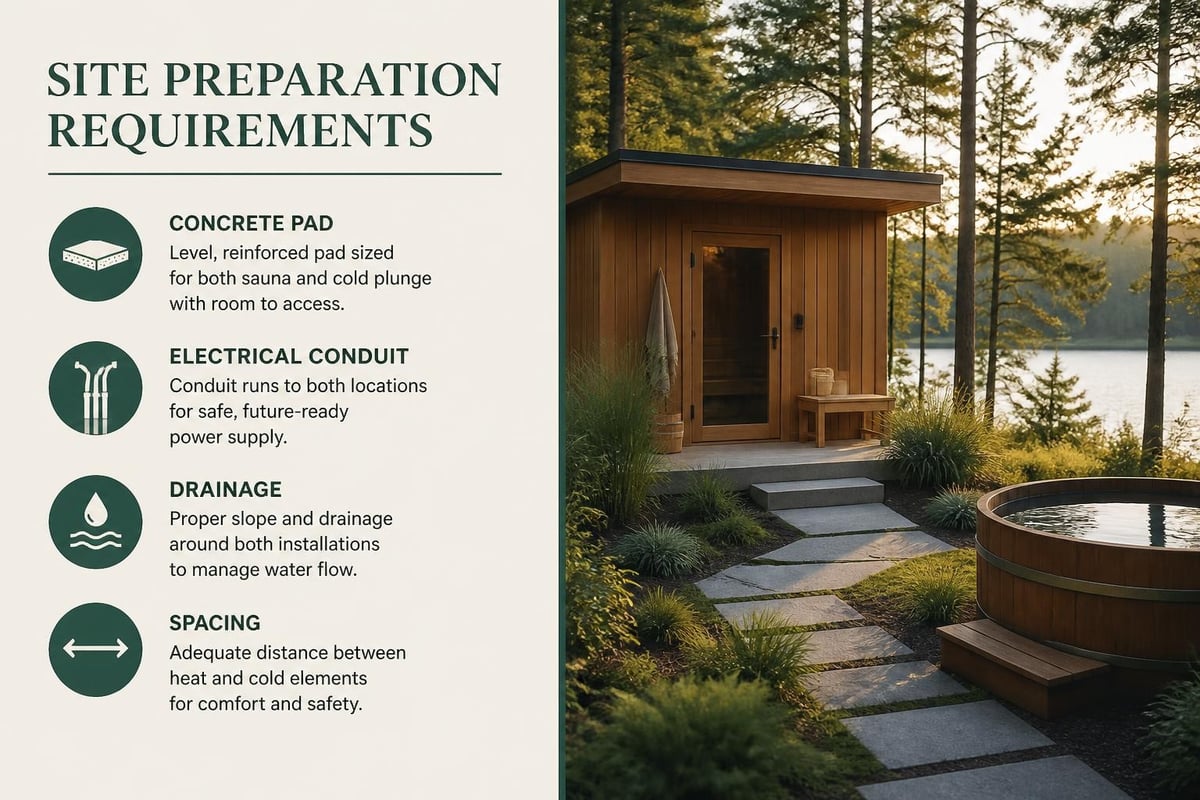
Measure available square footage. A two-person sauna requires a 4x6 foot footprint minimum. Add space for cold plunge (4x3 feet) and rest area.
Check electrical capacity. Traditional saunas need dedicated 240V circuits. Most homes built after 2000 have capacity, but older homes may require panel upgrades.
Verify drainage. Outdoor cold plunges drain to gravel beds or dry wells. Indoor setups need floor drains or sump pumps.
2. Choose Your Primary Element
Start with either sauna or cold plunge, not both simultaneously. Most people begin with a sauna and add cold water later.
Sauna-first approach:
- Establish daily heat routine
- Learn temperature preferences
- Add cold water after three to six months
Cold-first approach:
- Lower upfront cost
- Simpler installation
- Add heat source when ready
3. Plan for Year-Round Use
Cold climates actually improve home spa effectiveness. Winter air temperatures support cold exposure without ice. Summer heat makes sauna sessions shorter but more intense.
Winter considerations:
- Insulated foundation for outdoor saunas
- Heated pathways prevent ice
- Extra stone mass holds heat longer
Summer considerations:
- Shade structures reduce sun exposure
- Evening sessions more comfortable
- Cold plunge water naturally cooler
4. Install Properly or Hire Experts
Sauna kits from reputable manufacturers include detailed instructions. Most homeowners with basic carpentry skills can assemble barrel or cabin saunas over a weekend. Electrical work requires a licensed electrician.
Cold plunges vary. Plug-and-play models like fully assembled tubs arrive ready to fill. DIY conversions need plumbing knowledge and chiller installation.
Budget for professional help with:
- 240V electrical runs
- Outdoor concrete pads
- Drainage systems
- Building permits
Home Spa Design Trends in 2026
The Global Wellness Institute's architecture report identifies several design principles that apply directly to home spa spaces.
Primal architecture emphasizes natural materials, unfinished textures, and organic shapes. Cedar saunas align naturally with this approach. Stone, wood, and metal elements create sensory richness without requiring decoration.
Circadian lighting supports the body's natural rhythms. Warm light in evening spa sessions signals wind-down time. Avoid blue-spectrum LEDs after sunset.
Neuroarchitecture considers how spaces affect mental states. Simple, uncluttered spa areas reduce cognitive load. The absence of screens, mirrors, and complex surfaces helps shift toward rest.
The Living Etc. home wellness trends report emphasizes tech-free zones and sensory-friendly design. A home spa naturally becomes a screen-free space, a rare environment in 2026 homes.
Scent and Aromatherapy
Steam from water on hot stones carries subtle wood aromas from cedar benches and walls. Some people add essential oils to water buckets, though this requires caution.
The National Cancer Institute's aromatherapy overview notes that while certain scents may promote relaxation, quality standards vary widely. Use only sauna-safe oils in very dilute concentrations. Never apply oils directly to hot stones, as they can ignite or damage heater elements.
Eucalyptus and birch are traditional choices in Nordic saunas. A small amount in water produces gentle fragrance. Stronger scents overpower the experience.
A Note from Eastern Finland
I grew up on Lake Saimaa in Eastern Finland, where sauna was not a wellness amenity but a basic part of life. We heated the sauna three times a week year-round. After each session, we walked down to the lake. In winter, we broke ice to reach water. That cycle taught me more about recovery than any research paper. The body knows what to do when you give it real heat, real cold, and time to rest between.
Common Home Spa Questions
How often should I use a home spa? Three to four times per week shows consistent benefits in most research. Daily use works for some people. Less than twice weekly provides limited adaptation. Listen to your recovery needs rather than following rigid schedules.
Do I need both sauna and cold plunge? No. Each element offers value alone. Combining them provides stronger contrast effects, but starting with one and adding the other later works well. Most people begin with a sauna.
What maintenance does a home spa require? Traditional saunas need minimal care. Wipe benches monthly, check heater stones yearly, ensure proper ventilation. Cold plunges require regular water changes or filtration system maintenance. Budget 2-4 hours monthly for upkeep.
Can I build a home spa in a small yard? Yes. A barrel sauna occupies a 6x8 foot footprint. A compact cold plunge fits in 4x3 feet. Total space with pathways requires roughly 150 square feet. Check local setback requirements before building.
How long until I see results from regular use? Most people notice improved sleep quality within two weeks. Muscle recovery effects appear after four to six weeks of consistent use. Cardiovascular adaptations develop over months. Research shows associations, not guarantees.
Making Your Decision
A functional home spa requires less space and lower investment than most people expect. The essential elements are simple: heat source, cold source, rest area. Everything else is refinement.
Start with your available space and electrical capacity. Outdoor builds suit most northern properties. Indoor setups work for urban homes or basement conversions. Choose quality equipment sized correctly for your space. Plan for year-round use rather than seasonal amenity.
The pattern matters more than the equipment. Heat followed by cold, repeated over time, with rest between rounds. That is the practice Finns developed over two thousand years. The specific sauna model or plunge design matters less than consistent use.
Building a home spa means creating dedicated space for heat and cold therapy in your own property. The essential elements are straightforward: properly sized sauna, cold water immersion, and rest area. Whether you start with an outdoor traditional sauna or an indoor infrared model, the key is matching equipment to your space and using it consistently. At RecoSauna, I answer every question personally and help you choose equipment that fits your property, climate, and recovery needs. Free shipping across the USA and Canada. Ask Petri About Your Sauna.
Share:
Backyard Spa Design: How to Plan Your Home Wellness Space
Athlete Recovery Room: Setup Guide for Home Training