
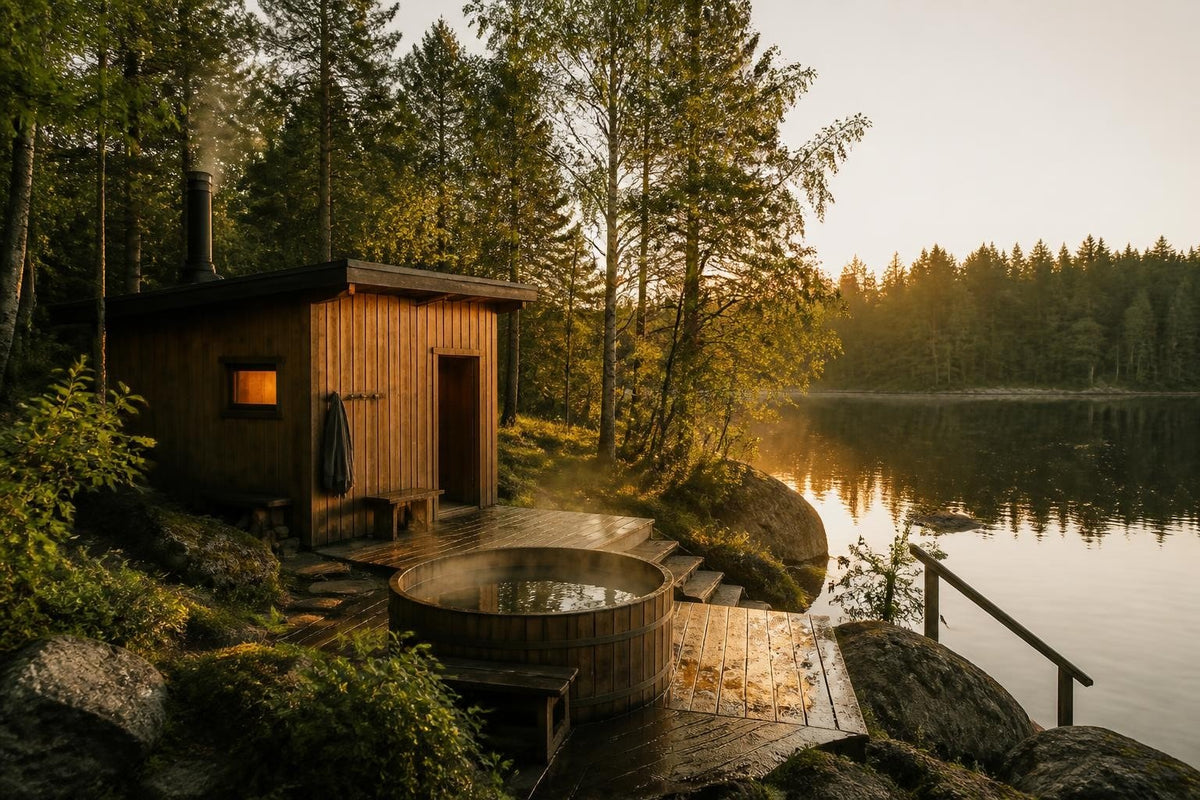
The cold plunge after sauna is not optional in Finnish practice. It's the second half of a cycle that has remained unchanged for 2,000 years. Heat opens the vessels, cold closes them. The body shifts between extremes, and in that shift, the nervous system resets. This is contrast therapy as it was practiced long before it received that name.
The question is not whether to plunge, but how to do it safely and effectively at home. Temperature, timing, and sequence matter. Guessing creates discomfort. Understanding creates clarity.
Why Cold Plunge After Sauna Works
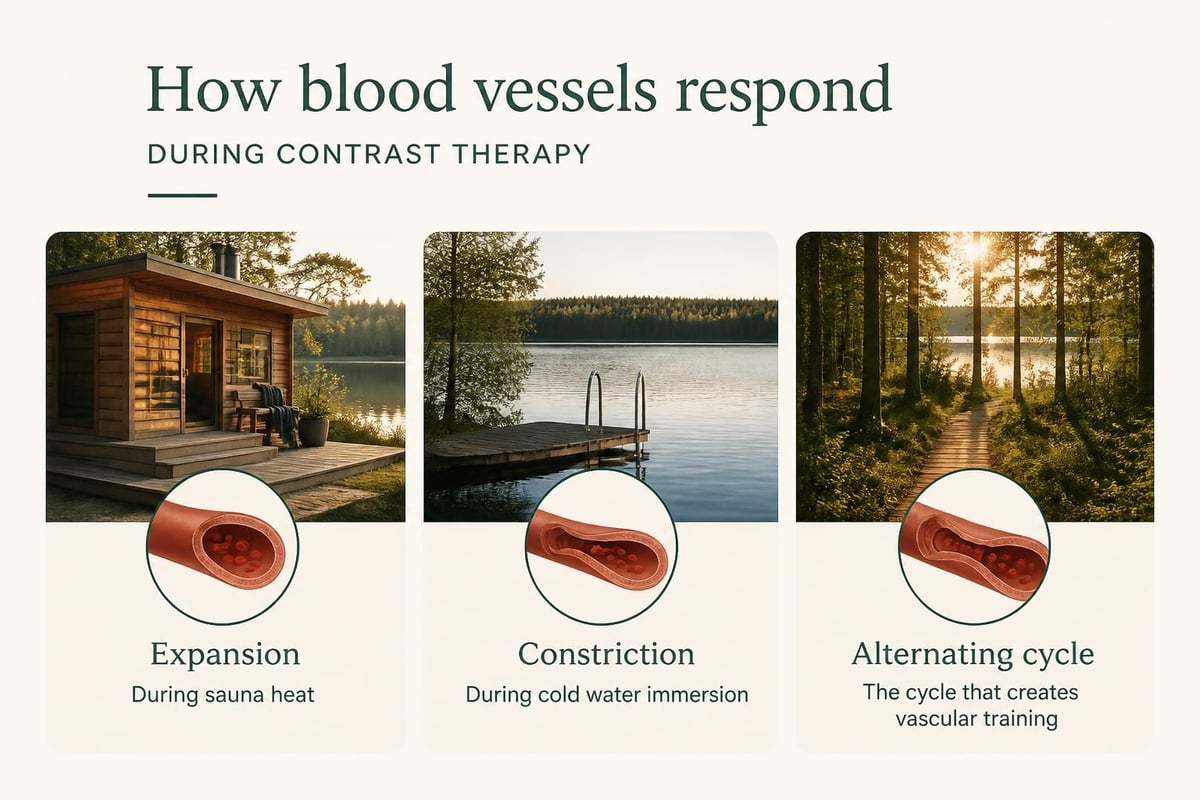
A cold plunge after sauna creates vascular exercise. The heat expands blood vessels. Cold contracts them. This alternation appears to support circulation and recovery, though research shows association, not proof.
Finnish tradition places the cold plunge immediately after heat. You step from the sauna, towel off briefly, and enter cold water. The contrast is sharpest when the body is warmest. Waiting too long reduces the effect.
Studies on cold plunge benefits note improved vascular reactivity and reduced muscle soreness. The autonomic nervous system responds to both heat and cold stress. Over time, regular exposure may build resilience to everyday stressors. The research is limited but growing.
The Physiological Response
When you enter cold water after sauna heat, several processes begin:
- Blood vessels constrict rapidly (vasoconstriction)
- Heart rate increases briefly, then stabilizes
- Breathing deepens and quickens
- Core temperature begins to lower
- Adrenaline and noradrenaline release
The sensation is intense but manageable. The body adapts within 30 to 60 seconds. Panic comes from fighting the cold. Calm comes from breathing through it.
Cold Plunge After Sauna: Comparison Table
Different cold exposure methods offer different experiences. Here's what matters for home use:
| Method | Temperature | Ease of Use | Year-Round |
|---|---|---|---|
| Outdoor tub (ice) | 40-55°F | Moderate | Yes |
| Outdoor tub (chiller) | 39-50°F | Easy | Yes |
| Cold shower | 50-65°F | Very easy | Yes |
| Lake or pond | 35-70°F | Seasonal | No |
A dedicated cold plunge tub offers consistent temperature and full immersion. A shower is convenient but less immersive. Natural water is ideal when available but depends on climate and season.
For beginner sauna and cold plunge routines, starting with a cold shower builds tolerance before moving to full immersion.
What to Look for in a Home Cold Plunge
If you're adding a cold plunge after sauna to your home routine, certain features matter more than others.
Tank Material and Insulation
Cedar and other woods offer natural insulation and aesthetic appeal. Stainless steel holds temperature well but requires more insulation for outdoor use. HDPE liners resist moisture and reduce maintenance.
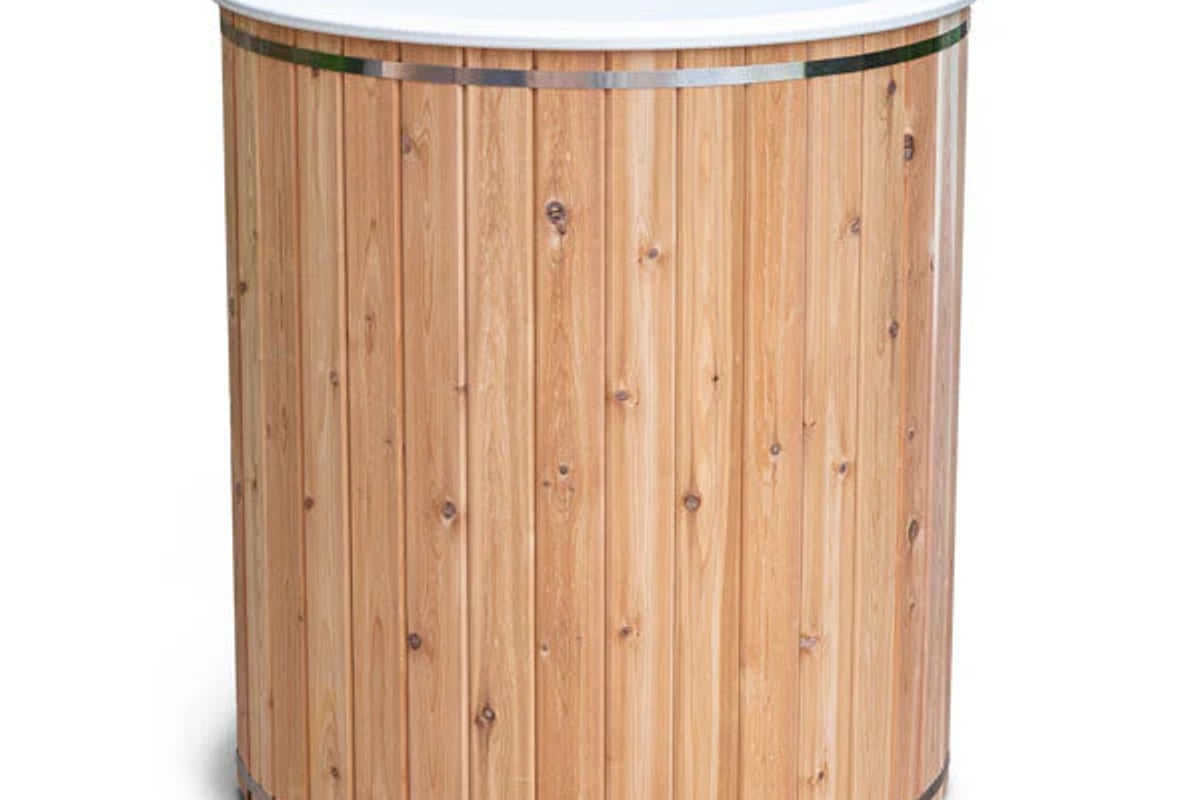
The LeisureCraft Baltic Plunge Tub combines Eastern White Cedar construction with an HDPE liner and stainless steel bands. Its 132-gallon capacity allows full-body immersion, and it works with either ice or an electric chiller depending on your preference.
Chiller or Ice
Electric chillers maintain consistent temperature automatically. You set the target temperature, and the unit runs as needed. Ice is simple but requires daily attention. Most serious users eventually add a chiller.
Chiller capacity should match tub volume. Undersized chillers struggle in warm weather. Oversized units cost more upfront but hold temperature reliably.
Drainage and Placement
Good drainage prevents standing water and simplifies water changes. Locate the plunge near your sauna but not so close that steam affects the cold water temperature.
Outdoor placement works in most climates. Insulated covers reduce heat gain in summer and prevent freezing in moderate winter conditions. Severe cold may require indoor placement or seasonal shutdown.
Temperature and Timing Guidelines
Cold plunge after sauna follows a clear sequence. Heat first, cold second. The order matters.
Start with 15 to 20 minutes in the sauna at 160 to 180°F. Allow your body to heat thoroughly. You should feel warm to the core, not just surface heat.
Step out, towel off briefly, and enter the cold water. The timing between sauna and cold plunge can be immediate or include a 30 to 60-second pause to steady your breathing. Longer delays reduce the contrast effect.
Cold Water Temperature
For cold plunge after sauna, water temperature between 45 and 55°F offers a strong but safe contrast. Colder water intensifies the experience. Warmer water (55 to 65°F) is easier for beginners but less stimulating.
Below 40°F increases risk without clear additional benefit for most users. Above 65°F reduces the cardiovascular response and feels less refreshing after sauna heat.
Duration in Cold Water
- First attempts: 30 to 60 seconds
- Regular practice: 2 to 3 minutes
- Experienced users: 3 to 5 minutes
Exit when you feel the urge to shiver. Shivering signals that core temperature is dropping too far. The goal is stimulation, not endurance. Research on mental health benefits suggests shorter, regular exposures offer more consistent mood improvements than prolonged single sessions.
How Many Rounds
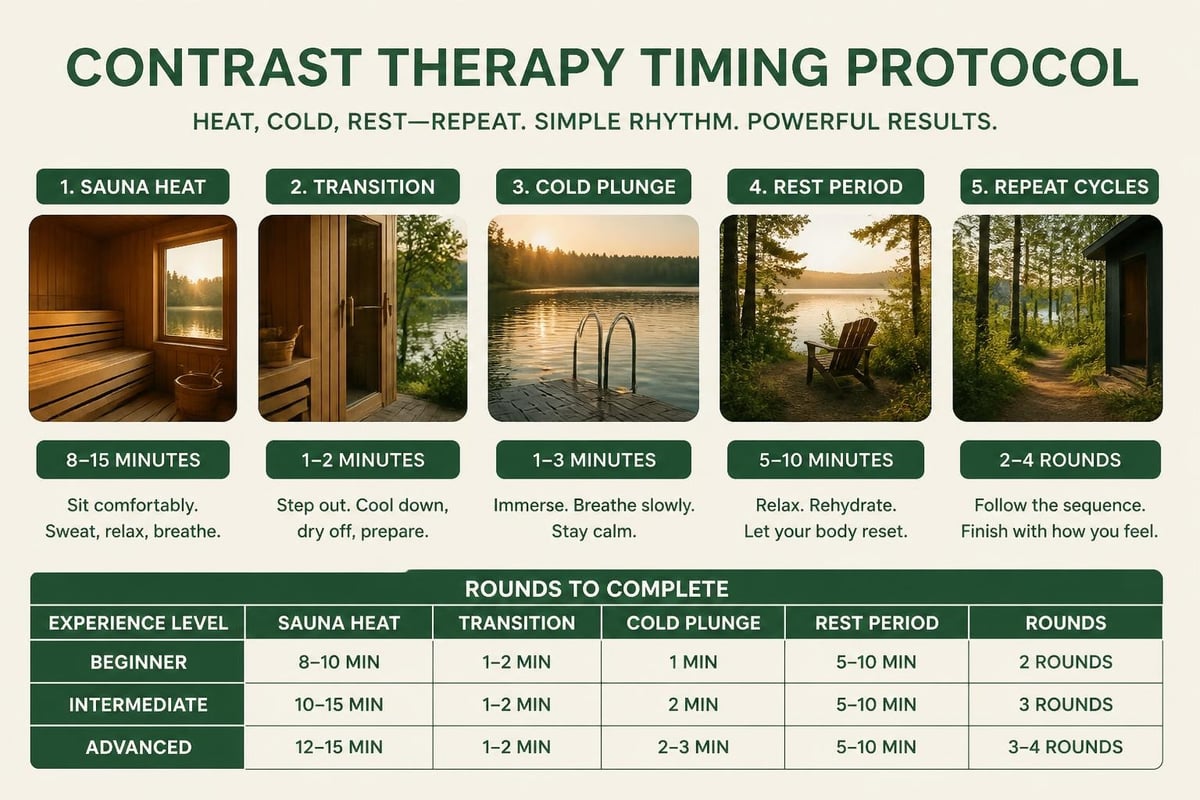
Traditional Finnish practice includes multiple rounds. Three rounds is common:
- 15 minutes sauna, 2 minutes cold, 5 minutes rest
- 15 minutes sauna, 2 minutes cold, 5 minutes rest
- 15 minutes sauna, 2 minutes cold, final rest
Each round deepens the relaxation. The first round warms the body. The second and third bring the shift from effort to recovery.
Some people prefer two rounds. Others do four or five. Listen to your body. Fatigue or lightheadedness means you've done enough.
Safety Considerations
Cold plunge after sauna is safe for most healthy adults. Certain conditions require caution or avoidance.
Consult a physician before starting if you have:
- Heart disease or irregular heartbeat
- High or low blood pressure
- Respiratory conditions
- Raynaud's disease or poor circulation
- Recent surgery or injury
Never plunge alone on your first several attempts. The shock can cause brief disorientation. Having someone nearby adds safety.
Do not plunge after alcohol. Alcohol impairs judgment and temperature regulation. The combination with extreme heat and cold increases risk significantly.
Warning Signs to Stop
Exit the cold water immediately if you experience:
- Chest pain or pressure
- Severe headache
- Numbness in extremities beyond normal cold sensation
- Confusion or difficulty speaking
- Uncontrollable shivering that doesn't stop after exiting
These symptoms are rare but serious. Most people feel invigorated, not distressed, after a proper cold plunge.
Setting Up Contrast Therapy at Home
Adding cold plunge after sauna to your home requires space, planning, and realistic expectations.
Space Requirements
A basic setup needs:
- Sauna (indoor or outdoor): 4 to 6 feet per side minimum
- Cold plunge: 3 to 5 feet diameter for round tubs, similar for rectangular
- Circulation space: 3 feet around each unit
- Drainage access: especially for the cold plunge
Total footprint ranges from 80 to 150 square feet depending on sauna size and layout. Outdoor installations offer more flexibility. Indoor setups work well in basements with proper ventilation and drainage.
Electrical Considerations
Most home saunas require 240V service. Electric sauna heaters range from 4.5 to 9 kW depending on sauna size. A qualified electrician should handle the installation. Cold plunge chillers typically run on 120V or 240V depending on capacity.
Check your home's electrical panel capacity before purchasing. Upgrading service adds cost but ensures safe operation.
Maintenance Requirements
| Component | Task | Frequency |
|---|---|---|
| Sauna | Wipe benches | After each use |
| Sauna | Clean floor | Weekly |
| Cold plunge | Change water | Every 1-2 weeks |
| Cold plunge | Clean filter | Weekly |
| Cold plunge | Sanitize interior | Monthly |
Regular maintenance prevents bacteria growth and extends equipment life. Cold water slows bacterial growth compared to warm water, but it doesn't eliminate it. Proper filtration and occasional sanitizing keep the water clean.
For those researching traditional sauna options for home use, maintenance simplicity often influences the final decision as much as initial cost.
Common Mistakes to Avoid
New users make predictable errors. Avoiding them improves the experience significantly.
Staying in cold water too long: More is not better. Two to three minutes provides the benefit. Ten minutes adds risk without clear advantage.
Skipping warmup: Jumping into cold water when your body is already cold creates discomfort without the contrast benefit. Always warm first.
Holding your breath: Breathe steadily through the initial cold shock. Holding your breath increases panic and raises blood pressure unnecessarily.
Ignoring your body: If something feels wrong, it probably is. Exit and assess. Contrast therapy should feel challenging but controlled, never dangerous.
A Note from Lake Saimaa
I grew up stepping from a wood-heated sauna into Lake Saimaa year-round. In winter, we broke ice to reach the water. In summer, the lake stayed cool even in July. The cold plunge after sauna was never optional, never questioned. It was simply what you did. That practice shaped my understanding of recovery in ways I only recognized decades later when contrast therapy became a trend. The cold plunge works because the body responds to contrast, not because science finally validated what Finns already knew.
Frequently Asked Questions
How long should I wait between sauna and cold plunge?
Most people towel off briefly and enter cold water within 30 to 60 seconds. Immediate transition maximizes the contrast effect. Longer delays are fine if you need time to steady your breathing or mentally prepare.
Can I do cold plunge before sauna?
Sauna before or after cold plunge matters. Heat first, cold second delivers better results. Starting cold reduces the body's heat capacity and makes the sauna less effective. The Finnish tradition follows heat with cold for good reason.
What if I don't have access to a cold plunge?
A cold shower works. It's less immersive but still provides temperature contrast. Gradually reduce the water temperature over several sessions until you reach the coldest setting. Even 60 to 90 seconds offers benefit.
Is a cold plunge after sauna good for muscle recovery?
Research suggests cold plunges reduce muscle soreness and may speed recovery after intense exercise. The evidence shows association, not definitive proof. Many athletes use cold exposure as part of recovery routines.
How cold should the water be?
Between 45 and 55°F works well for most people practicing cold plunge after sauna. Beginners may start warmer, at 55 to 65°F. Very cold water below 40°F increases discomfort without clear added benefit for general wellness use.
The cold plunge after sauna follows Finnish tradition because the tradition works. The sequence, temperature, and timing have been refined over centuries of daily practice. When you're ready to bring contrast therapy home, RecoSauna offers the saunas and cold plunges built for this purpose, backed by knowledge from Lake Saimaa and personal service from someone who grew up in this practice. Free shipping across the USA and Canada. Ask Petri About Your Sauna.
Share:
Best Traditional Sauna for Home (2026 Expert Buyer's Guide)
Backyard Spa Design: How to Plan Your Home Wellness Space