
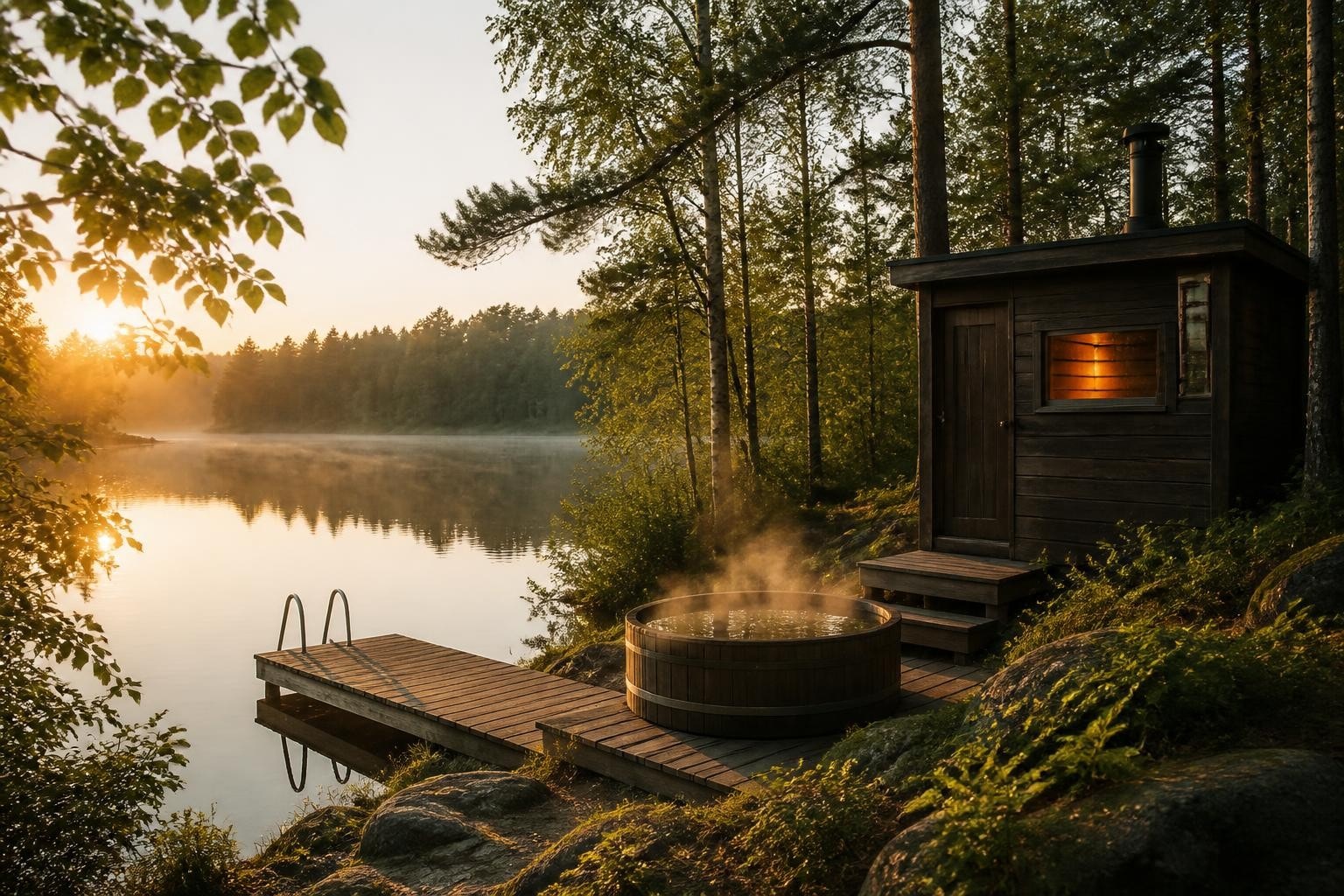
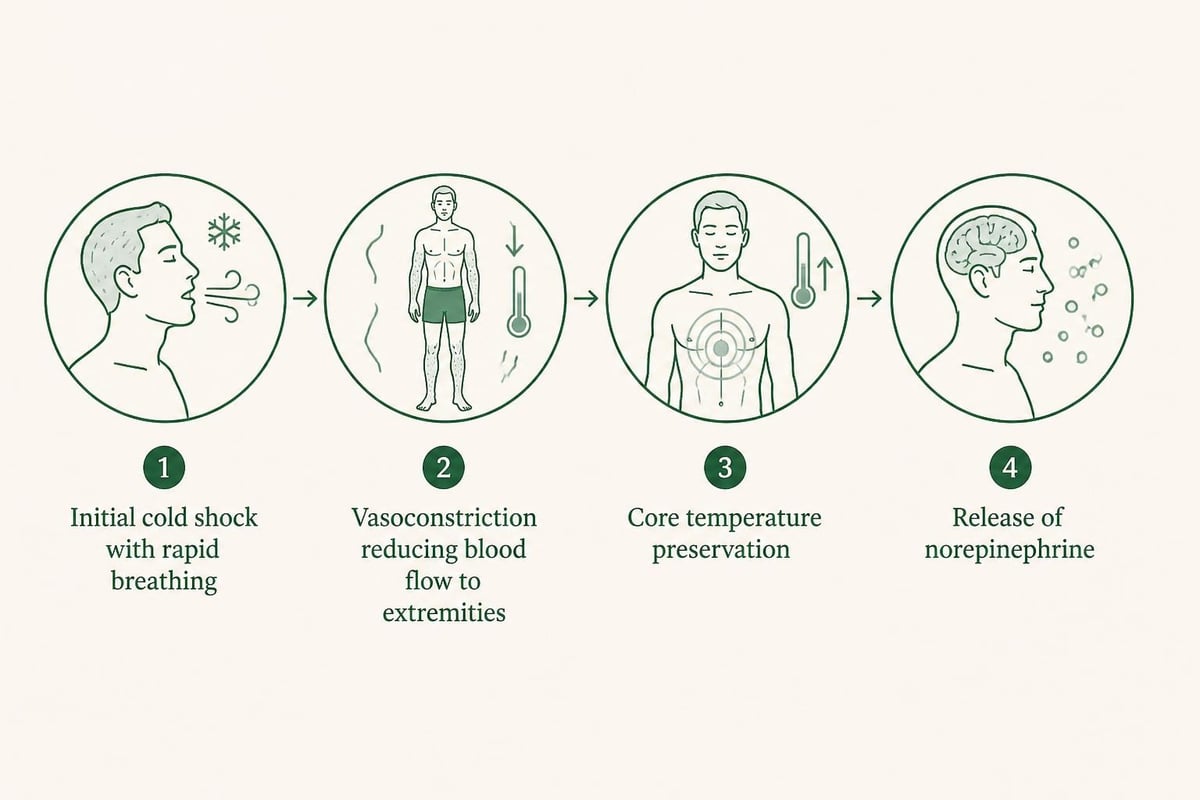
Cold water has been part of Northern bathing culture for thousands of years. In Finland, we stepped from the sauna into the lake year-round, including through ice holes in winter. Today that practice is called cold plunge therapy. The method is simple: immerse your body in cold water, typically between 39°F and 59°F, for a controlled period. The response is immediate and measurable. Your blood vessels constrict, your breathing shifts, and your body activates a series of adaptive mechanisms that researchers continue to study.
What Is a Cold Plunge
A cold plunge is deliberate immersion in cold water for therapeutic purposes. The practice differs from a quick cold shower or accidental cold exposure.
The water temperature typically ranges from 39°F to 59°F. Colder is not automatically better. Duration matters more than extreme temperature. Most practitioners stay submerged between 30 seconds and 10 minutes.
Forms of Cold Plunge Practice
- Natural water: lakes, rivers, ocean (temperature varies by season and location)
- Ice baths: tub or container filled with ice and water
- Cold plunge tubs: dedicated vessels with or without chilling systems
- Contrast therapy: alternating between sauna heat and cold water
Research on cold exposure extends back decades, but recent interest has accelerated study into specific mechanisms. Studies reviewed by Harvard Health examine inflammation markers, metabolic responses, and cardiovascular adaptation.
Potential Benefits Supported by Research
The health claims around cold plunge vary widely in quality. Some associations appear in multiple studies. Others remain speculative.
Documented Associations
Muscle recovery and inflammation
Cold water immersion after intense exercise shows association with reduced muscle soreness in several studies. The mechanism appears related to reduced blood flow and metabolic activity in tissues. WebMD notes that athletes have used ice baths for recovery for decades, though optimal timing and duration remain debated.
Mood and stress response
Cold exposure triggers norepinephrine release, a neurotransmitter linked to focus and alertness. Some research shows association between regular cold exposure and improved mood markers. The Atlantic's critical examination of cold plunging distinguishes between physiological response and claimed mental health benefits.
Cardiovascular adaptation
Repeated cold exposure appears to improve cold tolerance and may influence heart rate variability. Cleveland Clinic explains that cold water causes immediate cardiovascular stress, which may strengthen adaptation over time in healthy individuals.
| Claimed Benefit | Research Status | Certainty Level |
|---|---|---|
| Muscle soreness reduction | Multiple studies show association | Moderate |
| Improved mood | Some evidence, mechanisms unclear | Low to Moderate |
| Enhanced immunity | Limited human studies | Low |
| Fat loss | Animal studies, limited human data | Very Low |
| Longevity | No direct evidence | None |
The research shows what happens during cold exposure. It does not prove long-term health outcomes. Association is not causation.
Real Risks and Contraindications
Cold water creates immediate physiological stress. For some people, that stress is dangerous.
Medical Risks
The cold shock response triggers rapid breathing and increased heart rate. Harvard Health warns that individuals with heart conditions face elevated risk during cold immersion. The initial gasp reflex can cause hyperventilation.
Who should avoid cold plunge:
- People with cardiovascular disease
- Those with uncontrolled high blood pressure
- Anyone with Raynaud's syndrome
- Pregnant women (consult physician first)
- Individuals with cold urticaria (allergic reaction to cold)
Hypothermia becomes a risk with prolonged exposure or very cold temperatures. Water conducts heat away from the body 25 times faster than air. Even in 50°F water, core temperature can drop dangerously after 15-20 minutes.
Practical Safety Concerns
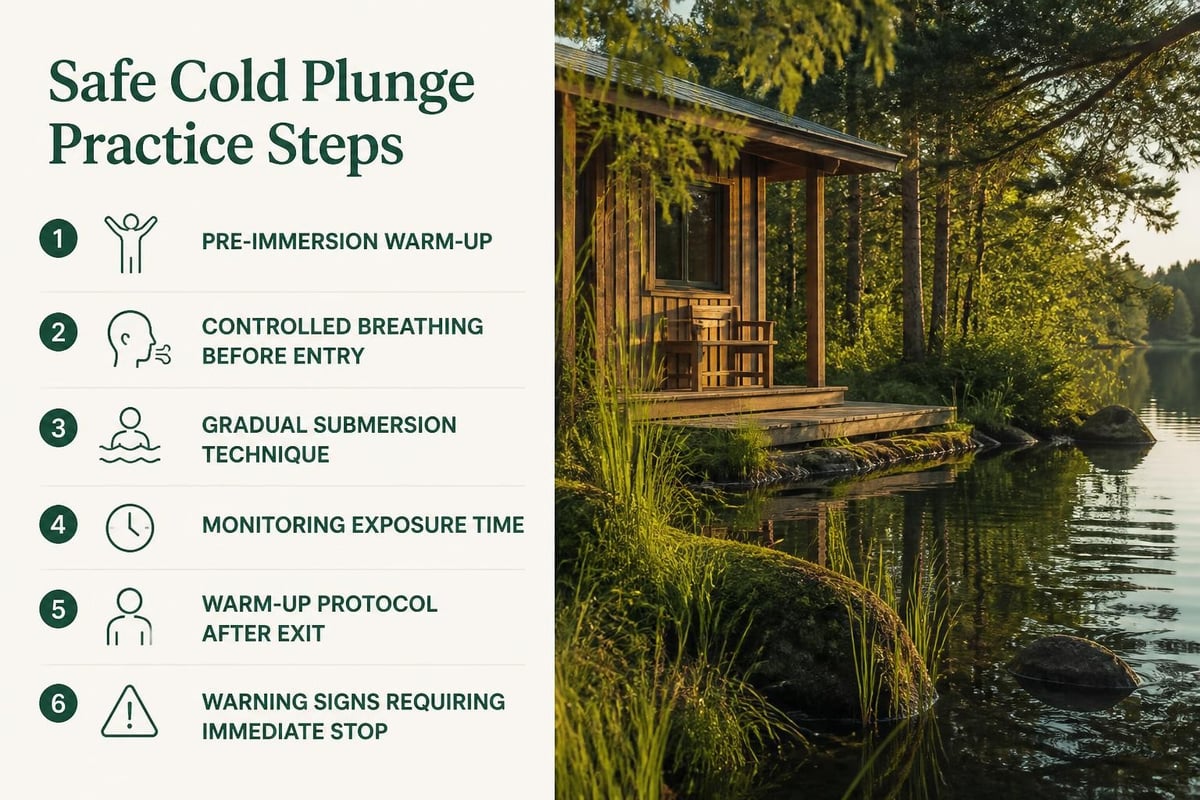
Never plunge alone, especially outdoors or in natural water. Drowning risk increases if you lose consciousness or experience muscle cramping.
Start with brief exposures. Your first plunge should be 30 seconds, not 5 minutes. Build tolerance gradually over weeks and months.
Exit immediately if you experience:
- Severe shivering
- Numbness in extremities
- Confusion or difficulty thinking
- Chest pain or irregular heartbeat
Choosing Between Cold Plunge Options
The equipment you choose depends on space, budget, climate, and how you plan to use cold therapy.
Tub and Ice Method
The simplest approach uses a standard bathtub or stock tank with ice. You fill the vessel, add ice, monitor temperature, and drain after use.
Advantages:
- Low initial cost
- Works in any space with water access
- No maintenance beyond cleaning
Limitations:
- Requires purchasing ice regularly
- Temperature control is imprecise
- Preparation time before each use
- No filtration system
This method works for experimentation. It becomes impractical for daily use.
Dedicated Plunge Tub Without Chiller
A cedar or acrylic tub designed for cold therapy offers better insulation and ergonomics than a standard tub. You still add ice or cold water manually, but the vessel retains cold temperature longer.
The LeisureCraft Baltic Plunge Tub features Eastern White Cedar construction with HDPE liner and 132-gallon capacity for full-body immersion. The natural cedar exterior fits beside an outdoor sauna, creating a complete contrast therapy setup without requiring a chiller.
When this works:
- You live in a cold climate where tap water stays naturally cold
- Winter is your primary plunge season
- You have outdoor placement near a hose
- You want simplicity without ongoing electricity costs
Cold Plunge with Integrated Chiller
A complete system with built-in refrigeration maintains target temperature year-round without ice. Water circulates through a filtration and chilling unit.
Key specifications to compare:
| Feature | What to Look For | Why It Matters |
|---|---|---|
| Cooling capacity | BTU rating sufficient for tub volume | Determines temperature recovery speed |
| Filtration | Micron rating, flow rate | Affects water clarity and maintenance |
| Insulation | Foam thickness, material | Energy efficiency in warm climates |
| Material | Cedar, acrylic, stainless steel | Durability, aesthetics, upkeep |
| Power | 120V vs 240V | Installation complexity, operating cost |
A chiller system eliminates preparation time. You set a temperature and step in whenever you want. The cost difference is substantial, both initial and ongoing electricity.
Practical Integration with Sauna
Contrast therapy, alternating between heat and cold, appears throughout cultures that developed bathing traditions. In Finland, we never called it therapy. It was simply how you used a sauna.
The sequence matters. Heat first, then cold. The sauna session warms your core and opens blood vessels. The cold plunge constricts them. This cycle repeats two or three times, ending with cold.
Placement Considerations for Home Setup
Distance between sauna and plunge:
Close proximity (within 10-15 feet) maintains the temperature contrast. Too far, and you cool down during the walk.
Outdoor placement:
Year-round access requires clearing snow and maintaining safe walking paths. Non-slip surfaces become critical in winter. Consider lighting for evening use.
Indoor placement:
Requires adequate ventilation, waterproof flooring, and drainage. A basement location works if you can manage humidity and water runoff.
| Climate Zone | Recommended Setup | Seasonal Considerations |
|---|---|---|
| Northern (Minnesota, Wisconsin, Alberta) | Outdoor tub without chiller, use natural cold | Water may freeze solid; requires draining or heating |
| Moderate (Pacific Northwest, Northeast) | Outdoor tub, optional chiller | Tap water cold enough 6-9 months |
| Warm (Southern states) | Chiller required year-round | Tap water rarely below 65°F |
I grew up on Lake Saimaa in Eastern Finland, where our sauna sat 20 steps from the water. After löyly, the steam from water on the stones, we walked to the lake. In winter, we kept an ice hole open. The distance from heat to cold was just long enough to feel the night air, short enough that the cold remained shocking. That pattern shaped how I think about placement. The transition should feel immediate, not planned.
How to Start Cold Plunge Practice
Begin conservatively. Your body needs time to adapt to cold stress.
First Month Protocol
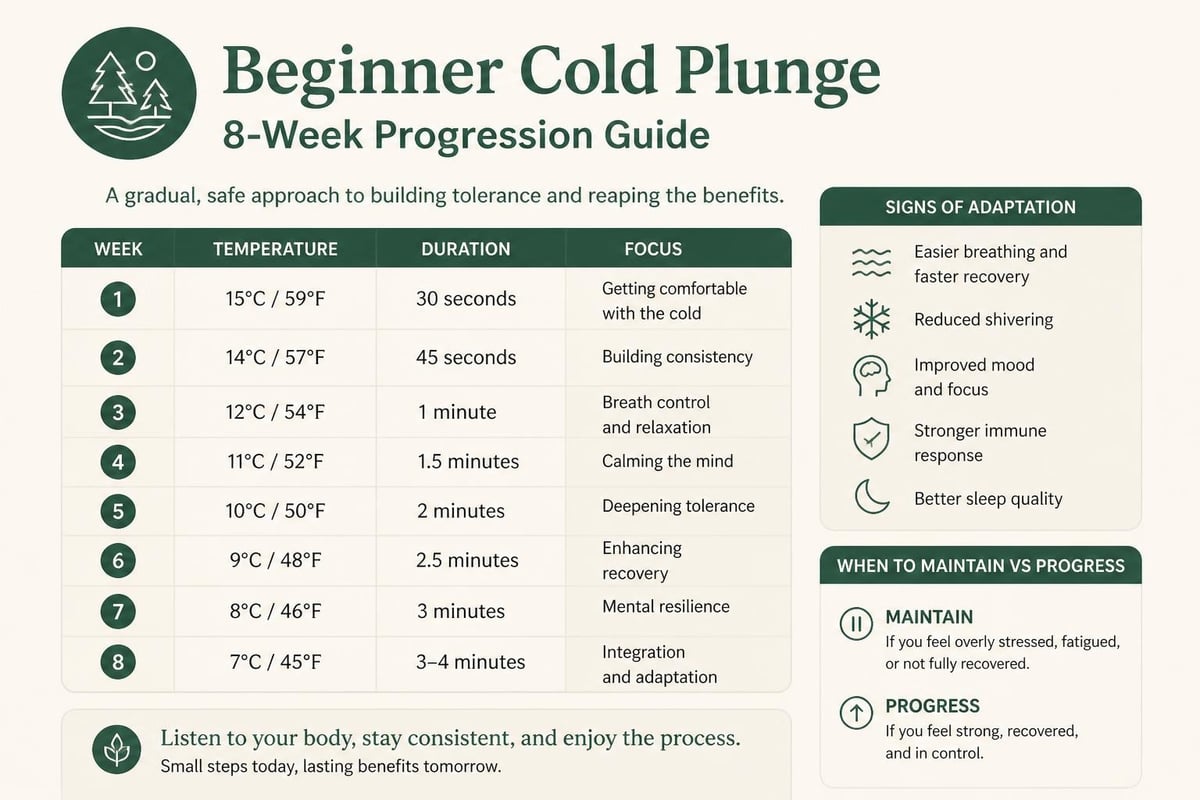
- Week one: 30 seconds in 60°F water after your shower
- Week two: 45 seconds in 55-60°F water
- Week three: 1 minute in 50-55°F water
- Week four: 90 seconds to 2 minutes
Focus on controlled breathing before you enter. Four-count inhale, hold briefly, six-count exhale. Repeat three times standing at the edge.
Enter gradually. Step in rather than jump. Submerge to your waist first, then chest, then shoulders. Keep your hands out of the water initially. They are extremely sensitive to cold.
Building Consistency
Daily practice shows more consistent results than occasional longer sessions. Two minutes every morning appears more effective than ten minutes twice weekly for most people.
TIME's exploration of cold exposure notes that even cold showers trigger similar physiological responses, though full immersion provides stronger stimulus.
Track your tolerance. Notice when 50°F water that felt unbearable in week two becomes manageable in week six. That adaptation is real and measurable.
Common Questions About Cold Plunge
How cold should the water be?
Start at 60°F. Most experienced users settle between 45°F and 55°F. Colder than 40°F increases risk without clear additional benefit.
How long should I stay in?
Begin with 30 seconds. Build to 2-3 minutes over several weeks. Beyond 10 minutes, risk increases substantially without clear advantage.
Should I plunge before or after sauna?
Heat first, then cold. This follows the traditional pattern and allows your body to warm fully before cold exposure. Research on cold water immersion suggests the sequence may influence the physiological response.
Can I do cold plunge without a sauna?
Yes. Cold plunge works as a standalone practice. The sauna adds the contrast element and the heat stress, but cold immersion alone triggers the cold adaptation response.
What should I do immediately after getting out?
Dry off gently. Put on warm, dry clothes. Allow your body to rewarm naturally. Avoid jumping into a hot shower immediately, which can cause dizziness as your blood pressure adjusts.
Maintenance and Water Quality
A dedicated cold plunge requires regular attention to water chemistry and cleanliness.
Without a Chiller System
Drain and refill after each use or every few days, depending on use frequency. Clean the tub interior weekly with mild soap. Rinse thoroughly.
Monitor for algae or biofilm, especially in warm weather. Empty standing water that won't be used within 48 hours.
With Filtration and Chiller
Follow a simplified pool maintenance approach:
- Test pH weekly (target 7.2-7.6)
- Add sanitizer (chlorine or bromine) as needed
- Run filtration 4-8 hours daily
- Drain and deep clean monthly
- Replace filter cartridge every 3-6 months
Outdoor installations in freezing climates require either draining for winter or maintaining water temperature above freezing, which defeats the cold plunge purpose. Most users drain from November through March in northern regions.
Integration into Daily Routine
Consistency matters more than duration. The physiological adaptation to cold comes from repeated exposure, not single extreme sessions.
Morning routine:
Many people prefer cold plunge first thing after waking. The alertness response helps start the day. If you have a home sauna, a morning session of heat followed by cold takes 30-40 minutes total.
Post-workout:
Cold immersion after training shows association with reduced muscle soreness. Timing varies by training type. Some athletes plunge immediately after, others wait 2-4 hours.
Evening use:
Cold exposure raises alertness, which may interfere with sleep if done too close to bedtime. If you plunge in the evening, allow at least 2-3 hours before sleep.
Seasonal patterns change how cold plunge fits into your day. In winter, outdoor cold plunge requires more preparation and warmer clothing nearby. In summer, it becomes the easiest part of the routine.
The practice becomes automatic after several months. You stop thinking about whether to plunge. You just do it. That automaticity separates experimental interest from integrated habit.
Cold plunge practice requires realistic expectations, gradual progression, and attention to safety. The research shows real physiological responses, though long-term health claims often exceed current evidence. Whether you start with a simple tub and ice or invest in a complete system, the approach remains the same: controlled exposure, consistent practice, careful monitoring. RecoSauna brings Finnish sauna and cold plunge traditions to North America through carefully selected equipment built for lasting quality. Ask Petri About Your Sauna and cold plunge questions directly.
Share:
The Hot Box Sauna: What It Is and How It Compares
Wood Sauna: Types, Selection & What You Need to Know