
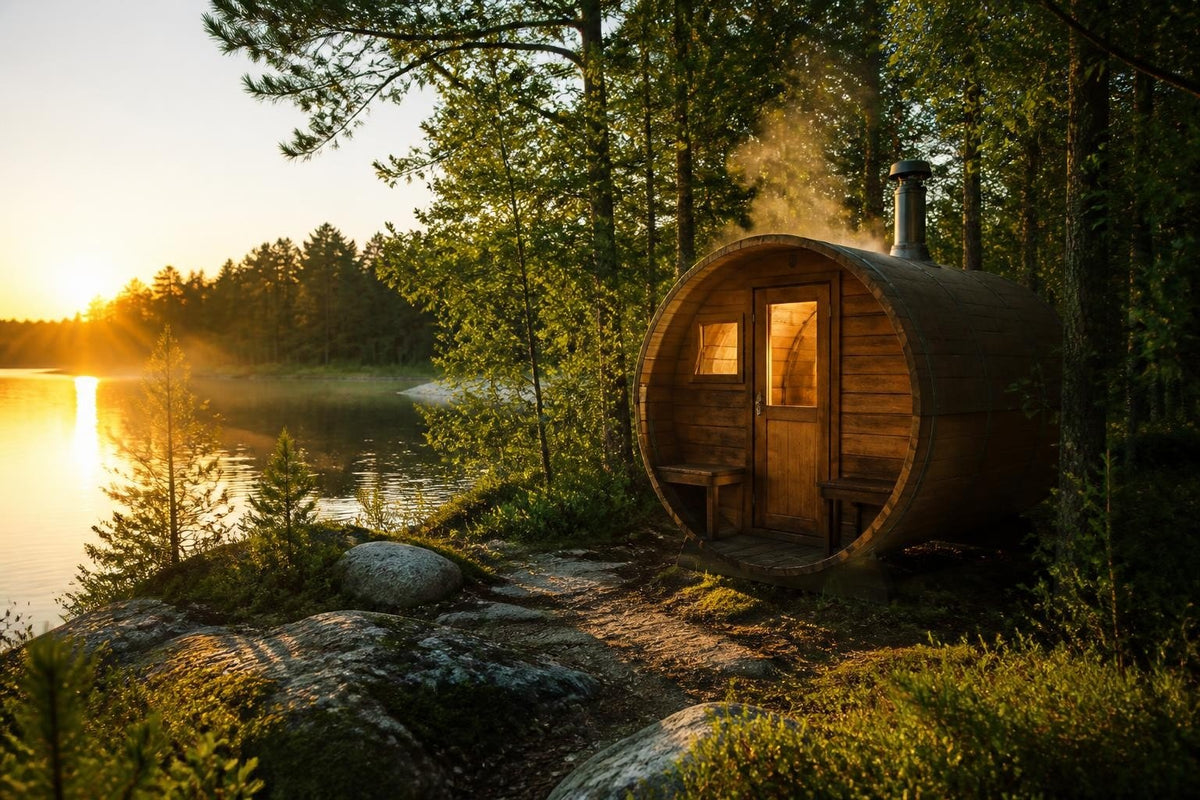
A wood barrel sauna is a cylindrical outdoor sauna built from curved planks that form a round or oval structure held together by tension bands. The circular shape creates faster heat circulation and better energy efficiency than rectangular cabin designs. Most barrel saunas stand on a level base, use Eastern White Cedar or Thermo-treated wood, and accommodate 2 to 6 people depending on diameter and length.
Why Round Design Changes How Heat Moves
The barrel shape forces hot air to move in a natural rotation. Heat rises along the curved walls, spreads across the arched ceiling, and settles evenly around seated bathers. No corners trap cold air. No flat ceiling creates hot spots above your head.
This circular flow means a barrel typically reaches bathing temperature 15 to 25 minutes faster than a square cabin of the same volume. Less wall surface area reduces heat loss. The geometry itself acts as insulation.
Physical Properties of Barrel Construction
| Feature | Barrel Sauna | Square Cabin Sauna |
|---|---|---|
| Heat rise time | 15-25 min | 30-45 min |
| Wall surface area | Lower (circular) | Higher (flat planes) |
| Air circulation | Rotational flow | Corner stagnation |
The round walls also shed rain and snow naturally. Water runs off instead of pooling on flat roofs or seeping into corner joints. This matters in climates with heavy winter precipitation.
Wood Species and Their Maintenance Requirements
Eastern White Cedar dominates the North American barrel market. The wood contains natural oils that resist rot and insect damage without chemical treatment. Grain structure stays stable through repeated heating and cooling cycles.
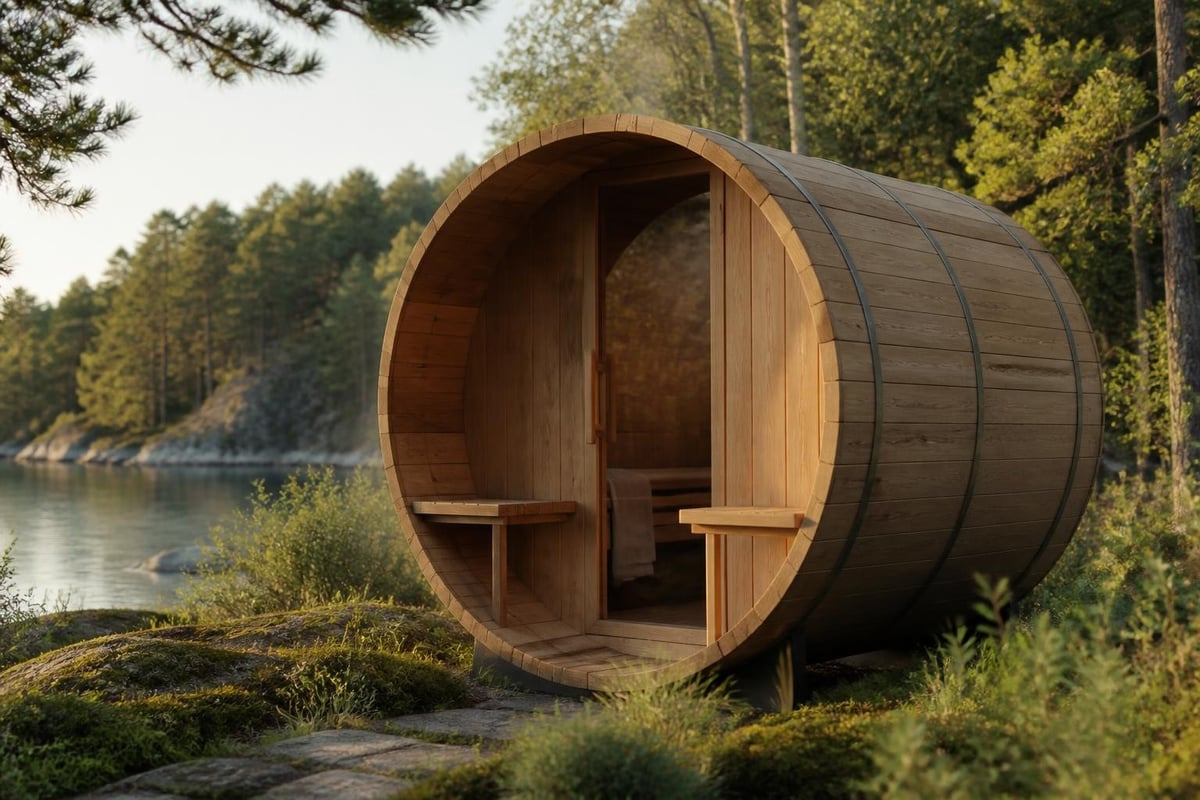
Cedar also produces a mild, pleasant aroma when heated. Not overpowering, just noticeable in the first few minutes of a session. Some builders use Nordic Spruce or Thermo-treated wood for different performance characteristics.
Thermo-treatment heats wood above 180°C in a controlled oxygen environment. The process changes the wood's cellular structure, reducing moisture absorption by 40 to 60 percent compared to untreated planks. Darker color, more dimensional stability, but also slightly more brittle.
Common Wood Choices
- Eastern White Cedar: Natural rot resistance, pleasant scent, requires annual oiling
- Thermo-treated wood: Reduced moisture movement, darker tone, less maintenance
- Nordic Spruce: Lighter weight, tighter grain, more common in European models
Cedar needs exterior oil every 12 to 18 months in most climates. Skip this, and UV radiation breaks down surface fibers. The wood turns gray, then silver, then starts to check and crack. Interior surfaces rarely need treatment since heat and löyly keep them dry between sessions.
Heater Sizing for Cylindrical Spaces
A wood barrel sauna requires careful heater selection because round spaces distribute heat differently than square rooms. Calculate interior volume in cubic meters, then choose a heater rated for 1.5 times that volume. The extra capacity compensates for faster air movement and heat loss through the curved shell.
Most barrels between 1.8 and 2.4 meters in diameter work well with a 6 to 9 kW electric heater. Smaller pods may only need 4.5 kW. Larger family models sometimes require 10.5 kW or dual heaters.
Stone mass matters more than heater power. A heater with 20 kg of stones holds more thermal energy than one with 12 kg, even if both produce the same wattage. More stone means softer, longer-lasting löyly and gentler heat waves after you throw water.
Heater Specifications by Barrel Size
| Barrel Diameter | Interior Volume | Heater Power | Stone Mass |
|---|---|---|---|
| 1.8 m | 4-5 m³ | 4.5-6 kW | 15-20 kg |
| 2.1 m | 6-8 m³ | 6-9 kW | 20-30 kg |
| 2.4 m | 9-12 m³ | 9-10.5 kW | 30-40 kg |
Electric heaters dominate the North American market because installation stays simple and municipalities rarely restrict them. Wood-fired heaters require chimney planning, spark arrestors, and sometimes building permits. They produce excellent löyly but demand more skill to maintain consistent temperature.
Assembly and Foundation Preparation
A wood barrel sauna ships as a kit with pre-cut planks, bands, hardware, and assembly instructions. Most manufacturers design these kits for two-person installation over a weekend. You need basic hand tools, a level surface, and patience.
The foundation must be perfectly level and capable of supporting 400 to 800 kg depending on model size. Common options include a concrete pad, paver base, or wooden deck with proper joist spacing. Gravel alone works only if you build a level frame on top.
Installation steps:
- Build or prepare level foundation with drainage
- Assemble floor section and attach first wall planks
- Work around the circle, tongue-and-groove joints locked
- Install bands loosely, tighten gradually as structure forms
- Add roof planks, door frame, and glass door
- Mount heater, benches, and ventilation
- Final band tensioning after 24 hours
The bands need attention. They hold everything together but must allow the wood to expand and contract with humidity changes. Too tight, and planks crack. Too loose, and gaps open between joints.
Check band tension every three months for the first year. Wood settles as it acclimates to your local humidity. After that, twice-yearly checks usually suffice. Use a socket wrench, turn each nut a quarter turn at a time, work around the barrel evenly.
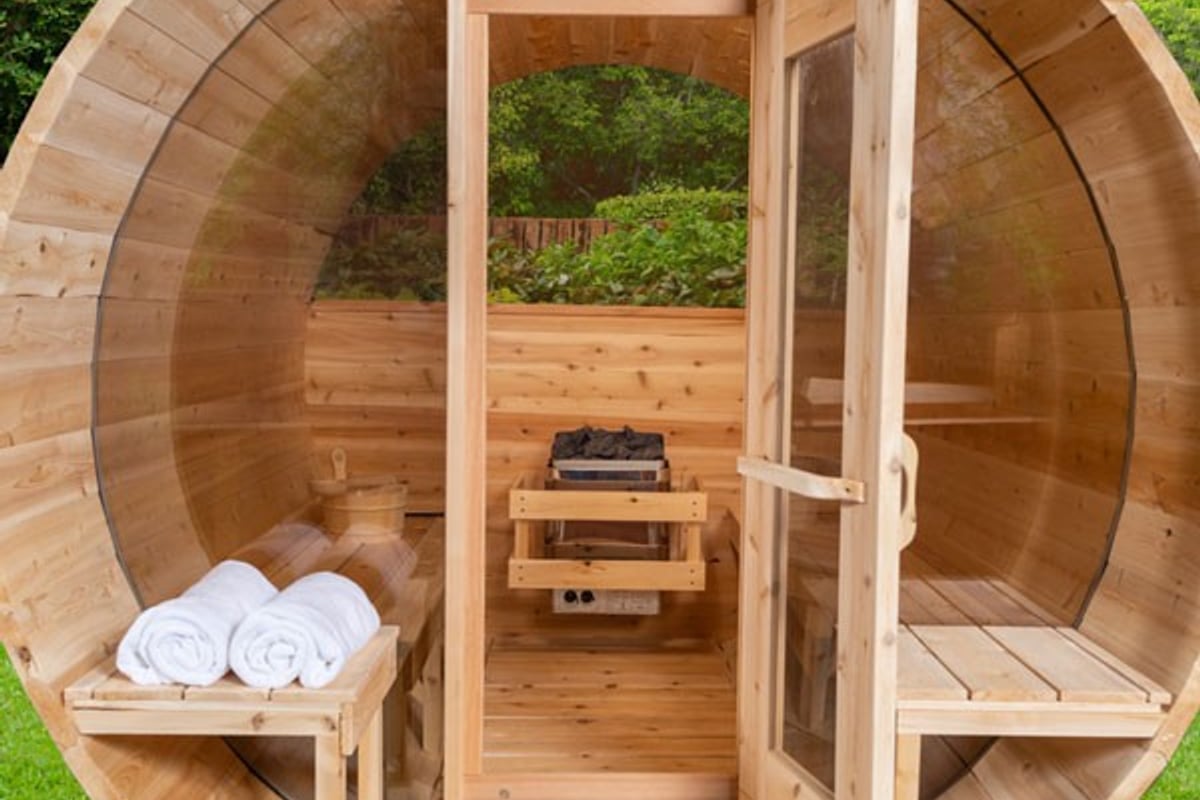
If you want a barrel sauna that combines Eastern White Cedar construction with straightforward electric heating and minimal ongoing care, the Canadian Timber Serenity MP Barrel Sauna offers a welcoming cedar interior and tempered glass door in a kit-form design built for regular backyard use.
Ventilation in Curved Spaces
Proper airflow prevents moisture buildup and delivers fresh oxygen during sessions. A barrel needs an intake vent near the floor below or beside the heater, plus an exhaust vent on the opposite wall at ceiling height. This creates cross-flow ventilation that pulls cool air in, heats it, circulates it past bathers, and expels it at the top.
Many builders place a small adjustable vent in the door. This gives you control during the session. Close it for hotter, more humid conditions. Open it slightly when you want crisper air or faster cooldown after bathing.
The round shape helps here too. Air doesn't stagnate in corners because there are no corners. The natural rotation keeps oxygen moving even with minimal vent openings.
Maintenance Tasks That Actually Matter
A wood barrel sauna lasts 15 to 25 years with consistent care. Most failures trace to skipped maintenance, not design flaws. The tasks divide into routine and seasonal categories.
Routine maintenance (after each use):
- Leave door open until interior dries completely
- Sweep floor and benches
- Check drain if your model includes one
- Wipe down glass door to prevent mineral deposits
Seasonal maintenance:
- Oil exterior wood annually before winter
- Tighten bands as needed, especially after humidity swings
- Inspect roof for debris or moss accumulation
- Check heater stones for cracks or deterioration
- Clean ventilation screens
The bands require the most attention. Regular band tension checks prevent gaps between planks and extend structural life significantly. Some owners mark each band position with a pencil so they can spot movement between inspections.
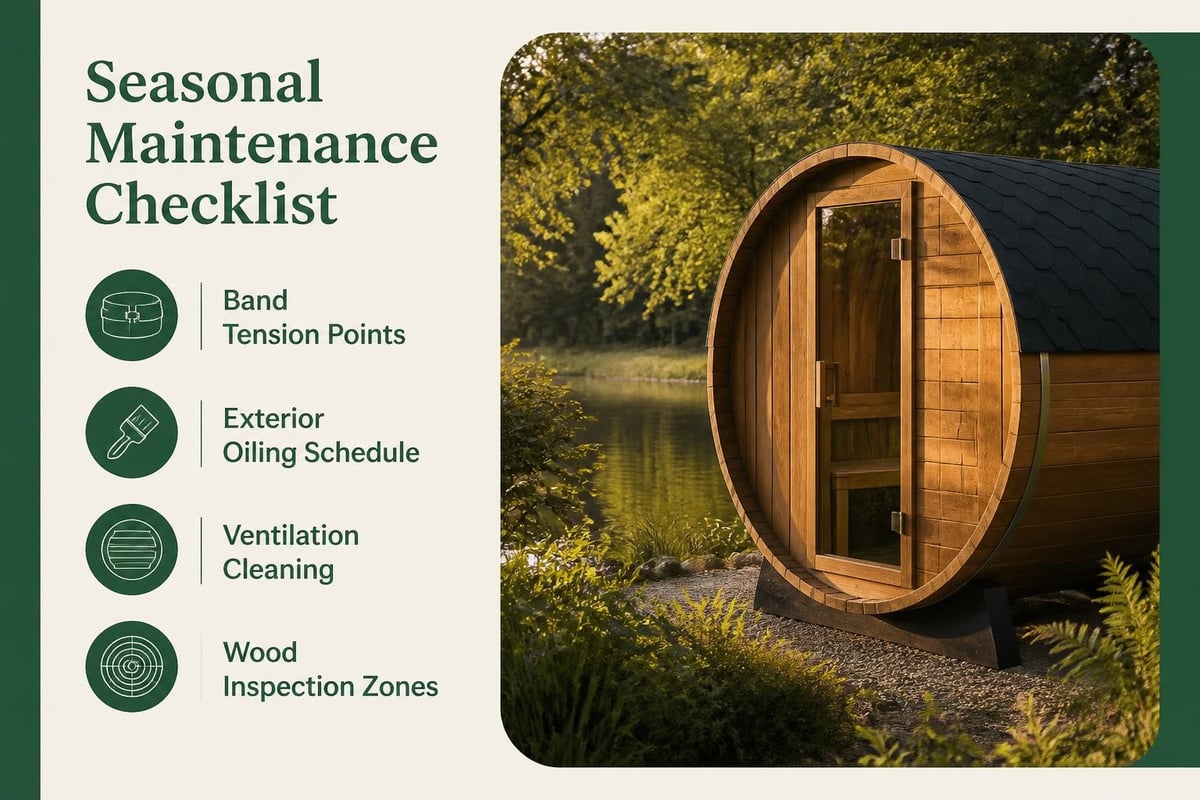
Wood treatment depends on your climate and aesthetic preference. Some owners let cedar weather naturally to a silver-gray patina. Others maintain the original honey tone with annual oil applications. Neither choice damages the wood if you stay consistent.
Avoid pressure washing. The force drives water deep into grain structure and can loosen tongue-and-groove joints. A garden hose and soft brush remove dirt and pollen without risking damage.
Placement and Site Considerations
Choose a location with level ground, good drainage, and reasonable distance from your house. You'll walk outside in all weather, sometimes barefoot after a session. A path of 10 to 30 meters feels right. Closer gets convenient. Farther adds privacy.
Consider sun exposure. Full southern sun in summer may overheat the structure before you even turn on the heater. Morning or late afternoon sun provides warmth without excessive thermal load. Some shade from deciduous trees works well because leaves drop in winter when you want solar gain.
Electrical requirements vary by heater size. Most residential barrels run on 240V circuits similar to an electric dryer or range. A 6 kW heater typically draws 25 amps. Your electrician needs to know the exact heater specifications before running cable and installing the breaker.
Site Selection Factors
| Factor | Ideal | Acceptable | Avoid |
|---|---|---|---|
| Distance from house | 10-30 m | 5-40 m | Against walls |
| Sun exposure | Partial shade | Morning sun | Full afternoon sun |
| Ground slope | Level | Under 2% | Over 5% |
| Drainage | Natural runoff | Slight grade | Low spots |
Some municipalities classify outdoor saunas as accessory structures and require setback distances from property lines. Others treat them like sheds under a certain size. Check local building codes before you order. Most areas under 100 square feet escape permit requirements, but rules vary widely.
Energy Costs and Heat Retention
A wood barrel sauna costs between $1.50 and $4.00 per session to heat, depending on local electricity rates, heater size, and session length. The round shape improves efficiency, but you're still heating an outdoor structure in winter.
Insulation options exist but complicate the traditional barrel design. Some manufacturers offer double-wall construction with foam core panels. This reduces energy use but increases cost and construction complexity. Most buyers choose single-wall cedar for authenticity and simplicity, then accept higher energy use as part of the experience.
Heat retention improvements focus on sealing gaps rather than adding insulation layers. Well-fitted planks, properly tensioned bands, and weatherstripping around the door make more difference than trying to insulate curved walls.
Preheat time drops significantly in warmer months. A barrel that needs 25 minutes in January might reach temperature in 15 minutes during July. Ambient temperature matters.
Growing Up on Lake Saimaa
I grew up in Eastern Finland where barrel saunas sat in many cottage yards alongside the lake. My grandfather built his from local pine, heated it with a wood stove, and tightened the bands every spring before the summer season started. We'd bathe in the evening, then walk down the dock and jump straight into Saimaa. That rotation between heat and cold water happened so naturally that we never thought to call it therapy or recovery.
Common Questions About Wood Barrel Saunas
How long does a wood barrel sauna last?
A well-maintained barrel sauna typically lasts 15 to 25 years. Cedar construction with regular band tensioning and annual exterior oiling reaches the upper end of that range. Lifespan depends heavily on maintenance consistency rather than initial build quality alone.
Can you use a barrel sauna in winter?
Yes, barrel saunas work in all seasons. The round design sheds snow naturally and actually performs better in cold climates because the temperature differential between interior and exterior creates stronger löyly. Allow extra preheat time when ambient temperature drops below freezing.
Do barrel saunas need special electrical?
Most require a dedicated 240V circuit similar to an electric dryer. Heaters between 4.5 and 9 kW need 20 to 40 amp breakers. Your electrician should review the specific heater manual before running wire. Some smaller models operate on standard 120V household current.
How much space do you need?
Plan for the barrel diameter plus 60 to 90 cm clearance on all sides for maintenance access and air circulation. A 2.1-meter diameter barrel needs roughly a 3.5 by 4-meter footprint including clearance. Check local setback requirements from property lines and structures.
Which wood type requires less maintenance?
Thermo-treated wood absorbs less moisture and needs oiling less frequently than untreated cedar. Different wood species offer varying maintenance profiles, but all require some annual attention. The choice often comes down to budget and aesthetic preference rather than dramatic maintenance differences.
A wood barrel sauna brings efficient heat, simple construction, and distinctive character to your backyard wellness routine. The round design handles our Northern climate well when you maintain the bands and protect the exterior wood. If you're ready to explore which barrel model fits your yard and goals, ask Petri about your sauna and get guidance from someone who grew up with this tradition on Lake Saimaa.
Share:
Sauna for a Cold: What Works, What Doesn't (2026)
Golden Designs Sauna Review: Full Spectrum Infrared Guide