
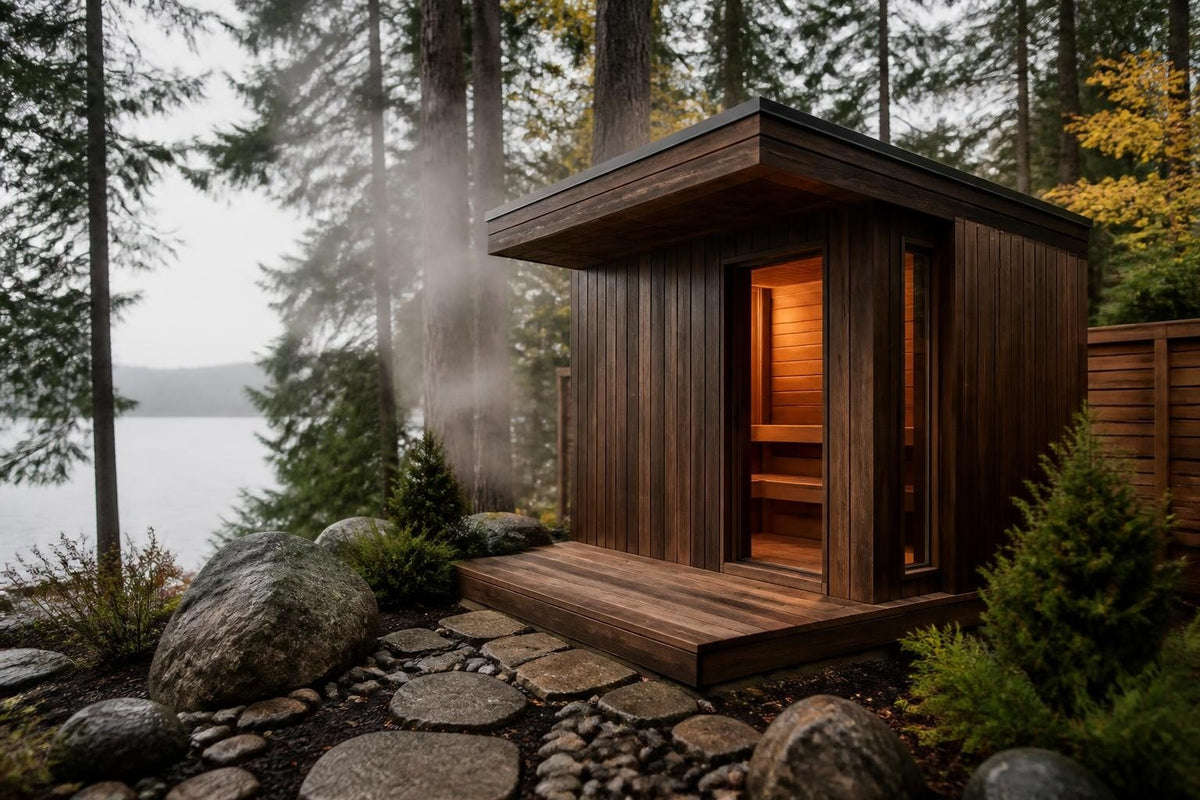
When you're comparing outdoor sauna options for your backyard, the wall material matters more than most buyers realize. A thermowood outdoor sauna uses thermally modified timber that has been heat-treated to fundamentally change its cellular structure, making it substantially more stable, durable and weather-resistant than untreated softwood. This isn't a surface coating or chemical treatment. It's a permanent transformation that gives Nordic timber the performance characteristics North American climates demand, especially in freeze-thaw cycles, high UV exposure and wide humidity swings.
What Makes Thermowood Different from Standard Sauna Lumber
Thermowood is Nordic spruce or pine heated to 185–215°C in a controlled, oxygen-limited environment. The ThermoWood Handbook documents exactly how this thermal modification reduces the wood's equilibrium moisture content by 40–50% and nearly eliminates its ability to swell and shrink with seasonal humidity changes.
Key physical changes during thermal modification:
Hemicellulose sugars break down, starving fungi and insects of nutrients
Cell wall structure becomes hydrophobic, repelling moisture absorption
Dimensional stability improves by 50–90% depending on treatment intensity
Density decreases slightly while surface hardness increases
Natural resin content migrates to the surface, creating a protective barrier
These changes aren't cosmetic. A thermowood outdoor sauna wall will hold its shape, gap spacing and structural integrity through Canadian winters and Arizona summers in ways untreated pine simply cannot. You won't see the same degree of warping, checking or joint separation that plagues conventional outdoor wood structures after two or three years.
How Thermal Treatment Extends Outdoor Sauna Lifespan
Durability in exterior applications comes down to moisture exclusion and biological resistance. The US Forest Service field trials tracked thermally modified wood performance in severe decay test sites and found dramatically improved decay resistance compared to untreated controls, even without additional preservative treatments.
For a thermowood outdoor sauna installed on a proper foundation in Minneapolis, Vancouver or Denver, this means:
Minimal seasonal movement in wall panels and door frames
Reduced UV degradation of surface fibers compared to natural wood
Natural resistance to mold, mildew and wood-boring insects
Longer intervals between surface maintenance treatments
Better coating adhesion when you do choose to oil or stain
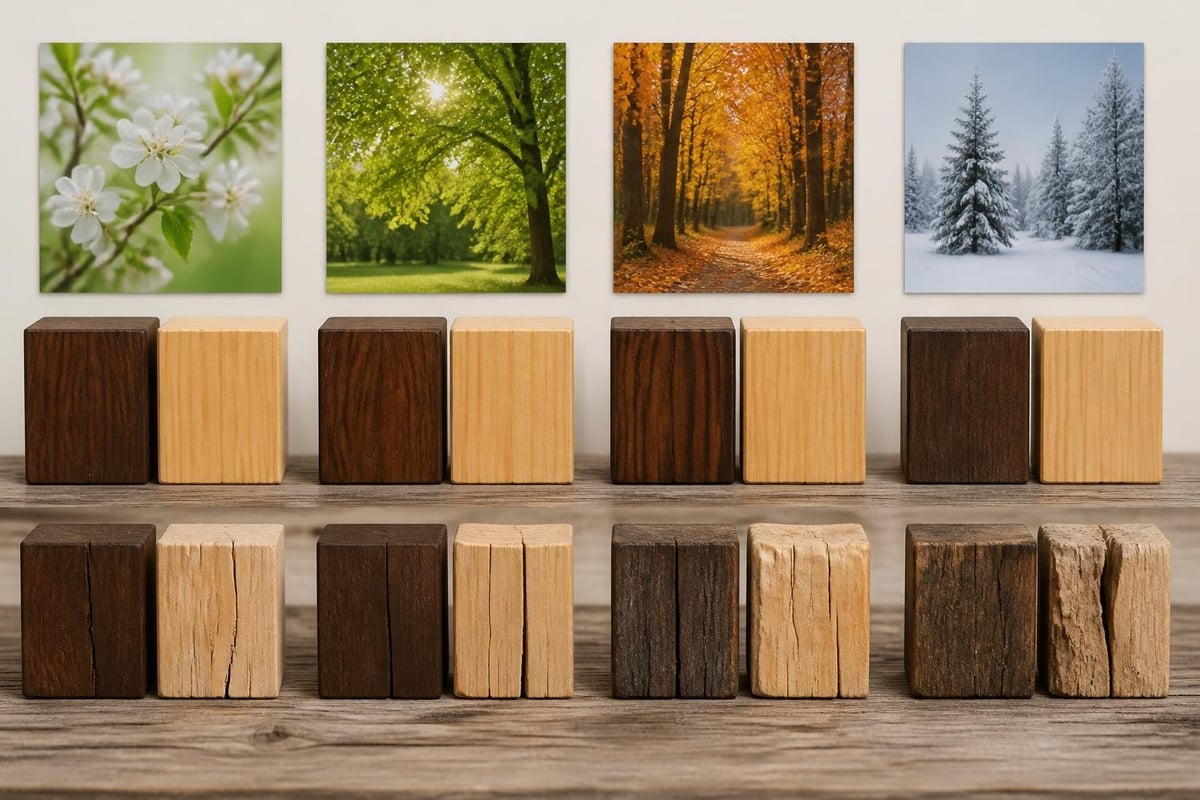
The thermal modification process also gives the wood its characteristic rich brown color, which deepens slightly over time but weathers to an attractive silver-grey patina if left untreated. Many owners prefer this natural aging, though thermowood accepts oil and stain treatments better than untreated wood when you want to preserve the darker tone.
Thermowood vs. Nordic Pine for Outdoor Sauna Construction
When you're choosing between a thermowood outdoor sauna and a Nordic Pine model, you're making a trade-off between performance and aesthetics. Both are authentic Scandinavian sauna materials. Both perform well. The question is which aligns with your climate, maintenance preferences and design vision.
Feature |
Thermowood |
Nordic Pine |
|---|---|---|
Dimensional stability |
Excellent (minimal seasonal movement) |
Good (moderate seasonal movement) |
Natural decay resistance |
Very high (no treatment needed) |
Moderate (benefits from treatment) |
Color when new |
Rich chocolate brown |
Warm honey blonde |
Weathered appearance |
Silver-grey patina |
Light grey patina |
Maintenance interval |
3–5 years (optional) |
2–3 years (recommended) |
Initial cost |
Premium |
Standard |
Nordic Pine gives you that classic light Scandinavian aesthetic many homeowners love. It's the traditional choice across Finland and Sweden, where climate conditions are relatively stable and owners maintain their saunas regularly. Thermowood shifts the value equation toward long-term performance and reduced upkeep, particularly valuable in North American climates with wider temperature and humidity ranges.
Climate Considerations for North American Installations
A thermowood outdoor sauna handles the specific challenges of continental and coastal North American weather patterns better than untreated softwood. The Journal of Materials Science review on thermally modified wood as exterior cladding confirms superior service life in building envelope applications, which directly translates to outdoor sauna performance.
Climate scenarios where thermowood shows clear advantages:
Mountain states and Canadian Rockies: Extreme diurnal temperature swings and intense UV at altitude
Great Lakes and Northeast: Freeze-thaw cycles, high humidity, and ice load on roofs
Pacific Northwest: Constant moisture exposure and minimal drying periods
Desert Southwest: Extreme heat, UV intensity, and radical humidity shifts during monsoon season
Even in milder climates like coastal California or the Mid-Atlantic, a thermowood outdoor sauna will maintain tighter construction tolerances and require less frequent surface treatment over its service life. The material simply works harder with less input from you.
Structural Performance and Assembly Details
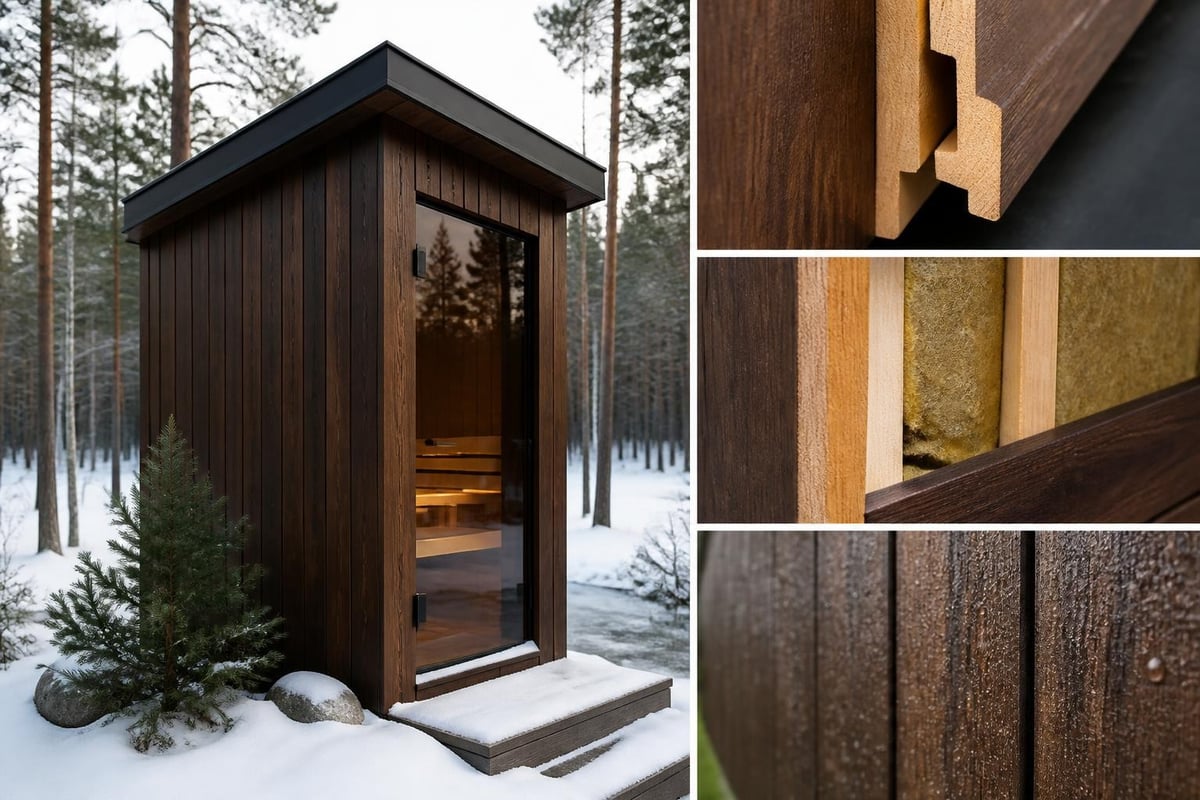
The structural integrity of your outdoor sauna depends on wall thickness, joint precision and material stability under load and weather stress. RecoSauna uses 46 mm solid thermowood walls in all Square Sauna models, providing excellent insulation value and structural rigidity without requiring additional framing.
Why wall thickness matters in outdoor sauna design:
Thermal mass: Thicker walls store heat more effectively and moderate temperature swings
Insulation value: 46 mm solid wood provides R-value equivalent to conventional framed walls with batt insulation
Structural stability: Self-supporting construction without additional framing that creates thermal bridges
Acoustic performance: Solid timber walls dampen external noise for a quieter sauna experience
The tongue-and-groove joinery in thermowood panels maintains tighter tolerances than untreated wood as the material ages. You won't develop the progressive air gaps and light leaks that compromise heat retention and create drafts in poorly maintained saunas.
Foundation Requirements and Installation Base
Every thermowood outdoor sauna needs a stable, level, well-drained foundation. The material's improved dimensional stability actually makes foundation requirements more critical, not less. Because the walls won't flex and accommodate an uneven base the way conventional framing might, you need precision at the foundation stage.
Acceptable foundation options for outdoor sauna installation:
Concrete slab: 4–6 inch reinforced slab with proper pitch for drainage
Concrete pier and beam: Adjustable piers supporting pressure-treated runners
Gravel pad with pavers: Compacted gravel base with level concrete pavers (minimum 2-inch thickness)
Deck integration: Existing deck structure reinforced to support sauna weight (verify load capacity)
Avoid placing your sauna directly on soil, grass or uncompacted gravel. Even with thermowood's superior moisture resistance, ground contact invites problems. A proper air gap between the floor system and ground level ensures drainage, prevents moisture wicking and extends the life of the entire structure.
Design Integration and Aesthetic Options
A thermowood outdoor sauna brings a distinctly modern Scandinavian character to your backyard. The darker wood tone creates a grounding, natural presence that works beautifully with contemporary architecture, native landscaping and minimalist outdoor living spaces.
The material also pairs well with the other design elements common in Nordic sauna culture:
Large glass panels that bring natural light into the sauna interior
Metal roofing in dark grey or black that complements the thermowood walls
Cedar or alder bench materials that provide tonal contrast against darker walls
Natural stone or concrete hardscaping around the sauna entrance
Your thermowood outdoor sauna will naturally weather to a silver-grey over time if you don't apply surface treatments. This patina is perfectly acceptable and doesn't indicate material degradation. Many owners embrace it as an authentic expression of natural aging. Others prefer to maintain the rich brown color with annual or biannual applications of UV-protective oil specifically formulated for thermowood.
Changing Room Integration for Year-Round Use
A dedicated changing room transforms your outdoor sauna from a seasonal amenity into a true four-season wellness retreat. The RecoSauna Comfort Square Sauna 3.0 × 2.3 m in Thermowood includes a 1-meter changing area with its own bench and an internal glass door separating the changing space from the hot room. This layout gives you a dedicated buffer zone where you can dress, cool down between rounds, or simply sit and relax without leaving the structure.
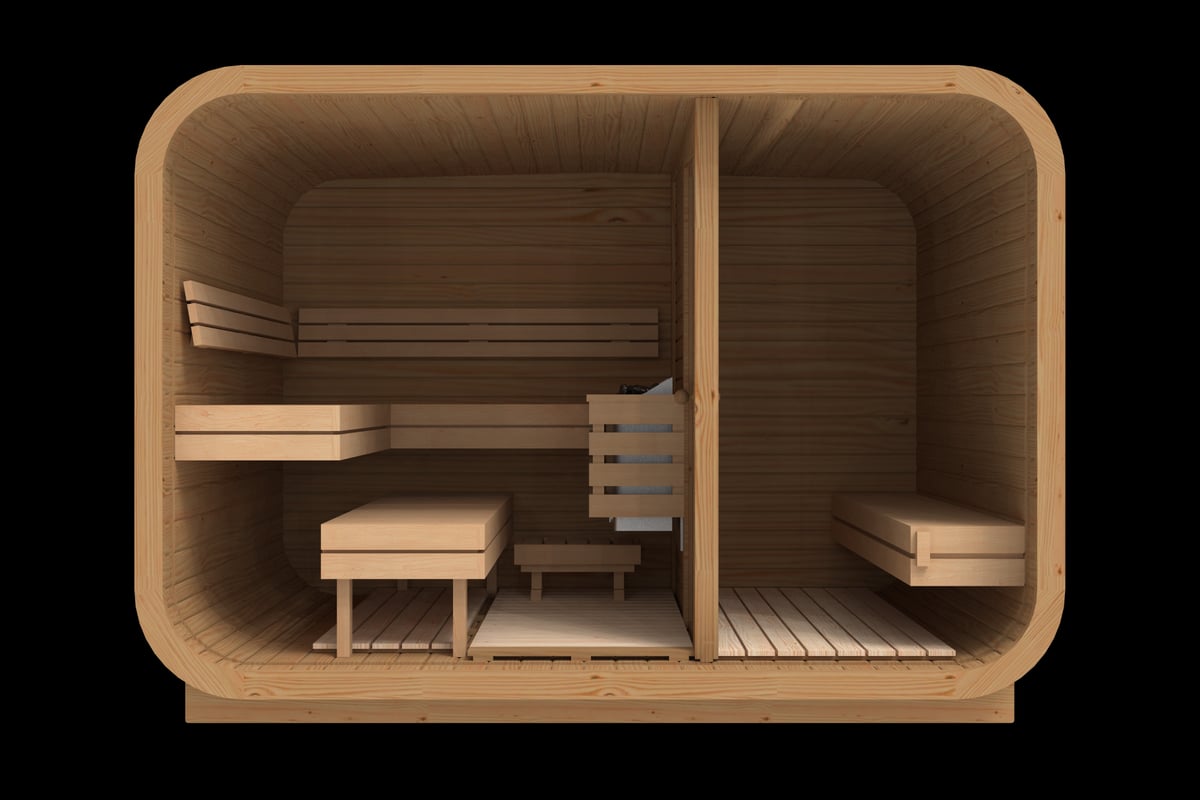
The changing room also acts as a thermal airlock in winter, preventing cold air from flooding the hot room every time someone enters or exits. In summer, it provides shaded space to cool down gradually rather than stepping directly from 80°C heat into direct sunlight.
Heater Compatibility and Interior Layout
Thermowood walls handle both electric and wood-burning heater installations without special accommodation. The material's thermal stability means it won't shrink away from heater guards or create gaps around stove pipes as it ages. You do need to follow standard clearance requirements between the heater and any combustible surface, but those requirements are identical to Nordic Pine or other wood-lined saunas.
Electric vs. wood-burning heater considerations for thermowood saunas:
Heater Type |
Thermowood Advantage |
Installation Note |
|---|---|---|
Electric |
No chimney penetration preserves roof integrity |
Requires 240V circuit; verify capacity |
Wood-burning |
Authentic löyly; independent of power grid |
Chimney installation requires roof flashing |
The interior of a thermowood outdoor sauna is typically finished with lighter wood (aspen or black alder) for benches and backrests. This creates visual contrast, provides a cooler seating surface, and maintains the traditional Finnish sauna aesthetic where wall and bench materials differ. The thermowood structure provides weather protection and stability while the interior finish focuses on comfort and heat tolerance.
Ventilation and Air Exchange in Outdoor Installations
Proper ventilation matters just as much in a thermowood outdoor sauna as in any other sauna design. You need continuous fresh air supply near floor level and an exhaust vent above or behind the heater to create the gentle convection current that defines authentic Finnish sauna.
Outdoor saunas actually have an advantage over indoor installations here. You're not pulling conditioned air from your home, and you're not exhausting humid sauna air into an attic or wall cavity. The outdoor environment handles moisture dispersal naturally once it exits the sauna structure.
Critical ventilation elements in outdoor sauna design:
Adjustable fresh air inlet positioned below and to the side of heater
Exhaust vent on opposite wall at bench height or higher
Door threshold gap providing supplemental air when needed
Roof vents or ridge cap allowing moisture and heat escape from roof cavity
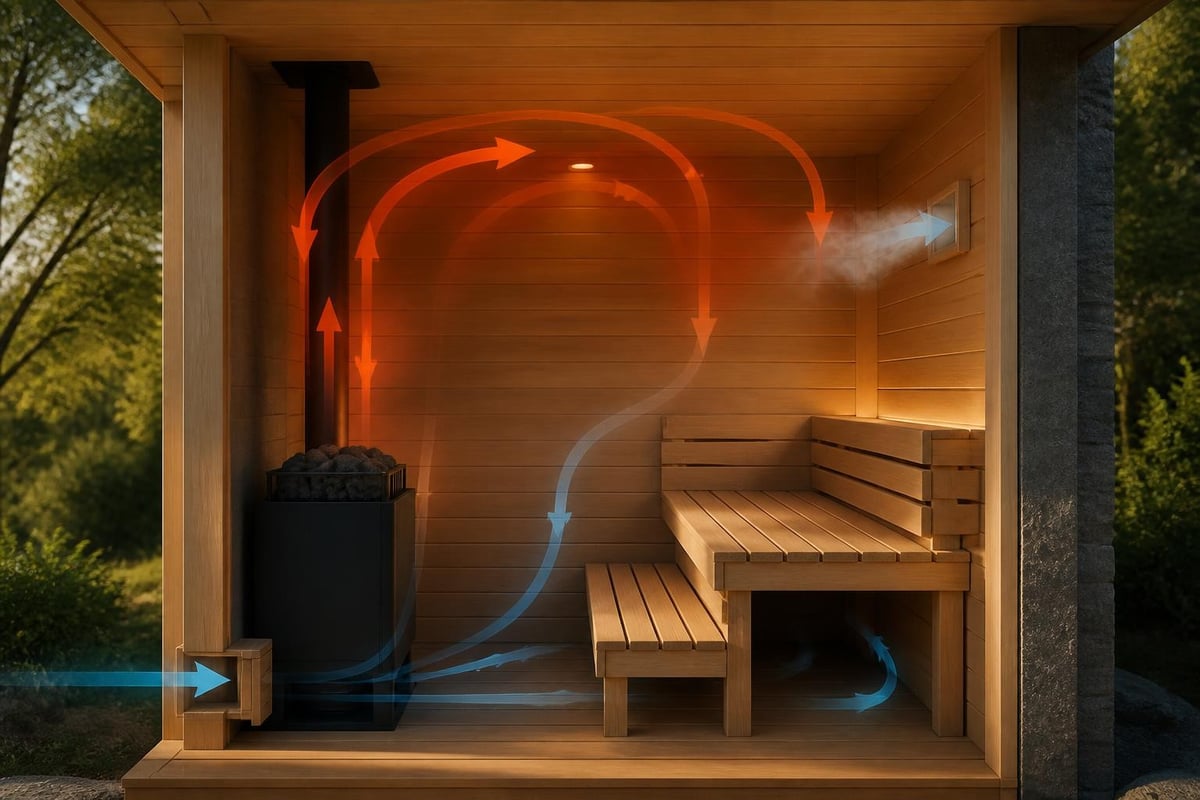
Thermowood's moisture resistance means the wall panels themselves handle occasional condensation or steam contact without degrading. Still, proper ventilation reduces surface moisture accumulation, speeds drying between sessions, and creates the air exchange necessary for comfortable breathing during your sauna session.
Maintenance Requirements and Long-Term Care
A thermowood outdoor sauna requires less maintenance than Nordic Pine, but it's not maintenance-free. The thermal modification process gives you a head start on durability, but smart seasonal care extends that advantage across decades of reliable performance.
Annual maintenance checklist for thermowood outdoor saunas:
Inspect roof for debris accumulation, ice dam damage, or fastener backing out
Check door and window seals for compression set or weather stripping failure
Clean exterior surfaces with soft brush and water to remove pollen, dirt, dust buildup
Apply UV-protective oil if maintaining dark color (optional; surface treatment every 2–3 years)
Verify foundation remains level and drainage paths stay clear
The ThermoWood Association technical documentation includes specific guidance on recommended surface treatments, cleaning methods, and maintenance intervals for exterior applications. Follow those guidelines rather than generic wood care advice written for untreated lumber.
Surface Treatment Options and Natural Weathering
Most owners face a decision point around year two: maintain the rich brown thermowood color with surface treatment, or allow natural weathering to silver-grey. Both choices are valid. Neither compromises the structural integrity of the material.
If you choose to maintain the dark color:
Use penetrating oil specifically formulated for thermally modified wood
Apply in dry conditions when wood surface is clean and temperatures are moderate
Expect to reapply every 2–3 years depending on sun exposure and climate
Test products in an inconspicuous area first to verify color and finish
If you prefer natural weathering:
Expect gradual color shift from brown to grey over 18–36 months
Weathering occurs on sun-exposed surfaces; shaded areas may retain more color
Structural performance and moisture resistance remain unchanged
You can reverse the decision later by sanding and applying oil if desired
Neither approach is "correct." Choose based on your aesthetic preferences, maintenance tolerance, and how the sauna integrates with your overall landscape design. Many modern Scandinavian architects deliberately specify weathered thermowood for its natural, organic appearance.
Sizing Your Thermowood Outdoor Sauna
Outdoor sauna sizing follows different logic than interior retrofits. You're not constrained by existing room dimensions or ceiling heights. Instead, you're balancing footprint, capacity, heater requirements and how the structure relates to your yard layout and backyard wellness plans.
Typical capacity and footprint for thermowood outdoor saunas:
2-person compact: 1.5 × 1.5 m to 1.8 × 1.8 m footprint; single bench; electric heater only
2–4 person standard: 2.0 × 2.0 m to 2.3 × 2.3 m; L-shaped or straight bench; electric or wood-burning
4–6 person family: 2.3 × 3.0 m or larger; tiered benches; wood-burning preferred
Changing room models: Add 1.0 m to length for integrated changing area
Bigger isn't always better. A smaller sauna heats faster, uses less energy and creates more intimate heat when you're bathing alone or with one other person. Larger models accommodate family sessions, social bathing and give you flexibility for recovery-focused sauna protocols that include cool-down periods on a lower bench.
Bench Layout and Interior Spatial Planning
Bench configuration affects how many people actually fit comfortably and how different body positions work during your sauna session. A straight bench along one wall maximizes lying-down space. An L-shaped layout seats more people upright and creates better social dynamics when multiple bathers share the space.
The upper bench in a properly designed sauna should position your head 100–110 cm below the ceiling when seated. This places you in the hottest air layer where traditional Finnish sauna heat concentrates. Lower benches provide cooler zones for children, heat-sensitive individuals, or cooling intervals between intense heat exposure.
Thermowood's dimensional stability means bench supports and fasteners stay tight over time. You won't develop the squeaks and wobbles common in saunas where seasonal wood movement loosens joints and connections.
Thermowood Performance in Winter Conditions
North American winters test outdoor structures in ways Scandinavian climates often don't. Rapid temperature swings, freeze-thaw cycling, ice accumulation and wind-driven precipitation create challenging conditions for any exterior wood application.
A thermowood outdoor sauna handles these stresses better than untreated softwood because the material's reduced moisture absorption limits the expansion that occurs when water freezes inside wood cells. Less moisture penetration means less internal ice formation and substantially less checking, splitting and structural damage over repeated winter seasons.
Winter performance advantages of thermowood construction:
Walls maintain structural integrity through freeze-thaw cycles
Reduced ice dam formation on roof edges due to better insulation continuity
Door and window frames hold tighter tolerances in sub-zero temperatures
Faster warm-up times because walls don't absorb heat into frozen moisture
The sauna will still form frost and ice accumulation around door seals, hinges and any metal components in very cold weather. That's normal. The difference is that the thermowood walls themselves aren't fighting moisture-driven expansion and contraction while simultaneously dealing with thermal loads from heating and cooling.
Cold-Climate Installation and Foundation Frost Protection
If you're installing in USDA climate zones 3–6 (most of Canada, northern US states), foundation frost protection matters. A floating slab or pier foundation can heave if frost penetrates below the bearing surface. This creates stress on the sauna structure even though the thermowood walls themselves remain stable.
Foundation frost protection strategies:
Pour concrete slabs below local frost depth or use foam insulation beneath slab
Set piers on concrete footings extending below frost line
Install gravel drainage layer preventing moisture accumulation and freeze expansion
Grade surrounding soil away from foundation to direct surface water away from structure
Your local building code specifies minimum footing depth for your frost zone. Follow it. The few hundred dollars saved by skipping proper foundation work will cost you thousands in structural repairs when the sauna shifts off-level and doors stop closing properly.
Comparing Thermowood Sauna Manufacturers and Quality Standards
Not all thermowood is created equal. The thermal modification process requires precise temperature control, specific atmospheric conditions and proper quality verification. Reputable manufacturers source their thermowood from certified suppliers following ThermoWood Association protocols for both treatment and subsequent machining.
Quality indicators in thermowood outdoor sauna construction:
Certification from recognized thermal modification standards body
Consistent color throughout material thickness (indicates proper treatment depth)
Tight moisture content specifications (typically 4–8% for outdoor applications)
Proper kiln drying after thermal treatment before machining and assembly
Clear documentation of thermowood class (Thermo-S or Thermo-D designation)
RecoSauna sources thermowood panels from Finnish suppliers where thermal modification quality control has been refined over decades. This matters because improperly treated wood won't deliver the performance benefits you're paying for. The material might look similar but lack the dimensional stability and decay resistance that define genuine thermowood.
Price Premium and Long-Term Value Calculation
A thermowood outdoor sauna typically costs 15–25% more than an equivalent Nordic Pine model. That premium buys material performance, not just aesthetics. The question is whether the benefits justify the cost for your specific situation.
Scenarios where thermowood premium makes clear economic sense:
Climate zones with extreme seasonal variation or coastal exposure
Buyers planning to keep sauna 15+ years (reduced maintenance compounds value)
Sites where surface treatment access is difficult or inconvenient
Installations integrated with high-end landscaping where weathering matters
Owners who prefer minimal maintenance and maximum weather resistance
If you're in a mild climate, plan to relocate within 5–7 years, or genuinely enjoy annual sauna maintenance as part of your routine, Nordic Pine may serve you just as well at lower initial cost. The thermowood advantage compounds over time through reduced upkeep and extended service life.
A thermowood outdoor sauna delivers authentic Finnish sauna culture with the dimensional stability, decay resistance and low-maintenance performance North American climates demand. The material's thermal modification provides structural benefits that compound over decades of year-round outdoor use. At RecoSauna, we bring Finnish sauna expertise and premium thermowood construction to homeowners across the USA and Canada, with Square Sauna models designed for authentic löyly, Nordic aesthetics and long-term backyard wellness.
Share:
Outdoor Wood Burning Sauna: Complete 2026 Guide