
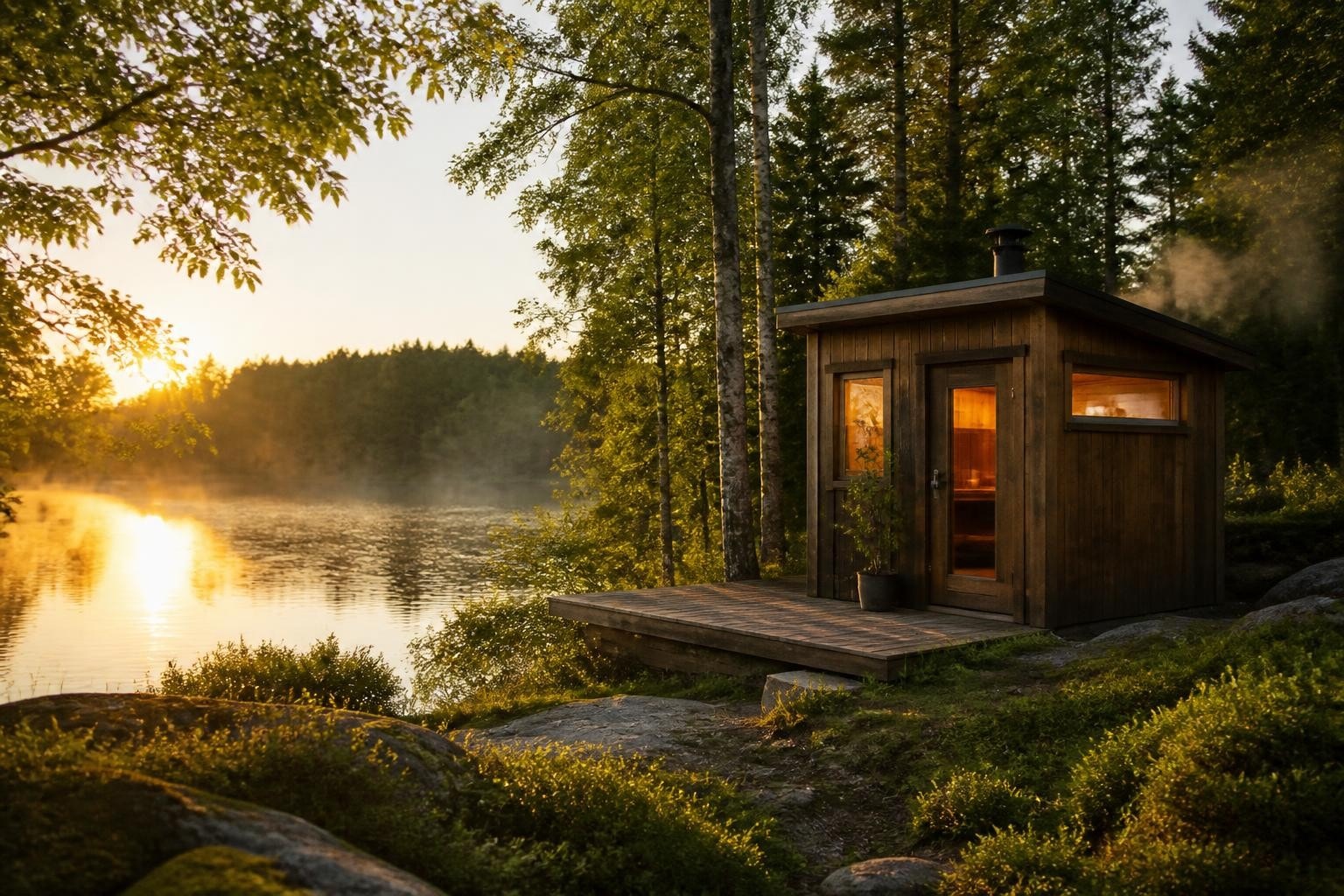
A single person sauna is built for one user at a time. The footprint ranges from 36 to 48 inches wide and 36 to 54 inches deep. Traditional steam models require a properly sized electric heater or wood stove. Infrared units use panel heating instead of stones. The choice depends on available space, preferred heat style, and whether you install indoors or outdoors.
What Defines a Single Person Sauna
A single person sauna accommodates one adult comfortably, with room to sit upright or recline. Most models measure between 10 and 20 square feet of interior floor space.
Traditional steam versions feature a bench, wall-mounted heater, and ventilation. Infrared models use carbon or ceramic panels mounted in the walls and ceiling. Both types deliver heat, but the experience differs significantly.
Key dimensions for solo use:
- Width: 36 to 48 inches
- Depth: 36 to 54 inches
- Bench height: 18 to 22 inches
- Ceiling height: 72 to 80 inches
Smaller footprints work for seated sessions. Longer cabins allow you to stretch out fully. The ceiling height matters for ventilation and heat distribution, not just headroom.
Traditional Steam vs Infrared for Solo Sessions
| Feature | Traditional Steam | Infrared |
|---|---|---|
| Heat source | Electric heater with stones | Carbon or ceramic panels |
| Temperature range | 150–195°F | 120–140°F |
| Humidity | Adjustable with water | Dry heat only |
| Warm-up time | 30–45 minutes | 10–15 minutes |
Traditional steam saunas use an electric heater topped with stones. You add water to create löyly, the steam that rises when water meets hot rock. Temperature reaches 150 to 195°F. Humidity adjusts with each ladle of water.
Infrared models skip the stones entirely. Panels emit infrared wavelengths that warm your skin directly. The air stays cooler, usually 120 to 140°F. No steam, no humidity control.
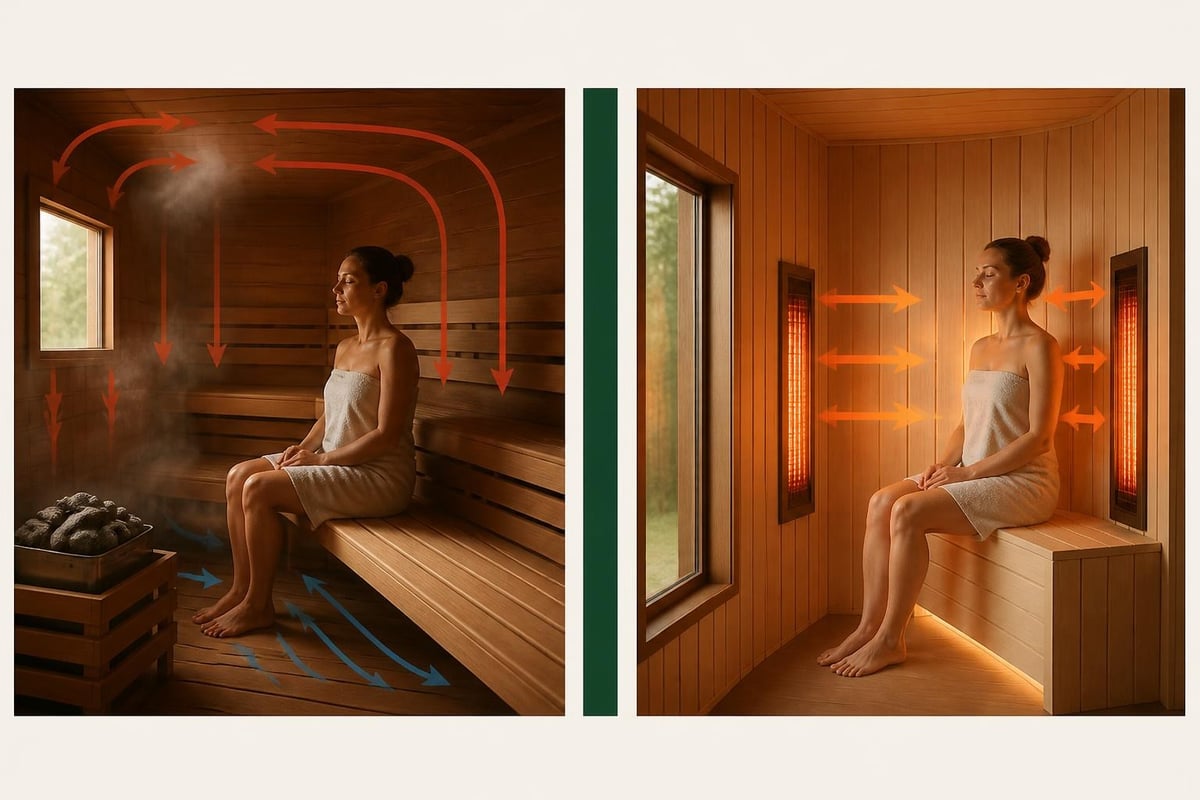
Both styles fit a solo user. The traditional approach offers variable humidity and higher temperatures. Infrared provides faster warm-up and simpler installation. Neither is better. The preference is personal.
Indoor Installation Considerations
Indoor models require electrical service, ventilation, and moisture management. Most traditional steam saunas need a dedicated 240V circuit. Infrared units often run on standard 120V.
Electrical requirements:
- Traditional 3–4.5 kW heaters: 240V, 20–30 amp circuit
- Infrared panels (total 1.5–2 kW): 120V, 15–20 amp circuit
Ventilation prevents moisture buildup and maintains air quality. A traditional sauna needs an intake vent near the floor and an exhaust vent near the ceiling or through the wall. Infrared models require less airflow but still benefit from basic ventilation.
Flooring should tolerate heat and occasional moisture. Tile, sealed concrete, and vinyl work well. Avoid carpet or untreated wood directly under the sauna. Some homeowners place a rubber mat beneath the unit for added protection.
The indoor sauna installation checklist outlines planning steps from site selection to first use. Placement near a bathroom or utility room simplifies plumbing and electrical work.
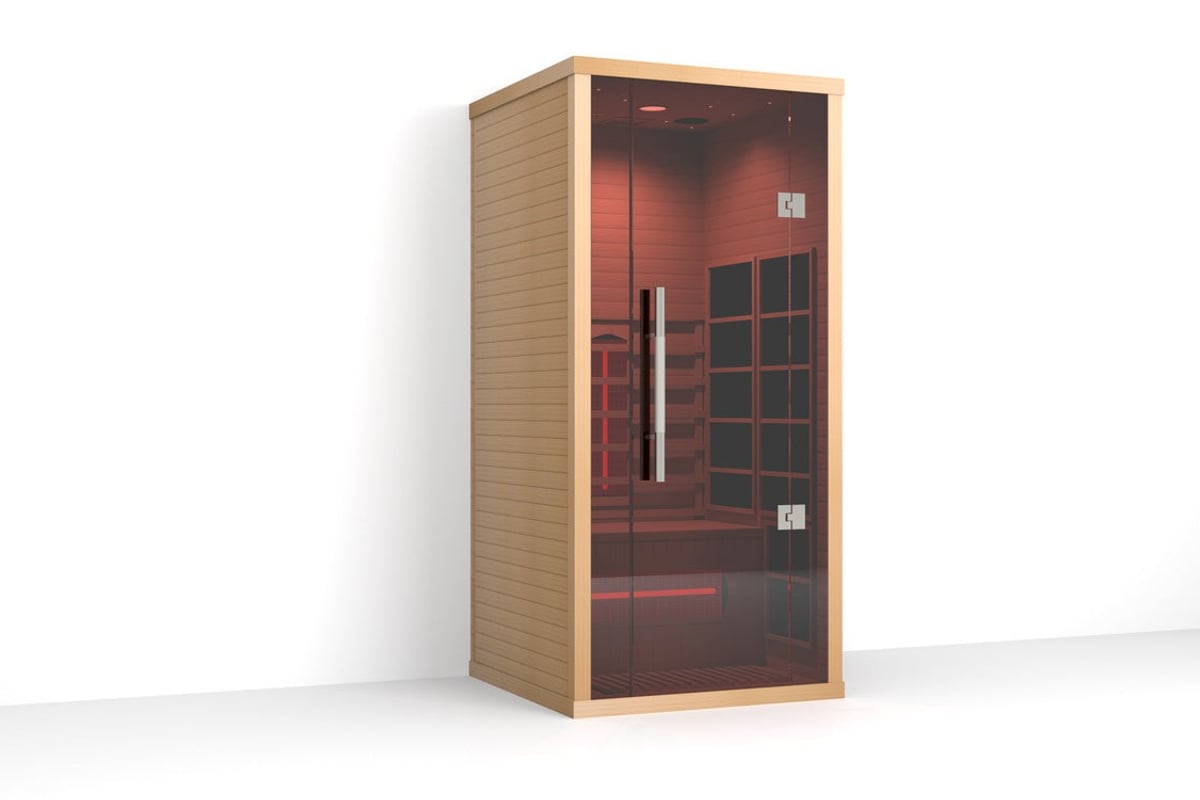
For homeowners seeking a refined indoor option, the Lumin Infrared Sauna One from Orivon Wellness fits compact spaces without requiring complex electrical upgrades. Built from Canadian Hemlock with plug-and-play setup, it delivers consistent far-infrared heat for daily recovery sessions in a basement, bedroom, or home gym.
Outdoor Single Person Sauna Options
Outdoor models expand material choices and heater flexibility. Cedar naturally resists moisture and insect damage. Barrel designs shed rain efficiently. Cabin-style structures offer more interior volume and easier access.
Common outdoor configurations:
- Barrel saunas: 4 to 6 feet long, 5 to 6 feet diameter
- Compact cabins: 4x4 to 4x6 foot footprint
- Pod saunas: rounded or A-frame shapes, similar dimensions
Electric heaters work outdoors if the unit is weatherproof and properly wired. Wood-burning stoves eliminate electrical requirements entirely. The stove sits inside or extends through the wall with an external firebox.
Outdoor placement requires a level foundation. Gravel, concrete pavers, or a wooden platform all work. The base should drain water away from the structure. Snow load matters in colder climates. A sloped roof or barrel shape prevents excessive buildup.
Weather exposure varies by region. Coastal areas see more moisture. High elevations face UV intensity and temperature swings. Cedar ages to a silver-gray patina unless treated with oil. Some owners prefer the weathered look. Others maintain the original color with annual sealing.
Heater Sizing and Stone Mass
Heater capacity depends on cabin volume, insulation quality, and desired heat-up time. A traditional steam sauna uses roughly 1 kW of heater power per 45 to 50 cubic feet of interior space.
For a 4x4x7 foot cabin (112 cubic feet), a 2.5 to 3 kW heater is appropriate. Undersized heaters struggle to reach target temperature. Oversized units heat quickly but may cycle on and off too frequently, reducing stone longevity.
Stone mass affects heat retention and steam quality. A 3 kW heater typically holds 30 to 40 pounds of stones. Larger stones retain heat longer and produce softer steam. Smaller stones heat faster but cool quickly.
Heater and stone guidelines:
- 80–100 cubic feet: 2–2.5 kW, 20–30 lbs stones
- 100–130 cubic feet: 2.5–3 kW, 30–40 lbs stones
- 130–160 cubic feet: 3–4.5 kW, 40–50 lbs stones
Most quality North American saunas use Harvia heaters. These Finnish-made units are rated for continuous use and include built-in safety controls. The stones should be inspected annually and replaced when they crumble or show cracks.
Infrared saunas skip this entirely. Panel wattage is fixed by the manufacturer. A single person unit typically has 4 to 6 panels totaling 1,500 to 2,000 watts.
Material Choices for Solo Sauna Construction
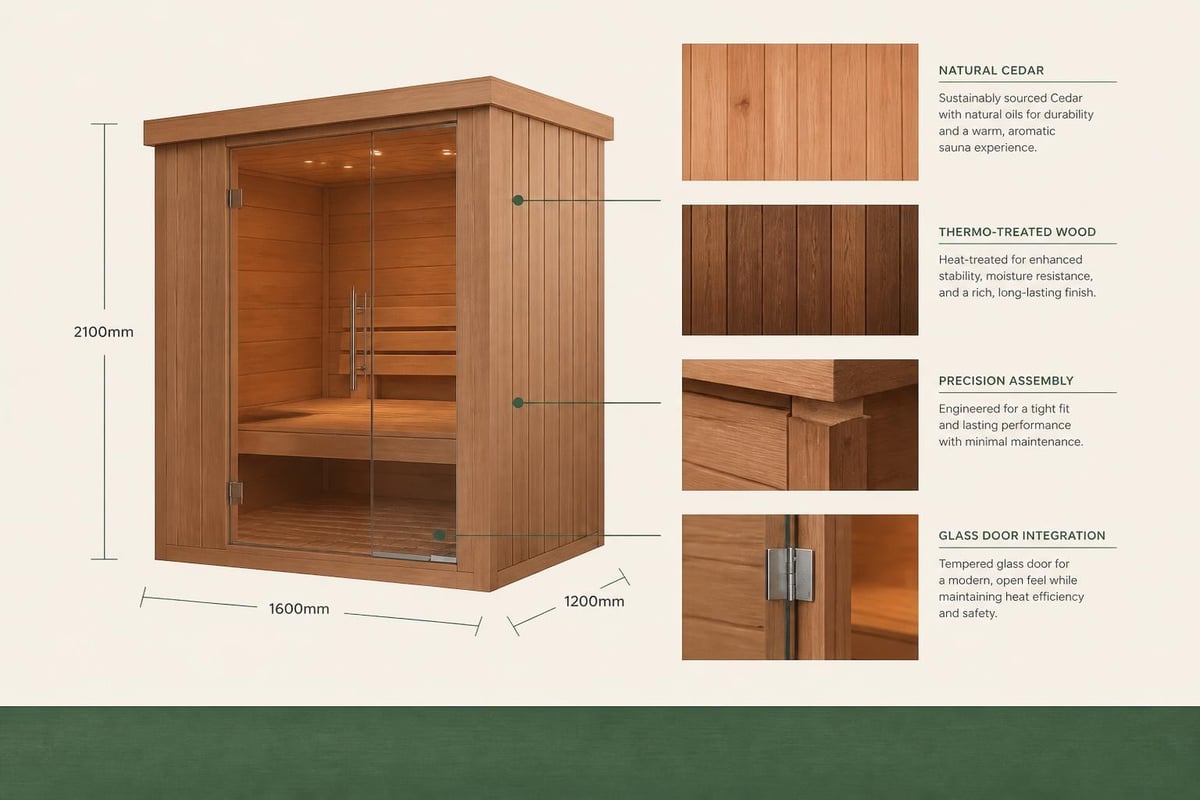
Cedar dominates North American sauna construction. Eastern White Cedar and Western Red Cedar both offer rot resistance and pleasant aroma. Hemlock is lighter in color and less aromatic but costs less.
Wood comparison for single person saunas:
| Wood Type | Aroma | Color | Moisture Resistance | Cost |
|---|---|---|---|---|
| Eastern White Cedar | Mild, sweet | Light tan | Excellent | Moderate |
| Western Red Cedar | Stronger, woodsy | Reddish-brown | Excellent | Higher |
| Canadian Hemlock | Minimal | Pale cream | Good | Lower |
Thermo-treated wood undergoes heat processing that improves stability and moisture resistance. Thermo Grandis and Thermo Aspen are common in modern indoor units. The treatment darkens the wood and eliminates natural oils, reducing aroma.
Glass doors and windows increase light and visibility. Tempered glass tolerates temperature swings without shattering. Bronze or gray tinting adds privacy without blocking all light.
Some builders use tongue-and-groove paneling for walls and ceiling. Others prefer a smooth, planed finish. The surface choice is aesthetic. Both perform equally in heat and humidity.
Bench Design and Interior Layout
A single person sauna typically has one bench. The height ranges from 18 to 22 inches, similar to a standard chair. Some models add a second, higher bench for hotter sessions or foot elevation.
Bench depth should allow comfortable sitting without your knees pressing against the front edge. A depth of 18 to 20 inches works for most adults. If you plan to recline, the bench needs to extend at least 60 inches, ideally 72 inches.
Bench configuration options:
- L-shaped: wraps two walls, seats one comfortably or two closely
- Straight: single wall-mounted bench, maximizes floor space
- Tiered: two heights for temperature variation
Backrest slats improve comfort during longer sessions. A simple angled board mounted 12 to 16 inches above the bench prevents back contact with the hot wall. Some units include a removable headrest for reclining.
Floor space matters for entry and movement. A 36x36 inch sauna leaves minimal room for anything beyond sitting. A 40x48 inch cabin allows easier entry and small accessories like a water bucket or towel hook.
First-Person Perspective from Petri
Growing up on Lake Saimaa, a single person sauna was rare. My family's cabin sauna fit six or eight of us, and the best moments came from shared silence between rounds. When I first encountered solo saunas in North America, I understood their appeal immediately. Not everyone has space for a larger cabin, and some people genuinely prefer solitude. The heat and steam work the same whether you share the bench or sit alone.
Comparing Infrared and Traditional Heat Patterns
Traditional steam creates convective heat. Hot air rises from the heater stones, circulates around the cabin, and warms your skin from all sides. The air temperature near the ceiling can be 30 to 40°F hotter than at floor level.
Infrared panels produce radiant heat. The energy travels in straight lines from the panel to your body. The surrounding air stays cooler. Your skin warms directly without waiting for the room to heat.
Heat distribution characteristics:
- Traditional: stratified temperature, hottest at ceiling, coolest at floor
- Infrared: uniform panel output, less temperature variation by height
Both methods raise core body temperature. Traditional saunas typically feel hotter because the air temperature is higher. Infrared users often report a gentler sensation despite similar core warming.
The health benefits of sauna use include stress reduction and cardiovascular support, though research shows association rather than proof of causation. Heat exposure activates the body's cooling mechanisms regardless of the source.
Space Requirements and Placement Flexibility
A single person sauna fits where larger models cannot. Basements, spare bedrooms, closets, and garages all work if ventilation and electrical service are adequate.
Minimum clearances for safe installation:
- Top: 6–12 inches from ceiling (traditional), 1–2 inches (infrared)
- Sides: 1–2 inches from walls for airflow
- Front: 24–36 inches for door swing and entry
Outdoor placement offers more flexibility. A 4x4 foot pad accommodates most solo units. The structure can sit close to a fence or wall as long as ventilation openings remain unblocked.
Some homeowners place a single person sauna on a deck or patio. The surface must support 400 to 800 pounds (the sauna, heater, stones, and user combined). Composite decking works if the manufacturer's load rating is sufficient.
For detailed guidance on indoor setup, the sauna installation guide for homeowners covers planning, electrical requirements, and ventilation.
Electrical Service and Dedicated Circuits
Traditional electric heaters require dedicated circuits. A 3 kW heater needs a 240V, 20-amp circuit. A 4.5 kW unit requires 30 amps. The circuit breaker, wire gauge, and outlet must all match the heater's specifications.
Infrared models usually plug into a standard 120V outlet. Total panel wattage rarely exceeds 2,000 watts, well within a 15 or 20-amp circuit's capacity. Some jurisdictions still require a dedicated circuit for any permanently installed sauna.
Typical electrical specifications:
- 2 kW heater: 240V, 15A dedicated circuit, 14-gauge wire
- 3 kW heater: 240V, 20A dedicated circuit, 12-gauge wire
- 4.5 kW heater: 240V, 30A dedicated circuit, 10-gauge wire
- Infrared panels (1.6 kW total): 120V, 15A circuit, 14-gauge wire
Hire a licensed electrician for installation. Improper wiring creates fire risk and voids warranties. Most manufacturers require professional installation to honor their coverage.
Outdoor units need weatherproof wiring methods. Conduit protects cables from moisture and physical damage. The disconnect switch should be accessible but protected from rain.
Maintenance and Longevity of Solo Units
A single person sauna requires less maintenance than larger models, but regular care extends its life. Wood surfaces should dry completely after each use. Leave the door open for 15 to 30 minutes.
Monthly maintenance tasks:
- Wipe down benches and walls with a damp cloth
- Inspect heater stones for cracks or shifting
- Check door seals and hinges for wear
- Verify ventilation openings are clear
Annual tasks include inspecting electrical connections, testing the high-limit thermostat, and examining the wood for cracks or splinters. Cedar naturally resists rot, but persistent moisture in poorly ventilated spaces can cause issues.
Outdoor saunas face additional weathering. UV exposure fades wood color. Rain and snow test seals and roofing. Applying a cedar oil or sealant every 12 to 24 months preserves appearance and adds a layer of moisture protection.
Infrared panels rarely need attention beyond occasional dusting. The heating elements are sealed and have no moving parts. Lifespan typically exceeds 10,000 hours of use.
Cost Considerations Without Specific Prices
Single person saunas cost less than larger models due to reduced material and lower heater capacity. Infrared units generally cost less than traditional steam saunas of the same size.
Factors affecting cost:
- Wood species and quality grade
- Heater type and capacity (electric, wood, infrared)
- Glass size and door style (solid wood, partial glass, full glass)
- Assembly method (prefab panels, kit, custom-built)
- Included accessories (lighting, controls, benches)
Prefabricated units ship in sections and assemble in hours. Custom-built saunas require carpentry skills and more time but allow complete design control. Kit models split the difference, providing pre-cut materials with detailed instructions.
Installation costs vary widely. Indoor units may need electrical upgrades and ventilation work. Outdoor models require foundation preparation and weatherproofing. Hiring professionals adds to the total investment.
Operating costs depend on heater size and usage frequency. A 3 kW electric heater running for one hour uses 3 kilowatt-hours of electricity. Local utility rates determine the actual cost per session.
How Single Person Saunas Fit Into Daily Routines
A solo sauna session lasts 15 to 30 minutes for most users. Some people go longer, especially if they step out for air between rounds. The compact size and quick heat-up make daily use practical.
Morning sessions can provide a calm start before work. Evening use supports unwinding and sleep. Post-workout timing helps with muscle recovery, though research on this remains limited to observational studies.
Typical session structure:
- Preheat sauna for 30–45 minutes (traditional) or 10–15 minutes (infrared)
- Shower briefly to remove oils and lotions
- Enter sauna, sit or recline for 10–15 minutes
- Exit for cool air or cold water exposure
- Repeat 1–3 rounds as desired
- Final shower and gradual cooldown
Hydration matters. Drink water before and after, not during. Sauna use increases fluid loss through perspiration. Most people feel thirsty afterward.
The benefits and risks of using a sauna include improved circulation and relaxation alongside potential dizziness or dehydration if sessions are too long or too hot.
Ventilation and Air Quality in Compact Spaces
Proper ventilation ensures fresh air circulation and prevents stale conditions. A single person sauna has less interior volume, so air exchange happens faster but must be managed carefully.
Traditional steam saunas use passive or active ventilation. Passive systems rely on intake vents near the floor and exhaust vents near the ceiling. Hot air rises, creating natural circulation. Active systems add a small fan to the exhaust vent.
Ventilation setup for steam saunas:
- Intake vent: 4–6 inches square, located below or behind the heater
- Exhaust vent: 4–6 inches square, diagonally opposite, high on the wall or ceiling
- Airflow rate: 6–8 air changes per hour during use
Infrared saunas generate less moisture and require simpler ventilation. A small gap under the door often provides adequate airflow. Some units include a roof vent for additional circulation.
Outdoor saunas benefit from natural ventilation through wall vents or operable windows. Indoor units in basements or interior rooms need deliberate vent placement to avoid drawing air from unconditioned spaces.
Stale air or stuffiness indicates insufficient ventilation. The sauna should feel fresh between sessions. If it smells musty, increase airflow or reduce moisture buildup by leaving the door open longer after use.
Aesthetic and Design Flexibility
A single person sauna can match a home's interior design or stand as a distinct retreat. Modern builds favor clean lines, glass fronts, and minimal hardware. Traditional styles emphasize natural wood grain and simple joinery.
Interior lighting sets the mood. LED strips provide even illumination without heat buildup. Dimmable controls allow adjustment. Some users prefer candlelight or no artificial light at all.
Design elements to consider:
- Door style: full glass for openness, solid wood for privacy
- Window placement: front, side, or none
- Bench finish: smooth planed or lightly textured
- Hardware: stainless steel, brass, or black matte
Color options exist beyond natural wood. Thermo-treated wood ranges from light tan to dark brown. Some manufacturers offer painted or stained finishes for exterior panels.
Outdoor units often feature pitched roofs, shingles, and decorative trim. Barrel saunas eliminate the need for roofing entirely. Their curved shape sheds water naturally and provides structural strength.
A well-designed single person sauna integrates into its surroundings without dominating the space. The goal is a retreat that feels intentional, not an afterthought.
Frequently Asked Questions
How much space does a single person sauna actually need?
A functional single person sauna occupies 10 to 20 square feet of floor space, typically measuring 3 to 4 feet wide and 3 to 6 feet deep. Include clearance for the door swing and ventilation.
Can I install a single person sauna myself?
Prefabricated infrared models often allow DIY installation with basic tools. Traditional steam saunas require electrical work and ventilation setup, which typically need professional assistance for code compliance and safety.
Do single person saunas use a lot of electricity?
A traditional 3 kW electric heater uses 3 kilowatt-hours per session (about 45 minutes of heating plus 15 minutes of use). Infrared models consume 1.5 to 2 kW per hour. Actual cost depends on local utility rates.
How long does it take to heat a single person sauna?
Traditional steam saunas need 30 to 45 minutes to reach operating temperature. Infrared models heat in 10 to 15 minutes. Wood-fired heaters vary based on fire management and outside temperature.
What temperature should a single person sauna reach?
Traditional steam saunas operate between 150 and 195°F. Infrared units run cooler, typically 120 to 140°F. Personal preference and tolerance vary. Start lower and adjust upward gradually.
A single person sauna fits where space is limited but the desire for regular heat sessions remains strong. Choose based on available room, preferred heat style, and installation complexity. If you have questions about which model suits your home or need guidance on heater sizing and placement, Ask Petri About Your Sauna. Every inquiry receives a personal response from someone who grew up with sauna as a daily practice, not a trend.
Share:
Recovery Sauna: The Complete 2026 Guide for Athletes
Home Infrared Sauna: A Finnish Expert's Guide (2026)