
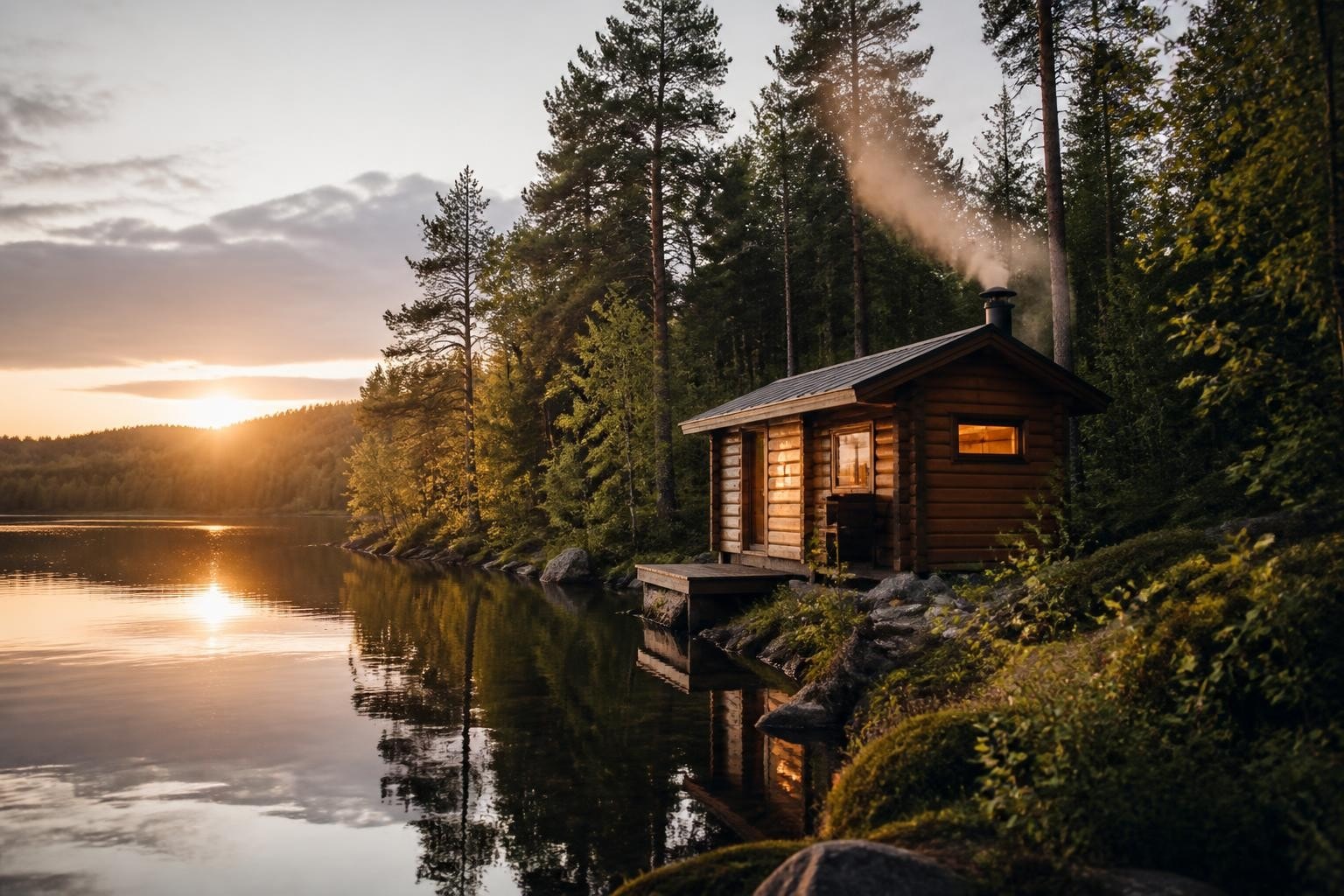
An outdoor traditional sauna is a freestanding heated structure placed in your yard that creates dry heat between 150°F and 195°F, allows you to pour water on hot stones for steam, and accommodates cooling intervals outside or in cold water. Unlike infrared models that use radiant panels, a traditional outdoor sauna relies on a wood-burning stove or electric heater to warm rocks, which then heat the air and your skin. The structure sits separate from your house, requires no interior remodeling, and connects you to weather and season in ways an indoor room cannot.
What Makes a Traditional Outdoor Sauna Different
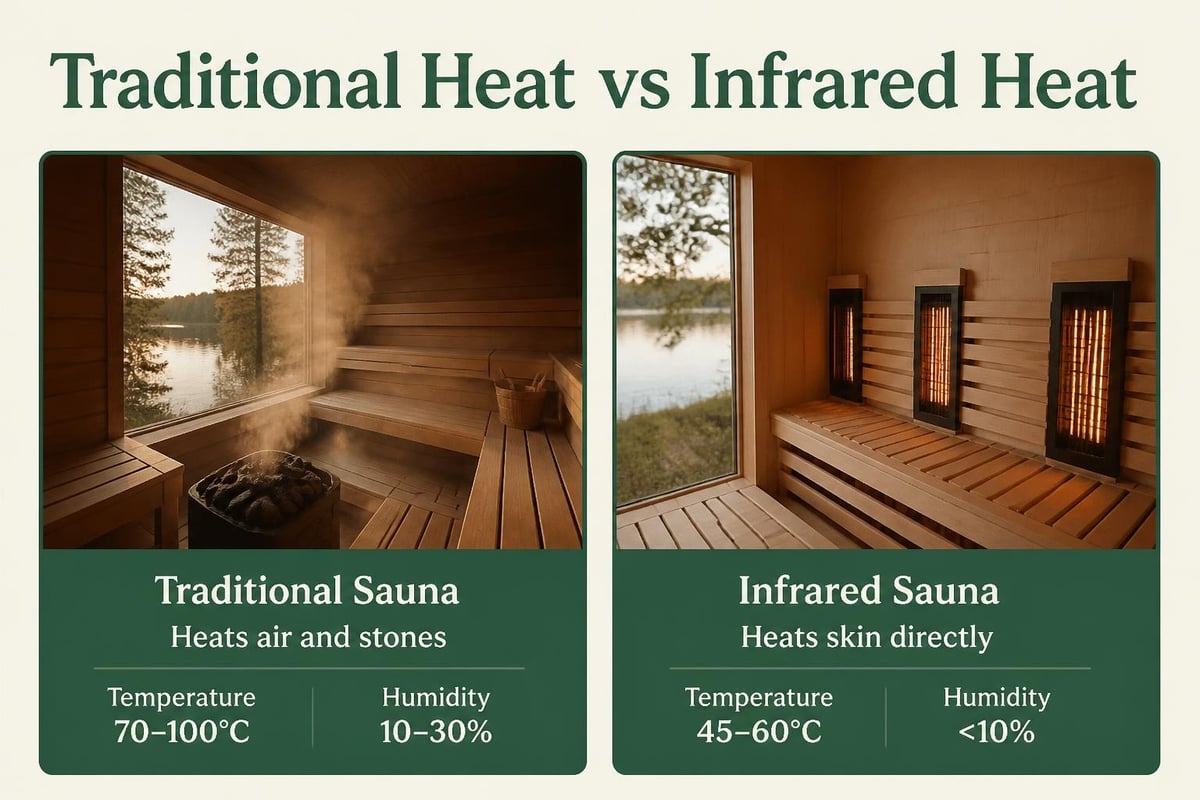
Traditional outdoor saunas generate heat through convection. Air temperature climbs as a stove or heater warms a pile of igneous rocks. When you ladle water onto those stones, steam rises and humidity spikes briefly before the dry heat returns.
Infrared saunas operate differently. They emit wavelengths that warm your body directly without heating the air much. The experience feels gentler and cooler, usually between 120°F and 140°F. Some people prefer that milder environment. Others want the intense dry heat and the ritual of tending stones. Neither approach is superior. They answer different needs.
An outdoor location also changes the rhythm. You step outside between rounds, cool down in open air, and return when you are ready. In winter that contrast sharpens. In summer you might walk to a lake or rinse under a hose. The separation from your living space makes the sauna feel like a destination rather than an appliance.
| Feature | Outdoor Traditional Sauna | Indoor Traditional Sauna |
|---|---|---|
| Heat source | Wood or electric heater with stones | Usually electric with stones |
| Location | Yard, deck, patio | Basement, bathroom, spare room |
| Cooling method | Outdoor air, cold plunge, hose | Shower, separate room |
Heat Source: Wood Versus Electric
Wood-fired stoves create the highest peak temperatures and the most variable heat. You control intensity by adjusting airflow and adding split logs. The process requires attention. You cannot set a timer and walk away. Some people find that focus meditative. Others find it inconvenient.
Electric heaters offer consistent output and simple controls. You set a target temperature, the thermostat maintains it, and you add water to the stones when you want steam. Most electric sauna models in North America use Harvia heaters, a Finnish brand known for reliable performance and long stone capacity. Heater size matters. A 6 kW unit works for a small barrel. An 8 or 9 kW model suits a larger cabin. Undersized heaters struggle to reach temperature in cold weather. Oversized units cycle on and off too often, reducing stone mass effectiveness.
Wood-fired setups appeal to people who already heat with firewood or want to sauna without electrical service. They also produce a subtle scent from burning birch or cedar that some users prefer. However, wood stoves require chimney installation, spark arrestors, and clearance from combustible walls. Local building codes often specify minimum distances and flue height. Check those rules before you commit.
Construction Types and Materials
Outdoor traditional saunas arrive in three main forms: barrel, cabin, and pod. Each suits different yards and preferences.
Barrel Saunas
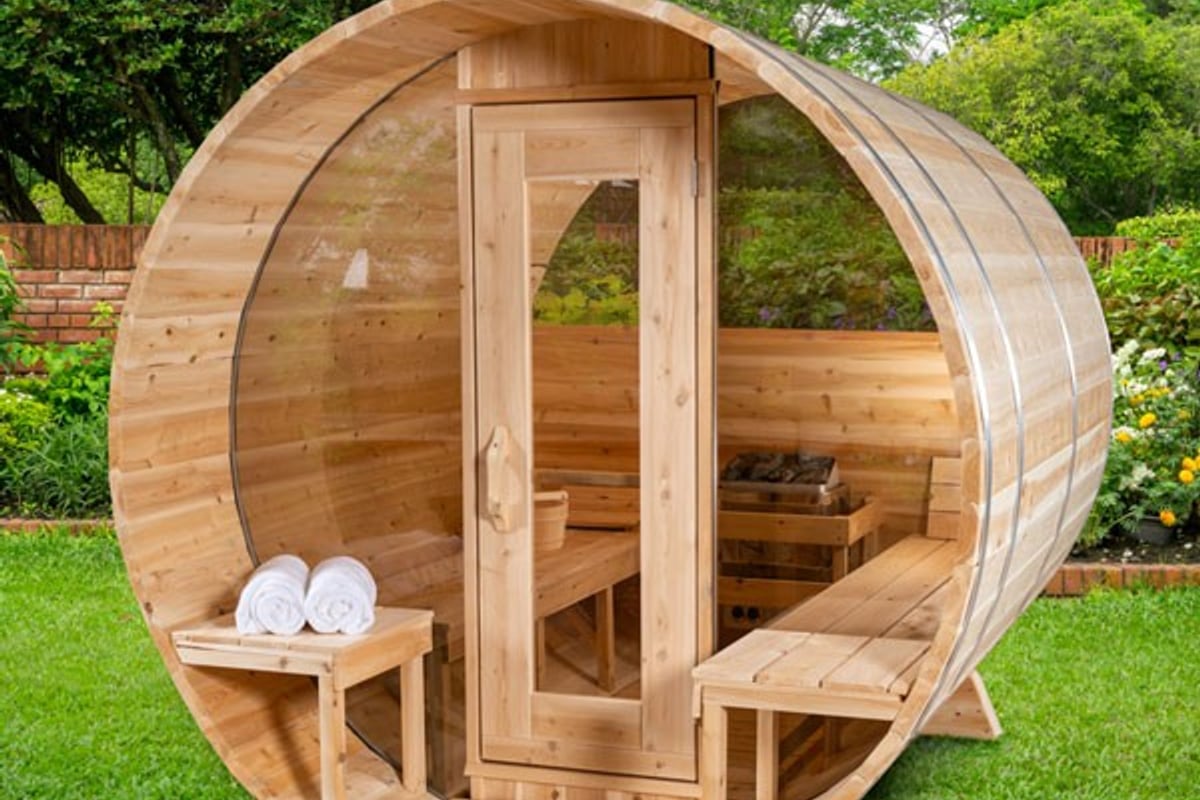
Barrel designs use curved staves held together by metal bands. The shape sheds rain and snow naturally. Interior volume stays smaller than a rectangular cabin of the same footprint, so the space heats faster and uses less energy. Benches curve with the walls, which some people find comfortable and others find awkward.
Barrels typically come in kit form. You assemble the staves on a prepared base, tighten the bands, install the heater, and connect electrical or vent a chimney. Most builds take a weekend with two people. The Canadian Timber Serenity MP Barrel Sauna uses Eastern White Cedar, a wood that resists moisture and insects without chemical treatment.
Cabin Saunas
Cabin-style structures look like small sheds. They offer straight walls, flat benches, and more headroom. You can add windows for daylight or a porch for sitting between rounds. Assembly is similar to a barrel but involves more components: wall panels, roof trusses, door frames, and sometimes foundation piers.
Cabins accommodate more people comfortably. A six-person cabin provides enough bench space for three people to lie down. That extra room also means longer heat-up times and higher energy use. If you rarely host groups, a smaller footprint makes more sense.
Pod and Compact Models
Pod saunas split the difference. They are taller than barrels, with vertical walls and a compact footprint. Some models include panoramic glass for views. Others keep a traditional solid door and small window. Pods suit narrow lots or decks where a full cabin would overwhelm the space.
| Construction Type | Footprint | Heat-Up Time | Capacity |
|---|---|---|---|
| Barrel | 5–7 feet diameter | 30–40 minutes | 2–4 people |
| Cabin | 6x8 to 8x10 feet | 45–60 minutes | 4–6 people |
| Pod | 4x6 to 5x7 feet | 35–45 minutes | 2–3 people |
Wood Species and Durability
Most quality outdoor saunas use cedar or Nordic spruce. Eastern White Cedar grows across Canada and the northern United States. It contains natural oils that repel moisture and discourage insects. The wood ages to a silver-gray patina outdoors unless you apply a sealer. Inside, it stays pale and fragrant for years.
Nordic spruce comes from Scandinavia. It is dense, stable, and less aromatic than cedar. Spruce handles high heat well and resists warping. It costs more to import but remains common in Finnish-made saunas.
Avoid pressure-treated lumber for interior surfaces. Chemicals used in treatment can off-gas at high temperatures. Exterior framing or foundation skids can use treated wood if needed for ground contact, but sauna walls and benches should not.
Site Preparation and Placement
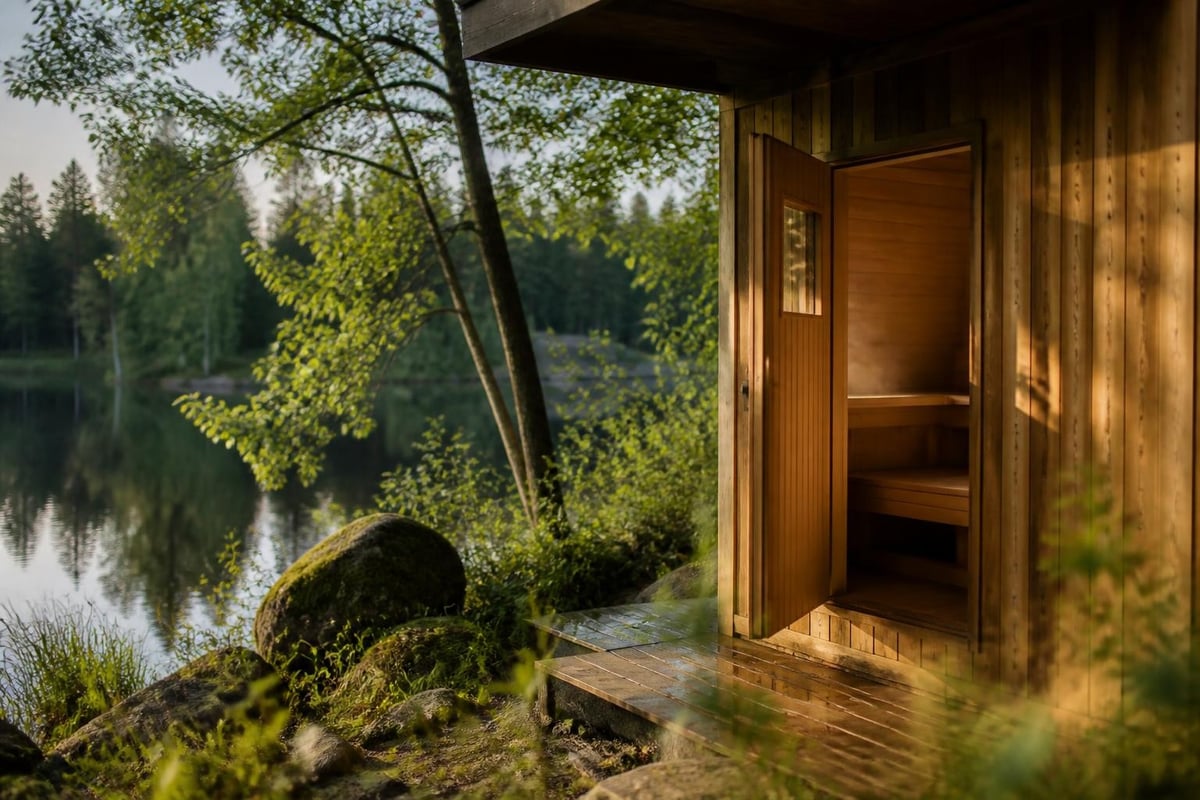
An outdoor traditional sauna needs a level base, electrical access if using an electric heater, and clearance from structures or trees. Most manufacturers recommend at least three feet of space on all sides for airflow and maintenance.
The base can be a concrete pad, gravel bed, patio pavers, or pressure-treated skids on compacted soil. Concrete provides the most stable surface and prevents settling. Gravel drains well and costs less but may shift over time. Avoid placing the sauna directly on grass or bare dirt. Moisture will wick into the floor, and the structure may sink unevenly.
If you plan to use a wood-fired stove, check local regulations about open flames and chimney height. Some municipalities require permits or inspections. Others prohibit wood burning altogether in urban zones. Electric heaters simplify permitting but need a dedicated 240V circuit, usually 30 or 40 amps depending on heater size. Hire a licensed electrician to run the line from your main panel to the sauna location.
Consider proximity to water for rinsing and to a cold plunge if you are building a contrast therapy setup. Carrying buckets from the house gets old quickly. A garden hose bib nearby solves that. A cold plunge tub beside the sauna allows you to move between heat and cold without walking far. Research shows alternating hot and cold exposure supports circulation and recovery, though the mechanisms remain partly uncertain.
Ventilation and Air Quality
Proper airflow prevents stuffiness and removes excess moisture. Most outdoor saunas include passive vents: an intake near the floor by the heater and an exhaust near the ceiling on the opposite wall. Hot air rises, drawing fresh air in below and pushing stale air out above. This convection loop keeps oxygen levels stable and prevents carbon dioxide buildup.
If your sauna feels stale or humid after a few rounds, check that vents are not blocked. Snow, leaves, or insect nests can obstruct airflow. In winter, frost may form around the exhaust vent. Brush it clear before each session.
Some users add a small battery-powered fan to boost circulation. This helps in very tight spaces or when multiple people are inside. Avoid sealing vents to hold heat. A slightly cooler sauna with good air quality beats a hotter one that leaves you lightheaded.
Heating Protocols and Stone Management
Start by preheating the sauna for 30 to 60 minutes depending on outside temperature and sauna size. In summer a small barrel may be ready in 30 minutes. In January a large cabin might need an hour. Use a sauna thermometer to confirm the air near the top bench reaches at least 160°F before your first round.
Add water to the stones once you are inside and settled. Pour slowly from a wooden ladle, half a cup at a time. The steam spike lasts a few seconds. Wait until it dissipates before adding more. Pouring too much too fast cools the stones and floods the room with moisture that does not evaporate quickly.
Igneous rocks hold heat longer than sedimentary stones. Peridotite, olivine, and basalt are common choices. Replace stones every one to two years. They crack and crumble from repeated heating and cooling. Crumbled stones reduce heat capacity and can block airflow around the heater.
Session Length and Frequency
Most people stay inside for 10 to 20 minutes per round, then cool for 5 to 10 minutes outside or in water. Repeat two to four times per session. Total time from first entry to final cooldown runs 60 to 90 minutes. Some prefer shorter, hotter rounds. Others sit longer at moderate heat. Neither approach has proven superior. Listen to your body and adjust accordingly.
Daily use is safe for most healthy adults. Some Finns sauna every evening. Others go twice a week. Consistency seems to matter more than frequency. Regular moderate exposure may support cardiovascular function and muscle recovery better than occasional intense sessions, though research remains associational.
Year-Round Use in Cold Climates
Outdoor traditional saunas work in winter if you prepare correctly. Insulate the walls and ceiling with foil-faced foam or fiberglass batts rated for high heat. Leave the floor uninsulated to allow moisture to drain. A snow-covered roof actually adds insulation. Let it accumulate unless the weight exceeds your roof design load.
Clear a path from your door to the sauna. Ice is a real hazard when you are barefoot and warm. Sand, salt, or rubber mats help. Keep a boot tray by the sauna door for quick changes between shoes and bare feet.
In extreme cold the heater may struggle to reach target temperature. A windbreak or privacy fence on the prevailing wind side reduces heat loss. You can also add a vestibule or porch to create an airlock that keeps cold drafts from rushing in when the door opens.
Maintenance and Longevity
Sweep the floor and benches after each session to remove leaves, dirt, or shed skin. Once a month, scrub benches with a stiff brush and water. Avoid soap or cleaners. They leave residue that releases odors when heated.
Inspect door seals, vent screens, and roof shingles twice a year. Replace worn weather stripping to prevent drafts. Check metal bands on barrel saunas for rust or looseness. Tighten if needed. Cedar naturally weathers to gray outdoors. If you prefer the original honey color, apply a UV-protective wood oil annually. Otherwise, let it age.
Electric heaters require minimal maintenance. Vacuum dust from the heating elements and thermostat housing once a year. Wood stoves need chimney cleaning every 30 to 50 burns depending on wood type and burn efficiency. Creosote buildup is a fire risk.
| Maintenance Task | Frequency | Time Required |
|---|---|---|
| Sweep interior | After each use | 2 minutes |
| Scrub benches | Monthly | 10 minutes |
| Inspect seals and vents | Twice yearly | 15 minutes |
| Oil exterior wood (optional) | Annually | 1 hour |
Comparing Outdoor Saunas to Other Wellness Options
An outdoor traditional sauna offers a different experience than a personal sauna tent or portable infrared cabin. Tents and portables are cheaper and easier to store but lack the heat intensity, stone mass, and permanence of a built structure. They work for occasional use or renters who cannot install a fixed sauna. For homeowners planning long-term use, a permanent outdoor unit provides better heat retention, more space, and higher resale value.
Hot tubs and spas also create warmth and relaxation but use water immersion instead of dry heat. Water transfers heat faster than air, so a 104°F hot tub can feel more intense than a 180°F sauna. However, you cannot easily alternate between hot and cold in a hot tub. The water stays constant. A sauna allows you to control temperature round by round and step outside for contrast.
Some people install both a sauna and a cold plunge to practice the full Finnish cycle. Others prefer sauna alone and rinse with a hose. Both patterns work. The key is consistent practice, not equipment variety.
What to Look for When Buying
Start with size. Measure your available space and subtract three feet on all sides for clearance. Compare interior bench dimensions across models. A six-person sauna often fits only four people comfortably if everyone wants to lie down.
Check heater specifications. Confirm the kW rating matches the sauna volume. Manufacturers list recommended room sizes. Do not buy a 4.5 kW heater for a 300 cubic foot cabin expecting it to reach 180°F. It will not.
Ask about wood treatment. Quality builders kiln-dry lumber before assembly to reduce warping. Look for vertical-grain cedar or spruce. Flat-sawn boards with wide grain patterns tend to crack more as they dry.
Review electrical requirements. Most 6 to 9 kW heaters need 240V service and a 30 to 50 amp breaker. Confirm your electrical panel has capacity before you order. Hiring an electrician to add a circuit can cost several hundred dollars depending on distance from the panel to the sauna site.
Warranty terms vary. Some cover the structure for five years and the heater for one. Others offer longer coverage. Read the fine print. Warranties often exclude damage from improper installation, lack of maintenance, or unauthorized modifications.
Growing Up With Outdoor Saunas on Lake Saimaa
I learned to sauna before I learned to swim. Our family sauna sat twenty meters from the lake, a small log cabin my grandfather built in the 1960s. We heated it with birch, waited for the stones to glow, and ran down the wooden pier to jump in. Winter meant breaking ice and cutting a hole wide enough to dip. That cycle of heat, cold, and stillness shaped how I understand recovery and attention. It is not complex. It is patient repetition.
Frequently Asked Questions
How long does it take to heat an outdoor traditional sauna?
Thirty to sixty minutes depending on sauna size, insulation quality, heater capacity, and outside temperature. Smaller barrels heat faster than larger cabins. Winter requires longer preheat times than summer.
Can I use an outdoor sauna in freezing weather?
Yes. Proper insulation and a correctly sized heater allow year-round use. Clear snow from vents and the door path. A windbreak helps in exposed locations. The sauna interior will reach full temperature even when outside air is well below zero.
Do I need a building permit for an outdoor sauna?
Requirements vary by municipality. Many areas treat small prefab saunas as accessory structures that do not require permits if under a certain square footage. Electric and wood-fired installations may need electrical and fire inspections. Check with your local building department before you order.
How much does it cost to run an electric outdoor sauna?
A 6 kW heater running for one hour uses 6 kilowatt-hours. At typical North American residential rates that is about 80 cents to one dollar per session. Costs rise in winter when longer preheat times are needed. Wood-fired saunas have no electric cost but require purchasing or splitting firewood.
What is the difference between a barrel sauna and a cabin sauna?
Barrels have curved walls, faster heat-up, and smaller interior volume. Cabins offer straight benches, more headroom, and easier expansion options like porches. Barrels suit compact lots. Cabins work better for groups or people who want extra space to move around.
An outdoor traditional sauna becomes part of your daily rhythm when you choose the right structure, prepare the site properly, and maintain it with simple care. At RecoSauna, I answer every question personally and help match your yard, climate, and goals to the right model. Authorized dealer for LeisureCraft, Golden Designs, Maxxus, HUUM, and Orivon Wellness. Free shipping across the USA and Canada. Ask Petri About Your Sauna.
Share:
Wood Sauna: Types, Selection & What You Need to Know
Best Home Sauna: Traditional vs Infrared for 2026