
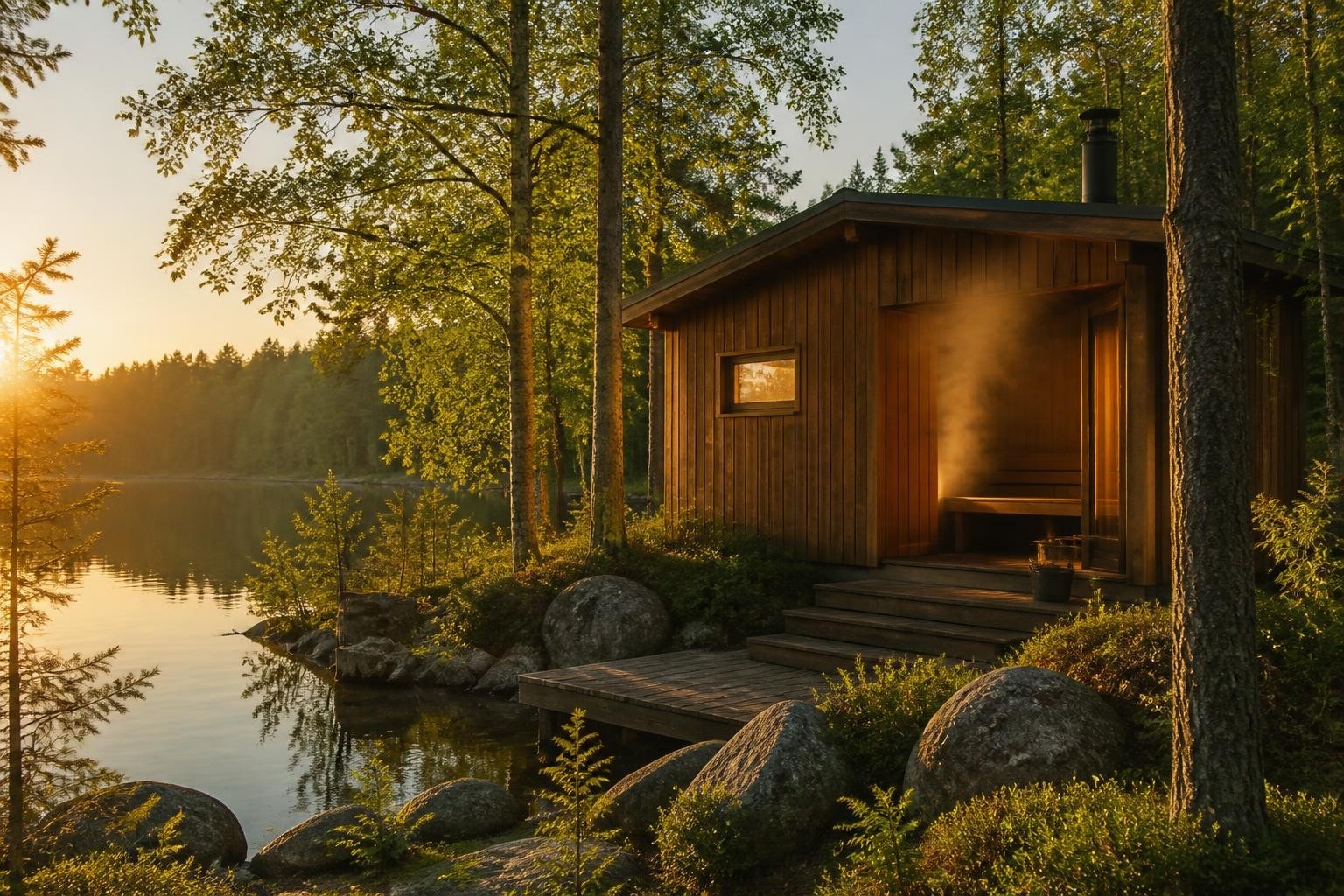
A traditional sauna for home is a wooden room heated to 150–195°F where you pour water on heated stones to create steam. This steam, called löyly in Finnish, defines the traditional experience and separates it from infrared cabins. The heat comes from either an electric heater or wood-burning stove, both holding stones that absorb and radiate warmth.
Most homeowners installing a traditional sauna for home choose between outdoor structures like barrel or cabin designs and indoor rooms built in basements or spare spaces. The decision depends on available space, electrical capacity, and how you want the sauna to fit into daily life.
What Makes a Traditional Sauna Different from Infrared
Traditional saunas heat the air and your skin through convection and radiant heat from stones. When you ladle water onto those stones, the room fills with humid heat that opens pores and raises skin temperature quickly.
Infrared saunas use panels that emit light waves absorbed directly by tissue. No stones, no steam, lower ambient temperature. The comparison between infrared and traditional saunas comes down to heat style and the role of humidity.
Core Elements Present in Traditional Saunas
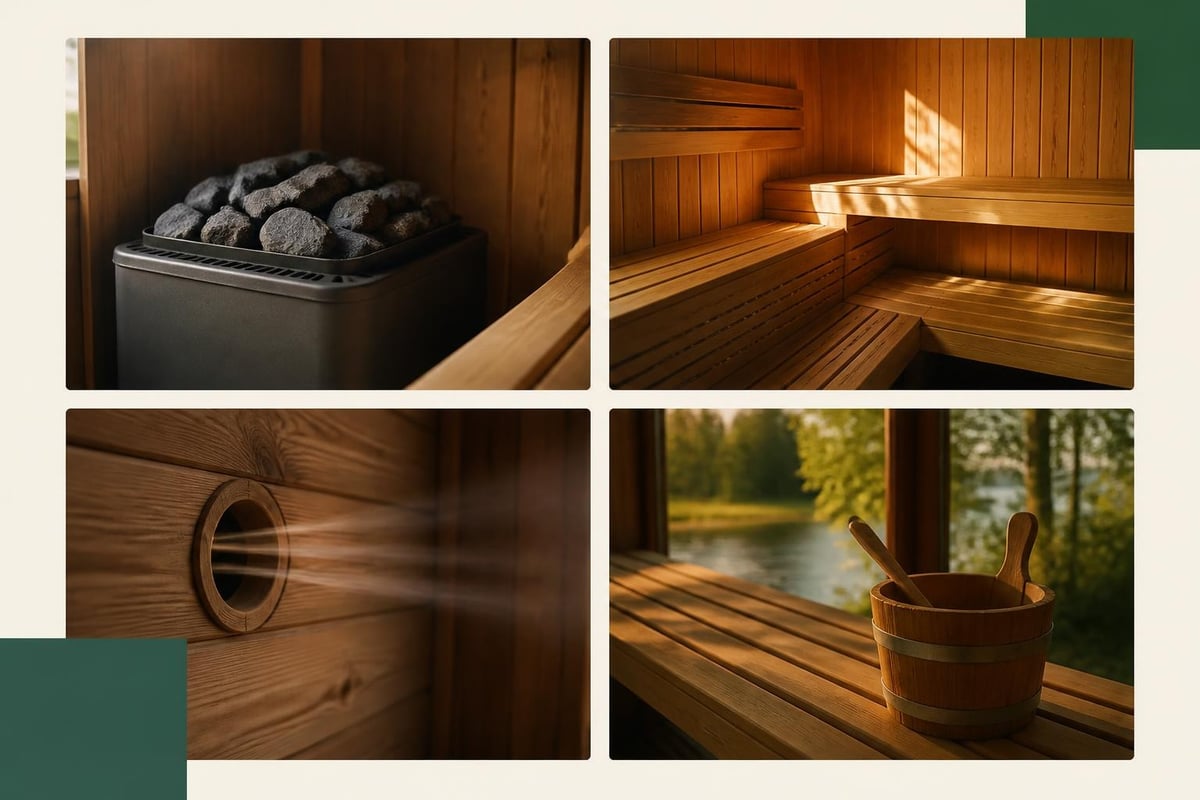
- Heated stones that store thermal mass and create steam
- Wooden interior typically cedar, hemlock, or heat-treated wood
- Ventilation system that brings fresh air near the floor and exhausts near the ceiling
- Benches at multiple heights for temperature variation
- Heater sized to the room volume for proper heat distribution
Traditional saunas reach higher temperatures but allow you to control humidity. A dry session at 180°F feels different from the same temperature with three ladles of water on the stones.
Indoor vs Outdoor Traditional Saunas for Home
| Feature | Indoor Sauna | Outdoor Sauna |
|---|---|---|
| Location | Basement, bathroom, spare room | Backyard, deck, patio |
| Weatherproofing | Minimal | Rain, snow, UV protection needed |
| Electrical Work | Often existing 240V available | May require trenching, conduit |
Indoor installations fit into existing climate-controlled space. You finish the interior with sauna-grade lumber, install vapor barriers, and insulate walls. Electrical work is simpler when a 240V circuit already serves the area.
Outdoor saunas arrive as kits or prebuilt structures. Barrel saunas and cabin designs handle weather exposure but need proper foundation and electrical runs from the main panel.
Climate Considerations for Outdoor Placement
Cold climates create faster heat loss through walls and roof. A well-insulated outdoor traditional sauna for home in Minnesota will use more energy than the same unit in Tennessee. Snow load on the roof matters in northern regions.
Wood expands and contracts with humidity changes. Eastern White Cedar and heat-treated woods resist moisture damage better than standard lumber. Roof shingles, metal banding, and door seals all need inspection after the first winter.
Outdoor placement also allows for a cooling area. Many homeowners in colder states place a cold plunge or hose nearby, creating the contrast cycle without walking through the house.
Electric vs Wood-Burning Heaters
Electric heaters plug into 240V circuits and use resistance elements to heat stones. Temperature control is precise. Most units include timers and remote controls. No smoke, no chimney, no wood storage.
Wood-burning stoves require a chimney that extends above the roofline. They create a different quality of heat, with radiant warmth from the stove body and convection from the stones above. Maintaining the fire becomes part of the ritual.
Heater Sizing and Stone Capacity
Heater output should match room volume. A common guideline is 1 kW per 45–50 cubic feet of interior space. Undersized heaters take too long to reach temperature. Oversized units cycle inefficiently.
Stone mass matters as much as heater power. A 6 kW heater with 40 pounds of stones creates better steam than an 8 kW unit with 20 pounds. The stones act as a thermal battery, absorbing energy and releasing it slowly.
Harvia heaters appear in most quality North American saunas. They size their models clearly and include stone recommendations. The advantage is not where the heater was made but that the sizing matches the sauna volume correctly.
- Small saunas (100–200 cubic feet): 4–6 kW heater, 30–40 lbs stones
- Medium saunas (200–350 cubic feet): 6–8 kW heater, 40–60 lbs stones
- Large saunas (350–500 cubic feet): 8–10 kW heater, 60–80 lbs stones
The guide to traditional sauna heating systems explains how electric and wood heaters distribute heat differently across bench levels.
Choosing the Right Size Traditional Sauna for Home
Sauna size depends on how many people use it at once and whether you prefer sitting or reclining. A two-person sauna is typically 4 feet by 5 feet interior. Four people need at least 6 feet by 7 feet with L-shaped benches.
Taller ceilings waste energy heating unused air. Most traditional saunas for home keep ceiling height between 6'6" and 7'2". The goal is to fit comfortably on the top bench without crouching, not to stand freely.
Bench Layout and Temperature Zones
Two-tier benches create temperature zones. The lower bench sits around 140–160°F. The upper bench, 18 inches higher, reaches 170–190°F. You move between them as your body adapts.
Bench depth affects comfort. Sixteen inches allows sitting upright with feet on the floor. Reclining benches need at least 24 inches. Corner benches maximize capacity in smaller rooms.
Wood Selection for Interior and Exterior
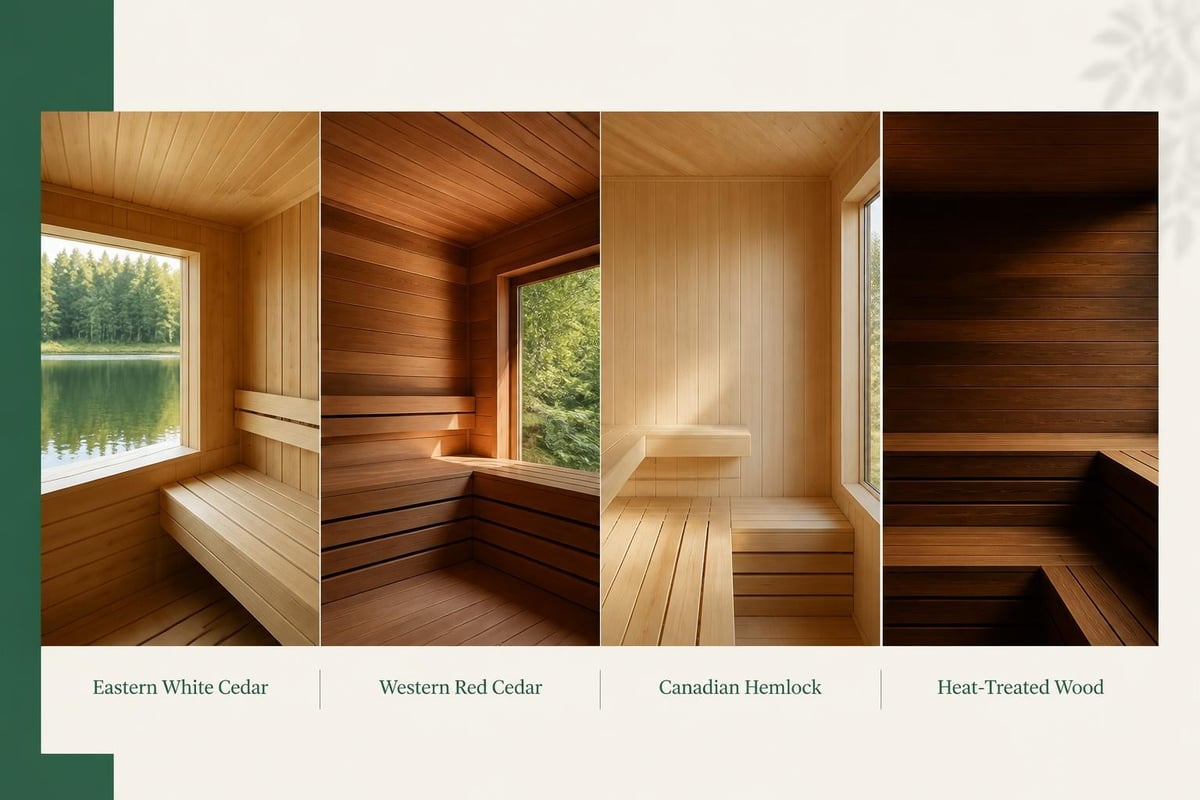
Cedar contains natural oils that resist moisture and decay. Western Red Cedar and Eastern White Cedar are common in North American builds. The scent is distinct and not everyone prefers it.
Hemlock is lighter in color with minimal scent. Canadian Hemlock costs less than cedar and holds up well with proper ventilation. Softwood is easier to mill and finish smoothly.
Heat-treated wood undergoes high-temperature processing that stabilizes dimensions and kills organic material. It resists mold better than untreated lumber. Thermo-treated varieties appear in higher-end indoor saunas where moisture control is critical.
| Wood Type | Scent | Color | Durability |
|---|---|---|---|
| Eastern White Cedar | Mild cedar | Light tan | High |
| Western Red Cedar | Strong cedar | Reddish brown | High |
| Canadian Hemlock | Minimal | Pale cream | Medium |
| Thermo-treated | None | Dark amber | Very high |
Avoid treated lumber, plywood, or any material with adhesives that release fumes when heated.
Electrical Requirements and Installation
Most electric sauna heaters require 240V service at 30–50 amps depending on heater size. A 6 kW heater draws about 25 amps. An 8 kW unit needs 33 amps. The circuit must be dedicated with no other loads.
Indoor installations often tap into existing 240V lines that serve water heaters or dryers. Outdoor saunas need underground conduit or overhead lines from the main panel. Permit requirements vary by municipality.
A licensed electrician should handle all wiring. Ground fault protection is sometimes required depending on local code. The heater manufacturer specifies wire gauge and breaker size in the installation manual.
Ventilation and Air Quality
Traditional saunas need continuous fresh air. A typical system draws air from a vent low on the wall behind or beside the heater. Heated air rises, circulates across the ceiling, and exits through a vent near the top of the opposite wall.
Without proper airflow, carbon dioxide builds up and the sauna feels stale. The room stays too humid or too dry depending on how tightly it's sealed.
Outdoor saunas naturally breathe through small gaps in construction. Indoor rooms need planned intake and exhaust paths. Some builders install small louvered vents. Others leave a gap under the door.
Growing up on Lake Saimaa in Eastern Finland, I learned that sauna works when the room breathes and the stones hold enough heat that water creates real steam, not just moisture. A proper traditional sauna for home is not complicated, but it must be built with attention to airflow, stone mass, and wood that can handle the cycle. That is what makes it last and feel right every session.
Maintenance and Upkeep Over Time
Wood benches and walls need occasional cleaning with water and a mild cloth. Avoid harsh chemicals that leave residue or scent. Let the sauna air out after each use with the door open.
Heater stones crack and crumble over time. Inspect them twice a year. Replace broken stones and rearrange remaining ones to maintain even coverage. Most stones last two to three years with regular use.
Outdoor saunas need seasonal checks. Roof shingles, door seals, and foundation supports shift with freeze-thaw cycles. Metal bands on barrel saunas may need tightening. Wood surfaces benefit from occasional oil or stain to resist UV and moisture.
Mountain Health and Performance in North Vancouver integrates sauna use into recovery protocols for athletes managing chronic muscle tension and joint stress. The practice supports tissue repair when combined with manual therapy and movement training.
Cost Considerations for Home Installation
A traditional sauna for home ranges from basic kit models to custom-built rooms. Barrel kits start around mid four figures for a small two-person unit. Larger outdoor cabins with porches reach higher into five figures.
Indoor builds depend on whether you're converting existing space or adding new construction. Basement installations save on foundation and roofing but may need moisture barriers and upgraded ventilation.
Operating cost depends on heater size and session frequency. A 6 kW heater running for one hour uses 6 kWh. At average residential rates, that is under one dollar per session. Outdoor saunas in cold climates use more energy to compensate for heat loss.
Installation Options and Timelines
- Prebuilt outdoor saunas: Delivered assembled or as large panels, installed in one day
- Kit saunas: Precut lumber and hardware, assembled over a weekend by two people
- Custom indoor builds: Framing, insulation, wiring, finishing takes two to four weeks
Best Roofing & Siding in Central Ohio works with homeowners adding outdoor structures like saunas and notes that proper roofing materials and flashing prevent water damage that shortens wood life.
Many first-time buyers research for months before selecting a model. The decision is not just about size and budget but how the sauna fits into the property and daily routine.
Integrating Sauna into Daily Life
A traditional sauna for home becomes part of your routine when it is easy to reach and simple to operate. Outdoor saunas work well if you enjoy the walk outside and the cooling air between heat rounds. Indoor units remove weather as a barrier.
Some homeowners use sauna three to four times weekly. Others reserve it for weekends or after intense physical work. Frequency depends on preference, not a set protocol.
Outdoor sauna placement affects how often you use it. A sauna visible from the kitchen window or near the back door sees more use than one tucked in a far corner of the yard.
Pairing Sauna with Cold Exposure
The cycle of heat and cold has been practiced in Finland and Scandinavia for centuries. After a sauna session, stepping into cold water or snow creates a distinct physiological response. Blood vessels constrict, heart rate adjusts, and the body shifts rapidly from heat stress to cold adaptation.
Not everyone tolerates or enjoys cold exposure. It is optional, not required for a satisfying sauna experience. But for those who do, placing a cold plunge or outdoor shower near the sauna makes the practice simple.
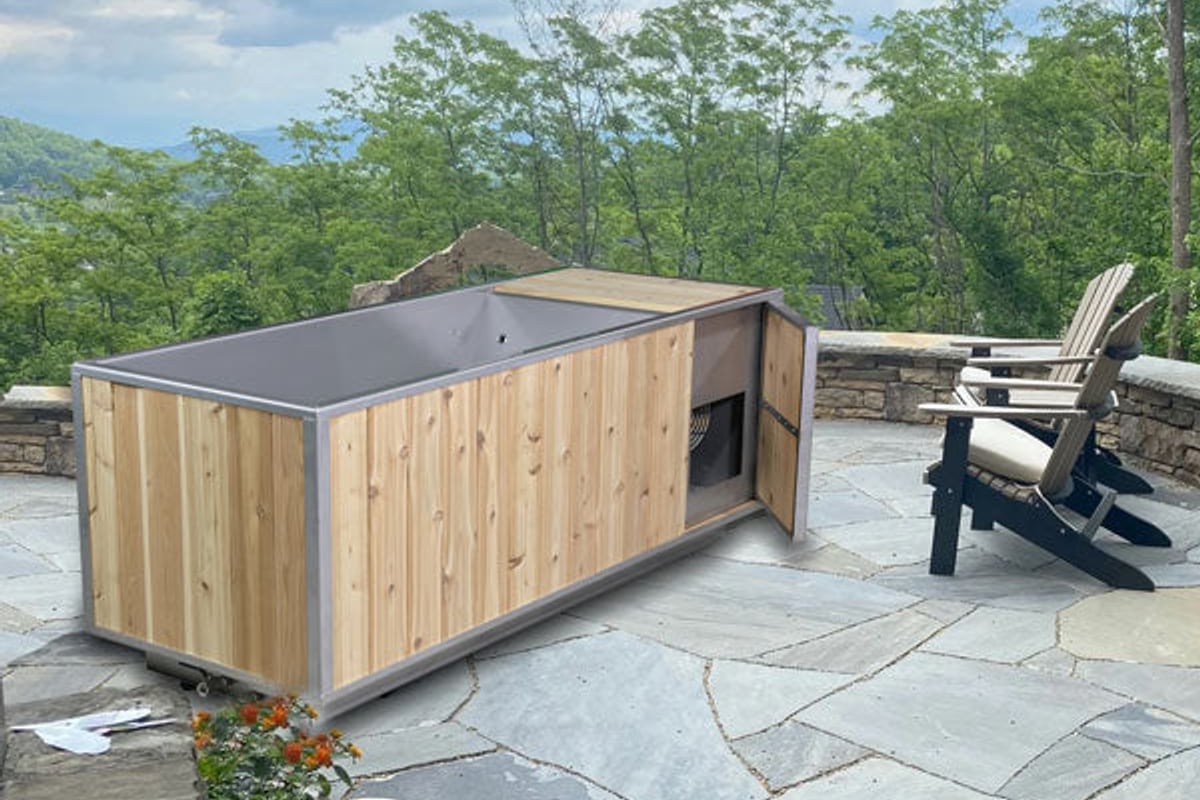
The LeisureCraft Flow Cold Plunge offers a built-in chiller and professional-grade construction designed to sit beside traditional saunas. It arrives ready to use, with stainless steel interior and natural cedar exterior that matches most outdoor sauna finishes.
Comparing Home Sauna Types Side by Side
Understanding the practical differences between sauna styles helps homeowners match the right system to their space and goals.
| Sauna Type | Heat Method | Humidity Control | Installation |
|---|---|---|---|
| Traditional Electric | Heated stones, electric element | Water on stones | 240V circuit, ventilation |
| Traditional Wood | Heated stones, wood fire | Water on stones | Chimney, firewood storage |
| Infrared | Light panels | None | 120V or 240V, minimal ventilation |
The cost and installation comparison between infrared and traditional systems shows that infrared requires less electrical work but offers no steam or stone-based heat.
Addressing Common Concerns Before Purchase
First-time buyers often worry about energy use, space requirements, and whether they will actually use the sauna regularly. Energy cost is measurable and modest for most users. Space can be optimized with careful planning.
The question of regular use depends on access and ease. A sauna that requires 30 minutes of prep time sees less use than one that heats in 40 minutes with a single switch.
Permit requirements vary by location. Most municipalities treat outdoor saunas like accessory structures. Some require setbacks from property lines. Indoor builds in finished basements rarely need permits unless electrical or structural work is involved.
Home sauna installation considerations include proximity to plumbing for cleaning, drainage if you rinse down the interior, and access for moving the heater and stones during initial setup.
Customization and Design Choices
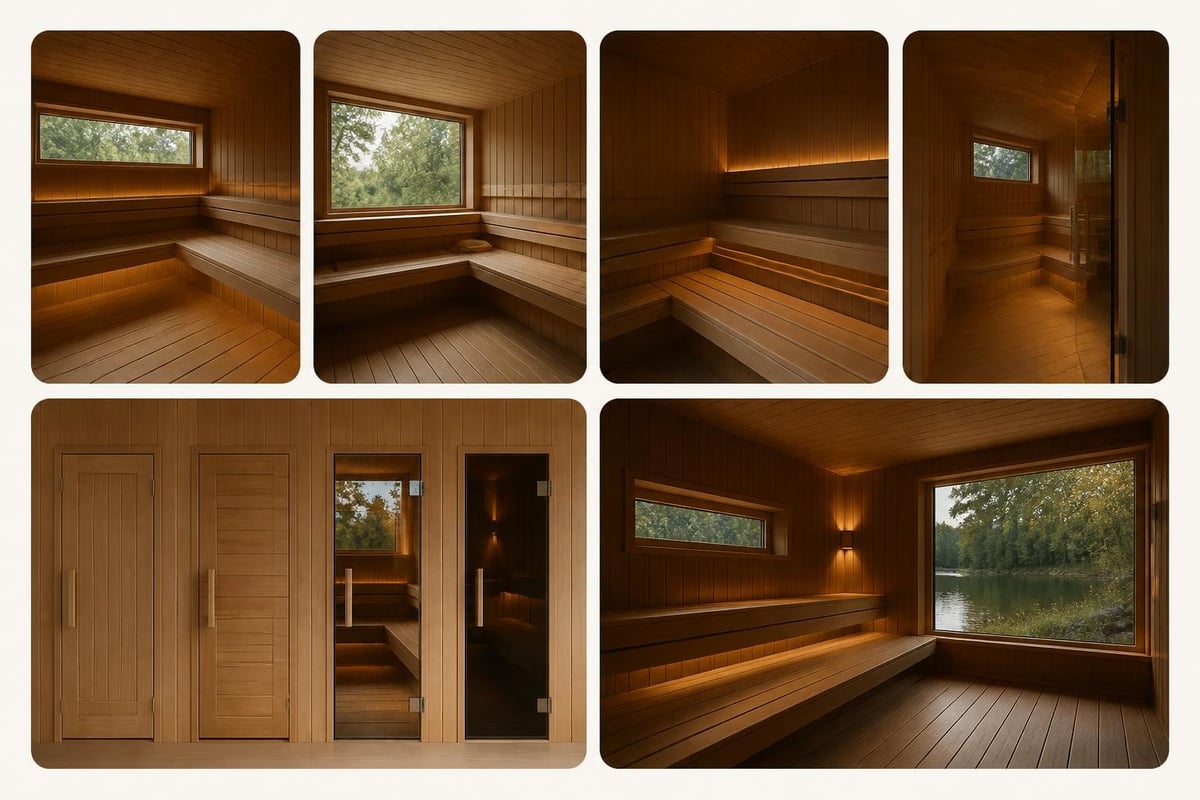
Traditional saunas allow for personal touches beyond basic function. Lighting options range from simple bulbs to LED strips with color temperature control. Some homeowners add windows for natural light or views. Others prefer an enclosed space without distraction.
Bench configuration can be customized during build. Single-tier straight benches maximize floor space. L-shaped two-tier layouts fit more people. Reclining benches require more depth but allow full-body stretch.
Door style affects both heat retention and aesthetics. Solid wood doors hold heat better. Glass doors bring light into the room and create visual connection to the outside. Many modern designs use full-glass fronts with tempered safety glass.
Stage Joy in San Diego notes that well-designed outdoor wellness spaces, including saunas, increase property appeal and create focal points that buyers remember during home tours.
Regional Factors Affecting Sauna Performance
Cold climates demand better insulation and weatherproofing for outdoor saunas. Snow load on roofs and frost heave in foundations require attention in northern states and Canadian provinces.
Humidity levels in the Southeast affect wood stability. Proper ventilation prevents mold in high-humidity regions. Wood selection matters more when ambient moisture is consistently high.
Altitude changes how quickly water boils and evaporates. High-altitude locations may notice slightly different steam behavior from the same amount of water on stones.
Texcore Construction in Fort Worth handles commercial and residential roofing and emphasizes that outdoor structures like saunas need properly flashed roofs and sealed penetrations to prevent leaks that damage interior wood over time.
Frequently Asked Questions
How long does it take to heat a traditional sauna for home?
Most electric saunas reach operating temperature in 30 to 45 minutes. Wood-burning units take 45 to 60 minutes depending on fire management and outdoor temperature.
Can I install a traditional sauna in a small bathroom?
Yes, if the room has adequate ventilation and space for benches. Minimum practical size is about 4 feet by 4 feet interior. Moisture barriers and proper exhaust are critical in bathroom installations.
Do I need a floor drain in my sauna?
Floor drains are optional. Most home saunas do not include them. If you plan to rinse the interior regularly or create very humid conditions, a drain simplifies cleanup.
What temperature should a traditional sauna reach?
Most users find 160–180°F comfortable. You can adjust based on preference. The top bench will be 20–30°F warmer than the lower bench.
How often should I replace sauna stones?
Inspect stones every six months. Replace cracked or crumbling stones immediately. Full replacement is typically needed every two to three years with regular use.
A traditional sauna for home delivers authentic heat and steam when built with attention to stone capacity, airflow, and wood quality. The choice between indoor and outdoor, electric and wood, depends on your space and how you want sauna to fit into daily life. RecoSauna offers traditional outdoor and indoor models from authorized dealers, with personal guidance on sizing and setup. Petri answers every question about heater selection, installation, and long-term care. Ask Petri About Your Sauna.
Share:
Best Home Sauna: Traditional vs Infrared for 2026
Barrel Sauna Kit: Complete Guide to Buying and Assembly