
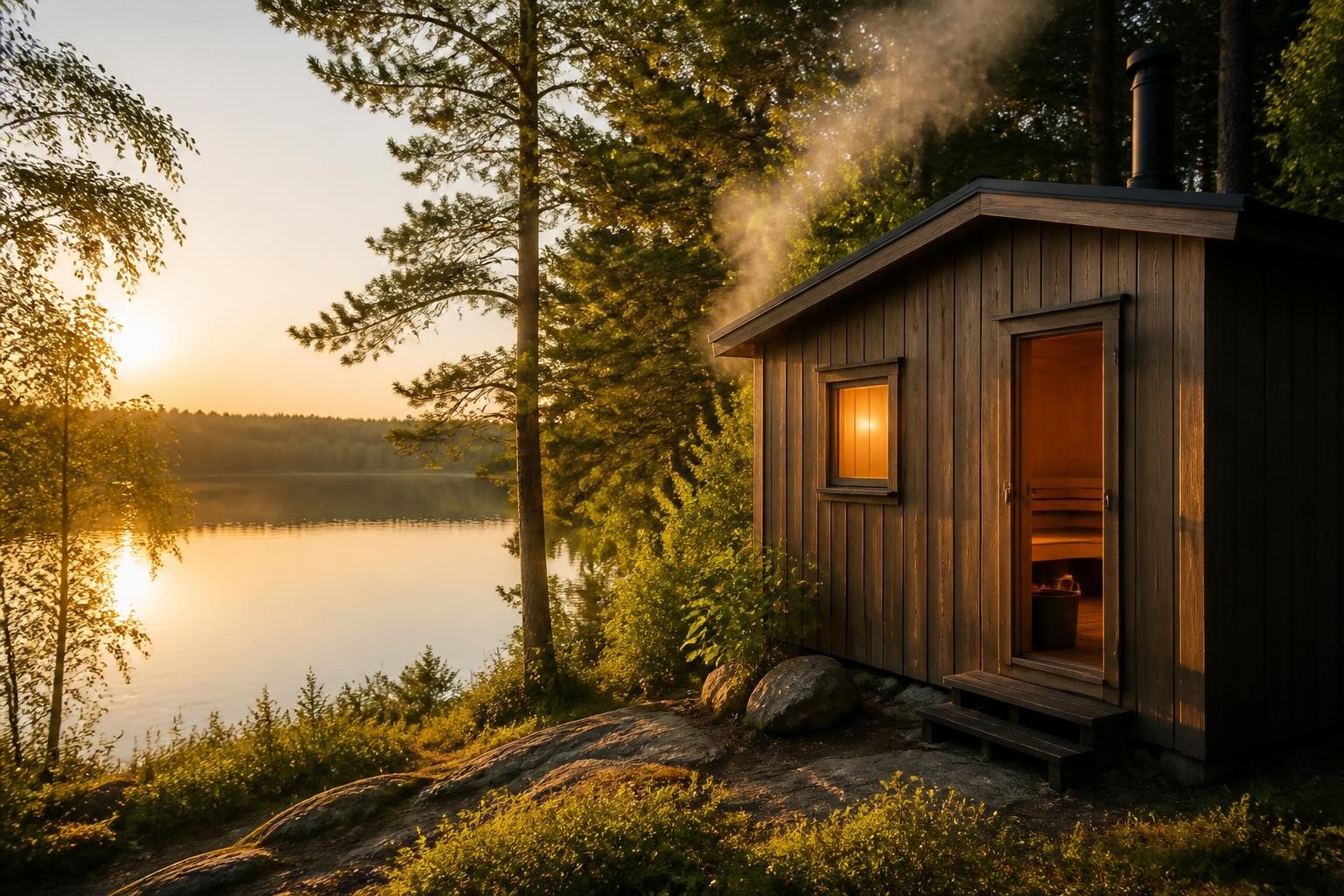
The best home sauna depends on how you plan to use it. Traditional Finnish saunas with hot stones create steam and high heat, while infrared models use radiant panels for lower temperatures and no humidity. Your choice comes down to space, installation requirements, and whether you want the experience of löyly or the convenience of plug-and-play heat.
Traditional vs Infrared: The Core Difference
Traditional saunas heat the air to 150-195°F using an electric or wood-fired heater filled with stones. You pour water on the stones to create steam. The heat surrounds you.
Infrared saunas use carbon or ceramic panels to emit radiant heat that warms your body directly. Air temperature stays between 120-140°F. No steam, no stones, no water ritual.
| Feature | Traditional | Infrared |
|---|---|---|
| Heat source | Stones + heater | Radiant panels |
| Temperature | 150-195°F | 120-140°F |
| Humidity | Optional steam | Dry only |
| Preheat time | 30-45 min | 10-15 min |
| Installation | 240V often needed | 120V plug-in |
The traditional approach reflects how Finns have used saunas for generations. The infrared category emerged in the 1990s as a lower-temperature alternative.
What Traditional Steam Saunas Offer
A traditional sauna requires a heater sized to the room's cubic footage. Too small and the sauna never reaches temperature. Too large and it cycles inefficiently.
Stone mass matters more than most buyers realize. A heater holding 40-60 pounds of stones retains heat longer and produces better steam than one with 20 pounds. The stones act as thermal mass, smoothing out temperature swings.
Most quality saunas in North America use Harvia heaters. The difference between brands often comes down to wood quality, construction methods, and how the sauna is insulated and sealed.
You need either 240V electrical service or a wood-burning setup. Installation costs vary, but expect electrical work if you don't already have the right circuit.
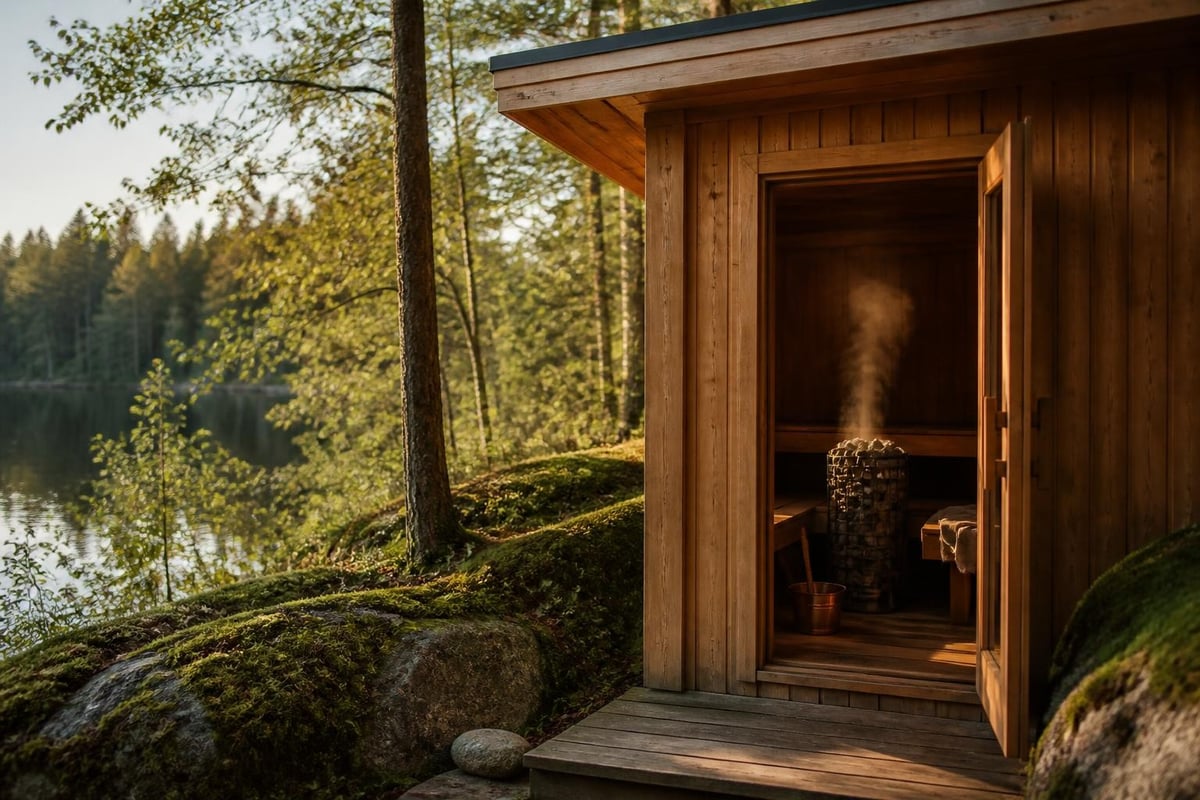
Infrared Models and Their Trade-Offs
Infrared saunas plug into standard household outlets. Assembly usually takes two people a few hours. No electrician, no permits in most cases.
The panels emit near, mid, or far infrared wavelengths. Far infrared is most common. Full-spectrum models include all three, though research on whether the different wavelengths produce different effects remains limited.
Carbon panels run cooler and cover more surface area. Ceramic elements concentrate heat in smaller zones. Both work, but carbon tends to distribute warmth more evenly.
Some users prefer the lower temperatures. Others find infrared lacks the intensity of traditional heat. Neither is better. They're different tools.
Indoor and Outdoor Placement
Indoor saunas require ventilation, moisture-resistant flooring, and often a dedicated space. Basements work well if you have ceiling height above seven feet. Spare bathrooms or closets can convert if properly sized.
Outdoor models handle weather exposure but need level foundations. Concrete pads, gravel bases, or deck installations all work. Barrel saunas shed rain naturally. Cabin-style units need proper roof pitch and sealed construction.
Climate affects outdoor sauna use. In Minnesota or Alberta, you can use a well-built outdoor sauna year-round. In milder regions, outdoor units extend the usable season without heating the house.
Location changes the experience more than most expect. An outdoor sauna encourages you to step into cold air or snow between rounds. An indoor unit keeps you inside, often leading to shorter, single sessions.
For those building a home wellness space, pairing a sauna with cold therapy creates the contrast cycle. Cold plunges placed near outdoor saunas turn a backyard into a recovery area.
Sizing Your Home Sauna
Sauna size determines capacity, heat-up time, and placement options. Manufacturers rate capacity, but realistic use often runs lower.
Square Footage and Bench Layout
A two-person sauna typically measures 4x4 or 4x5 feet. Tight for two adults to lie down, comfortable for two sitting.
Four-person models run 6x6 to 6x8 feet. These fit two lying down or four sitting upright.
Bench configuration matters as much as floor space. L-shaped benches maximize corner units. Straight benches along one or two walls work for rectangular rooms.
Upper benches should sit at least 36 inches above the floor to place your head in the warmest air. Lower benches provide a cooler zone for gradual warm-up or rest between rounds.
Ceiling Height Requirements
Traditional saunas need 6.5 to 7 feet of interior ceiling height minimum. Taller spaces waste heat unless you build tiered benches that bring seated users into the warm upper air layer.
Infrared units run shorter, often 6 to 6.5 feet, since air temperature matters less than panel proximity.
Barrel saunas curve overhead, giving a lower overall profile while maintaining usable space. The round shape also heats efficiently, with less air volume than a square room of similar floor area.
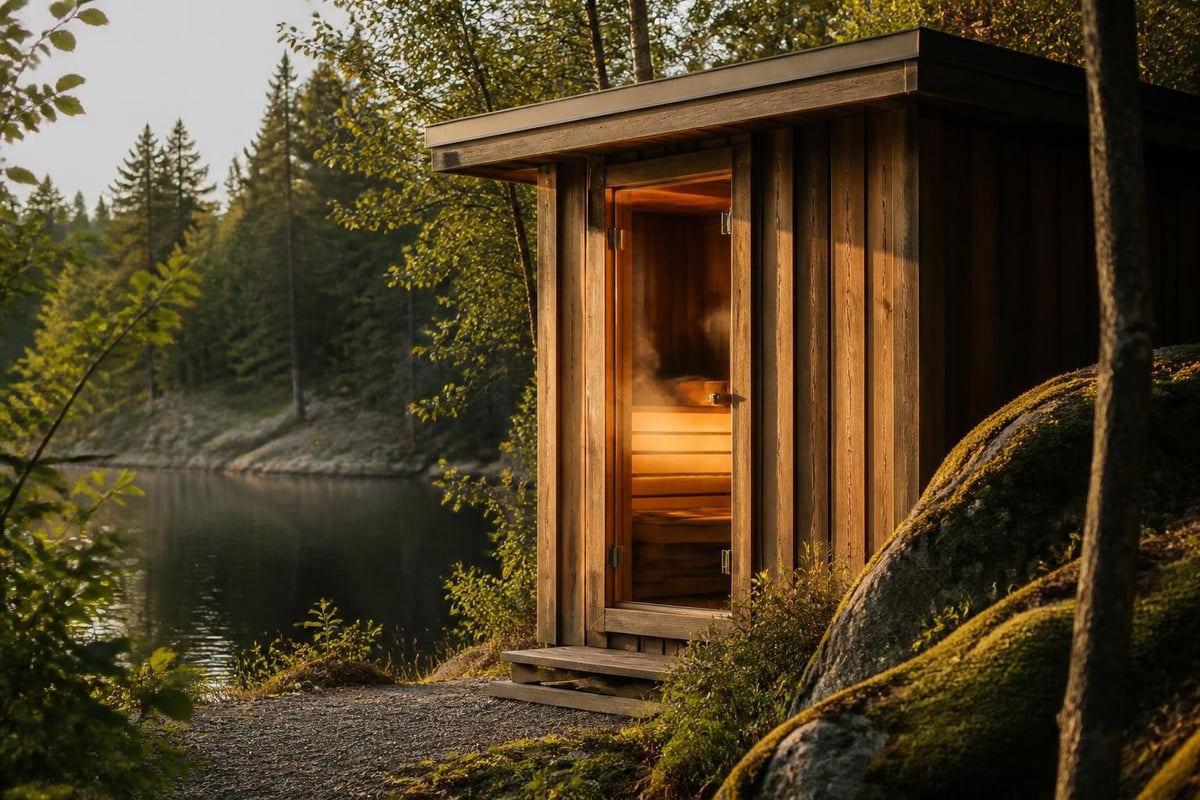
Wood Species and Build Quality
The wood you sit on and breathe near affects durability, scent, and maintenance.
Cedar, Hemlock, and Nordic Woods
Western Red Cedar resists moisture and insects naturally. It smells pleasant when heated and weathers to silver-gray outdoors. Common in North American-built saunas.
Canadian Hemlock runs lighter in color with minimal scent. It's softer than cedar, less prone to splintering, and often used in infrared cabins where high heat and steam aren't factors.
Nordic spruce and pine appear in European-style saunas. Lighter woods that handle high heat well but require more careful moisture management.
Thermo-treated woods undergo heat processing to improve moisture resistance and dimensional stability. Darker appearance, similar performance to cedar without the natural oils.
Avoid treated lumber, painted surfaces, or plywood with formaldehyde-based adhesives inside the sauna. Heat releases chemicals you don't want to breathe.
Construction Methods That Last
Quality saunas use tongue-and-groove paneling that expands and contracts without gaps. Cheaper models rely on thinner panels that warp or crack after a few years of heat cycles.
Insulation placement separates good saunas from adequate ones. Foil vapor barriers belong on the warm side of insulation in a traditional sauna to block moisture from reaching the wall cavity. Infrared saunas need less aggressive moisture control but still benefit from insulated walls in cold climates.
Exterior-grade fasteners, sealed roofs, and proper door weatherstripping extend outdoor sauna life. A well-built barrel or cabin sauna should last twenty years with basic maintenance.
Heater Selection and Control Systems
Heater quality and control accuracy affect every session.
Sizing the Heater Correctly
Heater output is rated in kilowatts. Match the rating to your sauna's interior volume in cubic feet.
A rough guideline: you need about 1 kW per 45-50 cubic feet in a well-insulated traditional sauna. A 6x6x7 foot sauna holds 252 cubic feet, suggesting a 5-6 kW heater.
Undersized heaters run constantly and never reach target temperature. Oversized units cycle on and off rapidly, reducing stone heat retention and shortening element life.
Digital vs Analog Controls
Analog controls use a dial or knob. Simple, durable, fewer parts to fail. Less precise temperature hold.
Digital controls offer exact temperature settings, timers, and remote operation via smartphone apps in some models. More features, more complexity.
For infrared saunas, digital controls often include chromotherapy lighting, Bluetooth speakers, and multi-zone panel control. Useful if you want those features. Unnecessary if you just want heat.
Safety Features Worth Having
Automatic shutoff after a set time prevents hours-long operation if you forget to turn the sauna off. Standard on most electric models.
Overheat protection cuts power if internal temperature exceeds safe limits. Required by most building codes.
Ground fault circuit interrupters (GFCIs) protect against electrical faults in high-moisture environments. Your electrician should install one on the sauna circuit.
Comparing Leading Home Sauna Options
Different models serve different needs. No single unit is best for everyone.
Barrel Saunas for Outdoor Use
Barrel saunas shed water naturally and heat efficiently due to their round shape. The curved ceiling keeps warm air close to your head without requiring tall walls. Barrel saunas typically seat two to four people and ship as a kit you assemble on-site.
Eastern White Cedar barrels weather well in cold climates. They require a level base but no foundation. You can place them on a gravel pad, concrete slab, or deck rated for the weight.
Most accept electric heaters, some allow wood-burning stoves. Electric versions need 240V service run to the location.
Cabin-Style Outdoor Saunas
Cabin saunas offer more interior space and vertical walls for easier bench configuration. They look like small outbuildings and can include changing rooms or covered porches.
These require more complex assembly than barrels. Roof installation, door hanging, and window sealing take more time. The result is a structure that blends into your property as a permanent feature.
Wood-fired cabin saunas need chimney installation and clearance from combustibles. Electric models need the same 240V service as barrels but install more like a shed than a appliance.
Indoor Infrared Cabins
Indoor infrared saunas arrive as panels you connect in a bedroom, basement, or spare room. The Lumin Infrared Sauna One represents the compact end of this category, designed for one to two users in a small footprint.
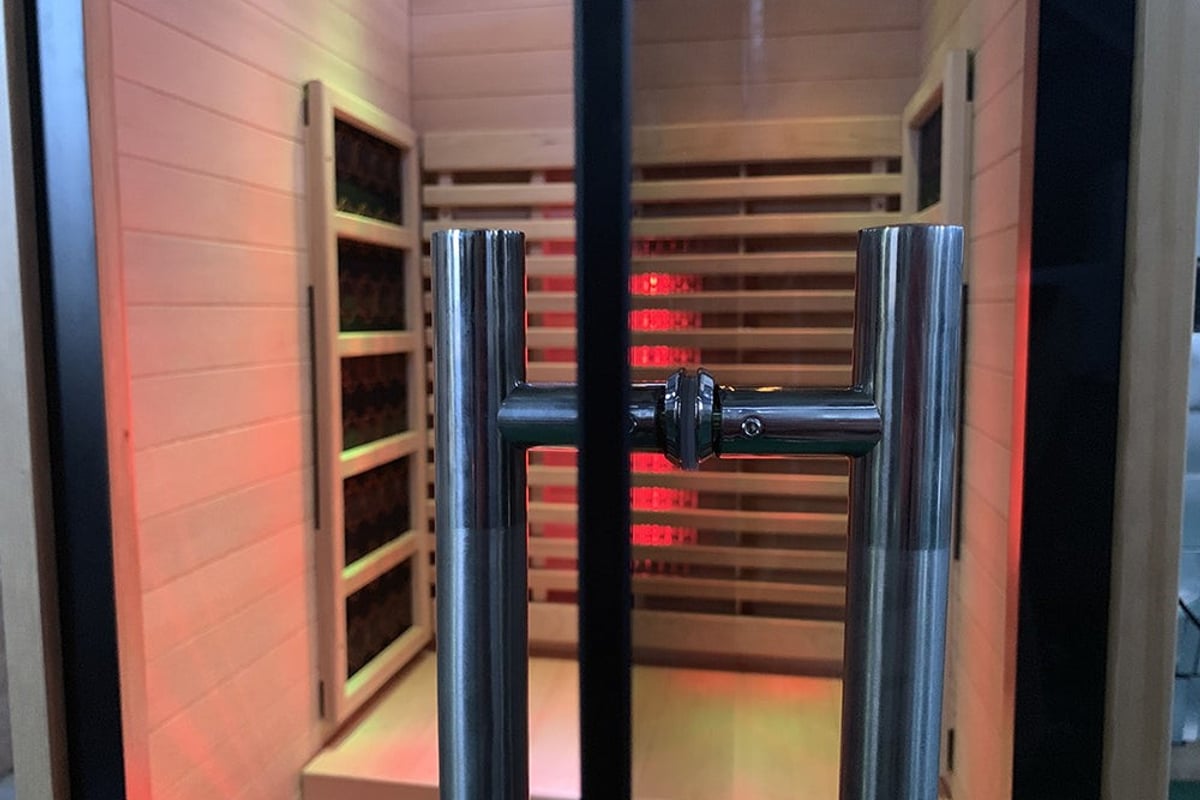
These units weigh 200-400 pounds fully assembled, light enough for second-floor installation in most homes. No moisture concerns like a traditional steam sauna, so you can place them on carpet or wood floors with a protective mat underneath.
Assembly usually takes two to four hours. Panels clip or bolt together, wiring connects via plugs, and the control panel mounts last.
Full-spectrum models include near-infrared elements in addition to far-infrared panels. The near-infrared lamps produce visible red light and run hotter, positioned at torso height. Research on whether this provides measurable benefit over far-infrared alone remains limited.
Traditional Indoor Steam Saunas
Indoor traditional saunas require more planning but deliver the authentic Finnish experience. You need moisture-resistant flooring, wall protection, and ventilation to handle steam.
Prefab kits include insulated wall panels, benches, heater, and controls. Custom-built options let you match existing room dimensions and finishes.
Proper installation includes a floor drain or sloped floor to manage condensation, especially if you plan to create heavy steam. A vent near the ceiling and an intake near the floor ensure air circulation.
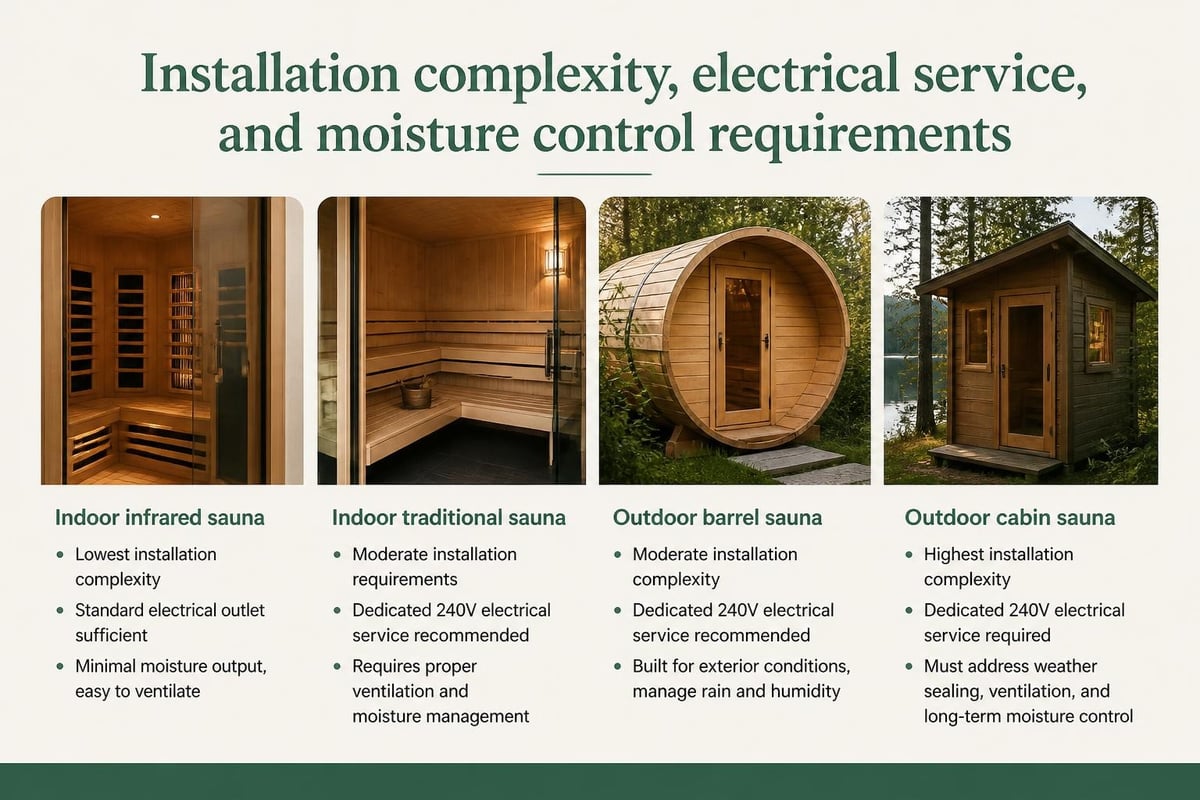
| Sauna Type | Installation Time | Electrical Needs | Moisture Management |
|---|---|---|---|
| Indoor infrared | 2-4 hours | 120V standard outlet | Minimal |
| Indoor traditional | 1-3 days | Usually 240V circuit | Ventilation + drainage |
| Outdoor barrel | 4-8 hours | 240V or wood-fired | Natural shedding |
| Outdoor cabin | 1-3 days | 240V or wood-fired | Roof + seal required |
What I Learned Growing Up with Sauna
I grew up on Lake Saimaa in Eastern Finland, where sauna was never optional. We heated ours three times a week year-round, more in summer. The ritual was simple: heat the stones until they glowed orange, pour water, let the steam settle over you, then walk into the lake regardless of season. That shift from heat to cold and back again was just how you ended a day. Not recovery, not therapy. Just Saturday.
What matters now, choosing a sauna for your home, is the same thing that mattered then: will you actually use it? A complicated sauna that takes an hour to prepare sits idle. A unit placed too far from the house gets skipped in winter. The best home sauna is the one that fits your space and routine so naturally you stop thinking about it as effort.
Common Questions About Home Saunas
How long does a home sauna last?
A well-built traditional sauna lasts 20-30 years with basic maintenance. Infrared units typically run 10-15 years before panels or controls need replacement. Outdoor models in harsh climates may need refinishing or resealing every 5-10 years.
Can I install a sauna myself?
Barrel and cabin sauna kits are designed for DIY assembly if you're comfortable with basic tools. Infrared cabins assemble with minimal skills. Traditional indoor saunas often need professional electrical work and sometimes plumbing for drainage. Always check local building codes and permit requirements.
How much does it cost to run a home sauna?
A 6 kW electric sauna running for one hour uses 6 kWh of electricity. At average 2026 US electricity rates, that's roughly $0.75-$1.25 per session. Infrared units use 1.5-3 kW, costing $0.20-$0.50 per hour. Wood-fired saunas depend on local firewood costs.
Do I need special ventilation?
Traditional steam saunas need air intake low and exhaust high to circulate fresh air and remove moisture. Infrared saunas produce no steam but still benefit from occasional air exchange. Outdoor saunas naturally ventilate when you open the door between rounds. Indoor installations should follow manufacturer specifications and local codes.
What's the difference between near, mid, and far infrared?
Far infrared penetrates skin and is most common in home saunas. Near infrared produces visible red light and runs hotter but covers less surface area. Mid infrared falls between the two. Research shows association between infrared exposure and various outcomes, but studies don't prove one wavelength superior to another for home use. Full-spectrum models include all three.
Selecting Your First Home Sauna
Start with your space and electrical capacity. Measure the area where the sauna will sit. Check your electrical panel for available circuits or budget for an electrician to install 240V service.
Decide on heat type based on temperature preference. If you want 180°F and steam, choose traditional. If 130°F dry heat sounds more comfortable, look at infrared.
Consider how the sauna integrates with your property. An outdoor sauna becomes a destination, especially when paired with cold therapy. An indoor unit offers convenience but changes the ritual.
Read recent comparisons from sources like Forbes and Popular Science to see how current models perform in real testing, but remember that published reviews often focus on features rather than long-term durability.
Quality matters more than brand recognition. Look for solid wood construction, proper insulation, and heaters sized correctly to the interior volume. Avoid thin panels, undersized heaters, and cabins marketed primarily on appearance rather than thermal performance.
Understand what's unknown. Some manufacturers claim specific health outcomes, but most research shows association, not causation. Sauna use correlates with various wellness markers in population studies, but individual results vary. Use a sauna because you enjoy it and it fits your routine, not because you expect measurable changes from any specific feature.
Maintenance and Long-Term Care
Saunas require less maintenance than most buyers expect, but a few regular tasks prevent problems.
Cleaning and Moisture Control
Wipe benches after use if you sweat heavily. This prevents salt buildup and discoloration. Use a damp cloth, no cleaners.
Infrared saunas need occasional panel cleaning. Dust reduces heating efficiency. A soft cloth removes surface dust without scratching.
Traditional saunas benefit from leaving the door open after use to dry the interior. In humid climates, run a fan to speed moisture removal.
Wood Treatment and Refinishing
Outdoor saunas weather naturally. Cedar turns gray without affecting performance. If you prefer the original color, apply a UV-protective oil every 2-3 years.
Indoor sauna wood darkens with use from heat and oils. This is normal. Avoid varnishes or sealants inside the hot room-they off-gas when heated.
Sand and refinish benches if they become rough or splintered. Light sanding restores smooth surfaces. No need to replace wood unless it's cracked or rotted.
Heater and Stone Replacement
Sauna stones crack and crumble over time. Inspect them annually and replace broken pieces. Most heaters hold 30-60 pounds of stones.
Electric heating elements last 5-10 years in residential use. Longer if the sauna isn't used daily, shorter if it runs at maximum temperature constantly.
Keep the heater area clear of debris. Dust and lint reduce efficiency and can create odors when burned.
Getting the Best Home Sauna for Your Situation
The best home sauna balances your available space, budget, and how you actually plan to use it. A two-person indoor sauna fits a couple's evening routine differently than a four-person outdoor cabin designed for family weekends.
Research takes time. Most buyers spend months comparing options before purchasing. That's appropriate for a product you'll use for years. Focus on construction quality and proper sizing rather than marketing claims.
Talk to someone who knows saunas from experience, not just from reading spec sheets. Understanding how stone mass, ventilation, and wood species affect real-world use matters more than comparing wattage numbers.
If you're weighing cost against quality, consider that a well-built sauna becomes part of your home. A cheap unit that fails in three years costs more than a quality model that lasts twenty. Detailed brand comparisons help, but specifications alone don't tell you whether a sauna is built to last.
Choosing the best home sauna comes down to understanding the difference between traditional steam and infrared heat, then matching that to your space and routine. I answer every question personally because sauna decisions depend on details-your climate, your electrical setup, whether you want the ritual of löyly or the convenience of quick warmth. Ask Petri About Your Sauna and we'll find what works for your home.
Share:
Outdoor Traditional Sauna: Guide for North America 2026
Traditional Sauna for Home: Full Guide (2026)