
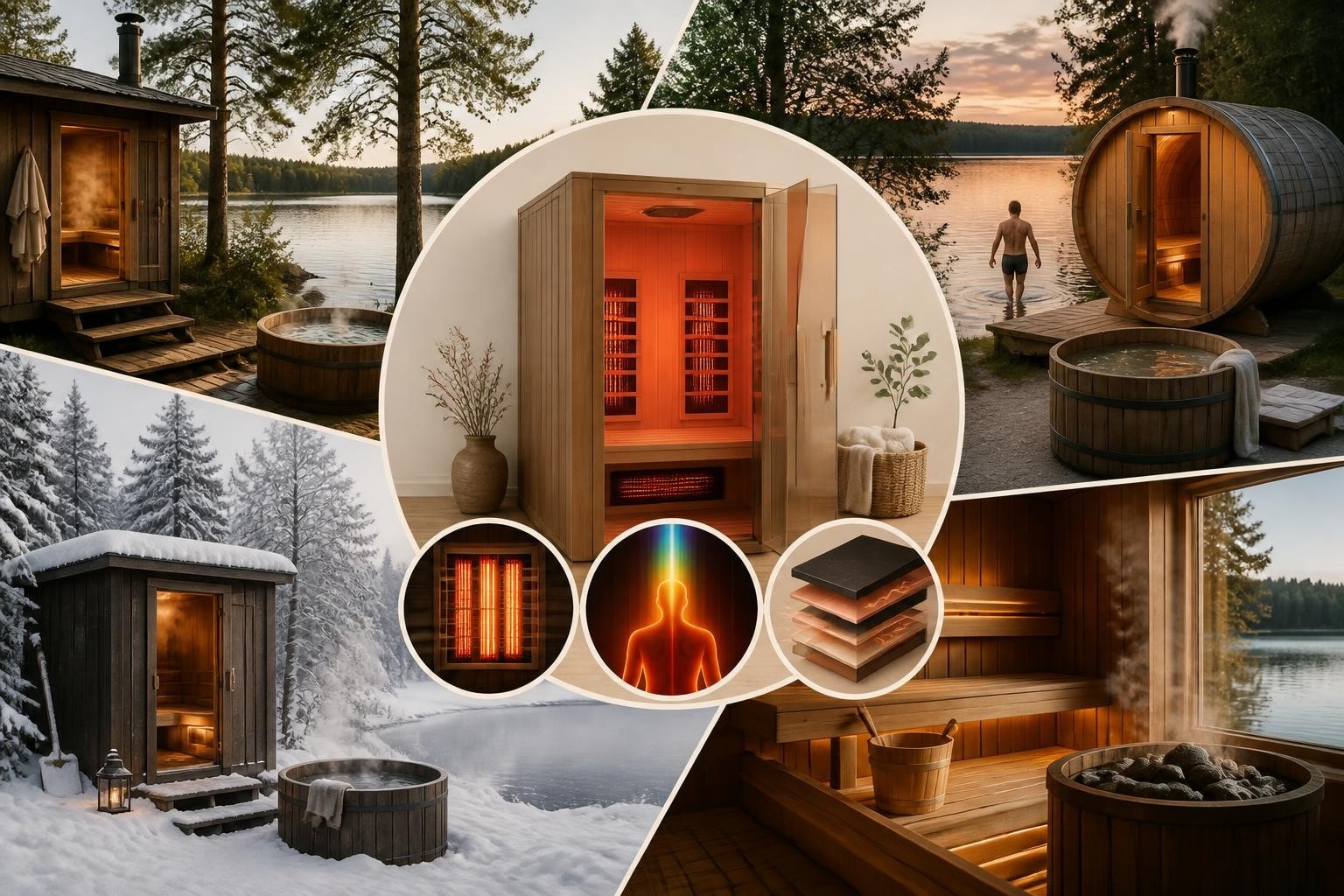
A portable infrared sauna fits in spaces where traditional saunas cannot, but the name can mislead you. Most models are not truly portable in the sense of moving them room to room. They are compact infrared units you can set up without permanent installation, often delivered to a bedroom, home gym, or spare room where they stay. What matters is not how often you move it, but whether the heat reaches deep enough to support real recovery. The Finnish tradition I grew up with centers on löyly, the steam rising from water hitting hot stones. That heat penetrates muscle and shifts your body from stress to repair. Infrared saunas use a different mechanism, light waves instead of steam, but the goal is the same: help your body recover.
What Makes a Portable Infrared Sauna Different
A portable infrared sauna typically means a prefabricated unit that plugs into a standard 120V outlet and requires no special wiring or ventilation work. You assemble the panels, connect the heating elements, and begin sessions the same day.
Key characteristics include:
- Pre-cut wood panels that clasp or interlock without carpentry skills
- Carbon or ceramic heating panels installed during manufacturing
- Tempered glass door or fabric enclosure depending on the model
- Digital controls for temperature and session timing
- Compact footprint, often between 36 and 48 inches wide
This differs from a custom-built infrared sauna that requires electrical upgrades or structural changes to your home. The portability allows flexibility if you move, rent, or want to test sauna therapy before committing to a permanent backyard structure.
How Infrared Heat Works in Your Body
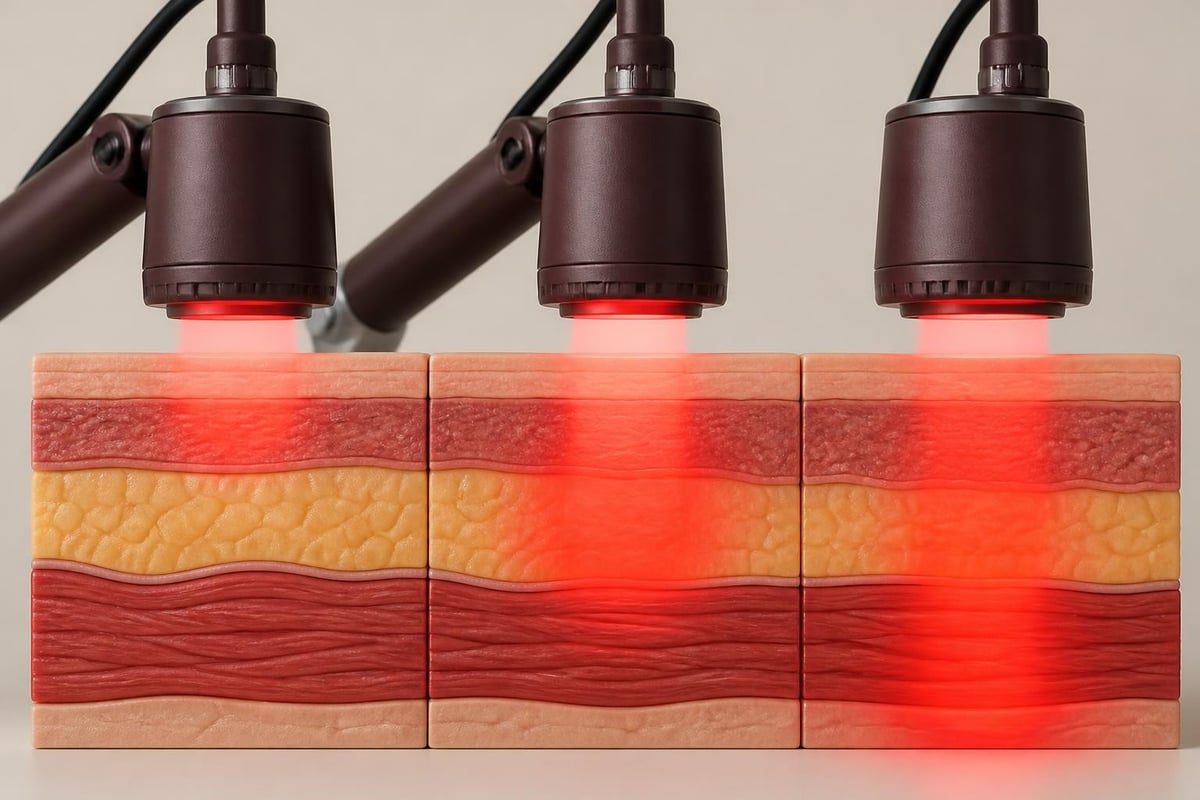
Infrared saunas emit light in the far-infrared spectrum, a wavelength your skin absorbs directly. Unlike the convection heat of a Finnish steam sauna, infrared does not heat the surrounding air as intensely. Instead, the waves penetrate one to two inches beneath your skin, warming tissue and increasing circulation without the same ambient temperature.
Prof. Jari Laukkanen at the University of Eastern Finland has published research in Mayo Clinic Proceedings, BBC, TIME, and The New York Times showing that regular sauna use, four to seven sessions weekly, reduces cardiovascular death risk by 51%. His studies focused on traditional Finnish saunas, but the physiological response to heat stress overlaps with infrared therapy when sessions are long enough and hot enough to raise core temperature.
The key is understanding that infrared alone does not replicate löyly. You lose the ritual of water on stones and the humidity that opens airways. But for people in apartments, condos, or climates where outdoor saunas are impractical, a portable infrared sauna offers a path to consistent heat therapy.
Choosing the Right Portable Infrared Sauna
Not every portable infrared sauna delivers the same heat quality or safety profile. You need to evaluate several factors before selecting a model.
| Feature | Why It Matters | What to Look For |
|---|---|---|
| Wood Type | Affects durability, scent, and moisture resistance | Canadian Hemlock, Red Cedar, or Reforested hardwoods |
| Heating Technology | Determines wavelength range and therapeutic depth | Full-spectrum (near, mid, far IR) or far-infrared only |
| EMF Levels | Exposure to electromagnetic fields during sessions | Near-zero EMF certification or shielded heating panels |
| Assembly | Time and skill required to set up | Clasp-together panels vs. complex framing |
| Warranty | Coverage for heating elements and wood defects | Minimum 5 years on heaters, 1-2 years on structure |
Full-Spectrum vs. Far-Infrared Only
Full-spectrum infrared saunas combine near, mid, and far-infrared wavelengths. Near-infrared penetrates skin surface and may support wound healing and skin health. Mid-infrared reaches slightly deeper, affecting circulation. Far-infrared goes deepest, one to two inches, targeting muscle and joint tissue.
Far-infrared only models focus on that deepest penetration, which aligns more closely with the core-warming effect of a traditional sauna. If your goal is muscle recovery after training or cardiovascular conditioning, far-infrared provides the most direct benefit. Full-spectrum models appeal to people seeking skin therapy or a broader wellness approach, but the evidence base is strongest for far-infrared and cardiovascular outcomes.
EMF Safety and Certification
Electromagnetic fields are a byproduct of electric heating elements. Research on infrared sauna safety shows that prolonged exposure to high EMF can interfere with cellular function, though the risk depends on field strength and session duration.
Look for portable infrared saunas certified as near-zero EMF, typically under 3 milligauss at seating distance. Some manufacturers shield heating panels with additional layers or use carbon fiber elements that naturally emit lower EMF than ceramic rods.
Installation and Space Requirements
A portable infrared sauna does not require the same planning as a traditional Finnish sauna, but you still need to prepare the space properly.
Steps for setup:
- Choose a dry, level surface. Avoid damp basements or areas with poor air circulation.
- Confirm electrical access. Most models plug into a standard 120V outlet, but verify the circuit can handle the load (typically 15-20 amps).
- Allow clearance around the unit. Leave at least six inches on all sides for ventilation and door swing.
- Assemble panels following the manual. Clasp-together designs take one to two hours with basic tools.
- Test the heating elements before your first session. Run the sauna empty for 15 minutes to ensure even heating.
Unlike outdoor saunas that need weather protection and drainage, a portable infrared sauna stays indoors and requires no foundation work. You can place it in a guest bedroom, home gym, or finished garage. If you move, disassemble the panels and reassemble at your new location.
Maintenance and Cleaning
Infrared saunas produce less moisture than steam saunas, so mold and mildew are less common. Still, sweat accumulates on benches and walls over time.
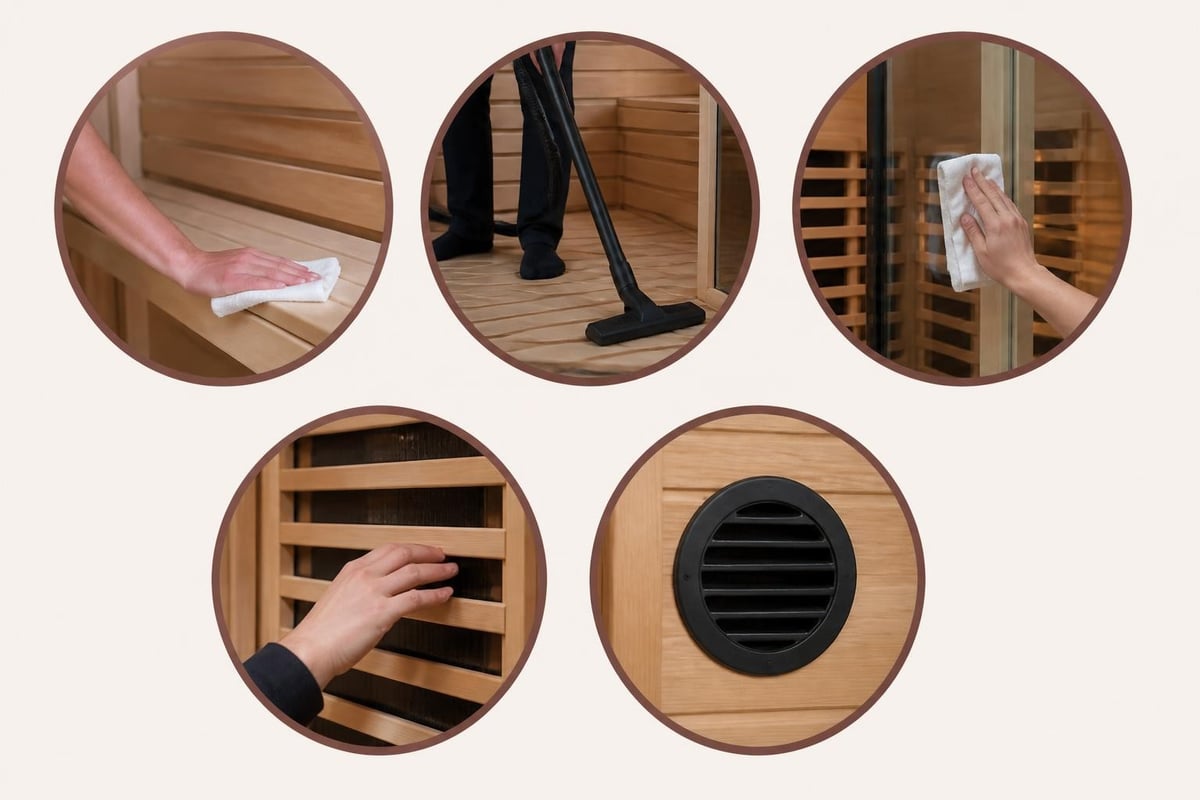
- Wipe down benches with a damp cloth after each session
- Vacuum the floor and corners weekly to remove dust
- Clean the glass door monthly with a non-abrasive cleaner
- Check heating panels every six months for damage or discoloration
Avoid chemical cleaners that leave residue. The heat will vaporize any remaining product, and you will inhale it during your next session. Plain water or a mild vinegar solution works for most cleaning tasks.
Portable Infrared Sauna Models and Pricing
The portable infrared sauna market ranges from budget tent-style units under $500 to premium wood-panel models above $8,000. The difference is not just cosmetic. Cheaper models use thinner wood, single-layer heating panels, and basic digital controls. Premium models offer reforested hardwoods, full-spectrum heating, chromotherapy lighting, and Bluetooth audio.
Entry-level portable infrared saunas ($400–$1,500):
- Fabric or nylon enclosures with collapsible frames
- Single far-infrared heating panel
- No EMF shielding or certification
- Limited warranty, often one year or less
These work for occasional use or testing whether infrared therapy fits your routine. They do not hold heat as consistently as wood-panel models, and the fabric deteriorates after a year of regular use.
Mid-range portable infrared saunas ($2,000–$5,000):
- Hemlock or basswood panels with clasp assembly
- Far-infrared carbon heating panels, two to four units
- Digital temperature and timer controls
- Basic chromotherapy lighting
This tier offers better heat retention and a more comfortable interior. The wood absorbs some moisture and provides a more natural experience than fabric tents. EMF levels vary, so confirm certification before buying.
Premium portable infrared saunas ($6,000–$12,000):
- Canadian Red Cedar or reforested Hemlock
- Full-spectrum heating (near, mid, far IR)
- Near-zero EMF certification
- Tempered glass doors, interior LED lighting, Bluetooth speakers
- Extended warranties (5-10 years on heating elements)
Premium models like the Lumin Infrared Sauna One deliver the most consistent heat and safest long-term use. Built from Canadian Hemlock with simple digital controls and plug-and-play setup, this one to two person model provides deep therapeutic infrared heat for relaxation, circulation, and muscle recovery. At $7,999, it sits at the lower end of the premium range and includes the full-spectrum heating and low EMF design that separates serious wellness tools from temporary solutions.
HSA and FSA Eligibility
Many portable infrared sauna purchases qualify for Health Savings Account (HSA) or Flexible Spending Account (FSA) reimbursement if you obtain a Letter of Medical Necessity from your physician. The letter should specify the medical condition the sauna will treat, such as chronic pain, arthritis, or cardiovascular rehabilitation.
Not all insurance administrators approve sauna purchases, so verify with your plan before buying. RecoSauna can provide itemized receipts and product specifications to support your claim.
Pairing Infrared Heat with Contrast Therapy
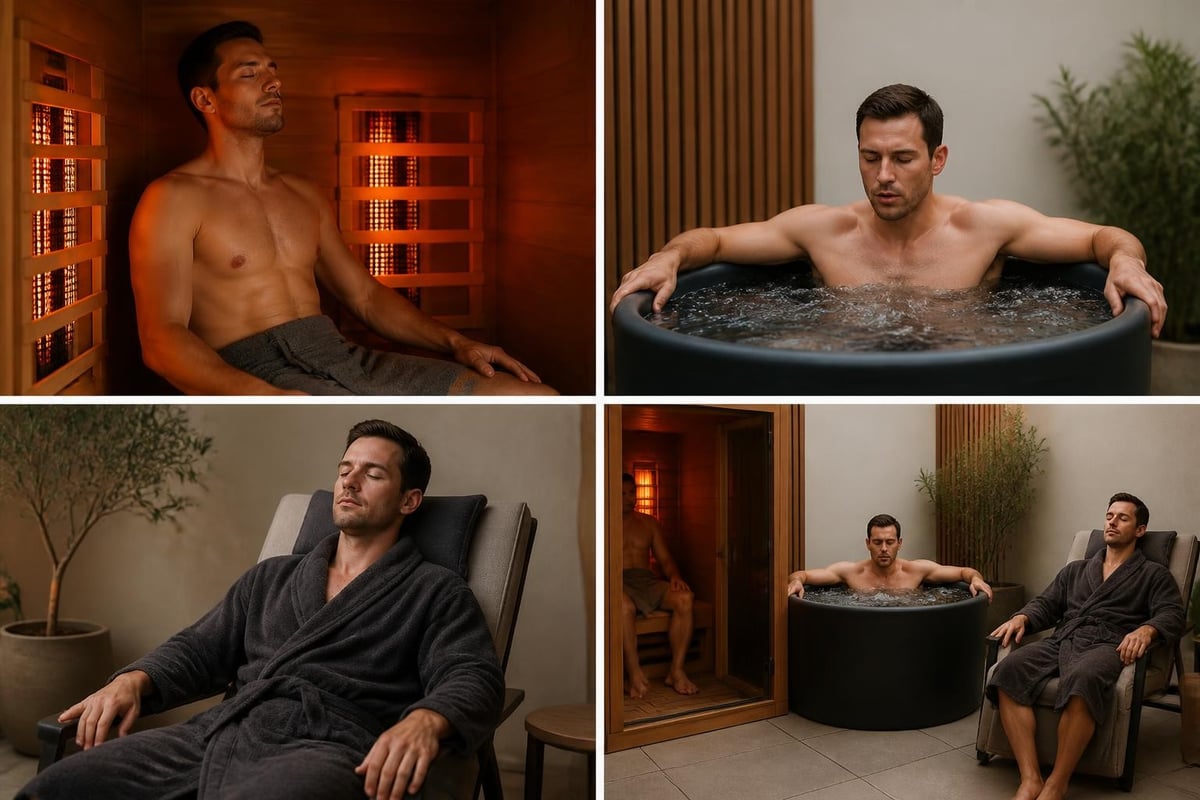
The Finnish tradition I learned growing up pairs heat with cold, not as separate treatments but as a continuous cycle. You heat your body until you sweat, then plunge into cold water. The contrast drives circulation, reduces inflammation, and resets your nervous system from sympathetic (stress) to parasympathetic (recovery).
A portable infrared sauna works well in this cycle if you add a cold plunge. The sequence:
- Heat session (15-25 minutes) in the infrared sauna until core temperature rises and sweating begins
- Cold immersion (2-5 minutes) in water between 45°F and 55°F
- Rest period (5-10 minutes) to allow heart rate and breathing to normalize
- Repeat the cycle one to three times depending on your recovery needs
Without the cold phase, you lose half the benefit. The heat alone relaxes muscle and improves circulation, but the cold immersion is what triggers the deeper cardiovascular and metabolic response Prof. Laukkanen's research tracks.
If you have space and budget, pair your portable infrared sauna with a cold plunge tub for complete contrast therapy at home. The investment in both tools supports the kind of regular practice that produces measurable health outcomes.
Safety Considerations and Usage Tips
Infrared saunas are generally safe for most adults, but certain risks apply to specific populations and improper use.
Who should avoid infrared saunas:
- Pregnant women (heat stress can affect fetal development)
- People with uncontrolled hypertension or recent heart events
- Individuals taking medications that impair sweating or heat tolerance
- Anyone with open wounds or active infections
Safe usage guidelines:
- Start with shorter sessions (10-15 minutes) and increase gradually
- Hydrate before and after each session, aiming for 16-24 ounces of water
- Avoid alcohol before or during sauna use
- Sit on a towel to protect the wood and absorb sweat
- Exit immediately if you feel dizzy, nauseous, or lightheaded
Listen to your body. The Finnish approach to sauna is not about endurance or pushing through discomfort. You sit until you feel ready to leave, then you leave. Forcing longer sessions does not increase benefits and raises the risk of dehydration or heat exhaustion.
Comparing Portable Infrared Saunas to Traditional Finnish Saunas
A portable infrared sauna cannot replace the experience of löyly. The steam from water on hot stones creates humidity, heat, and a ritual that has anchored Finnish culture for over 2,000 years. UNESCO recognized Finnish sauna culture as Intangible Cultural Heritage in 2020 because it represents a complete wellness practice, not just a heat source.
| Feature | Portable Infrared Sauna | Traditional Finnish Sauna |
|---|---|---|
| Heat Source | Far-infrared light waves | Wood-fired or electric stove with stones |
| Humidity | Dry (10-20% relative humidity) | Variable (20-60% with löyly) |
| Temperature | 120-140°F | 160-195°F |
| Installation | Plug-and-play, no ventilation needed | Requires ventilation, electric or wood-burning setup |
| Portability | Disassembles for moving | Permanent or semi-permanent structure |
| Cultural Tradition | Modern wellness tool | 2,000+ year Finnish practice |
If you have the space and climate for an outdoor sauna, that is the path I recommend. The ritual of preparing the fire, heating the stones, and throwing water to create steam cannot be simplified without losing something essential. But if you live in an apartment, rent your home, or face climate conditions that make outdoor sauna impractical, a portable infrared sauna gives you access to regular heat therapy that supports recovery.
Where to Buy and What to Expect
You can purchase a portable infrared sauna through online retailers, wellness equipment dealers, or directly from manufacturers. Buying from an authorized dealer ensures warranty support and access to replacement parts if heating elements fail.
What to ask before buying:
- What is the EMF rating at seating distance?
- Which wood species is used, and is it sustainably sourced?
- Does the warranty cover heating elements, wood panels, and electronics separately?
- Is assembly included, or is it DIY only?
- What is the return policy if the unit does not meet expectations?
Shipping is typically free within the continental United States and Canada for models above $2,000, but confirm with the seller. Delivery times range from one to six weeks depending on whether the model is in stock or built to order.
Expect assembly to take one to three hours with basic tools. Most manufacturers include video guides or phone support to walk you through setup. If you are not comfortable with assembly, some dealers offer white-glove delivery and installation for an additional fee.
Using Your Portable Infrared Sauna for Recovery
The benefits of infrared saunas extend beyond relaxation. Research supports improvements in cardiovascular function, muscle recovery, and sleep quality when sessions are consistent.
To maximize recovery benefits:
- Use the sauna four to seven times per week, as Prof. Laukkanen's research indicates this frequency correlates with the strongest cardiovascular outcomes
- Schedule sessions post-workout or in the evening to support muscle repair and sleep onset
- Pair heat with cold immersion to drive the contrast therapy response
- Track your resting heart rate and heart rate variability over time to measure adaptation
Your body adapts to heat stress just as it adapts to strength training or endurance work. The first few sessions may feel uncomfortable or tiring. After two to four weeks of consistent use, your sweat response improves, core temperature regulation becomes more efficient, and recovery between sessions shortens.
This is not a quick fix. The Finns have practiced sauna for millennia because it works over the course of a lifetime, not a weekend retreat.
Building a Home Wellness Routine Around Heat and Cold
A portable infrared sauna works best as part of a broader recovery routine, not as a standalone tool. The Finnish model integrates sauna into daily life, not as a luxury but as a necessity.
Sample weekly routine:
- Monday: Strength training + 20-minute infrared session + cold plunge
- Tuesday: Rest day, light movement
- Wednesday: Cardiovascular training + 20-minute infrared session + cold plunge
- Thursday: Rest day, 15-minute infrared session (no cold)
- Friday: Strength training + 20-minute infrared session + cold plunge
- Saturday: Longer infrared session (30 minutes) + extended cold plunge (3-5 minutes)
- Sunday: Rest, optional sauna if desired
Adjust frequency and duration based on your schedule and recovery needs. The goal is consistency, not intensity. Four shorter sessions beat one long session per week.
You do not need to turn your home into a spa. A small two-person sauna and a basic cold plunge tub are enough to build a sustainable practice. The ROI comes from using them regularly, not from buying the most expensive models and letting them sit idle.
Final Considerations Before Buying
A portable infrared sauna is a tool, not a cure. It supports your body's natural recovery processes when used correctly and consistently. The heat raises core temperature, improves circulation, and signals your cardiovascular system to adapt. Combined with cold immersion, you create the contrast therapy cycle that has anchored Finnish wellness for centuries.
Before you buy, clarify your goals. If you want the full Finnish sauna experience, with löyly and the ritual of water on stones, a portable infrared sauna will not satisfy that. If you need a practical, space-efficient way to add regular heat therapy to your routine, infrared delivers.
The market offers dozens of models, and quality varies widely. Focus on wood type, EMF certification, heating technology, and warranty terms. Avoid the temptation to buy the cheapest option. A poorly built sauna fails within a year and leaves you frustrated. A well-built model lasts a decade and becomes part of your daily rhythm.
A portable infrared sauna gives you access to heat therapy without permanent installation, but real recovery comes from pairing heat with cold and using both consistently. At RecoSauna, we bring Finnish sauna tradition to North America with authorized infrared models, traditional cedar saunas, and cold plunge tubs built for long-term use. Petri answers every question personally because this is not about selling equipment but about helping you build a practice that lasts.
Share:
DIY Sauna: Build Your Own Finnish Heat & Cold Retreat
One Person Sauna: Authentic Finnish Recovery at Home