
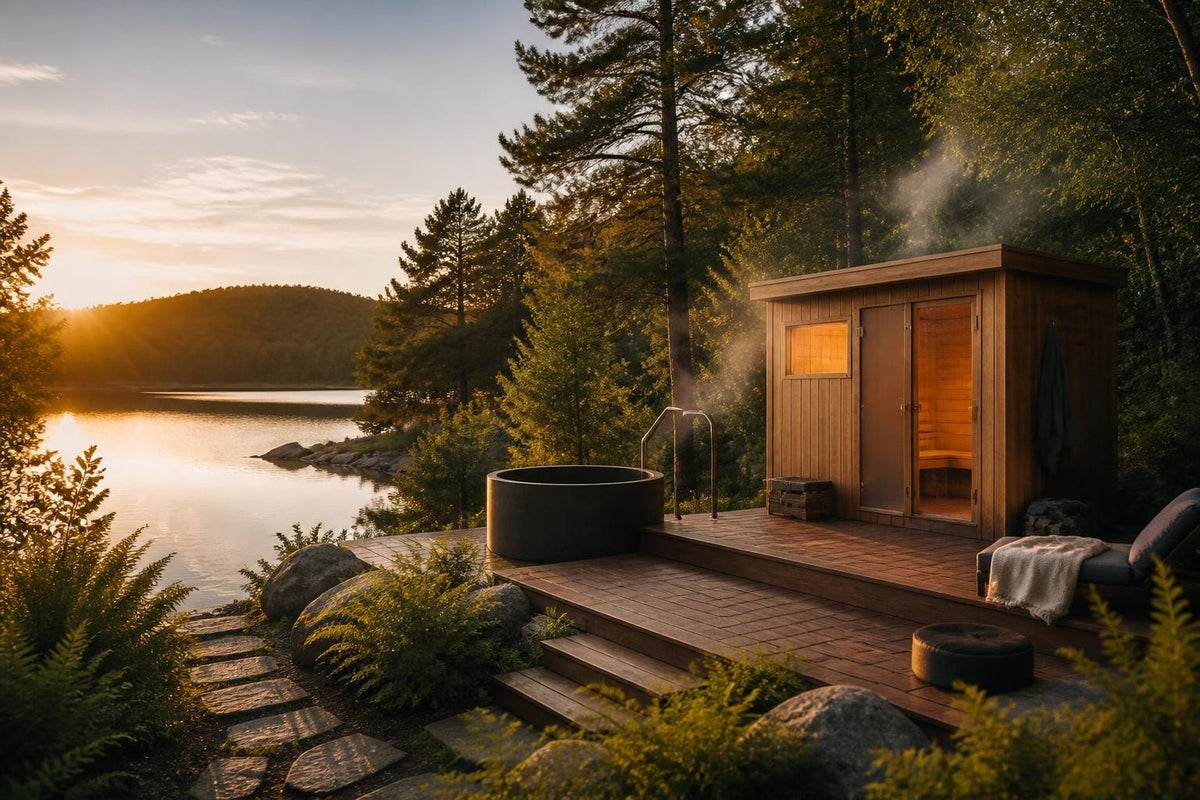
Backyard wellness means creating a home space for daily recovery practice. Not a fitness area or outdoor gym. A quiet place where your body shifts from performance to rest. In Finland, we built these spaces around water, sauna, and a short walk between them. The practice existed long before anyone sold wellness programs. You do not need complex equipment or large budgets. You need a clear understanding of what supports recovery and what is just decoration.
What Backyard Wellness Actually Requires
A functional backyard wellness space needs three elements: heat, cold, and transition zones.
Heat comes from a sauna. Traditional wood-burning or electric Finnish saunas create löyly, the steam that rises when water meets hot stones. The heat should be dry most of the time, with bursts of humid warmth when you pour water. This combination creates the conditions for genuine rest.
Cold comes from a plunge tub or natural water source. Temperature between 45 and 55 degrees works for most people. You need enough depth to submerge your torso. Duration matters less than consistency. Daily practice builds tolerance.
Transition zones are the overlooked part. You need:
- A place to sit between sessions
- Shelter from direct sun
- Room to move slowly
- Privacy from neighbors
These zones take up more space than the sauna or plunge. They define whether your setup feels restorative or cramped.
Heat Sources and Placement
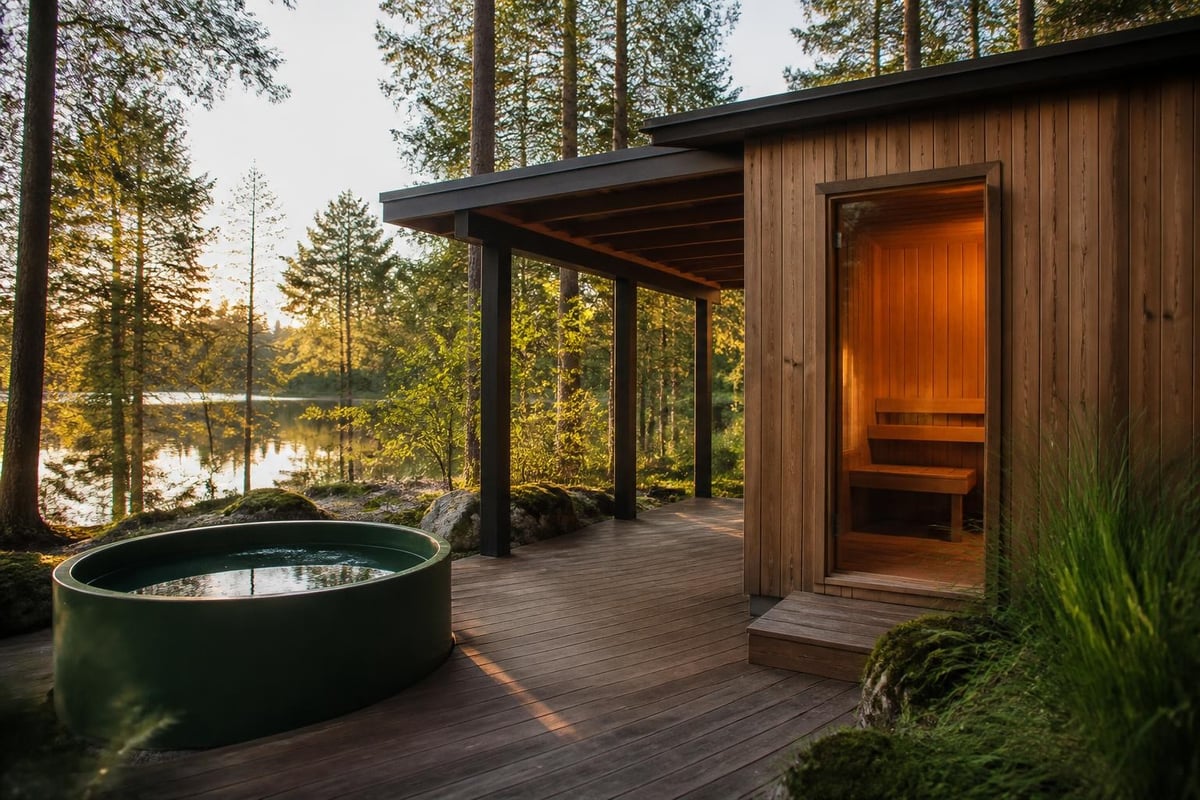
Traditional saunas sit on level ground with good drainage. Barrel saunas work well in smaller yards. Cabin designs offer more interior space and better insulation. Both need clearance from structures and vegetation.
Electric heaters require 240V service in most cases. The heater should hold enough stones to create steady löyly. Forty to sixty pounds of sauna stone is typical for a small to mid-sized sauna. Larger spaces need proportionally more mass. The stones store heat and release it slowly when water touches them.
Wood-burning heaters need no electrical connection but require chimney clearance and a firewood supply. They take longer to heat but reach higher temperatures and create a different quality of warmth.
Infrared saunas use ceramic or carbon panels instead of stones. They heat your body directly rather than heating the air. No steam, no löyly, lower temperatures. Some people prefer this. It is a different practice.
| Heat Source | Setup Time | Operating Cost | Löyly | Maintenance |
|---|---|---|---|---|
| Electric sauna | 30-45 min | Medium | Yes | Low |
| Wood-burning | 60-90 min | Low | Yes | Medium |
| Infrared | 10-15 min | Low | No | Very low |
Cold Plunge Options
Cold plunges range from simple wooden tubs to insulated models with chillers. A basic cedar tub with garden hose fill works if you refresh the water daily or add ice. Unheated water in northern climates stays cold enough from October through April.
Insulated plunges with electric chillers maintain temperature year-round. They cost more upfront and add to your electric bill. The advantage is consistency. You do not think about ice or water changes. The LeisureCraft Baltic Plunge Tub holds 132 gallons and works with or without a chiller, giving you flexibility as your practice develops.
Depth matters more than width. You want shoulder immersion. Forty inches is minimum. If you can only fit a shorter tub, you will need to crouch or kneel. That changes the experience.
Layout and Flow Between Zones
The distance between sauna and plunge should feel deliberate but not exhausting. In Finland we walked outdoors between sessions. Twenty to forty feet is typical. Too close and you lose the transition. Too far and you avoid the cold.
Pathway considerations:
- Non-slip surface when wet
- Gentle slope for drainage
- No sharp stones or wood edges
- Minimal exposure to neighbors
A covered area between heat and cold gives you a place to pause. A simple roof structure or pergola works. You need shade in summer and shelter from rain. This is where you rest between rounds, drink water, cool down gradually.
Research shows associations between green space exposure and reductions in stress biomarkers. Trees around your wellness space provide privacy and visual softness. Evergreens work year-round. Deciduous trees give shade in summer and light in winter.
Spatial Zones and Privacy
Your backyard wellness space should include distinct areas for different states. A dressing zone near the house. The sauna itself. The transition area. The plunge. A final rest area.
Fencing or tall plantings create privacy without feeling enclosed. In suburban yards, you often need screening on two or three sides. Natural wood fencing weathers well. Living screens take longer to establish but feel less constructed.
MIT's 2026 analysis of urban design and wellness found that walkability and greenery contribute to both physical and mental health. Your backyard is a micro-version of this principle. How you move through the space shapes how you experience it.
Vegetation and Plantings
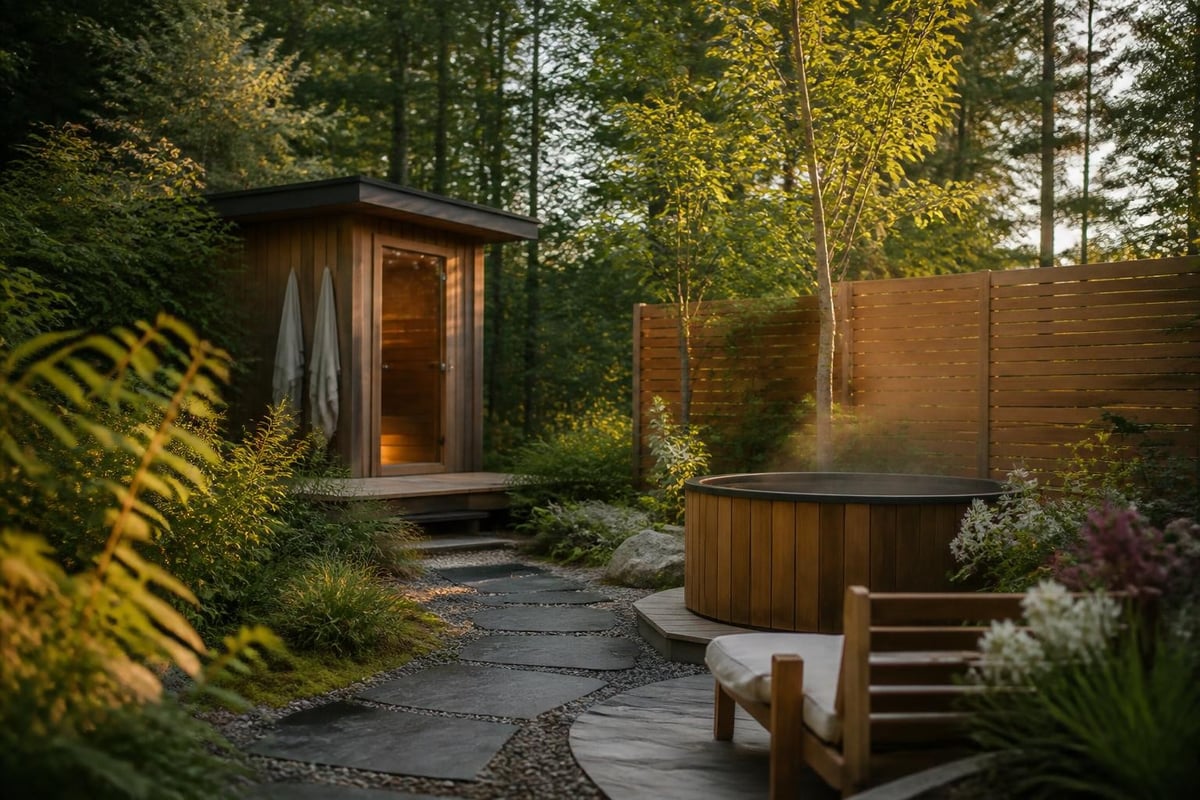
Choose plants that tolerate your climate and require minimal intervention. Native species adapt better and support local ecosystems. Avoid anything that drops sharp debris near barefoot areas.
Good choices for wellness gardens:
- Evergreen shrubs for year-round screening
- Groundcovers that handle foot traffic
- Trees with smooth bark and stable root systems
- Perennials that self-maintain after establishment
A 2023 systematic review of wellbeing gardens identified multisensory planting as a key design element. Texture, scent, movement, and seasonal change all contribute. Lavender and sage release scent when brushed. Ornamental grasses move in wind. Birch bark catches light.
The goal is not ornamental perfection. You want a space that feels alive without demanding constant care. Mulched beds reduce weeding. Drip irrigation reduces manual watering. Simplicity supports consistency.
Sauna and Cold Plunge as Anchors
The sauna and plunge define the function of your backyard wellness space. Everything else supports these two practices.
In Eastern Finland, we grew up with both. The sauna sat near the lake. You heated it in the evening, stayed inside until the heat became too much, then walked into the water. The cycle repeated three or four times. Afterward, you felt calm. Not tired. Not energized. Settled.
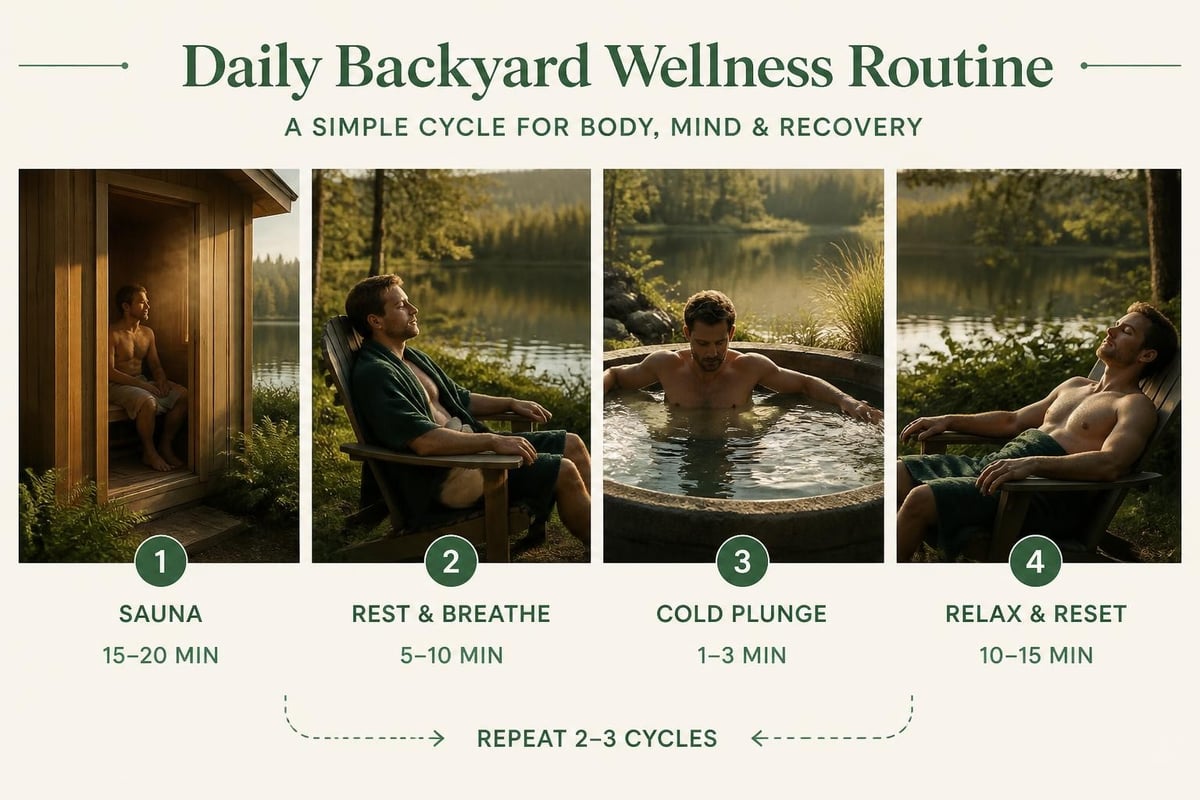
That rhythm still works. Heat, cold, rest. Repeat. The modern science calls it contrast therapy and studies the physiological mechanisms. We just knew it worked because it had worked for generations. You can read more about structuring these sessions in our guide to backyard spa ideas.
Building Considerations and Permits
Most jurisdictions classify outdoor saunas as accessory structures. Requirements vary by municipality. Common rules include setback distances from property lines, maximum square footage without permits, and electrical inspection for 240V installations.
Check local codes for:
- Setback requirements from lot lines
- Height restrictions for accessory buildings
- Electrical permits for sauna heaters
- Plumbing permits if adding water lines
- HOA approval if applicable
Prefabricated saunas from established manufacturers typically meet building codes. Custom builds require more documentation. Electric heaters need proper wire gauge and breaker sizing. A licensed electrician should handle the connection.
Cold plunges usually do not require permits unless you are adding permanent plumbing. A hose-filled tub on a gravel pad is generally exempt. Check anyway.
Maintenance and Seasonal Use
Backyard wellness spaces work year-round in cold climates. Winter is when contrast therapy feels most essential. Snow and cold air make the sauna more restorative. The plunge becomes easier because you are already cold when you enter.
Cedar saunas and plunge tubs need little maintenance. Rinse the sauna benches after use. Brush snow off the roof. Refresh plunge water regularly if not using a chiller. That is most of it.
Annual tasks:
- Inspect sauna heater stones for cracks
- Check door seals and hinges
- Clean sauna floor drain if present
- Treat cedar with wood oil if desired
- Inspect electrical connections
The more automated your setup, the less you think about it. That matters because the value comes from daily use, not occasional events.
Growing Your Practice
Start with what you can build now. A small sauna and a stock tank plunge work. You can expand later.
Consistency matters more than duration. Fifteen minutes in the sauna and one minute in cold water, repeated three times, is enough. Do this three or four times per week. That rhythm establishes the practice.
A 2025 study on home gardens explored how regular backyard activities affect stress and immunity. The patterns match what we observe with sauna practice. Daily exposure to manageable stress, followed by recovery, appears to build resilience. The research shows association, not proof. But the practice predates the studies by centuries.
Choosing Equipment That Lasts
Quality matters more than features. A simple sauna with a good heater and proper ventilation will outlast a complex model with electronics that fail.
Look for solid construction, proven heater brands, and clear assembly instructions. Prefabricated kits from manufacturers like LeisureCraft use Eastern White Cedar or Thermo Grandis and include all necessary components. You are paying for engineering and customer support, not just materials.
Cold plunges should have food-grade interiors and reinforced construction. Thin-walled plastic tubs crack in cold weather. Cedar and stainless steel last decades.
Quality indicators:
- Kiln-dried wood, not green lumber
- Tongue-and-groove wall construction
- Tempered glass in doors and windows
- UL-listed electrical components
- Manufacturer support and warranty
Petri's Perspective
I grew up on Lake Saimaa in Eastern Finland, where sauna was not a wellness trend but a weekly rhythm. We heated the sauna Saturday evenings, sat until we could not stand the heat, then ran to the lake. In winter we broke ice. In summer the water was warm enough to swim. The sauna itself was simple. Wood benches, a stone heater, lake water in a bucket. That was all. What made it work was consistency and the cold water nearby.
Frequently Asked Questions
How much space do I need for backyard wellness?
A small barrel sauna and plunge tub fit in a 200 square foot area. Add another 100 to 200 square feet for pathways and seating. Larger cabin saunas need 400 to 600 square feet total.
Can I use a backyard wellness space in winter?
Yes. Cold-climate use is when contrast therapy feels most valuable. Insulated saunas heat efficiently in freezing weather. Plunge water stays cold naturally. Clear snow from pathways and the sauna roof.
Do I need a chiller for my cold plunge?
Not in northern climates from fall through spring. Garden hose water and ambient air keep the plunge cold. In summer or warm regions, a chiller maintains consistent temperature. Ice is another option but requires daily replenishment.
How often should I use a backyard sauna and plunge?
Three to four times per week builds a sustainable practice. Daily use is common in Finland but not required. Consistency matters more than frequency. Start with what fits your schedule.
What type of sauna works best for backyard wellness?
Traditional Finnish saunas with electric or wood-burning heaters create löyly and the conditions for genuine recovery. Infrared saunas offer a different experience with lower temperatures and no steam. Choose based on your preference and yard layout.
Backyard wellness works when the space supports daily practice without demanding constant attention. Heat, cold, and simple transitions between them create the foundation. The rest is about removing obstacles and building consistency. If you are ready to bring Finnish sauna culture to your yard, ask Petri about your sauna. Every installation is different, and I answer questions personally to help you build something that lasts.
Share:
Backyard Spa Ideas: From Cold Plunge to Cabin Sauna
Outdoor Spa: Guide to Backyard Hot Tubs & Recovery