
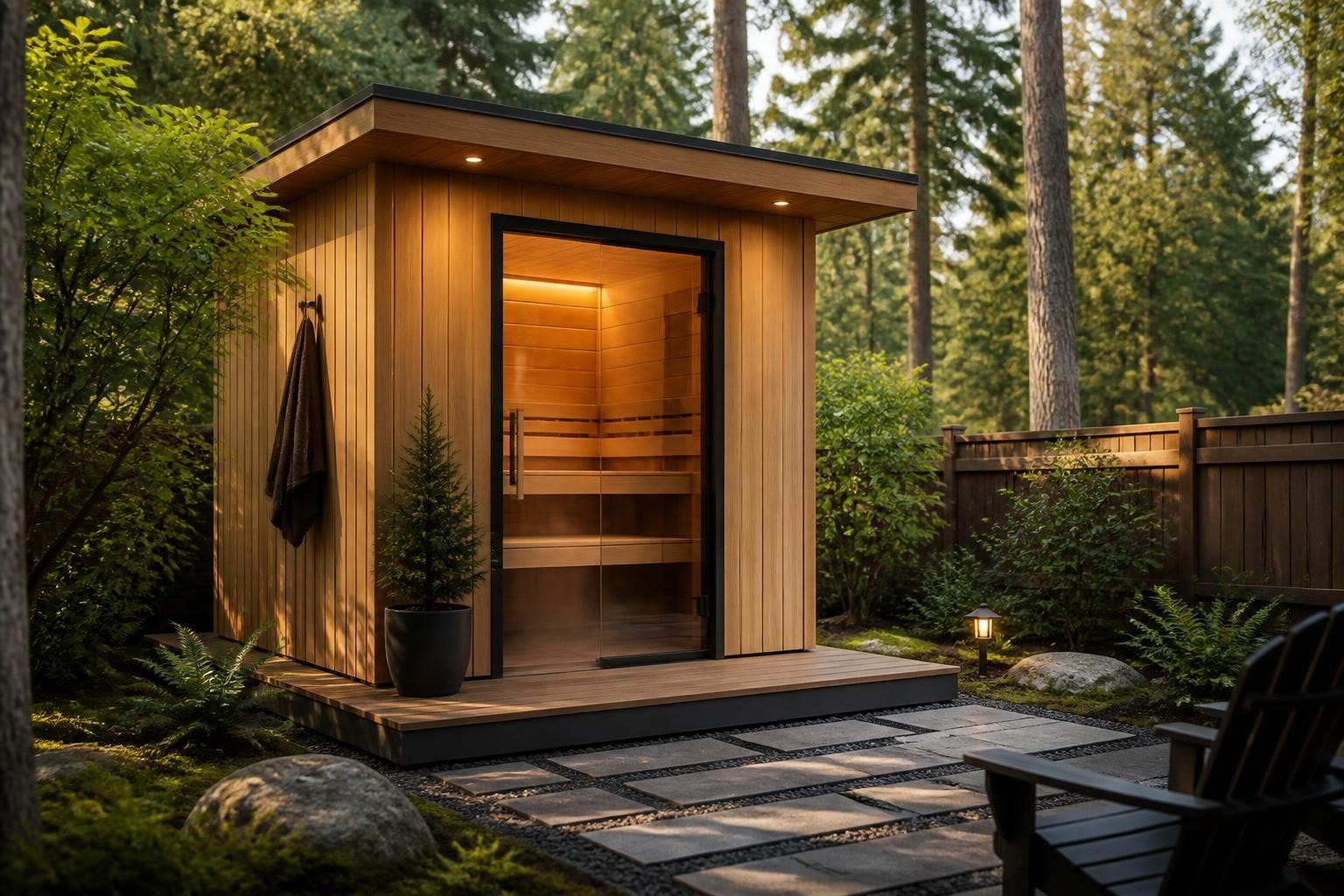
A small backyard sauna brings authentic Finnish wellness into compact outdoor spaces without compromising the sauna experience. Many North American homeowners assume they need a large yard for a proper outdoor sauna, but Finnish sauna culture has always embraced efficient design. The right small backyard sauna delivers full-temperature löyly, comfortable bench space and year-round durability in footprints as small as 2.3 × 2.3 meters. Understanding how to balance size, layout, materials and heater choice helps you build a complete sauna retreat even when space is limited.
Why Small Backyard Saunas Work in North American Homes
Small outdoor saunas fit naturally into modern North American backyards, patios, side yards and even urban rooftop spaces. Unlike oversized structures that dominate a landscape, compact saunas integrate into existing outdoor layouts while preserving yard functionality.
Finnish sauna tradition has always prioritized efficient heat and authentic löyly over square footage. A well-designed small sauna holds heat better, reaches temperature faster and uses less energy than larger models. The intimate scale also strengthens the social ritual, bringing family and friends together in a focused wellness space.
Key advantages of compact outdoor saunas:
- Lower material and foundation costs
- Faster heat-up time and better heat retention
- Easier electrical or gas installation
- Reduced permitting complexity in many jurisdictions
- More flexible placement options
Small doesn't mean cramped. Thoughtful bench layout, window placement and wood selection create an open, comfortable atmosphere even in tight dimensions. The difference lies in smart design, not sheer size.
Choosing the Right Dimensions for Your Small Backyard Sauna
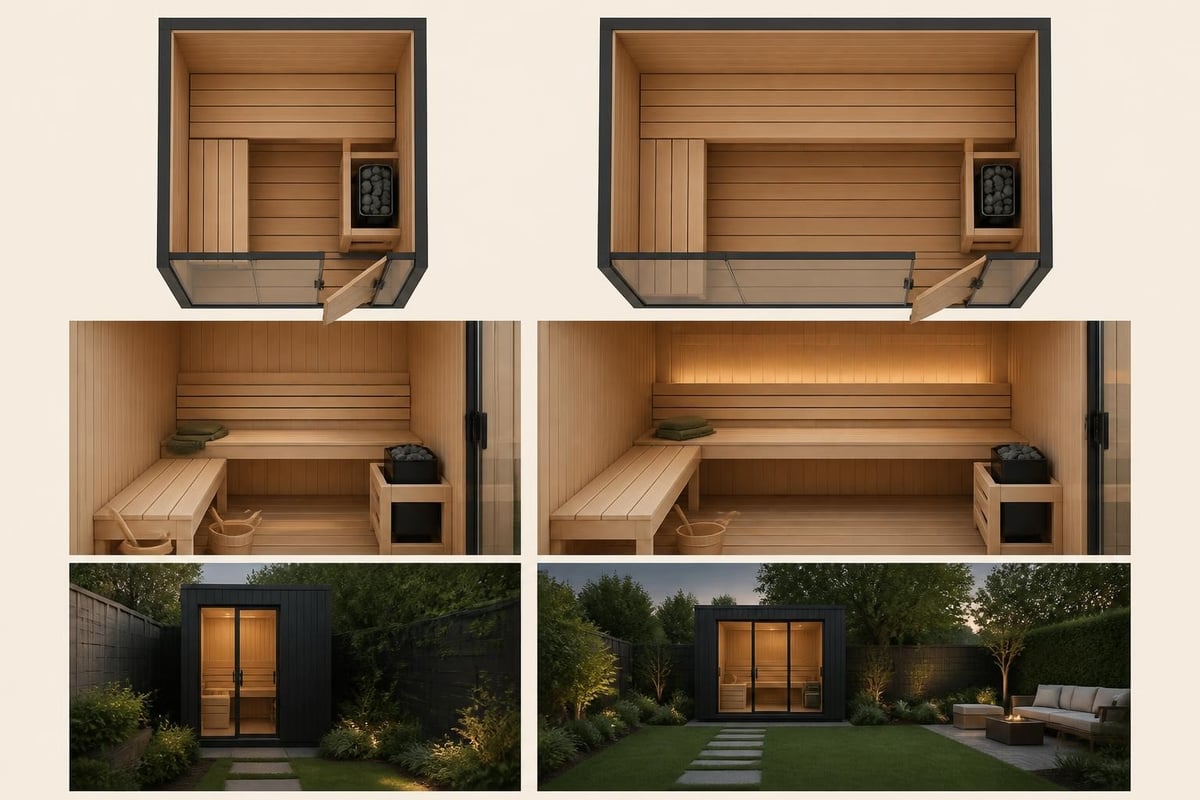
Outdoor sauna dimensions directly impact capacity, comfort and installation requirements. Most small backyard saunas fall into two categories: 2-person compact models and 2-6 person mid-sized designs.
A 2-person sauna typically measures around 1.5 × 2.0 meters, fitting easily onto small decks or narrow side yards. These models work well for solo relaxation or couples, with enough bench space for one person to lie down. They're designed exclusively for electric heating and require minimal foundation prep.
Mid-sized saunas in the 2.3 × 2.3 meter to 3.0 × 2.3 meter range offer more layout flexibility. The square 2.3 × 2.3 meter footprint supports straight bench seating for 4-6 people or L-shaped benches for reclining. The extended 3.0 × 2.3 meter layout allows full-length reclining on one bench while preserving floor space.
| Dimension | Capacity | Typical Bench Layout | Heater Options | Best For |
|---|---|---|---|---|
| 1.5 × 2.0 m | 2 people | L-shaped compact | Electric only | Patios, tight side yards |
| 2.3 × 2.3 m | 2-6 people | Straight or L-shaped | Electric or wood | Balanced footprint, family use |
| 3.0 × 2.3 m | 2-6 people | Straight or L-shaped | Electric or wood | Reclining space, social bathing |
Measure your available space carefully, accounting for door swing, ventilation clearances and any local setback requirements. Most municipalities require 1-2 feet of clearance from property lines and structures, though sauna building codes vary significantly by region.
Interior ceiling height matters as much as floor space. Standard outdoor saunas range from 1.9 to 2.1 meters interior height, providing headroom on upper benches while keeping heat low. Taller ceilings waste energy and dilute heat concentration near the löyly stones.
Materials That Perform in Small Outdoor Saunas
Wood selection defines durability, heat retention and maintenance requirements in any small backyard sauna. Two materials dominate quality outdoor construction: Thermowood and Nordic Pine.
Thermowood for Year-Round Performance
Thermowood undergoes heat treatment that eliminates moisture and resins, creating exceptional dimensional stability. This process makes the wood naturally resistant to rot, mold and warping, even through harsh North American winters.
For outdoor saunas, Thermowood offers clear advantages in moisture control and long-term structural integrity. The dark, rich color develops naturally during heat treatment and requires no chemical preservatives. Wall thickness of 46 mm solid Thermowood provides strong insulation without added foam layers.
Thermowood needs minimal maintenance beyond occasional washing. Proper ventilation and moisture control prevent condensation buildup, and the material naturally sheds water after cooling.
Nordic Pine for Natural Scandinavian Character
Nordic Pine brings lighter, warm tones and traditional Scandinavian aesthetics to outdoor sauna design. The natural pine scent adds sensory depth to the sauna experience, especially during the first year of use.
Pine requires more attention to moisture management than Thermowood but performs well when properly maintained. Regular ventilation, seasonal inspections and occasional treatment with natural wood oils preserve appearance and structural integrity.
Both materials support authentic Finnish sauna temperatures and tolerate freeze-thaw cycles common across Canada and northern U.S. states. The choice comes down to aesthetic preference, climate severity and maintenance commitment.
Bench Layout Strategy for Compact Spaces
Bench configuration determines comfort, capacity and heat distribution in your small backyard sauna. Finnish sauna design traditionally uses two or three bench levels, but small saunas benefit from simpler layouts.
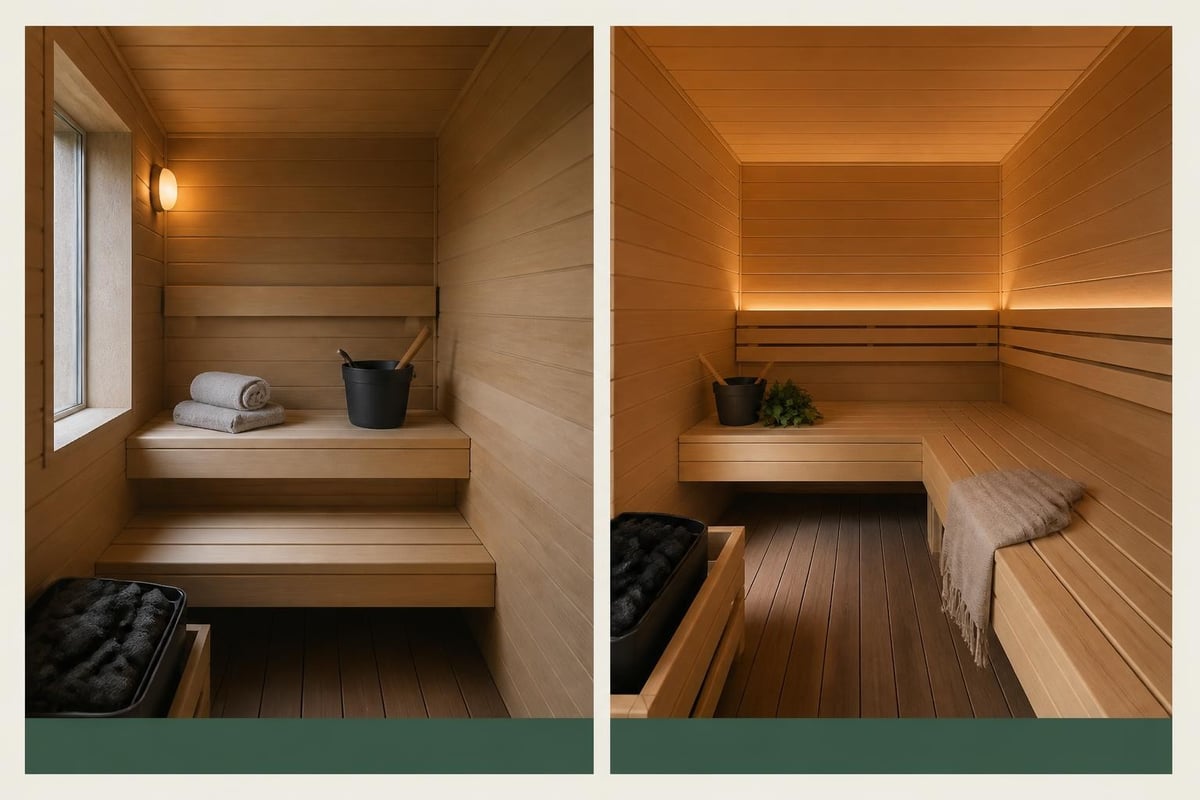
Straight bench design runs along one wall, providing clear floor space and easy entry. This layout works well for 4-6 person capacity in 2.3 × 2.3 meter or larger saunas. Straight benches allow one person to lie fully extended while others sit upright.
L-shaped bench layout maximizes seating in smaller footprints by wrapping two walls. This configuration fits 2-4 people comfortably and creates a more social bathing arrangement. L-shaped benches also provide reclining space along the longer section.
Higher benches reach hotter zones near the ceiling, following traditional Finnish principles. The temperature difference between upper and lower benches can reach 20-30°C, letting bathers adjust heat exposure by changing position.
Black Alder and Aspen remain the premium choices for sauna bench wood. Both stay cool to the touch even at high temperatures, resist moisture absorption and age gracefully. Aspen offers lighter tones, while Black Alder provides slightly darker, more pronounced grain.
Electric vs Wood-Burning Heaters in Small Saunas
Heater choice shapes the entire sauna experience, from installation complexity to operating cost and authentic löyly quality. Small outdoor saunas accommodate both electric and wood-burning options, each with distinct trade-offs.
Electric Heaters for Simplicity
Electric sauna heaters connect to standard residential electrical service, typically requiring a dedicated 240V circuit. Installation costs less than wood-burning setups, with no chimney, spark arrestor or clearance requirements.
Modern electric heaters reach full temperature in 30-45 minutes and maintain precise heat control through digital or analog controls. They produce excellent löyly when paired with proper ventilation and quality sauna stones.
Electric heater considerations:
- Requires electrical permit and licensed installation
- Operating cost varies by local electricity rates
- No wood storage or ash removal needed
- Better for urban settings and strict HOA communities
- Quieter operation without fire crackle
Most small electric saunas run on 40-60 amp circuits. Verify your home's electrical capacity before purchasing, especially if you plan to add other outdoor features like lighting or a cold plunge setup.
Wood-Burning Heaters for Authentic Experience
Wood-fired sauna heaters deliver the traditional Finnish sauna experience with visible flame, gentle heat and the ritual of fire tending. The radiant heat from a wood stove creates slightly different air quality and moisture characteristics compared to electric models.
Wood heaters need proper chimney installation, roof penetration sealing and spark arrestor compliance. Many jurisdictions follow NFPA safety standards for wood-burning appliances, requiring specific clearances and installation practices.
Operating cost depends on local firewood availability and pricing. The slower heat-up time (60-90 minutes) becomes part of the sauna ritual rather than a limitation. Wood storage, ash removal and chimney cleaning add maintenance tasks that some owners appreciate and others avoid.
Foundation and Installation Requirements
Every small backyard sauna needs a stable, level foundation that manages moisture, supports structural loads and allows proper drainage. Foundation choice affects installation cost, permitting and long-term maintenance.
Foundation Options for Compact Saunas
Concrete slab foundations provide maximum stability and longevity. A 4-inch reinforced slab with proper grading handles freeze-thaw cycles and prevents settling. Cost runs higher than other options but eliminates ongoing leveling concerns.
Paver or gravel foundations offer good drainage at lower cost. A compacted gravel base (4-6 inches) topped with concrete pavers creates a stable platform while allowing water to drain naturally. This approach works well in most climates and avoids concrete work.
Deck or platform installations integrate saunas into existing outdoor structures. Verify that deck framing can support 300-400 kg concentrated load, including sauna structure, users and heater. Additional blocking may be needed under the sauna footprint.
The sauna structure sits on the foundation without permanent attachment in most cases. This approach preserves flexibility for relocation and simplifies future maintenance or repairs.
Electrical and Utility Planning
Electric sauna installation requires dedicated wiring from your main panel to the sauna heater. Most installations need:
- 240V dedicated circuit sized for heater amperage (typically 40-60 amps)
- GFCI protection at the main panel or sub-panel
- Conduit run from panel to sauna location (underground or overhead)
- Licensed electrician installation to meet local electrical codes
- Electrical permit and final inspection in most jurisdictions
Budget $1,500-3,500 for professional electrical installation depending on distance from the main panel and local labor rates. Underground conduit runs cost more but look cleaner in most landscapes.
For a compact model ideal for smaller properties, the RecoSauna Mini Square Sauna in Thermowood delivers premium 2-person capacity in a minimal footprint with 46 mm solid Thermowood walls and authentic Finnish design.
Ventilation and Air Quality in Enclosed Spaces
Proper ventilation ensures fresh air circulation, controls humidity and maintains comfortable breathing during high-heat sessions. Small saunas need careful attention to air exchange without creating uncomfortable drafts.
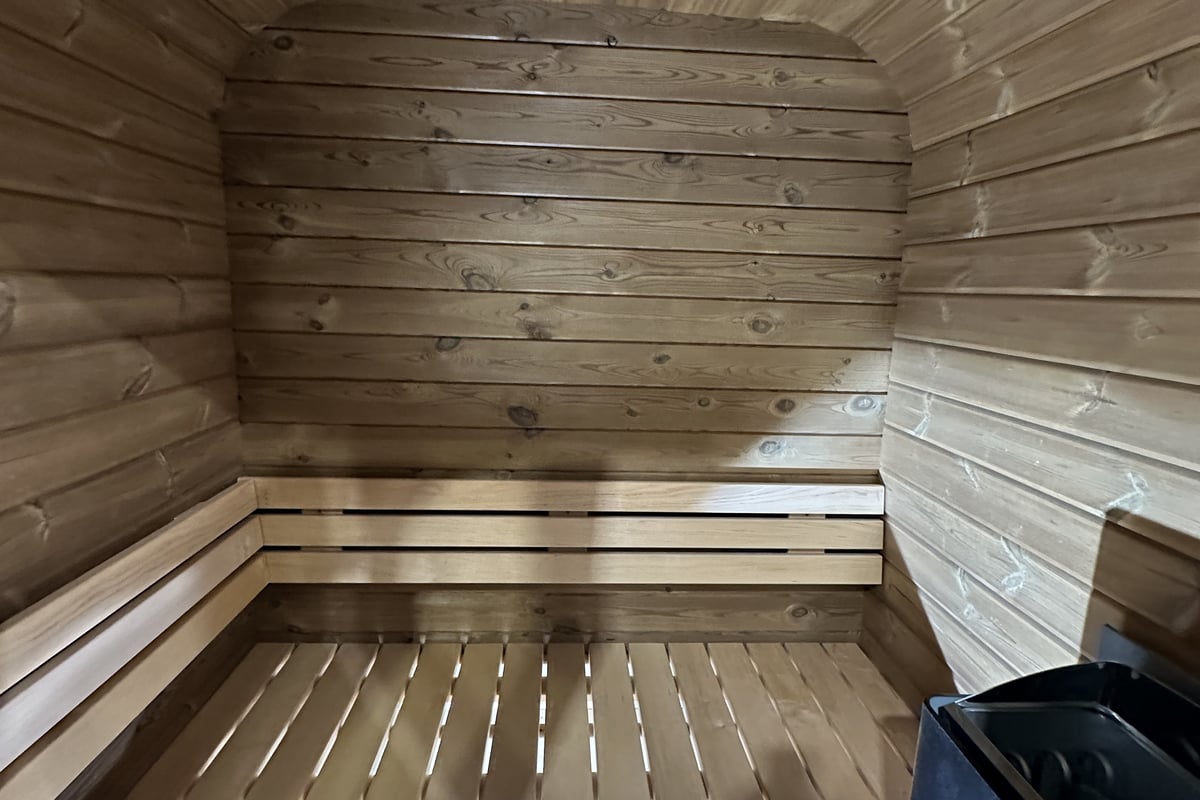
Finnish sauna design relies on natural convection, with fresh air entering low (typically under the heater or through a floor vent) and warm, moist air exiting high (through an adjustable roof vent). This passive system works reliably without fans or mechanical assistance.
The air exchange rate should replace the full sauna volume 6-8 times per hour during use. For a small 2.3 × 2.3 meter sauna with 2-meter ceiling height (approximately 10.5 cubic meters), this requires moving roughly 60-85 cubic meters per hour through natural draft.
Inlet vents should be sized at roughly 50-80 square centimeters, with outlet vents 1.5 to 2 times larger to create proper draw. Position the outlet vent diagonally opposite the inlet for best circulation. ASHRAE ventilation guidance provides detailed engineering principles for room air distribution.
Many modern outdoor saunas incorporate adjustable vents that let you fine-tune airflow based on weather conditions, user count and heater type. Close vents partially during warm-up, then open gradually once the target temperature is reached.
Windows, Doors and Thermal Performance
Glass elements add natural light and visual connection to your backyard while impacting heat retention and energy efficiency. Quality small backyard sauna design balances aesthetics with thermal performance.
Tinted or tempered glass windows reduce glare and handle temperature stress better than standard glass. Most outdoor saunas use double-pane or specially tempered single-pane glass rated for temperature differentials of 80-100°C.
Window placement affects both interior light distribution and exterior appearance. Front-facing windows create welcoming curb appeal and let bathers watch sunset or garden views. Side windows add cross-ventilation options and emergency egress.
| Window Configuration | Thermal Impact | Light Quality | Privacy | Visual Appeal |
|---|---|---|---|---|
| No windows | Best heat retention | Artificial only | Maximum | Minimal |
| Two front windows | Good retention | Natural, focused | Moderate | Good |
| Three-four windows | Moderate retention | Bright, open | Lower | Excellent |
Sauna doors should seal well but not lock. Traditional Finnish practice uses simple latches that open easily from inside, ensuring safe exit. Magnetic catches or ball-catch hardware provides reliable closure without complicated mechanisms.
Expect some heat loss through windows and doors regardless of quality. A well-insulated small sauna with 2-3 windows reaches target temperature within 5-10 minutes longer than a windowless design, a reasonable trade-off for natural light and view.
Winter Performance in Cold Climates
Small backyard saunas excel in cold weather when built with proper wall thickness, quality materials and effective heater sizing. Finnish sauna culture originated in sub-Arctic conditions, proving that outdoor saunas handle extreme cold reliably.
Solid 46 mm walls provide R-value of approximately 5-6 without additional insulation. This thermal mass holds heat well during sessions while allowing the structure to dry between uses. Thicker walls (68 mm or greater) offer marginal improvement but increase material cost and weight significantly.
Snow load matters in northern climates. Most quality outdoor saunas design roofs for at least 100-150 kg per square meter live load, handling heavy snow accumulation common across Canada and northern U.S. states.
Cold weather actually improves the contrast therapy experience when you pair sauna sessions with outdoor cold exposure or rolling in snow. The temperature differential triggers stronger physiological responses and deeper relaxation.
Winter operation tips:
- Allow 10-15 minutes extra warm-up time in sub-zero weather
- Check door seals and vent closures before each season
- Clear snow from vents and chimney before firing
- Keep a clear path to the sauna entrance for safety
- Consider adding a small changing area or vestibule
Frozen ground simplifies foundation installation in some ways, as frost-protected shallow foundations reduce excavation requirements. Consult local building codes for frost depth and foundation specifications in your area.
Changing Room and Vestibule Options
A dedicated changing area adds comfort, privacy and practical storage to your small backyard sauna experience. While not essential, this separate space improves usability, especially in colder months or shared backyard settings.
Changing rooms typically add 1-1.5 meters to the overall sauna length, creating a buffer zone between outdoor weather and sauna heat. This vestibule holds benches for dressing, hooks for robes and towels, and sometimes storage for firewood or sauna accessories.
Internal glass doors separate the changing room from the hot room, preserving heat while maintaining visual connection. These doors should use tempered glass rated for thermal stress, similar to exterior sauna glass.
Benefits extend beyond convenience. The changing area reduces heat loss when entering or exiting, stabilizes interior temperature during multi-person sessions and provides a comfortable space for cooling between sauna rounds.
For buyers with adequate space, models that include changing rooms combine all elements of the Finnish sauna ritual into one cohesive structure. The square outdoor sauna design philosophy emphasizes these complete, self-contained sauna experiences.
Health and Wellness Benefits in Compact Spaces
Regular sauna use delivers measurable wellness benefits regardless of sauna size. A small backyard sauna provides the same heat exposure, cardiovascular stimulus and recovery benefits as larger installations when designed properly.
Research on passive heat therapy demonstrates benefits across cardiovascular health, metabolic function, muscle recovery and mental well-being. These effects come from sustained heat exposure, not square footage.
Evidence-based sauna benefits:
- Improved cardiovascular function and blood flow
- Enhanced muscle recovery after exercise
- Reduced inflammation markers
- Better sleep quality and duration
- Stress reduction and mental clarity
- Temporary metabolism boost
Small saunas actually encourage more frequent use due to faster heat-up times and lower operating costs. Consistency matters more than session length for long-term wellness outcomes.
The intimate scale also supports mindful practice. A compact sauna creates a focused, meditative environment that some users prefer over larger social saunas. Solo sessions or couple's bathing develops into a sustainable daily ritual.
Proper sauna practice includes hydration before and after sessions, gradual temperature acclimation and listening to your body's signals. Most health benefits accumulate through regular use (3-7 sessions weekly) rather than occasional extended sessions.
Installation Timeline and DIY Considerations
Most small backyard sauna installations complete within 1-3 days once the foundation is prepared. Prefabricated outdoor saunas ship as panelized kits that assemble without specialized tools or extensive construction experience.
Typical installation sequence:
- Foundation preparation (1-2 days depending on method)
- Electrical rough-in (half day with licensed electrician)
- Sauna assembly (4-8 hours for 2-person crew)
- Heater installation (2-4 hours)
- Final electrical connection and testing (2-3 hours)
- Inspection and approval (timing varies by jurisdiction)
DIY-capable homeowners can handle foundation and sauna assembly, but electrical work requires licensed professionals in most jurisdictions. Wood-burning installations also benefit from professional chimney installation to ensure proper draft and code compliance.
Panel-by-panel assembly follows logical progression: floor frame, wall panels, roof assembly, door and window installation, interior bench mounting. Manufacturer instructions provide step-by-step guidance, and most quality sauna companies offer installation support.
Budget 2-3 weeks total from order to first session when accounting for shipping, site preparation and any permit approvals. Rush timelines are possible but increase stress and error risk.
Maintenance and Long-Term Care
Small outdoor saunas require minimal maintenance when built with quality materials and used properly. Regular attention to a few key areas preserves appearance, performance and structural integrity for decades.
Monthly maintenance tasks:
- Sweep interior floor and benches
- Wipe down walls if visible dirt or residue appears
- Check door seal and adjust if needed
- Verify vent operation and clear any debris
- Inspect heater stones and rearrange as needed
Seasonal maintenance checklist:
- Wash exterior walls with mild soap and water
- Inspect roof for damage or wear
- Check chimney and spark arrestor (wood-burning models)
- Test electrical connections and controls
- Apply wood oil to exterior if desired (Nordic Pine)
Thermowood requires almost no ongoing treatment beyond washing. Nordic Pine benefits from occasional oiling to preserve color, though it will naturally silver to grey over time without treatment. Both materials handle weather exposure well when properly ventilated.
Interior wood should never be sealed, painted or varnished. Bare wood breathes naturally, managing moisture and maintaining the authentic sauna environment. Discoloration from use is normal and doesn't affect performance.
Most small outdoor saunas develop character over years of use while maintaining structural integrity. The simple construction and quality materials mean repairs rarely extend beyond heater element replacement or door hardware adjustment.
A small backyard sauna brings authentic Finnish wellness, recovery and relaxation into compact outdoor spaces without compromise. The right combination of dimensions, materials, bench layout and heater choice creates a complete sauna experience that fits your property, budget and lifestyle. Whether you're working with a narrow side yard or a small patio, quality construction and smart design deliver the same heat, löyly and health benefits as larger installations. RecoSauna specializes in premium Thermowood and Nordic Pine outdoor saunas designed specifically for North American backyards, with authentic Finnish expertise to guide your selection, installation and long-term enjoyment.
Share:
Square Outdoor Sauna: Design, Sizing & Footprint Guide