

Using a sauna for a cold is a common practice in Finland, where I grew up, but it comes with important conditions. A sauna may help ease mild cold symptoms like congestion and muscle aches, but only if you have no fever and keep the session short and gentle. The heat opens nasal passages temporarily and may provide comfort, but it does not cure the cold or speed recovery. If you have a fever, body aches beyond mild discomfort, or feel weak, skip the sauna entirely. The immune system already generates heat to fight infection, and adding external heat creates unnecessary strain.
When Sauna Helps Cold Symptoms
Heat from a sauna temporarily relieves specific cold symptoms through direct physical effects, not by eliminating the virus. The warm, humid air loosens mucus in nasal passages and makes breathing easier for a short period after the session.
Congestion Relief
Steam and warmth expand blood vessels in the nasal lining, which reduces swelling and helps drain blocked sinuses. This is the same principle behind hot showers or steam inhalation, but a sauna provides more consistent heat exposure. The effect lasts 30 minutes to an hour after you leave the sauna.
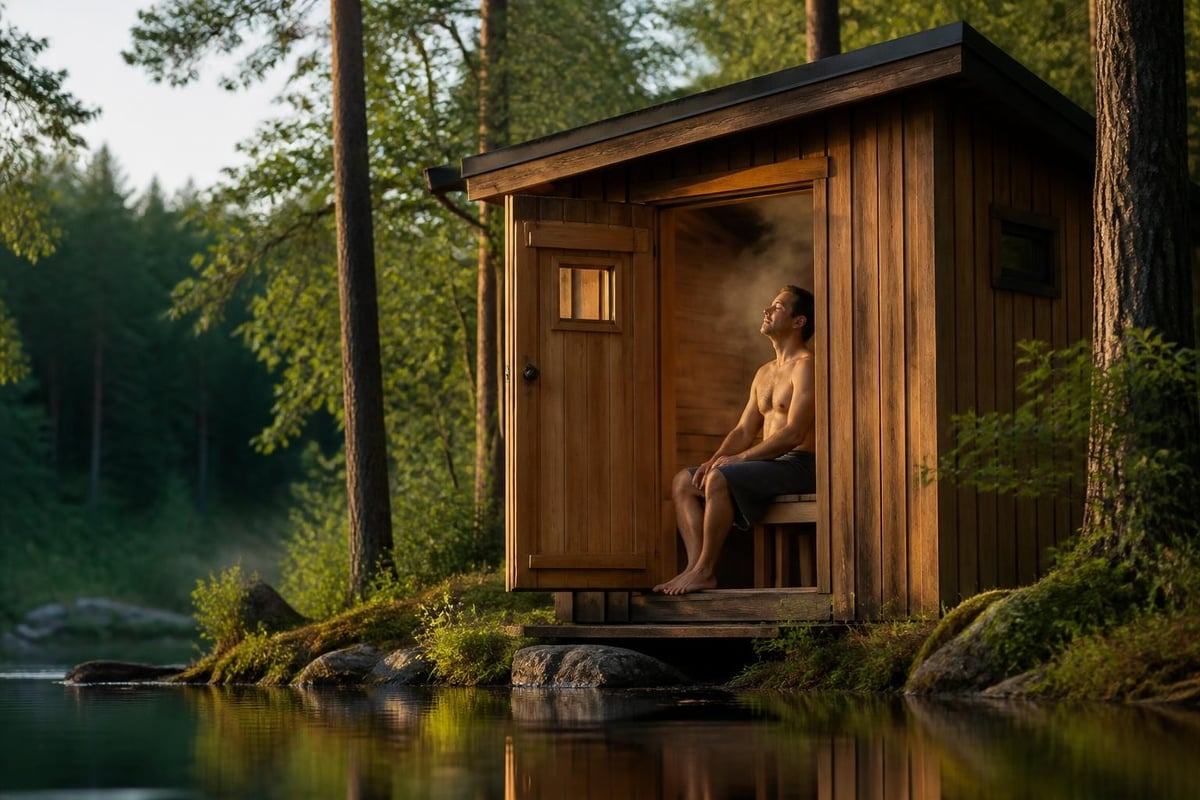
What works:
- Short sessions of 10 to 15 minutes
- Lower bench position where temperature is milder
- Gentle löyly (steam from water on stones) for added moisture
- Staying hydrated before and after
Muscle Aches and Discomfort
Mild body aches from a cold respond to sauna heat the same way general muscle tension does. Warmth increases blood flow to tissues and may reduce the sensation of stiffness. This is temporary relief, not treatment of the underlying infection.
| Symptom | Sauna Effect | Duration |
|---|---|---|
| Nasal congestion | Opens passages | 30-60 minutes |
| Muscle aches | Reduces stiffness | During and shortly after session |
| Sore throat | May feel soothing | Variable, often minimal |
Research shows that regular sauna use may be associated with fewer colds over time, but this refers to prevention through routine practice, not treatment once symptoms appear.
When to Avoid Sauna Completely
A fever is the clear line. If your body temperature is elevated, even slightly, do not use a sauna. The immune system raises core temperature to fight infection, and a sauna adds external heat that can push body temperature into dangerous ranges.
Fever Creates Real Risk
Combining fever with sauna heat can lead to dangerous hyperthermia, a condition where the body cannot regulate temperature effectively. Symptoms include confusion, rapid heartbeat, and potential collapse. This is not a theoretical concern. It happens.
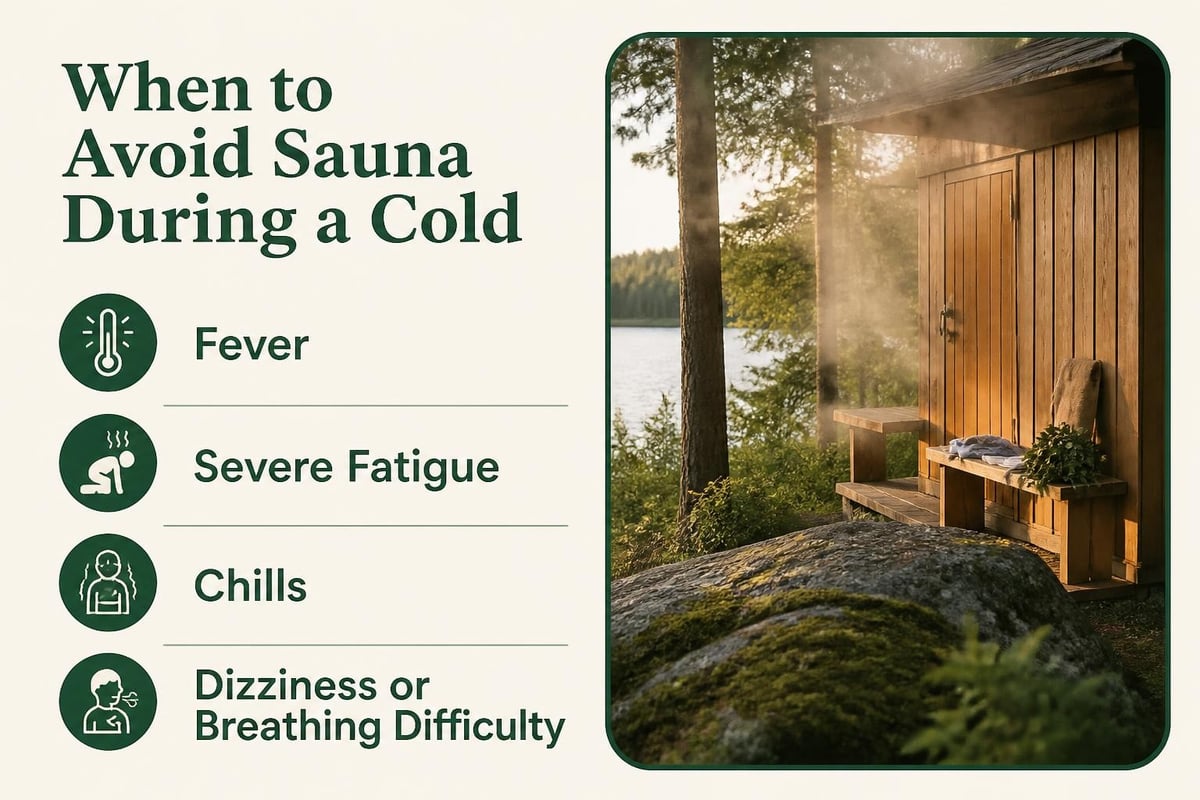
Skip the sauna if you have:
- Any measured fever above 98.6°F (37°C)
- Chills or feeling alternately hot and cold
- Severe fatigue or weakness
- Dizziness or lightheadedness
- Difficulty breathing beyond mild congestion
Dehydration During Illness
Colds often cause mild dehydration through increased mucus production, reduced appetite, and sometimes low-grade fever even if not measured. Sauna use increases fluid loss through sweat. When already dehydrated, this combination stresses the cardiovascular system and slows recovery.
The common idea of sweating out a cold has no scientific support. Viruses do not leave the body through sweat. The immune system clears infection through internal cellular processes unrelated to perspiration.
How to Use Sauna Safely with a Mild Cold
If you have only a runny nose and mild congestion with no fever, a short sauna session may provide comfort. The key is moderation and attention to how you feel.
Session Guidelines
- Check your temperature with a thermometer before entering
- Limit session to 10-15 minutes maximum
- Sit on a lower bench where heat is less intense
- Drink water before, during if possible, and after
- Exit immediately if you feel dizzy or unwell
- Cool down gradually, avoid cold plunge during active illness
Traditional Finnish practice includes cooling off after sauna, but when you have a cold, extreme temperature changes add stress. A lukewarm shower or sitting in cool air is sufficient. Save the cold plunge for when you are fully healthy.
For those who already own a cold plunge for regular contrast therapy, pairing it with sauna during a cold is not advisable. The immune system benefits from steady, predictable conditions during active infection.
Traditional Finnish Perspective
I grew up on Lake Saimaa in Eastern Finland, where sauna was part of daily life regardless of season or health. My grandmother's rule was simple: if you feel well enough to walk to the sauna without effort, you can sit in it briefly. If the walk feels difficult, stay in bed. This practical test worked because it forced honest assessment of energy levels.
In Finnish households, sauna during mild illness was common but always modified. Sessions were shorter, temperature lower, and no one pushed through discomfort to prove toughness. The sauna was for comfort and cleanliness, not for forcing the body to do extra work when already managing infection. We understood that rest, not heat, did the actual healing.
Comparing Sauna Types for Cold Symptoms
Traditional steam saunas and infrared saunas produce different types of heat, which affects how they influence cold symptoms.
| Feature | Traditional Sauna | Infrared Sauna |
|---|---|---|
| Heat type | Air and steam | Direct radiant heat |
| Humidity | Adjustable with löyly | Very low |
| Nasal relief | Better due to moisture | Minimal |
| Session length | 10-15 min when sick | 15-20 min when sick |
Traditional steam saunas provide moisture that helps with congestion, while infrared saunas create dry heat that may feel comfortable but does less for nasal passages. If congestion is your main symptom, a traditional sauna with gentle steam offers more direct relief.
The LeisureCraft Georgian Cabin Sauna with Porch is built for exactly this kind of measured, comfortable session. The large front windows bring in natural light, and the porch gives you space to cool down gradually without rushing inside. Solid wide benches let you recline if sitting upright feels tiring.

What Research Actually Shows
Studies on sauna use during colds are limited and focus primarily on prevention rather than treatment. One often-cited Austrian study found that regular sauna users reported fewer colds over a study period, but this association does not prove causation and does not address using sauna after symptoms begin.
Research on immune response shows that heat exposure triggers production of heat shock proteins and may temporarily increase white blood cell circulation. However, these effects are short-lived and occur in healthy individuals. Whether they help during active infection is uncertain.
What is known:
- Regular sauna use is associated with fewer reported colds in some studies
- Heat exposure temporarily increases circulation
- Nasal passages respond to warmth and moisture with reduced swelling
What is uncertain:
- Whether sauna shortens cold duration
- Optimal session length or temperature during illness
- Long-term immune effects of sauna use while sick
No credible research supports the idea that sauna "kills" cold viruses or accelerates their elimination from the body. The immune system works through complex cellular mechanisms that heat does not directly enhance during active infection.
Practical Decision Guide
Deciding whether to use a sauna when you have a cold requires honest assessment of symptoms and energy levels.
Use Sauna (Short, Gentle Session)
- Mild nasal congestion only
- No fever (verified with thermometer)
- Normal energy, able to move normally
- Well hydrated
- No dizziness or weakness
Skip Sauna Entirely
- Any fever present
- Severe fatigue or body aches
- Difficulty breathing beyond stuffiness
- Dehydration or reduced fluid intake
- Dizziness, confusion, or weakness
During Recovery Phase
- Cold symptoms improving for 24+ hours
- No fever for at least 24 hours
- Energy returning to normal
- Able to complete normal daily activities
When symptoms are improving and fever has been gone for a full day, you can resume normal sauna practice. Start with shorter sessions and pay attention to how your body responds.

Common Misconceptions
Several persistent beliefs about sauna for a cold have no supporting evidence.
"Sweating removes toxins and viruses" Sweat is primarily water and salt. Viruses are eliminated by immune cells, not through skin pores. The liver and kidneys handle actual toxin processing.
"Higher heat kills the virus faster" Viruses that cause colds cannot survive high temperatures in a laboratory setting, but they reside inside your cells where sauna heat does not reach. Even a dangerous fever of 104°F (40°C) does not kill cold viruses in living tissue.
"Longer sessions boost immunity" During active infection, extended heat exposure stresses the body rather than supporting it. The immune system requires energy and resources that long sauna sessions divert to temperature regulation and cardiovascular demand.
"Cold plunge after sauna fights infection" Contrast therapy has benefits for healthy individuals, but during illness the rapid temperature change creates additional stress without clear benefit. Recovery requires steady conditions, not dramatic shifts.
Sauna Session Checklist for Cold Symptoms
Before entering a sauna with any cold symptoms, complete this verification process.
- Measure temperature - Use a reliable thermometer, verify no fever
- Assess energy - Can you walk to the sauna easily without fatigue?
- Check hydration - Have you consumed adequate water in the past 2 hours?
- Evaluate symptoms - Are symptoms mild and limited to nasal congestion?
- Plan duration - Commit to maximum 15 minutes regardless of how good it feels
- Prepare exit - Have water ready, plan gentle cooldown, no cold plunge
If any step reveals concerning signs, skip the session. The sauna will be available when you are fully recovered.
Questions I Hear Often
Can I use sauna at the first sign of a cold? If you have only the earliest tickle in your throat or very mild congestion with no fever and normal energy, a brief session may provide comfort. But it will not prevent the cold from developing if the virus is already present.
How long should I wait after a fever breaks? Wait at least 24 hours after your temperature returns to normal and stays there. Your immune system needs time to stabilize even after fever ends.
Is sauna better than a hot shower for congestion? Both provide similar nasal relief through warmth and moisture. Sauna offers sustained heat over a longer period, but a hot shower is safer if you feel weak because you can stop immediately and sit down.
Will sauna help with cough? Warmth and moisture may soothe throat irritation slightly, but sauna does not address the underlying cause of cough. If you have a productive cough with mucus, the dry heat of some saunas may actually irritate airways.
Can children use sauna when they have a cold? Children regulate temperature less effectively than adults and often cannot communicate discomfort clearly. It is safer to skip sauna entirely when a child has any cold symptoms. When healthy, children can use sauna with appropriate supervision and shorter sessions.
Sauna Maintenance During Cold Season
If you own a home sauna and use it regularly, basic hygiene practices become more important during cold and flu season. While sauna heat kills many bacteria, viruses can survive on surfaces for hours.
Wipe down benches and door handles after sessions, especially if multiple household members use the sauna. Allow the sauna to fully cool and air out between uses. Good ventilation prevents moisture buildup that some viruses prefer.
For families, establish a simple rule: if anyone has active symptoms, they skip the sauna until 24 hours after symptoms resolve. This prevents confusion about who can and cannot use it safely.
Beyond Symptom Relief
The most valuable aspect of regular sauna practice is not what it does during illness, but what consistent use may do for overall resilience. Studies suggest associations between routine sauna use and reduced frequency of respiratory infections, though the mechanisms remain unclear.
Building sauna into weekly or daily routine during healthy periods may support the body's baseline stress response and circulation. This is different from using sauna reactively once symptoms appear. The benefit comes from sustained practice, not emergency intervention.
In Finland, sauna is part of life not because of any single health claim, but because the practice supports overall well-being in ways that are difficult to measure but easy to feel. This long-term rhythm matters more than what you do during a single week of cold symptoms.
A sauna can ease mild cold symptoms like congestion through warmth and moisture, but it does not cure illness and should be avoided entirely if fever is present. The most important factor is honest assessment of how you feel and keeping sessions short when any symptoms exist. At RecoSauna, I answer questions about sauna use during illness and help homeowners choose saunas built for decades of safe, comfortable practice. Free shipping across the USA and Canada, and I am available to discuss your specific situation at Ask Petri About Your Sauna.
Share:
Two Person Sauna: Size, Heat, and Real-World Fit