
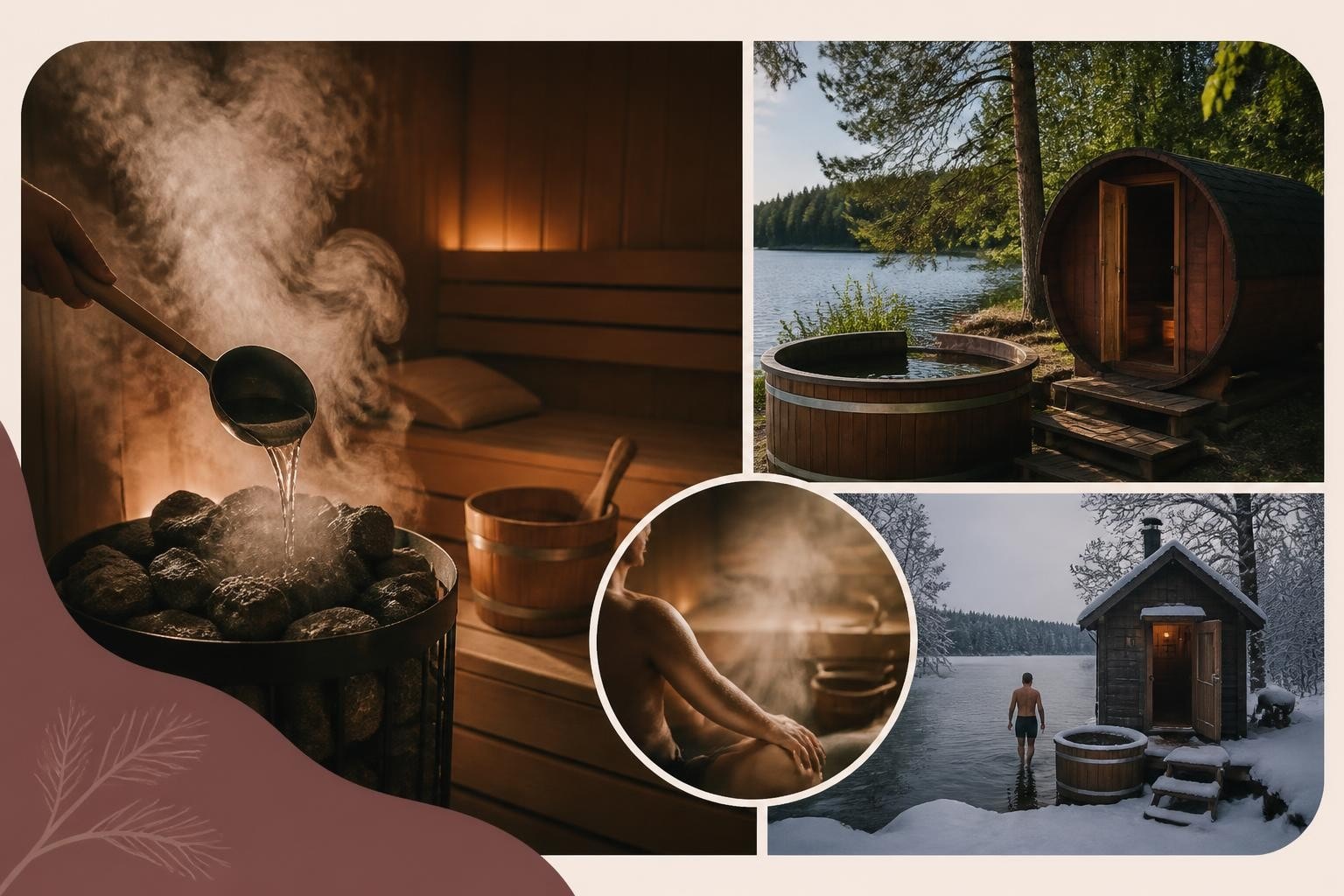
An indoor sauna changes how you recover at home. Not through luxury or relaxation language, but through löyly, the steam that rises when you pour water on hot stones. That moment shifts your body from performance to recovery. I grew up with this on Lake Saimaa in Eastern Finland. We practiced sauna and cold water cycles for 2,000 years before anyone called it contrast therapy. UNESCO recognized Finnish sauna culture as Intangible Cultural Heritage in 2020 because it works, and because it matters.
Why an Indoor Sauna Works for North American Homes
Your basement, spare room, or garage can hold a proper steam sauna. The indoor sauna fits modern life without sacrificing the traditional Finnish heat experience. You control the session schedule, the temperature, and the privacy.
Indoor placement offers practical advantages:
- Year-round access regardless of weather
- No outdoor construction permits in most municipalities
- Climate-controlled pre-heat and cool-down spaces
- Direct access to your shower for the cold contrast
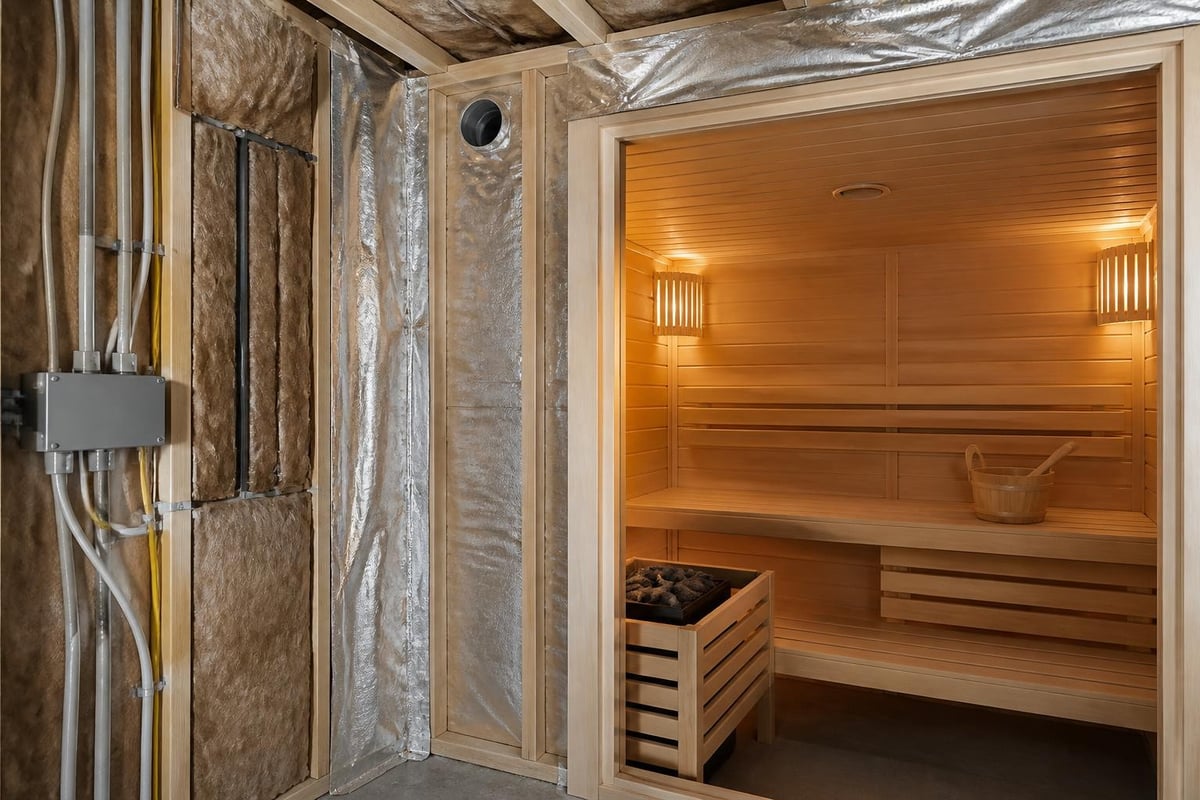
The key difference between indoor and outdoor units is moisture management. An indoor sauna needs proper ventilation and vapor barriers. Indoor sauna installation requires planning for steam release and air circulation from the first day.
Traditional Steam vs. Infrared Heat Indoors
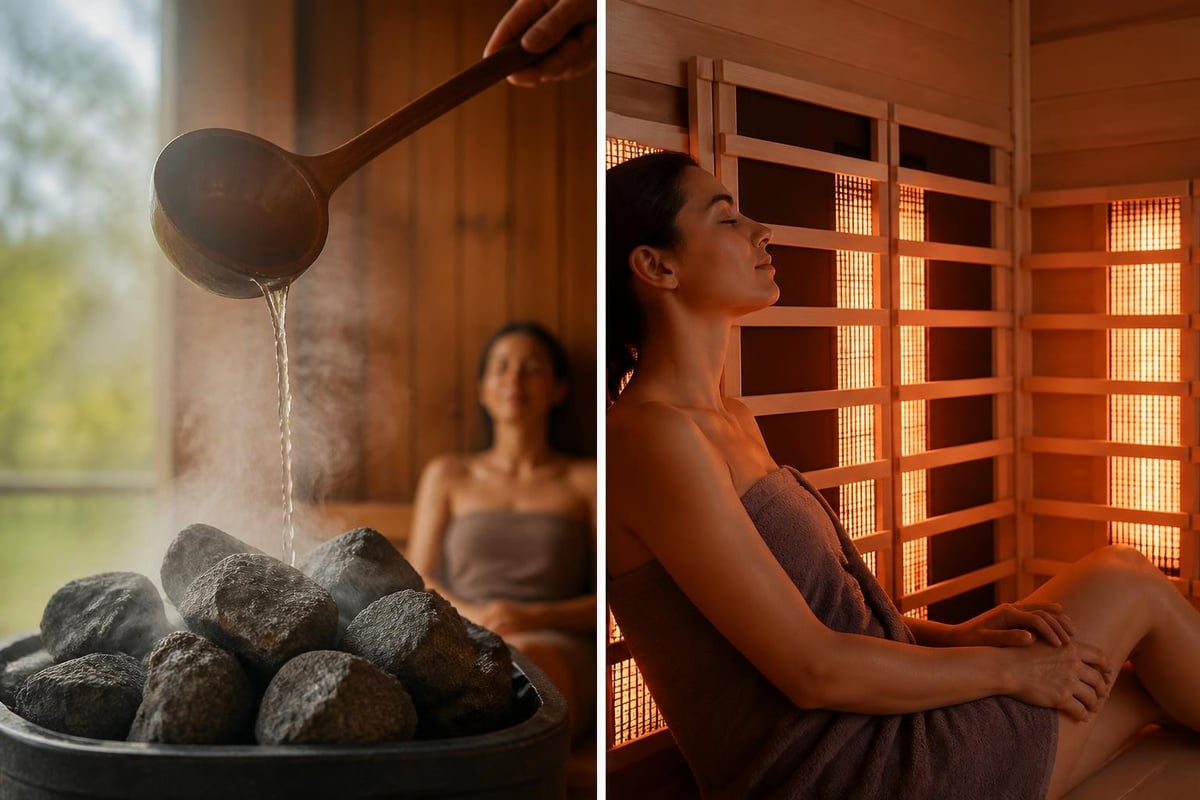
Traditional Finnish saunas heat air to 160-195°F using an electric heater with stones. You create löyly by ladling water onto those stones. The steam penetrates deeper than dry air alone.
Infrared saunas use panels that emit light waves to warm your body directly. Lower ambient temperatures (120-140°F) feel comfortable, but you cannot create löyly. No stones, no steam, no water ritual.
| Feature | Traditional Indoor Sauna | Infrared Indoor Sauna |
|---|---|---|
| Heat Source | Electric heater with stones | Carbon or ceramic panels |
| Temperature | 160-195°F | 120-140°F |
| Löyly Possible | Yes (water on stones) | No |
| Ventilation Needs | Higher | Lower |
| Installation Complexity | Moderate (requires proper venting) | Simple (plug-and-play) |
| Price Range | $5,585-$32,999 | $7,999-$10,999 |
Both types work indoors. Traditional steam gives you the full Finnish experience. Infrared offers easier installation in tight spaces with lower electrical demands.
How Löyly and Contrast Therapy Support Recovery
Löyly is not just steam. It is the moment your nervous system releases tension and your circulation opens. The heat dilates blood vessels. Your heart rate rises moderately, similar to light cardio.
After 10-15 minutes in heat, you expose your body to cold. A cold shower, a plunge tub, or even a cold bath. The temperature drop constricts blood vessels, flushes metabolic waste, and resets your nervous system.
This cycle offers measurable benefits:
- Reduced muscle soreness after training
- Improved sleep quality and duration
- Lower resting heart rate over time
- Mental clarity and stress resilience
Prof. Jari Laukkanen from the University of Eastern Finland published research in Mayo Clinic Proceedings, covered by BBC, TIME, and The New York Times. His findings show that sauna use 4-7 times weekly reduces cardiovascular death risk by 51%. The health benefits of sauna use extend beyond relaxation into measurable physiological change.
Contrast therapy is not a trend. It is what Finns practiced before modern wellness language existed. Heat, cold, rest. Repeat.
Pairing Your Indoor Sauna with Cold Exposure
An indoor sauna works best when you have access to cold water immediately after. Your body is primed for the contrast.
Cold exposure options at home:
- Cold shower (60°F or lower)
- Outdoor hose in warm months
- Dedicated cold plunge tub
- Ice bath in a standard bathtub
The cold plunge tub offers the cleanest experience. You fill it, chill it, and it stays ready. Anmowell in Fort Lee, NJ provides wave and sonic massage therapy as part of a broader wellness routine, and many clients combine those sessions with home sauna and cold plunge cycles for deeper recovery.
A cold plunge beside your indoor sauna turns your basement or garage into a full recovery space. You move between heat and cold without stepping outside or adjusting water temperature mid-session.
Choosing the Right Indoor Sauna for Your Space
Your indoor sauna decision depends on three factors: space dimensions, heat type preference, and installation complexity. Measure your available floor area first. Most indoor saunas need at least 48 inches of width and 72 inches of depth.
Space and Electrical Requirements
Traditional steam saunas require 240V electrical service for most heater sizes. A 6kW heater serves up to 200 cubic feet of sauna space. Larger rooms need 8kW or higher.
Infrared units plug into standard 120V outlets. No electrician needed in most cases. Assembly takes 1-2 hours with basic tools.
Ventilation matters more than people expect. An indoor sauna produces moisture, even infrared units from body sweat. You need an exhaust vent or dedicated air exchange system. Indoor infrared sauna installation guides explain the ductwork and moisture control steps in detail.
Wood Type and Build Quality
Eastern White Cedar and Thermo Grandis are the top wood choices for indoor saunas. Cedar resists moisture naturally and smells clean when heated. Thermo Grandis undergoes heat treatment in Ontario, Canada, making it exceptionally stable in humid environments.
Avoid woods treated with chemical sealants. Heat releases those compounds into the air you breathe.
Quality markers to check:
- Tongue-and-groove wall panels (not thin veneers)
- Tempered glass door with secure seal
- CE or ETL certification on the heater
- Stainless steel hardware (not painted metal)
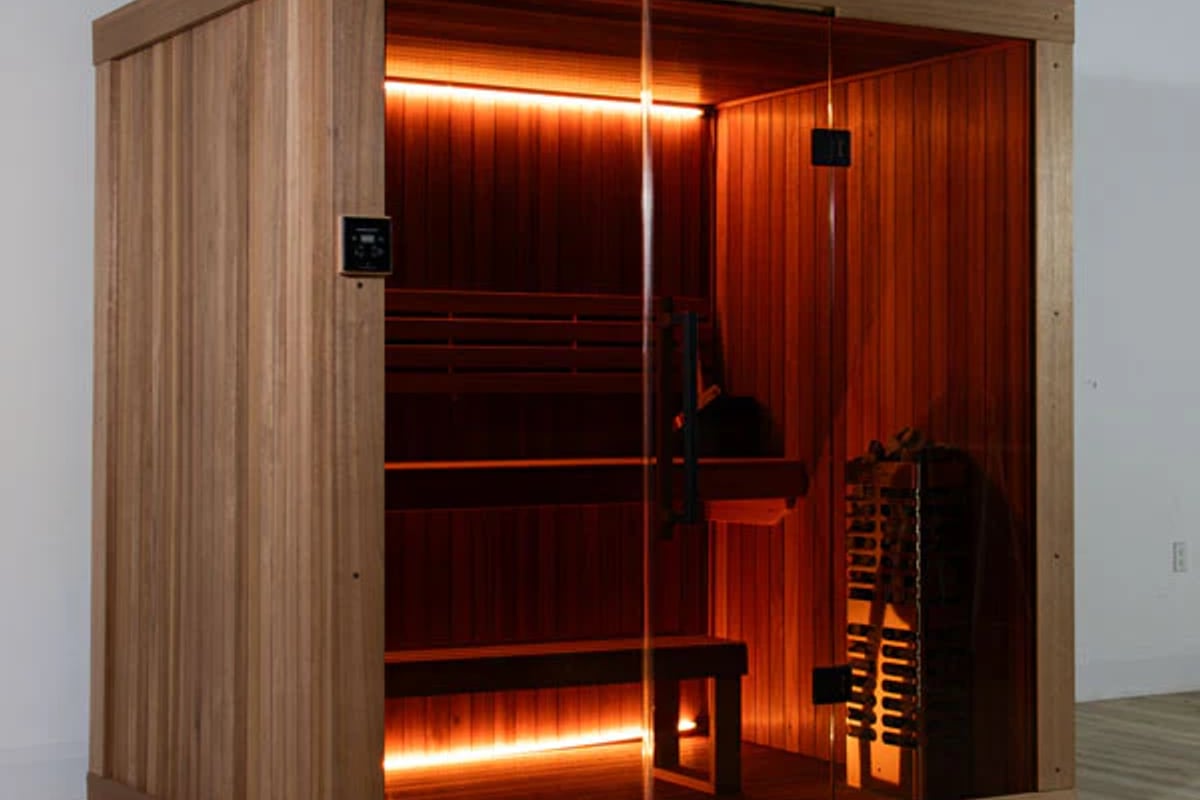
The LeisureCraft Loft CT Element Indoor Sauna uses Thermo Grandis from the Canadian Timber CT Element Collection. It fits a 54x74 inch footprint, seats two comfortably, and includes a full glass front with warm interior lighting. The wood handles indoor moisture without warping. This is the only traditional steam sauna in its size class designed specifically for indoor installation.
Infrared options like the Lumin series from Orivon Wellness use Canadian Hemlock, a softer wood suitable for lower heat environments. Hemlock costs less than cedar but performs well in infrared applications where temperatures stay below 150°F.
Installation Planning and Assembly
Installing an indoor sauna is not complicated, but it is precise. You need a level floor, moisture protection, and clearance around the unit for air circulation.
Pre-Installation Checklist
Start with your floor surface. Concrete basement floors work well. If installing on wood subfloor, add a vapor barrier underneath the sauna to prevent moisture damage. Tile or sealed concrete is ideal.
Steps before assembly:
- Confirm electrical service matches heater requirements (120V or 240V)
- Install vapor barrier on walls and floor if needed
- Locate nearest exhaust vent or plan ductwork route
- Clear 6-12 inches around all sauna walls for air flow
- Check ceiling height (most units need 78-80 inches minimum)
Hire a licensed electrician for 240V installations. This is not optional. Sauna heaters draw significant current and require dedicated circuits with proper breakers.
The comprehensive sauna installation guide from Sauna Place covers planning, electrical, ventilation, and site prep in full detail.
Assembly Process and Timeframe
Most indoor saunas ship in panels or sections. Traditional steam models require more assembly than infrared units.
| Assembly Step | Traditional Steam | Infrared |
|---|---|---|
| Floor panel placement | 15-30 min | 10-20 min |
| Wall panel connection | 60-90 min | 30-45 min |
| Ceiling installation | 30-45 min | 20-30 min |
| Bench assembly | 20-30 min | 15-20 min |
| Heater installation | 45-60 min | 10-15 min |
| Glass door mounting | 20-30 min | 15-20 min |
| Total Time | 3-5 hours | 1.5-2.5 hours |
You need two people for wall panel alignment. Panels interlock with tongue-and-groove joints. Forcing them damages the wood.
Test the heater and controls before final door installation. Make sure the thermostat cycles correctly and the door seal is tight.
Operating Your Indoor Sauna Correctly
A traditional indoor sauna needs 30-45 minutes to reach operating temperature. Infrared units heat in 10-15 minutes.
Creating Proper Löyly
Fill a wooden ladle or heat-resistant cup with clean water. Pour slowly onto the center of the stone pile. The water should sizzle immediately and convert to steam.
Löyly technique:
- Start with one ladle pour
- Wait 30-60 seconds for steam to disperse
- Add more water gradually as desired
- Avoid pouring onto heater elements directly
The steam rises, circulates, and settles around you. Your skin opens. Your breathing deepens. This is the recovery moment.
Session length depends on tolerance. Start with 10-12 minutes. Work up to 15-20 minutes as your body adapts. Exit if you feel dizzy or uncomfortable.
Session Protocol and Frequency
The Finnish approach is simple. Heat, cold, rest. Repeat 2-3 rounds.
Standard session structure:
- Sauna heat for 10-15 minutes
- Cold exposure for 1-3 minutes
- Rest for 5-10 minutes
- Repeat
Prof. Laukkanen's research shows benefits at 4-7 sessions weekly. Evidence-based sauna health benefits include reduced cardiac risk, improved cognitive function, and lower all-cause mortality.
Your body adapts quickly. Most people notice better sleep within the first week. Cardiovascular improvements take 4-6 weeks of consistent use.
Indoor Sauna Pricing and Investment Return
Indoor sauna prices vary by size, wood quality, and heat type. Budget $5,585-$9,550 for traditional cedar steam saunas from LeisureCraft. Premium models like the Orivon Wellness Auris line run $19,999-$32,999 with advanced features and larger capacity.
Infrared saunas cost less. Entry models start at $7,999. Full-spectrum units with zero EMF technology reach $10,999.
Operating Costs and Efficiency
Electric costs depend on heater size and session frequency. A 6kW traditional heater running 45 minutes uses approximately 4.5 kWh. At $0.13/kWh national average, that is $0.59 per session.
Four weekly sessions cost $2.36. Annual operating cost is roughly $123.
Infrared saunas use less power. A 1.6kW infrared unit running 30 minutes uses 0.8 kWh, costing $0.10 per session or $21 annually at four sessions weekly.
Cost comparison for 4 sessions weekly:
| Sauna Type | Power Draw | Session Cost | Annual Cost |
|---|---|---|---|
| Traditional Steam (6kW) | 4.5 kWh | $0.59 | $123 |
| Infrared (1.6kW) | 0.8 kWh | $0.10 | $21 |
Both types cost less to operate than a gym membership. The investment returns through daily access and long-term health benefits.
HSA and FSA Reimbursement Options
Many indoor saunas qualify for Health Savings Account (HSA) or Flexible Spending Account (FSA) reimbursement when purchased with a Letter of Medical Necessity from your physician.
Your doctor documents the medical need. Common qualifying conditions include chronic pain, cardiovascular risk factors, or muscle recovery needs related to injury rehabilitation.
Contact your HSA or FSA administrator for specific requirements. Most accept Letters of Medical Necessity as sufficient documentation for approval.
Maintenance and Long-Term Care
An indoor sauna needs minimal maintenance. Wood naturally resists bacteria at high temperatures. You clean the benches and floor, check the heater stones, and maintain ventilation.
Weekly and Monthly Tasks
After each session, leave the door open for 15-20 minutes. This dries the interior and prevents moisture buildup. Wipe benches with a damp cloth weekly to remove sweat residue.
Monthly maintenance checklist:
- Vacuum floor and bench crevices
- Inspect heater stones for cracks
- Check door seal for gaps
- Clean light fixtures and covers
- Test thermostat accuracy
Replace cracked sauna stones immediately. Damaged stones do not heat evenly and can cause uneven löyly distribution.
Extending Wood Life Indoors
Interior wood lasts decades with proper care. Never use chemical cleaners, oils, or sealants on sauna wood. Heat releases those compounds into breathing air.
For stubborn stains, use fine sandpaper (220-grit) to remove the affected layer. Sand with the grain direction. The wood naturally darkens over time from heat exposure. This is normal and does not affect performance.
Exterior wood on freestanding indoor units may need light cleaning if placed in dusty environments. Use a barely damp cloth. Allow full drying before the next session.
Comparing Indoor vs. Outdoor Sauna Options
Some customers ask whether indoor or outdoor placement makes more sense. Both work. The choice depends on space availability, climate, and how you plan to use cold exposure.
Indoor saunas offer immediate access from your living space. No winter coat, no shoes, no walking through snow. You control the pre-sauna and post-sauna environment completely.
Outdoor saunas provide natural ventilation and traditional placement. If you live where outdoor cold plunge is possible year-round, the outdoor sauna creates a complete cycle without indoor moisture concerns.
Indoor versus outdoor sauna considerations cover structural differences, moisture barriers, and ventilation requirements for each placement type.
When Indoor Makes More Sense
Choose indoor installation if:
- You live in extreme climate zones (very hot or very cold)
- You have basement or garage space available
- You want private, quiet sessions away from neighbors
- You plan to combine sauna with home gym or recovery area
- You prefer controlled pre-heat and cool-down environments
Indoor placement works especially well in northern climates where outdoor access is difficult for months each year. Your sauna stays ready regardless of weather.
When Outdoor Works Better
Outdoor installation suits you if:
- You have dedicated yard space and minimal HOA restrictions
- You enjoy the ritual of walking to a separate structure
- You want traditional backyard cold plunge access
- You prefer natural ventilation without ductwork
- You appreciate the aesthetic of a cedar structure outdoors
The home sauna setup guide from Peak Saunas explains space considerations and electrical planning for both indoor and outdoor models.
Selecting Your First Indoor Sauna
Start with your primary goal. If you want authentic Finnish löyly and steam, choose a traditional sauna with stone heater. If you need simpler installation and lower operating costs, consider infrared.
Decision framework:
- Measure your space - Width, depth, ceiling height
- Check electrical capacity - 120V or 240V available
- Determine heat preference - Löyly steam or infrared radiant
- Set your budget - $5,585-$32,999 range
- Plan ventilation - Exhaust vent or air exchange system
RecoSauna carries both traditional cedar saunas and infrared models. I answer every customer question personally because sauna selection matters. You are making a 20-year investment in daily recovery.
Our authorized dealer partnerships include LeisureCraft cedar saunas ($5,585-$9,550), Orivon Wellness Auris luxury models ($19,999-$32,999), and Lumin infrared saunas ($7,999-$10,999). All units ship free to US and Canada addresses.
If you need contrast therapy at home, pair your indoor sauna with a cold plunge. The LeisureCraft Flow Cold Plunge ships fully assembled with natural cedar exterior and stainless steel interior. Built-in chiller compartment keeps water at optimal temperature. Place it beside your sauna for immediate cold exposure after heat sessions.
We also stock LeisureCraft Baltic Plunge Tubs for flexible cold therapy without electric chillers. Both options turn your indoor sauna into a complete recovery system.
You can learn more about our full selection at RecoSauna, and I am available to discuss your specific space and goals directly.
An indoor sauna brings löyly and contrast therapy into your daily routine without weather dependence or complicated outdoor construction. The steam from water on hot stones creates real recovery, backed by Finnish tradition and Prof. Laukkanen's cardiovascular research. I grew up with this practice on Lake Saimaa, and I bring that knowledge to every customer conversation at RecoSauna. Whether you choose traditional cedar or infrared heat, proper installation and consistent use deliver measurable benefits. Reach out when you are ready to start.
Share:
Outdoor Sauna for Sale: Buying Guide for 2026
Garden Sauna: A Finnish Practice for Your Backyard