

A home gym sauna is a dedicated heat therapy space placed alongside or near workout equipment, designed for muscle recovery, circulation support, and mental reset after training. Most homeowners installing both workout areas and saunas choose adjacent placement in a basement, garage, or yard structure, creating a complete recovery environment. The sauna can be traditional wood-fired or electric, infrared, or barrel style depending on available space and intended use.
The question is not whether a sauna belongs in a home gym. The question is which type fits your training routine, your available space, and the way you want to recover.
Traditional vs Infrared for Home Gym Recovery
The choice between traditional and infrared affects how you use the sauna after workouts.
Traditional saunas generate high heat (160-195°F) and use water poured over stones to create steam. This is löyly, the moment when heat becomes humidity and the body shifts gears. Research shows association between post-exercise sauna use and improved neuromuscular recovery, though the mechanisms are not fully understood. Traditional heat causes immediate cardiovascular response. You sweat quickly. Sessions are shorter, usually 10 to 20 minutes.
Infrared saunas operate at lower temperatures (120-150°F) and use radiant panels instead of hot air. No steam. The heat penetrates skin directly. Sessions last longer, 25 to 40 minutes, and many users find the milder heat easier to tolerate immediately after heavy lifting or high-intensity intervals. Cleveland Clinic notes that infrared may be gentler for beginners or those sensitive to extreme heat.
| Feature | Traditional Sauna | Infrared Sauna |
|---|---|---|
| Temperature | 160-195°F | 120-150°F |
| Steam | Yes (löyly) | No |
| Session Length | 10-20 min | 25-40 min |
| Space Needed | Larger footprint | Compact options |
| Power | 240V dedicated circuit | Often 120V plug-and-play |
Your training intensity matters. If you push hard and want a sharp recovery contrast, traditional heat and cold water create the clearest boundary. If you prefer a slow wind-down or train multiple times daily, infrared offers repeated use without overwhelming the nervous system.

Sizing a Home Gym Sauna
Space planning comes before equipment decisions.
Basement and Garage Placement
Most home gym saunas go in basements or garages where concrete floors handle weight and moisture. A two-person indoor traditional sauna requires roughly 4x5 feet of floor space plus ventilation clearance. Infrared models can fit tighter, some as small as 3x3 feet.
Ceiling height matters for traditional saunas. Heat stratifies. A seven-foot ceiling allows proper bench height and head clearance. Lower ceilings trap heat too close to your face. Infrared is less sensitive to height because the panels radiate rather than relying on rising hot air.
Ventilation requirements differ by fuel and sauna type. Electric saunas need makeup air but not combustion venting. Gas or wood units require dedicated flue systems and meet local mechanical codes. The International Code Council guidance covers opening sizes and air change rates, though interpretation varies by jurisdiction.
Outdoor Placement Near Gym Structures
If your home gym occupies a detached garage or shed, an outdoor barrel or cabin sauna creates a natural transition space. Barrel saunas are compact, often six to eight feet long, and sit on concrete pads or gravel. They heat quickly due to low interior volume.
Cabin saunas offer more interior room and can include a changing area or porch. Placement within 20 feet of your gym door shortens the walk in workout clothes. Petri recommends keeping the path clear of ice in winter. A lighted walkway helps.
Outdoor units require outdoor-rated electrical service. Most electric heaters draw 6 to 8 kW and need 240V circuits. Plan the electrical run before placing the sauna.
Choosing Between Barrel, Cabin, and Indoor Box Saunas
Form follows function and available real estate.
Barrel Saunas
Barrel designs use curved walls to minimize interior volume. Smaller volume means faster heat-up, usually 25 to 35 minutes with an appropriately sized heater. The circular shape resists snow load and sheds rain naturally. Most barrels are kits: pre-cut panels, staves, and bands that bolt together over a weekend.
Barrels work well when the home gym is in a garage and you want a yard sauna within sight. They fit narrow side yards. Maintenance is straightforward. Cedar and spruce resist rot. Inspect door seals and roof shingles annually.
Cabin Saunas
Cabin-style saunas provide more headroom and bench space. A six-by-eight-foot cabin comfortably seats four people on two-tier benches. If you share the gym with a partner or train with friends, the extra capacity justifies the footprint.
Cabins often include windows for natural light and a porch for post-sauna cool-down. Some users keep a bench and towel hooks on the porch. Cabin construction is heavier, requiring a stable foundation, concrete pad, or deck framing.
Indoor Box Saunas
Indoor prefab saunas are modular boxes delivered in panels. Assembly involves fastening walls, installing a heater, and connecting electrical. No foundation excavation. They suit basements and spare rooms adjacent to the gym.
Wood choice matters for indoor units. Canadian Hemlock and Thermo Grandis resist moisture well and stay dimensionally stable in repeated heat cycles. Avoid woods that release strong resins indoors.
The indoor environment requires humidity management. Run a bathroom exhaust fan or crack a window during sessions to prevent moisture buildup on drywall and framing. The EPA guidelines on mold prevention recommend keeping indoor humidity below 60 percent. A sauna session can spike local humidity briefly, but good ventilation clears it within an hour.
Heater Sizing and Stone Mass
Undersized heaters extend warm-up time and struggle to maintain temperature when you add water for steam.
Calculating Heater Capacity
Heater output is measured in kilowatts. The rule is roughly 1 kW per 45 to 50 cubic feet of interior sauna space. A 6x6x7 foot sauna has 252 cubic feet and needs a 5 to 6 kW heater. Add another kilowatt if the sauna has large glass doors or is poorly insulated.
Most quality saunas in North America use Harvia or similar Finnish-engineered heaters. These units last decades if stone is replenished and elements are kept clean. Cheaper heaters with thin-gauge elements fail sooner.
Infrared saunas use wattage differently. Carbon or ceramic panels total 1,500 to 3,000 watts and heat surfaces rather than air volume. Panel placement affects evenness. Look for models with side, back, front, and floor panels to surround the body.
Stone Selection and Maintenance
Traditional sauna heaters hold 30 to 80 pounds of stone. The stones absorb and radiate heat, creating the thermal mass that makes löyly possible. When you pour water on hot stones, the steam release is immediate and intense.
Use igneous stones designed for sauna. Granite and olivine diabase handle thermal shock without cracking. River rocks and sedimentary stones can explode. Replace crumbled stones yearly. Dust and broken pieces insulate the heating elements and reduce efficiency.

Integrating Contrast Therapy with a Home Gym Sauna
Heat alone provides benefit. Heat followed by cold creates a sharper physiological contrast.
Cold Exposure Options
The simplest approach is a cold shower. Install a shower near the sauna or use an existing basement or garage utility shower. Run cold water for 30 seconds to three minutes. This works. It costs nothing beyond plumbing.
A dedicated cold plunge tub offers full immersion and consistent temperature. Cedar tubs hold 100 to 150 gallons and can be filled with hose water and ice, or paired with a chiller unit for year-round use at 45 to 55°F. Placing a cold plunge next to your home gym sauna completes the recovery setup. Many users cycle between heat and cold two or three times per session.
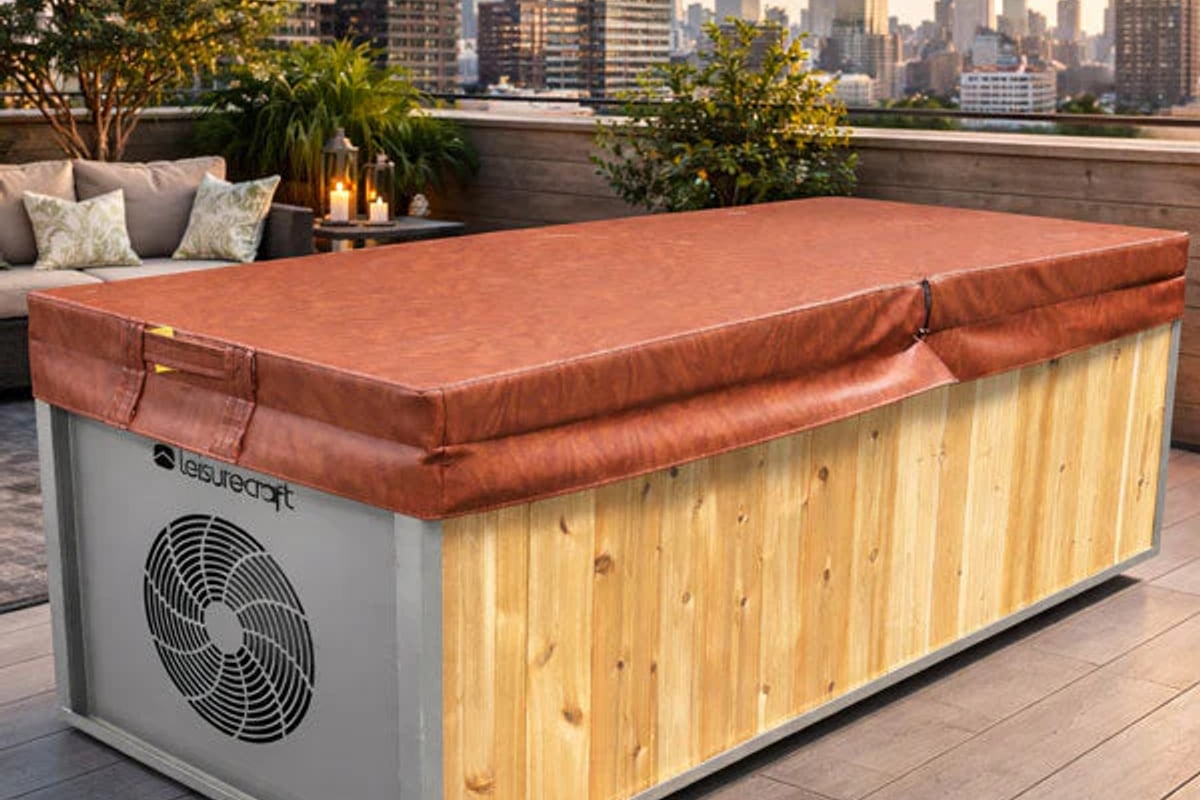
For those building a dedicated recovery space alongside their training area, a professional cold plunge offers lasting value. The LeisureCraft Flow Cold Plunge combines natural cedar exterior with stainless steel interior and a built-in chiller compartment, shipping fully assembled for immediate use. It pairs naturally with both outdoor and indoor saunas for daily contrast therapy.
A systematic review of passive heating interventions found associations between regular sauna use and improvements in blood pressure and vascular function, though causality is not established. Cold exposure after heat appears to enhance subjective recovery, though individual response varies.
Timing Heat and Cold Around Training
Timing matters. Sauna immediately after lifting or running fits most schedules. The body is already warm. Cardiovascular response to heat is amplified. Some users prefer a brief cool-down first, five to ten minutes of light stretching or walking, before entering the sauna.
Cold immersion follows heat. The sequence is heat, brief rest or rinse, cold, repeat. Total session time runs 45 to 75 minutes including transitions. Frequency depends on training load. Three to five contrast sessions per week is common among home gym users training four to six days weekly.
Building Codes and Electrical Requirements
Local codes govern sauna installation even in private homes.
Electrical and Ventilation Code
Electric saunas require dedicated circuits. A 6 kW heater draws roughly 25 amps at 240V and must run on a 30- or 40-amp breaker with appropriate wire gauge. Hire a licensed electrician for the circuit installation and inspection. Some jurisdictions require permits for new 240V circuits.
Ventilation openings are often mandated. Typical requirements call for a low fresh-air inlet near the heater and a high exhaust vent near the ceiling opposite side. The ICC technical guidance provides reference standards, but local amendments vary. Check with your building department before framing.
Gas and wood-burning saunas add complexity. They need combustion air, flue venting, and clearances to combustibles. Wood-fired units are rare in attached home gym spaces due to code restrictions and insurance concerns.
Accessibility Considerations
If you plan to share the sauna with family members or guests with mobility differences, review the U.S. Access Board sauna guidance. Key points include entry thresholds, bench height and depth, and turning radius inside the sauna. These standards apply primarily to commercial and multifamily settings, but they offer useful design principles for inclusive home installations.
Moisture Management and Maintenance
A home gym already battles sweat and humidity. Adding a sauna increases the load.
Controlling Humidity in Shared Spaces
If your sauna and gym share a room, control moisture spread. Close the sauna door fully after each session. Run an exhaust fan for 20 to 30 minutes post-session to evacuate humid air. Wipe down sauna benches and walls with a dry towel to remove surface moisture.
Monitor the surrounding gym space. Concrete floors handle moisture well. Drywall ceilings and wood framing do not. Keep dehumidifiers running if the space feels damp. The EPA mold prevention guidance emphasizes drying wet materials within 24 to 48 hours.
Outdoor saunas shed moisture naturally through ventilation and do not affect indoor gym humidity. This separation is a primary reason many users choose outdoor units.
Wood Care and Cleaning
Sauna interiors need minimal cleaning. Sweep or vacuum benches and floors weekly. Avoid soap or chemical cleaners. They leave residue that vaporizes during heating. Plain water and a stiff brush remove dirt and salt buildup.
Check door hinges, latches, and seals twice yearly. Tighten loose screws. Replace worn weather stripping around doors to maintain heat efficiency. Sand rough spots on benches to prevent splinters.
Outdoor units require roof and exterior inspection. Check shingles for damage after winter. Re-stain or oil exterior cedar every two to three years depending on sun exposure and climate.
First-Person Experience: Growing Up with Sauna and Recovery
I grew up on Lake Saimaa in Eastern Finland where sauna was part of the daily rhythm, not a luxury. After school sports, we heated the sauna, sat until sweat ran freely, then jumped into the lake even in October. Cold water after heat was normal. No one called it contrast therapy or biohacking. It was just what you did. When I see a home gym with a sauna beside it, I recognize that same practical approach: build the space, use it regularly, and let the routine do the work. The sauna does not need to be complicated. It needs to be there, ready, part of the day.
Frequently Asked Questions
Can I install a sauna in a basement gym with low ceilings?
Yes, if ceiling height is at least six and a half feet. Infrared saunas tolerate lower ceilings better than traditional models because heat does not stratify as sharply. Ensure adequate headroom when seated on the top bench.
Do I need a floor drain under the sauna?
Not required for most electric saunas. A sloped tile or concrete floor that can be mopped works. Outdoor saunas with wood stove heaters sometimes include drains for easier cleaning, but they are not code-mandated in residential settings.
How long does it take to heat a home gym sauna?
Barrel saunas heat in 25 to 35 minutes. Larger cabin saunas take 40 to 60 minutes. Infrared models reach operating temperature in 10 to 15 minutes. Preheat time depends on heater size, insulation quality, and outdoor temperature.
Can I use a sauna every day after workouts?
Yes, if sessions are moderate in length and you stay hydrated. Many regular users sauna four to six times per week. Listen to your body. Dizziness or excessive fatigue suggests shorter sessions or rest days.
What if I want to add a sauna but my home gym is indoors and I have no outdoor space?
Indoor prefab saunas fit basements, spare rooms, and large closets. Models as small as three by four feet exist. Confirm electrical capacity and ventilation before purchasing. Some compact infrared units plug into standard 120V outlets.
A home gym sauna brings traditional recovery practice into daily training routines, offering a structured way to support muscle recovery, circulation, and mental reset after workouts. Whether you choose a backyard barrel, a basement infrared box, or a cabin adjacent to your garage gym, the key is consistent use and proper setup. Petri answers every question personally and can guide you through placement, sizing, and selecting the right model for your space and training habits. Ask Petri About Your Sauna.
Share:
Home Spa Ideas That Create Lasting Recovery Spaces
Hot Sauna: Temperature, Safety & Health Effects in 2026