

A two person infrared sauna gives you private heat sessions at home without the footprint of a larger cabin. Most units measure between 48 and 60 inches wide, plug into standard household outlets, and deliver deep infrared warmth in 10 to 15 minutes. You can install one in a basement, spare bedroom, or even a finished garage. The question is which configuration fits your space, how much electrical capacity you need, and whether near-infrared, far-infrared, or full-spectrum heating makes sense for the sessions you actually plan to use.
What Makes a Two Person Infrared Sauna Different
A two person infrared sauna uses radiant heating panels instead of a stove and rocks. No steam, no water, no high ambient temperature. The panels emit infrared wavelengths that warm your skin and tissue directly. You sit on benches facing the panels, and the cabin temperature reaches 120 to 140°F, comfortable enough to stay in for 30 to 45 minutes.
Traditional Finnish saunas reach 160 to 200°F with löyly (steam from water on hot stones). That heat surrounds you, shifts your body into recovery, and pairs naturally with a cold plunge. Infrared operates differently. Lower air temperature, longer sessions, and the focus is on radiant penetration rather than humid heat shock.
Wavelength Options
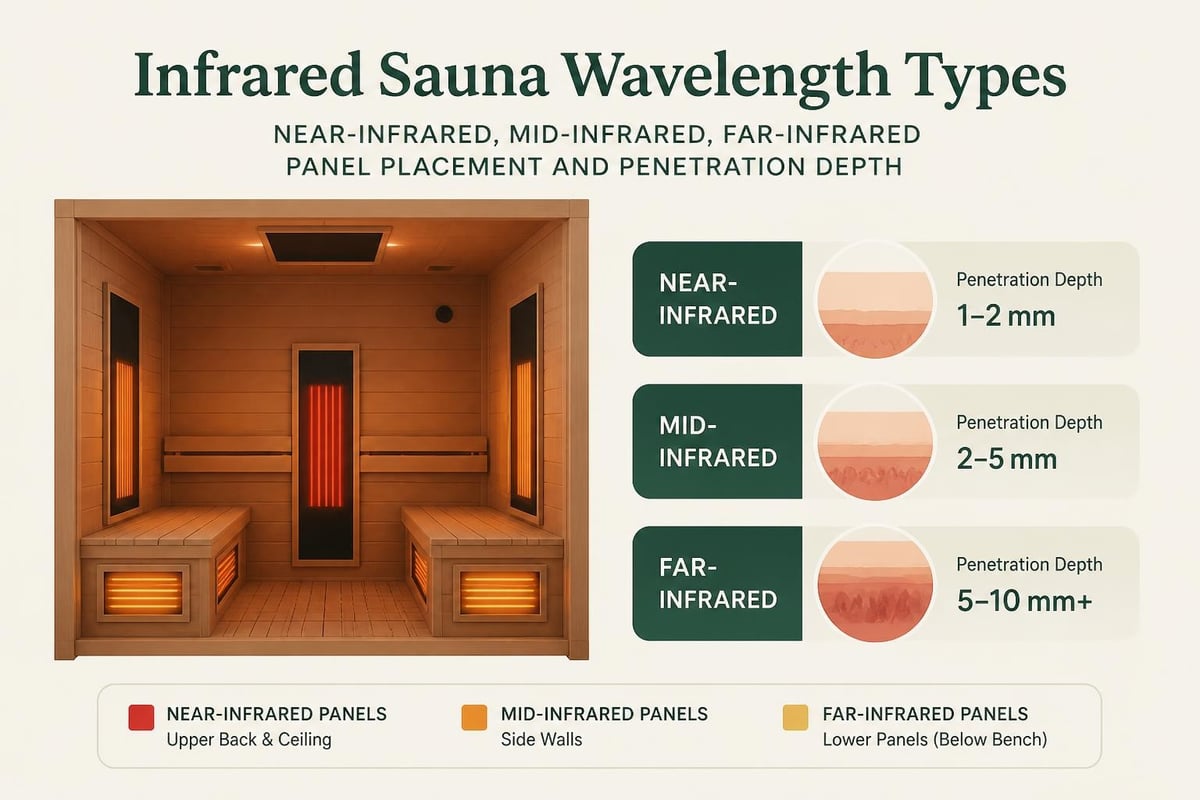
Infrared saunas come in three types:
- Far-infrared (FIR): Most common. Carbon or ceramic panels emit long wavelengths that warm the body without heating the air aggressively. Sessions feel gentler, easier to tolerate for longer periods.
- Near-infrared (NIR): Shorter wavelengths, often delivered by bulbs or smaller elements. Some manufacturers claim near-infrared penetrates deeper, though evidence remains limited.
- Full-spectrum: Combines near, mid, and far wavelengths in a single unit. You get variety, but the actual benefit of mixing wavelengths is still debated in research.
Each type has advocates. Far-infrared dominates the market because it scales well in cabin form and requires simpler electronics. Near-infrared adds cost and usually requires bulb replacement over time. Full-spectrum is a premium option with more complex panel assemblies.
| Wavelength Type | Panel Type | Typical Session Temp | Maintenance |
|---|---|---|---|
| Far-infrared | Carbon/ceramic | 120–140°F | Low |
| Near-infrared | Bulbs/elements | 110–130°F | Bulb replacement |
| Full-spectrum | Layered panels | 120–140°F | Moderate |
Comparing Two Person Models
Two person infrared saunas vary in wood species, heater wattage, control systems, and extras like chromotherapy or Bluetooth. The core question is whether the unit fits your room, plugs into your existing electrical, and holds up over years of regular use.
Key Specifications
Most two person models share a similar footprint but differ in height, bench configuration, and total panel coverage. Here is what you see across the category:
| Specification | Typical Range | What It Affects |
|---|---|---|
| Width | 48–60 inches | Room fit, bench seating |
| Depth | 42–48 inches | Legroom, panel placement |
| Height | 72–78 inches | Ceiling clearance, heat distribution |
| Power draw | 1400–1750 watts | Circuit capacity, heat-up speed |
| Voltage | 120V or 240V | Electrical installation cost |
A 120V unit plugs into a standard outlet and draws 12 to 15 amps. You may need a dedicated circuit depending on what else runs on that line. A 240V model requires hardwired installation and a double-pole breaker, adding cost but improving heat-up time and running efficiency.
Check the infrared sauna installation guide for wiring details. Most electricians can assess your panel capacity and add a circuit in a few hours.
Wood Species and Durability
Canadian Red Cedar and Canadian Hemlock dominate. Both resist moisture and hold up in low-humidity infrared environments. Cedar carries a stronger scent and tends to cost more. Hemlock is lighter in color, less aromatic, and slightly softer but still durable for daily use.
Eastern White Cedar appears in some models and offers similar properties to Red Cedar with a milder scent. Thermo-treated wood, like Thermo Grandis, is heat-modified for enhanced moisture resistance and dimensional stability, though it is more common in traditional steam saunas than infrared cabins.
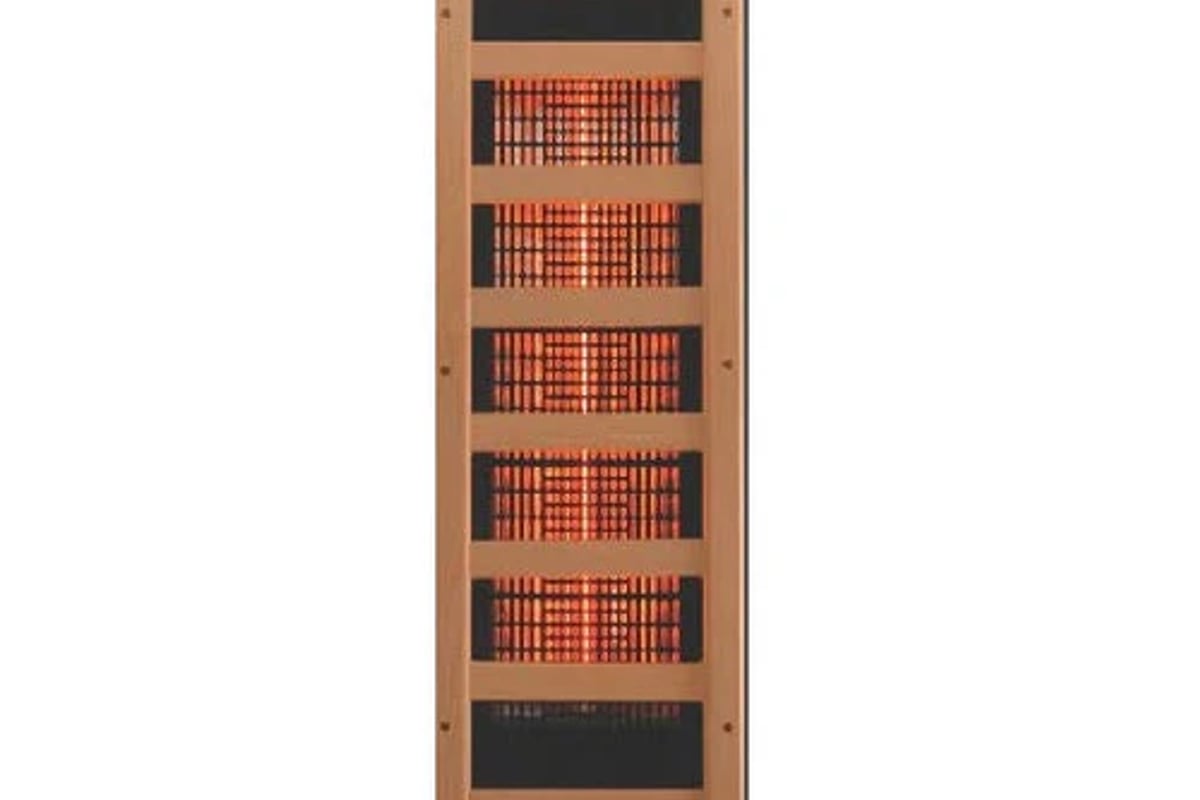
The Maxxus 2 Person Full Spectrum IR Sauna uses Canadian Reforested Red Cedar with full-spectrum heating panels, floor heating, and chromotherapy. It includes Bluetooth connectivity and privacy glass, combining natural wood with layered infrared coverage for daily home sessions.
What to Check Before You Buy
Space and Placement
Measure your room before you compare models. A two person infrared sauna needs a few inches of clearance on all sides for ventilation and access to panels. Check ceiling height if you have a basement with ductwork or low joists.
Most buyers place units in:
- Basements: Cool, private, easy electrical access
- Spare bedrooms: Convenient for daily use, climate-controlled
- Finished garages: Insulated space, less intrusion into living areas
Read the indoor infrared sauna placement guide for room-by-room considerations. Floor loading is rarely an issue with infrared cabins since they weigh 300 to 500 pounds fully assembled.
Electrical Requirements
Most 1750-watt 120V models draw 14.5 amps at full power. If your circuit also powers lights, outlets, or other appliances, you may trip the breaker during heat-up. A dedicated 20-amp circuit solves this cleanly.
240V units draw half the amperage for the same wattage, reducing load on the panel and speeding warm-up by several minutes. Installation cost is higher, but long-term reliability improves.
Ask your electrician to verify panel capacity and run a dedicated line if needed. Most homes built after 2000 have the capacity. Older homes may require a panel upgrade.
EMF Levels
Infrared panels emit low-frequency electromagnetic fields as a byproduct of heating. Some manufacturers advertise "low EMF" or "near-zero EMF" designs with shielded wiring and carbon panel layouts that cancel field exposure.
Research on EMF health effects remains inconclusive. The panels sit close to your body, and long sessions mean extended exposure. If EMF is a concern, ask for lab test results showing milligauss readings at seated positions. Most quality cabins measure below 3 milligauss, well under common household appliance levels.
Operating Cost
Running cost depends on wattage and session length. A 1750-watt unit running 45 minutes uses roughly 1.3 kilowatt-hours. At the US average of 16 cents per kWh, that session costs about 21 cents.
Daily use (365 sessions per year) runs around $77 annually. Electricity rates vary by state. Check the infrared sauna electricity cost breakdown for detailed estimates by region and usage pattern.
Heating panels last 10,000 to 15,000 hours with minimal maintenance. No rocks to replace, no stove elements to service. The main long-term cost is electricity.
Assembly and Installation Checklist
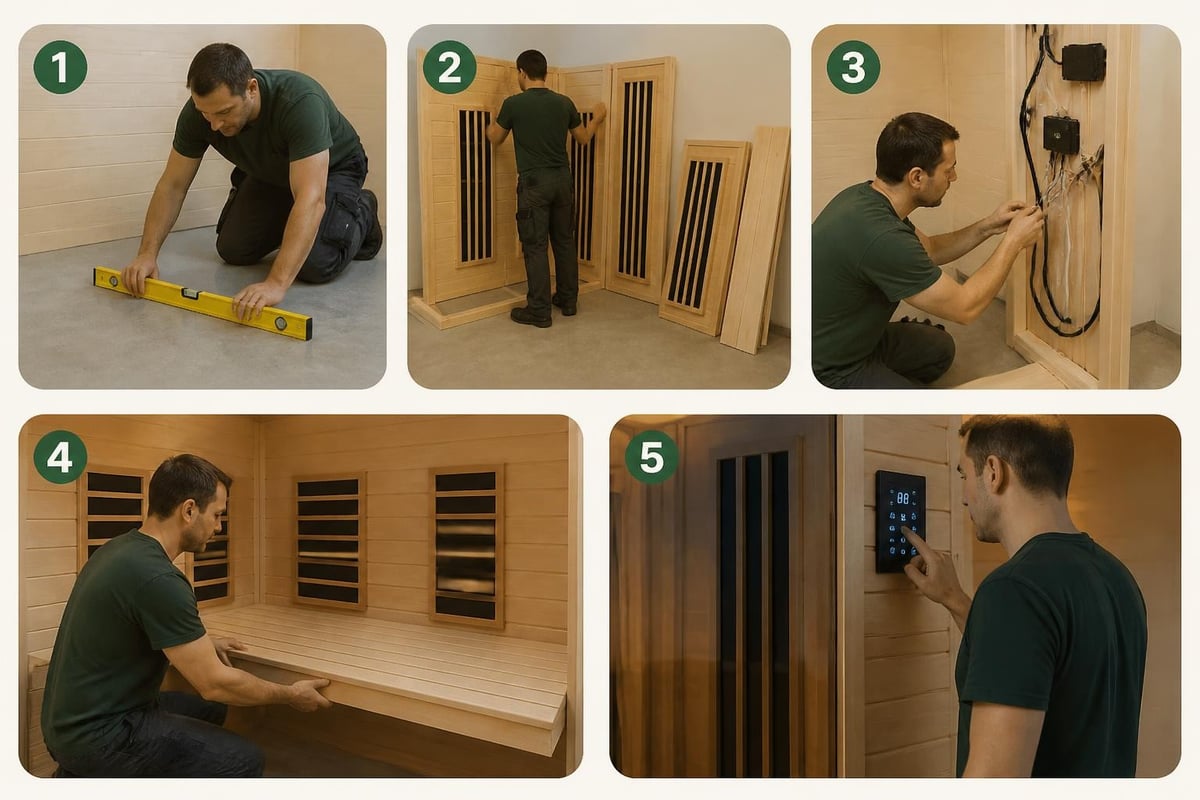
Most two person infrared saunas arrive in flat-pack form. Assembly involves tongue-and-groove wall panels, preassembled benches, and plug-in heater harnesses. Expect 2 to 4 hours with basic tools.
Step-by-step overview:
- Unpack and inventory parts. Check for missing hardware before starting.
- Assemble the floor base. Level it carefully since wall panels stack on top.
- Install wall panels. Tongue-and-groove or clasp-together depending on model.
- Mount heater panels and wire harnesses. Follow the manual precisely. Do not overtighten screws on carbon panels.
- Install benches, door, and control panel. Test the door seal and latch.
- Plug in and test heating. Run a short session to verify even panel operation.
Some manufacturers offer white-glove delivery with full setup. It adds cost but removes risk of assembly error. If you are not comfortable with light carpentry, it is worth considering.
Ventilation and Air Quality
Infrared saunas do not produce steam, so moisture buildup is less of a concern than in traditional saunas. Still, you need some airflow to prevent stale air and off-gassing from wood and adhesives during the first few sessions.
Most cabins include small roof or floor vents. Leave the door slightly open after sessions to let the cabin cool and air out. If you smell strong cedar or adhesive odor, run the sauna empty at full temperature for an hour to accelerate off-gassing.
Check the EPA guidance on mold remediation for cleaning protocols if moisture or mold ever appears. Infrared cabins stay dry, but basements with poor ventilation can introduce external humidity.
Health Considerations and Research
Infrared sauna exposure raises core body temperature, increases heart rate, and triggers sweating similar to moderate exercise. Research comparing infrared sauna to exercise shows cardiovascular and thermoregulatory responses overlap, though the mechanisms differ.
A comprehensive review of passive heat therapies notes associations between regular sauna use and cardiovascular markers, though most studies involve traditional Finnish saunas with löyly. Infrared data is growing but remains less robust.
Systematic review of dry sauna benefits identifies reported improvements in circulation, muscle recovery, and relaxation. The review also highlights gaps in the literature and calls for more controlled trials.
Key points to remember:
- Association, not proof: Studies show correlations. Causality is harder to establish.
- Individual variation: Some people tolerate heat well, others do not. Start with shorter sessions.
- Hydration matters: Sweating depletes fluids. Drink water before and after.
- Medical conditions: Check with your doctor if you have cardiovascular issues, are pregnant, or take medications that affect heat tolerance.
Infrared sauna is not a replacement for medical treatment. It is a home wellness tool. Approach it with realistic expectations.
What I Learned Growing Up on Lake Saimaa
I grew up in Eastern Finland where sauna was part of daily rhythm, not a trend. We heated the wood stove, threw water on the stones for löyly, and plunged into the lake afterward. The steam and cold cycle taught me that heat alone is only half the experience. Infrared saunas skip the steam, which changes the session entirely. They work well for people who want warmth without the intensity of traditional löyly, but they are not the same practice. If you are considering infrared, know what you are choosing and what you are leaving out.
Frequently Asked Questions
How long does a two person infrared sauna take to heat up?
Most models reach operating temperature in 10 to 15 minutes. Preheat before you step in. 240V units warm slightly faster than 120V models.
Can I use a two person infrared sauna alone?
Yes. The bench layout works fine for solo sessions. You get the same panel coverage whether one person or two are inside.
Do I need special ventilation for an indoor infrared sauna?
No mechanical ventilation is required. Small roof or floor vents allow air exchange. Open the door after sessions to let the cabin cool and dry.
How much does it cost to run a two person infrared sauna daily?
Around 21 cents per 45-minute session at average US electricity rates. Annual cost with daily use is approximately $77. Actual cost varies by state and local utility rates.
What is the difference between a two person infrared sauna and a traditional Finnish sauna?
Infrared uses radiant heating panels and lower air temperatures (120–140°F). Traditional Finnish saunas use a heater and stones with water for löyly (steam), reaching 160–200°F. The session experience, heat delivery, and recovery benefits differ significantly.
A two person infrared sauna fits into smaller homes and delivers private heat sessions without steam or high temperatures. Measure your space, verify your electrical capacity, and choose a model that matches the sessions you will actually use. At RecoSauna, I answer every question personally and help you find the right fit for your home, whether that is infrared or traditional löyly. Ask Petri About Your Sauna.
Share:
Sauna for Recovery: The Finnish Approach to Rest and Repair
Home Spa Ideas That Create Lasting Recovery Spaces