
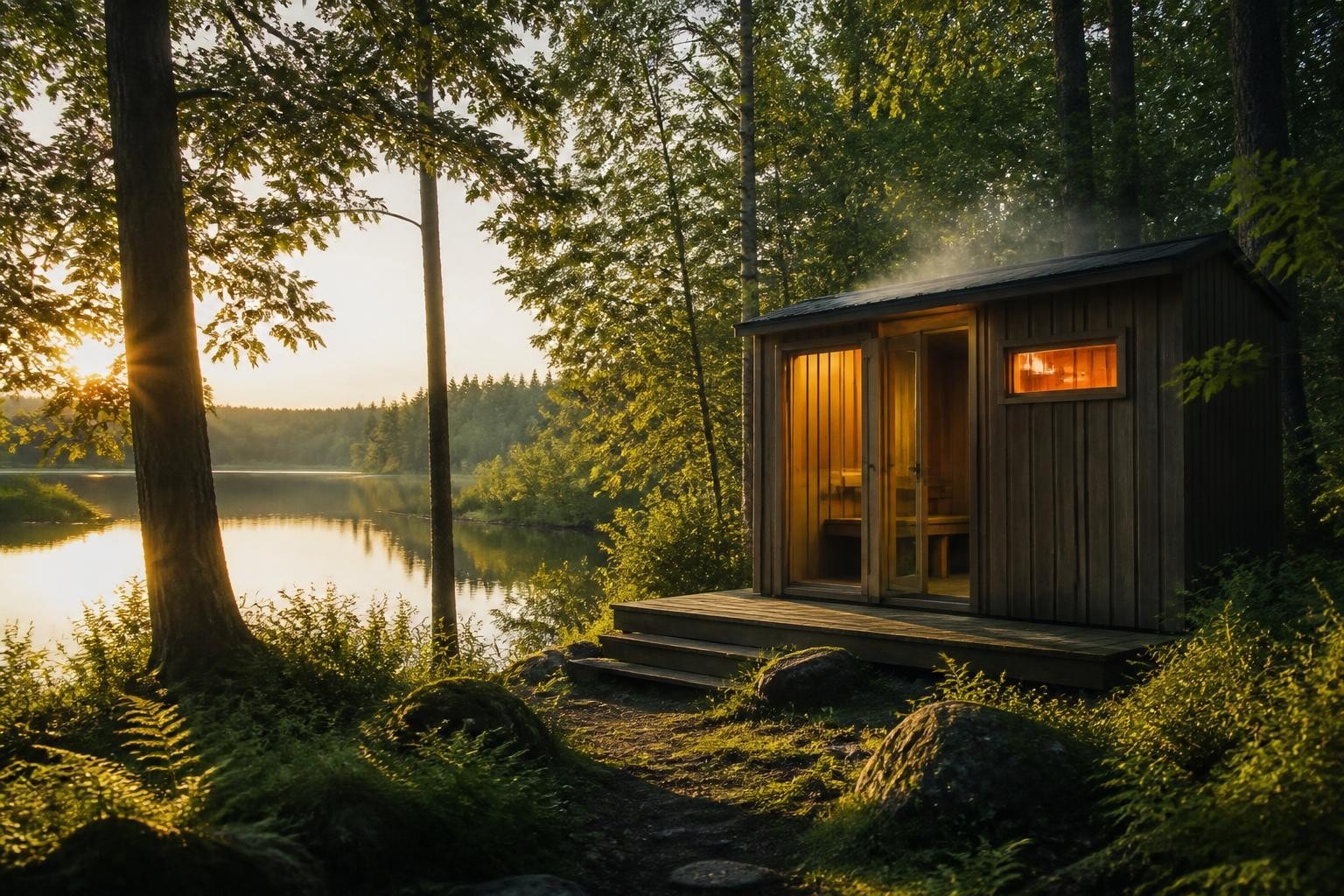
An outdoor sauna kit delivers the essential pieces for building a traditional steam sauna in your yard. You receive pre-cut wood panels, benches, framing, a glass door, and assembly instructions. Most kits require a foundation, electrical hookup for the heater, and basic carpentry skills. The appeal is clear: you skip custom design and receive tested components that fit together without guessing measurements or sourcing specialty lumber. Quality kits use cedar or heat-treated wood selected for moisture resistance and thermal performance. Assembly ranges from a weekend for experienced builders to several days for those working carefully through detailed steps.
What You Actually Get in an Outdoor Sauna Kit
A kit breaks down a sauna into modular sections that ship on a pallet. The core components include wall panels with tongue-and-groove joints, roof sections, benches, a frame for the door, interior trim, and hardware. Better kits add vents, bench supports, and LED lighting.
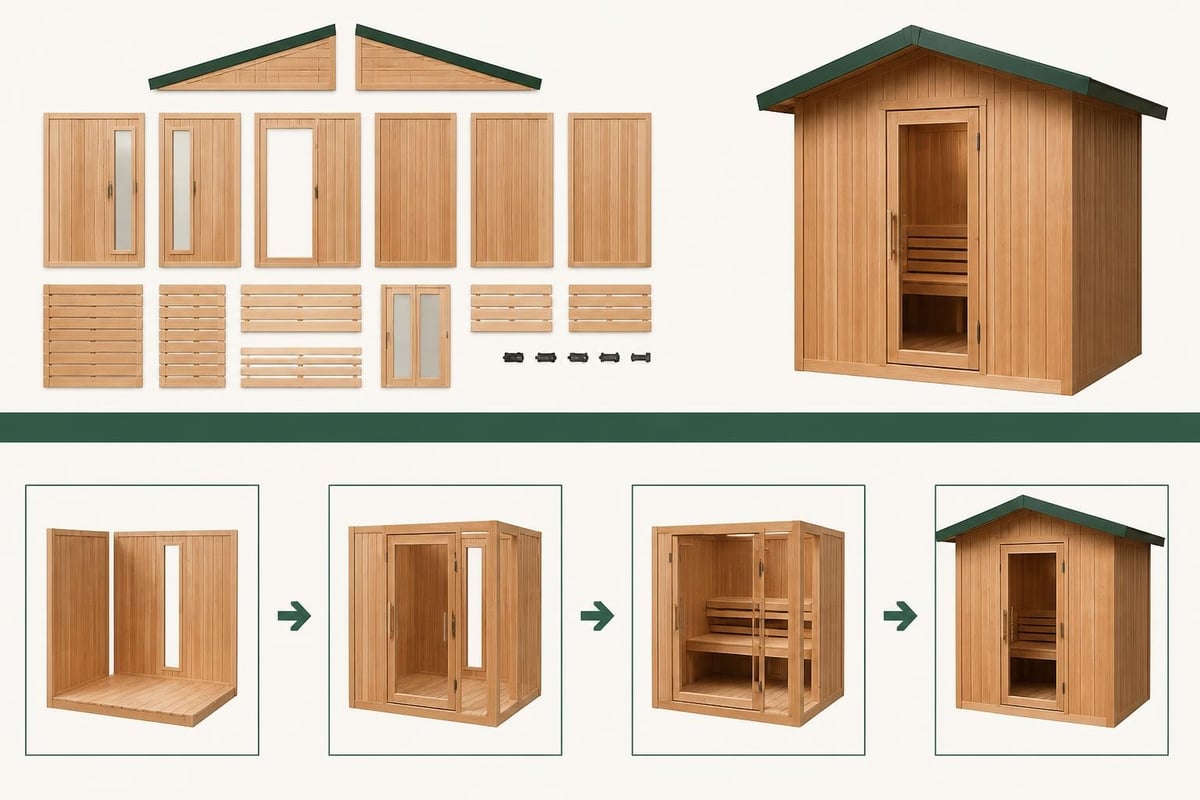
What you need to supply separately:
- A level foundation (gravel pad, concrete pavers, or slab)
- An electric sauna heater and stones
- Electrical wiring to code (often 240V)
- Tools for assembly (drill, level, saw for trim cuts)
- Exterior stain or sealant if recommended
The heater is almost never included. Sizing depends on interior volume, insulation quality, and whether you are in Montana or Ontario. A 6 kW heater serves most 4-person barrel or cabin kits. Larger models need 8 or 9 kW. Stone mass matters. A heater holding 40 to 60 pounds of stones creates better löyly, the steam that defines the Finnish sauna experience.
Barrel vs. Cabin Kits
| Feature | Barrel Kit | Cabin Kit |
|---|---|---|
| Assembly | Simpler, fewer joints | More complex framing |
| Headroom | Limited at edges | Full standing height |
| Bench Layout | Curved, intimate | Traditional flat tiers |
Barrel kits use curved staves held by metal bands. They shed water naturally and need no roof shingles. Cabin kits offer more interior space, traditional bench layouts, and the option to add a changing room or porch. Both work. Your preference depends on how you picture yourself sitting inside.
Comparing Kit Materials and Climate Fit
Wood selection determines how the sauna ages in your climate. Eastern White Cedar, Western Red Cedar, and heat-treated woods each handle moisture and temperature differently.
| Wood Type | Moisture Resistance | Best Climate |
|---|---|---|
| Eastern White Cedar | High natural oils | Cold, wet winters |
| Western Red Cedar | Moderate, aromatic | Mild to cold, drier regions |
| Thermo-treated Grandis | Excellent stability | Humid summers, freeze-thaw cycles |
Eastern White Cedar grows in the Great Lakes and northeastern forests. It resists rot without chemical treatment and weathers to silver-gray if left unsealed. Western Red Cedar offers a distinct aroma and rich color but benefits from annual stain in wet climates. Heat-treated woods undergo kiln processing above 200°C, removing moisture and sugars that attract mold. The result is dimensional stability and long service life in variable conditions.
Avoid pine or untreated softwoods marketed as "sauna-grade" without specification. They warp, crack, and fail within a few seasons outdoors.
Heater Sizing and Stone Capacity
Underpowered heaters take too long to reach temperature. Oversized heaters cycle frequently and create uneven heat. Calculate interior cubic footage (length × width × height in feet), then match to heater wattage.
- Up to 200 cubic feet: 4.5 to 6 kW
- 200 to 350 cubic feet: 6 to 8 kW
- 350 to 500 cubic feet: 8 to 9 kW
- Above 500 cubic feet: 9+ kW or dual heaters
Stone capacity influences heat retention and steam quality. A heater holding 50+ pounds of Finnish olivine or peridotite stones holds temperature longer and produces softer, more enveloping steam when you ladle water over them. Cheap heaters with 20 pounds of small stones run hot on the elements but lack the mass for proper löyly.
Most quality outdoor sauna kits in North America are designed around Harvia heaters. These Finnish-manufactured units are sized conservatively, heat evenly, and last decades with proper stone replacement every few years.
Electrical Requirements
Expect a 240V circuit for heaters above 6 kW. A licensed electrician should run the line from your panel to a weatherproof disconnect box near the sauna. Local codes vary. Some municipalities require a permit and inspection. Budget time and cost for this step. It is not optional.
Foundation and Drainage Essentials
An outdoor sauna kit sits outdoors year-round. Water runs off the roof, steam escapes through vents, and seasonal freeze-thaw cycles shift soil. A poor foundation leads to uneven floors, door misalignment, and wood rot at the base.
The simplest approach is a gravel pad 4 to 6 inches deep, extending 12 inches beyond the sauna footprint on all sides. Top it with concrete pavers or a grid of pressure-treated lumber to create a level surface. The gravel drains water away from the structure. For more detail, consult a comprehensive outdoor sauna drainage guide that covers slope, materials, and long-term maintenance.
Avoid placing a sauna directly on soil, grass, or a wood deck without proper ventilation and moisture barriers. The base will degrade faster than the walls.
Assembly: What the Instructions Don't Always Clarify
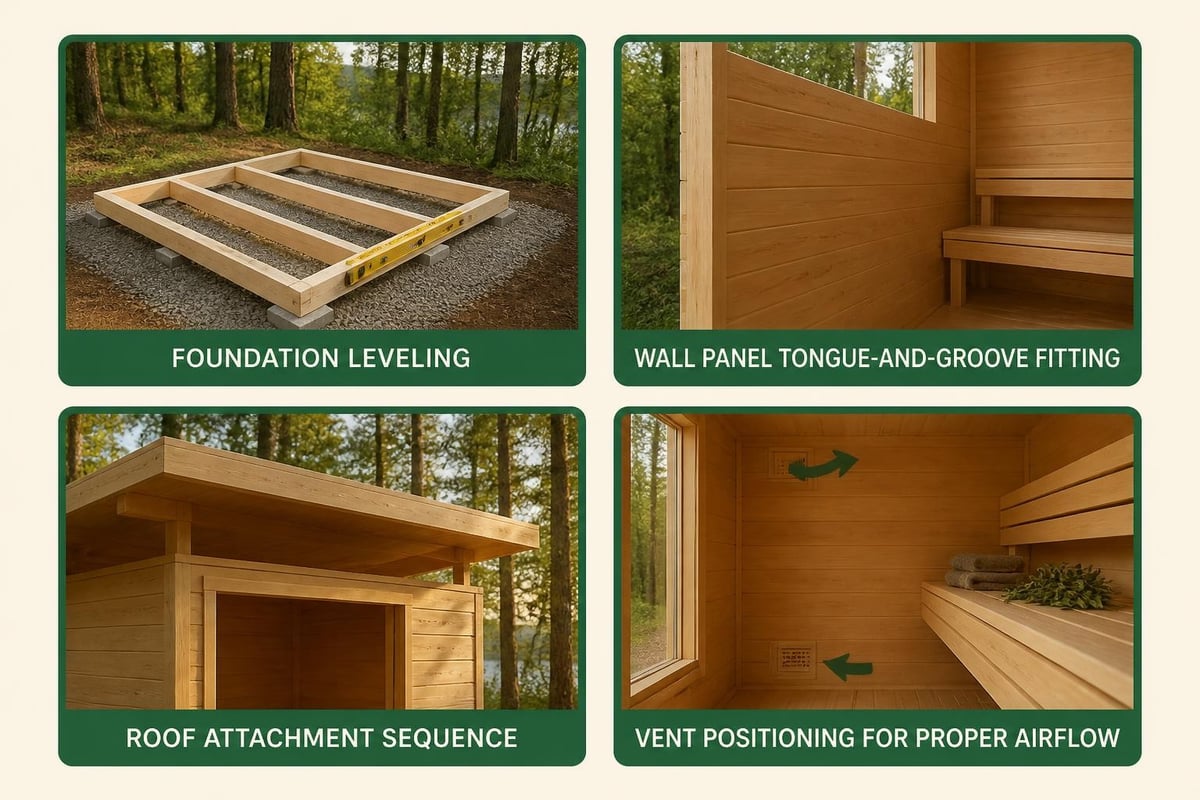
Kit instructions assume you understand basic carpentry terms and have assembled large furniture or structures before. Reality varies. Here are the steps that cause the most questions:
- Foundation leveling: Use a 4-foot level in multiple directions. A quarter-inch off over 8 feet will show in the door gap.
- Panel alignment: Tongue-and-groove joints require even pressure. Tap gently with a rubber mallet, never force.
- Roof assembly: Some kits use interlocking panels, others require shingle installation. Read ahead before starting this section.
- Vent placement: Intake vents go low near the heater. Exhaust vents go high on the opposite wall. Incorrect placement kills air circulation.
- Bench attachment: Benches need airflow underneath. Leave a half-inch gap between slats and allow space behind the backrest.
Mistakes add hours. Rushed assembly leads to gaps, squeaks, and panels that don't sit flush. Plan two full days minimum for a barrel sauna, three to four days for a cabin. If you have never assembled a structure this size, consider hiring a handyman for the foundation and framing. You can finish the interior details yourself.
For further guidance on common challenges, this DIY outdoor sauna kit installation resource walks through real installation issues and solutions.
Brand Differences That Matter
Not all outdoor sauna kits use the same joinery, hardware quality, or wood thickness. Pay attention to these details when comparing options:
- Wall thickness: 1.5 inches is standard. Thinner walls lose heat faster and feel less solid.
- Bench lumber: Look for clear, knot-free cedar or aspen. Benches with knots can become uncomfortably hot or crack over time.
- Glass door: Tempered safety glass, bronze or clear. Cheap kits use acrylic, which scratches and yellows.
- Roof design: Shingle kits require annual inspection. Metal roofs last longer with less maintenance.
- Hardware: Stainless steel bands, hinges, and fasteners resist corrosion. Galvanized steel rusts in steam.
Established brands test assembly sequences with real customers and refine instructions over multiple production runs. Newer importers sometimes translate manuals poorly or use non-standard fastener sizes. For a detailed comparison, review this outdoor sauna brand evaluation that covers material quality, warranty terms, and installation support.
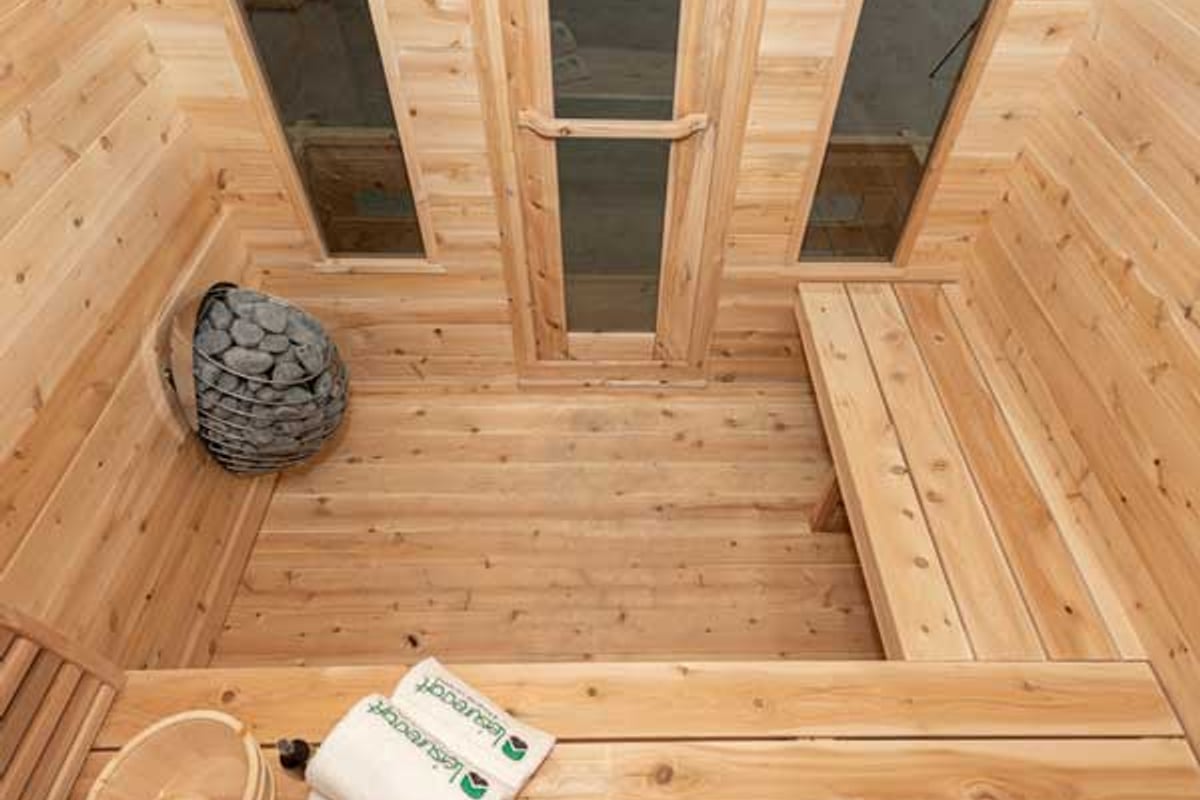
The LeisureCraft Georgian Cabin Sauna with Porch uses Eastern White Cedar with full-length tongue-and-groove panels, stainless steel hardware, and a covered porch that creates space to cool down between rounds. It is a kit built for northern climates and designed to last decades with basic seasonal care.
What to Expect After the First Year
Wood moves. It expands in summer humidity and contracts in winter cold. Expect small gaps to appear between panels during dry months and close again when moisture returns. This is normal. Serious gaps that let in daylight indicate a foundation problem or assembly error.
Exterior wood turns gray unless you apply UV-blocking stain or sealant. Some owners prefer the weathered look. Others restain every two years to maintain the original color. Interior wood darkens from heat and steam but needs no finish. Never use varnish, polyurethane, or paint inside a sauna. It will off-gas and peel.
Heater stones crack and crumble over time. Inspect them twice a year. Replace any that break into small pieces. Dust and stone fragments reduce airflow and strain the heating elements.
Door hinges may need tightening as the wood settles. Vent screens collect lint and should be vacuumed annually. These are small tasks. A well-built outdoor sauna kit requires less maintenance than a deck.
Pairing Your Sauna with Cold Exposure
A sauna alone provides heat stress and relaxation. Alternating heat with cold water immersion is a practice that has existed in Finland for centuries, now studied for its effects on circulation and recovery. If you are interested in this pairing, consider your space and budget for a simple cold plunge setup. For more background, read about the principles behind contrast therapy and how it fits into a home wellness routine.
Cold plunge options range from a stock tank filled with ice to a cedar tub with a chiller system. Neither is required to enjoy a sauna, but many who build one end up adding the other within a year.
Growing Up on Lake Saimaa
I spent childhood summers on the eastern shore of Saimaa, where every family had a sauna by the water. Saturday evenings meant heating the wood stove for two hours, sitting on the upper bench until sweat ran freely, then walking down the dock to dive into water so cold it reset your nervous system in seconds. No one called it therapy or optimization. It was simply how you ended the week, washed away the work, and prepared for what came next. That cycle taught me what a sauna should feel like, how the heat should build slowly, and why the quality of the structure, the heater, and the stones all matter more than the square footage or the brand name on the outside.
Frequently Asked Questions
How long does it take to assemble an outdoor sauna kit?
Most barrel saunas require one to two full days for two people working carefully. Cabin-style kits take three to four days, sometimes longer if you need to build a custom foundation or run new electrical service.
Can you place an outdoor sauna kit on a deck?
Yes, if the deck structure can support the weight (typically 1,500 to 3,000 pounds loaded) and you install a waterproof barrier under the sauna to protect the deck boards. Consult a structural engineer if unsure.
Do you need a permit to install an outdoor sauna kit?
It depends on local building codes. Some municipalities classify saunas as accessory structures requiring permits. Others treat them like sheds. The electrical work almost always requires a permit and inspection.
What is the difference between a sauna kit and a pre-built sauna?
A kit ships in flat-packed sections that you assemble on site. A pre-built sauna arrives fully constructed, often in two halves joined on your foundation. Pre-built units cost more but reduce labor and assembly risk. For a deeper exploration of types and installation, review this comprehensive outdoor sauna guide.
How often do you need to replace sauna stones?
Every two to three years with regular use (three or more sessions per week). Stones crack from repeated heating and cooling. Broken stones restrict airflow and reduce heater efficiency.
An outdoor sauna kit simplifies the process of building a backyard retreat, but material quality, heater sizing, and proper assembly determine whether it becomes a lasting part of your routine or a maintenance burden. If you are ready to choose a sauna that fits your space, climate, and how you plan to use it, ask Petri about your sauna. Every question gets a direct answer, not a sales script.
Share:
Golden Designs Sauna Review: Full Spectrum Infrared Guide
Traditional Sauna for Sale: Finnish Expert Buying Guide