
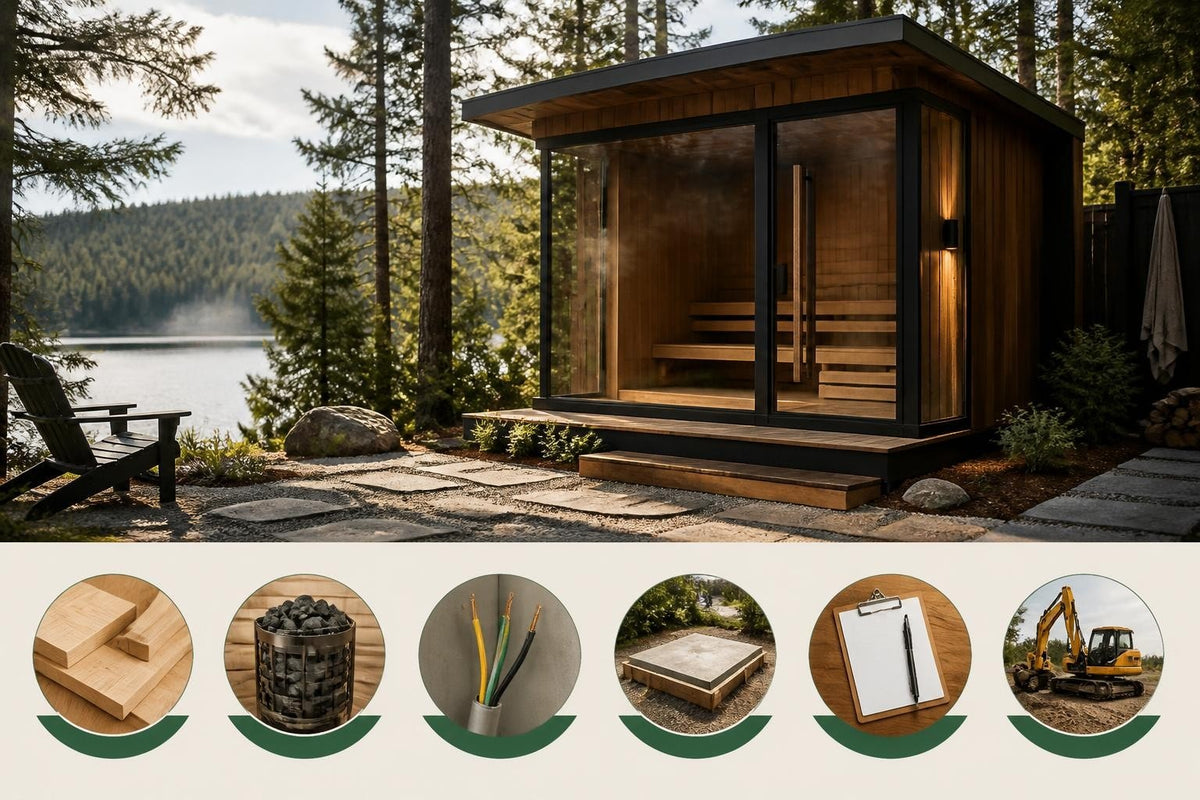
Understanding outdoor sauna cost begins with recognizing that you're not buying a single item, but assembling a complete backyard wellness system. The sauna itself is the largest expense, but heaters, electrical work, foundation prep, permits and site labor all add to your final number. Many homeowners start their research with a price range in mind, then discover that material choices, size, installation complexity and local code requirements shift the budget meaningfully. This guide walks through each cost component, explains the trade-offs, and helps you plan a realistic outdoor sauna budget for 2026.
What Determines Outdoor Sauna Cost
Your total outdoor sauna cost depends on five primary factors: the sauna kit itself, the heating system, site preparation, electrical or gas connections, and local permits. Each category has meaningful variation.
Sauna kit price is driven by wall material, footprint, construction quality and design features. Thermowood costs more than Nordic Pine because of the thermal modification process that improves dimensional stability and weather resistance. Larger saunas with changing rooms or terraces increase both material cost and installation time.
Heater cost ranges widely depending on whether you choose electric or wood-burning and the power rating. Electric heaters range from basic residential models to commercial-grade units with advanced controls. Wood-burning stoves typically cost more upfront but have no ongoing electricity demand.
Site preparation includes leveling, drainage and foundation work. A simple gravel pad costs less than a concrete slab, but your choice depends on soil conditions, frost depth and long-term durability preferences. Sloped yards and poor drainage add cost.
Electrical work varies by heater size and distance from your main panel. A 6 kW heater on a 40-amp circuit installed 20 feet from the panel costs far less than a 9 kW unit 100 feet away requiring trenching and a subpanel. Licensed electricians charge by complexity and local permit requirements.
Permits and inspections depend on local jurisdiction. Some municipalities treat outdoor saunas as accessory structures requiring building permits, setback compliance and electrical inspection. Others classify them as garden buildings exempt from permitting below a certain size threshold, as illustrated by Helsinki's garden construction permit guidance.
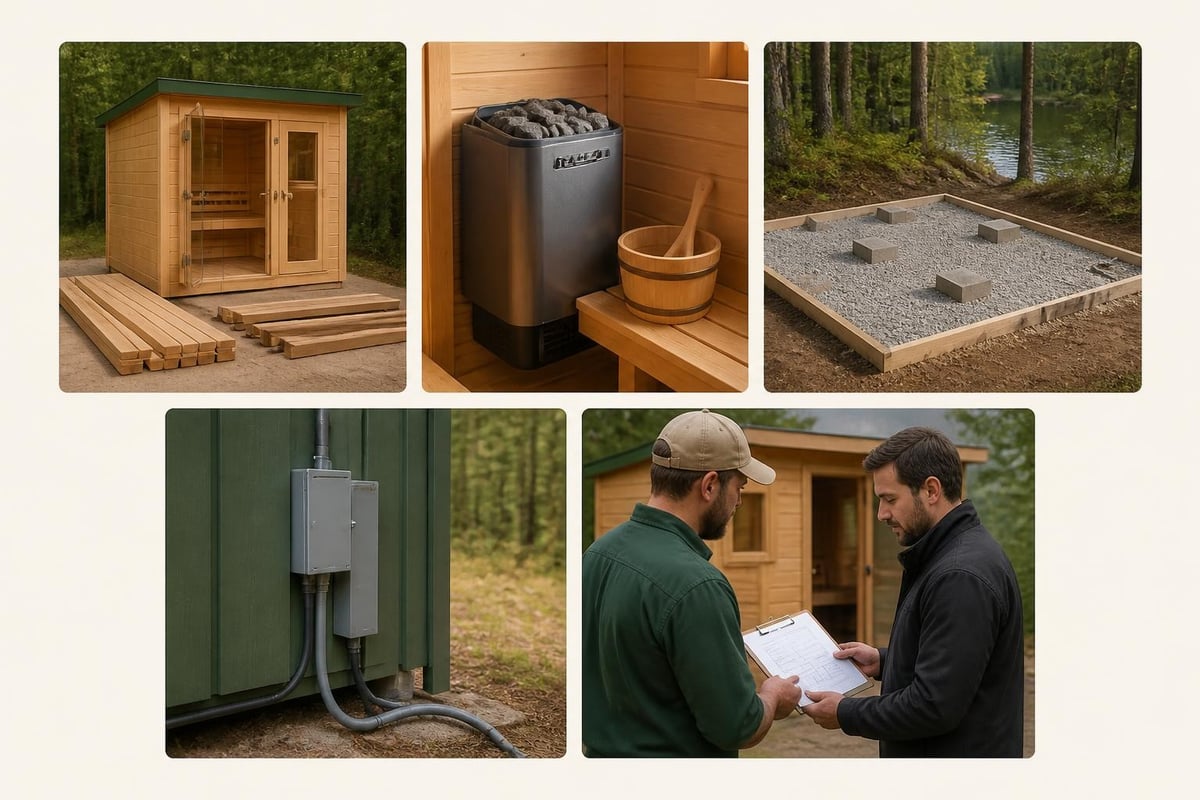
Outdoor Sauna Kit Costs by Size and Material
The sauna kit is your largest single expense. North American buyers typically choose between compact 2-person models, mid-size 4-person layouts and larger 6-person designs with changing rooms or terraces.
Compact Two-Person Saunas
Compact models suit smaller backyards, patios and buyers prioritizing space efficiency over group bathing. These saunas typically measure 2.0 m × 2.0 m or smaller, with interior benches arranged in an L-shape to maximize seating in a tight footprint.
Thermowood models in this category deliver premium weather resistance and modern Scandinavian aesthetics. Nordic Pine versions cost 15-20% less but require more frequent maintenance in climates with high humidity or freeze-thaw cycles.
Mid-Size Four-Person Saunas
Mid-size saunas balance capacity, footprint and budget. Dimensions around 2.3 m × 2.3 m provide comfortable seating for two to four adults, with enough wall space for windows, proper ventilation and flexible bench layouts.
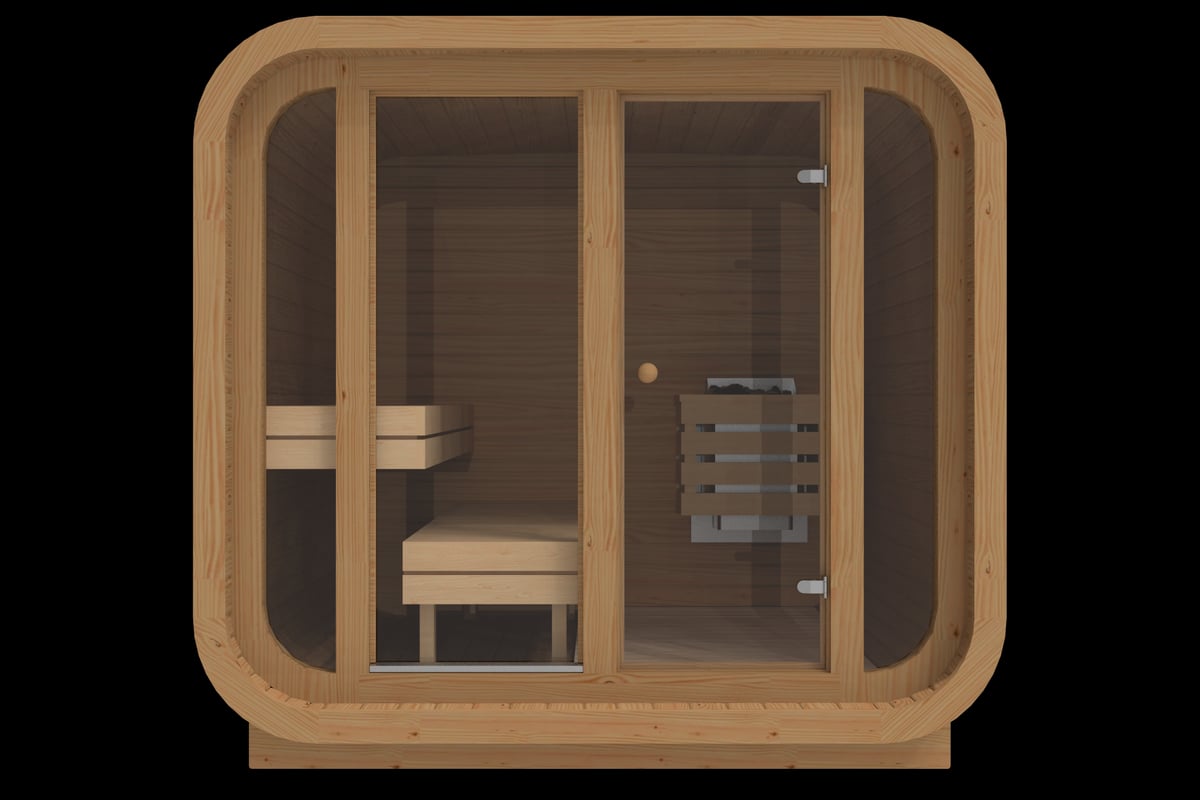
The RecoSauna Sisu Square Sauna 2.3 × 2.3 m in Thermowood exemplifies this category, combining 46 mm solid Thermowood walls, three tinted front windows and a straight Black Alder or Aspen bench in a balanced footprint suited to modern backyards.
Material choice affects both initial outdoor sauna cost and long-term value. Thermowood's dimensional stability reduces the risk of warping, cracking or moisture damage in cold-climate installations, which lowers maintenance costs over a 10- to 15-year ownership period.
Large Six-Person Saunas with Changing Rooms
Larger models suit buyers who want dedicated changing space, group bathing or a complete backyard wellness retreat. Dimensions of 3.0 m × 2.3 m or larger accommodate L-shaped benches, internal glass doors and separate changing areas with benches and coat hooks.
Changing rooms add 15-25% to the base sauna cost but deliver meaningful comfort in northern climates. You can undress in a sheltered space, step into the hot room, then return to the changing area to cool down without going directly outside in winter.
| Sauna Size Category | Typical Footprint | Capacity | Outdoor Sauna Cost Impact |
|---|---|---|---|
| Compact | 2.0 × 2.0 m | 2 people | Baseline |
| Mid-size | 2.3 × 2.3 m | 2-4 people | +20-30% |
| Large with changing | 3.0 × 2.3 m | 4-6 people | +40-60% |
Heater Costs and Operating Expenses
Your heating system is a long-term investment that affects both upfront outdoor sauna cost and monthly operating expenses.
Electric Heaters
Electric sauna heaters range from 4.5 kW entry-level units to 9 kW commercial-grade models. Power requirements depend on sauna volume and insulation. A well-insulated 2.3 × 2.3 m sauna typically needs a 6 kW heater, while a 3.0 × 2.3 m layout may require 8-9 kW for proper heat-up time and löyly steam.
Upfront cost for a quality electric heater with integrated or external controls typically ranges from moderate to premium depending on brand, features and safety certifications. Units compliant with IEC 60335-2-53 safety standards cost more but reduce insurance and inspection risk.
Installation cost includes wiring, breaker, disconnect and labor. A 6 kW heater on a 40-amp circuit installed near your main panel costs less than a 9 kW unit requiring a 50-amp circuit and 100 feet of trenched conduit. Budget for licensed electrical work; DIY wiring voids warranties and creates code-compliance problems.
Operating cost depends on local electricity rates and usage frequency. A 6 kW heater running 90 minutes (30 minutes heat-up, 60 minutes bathing) consumes roughly 9 kWh. At $0.14/kWh, that's about $1.26 per session or $65 per year for weekly bathing.
Wood-Burning Stoves
Wood-burning heaters suit buyers in rural areas, those seeking traditional sauna culture or anyone wanting to avoid electrical work. Quality wood stoves built for continuous high-temperature use cost more upfront than electric heaters, but have no electricity demand and often outlast electric elements.
Upfront cost includes the stove, chimney sections, flashing, heat shields and installation hardware. Wood stoves require professional installation to meet NFPA clearance and safety requirements.
Installation cost is higher than electric because you're adding a chimney, roof penetration, proper clearances and often a non-combustible floor pad. However, you avoid trenching, electrical panels and high-amperage circuits.
Operating cost depends on firewood prices and availability. In regions where firewood is plentiful and affordable, wood heating offers lower per-session costs than electricity. In urban areas where seasoned hardwood is expensive or difficult to source, wood heating loses its economic advantage.
Site Preparation and Foundation Costs
Your sauna needs a stable, level, well-drained foundation. Site prep is often underestimated in early outdoor sauna cost planning, but it's critical for long-term performance and structural integrity.
Foundation Options
Gravel pad: The most economical choice. Excavate 4-6 inches, lay landscape fabric, fill with crushed stone and compact. Works well on level lots with good drainage. Cost is primarily labor and materials; DIY-friendly if you have basic tools.
Concrete slab: More expensive but delivers superior stability and longevity. Requires formwork, rebar, concrete delivery and finishing. Essential in areas with expansive clay soils or heavy frost heave. Professional concrete work adds meaningfully to your total budget.
Deck or patio integration: If you have an existing deck or patio with adequate load capacity, you may be able to place the sauna directly on it. Check joist spacing, load rating and local code. Adding a sauna to an existing structure can reduce site prep costs, but may require structural reinforcement.
Pier and beam: Elevates the sauna above grade, improving ventilation and reducing moisture exposure. Common in areas with poor drainage or frequent flooding. Requires concrete footings or helical piers, blocking and rim joists.
Drainage and Grading
Proper drainage prevents water pooling under the sauna, which accelerates rot and attracts insects. Slope the ground away from the sauna at least 1-2% grade. If your lot is flat or slopes toward the sauna location, you'll need to regrade or install a French drain, adding cost.
Access and Delivery
Crane or tractor access affects delivery cost. If your backyard is accessible only through a narrow side yard or across a neighbor's property, delivery companies charge extra or require a smaller truck and manual carrying. Budget for this if your site has limited access.
Electrical Installation and Permit Costs
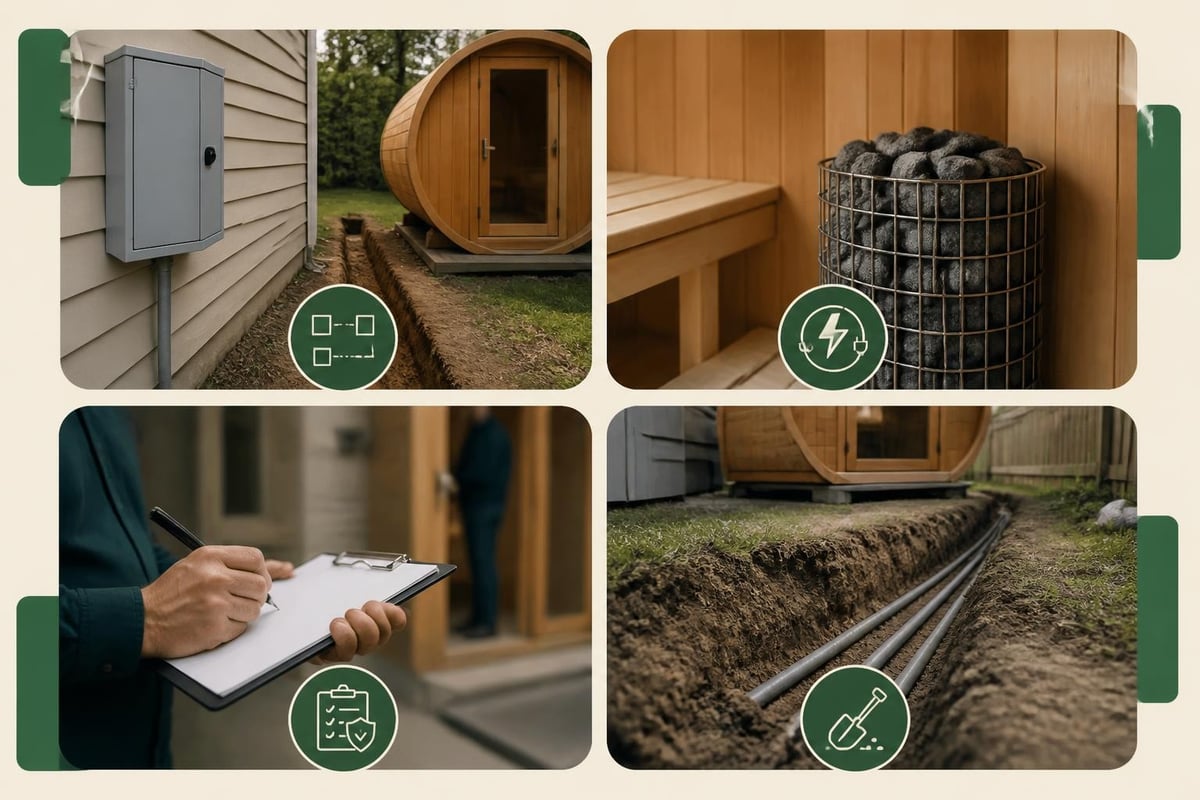
Electrical work is the most variable outdoor sauna cost component. Distance, capacity and local code requirements all shift the budget.
Distance from panel: Every additional 50 feet of trench or conduit run increases material and labor cost. Shallow burial in sandy soil is cheaper than deep trenching in clay or rock.
Circuit capacity: A 6 kW heater on a 40-amp circuit requires 8-gauge wire; a 9 kW unit on a 50-amp circuit needs 6-gauge. Larger wire and breakers cost more. If your main panel is full, adding a subpanel increases cost further.
Permit and inspection: Most jurisdictions require electrical permits for sauna heater installation. Permit fees range from modest to significant depending on location. Inspection visits add scheduling time and potential rework if the initial installation doesn't pass.
Budget for licensed electrical work. Unlicensed installation creates insurance problems, code violations and safety risk. Many sauna manufacturers void warranties if electrical work isn't performed by a licensed electrician.
Some municipalities are adopting stricter energy codes, as seen in Boulder County's draft building amendments, which can require renewable-energy offsets or impose additional compliance costs on high-power appliances.
Hidden Costs and Budget Contingencies
Beyond the major categories, several smaller expenses add to your total outdoor sauna cost.
- Sauna accessories: Thermometer, hygrometer, bucket, ladle, headrests and backrests. Budget a few hundred dollars for quality Finnish accessories.
- Lighting: Interior sauna lighting rated for high heat and humidity. LED fixtures designed for sauna use cost more than standard residential lights.
- Ventilation: Proper air intake and exhaust vents are critical for comfort and heater performance. Some sauna kits include vent hardware; others require separate purchase.
- Roof and exterior treatments: If you're adding shingles, metal roofing or additional weatherproofing, budget for materials and labor. Thermowood saunas benefit from periodic oiling to maintain color; Nordic Pine may require more frequent treatment in humid climates.
- Winter preparation: In cold climates, you may want to add pipe heat tape, insulation skirts or wind barriers to reduce heat loss and protect plumbing if you install a shower or changing-room sink.
- Cold plunge or shower: Many sauna buyers add a cold plunge, outdoor shower or hose bib for post-sauna cooling. Plumbing work, drainage and freeze protection add cost.
Set aside 10-15% of your total budget as contingency for unforeseen site conditions, permit delays or design changes during installation.
Comparing Outdoor Sauna Cost to Long-Term Value
Outdoor sauna cost isn't just an expense; it's an investment in your home, health and lifestyle. Research shows that regular sauna bathing supports cardiovascular health and overall wellness, which adds long-term value beyond the initial purchase price.
Durability and Maintenance
Quality materials reduce lifetime cost. Thermowood's resistance to moisture, rot and insect damage means fewer repairs and longer intervals between maintenance. Nordic Pine costs less upfront but may require staining, sealing or board replacement sooner, especially in coastal or high-humidity regions.
Investing in proper construction practices, as outlined in industry guides like the Hot Springs Association's Hydrothermal Guide, ensures your sauna performs well for decades. Cutting corners on foundation, ventilation or weatherproofing leads to costly repairs later.
Resale Value
A well-designed outdoor sauna adds curb appeal and can increase home value, particularly in wellness-focused markets or cold-climate regions where sauna culture is established. Buyers value turnkey outdoor wellness spaces, especially when the sauna is architecturally integrated with the landscape and constructed from premium materials.
Operating Efficiency
Energy-efficient heaters, proper insulation and smart design reduce long-term operating costs. A poorly insulated sauna with an oversized heater wastes electricity and takes longer to reach target temperature. Investing in the right heater size and quality insulation pays back over time through lower energy bills and faster heat-up.
Regional Variations in Outdoor Sauna Cost
Where you live affects every cost component. Urban areas typically have higher labor rates, stricter permitting and limited access, all of which increase installation costs. Rural areas may have lower labor costs but longer delivery distances and fewer contractor options.
Cold climates require deeper foundations to avoid frost heave, more robust electrical systems to handle winter demand and sometimes additional insulation or wind protection. These upgrades add cost but are essential for year-round performance.
Coastal regions benefit from Thermowood's superior moisture resistance. The initial outdoor sauna cost premium for Thermowood pays back through reduced maintenance and longer lifespan in humid, salty environments.
Permitting complexity varies widely. Some jurisdictions treat saunas as minor accessory structures with minimal oversight; others require full building permits, engineered foundations and multiple inspections. Research local code requirements early in your planning process to avoid budget surprises.
Integrating your sauna into a broader home improvement plan, such as alongside a custom home cinema or during a roofing replacement project, can sometimes reduce permitting and site-access costs by consolidating contractor visits and permit applications.
Financing and Payment Options
Most buyers pay for their outdoor sauna upfront, but financing options exist for those who prefer to spread payments over time. Some sauna retailers offer in-house financing or partner with third-party lenders to provide installment plans. Interest rates and terms vary, so compare total cost carefully.
Home equity lines of credit (HELOC) often offer lower interest rates than personal loans and allow you to borrow against your home's equity. This can be a cost-effective way to fund a sauna project if you have sufficient equity and a strong credit profile.
Credit cards with promotional 0% APR periods can work for smaller purchases or sauna accessories, but avoid carrying high-interest balances on the sauna kit or installation work.
Cash payment avoids interest and fees, giving you full ownership from day one. If you're planning a sauna purchase in 2026, starting a dedicated savings fund now can help you avoid financing costs entirely.
Planning Your Outdoor Sauna Budget for 2026
Start by defining your priorities. Do you value a compact footprint, premium materials, a changing room, or the lowest possible outdoor sauna cost? Each choice shifts your budget.
Step-by-step budgeting approach:
- Choose your sauna size and material based on available space, user capacity and climate. Thermowood for durability; Nordic Pine for lower upfront cost.
- Select a heating system that matches your electrical capacity, fuel preference and operating-cost tolerance. Electric for convenience; wood-burning for tradition and off-grid capability.
- Assess your site for foundation requirements, drainage needs and access constraints. Get quotes for gravel pad, concrete slab or pier-and-beam options.
- Budget for electrical work by measuring distance from your panel, confirming available breaker capacity and obtaining quotes from licensed electricians.
- Research local permits to understand fees, timelines and inspection requirements. Some jurisdictions publish fee schedules online; others require pre-application consultation.
- Add contingency for unforeseen site conditions, delivery delays or design changes. A 10-15% buffer protects against budget overruns.
| Cost Category | Typical Range | Key Variables |
|---|---|---|
| Sauna kit | Varies by size and material | Footprint, Thermowood vs. Pine, changing room, terrace |
| Heater | Varies by type | Electric vs. wood, power rating, controls |
| Electrical installation | Varies widely | Distance, circuit size, permit fees |
| Foundation | Varies by type | Gravel pad, concrete slab, deck integration |
| Permits and inspections | Varies by jurisdiction | Local code, structure classification |
| Accessories and finishing | Moderate | Lights, vents, benches, exterior treatments |
Making the Most of Your Outdoor Sauna Investment
Once you've planned your budget, focus on decisions that maximize long-term value. Choosing the right sauna size avoids buyer's remorse; too small feels cramped, while too large wastes energy and space. A mid-size layout like 2.3 × 2.3 m balances capacity, footprint and heating efficiency for most North American families.
Invest in quality where it matters. Premium heaters with accurate thermostats and durable elements outlast budget models. Solid Thermowood construction resists weathering better than thin-walled or composite alternatives. Proper ventilation and drainage prevent moisture damage and extend sauna life.
Consider the full ownership experience. A sauna placed near your home with easy electrical access and good drainage delivers more daily value than one tucked into a distant corner of your yard requiring long trenching runs and complex site prep.
If wellness is a priority, pairing your sauna with natural body care products and a cold plunge creates a complete contrast-therapy routine that enhances the cardiovascular and mental health benefits of regular sauna bathing.
Choosing the Right Sauna for Your Budget and Goals
Your outdoor sauna cost reflects your specific needs, site conditions and long-term goals. A compact Thermowood model suits buyers prioritizing space efficiency, low maintenance and modern design. A larger sauna with a changing room appeals to those who want a complete backyard retreat and don't mind higher upfront investment.
Balancing initial cost with operating expenses, maintenance requirements and resale value helps you make a decision you'll be happy with in 2026 and beyond. A well-planned sauna project delivers decades of reliable performance, daily wellness benefits and a meaningful addition to your home's outdoor living space.
Start by defining your must-haves: size, material, heater type and budget ceiling. Then work with experienced sauna specialists who can guide you through product selection, site assessment and installation planning. Clear communication with contractors, realistic budgeting and careful attention to code compliance ensure a smooth project from purchase to first steam.
Understanding outdoor sauna cost means looking beyond the initial price tag to consider installation, operation and long-term value. Whether you choose a compact two-person model or a spacious sauna with a changing room, investing in quality materials, proper site preparation and professional installation delivers a backyard wellness retreat that performs reliably for decades. RecoSauna combines authentic Finnish sauna culture with Thermowood construction, clear product guidance and practical support to help you choose the right outdoor sauna for your home, climate and budget.
Share:
DIY Outdoor Sauna: Planning, Permits & Build Realities
Luxury Outdoor Sauna: Design, Materials & Buying Guide