
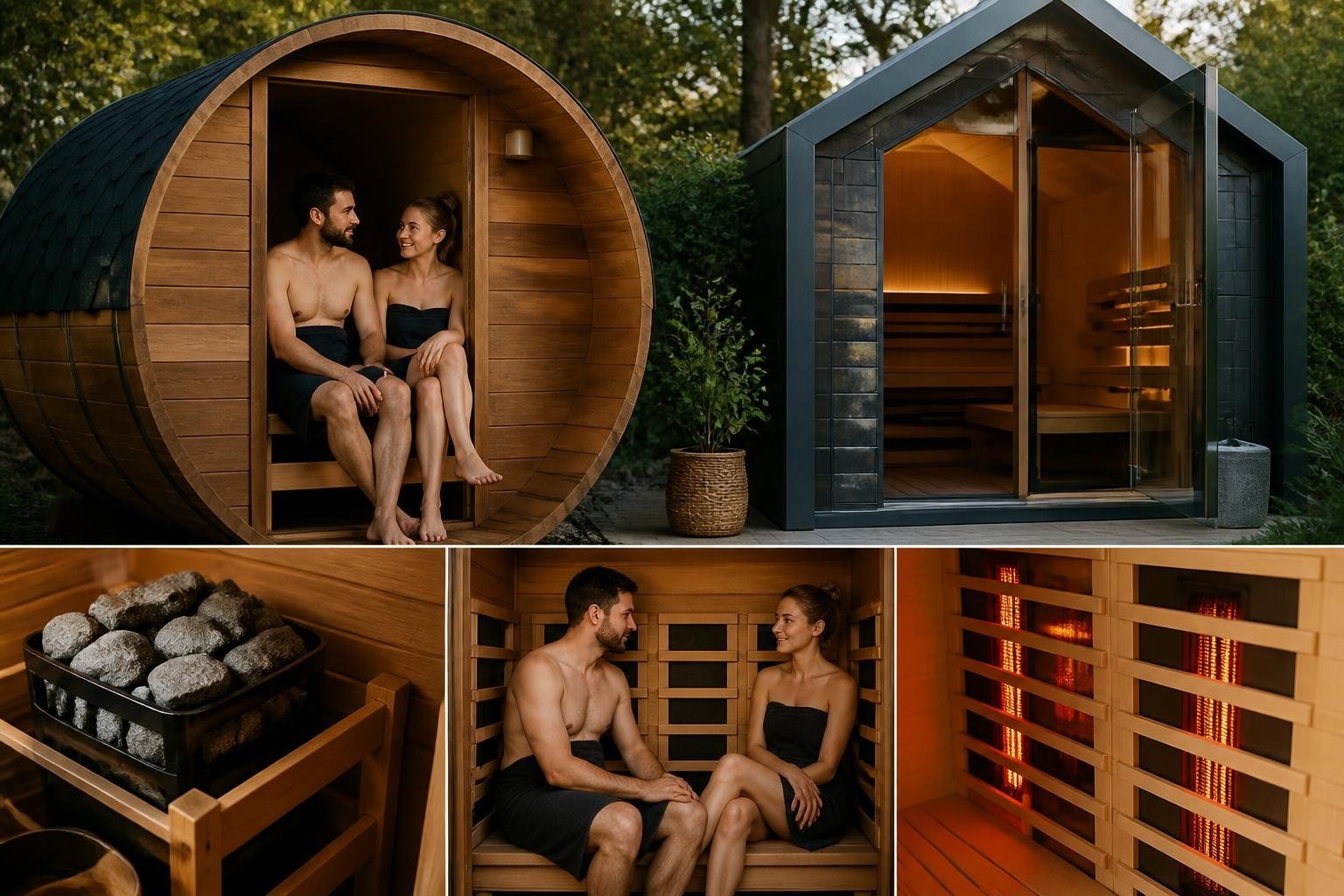
As someone who grew up on the shores of Lake Saimaa in Finland, I've experienced countless sauna sessions with friends and family. There's something special about sharing that heat with just one other person-whether it's a quiet evening with your partner or a post-workout recovery session with a friend. An outdoor sauna 2 person setup offers exactly that: an intimate wellness experience without overwhelming your backyard or your budget. Let me share what I've learned about choosing the right compact sauna for your space.
Why Two-Person Outdoor Saunas Are Perfect for Most Homes
You might wonder if a two-person sauna is really enough. Here's the truth: most sauna sessions in Finland happen with just one or two people. We're not hosting parties in there-we're seeking relaxation, recovery, and that deep warmth that only a proper sauna can deliver.
A two-person outdoor sauna fits beautifully in smaller backyards, on patios, or even on apartment balconies if you choose the right model. The footprint typically ranges from 4x4 feet to 6x6 feet, making it accessible for urban and suburban homeowners alike.
Space and Energy Efficiency Benefits
- Lower heating costs: Smaller volume means faster heat-up times and less energy consumption
- Manageable installation: Most two-person units can be assembled by two people in 4-6 hours
- Year-round use: Compact size makes it easier to maintain comfortable temperatures even in winter
- Privacy: Creates an intimate wellness space without feeling cramped
According to a comprehensive buyer's guide on two-person outdoor saunas, these compact units typically consume 30-40% less electricity than four-person models while delivering the same therapeutic benefits.
Barrel Versus Cabin: Which Outdoor Sauna 2 Person Design Works Best?
This is where personal preference meets practical considerations. I've tested both extensively, and each design has distinct advantages.
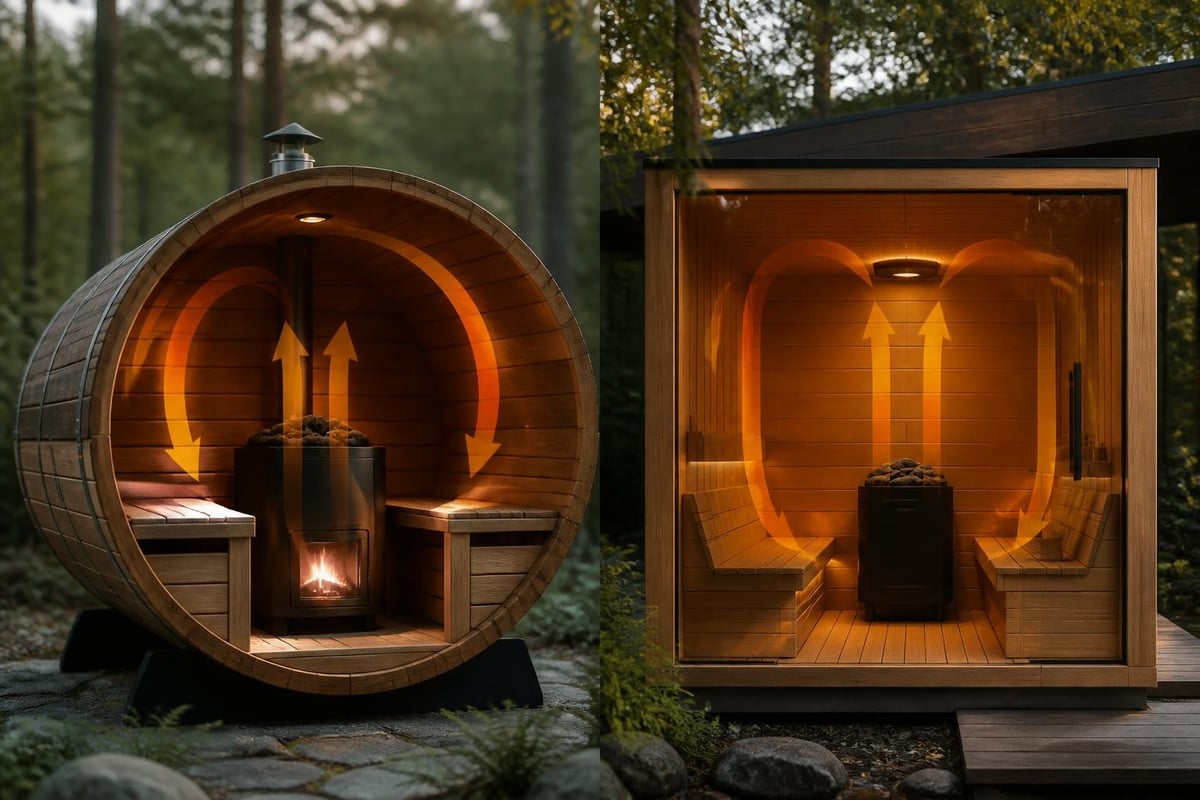
Barrel saunas use that classic curved design for a reason. The shape promotes natural air circulation, with hot air flowing along the curved ceiling and cooler air settling at floor level. This creates surprisingly even heat distribution in a compact space.
Cabin-style saunas offer a more traditional feel with straight walls and often more headroom. They're easier to customize with benches at different heights and tend to blend better with existing architecture.
| Feature | Barrel Sauna | Cabin Sauna |
|---|---|---|
| Heat circulation | Excellent (curved promotes flow) | Good (requires proper vent placement) |
| Space efficiency | Superior (no corner waste) | Moderate (corner dead space) |
| Headroom | Limited in smaller models | Better for taller users |
| Installation time | 4-6 hours | 6-8 hours |
| Weather resistance | Excellent (rain runs off naturally) | Good (requires proper sealing) |
| Price range | $4,500-$9,500 | $5,000-$12,000 |
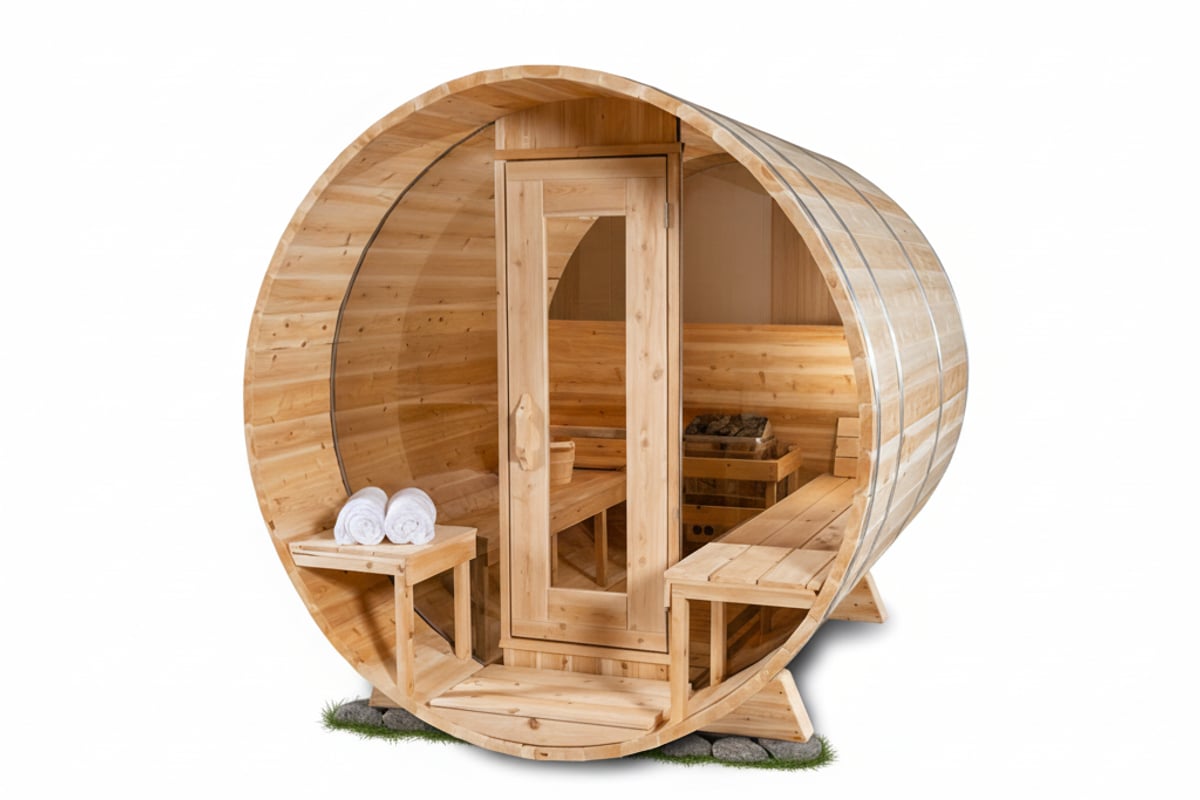
The Canadian Timber Serenity MP Barrel Sauna - LeisureCraft represents the sweet spot for many of our customers. Built from premium Eastern White Cedar, it provides authentic barrel sauna heat circulation with a tempered glass door and simple assembly. At $5,585, it delivers Canadian craftsmanship without the premium price tag of some imported models.
Material Matters: Cedar, Hemlock, and Spruce
When you're investing in an outdoor sauna 2 person unit, the wood species determines durability and maintenance requirements.
Eastern White Cedar remains my top recommendation for outdoor installations. It naturally resists rot and insects, requires minimal treatment, and develops a beautiful silver-gray patina over time. The aromatic oils create that authentic sauna scent every time you heat it up.
Canadian Hemlock offers a lighter color and smooth grain. It's slightly less weather-resistant than cedar but costs 10-15% less. Perfect for covered patio installations.
Nordic Spruce is common in European imports. It's strong and affordable but requires more frequent sealing and maintenance in wet climates.
Traditional Versus Infrared: Heating Technology for Two-Person Units
This question comes up constantly: should you go traditional or infrared? The answer depends entirely on how you want to use your outdoor sauna 2 person setup.
Traditional electric or wood-fired saunas create that authentic Finnish experience. Temperatures reach 160-195°F, you can throw water on the rocks for löyly (that burst of steam), and your body responds with the deep sweating our ancestors knew.
Research published in JAMA Internal Medicine found that regular traditional sauna use (4-7 times per week) was associated with a 66% reduced risk of dementia and a 65% reduced risk of Alzheimer's disease compared to those using saunas once weekly.
Infrared Technology for Daily Wellness
Infrared saunas operate at lower temperatures (120-140°F) and heat your body directly rather than heating the air. They're gentler for beginners, require less power, and can be plugged into standard 120V outlets.
- Faster warm-up (10-15 minutes versus 30-45 minutes)
- Lower operating costs (averaging $0.25-$0.50 per session)
- Can be used indoors or outdoors with proper weatherproofing
- Easier on those who find traditional heat overwhelming
The Mayo Clinic recognizes infrared sauna therapy as beneficial for cardiovascular health, pain relief, and relaxation, though they note that traditional saunas have more extensive research backing.
For outdoor installations, I often recommend traditional heating because the outdoor setting complements the high-heat experience. But for daily use by people new to sauna culture, infrared makes the practice more accessible. You can explore various infrared sauna options that work beautifully in outdoor settings with proper weatherproofing.
Installation Requirements: What You Need Before Your Sauna Arrives
Let's talk practical details. You've chosen your outdoor sauna 2 person model-now what?
Foundation Options and Site Preparation
The foundation determines your sauna's longevity. I've seen beautiful units deteriorate prematurely because they were placed directly on grass or dirt.
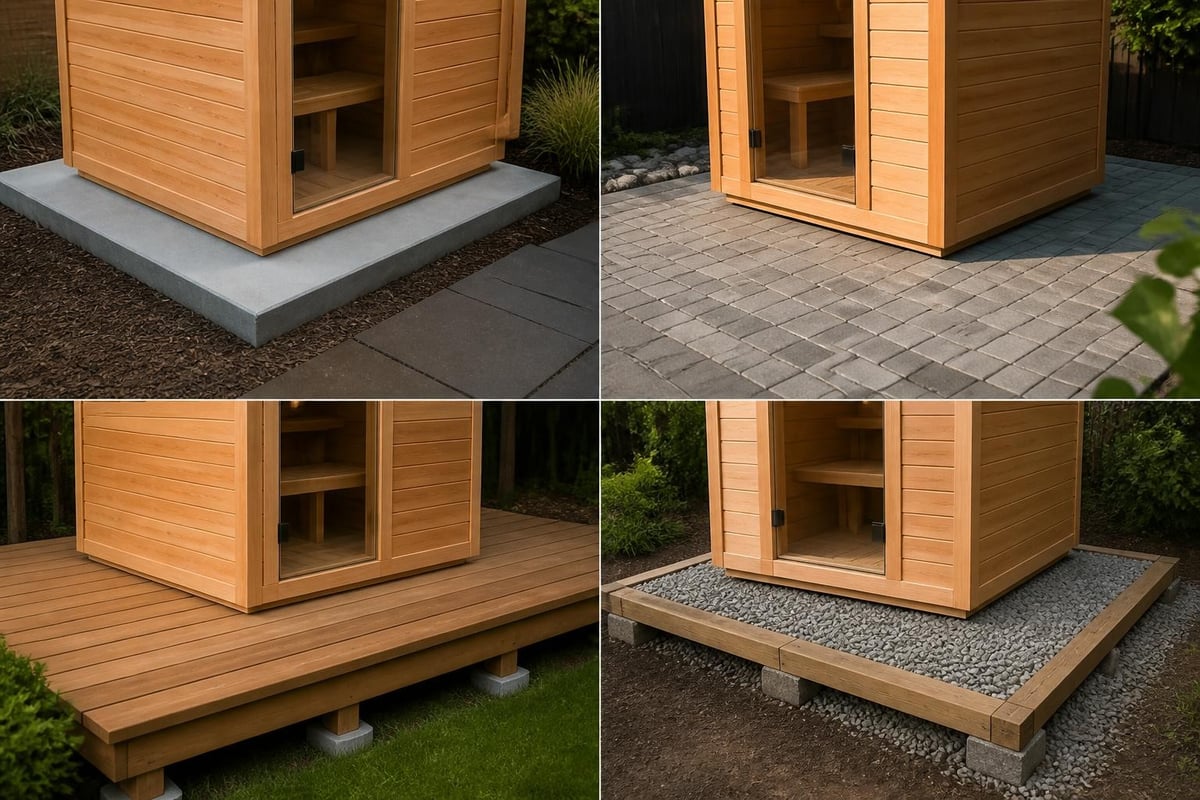
Best foundation options ranked:
- Concrete pad (4-6 inches thick): Most durable, best for any climate, $400-$800
- Paver base: Good drainage, attractive, easier DIY option, $200-$400
- Deck integration: Works if deck is rated for 100+ pounds per square foot
- Gravel pad with landscape timbers: Budget-friendly, good drainage, $150-$300
The outdoor sauna installation guide provides detailed foundation specifications and drainage considerations that prevent moisture damage.
Your site should be level within 1/4 inch across the entire footprint. Most two-person saunas weigh 600-900 pounds when fully assembled, so proper support is non-negotiable.
Electrical Requirements: What Your Electrician Needs to Know
Electric heaters for two-person saunas typically require:
- 120V plug-in units: 1,500-2,000 watts (infrared models)
- 240V hardwired units: 4,500-6,000 watts (traditional electric)
- GFCI protection: Required for outdoor installations
- Dedicated circuit: Never share with other appliances
Most homeowners spend $300-$600 having a licensed electrician run a dedicated line. This isn't optional-insurance and local codes typically require proper electrical certification for outdoor sauna installations. The outdoor sauna assembly guide walks through electrical considerations in detail.
Cost Breakdown: Budget Planning for Your Two-Person Outdoor Sauna
Let's be transparent about costs. An outdoor sauna 2 person setup represents a significant investment, but understanding the full picture helps you budget appropriately.
| Cost Category | Budget Range | Mid-Range | Premium |
|---|---|---|---|
| Sauna unit | $3,500-$5,000 | $5,000-$8,000 | $8,000-$12,000 |
| Foundation | $150-$400 | $400-$800 | $800-$1,500 |
| Electrical | $200-$400 | $400-$600 | $600-$1,200 |
| Assembly (if hired) | $300-$500 | $500-$800 | $800-$1,500 |
| Accessories | $100-$300 | $300-$600 | $600-$1,000 |
| Total Investment | $4,250-$6,600 | $6,600-$10,800 | $10,800-$17,200 |
Operating Costs Nobody Mentions
Your monthly operating costs depend on usage frequency and heating type:
Traditional electric (4,500W heater, 3 sessions/week, 1 hour each):
- 54 kWh monthly × $0.13/kWh = $7.02/month
Infrared (1,500W heater, daily 30-minute sessions):
- 22.5 kWh monthly × $0.13/kWh = $2.93/month
Factor in periodic cedar oil treatment ($30-$50 annually) and occasional replacement of rocks for traditional heaters ($50-$80 every 2-3 years).
Popular Models and What Makes Them Stand Out
Based on thousands of customer interactions, certain outdoor sauna 2 person models consistently deliver exceptional value.
For barrel sauna enthusiasts: LeisureCraft's Canadian Timber line dominates our sales. These barrel saunas combine Eastern White Cedar construction with straightforward assembly and competitive pricing. The Serenity model at $5,585 includes everything except the heater, which you can select based on your preference for electric or wood-burning.
For modern aesthetics: The Luna Sauna from LeisureCraft brings contemporary design to outdoor saunas with its rounded corners and large panoramic windows. It's slightly larger than a strict two-person unit but offers exceptional flexibility for couples who occasionally want to bring guests.
For infrared fans: Full-spectrum infrared units deliver near, mid, and far infrared wavelengths. The Maxxus 2 Person Full Spectrum model features Canadian Red Cedar, Bluetooth connectivity, and chromotherapy lighting at $4,999-a complete wellness package ready to plug in.
Understanding Wood-Burning Versus Electric
This decision often comes down to your location and lifestyle.
Wood-burning advantages:
- No electrical costs
- Authentic experience with crackling fire
- Off-grid capable
- Higher peak temperatures possible
Wood-burning challenges:
- Requires more active management
- Smoke may concern neighbors
- Local regulations may restrict use
- Insurance implications in some areas
Electric advantages:
- Set temperature and walk away
- Consistent, controllable heat
- No smoke or emissions
- Easier to permit in urban areas
For most suburban homeowners, electric makes sense. But if you have acreage and want that true Finnish experience, wood-burning creates an unmatched ambiance. You can view different barrel sauna configurations that accommodate both heating methods.
The Contrast Therapy Advantage: Pairing Your Sauna with Cold Plunge
Here's something we practice religiously in Finland: alternating hot and cold exposure. An outdoor sauna 2 person setup becomes exponentially more beneficial when paired with cold water immersion.
The science is compelling. Research from the University of Eastern Finland found that combining sauna bathing with cold water immersion enhanced cardiovascular benefits beyond either practice alone. The rapid temperature shifts trigger increased norepinephrine production, reduce inflammation, and create a natural high that leaves you energized for hours.
Setting Up Your Contrast Therapy Routine
You don't need a frozen lake like I had growing up. A simple cold plunge tub placed near your sauna creates the perfect setup:
- Sauna session (10-15 minutes at 170-180°F)
- Cold plunge (2-3 minutes at 45-55°F)
- Rest period (5-10 minutes)
- Repeat 2-3 cycles
The Georgian Porch Sauna ($8,050) paired with a Baltic Plunge ($3,189) creates an exceptional contrast therapy package totaling $11,239. This combination transforms your backyard into a complete wellness center that rivals expensive spa memberships.
The Baltic Plunge holds 80 gallons, features insulated construction, and fits two people comfortably. Positioned just steps from your sauna, it becomes part of your daily ritual rather than an occasional treat.
Weatherproofing and Maintenance: Making Your Investment Last
An outdoor sauna 2 person unit faces rain, snow, UV exposure, and temperature swings. Proper maintenance isn't complicated, but consistency matters.
Annual Maintenance Checklist
Every 3 months:
- Clean benches and walls with sauna cleaner (never harsh chemicals)
- Check door seals and weather stripping
- Inspect roof for debris accumulation
- Test heater and controls
Every 6 months:
- Apply cedar oil to interior wood (enhances aroma and protection)
- Inspect exterior for cracks or gaps
- Check foundation for settling or drainage issues
- Clean or replace sauna rocks (traditional heaters)
Annually:
- Reseal exterior wood if needed (depends on climate and sun exposure)
- Deep clean floor and drain
- Inspect electrical connections
- Replace any worn accessories
Cedar naturally weathers to silver-gray within 12-18 months outdoors. Some owners prefer this patina; others maintain the original honey color with annual sealing. Both approaches work fine-it's purely aesthetic preference.
The outdoor infrared sauna installation guide covers weatherproofing measures specific to infrared units, which require slightly different protection than traditional saunas.
Making the Final Decision: Questions to Ask Before Buying
After helping hundreds of customers choose their perfect outdoor sauna 2 person model, I've identified the critical questions that clarify decision-making.
How will you primarily use it?
- Daily personal wellness → Infrared, plug-in convenience
- Weekend ritual with partner → Traditional barrel, wood or electric
- Athletic recovery → Traditional high-heat, quick sessions
- Social relaxation → Cabin-style with comfortable seating
What's your comfort level with DIY?
- Confident builder → Save $500-$1,500 on assembly
- Moderate skills → Two-person kit assembly weekend project
- Prefer professionals → Budget $600-$1,500 for installation
What's your climate like?
- Harsh winters → Prioritize insulation and weather-resistant cedar
- Hot, dry summers → Consider covered installation to reduce UV damage
- High humidity → Ensure excellent ventilation and drainage
- Mild year-round → More flexibility in placement and materials
What's your available space?
- Compact patio → Barrel sauna (smallest footprint)
- Large backyard → Cabin with changing room
- Deck integration → Check weight capacity and ventilation
Review detailed specifications on models you're considering. The 2-person outdoor sauna comparison guide breaks down technical details across popular brands.
Real-World Performance: What Customers Report After Six Months
Theory is nice, but real-world experience tells the true story. Here's what our customers consistently report six months after installing their outdoor sauna 2 person unit:
Usage frequency surprises most people. Buyers expect 2-3 sessions weekly but actually average 4-5 sessions. Once the sauna becomes part of your backyard, the barrier to use drops dramatically. You find yourself firing it up after yard work, before bed, or simply because it's Tuesday.
Partner dynamics shift positively. Couples report it becomes "our time" free from phones and distractions. The shared heat creates conversations that don't happen elsewhere.
Energy costs remain negligible. Even daily users report monthly increases of $5-$15 on electricity bills-far less than feared.
Weather resistance exceeds expectations. Quality cedar saunas handle snow, rain, and sun without issues when properly maintained.
Assembly time runs longer than advertised. Manufacturers quote 4-6 hours; reality is often 6-8 hours for first-time builders. Don't rush it.
The RecoSauna Difference: Why We Focus on Premium Brands
As an authorized dealer for LeisureCraft and Golden Designs, I only offer products I'd install at my own cottage in Finland. Free shipping across the US and Canada removes one barrier, but the real value comes from our expertise.
When you're comparing an outdoor sauna 2 person model on our site versus direct imports, consider:
- North American manufacturing standards: LeisureCraft builds in Canada with locally sourced timber
- Parts availability: Replacement components ship within days, not weeks from overseas
- Technical support: Direct line to me, Petri, not a call center reading scripts
- Warranty servicing: Local service partners for warranty issues
We're proud members of Sauna from Finland, connecting authentic Finnish sauna culture with North American craftsmanship. That heritage guides every recommendation we make.
Your Next Steps: From Research to Relaxation
You've done the research. You understand the options. Now it's time to move forward.
Start by measuring your intended location precisely. Account for door swing, access for maintenance, and clearance from structures (typically 12-36 inches depending on local codes).
Then determine your electrical situation. Can you run a dedicated 240V line, or do you need a plug-in 120V model? This often eliminates half your options immediately.
Finally, set your realistic budget including foundation, electrical, and assembly. A $5,000 sauna becomes a $7,500 project after everything's installed. Plan accordingly.
Once you've narrowed your choices, reach out directly. I personally respond to every inquiry because this is too important to leave to automated systems. Whether you're comparing the best 2-person outdoor options or need guidance on specific models, I'm here to help.
Consider visiting RecoSauna to explore our full range of outdoor and barrel sauna configurations. Each model includes detailed specifications, assembly instructions, and real customer reviews.
An outdoor sauna 2 person setup transforms your backyard into a daily wellness retreat without overwhelming your space or budget. Whether you choose a traditional barrel sauna for authentic Finnish heat or a modern infrared model for convenient daily sessions, the investment pays dividends in health, relaxation, and quality time with loved ones. At RecoSauna, we provide premium Canadian Timber saunas and top North American brands with free shipping and direct access to expert guidance. Contact me directly to discuss which model fits your specific needs-I'm here to help you make the right choice the first time.
Share:
Sauna Post Workout: Benefits, Timing, and Best Practices
Red Light Sauna: Combining Finnish Heat + Light Therapy